Trump attacked the wrong ‘Megan Rapinoe’ on Twitter and her response has gone viral.
When it comes to attacks from the President on Twitter, no one is safe. Trump unleashed a firestorm of criticism directed at USWNT star Megan Rapinoe Wednesday after she told reporters she wouldn’t visit the White House if her team wins the 2019 Women’s World Cup. “I’m not going to the fucking White House,” Rapinoe…
When it comes to attacks from the President on Twitter, no one is safe.
Trump unleashed a firestorm of criticism directed at USWNT star Megan Rapinoe Wednesday after she told reporters she wouldn’t visit the White House if her team wins the 2019 Women’s World Cup.
“I’m not going to the fucking White House,” Rapinoe told Eight by Eight. “We’re not going to be invited,” the co-captain said in a video from behind the scenes of a cover story shoot for the soccer magazine.
“[Trump] tries to avoid inviting a team that might decline. Or, like he did when the Warriors turned him down, he’ll claim they hadn’t been invited in the first place,” she said in an interview with the magazine.
Eight by Eight shared the video on Twitter Tuesday, which according to the New York Times was recorded in January when the photoshoot took place. The issue was recently released in May and an online version of the story appeared on the publication’s website in June.
Not one to let insults slide, Trump took to his favorite social media platform to respond to Rapinoe’s comments with a series of nonsensical replies.
Women’s soccer player, @mPinoe, just stated that she is “not going to the F…ing White House if we win.” Other than the NBA, which now refuses to call owners, owners (please explain that I just got Criminal Justice Reform passed, Black unemployment is at the lowest level…— Donald J. Trump (@realDonaldTrump) June 26, 2019
….invited Megan or the team, but I am now inviting the TEAM, win or lose. Megan should never disrespect our Country, the White House, or our Flag, especially since so much has been done for her & the team. Be proud of the Flag that you wear. The USA is doing GREAT!— Donald J. Trump (@realDonaldTrump) June 26, 2019
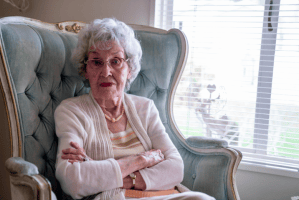
In his swift response, Trump didn’t bother checking to make sure he was tagging the correct Megan Rapinoe. Instead of tagging the soccer player, he instead tagged another Megan Rapinoe (though the president has since corrected his tweets).
Fortunately, the “other” Megan Rapino took it in stride. Finding her Twitter overwhelmed by people who’d clicked her account after reading Trump’s tweet, she decided to let the world know just what she thought of the president’s taking the real Rapinoe to task:
Melania's cyber bullying campaign was a complete failure.— DD (@votedbluein24) June 26, 2019
This isn’t the first time Trump has mistakenly tagged the wrong person during one is his Twitter outbursts. In January, he tagged a high school girl in a tweet in which he intended to call out Fox News reporter Gillian Turner.
Like Rapinoe, the mistakenly identified Jillian Turner took the incident in stride.
“Like how does that even happen,” she wrote in another tweet. “One in a million chance.”

A Somali refugee and current resident of Minneapolis, the multimedia artist and activist draws on her lived experiences to create work that explores trauma, displacement, and resilience. But like so many of the guests on Freedom to Thrive, an award-winning podcast produced by the National Immigration Law Center (NILC), Mansour doesn’t want to focus only on trauma; she also wants to celebrate the unexpected beauty she’s found during difficult experiences.
“One of the beautiful things about tragedies is that it activates hearts, and courageous people are born,” she says. For example, Mansour has noticed more Minnesotans than ever are reaching out to help the vulnerable, after the anti-immigrant crackdowns carried out by the Department of Homeland Security. “They are bringing food, they’re bringing extra clothes, they’re walking with people, and it’s just really beautiful.”
Hector Flores, co-founder of the Las Cafeteras and host of Freedom to Thrive, agrees with her. A child of immigrants himself, he has also seen how hope and hardship often live side by side.
Flores comes from a family with mixed status and is highly aware of the challenges immigrants and refugees in his community face, and how they’re affected by people’s misconceptions. “People want to know about trauma all the time, but we’re more than just undocumented,” he says. “We’re artists, singers, creatives … there’s so much richness in the culture.”
At its core, Flores’ comment is exactly what the Freedom to Thrive podcast is all about: Celebrating immigrants as complex, dynamic individuals, and challenging the dominant narrative that too often reduces them to symbols of hardship.
Launched in 2024, Freedom to Thrive explores heritage, resilience, community, and the ways art and comedy can spark social change. Now in its second season, the podcast continues to feature conversations with immigrants, policymakers, artists, musicians, activists, and more. Recent guests have included comedian Mo Amer, Grammy Award-winning singer Lila Downs, and Pulitzer Prize-winning author Viet Thanh Nguyen.
Where the first season focused on individual stories of identity and belonging, Flores says his goal for season two, where he joins as host, is to “take it to the next level” — using storytelling to highlight “the fact that we’re more similar than different.”
One recent podcast episode drives this point home. In December, Flores interviewed Bryan Andrews, a rising country music star and rural Missouri native who frequently uses his platform to speak about issues affecting immigrant families. At the heart of his message and his songwriting, Andrews says, is the idea that small-town Americans and the rest of the country, including immigrants, have more in common than they realize.
“It doesn’t matter where you’re from,” Andrews says on the podcast. “We’re all trying to make a living and we’re tired of getting railroaded by corporate greed or by politicians who don’t care.”
Rural Americans, Andrews says, are often stereotyped as racist and misogynistic but “the overwhelming majority of people in my home town have love in their hearts.” Media stereotypes often amplify differences and divide, he says, but at the end of the day, “we’re all in this together.”
Flores, who was raised in a working-class immigrant neighborhood in East Los Angeles, had similar thoughts. He says he often sees its residents stereotyped as wealthy, consumerist, and status obsessed. “That exists, but that’s not my life, that’s not my community,” he says. Like small-town Americans, people in the city “just want to work hard and take care of their families. We all want the same thing.”
Although the podcast tackles some heavy issues, each episode’s ultimate focus is how personal and collective struggles can be healed through art, driving home a message of hope and resilience:
Mansour’s episode about her experiences in Minnesota is just one of many examples. Flores asks her,
“What gives you hope for the people creating a home here?”
“The love I feel from other Minnesotans. It is trumping any hate we’re experiencing,” she replies.
CTA: Stream all episodes now on the Freedom to ThriveYouTube channel or the website,here.
The podcast has been nominated for a Webby in the “Belonging & Inclusion” category. You can vote for it to win until Thursday, April 16!
This article is part of Upworthy’s “The Threads Between U.S.” series that highlights what we have in common thanks to the generous support from the Levis Strauss Foundation, whose grantmaking is committed to creating a culture of belonging.
When Jorge Alvarez arrived at Rutgers University as a first-generation college student, he couldn’t find anyone who looked like him, a Latino man, talking openly about mental health. “I felt very lost,” he later said. So he decided to be that change. He revived the Active Minds chapter at Rutgers and built it into the largest student-run mental health organization on campus, with an intentional focus on creating space for Black and Brown students. He took that same energy online, building a community of over 115,000 TikTok followers through educational content on mental health, generational trauma, and cultural identity.
That trajectory led him, in 2022, to the White House, one of just 30 young advocates invited to the first-ever Mental Health Youth Action Forum, where he joined a conversation with Dr. Jill Biden, Selena Gomez, and Surgeon General Dr. Vivek Murthy to make the case for culturally relevant mental health care. He returned again in 2024.
To champion MentalHealthAction, #FLOTUS Dr. Jill Biden, SelenaGomez, and Surgeon General Dr. #VivekMurthy teamed up with @mtv to amplify the voices of youth activists and chart the path forward. @dometipongo spoke to Gomez about why it’s “OK not to be OK” and more. Head to mentalhealthishealth.us
Today, Alvarez is being recognized by Engage for Good as its first-ever Emerging Leader of the Year.
Now in its 24th year, the Halo Awards have long recognized the best corporate-nonprofit partnerships in the country. This year, for the first time, the organization is also recognizing the people behind the work: a pioneer who built the field before it had a name, a leader who has made it sharper and more responsive, and a younger voice who is pushing it somewhere new.
The Pioneer: Carol Cone
In 1983, a small shoe company called Rockport had a problem: nobody knew who they were. Carol Cone had an idea. Link the brand to something bigger than footwear — the emerging walking-for-health movement — and make the company a genuine champion of it. Rockport grew from a $20 million unknown into a $150 million brand. More importantly, Cone had stumbled onto something she would spend the next forty years proving: that a company’s values, done right, are a business strategy.She’s now known as the Mother of Cause Marketing, and the résumé backs it up. Cone founded the nation’s first cause marketing consultancy in 1980, produced more than 30 research reports that helped turn the field into a discipline, and has executed more than 250 purpose programs for some of the world’s leading companies. She’s directed $5 billion toward social causes through initiatives like the American Heart Association’s Go Red for Women, the Avon Breast Cancer Crusade, and Aflac’s My Special Aflac Duck. She wrote the book — literally, Breakthrough Nonprofit Branding — hosts the Purpose 360 podcast, now more than 220 episodes in, and has mentored over 1,000 people coming up in the field.
Engage for Good is honoring her with its Lifetime Achievement Award. “She didn’t just contribute to this space,” said EFG CEO Muneer Panjwani. “She defined and legitimized it.”
The Collaborator: Karen Little
What sets Karen Little apart isn’t just what she’s built, it’s how she builds it. The head of Rapid Response at PayPal is known across the social impact sector for bringing people together in moments when most organizations are still figuring out what to do.
When wildfires tore through Los Angeles in January 2025, Little didn’t wait for the smoke to clear. She activated PayPal’s financial tools, nonprofit partnerships, and giving infrastructure, moving resources to the organizations that needed them while the crisis was still unfolding. She has since helped write the playbook on strategic disaster philanthropy — the kind other companies can actually follow.
Her instinct for convening shows up elsewhere too. Little founded the Bay Area Social Impact Gathering, which started as a dozen peers talking over drinks and has since grown into a network of more than 250 professionals spanning corporate, nonprofit, and foundation sectors.
“Her balance between strategy and humanity is what sets her leadership apart,” said Panjwani. She is the inaugural recipient of EFG’s Impact Leader of the Year Award.
The Next Generation: Jorge Alvarez
Back at Active Minds, Alvarez has built that same personal conviction into a career. As Senior Manager of Corporate Partnerships & Engagement, he’s helped raise $6M+ for youth mental health and guided the A.S.K. campaign to reach more than 28 million people. He serves on the board of Youth MOVE National and was recognized as a 2023 Young Innovator in Behavioral Health.
“Youth and young adults are eager to lead,” he said when he received the award. “They just need organizations and allies to listen.”
What Comes Next
Carol Cone built the foundation. Karen Little is strengthening it. And Jorge Alvarez is one of the people who will decide what gets built on top of it. That’s what this year’s Halo Awards are really about, not just celebrating what the corporate social impact field has accomplished, but taking stock of who’s carrying it forward.
“Together, they represent a field that is evolving, deepening, and rising to meet a more complex moment,” said Panjwani.All three will be recognized at the Halo Awards Gala during the Engage for Good 2026 Conference, April 21–24 in Palm Springs.
Sabrina Carpenter seems to have been born on stage. There’s a clear ease with which she performs, often adding a cheeky layer of humor to her incredibly strong singing voice. It gives her that extra bit of magic that entertainers so often seek. So it’s not surprising that, when she was just 10 years old, she commanded performances.
In an Instagram clip making the rounds, we see her slaying “Come Together” by The Beatles. With total confidence, she punches every word of the John Lennon/Paul McCartney masterpiece, even daring to switch up a few notes. “He got feet down below his knees,” she croons, pretending, like many of us do, to know what it means.
The year was 2009, and Miley Cyrus had an online fan club called MileyWorld. Cyrus and her team held auditions for a show called “Are You a Superstar?” (also known as “Be a Star”), in which Carpenter auditioned. The clip notes that Carpenter’s fabulous performances didn’t go unnoticed: “She ended up placing third out of around 7,000 participants.” (Then-16-year-old Amy Colalella ultimately won the grand prize.)
The clip’s commenters—and there are many—seem truly impressed. A few note that she’s actually singing the Michael Jackson cover of the hit tune. This prompts some to argue over which version they prefer.
One commenter points out the meteoric rise Carpenter has taken: “15 years later, Sabrina became the second artist in history after the Beatles to have her first three songs land in the top five of the Billboard Hot 100 at the same time.”
Another commenter believes Lennon would be proud, writing, “John would be smiling. A star is born. Love it. Stays true to the melody, but adds her style and flair. Good one Sabrina.”
Carpenter tackled other songs throughout the contest, including Cyrus’ “Hoedown Throwdown” and “The Climb.” She also brilliantly covered Christina Aguilera’s “Makes Me Wanna Pray.”
She even got to meet her Hannah Montana hero at a concert. According to a 2009 news story in The Morning Call:
“Sabrina Carpenter was in the front row for Miley’s ‘Wonder Tour’ stop at the Wachovia Center in Philadelphia. She had a close view of Cyrus flying above the audience and riding a motorcycle. ‘I was kind of starstruck,’ Sabrina says. ‘It was a really awesome experience.’”
Sixteen years later, in 2025, Carpenter got the chance to pose with Cyrus at the Grammys. Kayleigh Roberts, a writer for Marie Claire, explained just how significant the moment was:
“Whoever said ‘never meet your heroes’ clearly wouldn’t have understood Sabrina Carpenter’s undying fangirl love for Miley Cyrus.
The fact that the ‘Espresso’ singer’s intense appreciation for Cyrus dates wayyy back to when she was just 10 years old is common knowledge on social media, where a photo of a young, fedora-clad Carpenter proudly posing with her idol has been making the rounds for years. So, when the singers crossed paths again at the 2025 Grammy Awards and posed for a modern recreation of the now-famous photo, fans were most definitely here for it.”
It’s once again proof that there’s room in this game for everyone, especially those with extraordinary talent. There’s no doubt that musical geniuses like The Beatles and Jackson helped pave the way for new artists like Cyrus and Carpenter to shine. And they will undoubtedly do the same for future up-and-comers not yet born.
The final performance of singer Marirose Powell has people welling up all over TikTok because of the soulful way she sang “Landslide” by Fleetwood Mac while in hospice care. Powell performed as Stevie Nicks in a Fleetwood Mac cover band for over twenty years, so the song was a major part of her life.
A week before she died from cancer, some friends showed up at her home and asked what she would like to sing. “And she said, ‘I want to sing ‘Landslide.’ And so she sang ‘Landslide’ one last time,” Powell’s daughter-in-law, Sam Xenos, who posted the video on TikTok, told People.
In the video, Powell grabs the railing over the medical bed as she sings a song about the inevitability of the passing of time. The song had to have taken on an even greater meaning as Powell was in the final days of her life. “I’ve been afraid of changing because I built my world around you,” Powell sings. “Time makes you bolder, and even children get old and I’m getting older, too.”
“My mother-in-law performed as Stevie Nicks for decades,” Xenos wrote in a video overlay. “This was her final performance before she passed the following week.” In the caption, she added there wasn’t “a day that goes by that I wish we’d had more time with her. She was truly the only person I’ve ever known to leave people better than she found them. Until we can be together again, mama.”
there isnt a day that goes by that i wish we’d had more time with her. she was truly the only person i’ve ever known to leave people better than she found them. until we can be together again mama…
In her obituary, she is remembered for her “infectious smile” that “guaranteed to brighten anyone’s day and she was known for her incredibly kind soul and generous heart. She had the beautiful ability to leave all those she touched better than she found them.”
In addition to performing as Steve Nicks, Powell released 3 solo albums and worked as an ER nurse. As a lifelong musician, she would probably be more than pleased to learn that her final performance has touched many people.
“I hope Stevie Nick sees this. She would be proud to know that your mom sung her songs for decades,and her choice of this song was heartfelt,” one commenter wrote. “I’m sobbing. God bless you and your family. Your mom is beautiful,” another added.
“That might be the most touching performance of ‘Landslide’ to ever exist,” a commenter wrote.
Xenos and her husband, Powell’s son, are overjoyed that the video has gone viral. At first, she was afraid of how her husband would react to the clip being posted on TikTok. “I remember calling my husband nervous because he didn’t know I posted it,” Xenos told Upworthy. “He was over the moon after reading the comments and seeing people feel her genuine soul from that small clip. He asked me to post more videos of her and they have generated a phenomenal response. She was the most giving and generous person. I would tell her to post her music and she was worried no one would care. I’m so honored to have proved her wrong on that fact.”
Nicks says she wrote “Landslide” in Aspen, Colorado, at 27. “I did already feel old in a lot of ways,” Nicks told The New York Times. “I’d been working as a waitress and a cleaning lady for years. I was tired.”
She was also having a hard time in her relationship with Fleetwood Mac guitarist Lindsey Buckingham. She composed the song while looking out her window in the snow-covered Aspen mountains. “And I saw my reflection in the snow-covered hills / Til the landslide brought me down.”
Here is a full performance of “Landslide” that Powell gave in 2016 at the Prospect Theater in Modesto, California. Jamie Byous joins her on guitar.
This article originally appeared last year. It has been updated.
Grey hair has been a concern for people since before hair dye was invented. Some people pluck them and dye them as soon as they see them growing in, while others embrace the silvery hairs. Chiara Do’wal Sehi (Sunshine) Enriquez, an Indigenous woman from the Karankawa Tribe, recently shared her excitement about learning she had grey hair.
For a brief period of time, people were actually dyeing their hair grey prematurely. It wasn’t uncommon to meet a 20-something with “granny grey” purplish-silver hair, but the popularity faded nearly as fast as it started. But for Enriquez, grey hair isn’t a fad or something to hide. It’s a right of passage to celebrate.
During the colonization of the Texas Gulf Coast where the Karankawa originated, the Indigenous tribe was nearly eliminated. According to the Texas State Historical Association, the Karankawa people fought to maintain their land from 1685 until 1858 from French and Spanish settlers. Due to this multi-century, on-and-off battle for their territory, the tribe’s numbers became so small that they were considered “extinct.”
Enriquez is a descendant of the small number of Karankawa that survived. To her, living long enough to experience the growth of grey hair is a gift. The woman shares how much her “unruly” greys mean to her in a video uploaded to her Instagram page.
“I got my hair styled today. I don’t get it cut. It’s a cultural belief that I was taught by my mother. We don’t cut our hair, we let it grow. We save the cut for very, very serious and important moments in our lives,” she says while sitting in her car.
The woman explains that while she was having her hair styled, she asked the hairdresser about the texture of her hair. This is when she learned of her wiry new strands. She surprised hairdresser with her delighted response. “She said to me that it was because I had many little greys, and the unruly ones that were pushing up my other hair that weren’t grey were causing it to be a little bit frizzy.”
Enriquez lights up and smiles while recalling the moment in her hairdresser’s chair. She reveals, “And that felt so incredible. What an honor, and I was…I’ve only ever seen my head grow one grey hair, and even when I knew I had one grey hair, I was incredibly thankful. When she saw that I was smiling and so happy, she said, ‘Oh wow, you really must come from a different culture.’”
She later adds while tearing up, “I’m very happy to report that not only do I have for sure one grey hair, I have many. A plethora of grey hair. What an honor. What a fantastic gift to be lucky enough to see myself grow grey hair. That is so incredible. I am so lucky. What a life it has been. What a life it continues to be.”
Enriquez wipes away tears as she encourages others to embrace their grey hair. Viewers were moved by her joyfully emotional response to finding out she has a head full of grey hairs pushing their way through.
One person shares, “As a chemo patient I am always surprised when people are upset about their grey hair. I have come to see it as a privilege and dream of the day I might have greys, though my mom’s hair has never changed colors, and neither did her dads. Their hair has always stayed brown for some reason. Since my hair has begun growing again I have decided not to cut it for as long as possible. So I can say, I’ve been cancer free for this long, and show people my hair for reference.”
Someone else writes, “This had me in tears because i’ve loss so many people and im only 30 and the day i get grey hairs i will celebrate with them!”
Another person says, “i’m so happy to hear this expression of delight regarding your grey hair~ i am only just now getting greys & my own natural reaction was very different from my mom’s & grammom’s reactions~ i was surprised to find that i like seeing them appear~ hearing your perspective makes me think that it’s because i am not as tethered to the usa culture as they… so thank you for sharing your experience & offering food for thought~ & congratulations.”
“I have been allowing my greys to come in naturally and have stopped dyeing my hair and it’s very liberating and in a society where ageism is everywhere it feels like resistance. And I love that! I have more greys than my mom. :),” someone else shares.
“What a sacred and healthy perspective,” one person says.
Another reveals, “I love this so much! Thank you for sharing your joy and gratitude with us. I’m getting grey and have been oscillating between feeling happy about it and feeling like I’m not sure i feel “ready” to have grey hair.”
Enriquez says, “I’ve always been of the personal belief that humans take the longest to change the color of their foliage in observation of their reconnection with Mother Earth and the cyclicity of her seasons and transitions.” She then explains that trees change with the seasons, grass goes through a cyclical change, and even animals turn grey and calm with age. “And it has always been representative that you have lived a full life. Do you know how many people didn’t get to grow grey hair? Didn’t get to see the hair change? What a gift,” she adds.
When a person consistently brings the world joy, it’s extra special when we see them experience it tenfold. This is what happened for iconic comedian Carol Burnett when a young girl relayed a message from her next-door neighbor. Burnett’s response was pure delight.
A re-surfaced clip of Burnett shows her taking questions at the Q&A segment before her taping of The Carol Burnett Show. A young girl tells Burnett that she “lives next door” to one of her old boyfriends and that he says “Hello.” Burnett, clad in a lively black and yellow dress with a giant chiffon bowtie, confirms, “You live next door to an old boyfriend of mine and he says hello?” She throws her head back in jest. “There were so many!” The audience, as they so often did, laughs uproariously.
Burnett leans toward the girl and asks, “Who?” The firl answers quickly, “Tom Tracy.” Burnett, who had reportedly not planned the reaction, answers in earnest shock, crying, “TOMMY?! You’re kidding? Tommy Tracy?” Clearly, Burnett can hardly believe it. “She lives next door to… I can’t believe this! ” she stutters as she squats down. “How IS he?”
The audience continues to eat up the exchange, while Burnett adds a vulnerably adorable tidbit to the story. “Did you know that I loved him from the time I was about 12 years old up till the time I was 17? Which was about ten years ago. I always loved Tommy Tracy. And I always dreamed that someday we’d get married and have two children and I’d name them Stacy Tracy and Dick Tracy.”
An Instagram page shared the clip, noting a super fun fact: “The audience Q&A was one of the most beloved segments on The Carol Burnett Show, which ran on CBS from 1967 to 1978. Carol never knew what she’d be asked, so it was pure improv. The Q&A was done without any wigs, costumes, or character, just Carol herself, and if she ended up with egg on her face, so be it, which is exactly what made audiences connect with her so deeply.”
Making sure he could find her
The Instagram handle continued. “Carol has said she actually considered changing her name to Carol Creighton early in her career because she thought it sounded better, but she kept Burnett specifically because she wanted Tommy Tracy to know it was her if she ever became successful. He sent his regards via a little girl in a studio audience decades later.” (This anecdote has been confirmed!)
The clip had over a quarter of a million likes in less than a week and many comments. Quite a few simply reveled in the brilliance and happiness Burnett brought (and brings) to a crowd. One noted how sincere her “Tommy” squeal was, writing, “That ‘Tommy’ was from the heart.”
Many joked about Tommy himself. “Tom went to everyone he knew saying, ‘I told y’all I dated Carol Burnett!”
Jerry Hall
This wouldn’t have been the only time Burnett was shocked by a crush during Q&A. In 1976, a young girl showed up in the audience and asked, “Did you know Jerry Hall?” Burnett proudly proclaimed, “I had a crush on Jerry Hall!” The audience goes wild, exclaiming, “This is his daughter!”
Burnett hilariously responds, “You’re Jerry Hall’s daughter? You could have been mine!” She then comes into the audience to give the young girl a giant hug.
This clip has yielded well over half a million likes as well. One Instagrammer seemed to sum up what so many of us feel, writing, “Every time I see a clip from her show I can’t help but smile. She’s so infectious.”
The odds seemed stacked against Ganesh Baraiya at birth. He had seven brothers and sisters, was born with dwarfism, and has a locomotor disability that impairs his movement. His prospects in life were so limited that while he was in primary school, a circus offered his family 500,000 rupees ($5,350) to take him as a performer. Even though it was a life-changing amount of money, his father refused, in hopes that his son would pursue an education.
His hard work in school paid off, and in 2018, Ganesh eventually passed India’s medical exam. However, instead of celebrating, Ganesh faced another barrier: the Medical Council of India rejected his admission to an MBBS program because of his physical disability.
The council believed that his height could be a hindrance during medical emergencies. “I was very disappointed,” Ganesh told the BBC. “I could not see a way out… I was thinking that my dream of becoming a doctor would remain incomplete.”
Ganesh was hurt, but he wouldn’t take no for an answer
“When the MCI rejected my application, I was very disappointed. But I didn’t give up,” he told The Federal. “I approached my college principal, Dr. Dalpatghai Katariya, who encouraged me to fight for my right to pursue medicine.” With the help of his friend, he fought the rejection in India’s high court, but his plea was rejected.
Undeterred, Ganesh appealed the decision, and the case reached India’s Supreme Court. “After four months, the Supreme Court of India ruled in my favor on October 22, 2018,” he told The Federal. “After completing my MBBS and internship, I began my first posting as a medical officer on November 27, 2025. It’s a moment I’ve worked hard for.” Ganesh now works as a medical officer at Bhavnagar Civil Hospital, the same place where he received his medical degree.
While some may believe that being only three feet tall and weighing a little over 40 pounds might pose serious drawbacks as a medical practitioner, Ganesh says his stature offers unique benefits. “Children would open up to me easily,” he told the BBC. “They would tell me their small problems, which they would not share with other doctors.”
Looking ahead, Ganesh wants to pursue a career that leverages his strengths, including radiology, pediatrics, and dermatology. Now that he has a steady income, he’d also like to build a brick house for his family.
Ganesh’s story is a powerful example of what can happen when you refuse to settle, whether that’s joining a circus or giving up when powerful institutions say you can’t pursue your dreams. He’s also a great inspiration for anyone who has had to pick themselves up from a major setback. If a three-foot-tall man born into a humble farming family can fulfill his dreams, then anything is possible.
“A life without struggle is like not living at all,” he told the BBC. “Many times in life, I feel like I am failing. But you have to keep moving ahead toward your goals.”
Chris Leavitt had been his mother’s primary caregiver for six months, ever since she suffered a stroke and he moved across the country to help her. He drives her to therapy appointments, helps her communicate, and tries to give her as much independence as possible on the days when that feels within reach.
December 20 was her 60th birthday. They’d already had a full day of therapy sessions, but Leavitt wanted to mark the occasion. He let his mother choose where to go for lunch, and she navigated them to Hole in One Bagel Deli, a strip mall spot on Route 33 in Neptune, New Jersey. It wasn’t a restaurant he knew. It turned out to be exactly the right place.
The obstacles of stroke recovery
Leavitt’s mother walks with a cane and still has difficulty speaking as she recovers. Once inside, ordering proved harder than expected. The menus were displayed on TV screens that were difficult to read in the lighting, and when Leavitt asked whether paper menus were available, there weren’t any. As he worked to help his mother communicate what she wanted, he was aware of the other customers around them, the noise, the weight of the moment.
That’s when manager Chris Hansen came around the counter.
The quiet kindness of a stranger
He didn’t make an announcement or draw attention to the situation. He simply started presenting options to her, one at a time, letting her point at what she wanted. A poppy seed bagel. Then lox. “I got you,” Hansen told her. “Don’t worry about it.” According to Leavitt, Hansen moved fluidly between helping them and the other customers coming in and out, never once making them feel like an inconvenience.
“From the moment we walked in, the manager Chris showed us incredible grace and patience,” Leavitt wrote later on GoFundMe. “In truth, I’m not sure I would have figured out what she wanted on my own.”
When their food arrived, Hansen returned to the table with something they hadn’t ordered: a chocolate pastry. He told them the whole meal was on the house. When Leavitt tried to refuse, Hansen insisted. “Please, please enjoy.”
The power of a random act of kindness
Leavitt said his mother didn’t fully register what had just happened. But he did. “It took everything in me not to sob inside the deli,” he wrote.
As they were leaving, Hansen said one thing that stayed with Leavitt long after they drove away: “What’s the point of life if you can’t be nice every once in a while?”
Responding in kind
Leavitt, who has worked in hospitality for 15 years, posted about the experience to his Instagram following of over 400,000 people. The response was immediate. Within a day, he’d received more than a thousand comments and messages. He also quietly launched a GoFundMe to benefit Hansen directly, as a thank you. As of late December, it had raised more than $16,500.
The comment that seemed to resonate most with viewers came from someone who put it simply: “A man crying because his mom was treated with respect and dignity is pure gold.”
Julian wasn’t expecting anything unusual when he pulled up to pick up his stepdaughter from school. Just another ordinary afternoon errand. But when one of her classmates pointed at him and asked who he was, his stepdaughter answered without hesitating for even a second.
“That’s my dad.”
Stepping up to just ‘dad’
Julian shared the moment in a TikTok video that quickly resonated with thousands of viewers, many of whom have lived some version of this story themselves. He said he wasn’t sure she’d ever give him that title — not because things were bad between them, but because he’d never pushed for it. He’d just tried to show up, consistently, and let her lead.
That’s what made the moment so meaningful. She didn’t say it for him. She said it because it was simply true to her.
People knew how it made him feel
The comments filled up almost immediately with people who understood exactly what that kind of moment feels like. One commenter wrote that her husband cried the first time one of his stepsons said the same thing. Another, who grew up with a stepfather herself, offered a perspective worth sitting with: “She will see you differently the moment you just call her your daughter, not a stepdaughter. Just like how you felt — that feeling is the same both ways.”
Kids are figuring things out, too
That symmetry is easy to miss in blended families, where so much of the emotional weight tends to fall on the adults trying to figure out their role. Kids are often doing the same calculus quietly on their end, watching to see if this person is going to stick around, wondering what to call them, not wanting to get it wrong either.
Julian ended his video saying he was going to take her out for food — which, as many commenters pointed out, is about the most dad response imaginable.
The title of “dad” isn’t something you can ask for or negotiate. It’s conferred. And apparently, a school pickup on an ordinary afternoon is exactly the kind of place where it happens.