
Teacher simulates an authoritarian dictatorship in her classroom, but the students crushed her
It went along with the students reading "1984."

Students at a protest.
Each year that I teach the book "1984," I turn my classroom into a totalitarian regime under the guise of the "common good." I run a simulation in which I become a dictator. I tell my students that in order to battle "Senioritis," the teachers and admin have adapted an evidence-based strategy, a strategy that has "been implemented in many schools throughout the country and has had immense success." I hang posters with motivational quotes and falsified statistics, and provide a false narrative for the problem that is "Senioritis."
"1984" is a book by George Orwell, written in 1949, about a fictional future where a totalitarian regime watches over everyone, rewrites history, and controls what people think. The film's protagonist, Winston Smith, quietly rebels against the regime in an attempt to regain hope, freedom, and truth. It has become essential reading for students worldwide as a blueprint for recognizing the tactics used by authoritarians.
I tell the students that in order to help them succeed, I must implement strict classroom rules. They must raise their hand before doing anything at all, even when asking another student for a pencil. They lose points each time they don't behave as expected. They gain points by reporting other students. If someone breaks the rule and I don't see it, it's the responsibility of the other students to let me know. Those students earn bonus points. I tell students that in order for this plan to work they must "trust the process and not question their teachers." This becomes a school-wide effort. The other teachers and admin join in.

I've done this experiment numerous times, and each year I have similar results. This year, however, was different.
This year, a handful of students did fall in line as always. The majority of students, however, rebelled.
By day two of the simulation, the students were contacting members of administration, writing letters, and creating protest posters. They were organizing against me and against the admin. They were stomping the hallways, refusing to do as they were told.
The president of the Student Government Association, whom I don't even teach, wrote an email demanding an end to this "program." He wrote that this program is "simply fascism at its worst. Statements such as these are the base of a dictatorship rule, this school, as well as this country cannot and will not fall prey to these totalitarian behaviors."
I did everything in my power to fight their rebellion.
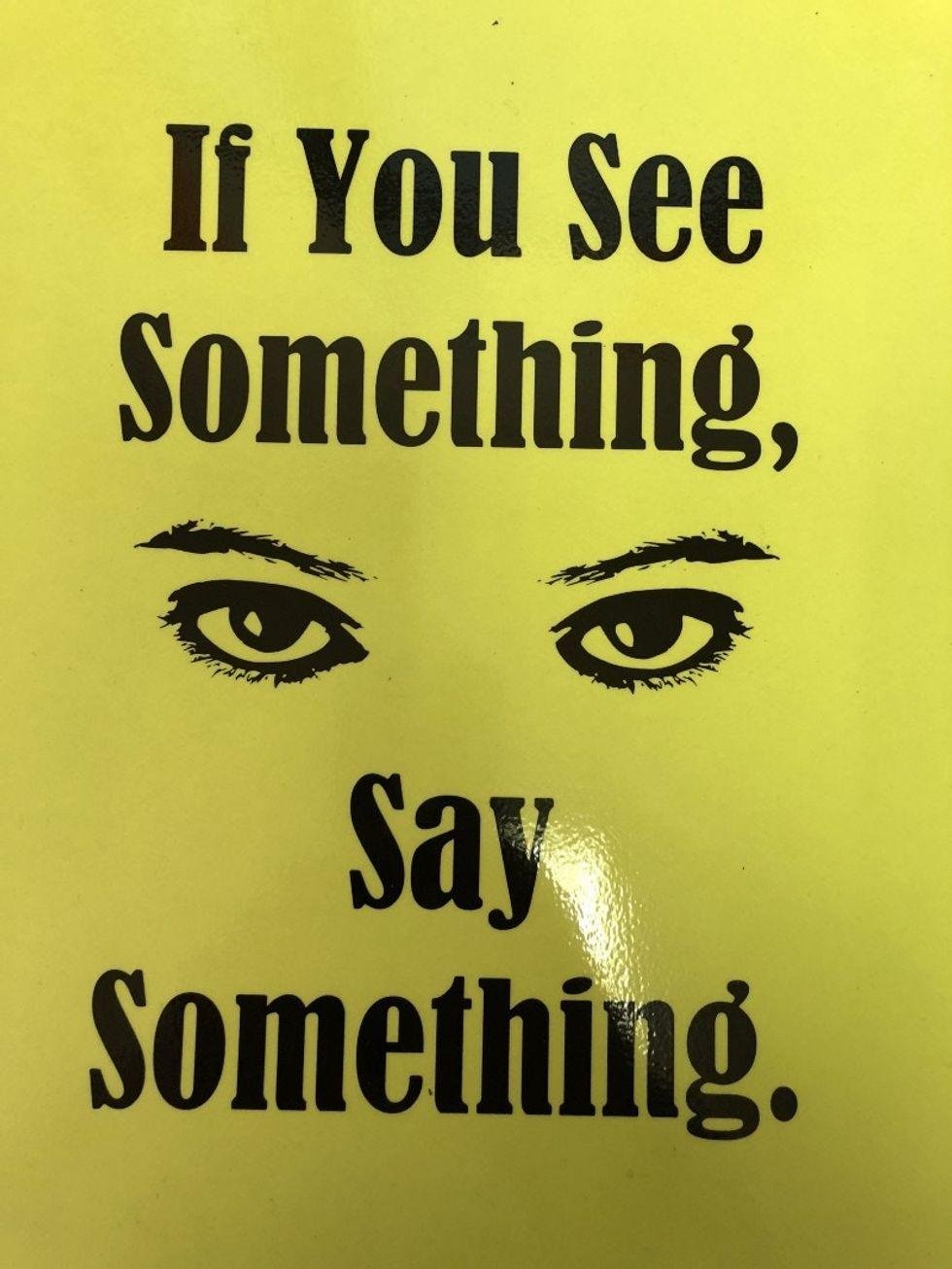
I "bribed" the president of the SGA. I "forced" him to publicly "resign." And, yet, the students did not back down. They fought even harder. They were more vigilant. They became more organized. They found a new leader. They were more than ready to fight. They knew they would win in numbers.
I ended the experiment two days earlier than I had planned because their rebellion was so strong and overwhelming. For the first time since I've done this experiment, the students "won."
What I learned is this: Teenagers will be the ones to save us.

Just like Emma Gonzalez, the teen activist from Marjory Stoneman Douglas, my students did not back down nor conform. They fought for their rights. They won.
Adults can learn a lot from the teens of this generation. Adults are complacent, jaded, and disparaged. Teenagers are ignited, spirited, and take no prisoners. Do not squander their fight. They really are our future. Do not call them entitled. That entitlement is their drive and their passion. Do not get in their way. They will crush you.
Foster their rebellion. They are our best allies.
This story originally appeared on Medium and is reprinted here with permission. It was originally published seven years ago.

- Florida student uses a clever metaphor in graduation speech to advocate for LGBTQ rights ›
- Students at BYU are protesting their school's 'honor code' as sexist, homophobic and dangerous. ›
- Students will be walking out of class on Friday to protest climate change thanks to this amazing kid. ›
- The 13 signs someone is brilliant at reading people - Upworthy ›
- Even you can read 50 books a year with these 4 proven tactics for every type of reader - Upworthy ›
- Teacher asks 7th graders about the 80s. Their answers have us howling. - Upworthy ›
- George Orwell shared '6 rules for writing' in 1946. People say they're more essential than ever. - Upworthy ›


A woman is getting angry at her coworker.via
A man with tape over his mouth.via
A husband is angry with his wife. via 
a man sitting at a desk with his head on his arms Photo by
Can a warm cup of tea help you sleep better? If you believe it, then yes. Photo by 
Three women sit on a blanket in the park. 
Two women engaging in a pleasant conversation inside a coffee shop
Two men engaging in a peaceful disagreement.
Resurfaced video of French skier's groin incident has people giving the announcer a gold medal
"The boys took a beating on that one."
Downhill skiing is a sport rife with injuries, but not usually this kind.
A good commentator can make all the difference when watching sports, even when an event goes smoothly. But it's when something goes wrong that great announcers rise to the top. There's no better example of a great announcer in a surprise moment than when French skier Yannick Bertrand took a gate to the groin in a 2007 super-G race.
Competitive skiers fly down runs at incredible speeds, often exceeding 60 mph. Hitting something hard at that speed would definitely hurt, but hitting something hard with a particularly sensitive part of your body would be excruciating. So when Bertrand slammed right into a gate family-jewels-first, his high-pitched scream was unsurprising. What was surprising was the perfect commentary that immediately followed.
This is a clip you really just have to see and hear to fully appreciate:
- YouTube youtu.be
It's unclear who the announcer is, even after multiple Google inquiries, which is unfortunate because that gentleman deserves a medal. The commentary gets better with each repeated viewing, with highlights like:
"The gate the groin for Yannick Bertrand, and you could hear it. And if you're a man, you could feel it."
"Oh, the Frenchman. Oh-ho, monsieurrrrrr."
"The boys took a beating on that one."
"That guy needs a hug."
"Those are the moments that change your life if you're a man, I tell you what."
"When you crash through a gate, when you do it at high rate of speed, it's gonna hurt and it's going to leave a mark in most cases. And in this particular case, not the area where you want to leave a mark."
Imagine watching a man take a hit to the privates at 60 mph and having to make impromptu commentary straddling the line between professionalism and acknowledging the universal reality of what just happened. There are certain things you can't say on network television that you might feel compelled to say. There's a visceral element to this scenario that could easily be taken too far in the commentary, and the inherent humor element could be seen as insensitive and offensive if not handled just right.
The announcer nailed it. 10/10. No notes.
The clip frequently resurfaces during the Winter Olympic Games, though the incident didn't happen during an Olympic event. Yannick Bertrand was competing at the FIS World Cup super-G race in Kvitfjell, Norway in 2007, when the unfortunate accident occurred. Bertrand had competed at the Turin Olympics the year before, however, coming in 24th in the downhill and super-G events.
As painful as the gate to the groin clearly as, Bertrand did not appear to suffer any damage that kept him from the sport. In fact, he continued competing in international downhill and super-G races until 2014.
According to a 2018 study, Alpine skiing is a notoriously dangerous sport with a reported injury rate of 36.7 per 100 World Cup athletes per season. Of course, it's the knees and not the coin purse that are the most common casualty of ski racing, which we saw clearly in U.S. skier Lindsey Vonn's harrowing experiences at the 2026 Olympics. Vonn was competing with a torn ACL and ended up being helicoptered off of the mountain after an ugly crash that did additional damage to her legs, requiring multiple surgeries (though what caused the crash was reportedly unrelated to her ACL tear). Still, she says she has no regrets.
As Bertrand's return to the slopes shows, the risk of injury doesn't stop those who live for the thrill of victory, even when the agony of defeat hits them right in the rocks.