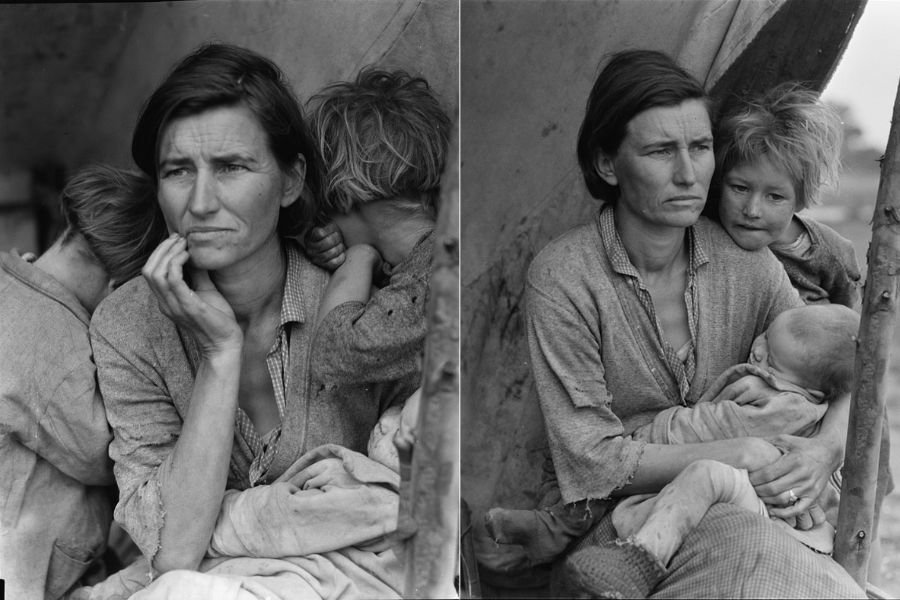
It’s one of the most iconic and haunting photos of all time, up there with the likes of Hindenburg, The Falling Soldier, Burning Monk, Napalm Girl, and many others. It’s called simply Migrant Mother, and it paints a better picture of the time in which it was taken than any book or interview possibly could.
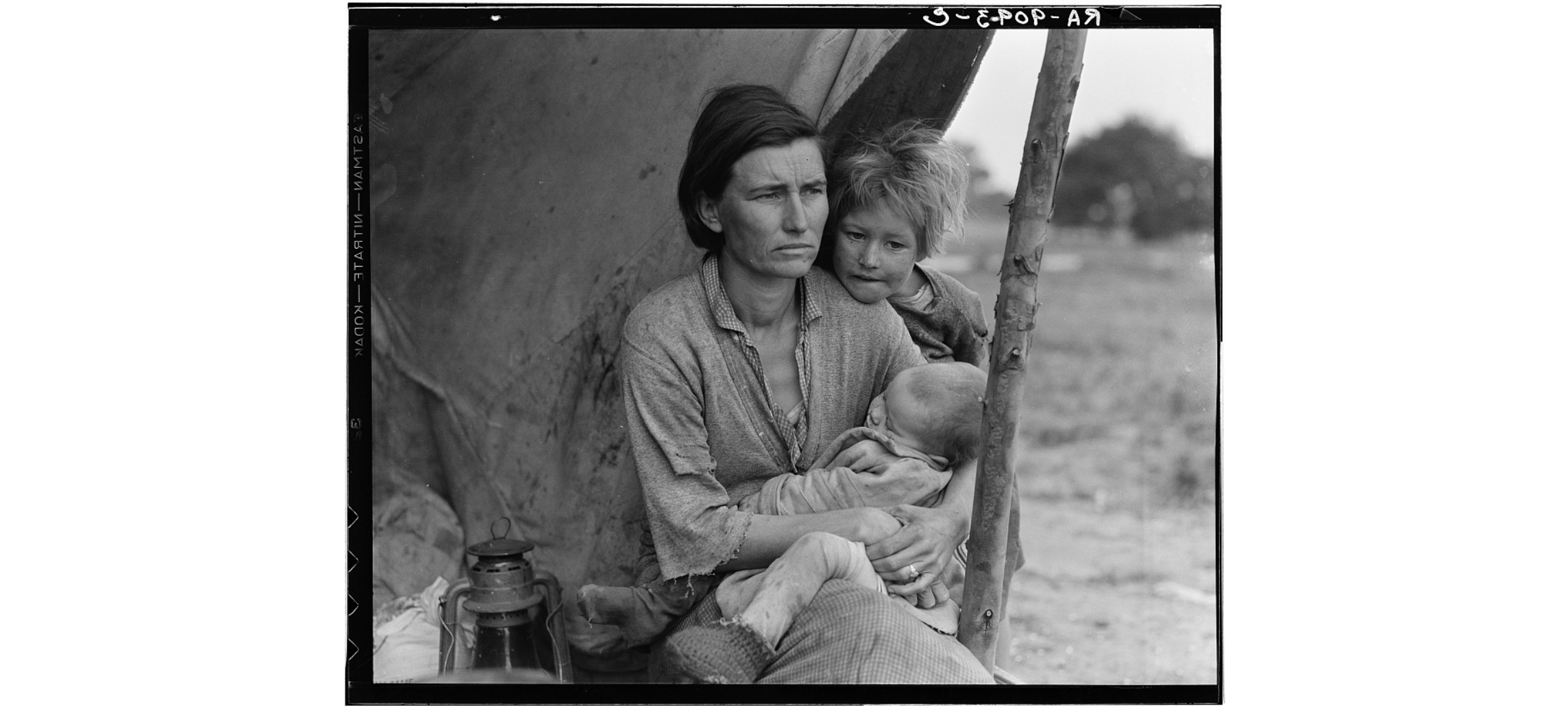
Nearly everyone across the globe knows Florence Owens Thompson’s face from newspapers, magazines, and history books. The young, destitute mother was the face of The Great Depression, her worried, suntanned face looking absolutely defeated as several of her children took comfort by resting on her thin frame. Thompson put a human face and emotion behind the very real struggle of the era, but she wasn’t even aware of her role in helping to bring awareness to the effects of the Great Depression on families.
It turns out that Dorothea Lange, the photographer responsible for capturing the worry-stricken mother in the now-famous photo, told Thompson that the photos wouldn’t be published.
Of course, they subsequently were published in the San Francisco News. At the time the photo was taken, Thompson was supposedly only taking respite at the migrant campsite with her seven children after the family car broke down near the campsite. The photo was taken in March 1936 in Nipomo, California when Lange was concluding a month’s long photography excursion documenting migrant farm labor.
“Migrant worker” was a term that meant something quite different than it does today. It was primarily used in the 30s to describe poverty-stricken Americans who moved from town to town harvesting the crops for farmers.
The pay was abysmal and not enough to sustain a family, but harvesting was what Thompson knew as she was born and raised in “Indian Territory,” (now Oklahoma) on a farm. Her father was Choctaw and her mother was white. After the death of her husband, Thompson supported her children the best way she knew how: working long hours in the field.
“I’d hit that cotton field before daylight and stay out there until it got so dark I couldn’t see,” Thompson told NBC in 1979 a few years before her death.
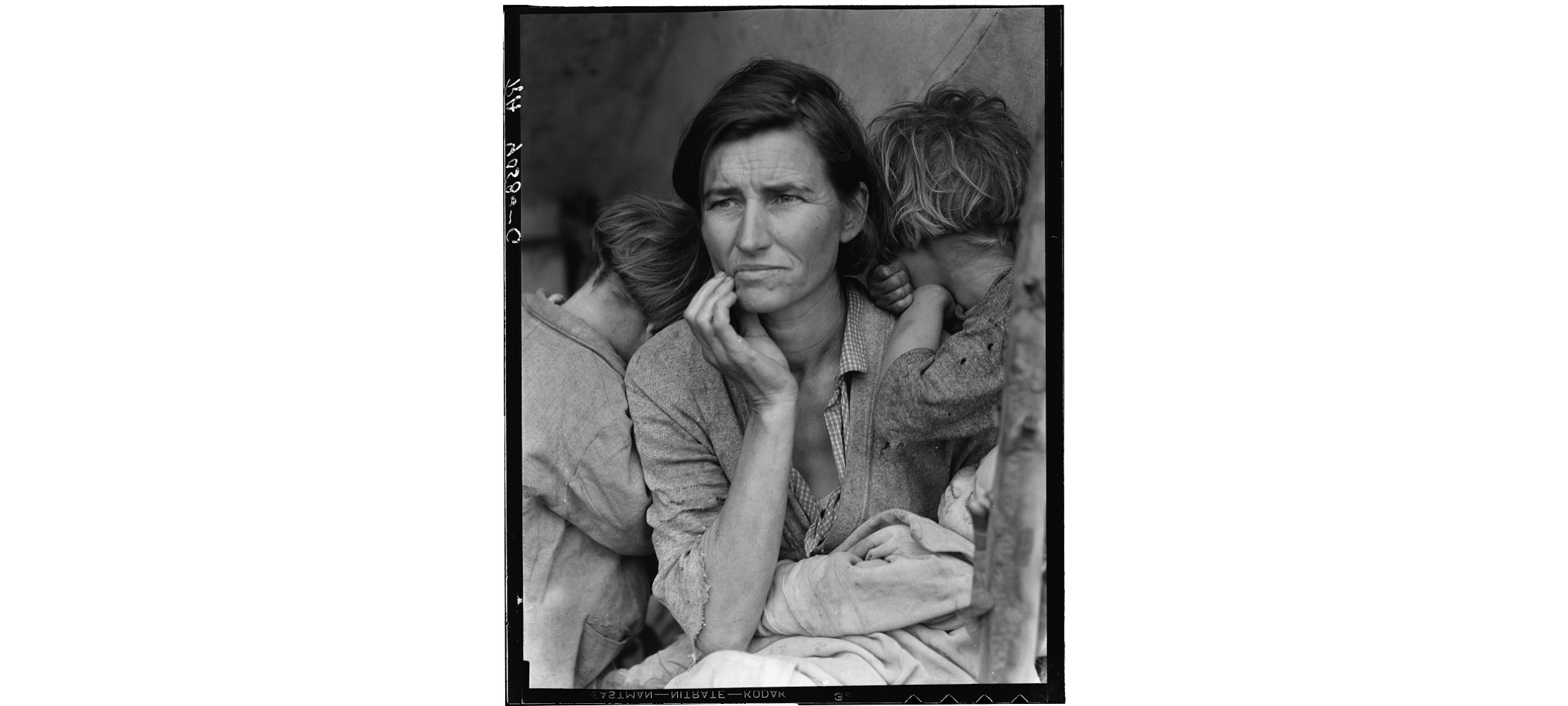
When talking about meeting Thompson, Lange wrote in her article titled “The Assignment I’ll Never Forget: Migrant Mother,” which appeared in Popular Photography, Feb. 1960, “I saw and approached the hungry and desperate mother, as if drawn by a magnet. I do not remember how I explained my presence or my camera to her, but I do remember she asked me no questions. I made five exposures, working closer and closer from the same direction. I did not ask her name or her history. She told me her age, that she was thirty-two. She said that they had been living on frozen vegetables from the surrounding fields, and birds that the children killed.”
Lange goes on to surmise that Thompson cooperated because on some level she knew the photos would help, though from Thompson’s account she had no idea the photos would make it to print. Without her knowledge, Thompson became known as “The Dustbowl Mona Lisa,” which didn’t translate into money in the poor family’s pocket.
In fact, according to a history buff who goes by @baewatch86 on TikTok, Thompson didn’t find out she was famous until 40 years later after a journalist tracked her down in 1978 to ask how she felt about being a famous face of the depression.
It turns out Thompson wished her photo had never been taken since she never received any funds for her likeness being used. Baewatch explains, “because Dorothea Lange’s work was funded by the federal government this photo was considered public domain and therefore Mrs. Florence and her family are not entitled to the royalties.”
While the photo didn’t provide direct financial compensation for Thompson, the “virality” of it helped to feed migrant farm workers. “When these photos were published, it immediately caught people’s attention. The federal government sent food and other resources to those migrant camps to help the people that were there that were starving, they needed resources and this is the catalyst. This photo was the catalyst to the government intercepting and providing aid to people,” Baewatch shares.
As for Lange, Migrant Mother was not her only influential photograph of the Great Depression. She captured many moving images of farmers who had been devastated by the Dust Bowl and were forced into a migrant lifestyle.
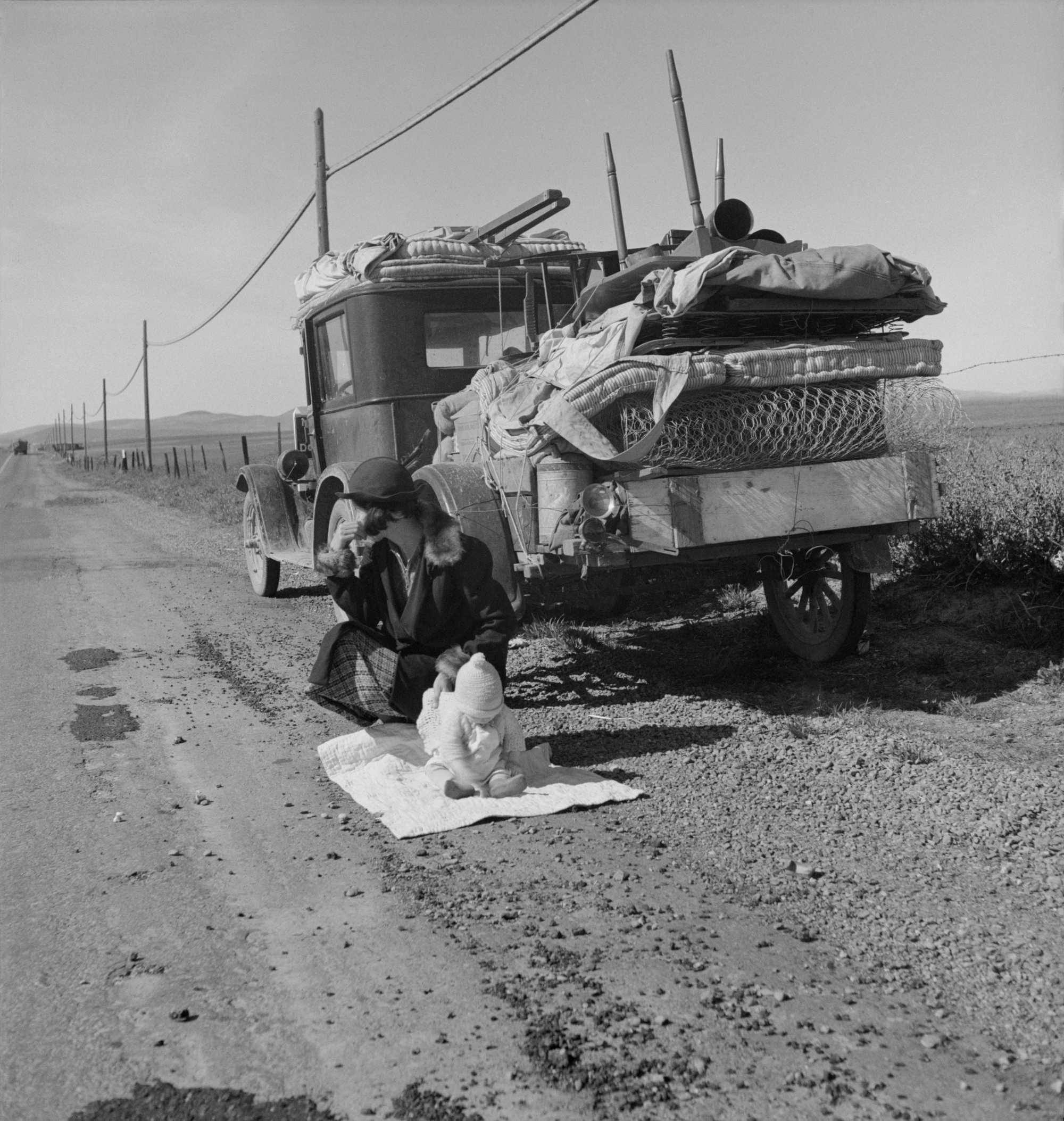
“Broke, baby sick, and car trouble!” is just one of her many incredible photos from the same year, 1937.
She also did tremendous work covering Japanese internment in the 1940s, and was eventually inducted into the International Photography Hall of Fame and Museum and the National Women’s Hall of Fame.
Thompson did find some semblance of financial comfort later in life when she married a man named George Thompson, who would be her third husband. In total, she had 10 children. When Thompson’s health declined with age, people rallied around to help pay her medical bills citing the importance of the 1936 photo in their own lives. The “Migrant Mother” passed away in 1983, just over a week after her 80th birthday. She was buried in California.
“Florence Leona Thompson, Migrant Mother. A legend of the strength of American motherhood,” her gravestone reads.