Someone asked Millennials why they always joke about dying and the answers were pretty serious

Every generation has its own sense of humor. Older generations just don’t get it and the younger ones just can’t understand it. Generation X had a love of irony. In the ’90s, they wore old T-Shirts of bands they didn’t like and laughed at obscure references in music and films. “Pulp Fiction,” anybody? Millennials are…

Array
ArrayPhoto credit: Array

Every generation has its own sense of humor. Older generations just don’t get it and the younger ones just can’t understand it.

Generation X had a love of irony. In the ’90s, they wore old T-Shirts of bands they didn’t like and laughed at obscure references in music and films. “Pulp Fiction,” anybody?

Millennials are a much more sincere group with a shared love of the absurd. Shows like “Rick and Morty” and “The Eric Andre Show” are great examples.


The Washington Post tried to address the issue in 2017 and found that Millennial humor is rooted in a sense of pointless dread.

“… that as the economic climate has delayed milestones such as marriage, kids and home ownership, and external sources of meaning such as religion have faded away, life has started to feel unpleasantly rootless, something that is being reflected in a stranger, more chaotic form of comedy.”

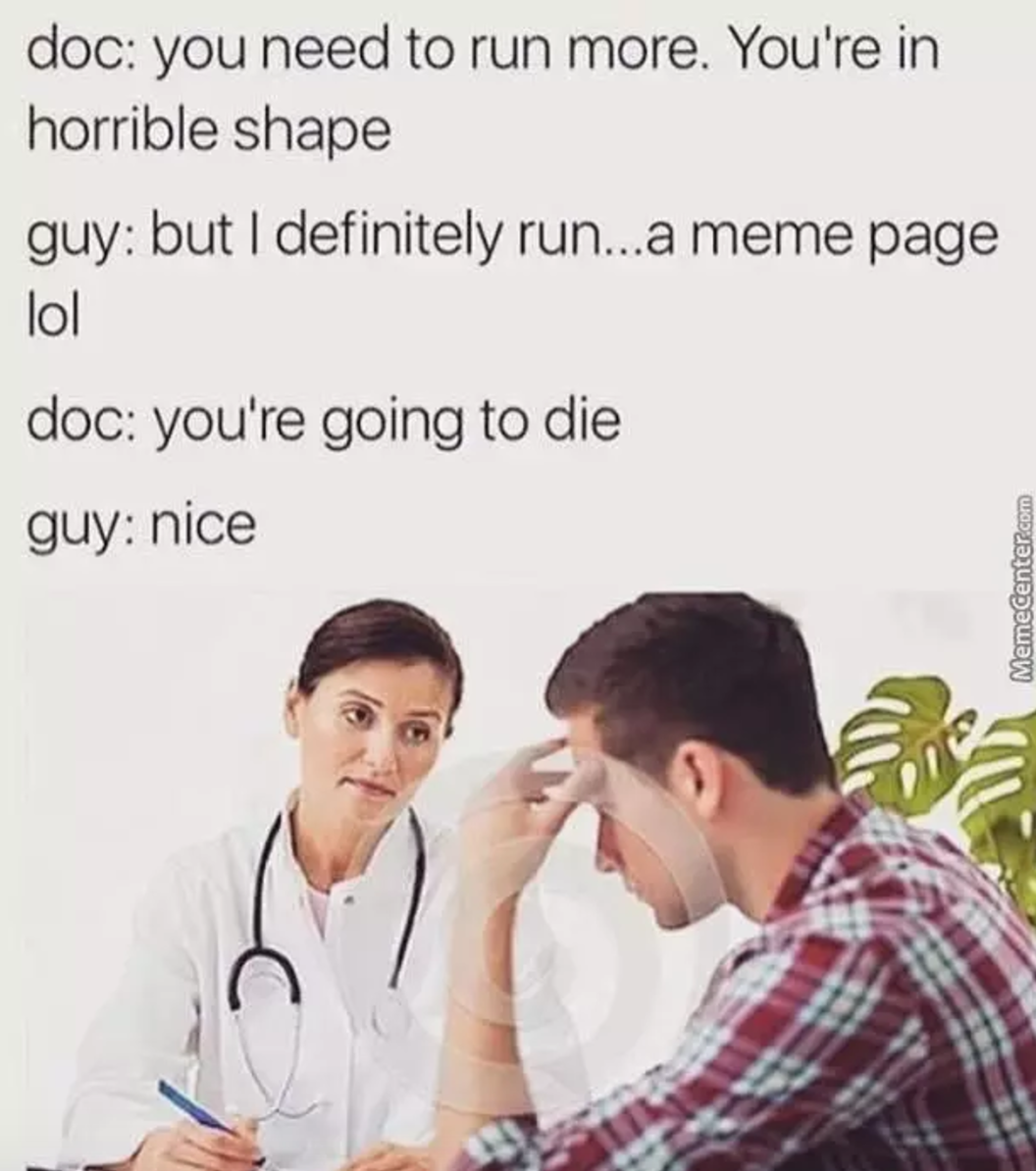
One way this is expressed is through memes where Millenials wish for their own death.

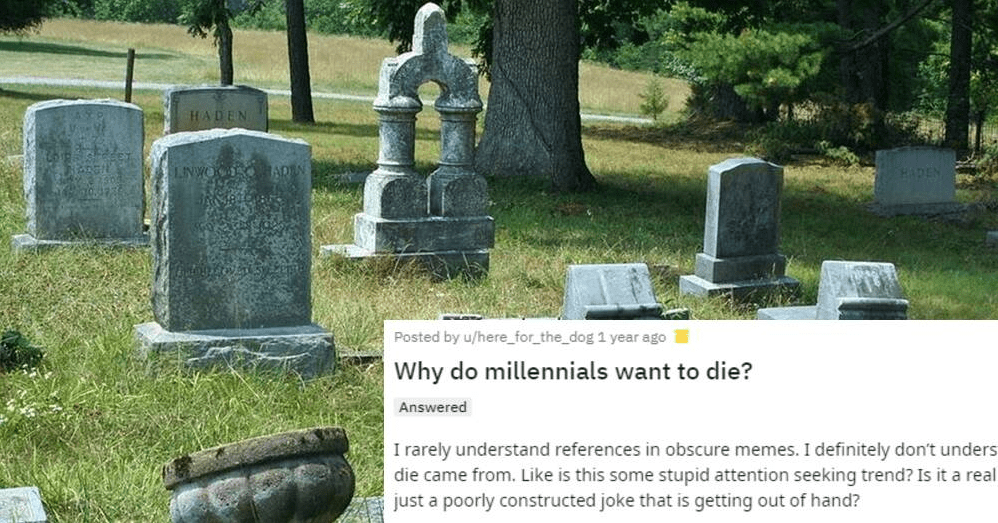
Reddit user here_for_the_dog doesn’t understand Millennial death memes so they asked the online forum r/OutOftheLoop.

“I rarely understand references in obscure memes,” they wrote. “I definitely don’t understand where all this about Millennials wanting to die came from. Like is this some stupid attention seeking trend? Is it a real issue that needs to be addressed? Or was it just a poorly constructed joke that is getting out of hand?

The responses provided a thorough explanation of why Millennials joke about awaiting the sweet embrace of death. The big takeaway is that the jokes are rooted in serious problems they deeply care about.

The first poster did a great job of encapsulating the Millennial mindset.

Humor is a great coping mechanism.

RELATED: There’s a reason most millennials can’t afford to buy a house. And it’s not avocado toast.

Economic uncertainty is a big part of it.
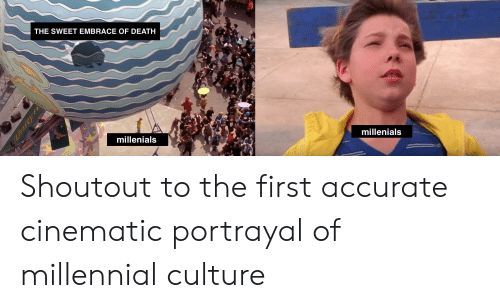
Climate change.

Burn out is a big part of it.
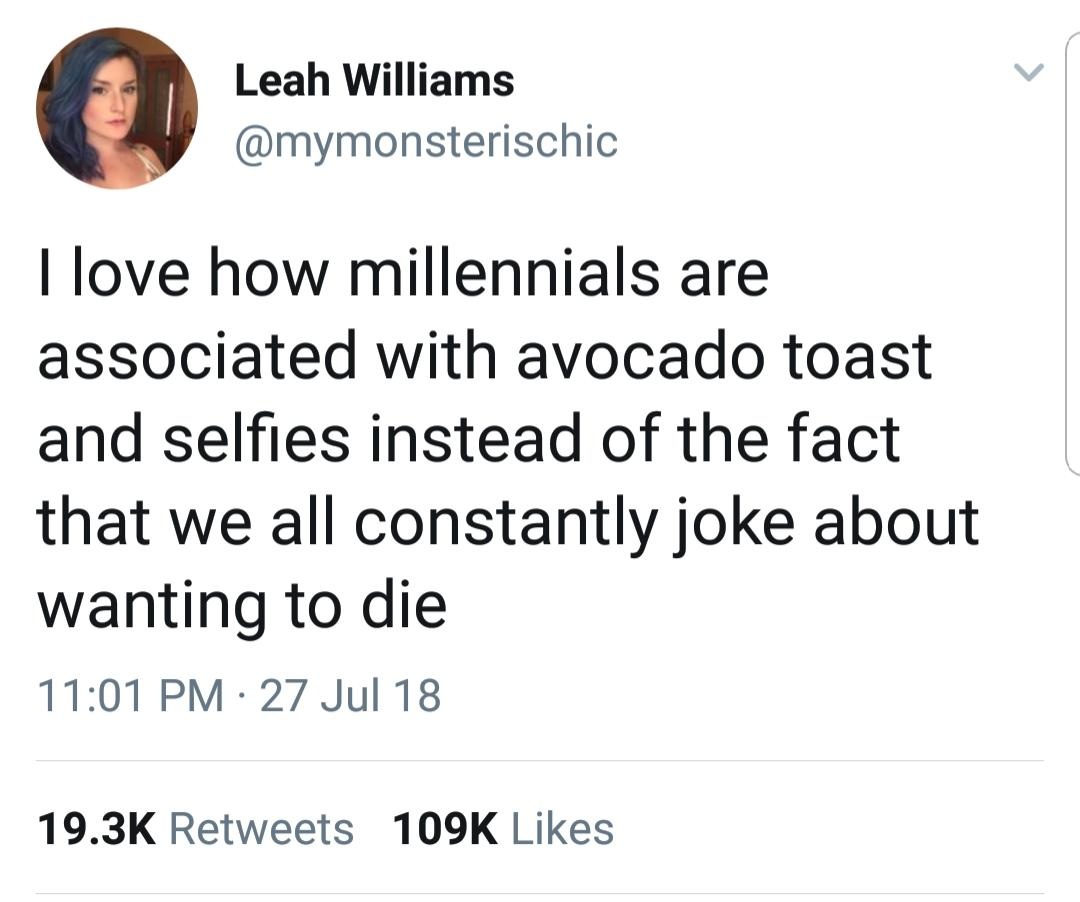
Because the 2010s suck.

It feels like something is missing.


Morrissey nailed it right on the head.
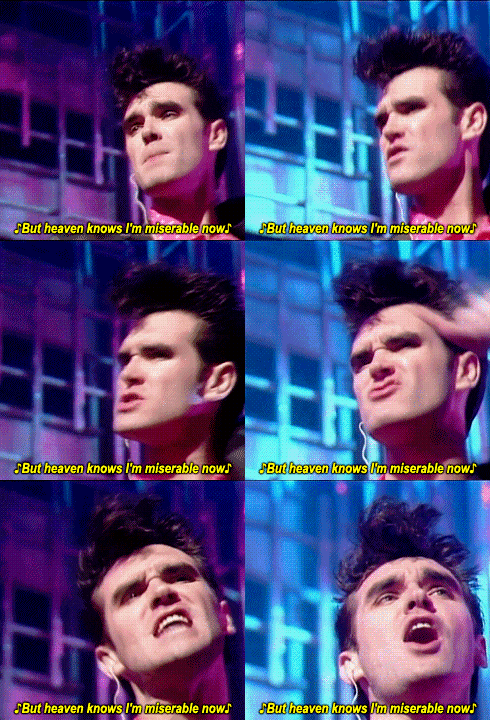
One person thought they’d share a little advice on happiness to cheer Millenials up.
RELATED: Someone asked Twitter, ‘What’s the most Gen X thing you ever did?’ and the responses were awesome

After the post went virral, the original poster responded with a sorry/not sorry.

” … mostly it sounds like a general frustration at being underprepared and then under appreciated for getting it done despite the odds and thank god for the internet because it is the only place I feel heard and understood that I can still afford to visit and vent.”

  • 17 Gen X candies kids of the ’80s are still pining for
    Gen X misses the candy they grew up with in the 1980s.Photo credit: Reddit/Longjumping-Shoe7805/welding_guy_from_LI/ajslinger

    Gen X (people born between 1965 and 1980) grew up eating some pretty incredible foods. From classic casseroles and meatloaf to old-school sandwich combos, food in the ’80s was filled with delicious staples.

    Gen X also had a major sweet tooth. In the ’80s, they were munching on unique candy from drugstores and corner shops. Many Gen Xers argue that candy in the ’80s was the best, including comedian Karen Morgan—whose bit about ’80s candy being “mean to children” resonated with Gen Xers on Reddit.

    “We had candy like Atomic Fireballs. You couldn’t eat that! It was who could leave it in your mouth the longest before you spit it out,” she quips.

    More Gen Xers shared their favorite candies from the ’80s that they miss most. Although some are still around, most don’t taste the same—and many have been discontinued.

    From sour varieties and chewy classics to chocolate bars and pure sugar treats, these are some of the best nostalgic candies Gen X hasn’t forgotten.

    Willy Wonka’s DinaSour Eggs

    “Soo many great memories seeing this box! I wish they would bring them back!!” — blue_eyed_girlie

    “I liked getting to the sour center.” — robgrab

    “Duuude remember these and loved them! There was an urban legend in my neighborhood that there was some of these that had a candy shaped dinasour inside…. Never got one! ( never made it to the cherry tree in pitfall either!) lol.” — right_bank_cafe

    Mr. Bones

    “I loved that candy!! I had so many coffins all over my room!” — FlawedWoman

    “OMG I completely forgot about this candy! We ate it to quick to make a skeleton 😂😂.” — PaleontologistSad316

    Fun Dip

    “My little brother always liked the powder better so if we both got a pack of fun dip I’d give him the powder and he’d give me the candy stick. 😆” — Happy_Leg-2063

    “The Lik-a-Stix from the Fun Dip. I just threw the powder away.” — non3ck

    “I wish they still had the lime.” — bubblehead772

    Johnny Apple Treats

    “Johnny Appletreats were my favorite😋” — Longjumping-Shoe7805

    “I’ve been looking everywhere for apple treats. They are like f*cking CRACK.” — truthteller5

    Alexander The Grape

    “Alexander!!!!!!! So good.” — cwvandalfan

    “I ate all of these but probably Alexander The Grape most of all.” — Grand_Snow_2637

    Cherry Clan

    “I really loved the cherry clan!!!!” — McKitNassty

    “Cherry Clan were the best. 🍒” — Krystalmyth

    Marathon

    “This is THE answer. I sure miss them.” — Beanholiostyle

    “I both loved these and forgot about them. Now I have a craving for one.” —Ok_Experience_8194

    “Marathon Bar (stealer of fillings).” — JCo1968

    Tangy Taffy

    “Best part was freezing them, then you could bang them on a table and they would shatter then you had little pieces of them to eat.” — Chewcudda42

    “Tangy Taffy. So much better than Laffy Taffy IMO.” — User Unknown

    Reggie!

    “Ooh, those were so good…like an oversized chocolate turtle, but more savory.” — throw123454321purple

    “They were awesome. Pretty much was just a round Baby Ruth but sooooo good.” — jmf0828

    @hellosweetscandy

    Replying to @Delia’s Nail Studio LLC Lets take a look at some candy that was popular in the 1980s! #hellosweetscandy #candyshop #candystore #candy #nostalgia #nostalgic #retro #1980s #wny #smallbusiness

    ♬ 80’s nostalgic synth pop(1140622) – Studio Bach

    Willy Wonka’s Oompas

    “Oompa’s by Willy Wonka. Ginormous half chocolate half peanut butter M&M’s…….” — Ledophile

    “Peanut Butter Oompas… they were similar to peanut butter M&Ms, but tasted better.” — Interesting-Night740

    BarNone

    “Bar None. Like a cross between a Twix and KitKat.” — Katriina_B

    Milk Shake

    “There used to be a candy bar called Milkshake. They at I remember it would have been slightly between an Uno Bar and a Three Musketeers. It has a taste of a chocolate malted milkshake. They were delicious but did not last long that I remember.” — Salt_Ingenuity_720

    PB Max

    “I swear when I talk to my kids about the PB max, I feel like one of those old cartoons where you’re saying ‘back in my day’ 😂 by far the best peanut butter candy bar ever.” — New-Car-3759

    “These are discontinued but they were so good! Well my young mind used to think they were good lol.” — Pink_Pixie00

    Atomic FireBall

    “Atomic Fireballs, I used to love those things!” — AzureGriffon

    “When I quit smoking, I used these to get through it. Then I had an Atomic Fireball addiction. Thankfully, that was a much easier habit to break.” — ThresherGDI

    Whatchamacallit

    “Whatchamacallits are my favorite candy bar, hands down. They are definitely different size wise and also the taste, but they are still pretty good. Rarely do things stay the same, but it’s especially bad when it’s your favorite candy.” — yellow_forsythia

    “When Whatchamacallit first came out, it was a bar of crispy rice covered in chocolate. I LOVED it. Then they decided to ‘improve’ it by adding caramel. I didn’t like it as much anymore, but still bought it because it was still a good candy bar.” — Alman54

    “🎶Whatchoo say? Whatchamacallit! 🎶 Can still remember the song from the commercial.” — demonOS_

    Skor

    “I had a Skor bar the other day and it just hit SO right.” — Luvsseattle

    “Skor. I remember when those things came out that they positioned them as upscale candy bars. My great-grandmother loved them because they made her feel fancy.” — jimb575

    Oh Henry!

    “This was one of my favs in 5th grade going to the candy store after school.” — banana_fana_1234

    “Oh, made my mouth water I miss those😧.” — Wuddlecat

  • Romeo is ‘cringe’: English teacher shares what Gen Z thinks about ‘Romeo & Juliet’
    A high school teacher shares the unhinged things her students have said about 'Romeo & Juliet.'Photo credit: @miss.dugan1/Instagram

    Shakespeare is a staple of any high school English curriculum. Yet, getting young folks to actually understand, let alone appreciate, the Good Bard’s work has always been a bit of a challenge. Unless you’re teaching it to a room full of theatre kids, that is.

    Recently, a high school teacher named Molly Dugan shared some of her current students’ reactions to one of Shakespeare’s most notable works, Romeo & Juliet. Spoiler alert: they weren’t fans. Nonetheless, their remarks were comedy gold.

    High schoolers react to Romeo & Juliet

    Some of the comments reflected the same counterpoints many younger generations have had about well-received works of yesteryear (looking at you, ’90s rom-coms).

    For instance, one student said, “Romeo is hella cringe, get him off my screen.”

    Meanwhile, two other students accused him of being a “hella stalker” with “bad rizz” who just “wants the huzz,” a.k.a. a girl, a woman, or, to really make it feel dated, a “boo.”

    Folks in the comments didn’t really disagree with these points. 

    “‘Bro’s a hella stalker’ oddly accurate take😂,” one viewer wrote. 

    Another echoed, “Bro actually was a hella stalker and arguably was hella cringe.”

    Another teacher even shared, “Directed it last year. Best response: ‘where are their parents?!’”

    Distinct brand of savage high school sarcasm on full display

    “Oh, so you actually hate us,” one student said, apparently after Dugan asked the class to get their notebooks out.

    Another delivered a rather low blow, saying, “We don’t need subtitles. We’re not old.”

    But then some genuinely baffling questions left many wondering if this generation is, in fact, “cooked”:

    “Was there time back then? Like, did it exist when Romeo and Juliet were alive?”

    “Is Shakespeare a real person? Because I thought he was one of those Greek gods. So I’ve been confused.” 

    Woof. That’s…something.

    Apparently, a few other teachers have had very similar experiences

    “One year I got ‘What’s Shakespeare’s last name?’” one commented. 

    Another shared, “At the beginning of teaching the Anne Frank unit, I asked my 8th graders what they knew about her…’Isn’t she a rap star?’ 😳”

    Who knows—perhaps the kiddos would have appreciated this Gen Z–ified version of Romeo & Juliet

    Shakespeare’s work has always been a bit of a hurdle for students

    His plays were written more than 400 years ago, after all, and can sometimes feel as though they’re in an entirely different language. On top of that, Shakespeare wrote in verse, using rhythm and poetic devices that were meant to be heard onstage rather than quietly analyzed in a classroom. When those lines are lifted from the stage and dropped into a worksheet or textbook, it can take a lot more effort for students to connect with what’s actually happening in the story.

    Cultural references can also add another layer of confusion. Jokes, social norms, and expectations around love, family, and marriage were very different in Elizabethan England than they are today. Without that context, characters’ actions can seem strange, exaggerated, or downright problematic to modern readers.

    That’s part of what makes teaching Shakespeare such a unique challenge. Teachers often have to act as translators, guiding students through unfamiliar vocabulary and historical context while also trying to reveal the very human stories beneath it all.

    Once you get past the old-fashioned phrasing, the themes are surprisingly relatable

    Romeo & Juliet is about power dynamics, rivalry, and impulsive decisions that spiral out of control (and love, I guess). Those ideas are still easy to recognize, even if the characters express them in dramatically poetic language. It’s what gives Shakespeare such staying power and explains why he continues to show up in classrooms century after century, much to the bemoaning of high schoolers.

  • A new hopeful payphone project invites ‘Boomers’ and ‘Zoomers’ to connect one conversation at a time
    A social experiment connects Boomers and Zoomers through payphones.Photo credit: Matter Neuroscience/Instagram

    Imagine you’re young and strolling through a university campus, wishing you could randomly chat with someone much older. Perhaps you’re looking for a bit of wisdom. Or maybe you simply wish to talk to a Baby Boomer, like a parent or grandparent. If you’re on the Boston University campus near Pavement Coffeehouse, this wish could become a reality.

    The folks at Matter Neuroscience have created another social experiment in which they set up what look like payphones in two locations. One, outside a building on the BU campus, says “Call a Boomer.” The other is in the game room of a senior housing complex in Reno, Nevada. That one has a sign suggesting someone “Call a Zoomer.” The hope? That two generations can connect, have a lovely conversation, and spark a little dopamine in their day.

    Loneliness matters

    On the Matter Neuroscience Instagram page, they share the statistic that younger and older adults often suffer from loneliness: “Younger adults and older adults tend to experience the highest levels of loneliness of any age group, so the goal of this project is to inspire generational connection through meaningful conversations, despite differences in age, lifestyle, or politics.”

    They report that statistically, “over a third of people over 65 report being lonely. And over half of the students in college report being lonely.” They go on to note that loneliness can be more detrimental to one’s health than lack of exercise or even smoking cigarettes.

    Loneliness demographics in America. Photo credit: Matter Neuroscience

    A new idea

    Upworthy spoke with Calla Kessler, a social strategist at Matter Neuroscience, who explained the process:

    “The boomer/zoomer payphones are the second iteration of our Party Line experiment, which originally included in San Francisco and Abilene, Texas, encouraging Democrats and Republicans to find common ground and walk away with a positive interaction.”

    Kessler is referring to a project that Upworthy covered a little over a month ago. In that project, the team set up two makeshift “payphones” in Texas and California. The idea was for people on the left and right sides of the political aisle to connect without all the extraneous noise.

    Ben Goldhirsh, one of the co-founders of Matter Neuroscience (alongside neuroscientist Axel Bouchon), reported that after reviewing hours of footage, people were looking to connect on a human level 100% of the time. No arguments—just two people laughing while sharing a brief moment of their lives with a total stranger.

    Kessler said the success of the project inspired them to think about other demographics that would benefit from connection:

    “We landed on two groups that research shows experience some of the highest levels of loneliness: younger adults and older adults. The purpose of these projects is to share the science of happiness and help people live emotionally and molecularly balanced lives.”

    She reiterated how dangerous chronic loneliness can be:

    “Loneliness has been linked to health risks comparable to smoking, excessive drinking, and lack of exercise. Positive social interactions can influence our biology in the opposite direction, lowering cortisol while increasing feel-good neurotransmitters like dopamine, cannabinoids, and oxytocin.”

    How it works

    For those wondering how the payphones work, they were bought on Facebook Marketplace. They were then deconstructed so modems with SIM cards could be placed inside, making it possible to make toll-free calls.

    While they’re waiting for the results (the phones were just recently installed), people in the comment section were already excited. At the mere mention of the idea, thousands chimed in to add their two cents. One wrote, “This is so great! Can we make pen pals cool again?”

    Another noted that although they don’t fall into either generation, they’d love to take part as well: “I’m not old. I’m not young. But if that phone were in my vicinity, I would be calling someone every day.”

  • In 1893, a popular magazine predicted how fashion would change over the next 100 years. It is wild.
    Imagined outfits of the 1980s by a man in 1893.Photo credit: Public Domain

    If we look back over the last 100 years of fashion, we can see how much has changed. The 1920s were famous for loose, square-cut flapper dresses and pinstripe suits with wide-legged trousers. The ’50s saw fitted shirts, poodle skirts, and the “greaser” in his jeans, T-shirt, and leather jacket. The ’70s brought us bell-bottoms. The ’80s lit up with neon, and the ’90s grunge craze had us all in flannels.

    Just hold those images in your mind real quick as we make our way back to the 1890s. Victorian-era fashion was marked by corsets, bell-shaped skirts, and three-piece suits. Against that backdrop, in 1893, The Strand Magazine published predictions of what people would wear in the coming century. And, well, you just have to see it.

    The magazine feature by W. Cade Gall was called “Future Dictates of Fashion.” Gall framed his piece as a fictional story about an old man mysteriously finding a book published in 1993 called The Past Dictates of Fashion.

    Fashion, according to the made-up 1993 author of the made-up book, was governed by “immutable laws.” But according to Gall, those laws were unknown in 1893, when people thought of fashion as “a whim.” By the 1940s, however, fashion would assume “the dignity of a science.” It would even be taught in universities from the 1950s onward.

    Whatever those immutable laws of fashion were supposed to be, they must have been wild to explain the hilariously wrong predictions of what people would wear in the 20th century.

    You still have those 1920s fashion images in your head, right? Compare them to these drawings:

    Sketches of imaginary outfits from 1922, 1926, and 1929
    The 1920s predictions were a far cry from the roaring ’20s. Photo credit: Public domain

    To add to the hilarity, here’s the commentary on the skirt length in the first drawing:

    “The skirt, it is true, is short enough to alarm prim contemporary dames, and it is scarcely less assuring to find in the whole of the remaining plates only three periods when it seems to have got longer.”

    Imagine if they’d seen the knee-length flapper dresses of the actual 1920s, followed by the miniskirts of the ’60s. The sheer horror.

    The style sketches for each decade provide laugh after laugh. What in the Shakespearean Strawberry Shortcake–Bo Peep is happening here in the 1930s?

    Sketches of imaginary outfits from the 1930s
    There’s a lot going on here, and none of it looks like the actual 1930s. Photo credit: Public domain

    The 1950s weren’t much better. Apparently, there was a trend toward a court-jester look in the mid-’50s?

    Sketches of imaginary outfits from the 1950s
    The 1950s: Puritan clowns or Shakespearean court jesters? Photo credit: Public domain

    The ’70s got a couple of things closer-ish to reality, kind of. Those collars could hint at butterfly collars, perhaps? And that 1978 outfit almost looks like bell-bottoms. Can we imagine people showing up to the disco in these digs?

    Sketches of imaginary outfits from the 1970s
    At least the 1970s had bell-bottoms, sort of. Photo credit: Public domain

    How about the ’80s? Do we see acid-washed jeans? Parachute pants? A preppy sweater tied around the shoulders, perhaps? Mmm, not exactly. More like The Wizard of Oz meets Alice in Wonderland.

    Sketches of imaginary outfits from the 1980s
    Imagined outfits of the 1980s by a man in 1893.Photo credit: Public Domain

    If you look at what models wear on haute couture runways, you might see clothing that aligns somewhat with these sketches. But we certainly don’t see it in the daily wear of ordinary people.

    Imagine showing the folks in 1893 today’s kids in hoodies and jeans. Or moms in yoga pants and cropped tees. It would blow their Victorian minds.

    Of course, no one can predict the future, and Mr. Gall in 1893 didn’t have the benefit of seeing the drastic shifts in clothing that we’ve witnessed over the past several generations. It’s hard to look outside of our own experience and timeline and imagine something totally different. Could we predict the next century of fashion? Would we even dare to try?

    Perhaps someone should, if only to provide some chuckles to our descendants 100 years from now.

  • Dedicated teacher gave his student $500 for a trip to Uganda. She showed up years later with a surprise.
    A teacher leads a discussion with students in class.Photo credit: Canva
    ,

    Dedicated teacher gave his student $500 for a trip to Uganda. She showed up years later with a surprise.

    “And now I’m crying…Thank you for being the embodiment of infinite possibilities.”

    A teacher can alter the course of someone’s life and never get a chance to see the results. Ron Clark is one of those life-changing teachers. In fact, many people may already be familiar with him from the 2006 movie The Ron Clark Story, starring Matthew Perry.

    Clark is still using his gifts to educate students in the classroom and entertain adults on social media. Recently, the founder of the Ron Clark Academy shared a heartwarming update about his former student, Alizè Garcia. In a video posted to Instagram, Clark recounted the story of taking Garcia and her classmates to South Africa.

    Ron Clark, Ron Clark Academy, teachers, wholesome, full circle moments
    Students working at a desk. Photo credit: Canva

    “After my students and I raised money to go to South Africa, where we had the surprising encounter with Nelson Mandela, we come back home and I get a phone call from Alizè,” Clark said.

    It turns out the then-teen shared her excitement about her experience in South Africa with her friends. Instead of being content with Clark simply mailing her photos, Garcia had bigger dreams. She wanted to find a way to return to Africa with her friends. Clark encouraged her to fundraise for the trip and provided $500 in seed money.

    She raised the rest of the money and took her classmates to Uganda, but that’s not where the story ends. Garcia is now an adult. The original trip took place before social media and smartphones, but years later, Garcia found Clark.

    Ron Clark, Ron Clark Academy, teachers, wholesome, full circle moments
    A student smiling at his work. Photo credit: Canva

    The Ron Clark Academy is a nonprofit that requires a lot of fundraising to stay open. Clark received a call from Nike saying the company’s director of social and community impact wanted to send a team to the school.

    “I’m like, ‘say less, come on,’” Clark shared. “We roll out the red carpet. We give a tour of the school. All the members of Nike, they watch us teach in our classes. They meet all the kids. Then we sit down to have lunch, and the Zoom comes up with the new director of social and community impact for Nike, and I hear, ‘Heeeey Mr. Claaark.’”

    It was his former student Alizè Garcia. Clark was shocked to see her familiar face pop onto the computer screen.

    He explained, “She said, ‘You took me to South Africa. It changed my life. You showed me what it means to give back, to open yourself up to the world. You then sent me $500 so I could take students.’ She said, ‘I’ve been working in philanthropy and giving back ever since, and now I’ve worked my way up.’”

    Since that encounter, the pair has worked together to host STEM camps for kids in Atlanta. He shared how proud he is of her, and his video made his former student emotional.

    Ron Clark, Ron Clark Academy, teachers, wholesome, full circle moments
    A teacher helping her students. Photo credit: Canva

    Garcia wrote in the video’s comments:

    “And now I’m crying. That trip to Uganda was so special because we did it on our own. Truly, this is the least I can do. You poured your heart into us and made sure we understood the importance of dreaming big—and being relentless about going after those dreams. I believed you because I watched you do it for yourself. Thank you for being the embodiment of infinite possibilities.”

    Others were also moved by the story, with one person saying, “I love these types of full circle moments with former students. It’s like a pat on the back for being a great teacher.”

    Ron Clark, Ron Clark Academy, teachers, wholesome, full circle moments
    An empty classroom. Photo credit: Canva

    Another shared, “These stories are what make education worth it. I can only hope that as a school counselor i make a positive lasting impression on at least one student. This story had my phone getting blurry. Such a full circle moment. Congrats to Alizé and you.”

    “YOURE GONNA MAKE ME CRY! What a beautiful full circle moment!!!!” someone else wrote.

    “I’m usually laughing out loud for your posts, but this one had me in full on tears,” a fellow teacher shared. “As a retired elementary music teacher, I always hope my students are out making a positive mark in the world and achieving their dreams. Congratulations to her and to you, her beloved teacher!!”

  • Man who raised and released an orphaned otter films her swimming to his kayak for cuddles
    Leya comes up to Mats Janzon on his kayak for cuddles. Photo credit: Courtesy of Mats Janzon /TikTok

    When Mats Janzon found Leya, she was just a tiny baby curled up alone in the grass near his home in Sweden. Janzon was out on a quiet walk in the woods when he heard a soft peeping sound and saw it was a baby otter. He kept his distance for several hours, hoping her mother would return. When no one came, he searched the area and found that her mother had been killed on a major road nearby. Leya appeared to be starving and barely breathing, and he knew she wouldn’t make it without help.

    Janzon had volunteered with animal rescues while working as a pilot in Cyprus, but after moving back to Sweden several years ago, he felt a pull to leave his job and spend more time in nature. “This shift led me to focus on helping wildlife,” Janzon tells Upworthy. “I’ve cared for various animals, mostly birds, that seemed to find me. Huginn, a crow I rescued, stayed with me for three years before he was ready to join his own flock in the wild.”

    However, Janzon had never raised an otter before and didn’t know what to do. He was scared, as Leya needed care around the clock, but she began to thrive and quickly bonded with him. She would cry when he left the room and curl up in his lap to feel safe.

    “The first time she let me pet her, I remember thinking this can’t be real,” Janzon told the TikTok account SoulPaws Tails. “It felt like a dream, this wild, free otter choosing to trust me.”

    Still, Janzon kept second-guessing himself, wondering if he was doing the right thing. Otters are wild animals, and he knew Leya couldn’t stay indoors forever. So, starting with a plastic kiddie pool in the backyard, Janzon helped Leya learn to swim. She was awkward in the water at first, but little by little, day by day, she grew more confident.

    @matsjanzon

    Two years ago, our sweet otter pup Leya took her very first splash in a cozy baby pool, a moment that still melts our hearts! At just a few weeks old, tiny Leya was all curiosity and wobbly paws as she explored the shallow water filled with colorful floating toys. ?✨ Her first cautious pats at the surface turned into excited splashes as she chased the toys. Watching her dive and twirl, already showing off her natural otter grace, was pure magic. Now, at 2 years old, Leya’s likely out in the wild, thriving and possibly finding a safe territory for her own pups. ? We’re so proud of the strong, playful otter she’s become, and we’ll always cherish those early days of her splashing adventures in that little pool. ? Here’s to Leya, ruling the rivers and raising her own little swimmers! ?? #Throwback #FirstSwim #OtterMemories #WildAndFree #fyp #foryourpage

    ♬ The Moment of Love – Seok Jeong Ran

    Leya followed Janzon everywhere. Soon she became part of the family, which included another rescued crow and a cat. The animals would play hide and seek, chasing one another around the bushes. Janzon says it was like something out of a children’s storybook.

    Once Leya was totally comfortable in the water, he took her down to the lake. She looked up at Janzon as if to ask, “What now?” He nodded at her, and she jumped into the water. He realized that in some way he’d become a father to her.

    “I named Leya while sitting with her on my lap, gazing out over the lake in a near-meditative state,” Janzon tells Upworthy. “I quietly asked her, ‘Who are you? What should I call you?’ The name Leya popped into my mind, and when I said it aloud, she instantly looked up at me. That’s when I knew it was the name meant for her.”

    But as Leya grew, so did her wild instincts. She began to wander farther and stay out longer, and Janzon knew it was time to let her go. He describes it as “a strange kind of love—part pride, part heartbreak” but she started living the life she was meant to live.

    @soulpaws_tails

    This Otter Hope Into My Kayak Every Morning Just To Say “Hello”. Beautiful And Heartwarming Story of Leya The Otter #animals #animalsoftiktok #tiktok #otter #tiktok

    ♬ original sound – SoulPaws Tails

    “Leya is an old soul, brimming with energy and positivity, always finding opportunities in everything,” Janzon says. “Nothing seems impossible for her. She’s been a true inspiration and a dear friend during my transition from a conventional career to a life focused on something greater, not just working to pay bills, but making a difference by helping all living beings in our community.”

    At some point, Leya started staying away for days at a time. But even then, when Janzon was out for a morning kayak ride on the lake, he’d see her nose pop out of the water and start moving towards him. Leya knew he was there and would swim up and climb into the kayak for cuddles and a ride.

    Sometimes she’d even bring a snack with her:

    And sometimes she’d return after nearly a week away for a little snuggle time:

    People love seeing Leya’s bond with her human and Janzon’s peaceful videos that seem like something out of a dream:

    “Sorry, which fantasy world is this and can I have the Google maps link to get there?”

    “I wish the world could be like this.”

    “She’s your significant otter.

    “You are so lucky to be friends with a cute otter who also gets to live her own life. She chooses to be with you.

    “She’s just living her best life and I think you are too – good luck to you and enjoy it.

    otter, leya the otter, otter rescue, mats janzon, tame otter
    Leya and Mats hanging out in his kayak. Courtesy of Mats Janzon

    Mats says Leya is officially living her wild life now.

    “I last saw Leya at the end of May,” Janzon tells Upworthy. “Initially, we thought she’d find her own territory before winter, but after several long trips, she chose to stay under the house while the lake was frozen. When spring arrived, she resumed her search, staying away for up to 10 days before returning for brief visits, lasting a few hours to a day. Her last visit was unusually long, over a week. I suspect she may have been pregnant, eating heartily to prepare for a longer stay in a new territory farther away.”

    Janzon wants people to know that as much as he loves Leya, she’s not a pet. “When an animal trusts you, it creates a bond deeper than words can explain,” he told SoulPaws Tails. “If you’re thinking of adopting or rescuing an animal, especially a wild one, please do it with your whole heart and full responsibility. Do your homework, talk to professionals, ask questions, learn everything you can about animals like Leya. They aren’t pets. They’re living, feeling souls that deserve to be loved and respected for who they are.”

    You can follow Mats Janzon and see more videos of Leya on TikTok.

    This article originally appeared last year. It has been updated.

  • Chinese teacher shares 18 American names with delightfully awkward meanings in Mandarin
    Some American names sound really funny to Mandarin speakers.Photo credit: Canva

    When you see a list of the year’s most popular baby names, what you’re really looking at are the most common baby names in a specific country or culture. If you live in the U.S., you likely know a whole lot of kids named Olivia, Emma, Liam, and Noah, but if you live in Thailand or Kyrgyzstan or Botswana, you probably don’t.

    Simply saying common names in different countries can sometimes result in hilarity. A name that sounds beautiful and has a lovely meaning in one language might sound odd and mean something very different in another. For instance, Odd is a common name in Norway, but it sounds…well, odd to and English ear. The former president of Vietnam had the last name Phuc, which surely led to some awkward moments for Americans who had to address “President Phuc.” (The “u” is pronounced more like the “oo” sound, but if you’d never heard it said, you wouldn’t know.)

    Chinese language and culture instructor Dr. Candise Lin is sharing American names that sound funny to Mandarin speakers because of what they mean when pronounced with Chinese phonetics, and it’s a hoot.


    1. Robin (pronounced Luo ben) = Running Naked

    2. Robinson (pronounced Luo ben shen) = God of Running Naked

    3. Nelson (pronounced Niao shen) = God of Pee

    4. Benson (pronounced Ben shen) = God of Dumb

    5. Mason (pronounced Mei shen) = God of Beauty

    6. Nicholas (pronounced Ni kou si le) = You Are So Stingy

    nicholas cage, names, surprised, language, translations
    Surprised Nicolas Cage GIF Giphy

    7. Isabella (pronounced Yi sheng bei la) = The Doctor Got Arrested

    8. Dylan (pronounced Di neng) = Low IQ

    9. Nancy (pronounced Nan si) = Difficult to Die

    10. Robert (pronounced Luo bo) = Carrot

    11. Ashley (pronounced Ao si ni) = Wear You Down to Death

    12. Logan (pronounced Nao geng) = Brain Stroke

    13. Tiffany (pronounced Ti fa ni) = Kick Your Ass

    tiffany, names, translations, chinese, mandarin

    Tiffany Darwish GIF by New Kids On The Block Giphy

    14. Martha (pronounced Ma hua) = Fried Dough Twist

    15. Jeff (pronounced Jie fu) = Brother-in-law

    16. Daniel (pronounced Da niu) = Big Shot

    17. Gordon (pronounced Gou dan) = Dog Balls

    18. Melanie (pronounce Mei ren li) = Nobody Cares

    A few of these names actually seem pretty rockstar in Mandarin. Mason as “God of Beauty’? Nothing wrong with that. Nancy being “Difficult to Die?” Heck yeah. But some are particularly unfortunate. God of Pee? Yeesh. Low IQ? Ouch.

    Of course, the names in Chinese are based on transliterations that aren’t exact. English and Mandarin have different sounds, so many of them are just the closest approximations that there are in terms of pronunciation. (But then along comes Tiffany, kicking ass as clear as day.)

    chinese characters, china, mandarin, language, english

    Chinese characters aren’t phonetic in the way that English letters are. Photo credit: Canva

    Naturally, people who have some beef with people who bear some of these names are having a heyday, with comments like “Ashley actually makes a lot of sense,” or “Not Gordon Ramsay actually being called Dog Ballz Ramsay.” But mostly people are just delighted to see how names they see as totally “normal” mean hilarious things in Chinese.

    As one person wrote, “This was awesome and about time! Chinese names get a lot of humor attention in English circles. It’s nice to know English names can also be a bit ridiculous in Chinese.” It’s likely that many of us have never thought about how American names might sound in other countries.

    But names not translating well is truly a universal phenomenon, and as long as we’re all laughing about it together, finding the funny when things—even our names—get lost in translation can be a fun way to connect across cultures.

    This article originally appeared last year. It has been updated.

  • Millennial history teacher explains the 3 phases of Gen X and why they were ‘forgotten’
    A cassette tape from the '80s.Photo credit: via Canva/Photos

    Generation X occupies an interesting time in history, for those who care to recognize that they actually exist. They were born between 1965 and 1980 and came into this world at an interesting inflection point: women were becoming a larger part of the workplace and divorce was at the highest point in history. This left Gen X to be the least parented generation in recent history.

    Gen X was overlooked in their domestic lives and culturally were overshadowed by Baby Boomers with their overpowering nostalgia for Woodstock, The Beatles, and every cultural moment celebrated in Forest Gump. Once Boomer navel-gazing nostalgia began to wane, a much larger and over-parented generation, the Millennials, came on the scene.

    “Whereas Boomers were the ‘me generation’ and millennials were the ‘me me me generation,’ Gen X has become the ‘meh’ generation,” Emily Stewart writes at Business Insider. But even if Gen X is a little aloof, that doesn’t mean they aren’t totally rad, awesome, trippindicular, and that it’d be bogus to define them any other way. To explain the unique history of Gen X and why they’re often overlooked, history teacher Lauren Cella created a timeline on TikTok to explain them to her Gen Z students.

    @laurencella92

    A love letter to Gen X from your millennial cousin? Gen X didn’t start the fire, so after this I will just leave them alone because they do not care ? But seriously for a generation that sometimes gets “forgotten” and stuck between the larger boomer or millennial cohorts, the genres they created paved the way for pop culture as we know it. I’m still not sure who let kids watch “The Day After” on TV or play on those hot metal playgrounds, but Gen X survived to tell the tale. Today, the so called “latchkey” kids, born 1965-1980 are actually super involved as parents, aunts, uncles, teachers (or maybe even grandparents)?. Kids today want to say they are “built different” but I think Gen X is the one holding down that title because they grew up tough, they saw too much, they made it out, and they know exactly who they are and wouldn’t have it any other way.✌️ g#genx

    ♬ original sound – laurencella

    In Cella’s video, she divides Gen X into three distinct phases.

    Phase 1: 1970s stagflation and changing families

    “Gas shortages meant stagflation. So parents either both had to work or maybe they were divorced. So that meant microwave TV dinners and kids that sort of raised themselves,” Cella explains. “There was no parenting blogs, there was no after-school travel sports, emailing. Like, none of that existed. Bored? Go outside.”


    Phase 2: The neon ‘80s

    “But then came the 1980s, where everything was big and loud. The hair, the bangs, the Reaganomics, mass consumerism (because now we can trade with China). The whole media just exploded,” Cella says. “But now we have TV, we have movies, we have TV, movies, home movies, TV movies, favorite TV movies, music, music, Videos, music, video, television. All these different genres and all these different cliques and all these different ways that you can express yourself.”


    Phase 3: 1990s post-Cold War Skepticism

    “Gen X sort of comes into the 1990s more sarcastic and skeptical,” Cella continues. “The Cold War ending meant that they rejected the excess of the eighties. And there’s the shift. Grunge, indie, alternative, flannels, Docs [Doc Martins]. At this point, the technology is also exploding, but not like fun home media, but like corporate media. So there’s this resistance to sell-out culture.”


    Cella has a theory on why Gen X seems forgotten, and it’s not just because CBS News famously denied its existence. She believes that it comes down to Gen X’s inability to call attention to itself. “So Gen X is a bridge between these two larger, more storied generations. So it’s not necessarily that they get forgotten. They don’t really want the attention. They’re kind of fine to just like, fly under the radar like they always have, because honestly, it’s whatever.”

    This article originally appeared last year. It has been updated.

Culture

In 1893, a popular magazine predicted how fashion would change over the next 100 years. It is wild.

Wholesome

Dedicated teacher gave his student $500 for a trip to Uganda. She showed up years later with a surprise.

Pop Culture

Man who raised and released an orphaned otter films her swimming to his kayak for cuddles

Pop Culture

Chinese teacher shares 18 American names with delightfully awkward meanings in Mandarin