upworthy
Add Upworthy to your Google News feed.
Google News Button
Identity

Man's eye-opening story about taking 'a black walk' in a white neighborhood goes viral

"There is an art to making white people feel safe."
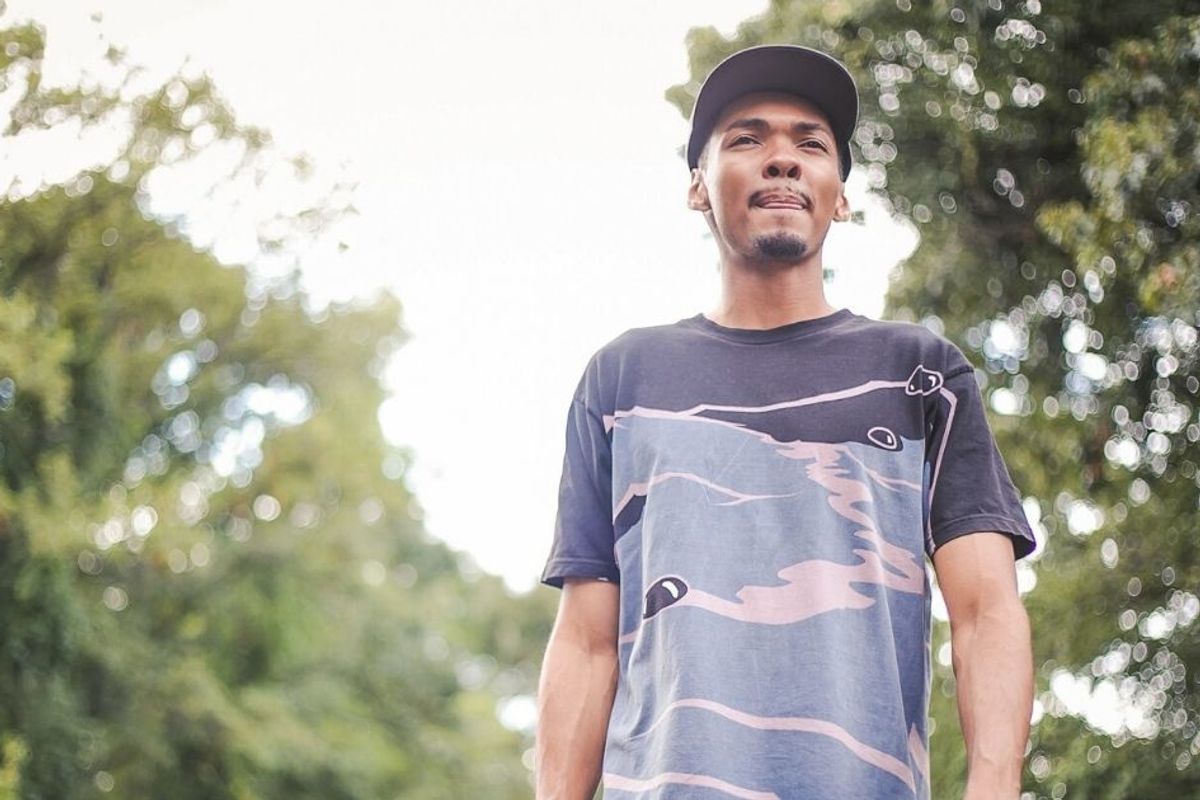
Black man walking outside

For Black people, something as simple as taking a walk isn't so simple.

Though we're all part of the same species living on the same planet, our experience as humans walking through this world can differ widely. Children see things through a different lens than adults. Women and men have different perspectives on certain issues. And because racism has long been an active element in our society, people with varying amounts of melanin in their skin face specific challenges that others don't.

As a white American, I don't instinctively know what it's like to walk in a Black person's shoes. I can tell you about the legacy of white supremacy laced throughout our country's history. I can explain the far-reaching effects of slavery, lynch mobs, Jim Crow laws, redlining, mass incarceration, and more. I can intellectually break down the psychological and sociological impact of centuries of race-based oppression.

But I can't tell you what it feels like to walk through this world, right now, as a Black person—which is why it's so important to listen to the voices of people who can.

David Summers shared a story on Facebook that reflects the experience of many Black Americans—one that can help us non-Black folks see through a lens we simply do not and cannot have. Perhaps that's why it's been shared more than 20,000 times. From the fear that any object he carries might be mistaken as a gun to figuring out how to smile at a stranger just right so he won't be considered a threat, the "black thoughts" Summers describes during his walk through a beautiful, white neighborhood—presumably a neighborhood most of us would consider "safe"—are heartbreaking.

He wrote:

"I took a black walk this morning. I took a black walk through a white neighborhood. When I take black walks, I think black thoughts. I am conscious of where I've placed my gun, my gun, and my gun. I mean, my phone, my wallet, and my keys. Because Peace Officers have a hard time telling the difference. I rehearse what I'll say if a concerned resident, or a law enforcement employee has questions about why my black body is walking through their white space. And I remind myself to make sure the law enforcement employee has his body camera recording. Sometimes it helps if there is video evidence to accompany the hashtag.

There is no way to be stealthy when you take a black walk. White neighborhoods are blanketed by a sophisticated security system comprised of nosy neighbors, Ring doorbell cameras, and white women walking their dogs. So, I've learned to notice the white world through my periphery. To be aware of the dangers without acknowledging them. There is an art to making white people feel safe. To say 'Good Morning' and flash a smile that shows confidence and deference at the same time. To being polite because your life depends on it.

I felt the squad car behind me before I saw it.

It moved deliberately. Not like the other cars mindlessly whizzing past. Its tires inched. Crept. Stalked their way toward me.

I kept walking.

"Don't take your hands out of your pockets," I thought. Or wait, maybe I should? Maybe it's better if my hands are clearly empty. But it's cold outside…maybe it's nothing. Keep walking.

The car rolled past me and made a slow right turn. I glanced quickly but didn't stare. The air is still. My ears tuned out everything but the slight scuff of my sneakers on the sidewalk and the fading sound of those stalking tires.

Almost there.

Suddenly the squad car re-emerged. It was a block ahead of me. It made a quick right turn, continued to the end of the street, and then waited. No more stalking. This was a show of force. This was a roar. This was a reminder that I was trespassing.

I kept walking.

As I approached the corner, the front window began to roll down. The occupant didn't speak. Didn't smile. Just stared. I was being warned.

I crossed the street and the lion trotted off. He had effectively marked his territory. The brave protector had done his job.

I however, couldn't help but wonder what I'd missed during my black walk. It's hard to hear the birds chirping, or to smile at the squirrels playfully darting along the branches when you're on a black walk. It's easy to miss the promise of a light blue sky, or appreciate the audacity of the red, yellow, and purple daisies declaring their independence from the green grass when your mind is preoccupied with black thoughts.

I took a walk through a beautiful neighborhood this morning. But I missed the whole thing."

Thank you, Mr. Summers, for sharing your "black walk" experience. Hopefully, it will prompt us all to ask ourselves whether our words and actions serve to reinforce or remedy what you've described.


This article originally appeared five years ago.

time off requests, pto, sick leave, gen z manager, manager positions, asking for time off

This Manager thinks PTO is for vacation, not "life changing events."

What does it take to be a good boss? You can answer this a million different ways—by being a clear communicator, earning employee trust, providing constructive feedback, and fostering a positive and supportive work environment while also being open to feedback and recognizing your team's contributions—but really, it all seems to stem from respecting your employees as fellow human beings.

Part of that means acknowledging that these employees have lives that are, frankly, more important to them than the job, and not penalizing them for it. One manager, and Gen Zer no less, seems to fully understand this basic principle, and folks are applauding her for it.


Elizabeth Beggs, who manages a five-person team for a packaging distribution company in Virginia, recently made a TikTok sharing which time-off requests she “rejects. ”You’ll see why “rejects” is in quotes shortly.

One example: when a female rep notified Beggs that she was likely having a miscarriage. After the team member asked how she can file for time off to see to the issue, Beggs immediately responded, “Girl, go to the doctor! We’re not submitting time off for that!”

In Beggs’ mind, PTO is for “vacation,” not medical emergencies. What a concept.

@bunchesofbeggs

Edited to clarify- 1. My team is all salary. 2. These examples are not all recent or from my current position. 3. My team works hard and hits thier KPIs above and beyond. Time off is meant to recharge and be used how you need it, not to handle life changing events #mangers #corporate #genzmanagers #sales #vetstocorporate #veterans

Beggs went on to explain a couple more situations, like when one employee—a parent—was “up all night” with their sick kid. And her last one wasn’t even negative—she had an employee who wanted to work a half-day to do something nice for their anniversary.

“Seriously, if any of these triggered anyone, then you need to evaluate how you run your team as a manager,” she concluded.

By and large, the response to Beggs’ management style has been overwhelmingly positive, and people seem to find it completely refreshing.

“You are not a manager, you’re a LEADER,” one person wrote.

@bunchesofbeggs

Everything you do should be to better your team, not to make your life easier #leadership #ownership #corporatelife #veteran #military

Another said, “The better you treat your employees, the more loyal they will be and the better work they will put out. Most people do not understand how management works.”

A few noted how this attitude seems to be more present among younger leaders. One person commented, "millennial manager here. My team members are human first, employees second. Like just go do what you want but get the work done too.”

Another joked that “Boomer managers could NEVER.”

Beggs would later clarify this doesn’t mean she doesn't have clear productivity expectations for her team (who work on salary). Perhaps if she had a team member not making their KPIs (key performance indicators), there would be an additional conversation surrounding time off, but there is still an inherent respect as a fellow human being. Which, to her, means treating bona fide time off as a way to “recharge and be used how you need it, not to handle life changing events.”

@bunchesofbeggs

If you’re planning does not account for people being human- it’s bad planning #genzleaders #armyvet #militaryvet #genz #corporatelife #corporate #manager #timeoff

Younger generations might get labeled “lazy” or “entitled,” but they are also the ones fighting to change the status quo so that we all may be treated less like cogs in the machine, and more like actual human beings. Its leaders like Beggs who show that operating in new ways doesn't compromise productivity—it, in fact, enhances it. We might not be able to change the global standard overnight, but we certainly aren’t going to get to a better place without leaders who choose to serve their community rather than a bottom line.

This article originally appeared in March.

Michelle Obama, George Clooney, Kamala Harris, gen jones, generation jones

Generation Jones includes Michelle Obama, George Clooney, Kamala Harris, Keanu Reeves and more.

Did you know there are folks who don't quite fit into the main generational categories? That's boomers, Gen X, millennials, Gen Z and the up-and-coming Gen Alpha, of course. Sometimes, someone born a few months too early or late can make a world of difference in how they see the world. These in-betweeners, sometimes called "cuspers," are members of microgenerations that straddle two of the biggies.

"Xennial" is the nickname for those who fall on the cusp of Gen X and millennial, but there's also a lesser-known microgeneration that straddles Gen X and baby boomers. The folks born from 1954 to 1965 are known as Generation Jones, and they got thrust into the spotlight as Vice President Kamala Harris (born in 1964) became a presidential hopeful in 2024.


generations, gen jones, boomers, gen x, on the cusp between gen x and baby boomer Generation Jones was born between 1954 and 1965.Photo credit: Canva

Like President Obama before her, Harris is a Gen Jonesernot exactly a classic baby boomer but not quite Gen X. Born in October 1964, Harris falls just a few months shy of official Gen X territory. But what exactly differentiates Gen Jones from the boomers and Gen Xers that flank it?

"Generation Jones" was coined by writer, television producer and social commentator Jonathan Pontell to describe the decade of Americans who grew up in the '60s and '70s. As Pontell wrote of Gen Jonesers in Politico:

"We fill the space between Woodstock and Lollapalooza, between the Paris student riots and the anti-globalisation protests, and between Dylan going electric and Nirvana going unplugged. Jonesers have a unique identity separate from Boomers and GenXers. An avalanche of attitudinal and behavioural data corroborates this distinction."

Pontell describes Jonesers as "practical idealists" who were "forged in the fires of social upheaval while too young to play a part." They are the younger siblings of the boomer civil rights and anti-war activists who grew up witnessing and being moved by the passion of those movements but were met with a fatigued culture by the time they themselves came of age. Sometimes, they're described as the cool older siblings of Gen X. Unlike their older boomer counterparts, most Jonesers were not raised by WWII veteran fathers and were too young to be drafted into Vietnam, leaving them in between on military experience.

Gen Jones gets its name from the competitive "keeping up with the Joneses" spirit that spawned during their populous birth years, but also from the term "jonesin'," meaning an intense craving, that they coined—a drug reference but also a reflection of the yearning to make a difference that their "unrequited idealism" left them with. According to Pontell, their competitiveness and identity as a "generation aching to act" may make Jonesers particularly effective leaders:

"What makes us Jonesers also makes us uniquely positioned to bring about a new era in international affairs. Our practical idealism was created by witnessing the often unrealistic idealism of the 1960s. And we weren’t engaged in that era’s ideological battles; we were children playing with toys while boomers argued over issues. Our non-ideological pragmatism allows us to resolve intra-boomer skirmishes and to bridge that volatile Boomer-GenXer divide. We can lead."

@grownupdish

I found my people and we are Generation Jones! Get ready to re-live our childhoods and follow for more. #grownupdish #midlife #midlifewomen #boomer #babyboomer #generationx #genx #1963 #over50 #generationjones #generationalmarketing #adulting #greenscreen

However, generations aren't just calculated by birth year but by a person's cultural reality. Some on the cusp may find themselves identifying more with one generation than the other, such as being culturally more Gen X than boomer. And, of course, not everyone fits into whatever generality they happened to be born into, so stereotyping someone based on their birth year isn't a wise practice. Knowing about these microgenerational differences, however, can help us understand certain sociological realities better as well as help people feel like they have a "home" in the generational discourse.

As many Gen Jonesers have commented, it's nice to "find your people" when you haven't felt like you've fit into the generation you fall into by age. Perhaps in our fast-paced, ever-shifting, interconnected world where culture shifts so swiftly, we need to break generations into 10 year increments instead of 20 to 30 to give everyone a generation that better suits their sensibilities.

This article originally appeared last year and has been updated.

Education & Information

This surprising map reveals the real value of $100 in each state

Your purchasing power can swing by nearly 25 percent from state to state.

cheapest states, cost of living, finances, cost of living, $100

Map represents the value of 100 dollars across America.

As the cost of living in large cities continues to rise due to inflation, tariffs, and other economic factors, more and more people are realizing that the value of a dollar in the United States is a very relative concept. For decades, cost of living indices have sought to address and benchmark the inconsistencies in what money will buy, but they are often so specific they prevent a holistic picture or the ability to "browse" the data based on geographic location.

Each year, the Tax Foundation addresses many of these shortcomings using the most recent Bureau of Economic Analysis data to provide a familiar map of the United States overlaid with the relative value of what $100 is "worth" in each state. In recent years, they've further updated their data so that you can break down the value of your money across every single metro area in the United States. It's an incredibly valuable tool for the many people considering (or who have already acted and migrated from states like California to Florida), Texas and other states with friendly state taxes rates and more affordable housing options.


The map quantifies and presents the cost of living by geography in a brilliantly simple way. For instance, if you're looking for a beach lifestyle but don't want to pay California prices, try Florida, which is about as close to "average"—in terms of purchasing power, anyway—as any state in the Union. If you happen to earn (or luck) your way into Silicon Valley tax brackets, head to Hawaii, D.C., or New York. You'll burn through your money in no time. And in some of those places like Hawaii, there are quality of life measurements that often exceed raw purchasing power.

So, where does your dollar go the furthest in 2025? The financial planning site GoBankingRates.com compiled its own list of cash purchasing power across each state and found that in California, you get the least bang for your buck: only $87.42 in real purchasing power for every $100 of cash. The average person in California makes $96,344 annually, one of the higher income levels in the country. However, just living in California on average costs residents a staggering $86,408, leaving the average person with little flexibility for long-term financial planning projects like retirement, saving for a new home, or even buying a new car.

At the other end of the spectrum is Arkansas, where your dollar goes the furthest. In fact, that $100 bill burning a hole in your proverbial wallet is in fact worth more than its technical value, with a real value of $113.49. On top of that, the cost of living is only $37,067, less than half of that in California. Further, the average cost of a new home in Arkansas is $208,743, less than one-third of a new home in California. Not coincidentally, in 2023, Arkansas was the top destination for people moving to another state within the United States, followed by Texas.

family, moving, income, finances, $100 Family moving into a new home. Canva Photos.

How about Florida, which has received outsized attention in recent years for its overt efforts to draw residents from California and other states with higher costs of living? According to the most recent data, Florida is in fact much closer to California than Arkansas, coming in only in 40th place on the GoBankingRates rankings, with $100 in cash only being worth $96.55. However, the annual cost of living is still only slightly more than half of that in California, coming in at $53,505. And if you're looking to buy some real estate, the average home is valued at $404,924. That's still well outside the purchasing power of many Americans, but with built-in advantages such as warm weather and one of the top-ranked state education system in America, it's obvious why so many people, especially those with families, are choosing Florida over California in recent years.

florida, cost of living, finances, $100, education Driving Road Trip GIF by Rosen Hotels & Resorts Giphy

According to U.S. News and World Report's data analysis, California only has the nation's 23rd best education system and is ranked a paltry 37th overall in their state rankings. It's quite a contrast for a state that bills itself on the promise of opportunity, natural wonder, and positive lifestyle options. And with 2025's wildfires (as well as an annually-worsening wildfire season), the constant threat of earthquakes, and other factors, California clearly has challenges beyond economics if it wants to remain one of the more attractive states in the nation.

Of course, those numbers are always in flux, and political leaders in California have promised concrete reforms in order to address the state's high cost of living compared with the value of its social and emergency services. If you want proof of how quickly things can change, look at a similar analysis of the value of $100 in each state from 2015:

- YouTube youtu.be

However, those negative statistical trends aside, California continues to have an incredible pull on our collective imagination. Four hundred twenty-three thousand, one hundred ninety-four Americans left their state for California according to the most recent data in 2023, placing it in third behind our previously mentioned top two states, Arkansas and Texas.

So, it's clear there are a number of factors that determine the best place to live in America. When it comes to raw purchasing power, you cannot beat Arkansas. But there's so much else to consider: public resources like education and healthcare, job opportunities (you probably won't make nearly as much in Arkansas as you might in California) and other factors such as proximity to family, friends, and personal interests.

There's no doubt America is rapidly changing and that includes what people value the most when they decide where to live. In uncertain economic times, the face of America will likely change radically in the coming years with the political, economic, and social landscape shifting in meaningful ways.

This article originally appeared in August.

aging, before-and-after photos, jan langer, aging process, photos of old people

Jan Langer's incredible photos are timeless.

Czech photographer Jan Langer's portrait series "Faces of Century" shows them in a different light: as human beings aged by years of experience, but at their deepest level, unchanged by the passing of time. In the series, Langer juxtaposes his portraits with another portrait of the subject from decades earlier. He recreates the original pose and lighting as closely as he can — he wants us to see them not just as they are now, but how they have and haven't changed over time. That is the key to the series.

These are the rare faces of people who have lived through two world wars, a cavalcade of regimes, and the rush of advancements in modern life. These photos, and the stories of the lives lived by the people in them, show not only the beauty of aging, but how even as we age, we still remain essentially ourselves.


All photos by Jan Langer.


1. Prokop Vejdělek, at age 22 and 101


aging, photos, older people with their younger selves, aging process, 100 years old Prokop Vejdělek, at age 22 and 101via Jan Langer/Aktualne

Vejdělek is a former metallurgical engineer who will never forget the taste of warm fresh goat's milk.


2. Bedřiška Köhlerová, at age 26 and 103


via Jan Langer/Aktualne

Originally born in Merano, Italy, Köhlerová wishes to visit Italy one more time.


3. Ludvík Chybík, at age 20 and 102


via Jan Langer/Aktualne

Chybík is a former postal carrier and says he will never forget the route he worked every day.


4. Vincenc Jetelina, at age 30 and 105


via Jan Langer/Aktualne

Jetelina spent eight years in prison after World War II. Now, he just wants to live the rest of his life in peace.


5. Antonín Kovář, at age 25 and 102


via Jan Langer/Aktualne

Kovář is a former musician whose daughter comes to visit him every day. He wishes to play the clarinet once more.


6. Anna Vašinová, at age 22 and 102


via Jan Langer/Aktualne

Vašinová will always remember the day her husband was taken away by the Nazis. She wishes to be reunited with him after death.

7. Stanislav Spáčil, at age 17 and 102


via Jan Langer/Aktualne

Spáčil was an electrical engineer throughout his life and thinks that it's too early in his life to think about the past.


8. Anna Pochobradská, at age 30 and 100

via Jan Langer/Aktualne

Pochobradská was a farmer. She now lives a quiet life and is thankful that her daughter visits her every weekend.


9. Antonín Baldrman, at age 17 and 101


via Jan Langer/Aktualne

Baldrman was a clerk early in life and keeps up with current events by reading the newspaper.


10. Marie Burešová, at age 23 and 101


via Jan Langer/Aktualne

Burešová loves talking to her family and wishes to have them all together again.


11. Vlasta Čížková, at age 23 and 101


aging, photos, older people with their younger selves, aging process, 100 years old via Jan Langer/Aktualne

Čížková cooked in the dining room at the airport in the small village of Vodochody. She'll never forget reciting her own poetry at wedding ceremonies.


12. Ludmila Vysloužilová, at age 23 and 101


aging, photos, older people with their younger selves, aging process, 100 years old via Jan Langer/Aktualne

Vysloužilová stays active every day by chopping wood, shoveling snow, and doing work around her house.


The photographer Langer was initially inspired to document the lives of elderly people because of what he saw as the media's lack of coverage of them. He decided to focus on people over the age of 100 — a very rare demographic indeed. The 2020 U.S. Census recorded 80,139 people aged 100 or older, a 50.2% increase from the 53,364 centenarians counted in 2010. As our aging population continues to increase, and technology evolves along with it, it's likely these incredibly photo essays will become far more common. But for now, they are an incredible reminder of how precious and valuable life is, sometimes especially when we reach our golden years.

“One should live every single moment according to their best knowledge and conscience because one day we will see clearly what has a real value," Langer says of what he learned from his subjects while photographing them.

The series was originally part of a story that Langer did for the Czech news outlet aktuálně.cz. You can see more photos from the portrait sessions by following the link.

This article originally appeared seven years ago.

Conservation

A juice company dumped orange peels in a national park. This is what it looks like today.

12,000 tons of food waste and 28 years later, this forest looks totally different.

natural wonder, nature, experiments, costa rica, oranges, orange peels, national park, climate, planet
Image via Dan Jansen

A before and after view of the experiment

In 1997, ecologists Daniel Janzen and Winnie Hallwachs approached an orange juice company in Costa Rica with an off-the-wall idea. In exchange for donating a portion of unspoiled, forested land to the Área de Conservación Guanacaste — a nature preserve in the country's northwest — the park would allow the company to dump its discarded orange peels and pulp, free of charge, in a heavily grazed, largely deforested area nearby.

One year later, one thousand trucks poured into the national park, offloading over 12,000 metric tons of sticky, mealy, orange compost onto the worn-out plot. The site was left untouched and largely unexamined for over a decade. A sign was placed to ensure future researchers could locate and study it.


16 years later, Janzen dispatched graduate student Timothy Treuer to look for the site where the food waste was dumped.

Treuer initially set out to locate the large placard that marked the plot — and failed.


natural wonders, nature, recycling, conservation, environment, oranges, orange peels, dumps The first deposit of orange peels in 1996. Photo by Dan Janzen.


"It's a huge sign, bright yellow lettering. We should have been able to see it," Treuer says. After wandering around for half an hour with no luck, he consulted Janzen, who gave him more detailed instructions on how to find the plot.

When he returned a week later and confirmed he was in the right place, Treuer was floored. Compared to the adjacent barren former pastureland, the site of the food waste deposit was "like night and day."


Environment, natural wonder, natural miracles, nature, oranges, planet, conservation The site of the orange peel deposit (L) and adjacent pastureland (R). Photo by Leland Werden.


"It was just hard to believe that the only difference between the two areas was a bunch of orange peels. They look like completely different ecosystems," he explains.

The area was so thick with vegetation he still could not find the sign.

Treuer and a team of researchers from Princeton University studied the site over the course of the following three years.

The results, published in the journal "Restoration Ecology," highlight just how completely the discarded fruit parts assisted the area's turnaround.

According to the Princeton School of International Public Affairs, the experiment resulted in a "176 percent increase in aboveground biomass — or the wood in the trees — within the 3-hectare area (7 acres) studied."

The ecologists measured various qualities of the site against an area of former pastureland immediately across the access road used to dump the orange peels two decades prior. Compared to the adjacent plot, which was dominated by a single species of tree, the site of the orange peel deposit featured two dozen species of vegetation, most thriving.


natural wonder, nature, environment, conservation, oranges, orange peels Lab technician Erik Schilling explores the newly overgrown orange peel plot. Photo by Tim Treuer.


In addition to greater biodiversity, richer soil, and a better-developed canopy, researchers discovered a tayra (a dog-sized weasel) and a giant fig tree three feet in diameter, on the plot.

"You could have had 20 people climbing in that tree at once and it would have supported the weight no problem," says Jon Choi, co-author of the paper, who conducted much of the soil analysis. "That thing was massive."

- YouTube www.youtube.com

Recent evidence suggests that secondary tropical forests — those that grow after the original inhabitants are torn down — are essential to helping slow climate change.

In a 2016 study published in Nature, researchers found that such forests absorb and store atmospheric carbon at roughly 11 times the rate of old-growth forests.

Treuer believes better management of discarded produce — like orange peels — could be key to helping these forests regrow.

In many parts of the world, rates of deforestation are increasing dramatically, sapping local soil of much-needed nutrients and, with them, the ability of ecosystems to restore themselves.

Meanwhile, much of the world is awash in nutrient-rich food waste. In the United States, up to half of all produce in the United States is discarded. Most currently ends up in landfills.


natural wonder, nature, conservation, environment, planet, oranges, orange peels The site after a deposit of orange peels in 1998. Photo by Dan Janzen.


"We don't want companies to go out there will-nilly just dumping their waste all over the place, but if it's scientifically driven and restorationists are involved in addition to companies, this is something I think has really high potential," Treuer says.

The next step, he believes, is to examine whether other ecosystems — dry forests, cloud forests, tropical savannas — react the same way to similar deposits.

Two years after his initial survey, Treuer returned to once again try to locate the sign marking the site.

Since his first scouting mission in 2013, Treuer had visited the plot more than 15 times. Choi had visited more than 50. Neither had spotted the original sign.

In 2015, when Treuer, with the help of the paper's senior author, David Wilcove, and Princeton Professor Rob Pringle, finally found it under a thicket of vines, the scope of the area's transformation became truly clear.


natural wonder, nature, environment, environmental miracle, planet, oranges, orange peels The sign after clearing away the vines. Photo by Tim Treuer.


"It's a big honking sign," Choi emphasizes.

19 years of waiting with crossed fingers had buried it, thanks to two scientists, a flash of inspiration, and the rind of an unassuming fruit.

This article originally appeared eight years ago.