Those of us who lived life on Earth before the internet and GPS have memories that today’s young people will never have. Stopping at a gas station to pick up a local road map. Keeping a road atlas the size of a textbook under the passenger seat. The agony of having to try to refold a map in the clunky confines of your car.
It’s easy to forget what life was like before cell phones fit in your pocket and Google Maps took you from point A to point B in real-time. But Gen Z, whose oldest members haven’t even reached 30 yet, has never lived that struggle, so they have no frame of reference for what their elders had to do to find their way around.
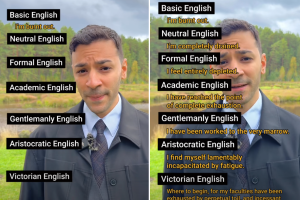
One self-proclaimed Gen Zer named Aneisha took to social media to ask the question that has been burning on her mind–how did people travel before GPS?
Aneisha asks in her video, “Okay, serious question. How did people get around before the GPS? Like, did you guys actually pull a map and like draw lines to your destination? But then how does that work when you’re driving by yourself, trying to hold up the map and drive? I know it’s Gen Z of me, but I kind of want to know.”
Even when most Millennials were starting to drive, they had some form of internet to download turn-by-turn directions, so it makes sense that the cohort between Gen Z and Gen X would direct Aneisha to Mapquest — a primitive early ancestor of Google Maps.
“We’d have to print step-by-step directions from MapQuest and hope for the best,” one commenter wrote.
It’s true, you’re not really a Millennial if you’ve never driven around with a stack of loose MapQuest pages floating around your car. If you were lucky, you had a passenger to read them off to you. “Drive half a mile and turn left on Elm Street!” It was a stressful time, for sure. God help you if the pages got mixed up or if you went off track somewhere. Even with a printed map and directions, there was no guidance for finding your way back to the proper route.
But there was a time before imaginary tiny pirates lived inside of computer screens to point you in the right direction, and tales from those times are reserved for Gen X.
MapQuest, by some standards, was an incredible luxury made possible by the internet. So the generation known for practically raising themselves chimed in, not only to sarcastically tell Millennials to sit down but to set the record straight on what travel was like before the invention of the internet. Someone clearly unamused by younger folks’ suggestion shares, “The people saying MapQuest. There was a time before the internet kids.”
Others are a little more helpful, like one person who writes, “You mentally note landmarks, intersections. Pretty easy actually,” they continue. “stop at a gas station, open map in the store, ($4.99), put it back (free).”
“Believe it or not, yes we did use maps back then. We look at it before we leave, then take small glances to see what exits to take,” someone says, which leaves Aneisha in disbelief, replying, “That’s crazy, I can’t even read a map.”
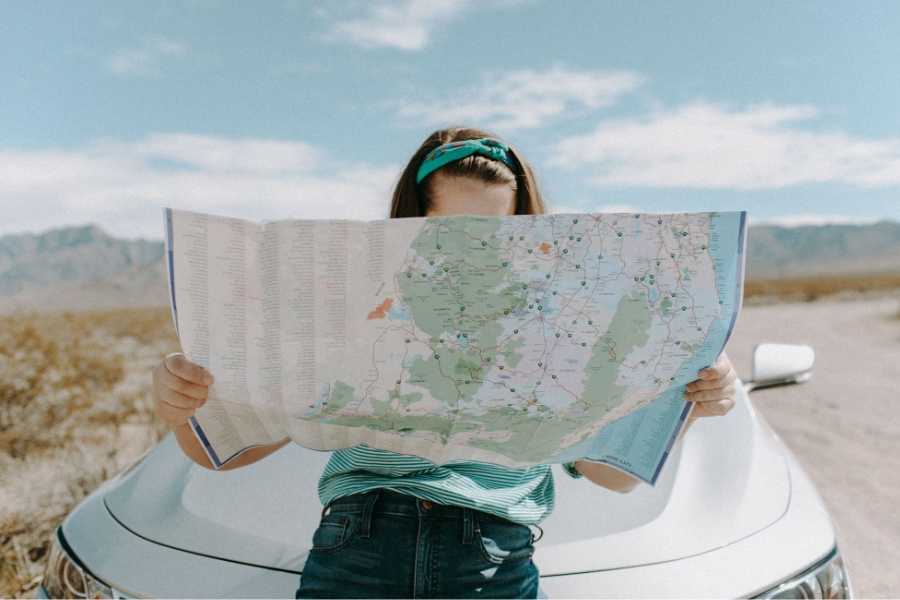
It’s a good idea to keep a local map in your car, even today! In case of emergency, you never know when it might come in handy. Learning how to read it, however, might take a little time for folks who didn’t grow up using non-digital maps. (Many young people are confident in their ability to read maps based on their heavy GPS usage, but something tells me those skills won’t translate to the big according-style paper maps.)
Some users added that you could often call your destination (or friend or family member) and write down careful directions before you left. If you’ve ever visited a venue or business’s website and seen general directions depending on which direction you’re traveling from, you get the idea.
“Pulled over and asked the guy at the gas station,” one person writes as another chimes in under the comment, “and then ask the guy down the street to make sure you told me right.”
Imagine being a gas station attendant in the ’90s while also being directionally challenged. Was that part of the hiring process, memorizing directions for when customers came in angry or crying because they were lost? Not knowing where you were going before the invention of the internet was also a bit of a brain exercise laced with exposure therapy for those with anxiety. There were no cell phones, so if you were lost, no one who cared about you would know until you could find a payphone to check in. Imagine that!
The world is so connected today that the idea of not being able to simply share your location with loved ones and “Ask Siri” when you’ve gotten turned around on your route seems dystopian.
But in actuality, if you took a few teens from 1993 and plopped them into 2024, they’d think they were living in a sci-fi movie waiting for aliens to invade.
Technology has made our lives infinitely easier and nearly unrecognizable from the future most could’ve imagined before the year 2000, so it’s not Gen Z’s fault that they’re unaware of how the “before times” were. They’re simply a product of their generation.
Some would say that having a rough geographical understanding of your local area, aka being able to navigate around without GPS, is a lost art that kept our brains and wits sharper. On the other hand, using Google Maps even for simple trips to everyday stops helps us avoid accidents and traffic and give people our near-exact ETA. It also delivers crucial real-time information about wildfires, natural disasters, and more. Who’s to say if one way is really better or worse?
This article originally appeared two years ago. It has been updated.