People are planting WWI-style victory gardens—even those of us without green thumbs
Annie Reneau

I've never been a gardener. I love the idea, but my history of killing plants isn't terribly inspiring. However, this year is different. I am doggedly determined to grow all the things because I will not allow 2020 to defeat me.

Is there a better symbol of hope than a garden? Planting a seed means you believe the future is imminent. Watching a sprout emerge from the soil and grow into a flourishing plant means life goes on. In addition, reaping the fruits and veggies of your efforts and giving thanks for the bounty that nature provides is perhaps the most basic, fundamental human act I can think of.


During World War I, Americans were encouraged to plant "victory gardens" to provide food during the war—and they undoubtedly came in handy during the pandemic that overlapped with the end of the war. (Side note: Holy cow, those people were tough.) While our food supply has held up so far in this pandemic, we don't know what will happen in the coming year or so before a vaccine becomes available. Growing some extra food seems as prudent as it is poetic.

Not only that, but gardening is good for you. Research from Princeton University has found that gardening at home had a powerful impact on a person's emotional well-being—just like biking, walking or dining out. The benefits crossed racial demographics as well as urban and rural locations. And vegetable gardening in particular had a stronger benefit than ornamental gardening, which provides mainly aesthetic value.

But what if you're not a natural gardener? What if you don't know where to start? What if you don't have any space to garden?

Even if you're short on land and experience, you can still plant your own little victory garden. If you have a patio or balcony, or any bit of outdoor space, you can use containers instead of outdoor garden beds. My family has space in our yard, but decided to use containers anyway because it's a lot easier than tilling the ground, preparing the soil, etc.

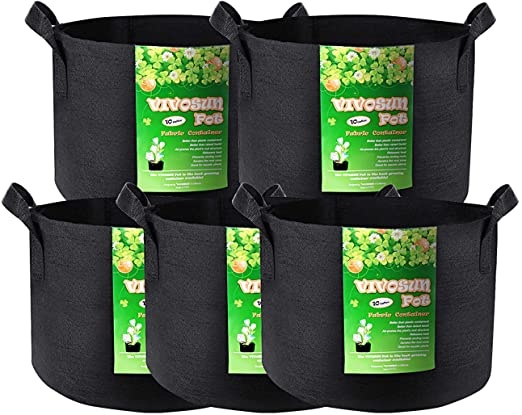
The previous owners of our house had left a few plastic planters, but to supplement them we bought a pack of these grow bags. They're basically fabric pots—they almost feel like felted wool—and they're more affordable than plastic or ceramic containers. They also designed for healthy aeration of the soil, which sounds like something fancy gardeners say. I have no idea what it means, but it sounds important.

Amazon

You can even choose different sizes of grow bags to accommodate your space and what you want to plant.

One nice thing about container gardening is that you don't have to have a lot of tools. A simple set of small shoveling tools and some gardening glove will suffice. I learned quickly that digging your hands in the dirt without gloves might sound rustic and romantic, but it dries your hands and nails out something fierce.

And yet another advantage of container gardening is that you don't have to figure out how to get your ground soil ready for planting. According to my gardener-by-nature friends, everyone's soil is different, so there's different things you have to add to it and mix into it to get the right balance of minerals— blah blah blah. No thank you. I want to be able to put my seeds or my plant into the dirt and go. With container gardening, you just buy a bag of potting soil (available at any garden center—we got ours at Walmart), dump it in the pot and voila! Ready-to-plant garden.

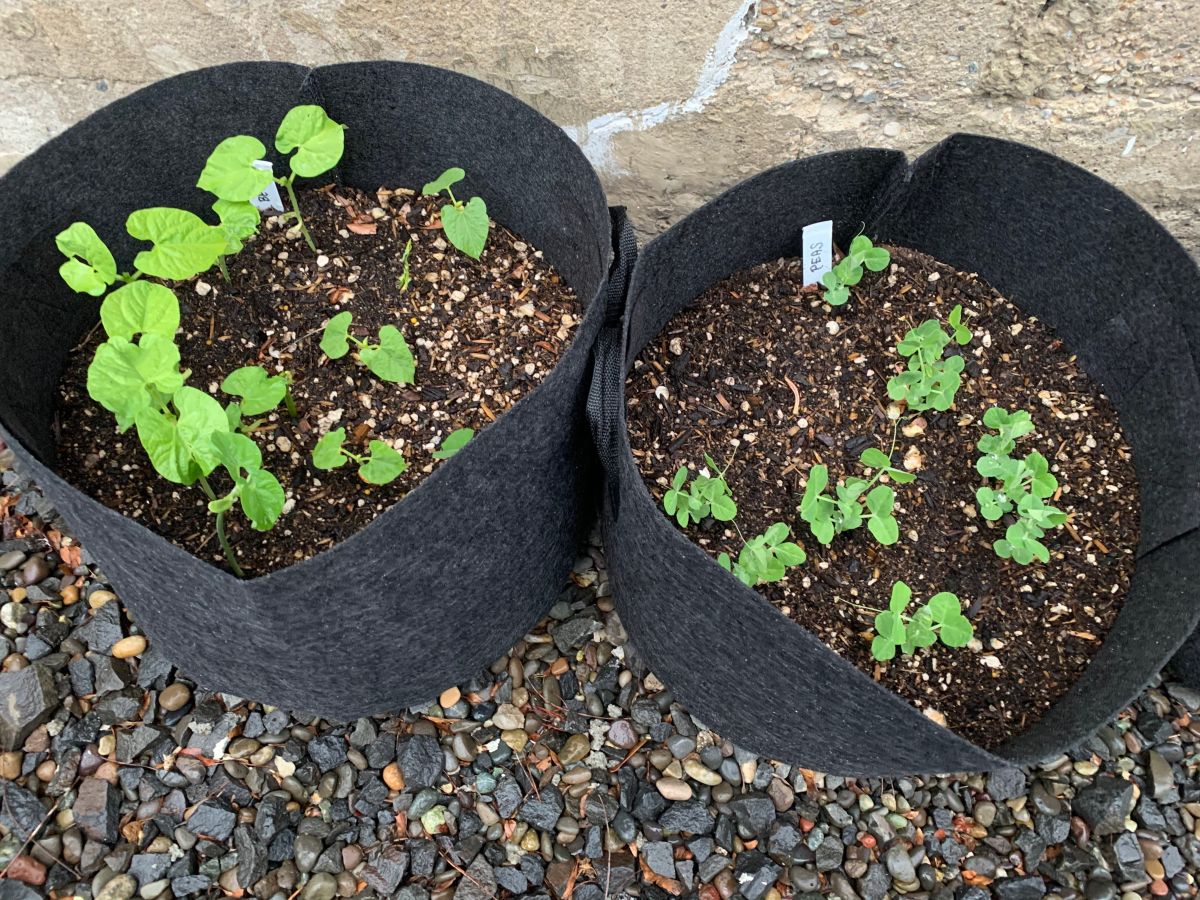
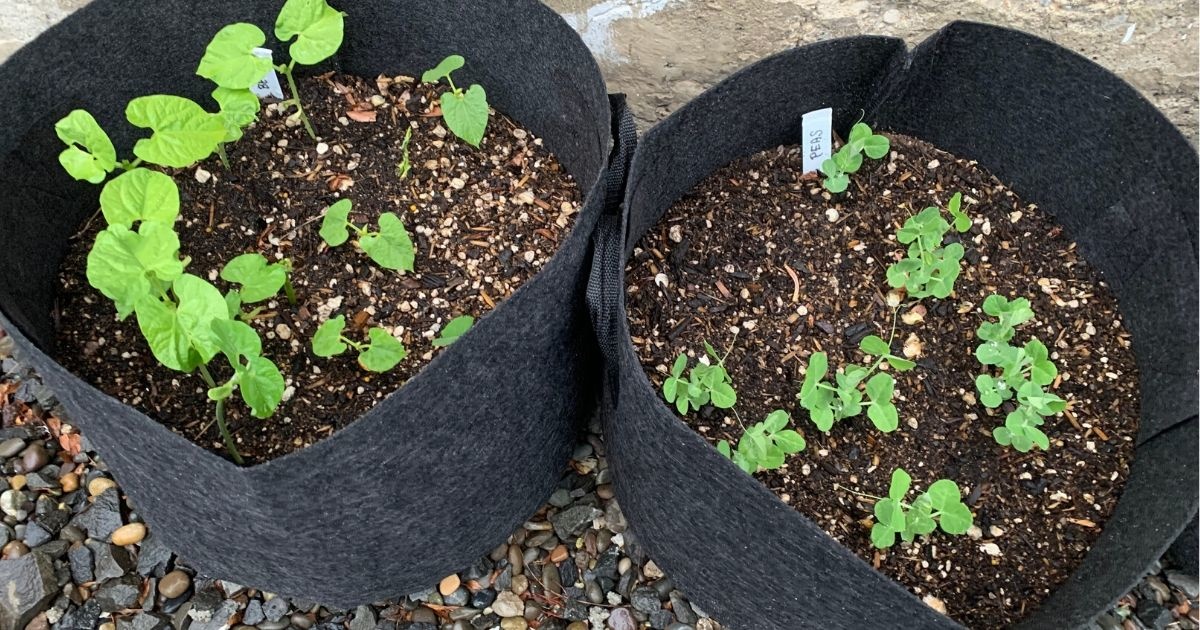
Lastly, you have to decide what to plant. If you've not gardened before, start with things that are easy and quick to grow, like peas and beans. Look at my beans and peas! I'm doing it! I'm doing it!

Annie Reneau

You also might consider starting with small plants instead of the seeds. They can take a while to germinate, depending on what you're growing and If you don't get an early start indoors, you might find growing from seed frustrating. That also depends on where you live. I live in the north, where we have a limited growing season.

Apparently, beginning gardening books are flying off the virtual shelves as more and more people are using social distancing time to plant a victory garden. But if video is more your speed, I highly recommend the YouTube channel Epic Gardening. Kevin Espiritu used to be like me—a know-nothing, wannabe gardener—and now he helps people learn how to grow stuff. He's delightful and so helpful:

Epic Gardening Channel Trailer www.youtube.com

If nothing else, a garden gives you a way to help life flourish (hopefully) and a place to see progress when it seems like the world is slipping backwards. Good luck, novice gardeners!


Photo courtesy of Macy's
True

Macy's and Girls Inc. believe that all girls deserve to be safe, supported, and valued. However, racial disparities continue to exist for young people when it comes to education levels, employment, and opportunities for growth. Add to that the gender divide, and it's clear to see why it's important for girls of color to have access to mentors who can equip them with the tools needed to navigate gender, economic, and social barriers.

Anissa Rivera is one of those mentors. Rivera is a recent Program Manager at the Long Island affiliate of Girls Inc., a nonprofit focusing on the holistic development of girls ages 5-18. The goal of the organization is to provide a safe space for girls to develop long-lasting mentoring relationships and build the skills, knowledge, and attitudes to thrive now and as adults.

Rivera spent years of her career working within the themes of self and community empowerment with young people — encouraging them to tap into their full potential. Her passion for youth development and female empowerment eventually led her to Girls Inc., where she served as an agent of positive change helping to inspire all girls to be strong, smart, and bold.

Photo courtesy of Macy's

Inspiring young women from all backgrounds is why Macy's has continued to partner with Girls Inc. for the second year in a row. The partnership will support mentoring programming that offers girls career readiness, college preparation, financial literacy, and more. Last year, Macy's raised over $1.3M for Girls Inc. in support of this program along with their Science, Technology, Engineering, and Math (STEM) programming for more than 26,000 girls. Studies show that girls who participated are more likely than their peers to enjoy math and science, score higher on standardized math tests, and be more equipped for college and campus life.

Thanks to mentors like Rivera, girls across the country have the tools they need to excel in school and the confidence to change the world. With your help, we can give even more girls the opportunity to rise up. Throughout September 2021, customers can round up their in-store purchases or donate online to support Girls Inc. at Macys.com/MacysGives.

Who runs the world? Girls!

via Pixabay

Over the past six years, it feels like race relations have been on the decline in the U.S. We've lived through Donald Trump's appeals to America's racist underbelly. The nation has endured countless murders of unarmed Black people by police. We've also been bombarded with viral videos of people calling the police on people of color for simply going about their daily lives.

Earlier this year there was a series of incidents in which Asian-Americans were the targets of racist attacks inspired by the COVID-19 pandemic.

Given all that we've seen in the past half-decade, it makes sense for many to believe that race relations in the U.S. are on the decline.

Keep Reading Show less
Photo courtesy of Macy's
True

Did you know that girls who are encouraged to discover and develop their strengths tend to be more likely to achieve their goals? It's true. The question, however, is how to encourage girls to develop self-confidence and grow up healthy, educated, and independent.

The answer lies in Girls Inc., a national nonprofit serving girls ages 5-18 in more than 350 cities across North America. Since first forming in 1864 to serve girls and young women who were experiencing upheaval in the aftermath of the Civil War, they've been on a mission to inspire girls to kick butt and step into leadership roles — today and in the future.

This is why Macy's has committed to partnering with Girls Inc. and making it easy to support their mission. In a national campaign running throughout September 2021, customers can round up their in-store purchases to the nearest dollar or donate online to support Girls Inc. and empower girls throughout the country.


Kaylin St. Victor, a senior at Brentwood High School in New York, is one of those girls. She became involved in the Long Island affiliate of Girls Inc. when she was in 9th grade, quickly becoming a role model for her peers.

Photo courtesy of Macy's

Within her first year in the organization, she bravely took on speaking opportunities and participated in several summer programs focused on advocacy, leadership, and STEM (science, technology, engineering and math). "The women that I met each have a story that inspires me to become a better person than I was yesterday," said St. Victor. She credits her time at Girls Inc. with making her stronger and more comfortable in her own skin — confidence that directly translates to high achievement in education and the workforce.

In 2020, Macy's helped raise $1.3 million in support of their STEM and college and career readiness programming for more than 26,000 girls. In fact, according to a recent study, Girls Inc. girls are significantly more likely than their peers to enjoy math and science, to be interested in STEM careers, and to perform better on standardized math tests.

Keep Reading Show less