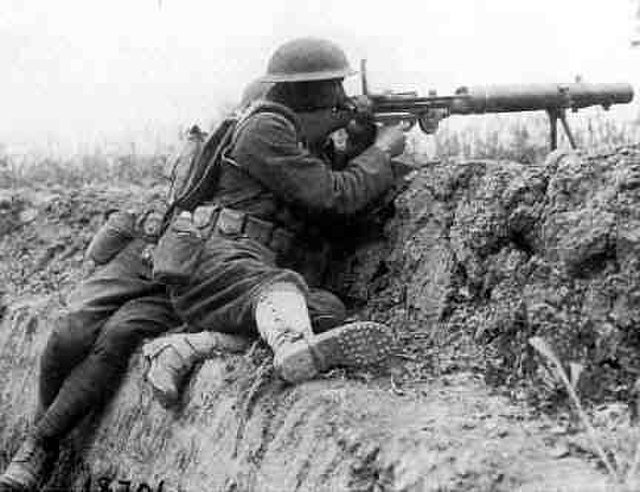
On November 11, 1918, U.S.soldier Robert Casey wrote from the American front in Western Europe:
“And this is the end of it. In three hours the war will be over. It seems incredible even as I write it. I suppose I ought to be thrilled and cheering. Instead I am merely apathetic and incredulous … There is some cheering across the river—occasional bursts of it as the news is carried to the advanced lines. For the most part, though, we are in silence … With all is a feeling that it can’t be true. For months we have slept under the guns … We cannot comprehend the stillness.”
It was the 11th day of the 11th month, and the war was scheduled to end with a ceasefire at the 11th hour—11:00 a.m. exactly. It had been four years of bloody, brutal fighting in what would later be called World War I. (Ironically, the war that was dubbed “the war to end all wars.”)
The sense of relief at the ceasefire had to have been palpable, and thanks to modern technology, we can get an idea of what it sounded like to have the constant gunfire, artillery shells, fighter planes and bombs just…stop.
The following audio is not a recording, since magnetic tape recording technology didn’t exist in WWI. It’s a sound recreation based on visual “sound ranging” recordings the military used to determine where enemy fire was coming from. Special units placed microphones in the ground and used photographic film to visually record the noise intensity of gunfire, similarly to how seismometer measures an earthquake.
The lines you see in the film below are vibrations from noises at the River Moselle on the American Front, which were interpreted by sound company Coda to Coda using meticulous research on the kinds of weaponry that would have been used and how far away they were, even taking into account the geography of the area.
The result is the sounds soldiers would have heard during the last minute of World War I. Listen:
The little bird chirp at the end really punctuates it, doesn’t it? Beautiful, yet haunting.
The fact that there was an exact minute when opposing forces agreed to lay down their arms and then did so is a bit surreal. If you know you’re going to stop shooting, why wait for a few hours and keep shooting one another? Why not just say, “Stop, we’re done now”? Communication took time and the various forces needed to be informed of the ceasefire agreement, so it makes some sense, but still. The armistice agreement was signed six hours before the ceasefire. In those six hours—when peace had already been agreed upon—3,000 soldiers were killed. Talk about senseless deaths.
Of all the things humans have devised and systematized, war is probably the weirdest. Leaders get into disputes over political or geographic particulars, and then one says, “I’m going to send my people to kill your people.” Another responds, “If your people kill my people, then my people will kill your people.” Then the worst of human atrocities are perpetrated by people who would normally never dream of doing such things to one another until, at some point, they’ve all have had enough of the senseless destruction, the leaders come to some kind of agreement and say, “OK, our people will no longer kill each other. Good talk.”
Of course, it’s all a bit more complicated than that, but at the same time, it’s not. War as a concept is simply stupid and stupidly simple. Humanity in general does seem to have grasped the stupidity of it, as we’ve been making global progress toward a more peaceful world for many decades. But as conflicts ignite and violence explodes in certain regions, we feel the tenuousness of that progress, which makes peacemaking skills all the more valuable.
Twenty million people were killed in WWI, more than half of them civilians. Many of them died from famine and disease brought on by the conditions of war. This audio is a reminder that these things don’t just happen—they are choices that human beings make. Destruction and diplomacy are both choices. Retaliation and restoration are choices. War and peace are choices.
We’ve tried choosing war followed by peace, many times over. Maybe we should try choosing peace without having to go through the stupid, senseless killing part first.