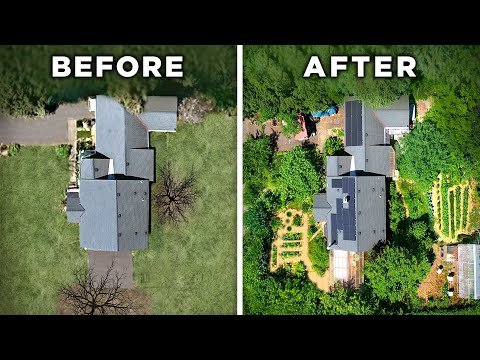
Fifteen years ago, Andrew Millison’s yard looked like most average suburban American yards with a row rose bushes, a few trees, and a basic green lawn that had to be mowed and watered—good for running around and picnicking on, but not much else.
Today, it couldn’t be more different or more productive. Where there used to be grass, now there’s a “multi-layered permaculture food forest” that serves both Millison’s family and their neighbors. In a video tour of his property in Oregon’s Willamette Valley, the permaculture expert shares the five strategies he used to design his edible landscape.
But first, what does permaculture mean?
Permaculture refers to sustainable agricultural and design practices that work with nature rather than against it. Permaculture practices include observing and learning from natural ecosystems and creating purposeful systems that emulate them.
For instance, huge fields filled with neat rows of all one kind of crop might make planting and harvesting more efficient, but nothing in nature actually grows that way on its own. Agriculture that goes against nature means having to work hard to keep away pests, manage water distribution carefully, etc. Permaculture aligns human action with the diversity, stability and resilience that make healthy landscapes productive and self-sustaining long-term.
Here are the five strategies Millison used to do that right in his own yard:
1. Create productive edges
Edges of yards and gardens are usually decorative, but Millison’s yard edges are almost entirely made of trees and shrubs that produce fruit or other food. From cherries to blackberries to fennel to grapes and more, he created “a solid corridor of food” for him and his community to enjoy. He even has an apple tree that grew out of a crack in the sidewalk. As neighbors walk by, they can partake of the abundance.
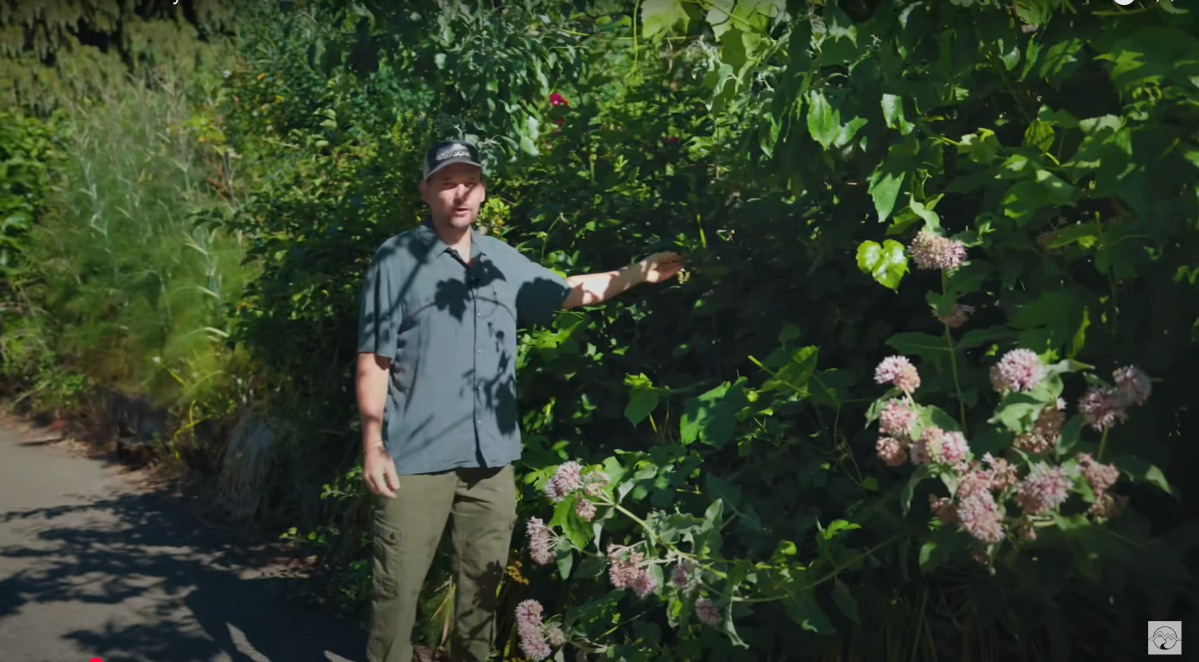
His cherry tree is grafted with four different varieties so they ripen at different times throughout the season. He also has a fig tree that he planted in the south-facing part of the yard to take advantage of the increased heat reflected off the sidewalk.
2. Plant food everywhere
We’re used to thinking of a gardens as a distinct part of a yard, not the whole thing, but why? Millison makes use of the land he has by planting food literally everywhere—front yard, side yard, back yard, all of it.
Millison has perennial plants like his artichokes, which means he doesn’t have to replant them every year. He also has an annual garden patch, growing things like lettuce, zucchini, broccoli and more, which he harvests from every day during growing season.
3. Diversity of plants
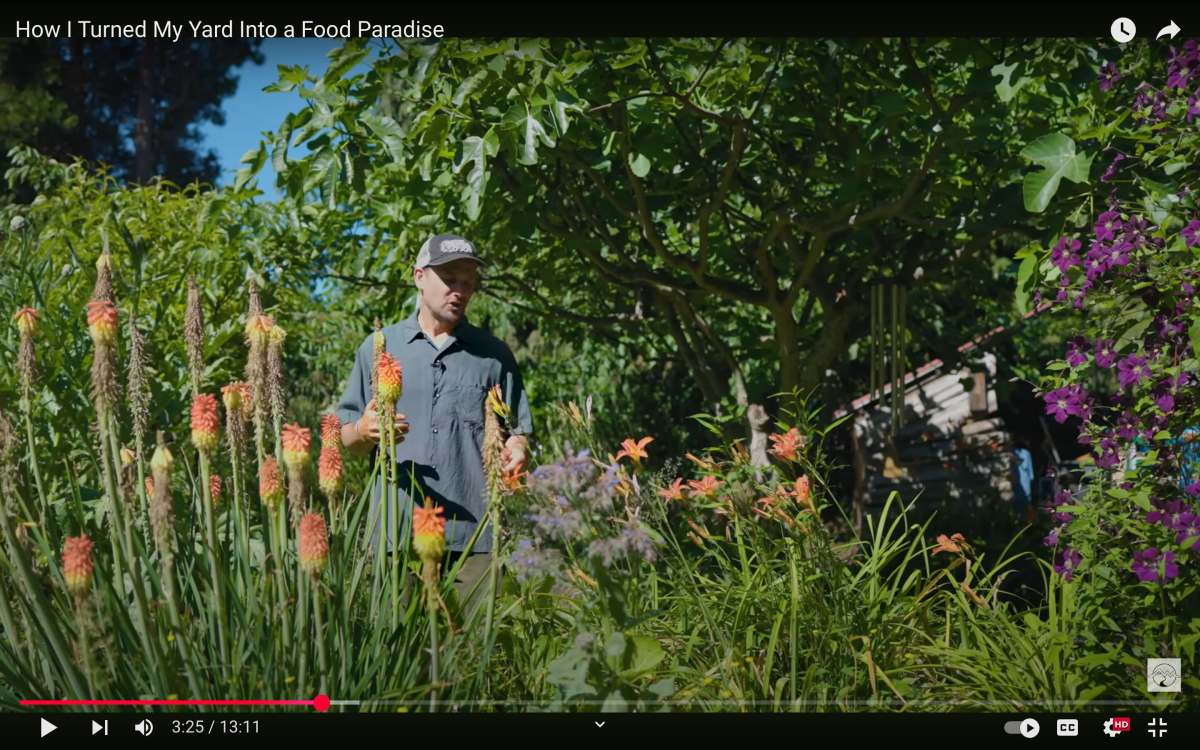
Hyperdiversity is an important strategy, says Millison. Flowers and native plants are a big part of the food-bearing ecosystem, not only attracting pollinators but also supporting insect predator and prey relationships, keeping pests at bay in the garden.
“So I not only have the cultivated ecosystem of exotic food and flowering plants, but I have the ecological matrix of a native, intact system as well,” says Millison.
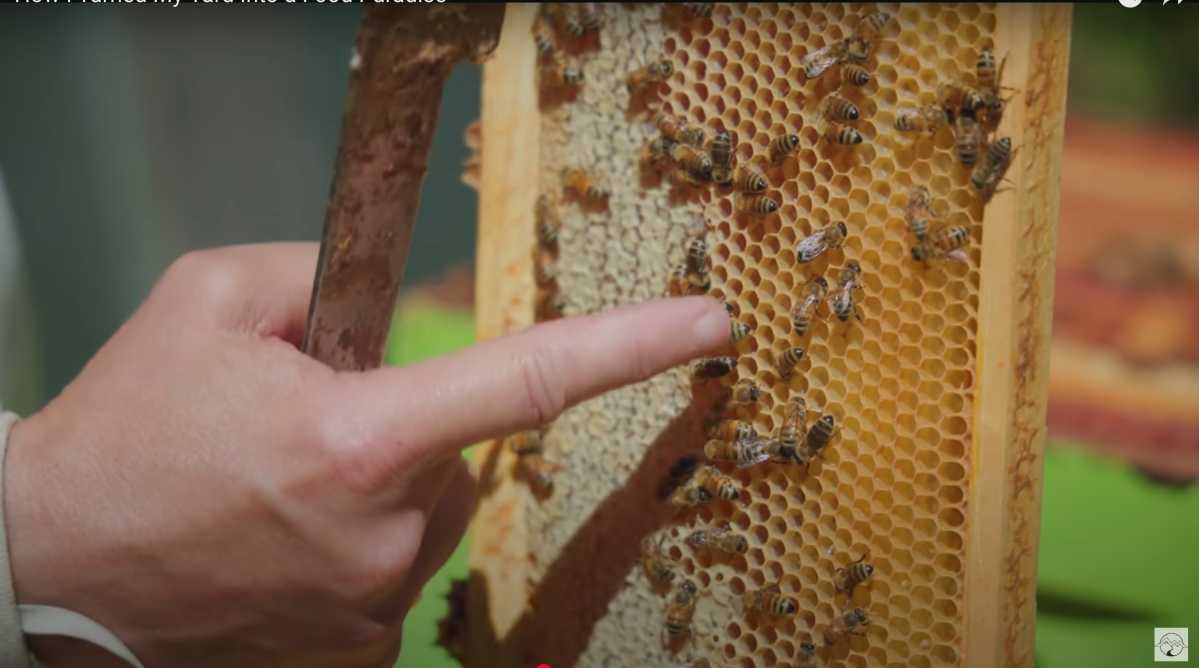
Along with the diversity of flowers, Millison also keeps bee hives. The bees pollinate the garden and provide honey (which he puts in his tea he makes with the overabundance of fresh mint he has growing). And because their range is about a mile, the bees from Millison’s hives help pollinate his neighbor’s gardens as well.
4. Chicken rotation system
Bees aren’t the only animal Millison tends to in his permaculture garden. His chickens also play a big role in fertilization, weeding and tilling of the soil, thanks to a rotation system he uses season to season. During the summer, they stay in a paddock where their activity prepares the soil for a winter crop that will be planted there. After the harvest in the fall, they move to the main garden area where they do the same thing, preparing the soil for the next summer’s planting.
“Having the chickens move back and forth between these gardens creates a wonderful synergy where the chickens take care of a lot of the important garden work so I don’t need to do it,” he says.
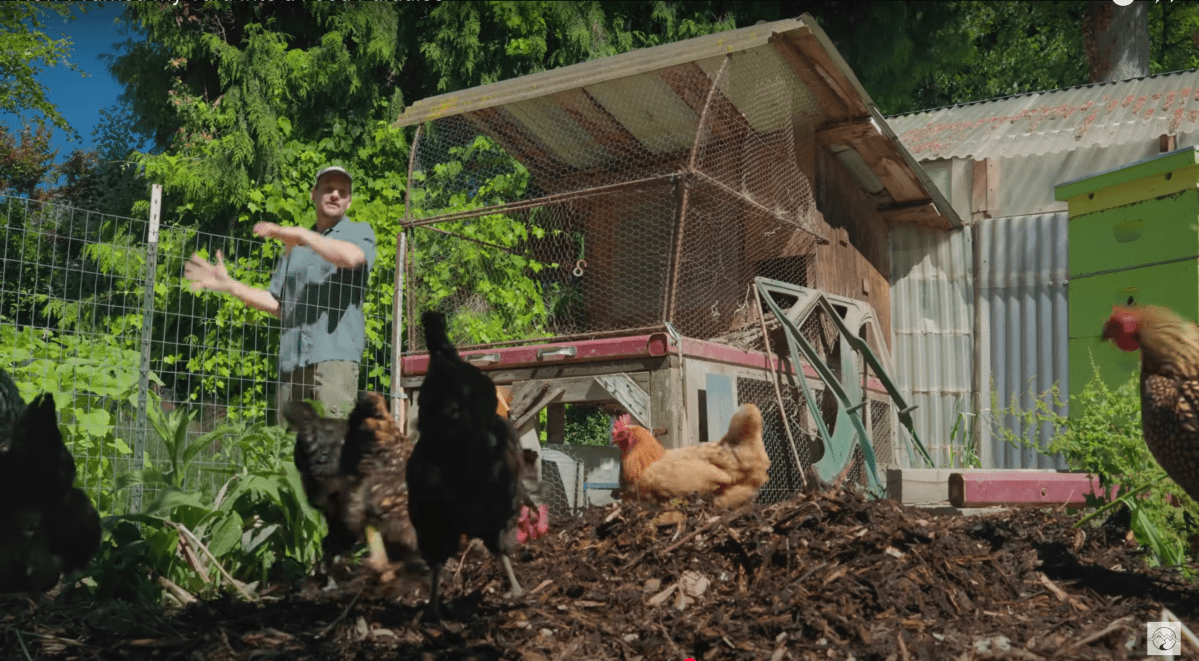
The chickens have a coop that can be accessed from either area and which is also connected to the greenhouse, which is part of Millison’s final strategy.
5. Create microclimates
Millison’s small lot has about 50 trees planted on it, but it’s designed as a “solar bowl” so that all of the plants get the amount of sunlight they need.
A microclimate element familiar to most of us is the greenhouse, and Millison’s greenhouse is made from mostly recycled materials. It stays much warmer than the outside, enabling him to keep citrus trees, desert foliage and other plants that don’t do well with prolonged below-freezing temperatures. (His greenhouse even has a jade plant from a cutting he got from Jerry Garcia(of The Grateful Dead.)
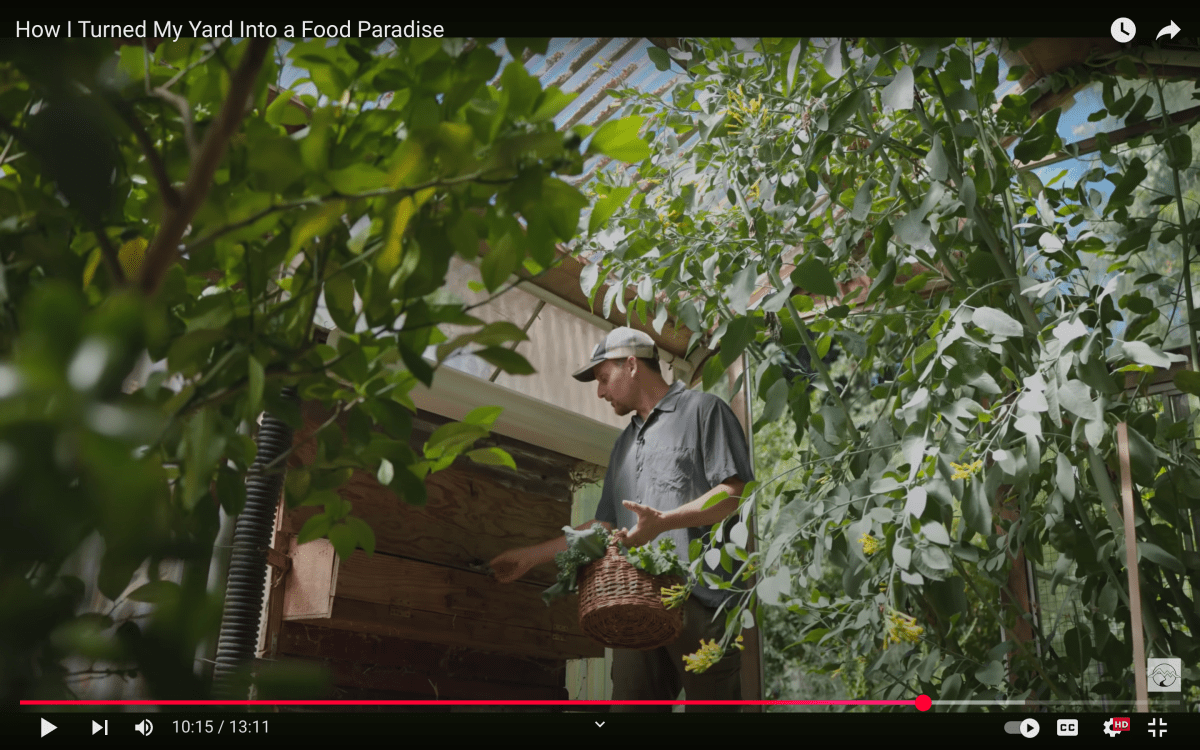
In an example of the whole permaculture design working together, the chickens’ nesting boxes in their coop are attached to and open up into the greenhouse for easy collection.
“You know, your quality of life really goes up when you surround yourself with gardens, with nature,” says Millison. “I find my peace in going out here and gardening. It’s my hobby. I have a lot of creative energy out here as well. It’s a wholesome feeling and it’s a secure feeling.”
Millison says the garden does help with their grocery bill and there’s nothing like eating something fresh that literally just been picked. But it’s also about sharing, he says.
“I’ve got a school down the block. The kids are always walking by, they’re eating all the berries and fruits on the sidewalk. I’ve got neighbors coming over—I’m always sharing my surplus. It’s a really good way to build community with your neighbors.”
Imagine if everyone’s yards were used to grow food this way. You can learn more about Millison’s expertise and other permaculture projects around the world on his YouTube channel as well as his website at andrewmillison.com.