
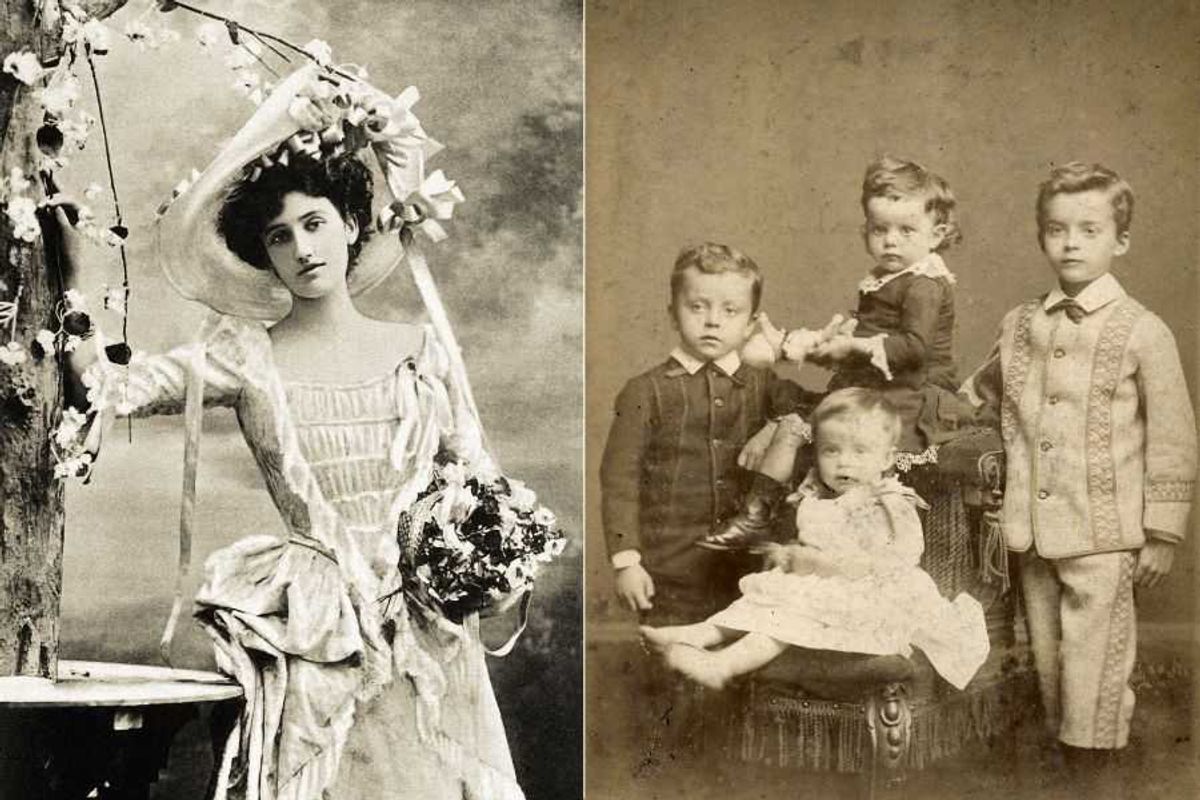
Historians explain why everyone was so pale in Victorian portraits.
When people think of portraits from the Victorian era, the images that come to mind are usually women in tight corsets with extremely pale skin. Children were also very pale and often appeared to have dark circles under their eyes. But why? It's not because they had better sunscreen in the 1800s.
The reason many people who posed for those portraits were as white as bleached cotton sheets is multifaceted. Portraits from the Victorian era generally depict wealthy people, which is likely the reason for the over-the-top dresses and hairstyles. Sitting for a formal portrait was an expensive luxury that poor people couldn't afford. If they had been able to, we'd probably see a lot more color in the faces being captured.
In the 1800s, especially during the European Victorian era, paleness indicated status. The paler you were, the more money you were assumed to have, signaling higher social status. It was believed that tan skin meant you did some form of outdoor manual labor, something associated with poorer people. Paintings from that era often show women enjoying the outdoors in multilayered dresses, carrying parasols to shield their fair skin from the sun. This belief that paleness displayed high status became a dangerous obsession, according to historians.
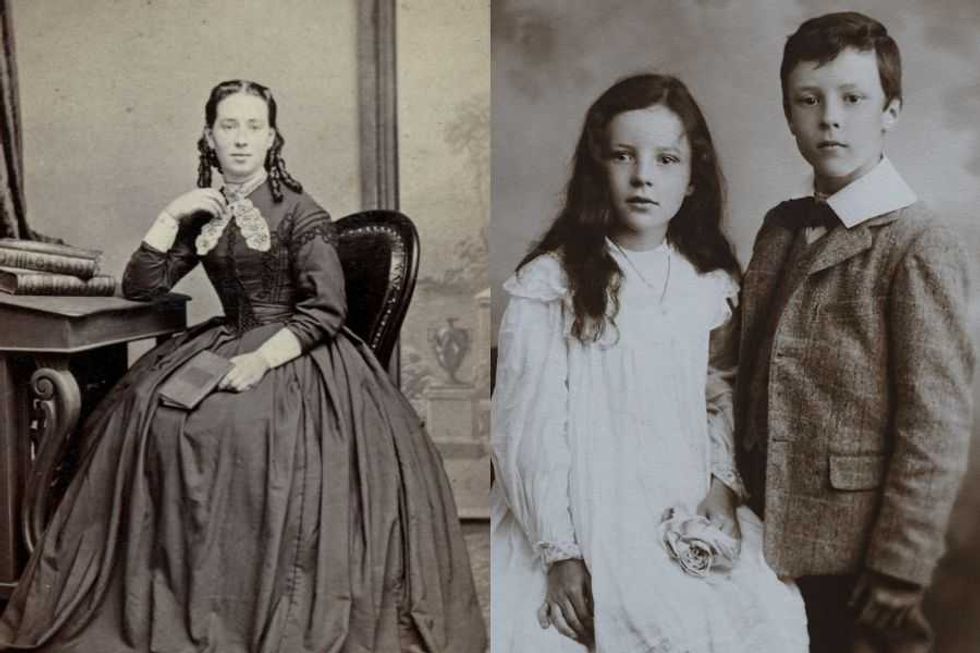 Vintage portraits of a woman and two children, showcasing elegant attire of their era.Photo credit: Canva
The Johnston Collection explains that the Romantic period marked a shift toward paleness and extreme thinness as the ultimate signs of wealth and beauty, writing, "many of the beauty icons of the day were depicted as skeletal thin with ghostly pale skin, glistening eyes, flushed cheeks and perpetually red lips." Those chasing this impossible beauty standard quickly noticed that contracting tuberculosis produced many of these highly sought-after features as the disease progressed.
"If a lady wasn't fortunate enough to suffer from such a glamorous illness, she could feign going into a decline – the desirable fragile look being simulated by drinking vinegar and dropping belladonna into the eyes," The Johnston Collection notes.
Belladonna is poisonous, but women of the era appeared unafraid to risk death for the privilege of being seen as beautiful. As the Romantic period faded, appearing sickly did not fall out of fashion. The Victorian era simply tied paleness to morality and social status, leading women to continue risking their lives to avoid being perceived as poor. Instead of trying to contract tuberculosis, women began ingesting arsenic, chalk, and even ground-up rocks to maintain a fair complexion.
 Three friends enjoy a lively music session indoors.Photo credit: Canva
History Facts shares:
"In 1851, a Swiss physician published a report in a medical journal about the 'toxicophagi,' a group of people in modern-day Austria who routinely consumed arsenic; they knew it was poison, but thought they could develop an immunity to it by starting with small doses and gradually increasing the intake. The report's author claimed that arsenic gave them great energy, sparkling eyes, and wonderful complexions, but noted that after long-term use, unsurprisingly, 'most arsenic eaters end with an inevitable infirmity of the body.'"
While there was some knowledge that consuming arsenic could be dangerous, it was still viewed as benign when used in other products. The chemical was used to create the color green in clothing, wallpaper, and other products. This led children to take on the same sickly look and eventually contributed to their deaths. Unintentionally, entire families were poisoned by their beautiful green wallpaper, dresses, baby blankets, and other household items.
It took one family losing multiple children to what doctors believed was diphtheria before a leading physician and a chemist teamed up to uncover why the children kept dying. After noticing the green wallpaper in the home, the doctor asked to perform an autopsy on the child who had recently died. The results of the tests changed how society treated the dangerous chemical.
If you ever find yourself gazing up at a portrait of a ghostly pale Victorian child or a wealthy Victorian woman, you'll know that arsenic is likely the reason. Ingesting deadly chemicals to keep up appearances is a practice that should probably stay lost to history.