upworthy
Add Upworthy to your Google News feed.
Google News Button
Joy

Five Gen X values from the ’90s that can save today’s world

We're bringing "whatever" back.

1990s, gen x, '90s values

A mix tape from 1992.

A few weeks ago I came across an article about a kid who watches television at 1.5x speed so he can cram as much viewing in as he can. It seemed that his unquenchable desire to get through shows in the Golden Age of television meant he’d sacrifice the entertainment value of the show just to get to the end.

“Man, this guy would have been crucified in 1993,” I thought.

As a 45-year-old card-carrying member of Generation X (those born between 1965 and 1979), I remembered a time when nobody bragged about the amount of TV they watched. In fact, they bragged about not owning a TV. “I don't watch TV, man,” people would say. “It only exists to sell you stuff.”

This complete reversal on the social acceptance of gluttonous TV viewing made me wonder what happened to the values we were raised on as Gen Xers? We were taught that sincerity was for simpletons, everything corporate is evil, old school is always better than the latest and greatest, authenticity is king, conformity is death and there is nothing worse than being a sell-out or a poser.


Nobody would have ever referred to themselves as an “influencer” in 1991—that’s the definition of a sell-out.

“After writing this book, I’m back in the mindset of ’90s thinking, which is that nothing is worse than selling out,” Chuck Klosterman, author of “The Nineties: A Book,” told Esquire. “Nothing was more embarrassing in the ’90s than trying to convince people to like the thing you made."

Deep inside the heart of almost every Gen Xer is a deep-seated feeling of nihilism. We didn’t trust the corporations that laid off our parents or gutted their pensions in the ’80s. In fact, everything corporate was predatory. We didn’t have a lot of faith in family values because we were the first generation raised by single parents or in daycare. We didn’t care much about politics either. Back in the ’90s, Gen X’s aversion to politics was historic.

Of course, these are all generalities about a generation of nearly about 65 million people, but studies show that there are some definite hallmarks of being a Gen Xer.


According to a generational differences document circulated through the business community, Gen X’s core values are “skepticism,” “fun” and “informality.” They’re described as “self-reliant,” “independent,” “unimpressed with authority” and motivated by “freedom.”

In the young Gen Xer, the culture of the era “instilled a wariness and skepticism, and a kind of ‘figure it out for yourself’ mindset,” Paul Taylor, author of “The Next America: Boomers, Millennials, and the Looming Generational Showdown” told The Washington Post. And with that came a sense “that you don’t have to shine a light on yourself. You’re not the center of the universe.”

But things have changed since the ’90s when Gen X was coming of age. We live in an American culture that is fractured by political partisanship, fueled by a constant culture of outrage, crippled by a preoccupation with technology, plundered by greedy boomers and annoyed by overly sensitive millennials. All of this is happening while we face the greatest challenge of our times, climate change.

The answer to all of these problems is simple: admit that Gen X at one point had it right and if we followed its lead, we could reverse these terrible trends. OK, it might not fix all of our woes, but the way things are going now surely aren’t working. Plus, weren’t the ’90s great?

Also, with hat in hand, I must admit that this message is for Gen Xers as well. Many of us have lost our way by forgetting our disdain for authority and skepticism toward institutions. This is a call for us to remember what we once stood for and to fight back by doing what we do best—staying above the fray.

Gen X, it’s time to strap on your Dr. Martens boots and get back to fighting the “Battle of Who Could Care Less.” It’s time we collectively got our “whatever” back and showed the other generations how powerful dismissiveness can be.

Here are the top five Gen X values that we need to embrace again.

5.  Buying vintage items

Nothing was less hip in the early ’90s than wearing mall clothes. If you had any style you shopped at a thrift store and bought used duds from the ’70s and early ’80s and remixed them into something awesome. If you were into hip-hop or skating you shopped at the surplus store and rocked some super-durable Dickies or Carhartt gear. The mood of the times was totally anti-fashion. These days, we live in a world where fast fashion is killing the environment. By embracing the Gen X value of old-school cool, we can help the planet while looking much more fashionable in the process.

4. Corporate skepticism

In the early 2000s, people fell head-over-heels in love with smartphone technology and social media so quickly that nobody stopped and said, “Hey, wait a minute!” Now, we have a world where kids are depressed, the culture has become divided and nobody talks to each other in public anymore, they just stare at their phones. I can totally understand why young millennials and Luddite boomers would fall for the big-tech ruse, but sadly, Gen X was asleep at the wheel and fell victim, too. The generation that embraced the notion that TV rotted your brain needs to remind everyone to go outside and play in the sunshine or read a book. And if you read a book it should be by Bret Easton Ellis.

3. Just say “whatever”

Two of the most popular Gen X phrases were “whatever” and “talk to the hand (because the face don’t give a damn).” These may seem to be flippant responses but they are the correct way to deal with other people’s nonsense and in 2022, we have to deal with a constant barrage of it.

Somewhere along the way, people forgot that it’s even more powerful to ignore someone than to admit they got under your skin. In the world of social media, we unintentionally amplify the most wretched voices by subtweeting, commenting and liking the posts from the army of grifters fighting for our attention.

We also live in an era where many seem to be addicted to outrage. The quickest way to stop fanning the flames of outrage is with a simple, “whatever.” Like dogs distracted by squirrels, we’ve got our heads on outrage swivels these days. Throwing around the occasional “whatever” gives us the time and energy to focus on the problems that really matter and take action.

These days “whatever” matters more than ever.

2. Bring back snobbery

Good taste used to matter. In the 2000s, millennials decided that people have the right to like what they like and that it’s worse to judge someone’s personal taste than to have bad taste. Gen Xers based their entire personalities on taste and demanded integrity from artists and were rewarded by living in a time of superior films and music. These days, no one listens to new music and we’re stuck in a world dominated by comic book movies because no one stood up and shamed people for liking low-effort culture.

1. ​Political apathy

America’s political divide has calcified over the past decade because more and more people are basing their personal identities on their politics. This has created a culture where the dialog between liberals and conservatives has become a shouting match that only makes people dig their heels in further. It’s also created a culture in Washington, D.C. that has attracted a more debased form of politician and led to the gridlock that has halted any sense of progress. Sadly, Gen X has also been sucked into this vortex.

Things were a lot different in the ’90s. Back in 1999, Ted Halstead at The Atlantic noted that Xers “appear to have enshrined political apathy as a way of life.” He added that Gen Xers “exhibit less social trust or confidence in government, have a weaker allegiance to their country or to either political party.”

Compared to what’s going on in America in 2022, this type of apathy seems welcome. Back in the ’90s, taking a “chill pill” could solve everything. Wouldn’t it be great if everyone took one, and then we could open our ears and hearts and have some constructive discussions?

There was a common lament in the 1980s that the boomer hippies had sold out and became boomer yuppies. They went from being concerned with peace, love and the planet to stocks, bonds and conspicuous consumption. Gen X is now in its 40s and 50s and it’s fair to say that we've moved from being the outsiders to creating technological and political machines that are generating the type of conformity that we once railed against.

Now that Xers are at the age where we get to run the world for a few decades, it’s time to recommit to the core values that make us well … us. The great news is that as Gen Xers, it’ll be easy to get back to our roots because we were raised to ironically love the past.


This article originally appeared on 03.10.22

From Your Site Articles
Once a refugee seeking safety in the U.S., Anita Omary is using what she learned to help others thrive.
Pictured here: Anita Omary; her son, Osman; and Omary’s close friends
True

In March 2023, after months of preparation and paperwork, Anita Omary arrived in the United States from her native Afghanistan to build a better life. Once she arrived in Connecticut, however, the experience was anything but easy.

“When I first arrived, everything felt so strange—the weather, the environment, the people,” Omary recalled. Omary had not only left behind her extended family and friends in Afghanistan, she left her career managing child protective cases and supporting refugee communities behind as well. Even more challenging, Anita was five months pregnant at the time, and because her husband was unable to obtain a travel visa, she found herself having to navigate a new language, a different culture, and an unfamiliar country entirely on her own.


“I went through a period of deep disappointment and depression, where I wasn’t able to do much for myself,” Omary said.

Then something incredible happened: Omary met a woman who would become her close friend, offering support that would change her experience as a refugee—and ultimately the trajectory of her entire life.

Understanding the journey

Like Anita Omary, tens of thousands of people come to the United States each year seeking safety from war, political violence, religious persecution, and other threats. Yet escaping danger, unfortunately, is only the first challenge. Once here, immigrant and refugee families must deal with the loss of displacement, while at the same time facing language barriers, adapting to a new culture, and sometimes even facing social stigma and anti-immigrant biases.

Welcoming immigrant and refugee neighbors strengthens the nation and benefits everyone—and according to Anita Omary, small, simple acts of human kindness can make the greatest difference in helping them feel safe, valued, and truly at home.

A warm welcome

Dee and Omary's son, Osman

Anita Omary was receiving prenatal checkups at a woman’s health center in West Haven when she met Dee, a nurse.

“She immediately recognized that I was new, and that I was struggling,” Omary said. “From that moment on, she became my support system.”

Dee started checking in on Omary throughout her pregnancy, both inside the clinic and out.

“She would call me and ask am I okay, am I eating, am I healthy,” Omary said. “She helped me with things I didn’t even realize I needed, like getting an air conditioner for my small, hot room.”

Soon, Dee was helping Omary apply for jobs and taking her on driving lessons every weekend. With her help, Omary landed a job, passed her road test on the first attempt, and even enrolled at the University of New Haven to pursue her master’s degree. Dee and Omary became like family. After Omary’s son, Osman, was born, Dee spent five days in the hospital at her side, bringing her halal food and brushing her hair in the same way Omary’s mother used to. When Omary’s postpartum pain became too great for her to lift Osman’s car seat, Dee accompanied her to his doctor’s appointments and carried the baby for her.

“Her support truly changed my life,” Omary said. “Her motivation, compassion, and support gave me hope. It gave me a sense of stability and confidence. I didn’t feel alone, because of her.”

More than that, the experience gave Omary a new resolve to help other people.

“That experience has deeply shaped the way I give back,” she said. “I want to be that source of encouragement and support for others that my friend was for me.”

Extending the welcome

Omary and Dee at the Martin Luther King, Jr. Vision Awards ceremony at the University of New Haven.

Omary is now flourishing. She currently works as a career development specialist as she continues her Master’s degree. She also, as a member of the Refugee Storytellers Collective, helps advocate for refugee and immigrant families by connecting them with resources—and teaches local communities how to best welcome newcomers.

“Welcoming new families today has many challenges,” Omary said. “One major barrier is access to English classes. Many newcomers, especially those who have just arrived, often put their names on long wait lists and for months there are no available spots.” For women with children, the lack of available childcare makes attending English classes, or working outside the home, especially difficult.

Omary stresses that sometimes small, everyday acts of kindness can make the biggest difference to immigrant and refugee families.

“Welcome is not about big gestures, but about small, consistent acts of care that remind you that you belong,” Omary said. Receiving a compliment on her dress or her son from a stranger in the grocery store was incredibly uplifting during her early days as a newcomer, and Omary remembers how even the smallest gestures of kindness gave her hope that she could thrive and build a new life here.

“I built my new life, but I didn’t do it alone,” Omary said. “Community and kindness were my greatest strengths.”

Are you in? Click here to join the Refugee Advocacy Lab and sign the #WeWillWelcome pledge and complete one small act of welcome in your community. Together, with small, meaningful steps, we can build communities where everyone feels safe.

This article is part of Upworthy’s “The Threads Between U.S.” series that highlights what we have in common thanks to the generous support from the Levi Strauss Foundation, whose grantmaking is committed to creating a culture of belonging.

quiet, finger over lips, don't talk, keep it to yourself, silence

A woman with her finger over her mouth.

It can be hard to stay quiet when you feel like you just have to speak your mind. But sometimes it's not a great idea to share your opinions on current events with your dad or tell your boss where they're wrong in a meeting. And having a bit of self-control during a fight with your spouse is a good way to avoid apologizing the next morning.

Further, when we fight the urge to talk when it's not necessary, we become better listeners and give others a moment in the spotlight to share their views. Building that small mental muscle to respond to events rather than react can make all the difference in social situations.


argument, coworkers, angry coworkers, hostile work enviornment, disagreement A woman is getting angry at her coworker.via Canva/Photos

What is the WAIT method?

One way people have honed the skill of holding back when they feel the burning urge to speak up is the WAIT method, an acronym for the question you should ask yourself in that moment: "Why Am I Talking?" Pausing to consider the question before you open your mouth can shift your focus from "being heard" to "adding value" to any conversation.

The Center for The Empowerment Dynamic has some questions we should consider after taking a WAIT moment:

  • What is my intention behind what I am about to say?
  • What question can I ask to better understand what the other person is saying?
  • Is my need to talk an attempt to divert the attention to me?
  • How might I become comfortable with silence rather than succumb to my urge to talk?

tape over muth, sielnce, be quiet, mouth shut, saying nothing A man with tape over his mouth.via Canva/Photos

The WAIT method is a good way to avoid talking too much. In work meetings, people who overtalk risk losing everyone's attention and diluting their point to the extent that others aren't quite sure what they were trying to say. Even worse, they can come across as attention hogs or know-it-alls. Often, the people who get to the heart of the matter succinctly are the ones who are noticed and respected.

Just because you're commanding the attention of the room doesn't mean you're doing yourself any favors or helping other people in the conversation.

The WAIT method is also a great way to give yourself a breather and let things sit for a moment during a heated, emotional discussion. It gives you a chance to cool down and rethink your goals for the conversation. It can also help you avoid saying something you regret.

fight, spuse disagreement, communications skills, upset husband, argument A husband is angry with his wife. via Canva/Photos

How much should I talk in a meeting?

So if it's a work situation, like a team meeting, you don't want to be completely silent. How often should you speak up?

Cary Pfeffer, a speaking coach and media trainer, shared an example of the appropriate amount of time to talk in a meeting with six people:

"I would suggest a good measure would be three contributions over an hour-long meeting from each non-leader participant. If anyone is talking five/six/seven times you are over-participating! Allow someone else to weigh in, even if that means an occasional awkward silence. Anything less seems like your voice is just not being represented, and anything over three contributions is too much."

Ultimately, the WAIT method is about taking a second to make sure you're not just talking to hear yourself speak. It helps ensure that you have a clear goal for participating in the conversation and that you're adding value for others. Knowing when and why to say something is the best way to make a positive contribution and avoid shooting yourself in the foot.

Planet

Our favorite giveaway is back. Enter to win a free, fun date! 🌊 💗

It's super easy, no purchase or donation necessary, and you help our oceans! That's what we call a win-win-win. Enter here.

Our favorite giveaway is back. Enter to win a free, fun date! 🌊 💗
True

Our love for the ocean runs deep. Does yours? Enter here!

This Valentine’s Day, we're bringing back our favorite giveaway with Ocean Wise. You have the chance to win the ultimate ocean-friendly date. Our recommendation? Celebrate love for all your people this Valentine's Day! Treat your mom friends to a relaxing spa trip, take your best friend to an incredible concert, or enjoy a beach adventure with your sibling! Whether you're savoring a romantic seafood dinner or enjoying a movie night in, your next date could be on us!

Here’s how to enter:


  • Go to upworthy.com/oceandate and complete the quick form for a chance to win - it’s as easy as that.
  • P.S. If you follow @oceanwise or donate after entering, you’ll get extra entries!

Here are the incredible dates:

1. Give mom some relaxation

She’s up before the sun and still going at bedtime. She’s the calendar keeper, the lunch packer, the one who remembers everything so no one else has to. Moms are always creating magic for us. This Valentine’s Day, we’re all in for her. Win an eco-friendly spa day near you, plus a stash of All In snack bars—because she deserves a treat that’s as real as she is. Good for her, kinder to the ocean. That’s the kind of love we can all get behind.


Special thanks to our friends at All In who are all in on helping moms!

2. Jump in the ocean, together

Grab your favorite person and get some much-needed ocean time. Did you know research on “blue spaces” suggests that being near water is linked with better mental health and well-being, including feeling calmer and less stressed? We’ll treat you to a beach adventure like a surfing or sailing class, plus ocean-friendly bags from GOT Bag and blankets from Sand Cloud so your day by the water feels good for you and a little gentler on the ocean too.

Special thanks to our friends at GOT Bag. They make saving the ocean look stylish and fun!

3. Couch potato time

Love nights in as much as you love a date night out? We’ve got you. Have friends over for a movie night or make it a cozy night in with your favorite person. You’ll get a Disney+ and Hulu subscription so you can watch Nat Geo ocean content, plus a curated list of ocean-friendly documentaries and a movie-night basket of snacks. Easy, comfy, and you’ll probably come out of it loving the ocean even more.

4. Dance all day!

Soak up the sun and catch a full weekend of live music at BeachLife Festival in Redondo Beach, May 1–3, 2026, featuring Duran Duran, The Offspring, James Taylor and His All-Star Band, The Chainsmokers, My Morning Jacket, Slightly Stoopid, and Sheryl Crow. The perfect date to bring your favorite person on!

We also love that BeachLife puts real energy into protecting the coastline it’s built on by spotlighting ocean and beach-focused nonprofit partners and hosting community events like beach cleanups.

Date includes two (2) three-day GA tickets. Does not include accommodation, travel, or flights.

5. Chef it up (at home)

Stay in and cook something delicious with someone you love. We’ll hook you up with sustainable seafood ingredients and some additional goodies for a dinner for two, so you can eat well and feel good knowing your meal supports healthier oceans and more responsible fishing.

Giveaway ends 2/15/26 at 11:59pm PT. Winners will be selected at random and contacted via email from the Upworthy. No purchase necessary. Open to residents of the U.S. and specific Canadian provinces that have reached age of majority in their state/province/territory of residence at the time. Please see terms and conditions for specific instructions. Giveaway not affiliated with Instagram. More details at upworthy.com/oceandate

winter coat, winter coats, how to clean winter coat, vodka on clothes, vodka laundry

A woman wearing a winter coat.

Winter coats go through a lot of wear and tear when we need them most during brutal winter temperatures. With winter weather not letting up anytime soon, they'll continue to play an important role in the coming months for those of us living in cold climates.

By midwinter, your winter coat may start to smell a bit... dank. But washing winter coats can be cumbersome and time-consuming.


Thankfully, a quick and easy solution can be found in your liquor cabinet, according to Patric Richardson, also known as "The Laundry Evangelist." Richardson shared the brilliant laundry hack on Instagram, showing his followers how to refresh winter coats without putting them in the washer.

How to refresh your winter coat

According to Richardson, you only need two simple items: a spray bottle and vodka. In the video, he explains that this winter he had to pull his parka out from the depths of his closet due to freezing temperatures and noticed that it smelled.

"I haven't worn it in like two years, and it smelled like the closet," he said. "It had that musty, sort of house smell, and I didn't have time to wash it."

What he did instead? He sprayed it with vodka.

"Spray it, spray it, spray it," he said. "You need to mist all over it. Let it sit for five or 10 minutes. Let it dry. And you're good to go. If you get pulled over by the cops, you're totally fine because vodka is odorless and colorless."

- YouTube www.youtube.com

He also recommends spraying vodka on other types of coats, like dress coats.

One viewer asked Richardson whether 70% alcohol, such as isopropyl alcohol, could be used instead. But it's a no-go. "It will leave an odor," he explained. "The denaturing process gives it a residual scent."

Richardson also noted that spraying vodka on wool coats is totally safe and can help remove heavy scents from cooking or spices.

"Fill a spray bottle with the stuff and use it to remove odors from clothes that are stinky but not dirty. No washing required!" he shared in a previous Instagram post.

Vodka removes strong odors from your winter coat because it's antibacterial, thanks to its alcohol content. In the United States, vodka must be at least 40% alcohol by volume (ABV), which helps neutralize the funky-smelling bacteria your coat may be harboring.

@brunchwithbabs

You likely have an odor fighter right in your liquor cabinet.  Grandma’s usually do know best because we have been around a long time.  And I learned this one from my Grandmother.  A simple spray of vodka can eliminate odors on clothing, furniture, upholstery and even mattresses.   All you need is vodka and a spray bottle - make sure your spray bottle has a mist setting - not just a straight spray.  To spray clothing, focus on the areas that collect the most bacteria and therefore odor - like under the sleeves.  Spray from about 18” away from the clothing in sort of a sweeping motion. The vodka clings to the smelly molecules that are produced naturally and then ferment and cause odor. So bye bye smelling clothes and wasting time and money cleaning or dry cleaning each time you wear something.

In an interview with Apartment Therapy, Richardson said that vodka can be sprayed on practically any clothing to remove unwanted scents:

"There's this wonderful costumer that comes to my store, and she always wants to give me a hug, and when she leaves I smell like [perfume]. I go in the stock room and have one of my sales people spray me with vodka to take that away. ... You can spray your gym bag with vodka; if you go to your favorite restaurant and you leave [smelling like food], you can spray that with vodka; If you stand next to a smoker, you can spray that with vodka."

arthur c. brooks, harvard, psychology, happiness research, bucket list

Harvard researcher Arthur C. Brooks studies what leads to human happiness.

We live in a society that prizes ambition, celebrating goal-setting, and hustle culture as praiseworthy vehicles on the road to success. We also live in a society that associates successfully getting whatever our hearts desire with happiness. The formula we internalize from an early age is that desire + ambition + goal-setting + doing what it takes = a successful, happy life.

But as Harvard University happiness researcher Arthur C. Brooks has found, in his studies as well as his own experience, that happiness doesn't follow that formula. "It took me too long to figure this one out," Brooks told podcast host Tim Ferris, explaining why he uses a "reverse bucket list" to live a happier life.


bucket list, wants, desires, goals, detachment Many people make bucket lists of things they want in life. Giphy
Brooks shared that on his birthday, he would always make a list of his desires, ambitions, and things he wanted to accomplish—a bucket list. But when he was 50, he found his bucket list from when he was 40 and had an epiphany: "I looked at that list from when I was 40, and I'd checked everything off that list. And I was less happy at 50 than I was at 40."

As a social scientist, he recognized that he was doing something wrong and analyzed it.

"This is a neurophysiological problem and a psychological problem all rolled into one handy package," he said. "I was making the mistake of thinking that my satisfaction would come from having more. And the truth of the matter is that lasting and stable satisfaction, which doesn't wear off in a minute, comes when you understand that your satisfaction is your haves divided by your wants…You can increase your satisfaction temporarily and inefficiently by having more, or permanently and securely by wanting less."

Brooks concluded that he needed a "reverse bucket list" that would help him "consciously detach" from his worldly wants and desires by simply writing them down and crossing them off.

"I know that these things are going to occur to me as natural goals," Brooks said, citing human evolutionary psychology. "But I do not want to be owned by them. I want to manage them." He discussed moving those desires from the instinctual limbic system to the conscious pre-frontal cortex by examining each one and saying, "Maybe I get it, maybe I don't," but crossing them off as attachments. "And I'm free…it works," he said.

- YouTube www.youtube.com

"When I write them down, I acknowledge that I have the desire," he explained on X. "When I cross them out, I acknowledge that I will not be attached to this goal."

The idea that attachment itself causes unhappiness is a concept found in many spiritual traditions, but it is most closely associated with Buddhism. Mike Brooks, PhD, explains that humans need healthy attachments, such as an attachment to staying alive and attachments to loved ones, to avoid suffering. But many things to which we are attached are not necessarily healthy, either by degree (over-attachment) or by nature (being attached to things that are impermanent).

"We should strive for flexibility in our attachments because the objects of our attachment are inherently in flux," Brooks writes in Psychology Today. "In this way, we suffer unnecessarily when we don't accept their impermanent nature."

What Arthur C. Brooks suggests that we strive to detach ourselves from our wants and desires because the simplest way to solve the 'haves/wants = happiness' formula is to reduce the denominator. The reverse bucket list, in which you cross off desires before you fulfill them, can help free you from attachment and lead to a happier overall existence.

This article originally appeared last year.

Art

Van Gogh painted his 'Starry Night' view dozens of times. Here are 5 most people have never seen.

There was one feature of the landscape that he initially said was "too beautiful for me to dare paint."

vincent van gogh, starry night, france, art, paintings, saint-remy, artists, perspective, master painters
Public domain/Wikimedia Commons

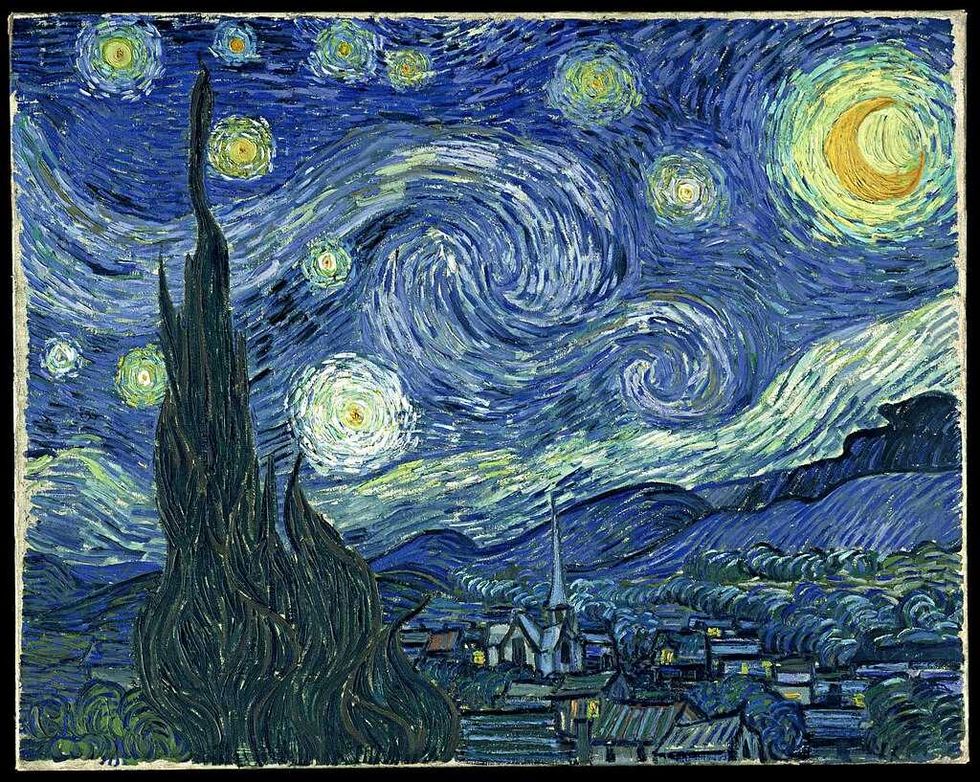
The famous view from "The Starry Night" was painted by Vincent van Gogh many times in lesser-known works.

Vincent van Gogh's The Starry Night is widely considered one of the most renowned paintings of all time, often uttered in the same breath as The Mona Lisa and The Last Supper by Leonardo da Vinci, as well as Edvard Munch's The Scream, among many others.

It has been discussed at length in both art history and pop culture, yet there are still plenty of mysteries for the casual fan to uncover about this incredible work of art.


The Starry Night was painted while van Gogh was voluntarily staying at the asylum of Saint-Paul-de-Mausole in Saint-Rémy-de-Provence, France. He checked himself in shortly after cutting off part of his own ear in late 1888 and famously painting his iconic Self-Portrait with Bandaged Ear. He continued to experience mental health challenges after the incident and sought help in May 1889.

vincent van gogh, starry night, france, art, paintings, saint-remy, artists, perspective, master painters "The Starry Night"Public domain/Wikimedia Commons

The Starry Night is van Gogh's interpretation of the view from his room at the asylum. The Van Gogh Gallery notes, "Van Gogh lived well in the hospital; he was allowed more freedoms than any of the other patients. If attended, he could leave the hospital grounds; he was allowed to paint, read, and withdraw into his own room. He was even given a studio."

He lived there for about a year and created countless works. Fascinatingly, he painted variations of the same view many times over in works that would go on to achieve only a fraction of The Starry Night's fame.

Here are five lesser-known van Gogh paintings from nearly the same perspective as The Starry Night:

1. Wheat Field with Cypresses (September 1889)

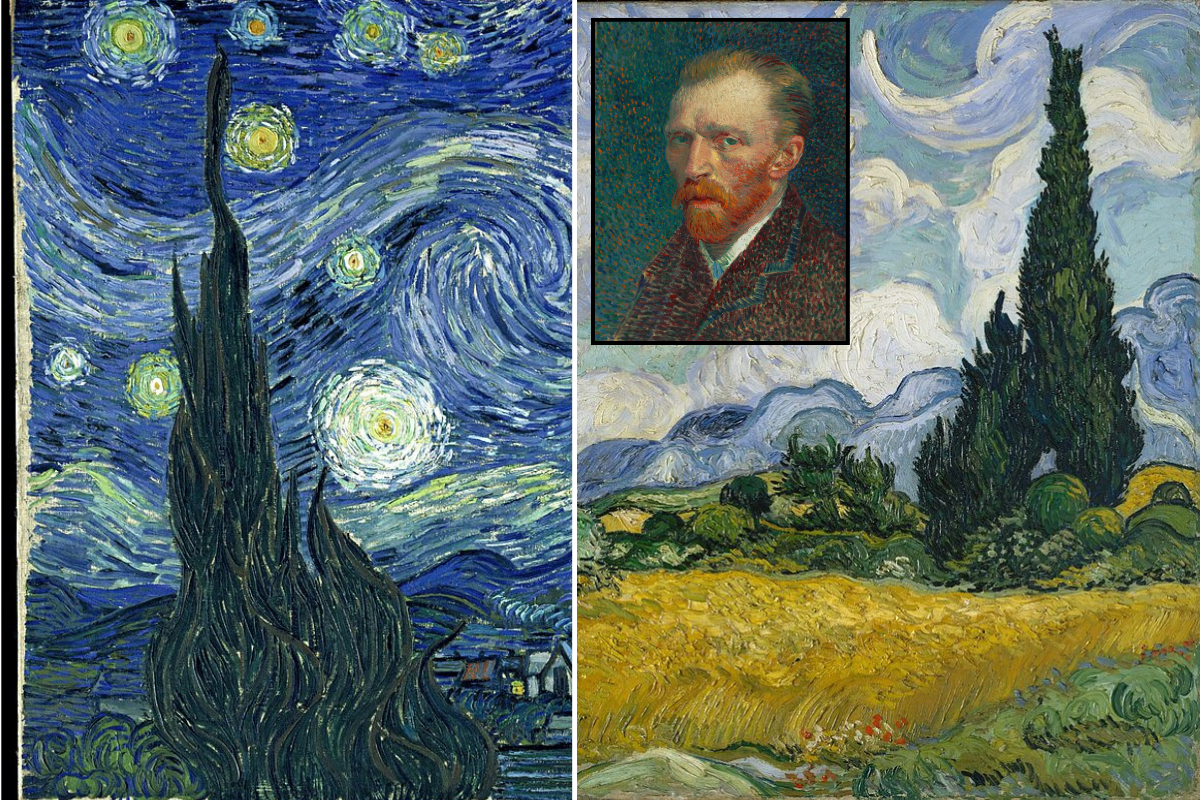
Wheat Field with Cypresses was painted several months after van Gogh completed The Starry Night. The two works closely resemble one another, from the unique shapes of the cypress trees to the contours of the mountain range and the swirling clouds. Notably, this piece is painted in a much lighter palette than the darker tones van Gogh used earlier that summer, which the Van Gogh Gallery links to his struggles with mental health at the time. An earlier version of Wheat Field with Cypresses was darker than the September version.

vincent van gogh, starry night, france, art, paintings, saint-remy, artists, perspective, master painters "Wheat Field with Cypresses"Public domain/Wikimedia Commons

2. Mountainous Landscape Behind Saint-Paul Hospital (early 1889)

Mountainous Landscape Behind Saint-Paul Hospital is a precursor to The Starry Night, predating it by an unknown amount of time. The view, however, is nearly identical. The central rolling hill, which gives way to the oddly shaped mountain ridge, is a dead ringer for how the landscape appears in van Gogh's most famous work.

vincent van gogh, starry night, france, art, paintings, saint-remy, artists, perspective, master painters "Mountainous Landscape Behind Saint-Paul Hospital"Public domain/Wikimedia Commons
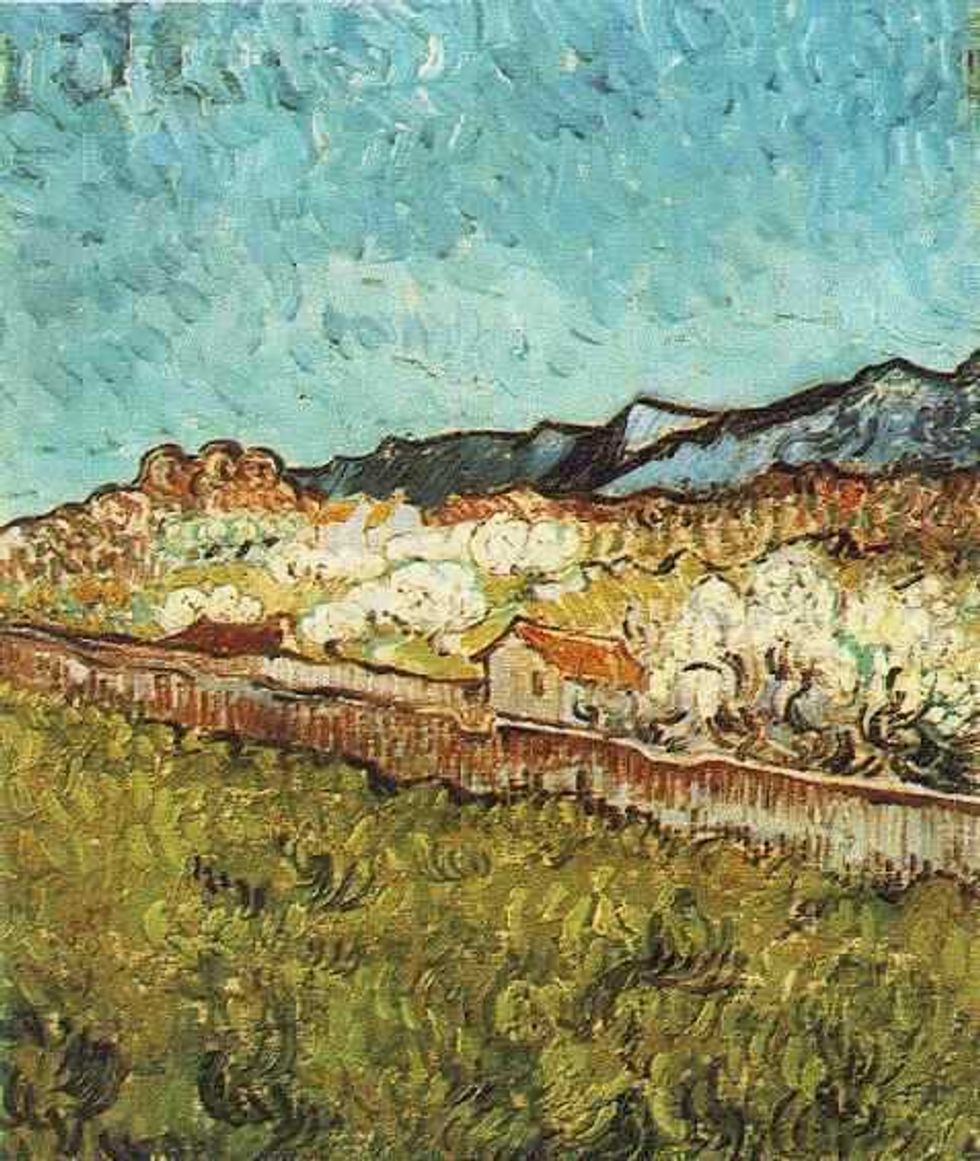
3. At the Foot of the Mountains (June 1889)

This painting was completed shortly before van Gogh began The Starry Night and offers a slightly different perspective. The sky is relatively cloudless, but the mountains are as distinctive as ever. The same, or a very similar, small cottage at the center of the painting shows up repeatedly in van Gogh's works from Saint-Rémy.

vincent van gogh, starry night, france, art, paintings, saint-remy, artists, perspective, master painters "At the Foot of the Mountains"Public domain/Wikimedia Commons

4. Wheat Field with Reaper and Sun (June 1889)

Here's a similar scene done closer to sunrise, casting a golden hue over the familiar landscape. Van Gogh would go on to paint the same reaper several more times. During this period, he repeatedly created studies of the same scenes and revisited them from multiple angles.

vincent van gogh, starry night, france, art, paintings, saint-remy, artists, perspective, master painters "Wheat Field with Reaper and Sun"Public domain/Wikimedia Commons

5. Olive Trees with the Alpilles in the Background (June 1889)

What's fascinating about this one, besides showing an alternative perspective on the view from The Starry Night, is that it represents one of van Gogh's greatest achievements. In a letter to his brother, the artist admitted that he found olive trees "too beautiful for me to dare paint."

At the asylum, he had plenty of time on his hands and finally worked up the courage to give it a try.

"The olive trees are very characteristic, and I'm struggling to capture that," he wrote. "It's silver, sometimes more blue, sometimes greenish, bronzed, whitening on ground that is yellow, pink, purplish or orangeish to dull red ochre. But very difficult, very difficult."

vincent van gogh, starry night, france, art, paintings, saint-remy, artists, perspective, master painters "Olive Trees with the Alpilles in the Background"Public domain/Wikimedia Commons

Seeing van Gogh's many attempts and perspectives during his stay at the asylum, and how his techniques and use of color evolved over time, is fascinating and adds texture and meaning to The Starry Night.

It's no wonder art lovers continue to make pilgrimages to Saint-Rémy to take in the views for themselves. Visitors can even tour van Gogh's room and look out the very same window on a guided visit. While some of the scenery has changed, the landscape is very much the same. It really gives you a whole new appreciation for how he captured the magic of the mountains and sky and created something that continues to move people more than 125 years later.

decluttering, making decluttering fun, decluttering ideas, items to donate, goodwill, how to declutter, decluttering tips

Left: A woman holding her finger up to convey a secret. Right: A hand placing an antique item on a window ledge.

For many of us, decluttering is a necessary evil. We take no joy in it, other than knowing our lives might run a little more smoothly afterward. It's sort of like going to the dentist or getting an oil change.

But like so many of life's mundanities, could decluttering become something we actually look forward to if we found a way to infuse a little playfulness?


For Stephanie Patrick, that meant secretly leaving random items at other people's houses.

In a mega-viral Instagram clip, Patrick is seen placing a tiny bar of soap, a small creamer pitcher, and a vintage glass tealight candle holder on different countertops, accompanied by the caption, "Sometimes you gotta do what you gotta do."

The video has been viewed more than 25 million times, with thousands of people praising Patrick for her "diabolical" yet "genius" idea. Here are just a few of the reactions:

"A clever menace. I love it."

"This is amazing. They are going to go crazy asking each other 'where did this come from? Do you know where this came from?'"

"I have never felt so inspired in my whole entire life."

"UNHEIST"

"Reverse burglary"

This isn't Patrick's first, ahem, unconventional decluttering idea. In another video, we see her placing random items—a picture frame, a mini sewing kit, a sequined heart pillow, and yet another tealight candle holder—along the aisles of Hobby Lobby. Retail sticker and everything.

"I'm sure they will sell eventually," she wrote.

While leaving items for retail workers to deal with isn't the best option, Patrick clarified in the comments that she only "pretended" to leave the items behind. Still, there's something to be said for gamifying decluttering so the process itself becomes a bit more enjoyable.

Here are a few ideas procured from around the web:

Creative ways to make decluttering fun

- YouTube www.youtube.com

Hanger reversal

Turn all your hangers the wrong way. When you wear an item, flip the hanger back. After six months, donate anything that's still reversed.

The "no-thing" prize

Reward yourself with an experience, like a movie or dessert, rather than more items.

Take the 12-12-12 challenge

Locate 12 items to throw away, 12 to donate, and 12 to return to their proper homes. You can customize the challenge however you see fit.

Take before-and-after photos of a small area

Choose one part of your home, like a kitchen counter, and take a photo of a small area. Quickly clear away the items in the photo, then take an after shot. Once you see how your home could look, it becomes easier to start decluttering other areas.

Play the "minimalism game"

Created by Joshua Fields Millburn and Ryan Nicodemus ("The Minimalists"), this game has you determine how many items you'll declutter based on the day of the week, such as 20 items on the 20th. You can find a free printable by clicking here.

Decluttering jar

A "declutter jar" contains color-coded sticks for each area of the house. The kitchen might be marked blue, with each blue stick representing a specific area, such as the pantry, under the sink, the junk drawer, or the cup shelf. Whatever stick you draw is the area you declutter. No decision-making necessary.

The "moving method"

Pretend you're moving into a smaller, but swankier, home and only keep what you absolutely love or need. Tap into your imagination while making room for real life. A win-win.

Lastly, never underestimate the power of simply throwing on a bangin' decluttering playlist. Whatever route gets you there is the route worth taking. Of course, if you follow in Patrick's footsteps, you might have some explaining to do to your friends.