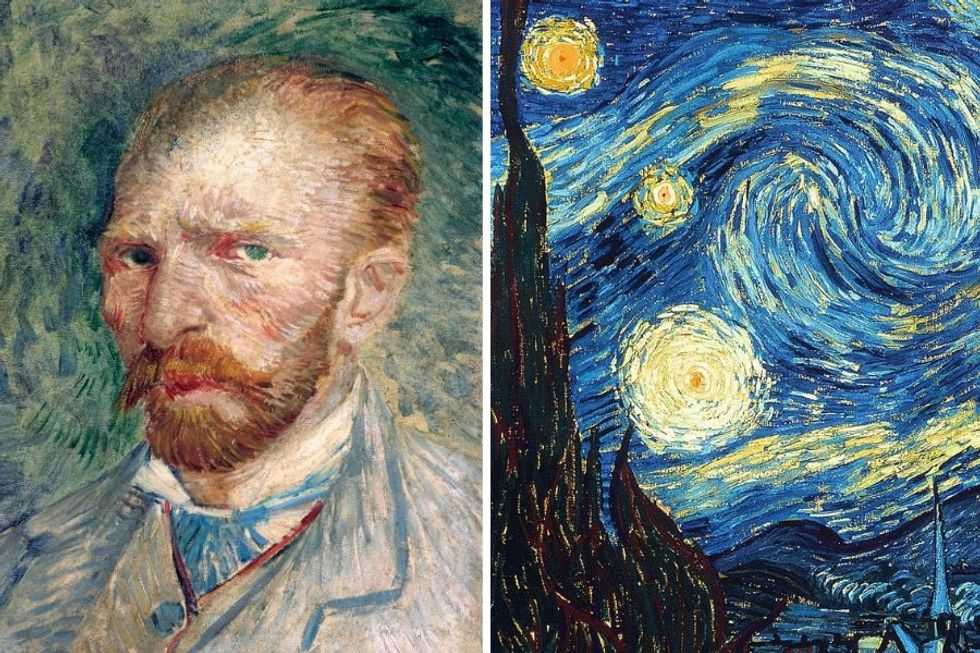
Vincent van Gogh’s “The Starry Night” is one of the most recognizable works of Western art, and van Gogh is a household name even among people who aren’t big art connoisseurs. Few artists reach that kind of legendary status, especially when they only paint for a short period of time, like van Gogh did.
Most of us know at least a little bit about van Gogh due to the dramatic story of him cutting off his own ear. But there’s also a ton of lore and legend ranging in accuracy about the man and his art, so it’s worth doing a dive into some of the true fascinating facts about both. A video from Great Art Explained provides a concise but comprehensive overview of who he was and how he worked, giving us a bigger picture of the legend as well as his most famous piece.
Here are some facts the average person might not know about Vincent van Gogh:
1) Van Gogh only painted for a decade, starting in his late 20s.
For such a famous artist, van Gogh didn’t paint for very long. He didn’t seriously begin painting until around age 27, but he dedicated himself fully to his art until he died from a self-inflicted gunshot wound to the chest at age 37. Still, his prolific talent was legendary, as he created some 900 paintings and over 2,000 pieces of art overall during his decade of work. He had just begun being recognized for his artistic talents when he died, and most of his famous paintings were created in his final two years of life.
2) Van Gogh spent time in a mental institution, but it wasn’t the typical asylum experience of his time.
In 1889, van Gogh was admitted into a mental asylum outside Saint Remy, France. But unlike the overcrowded public mental institutions in large cities, the small asylum only had 41 patients and was run by a progressive doctor who believed in treating mentally ill people with kindness and understanding. Art and nature were seen as healing, and doctors quickly realized that van Gogh wouldn’t survive if he didn’t have the freedom to paint and create. He spent all of his waking hours painting and created many of his most well-known works—including “The Starry Night”—while gazing out his barred asylum window at the beautiful countryside dotted with olive groves and vineyards or wandering the purposefully planted gardens.
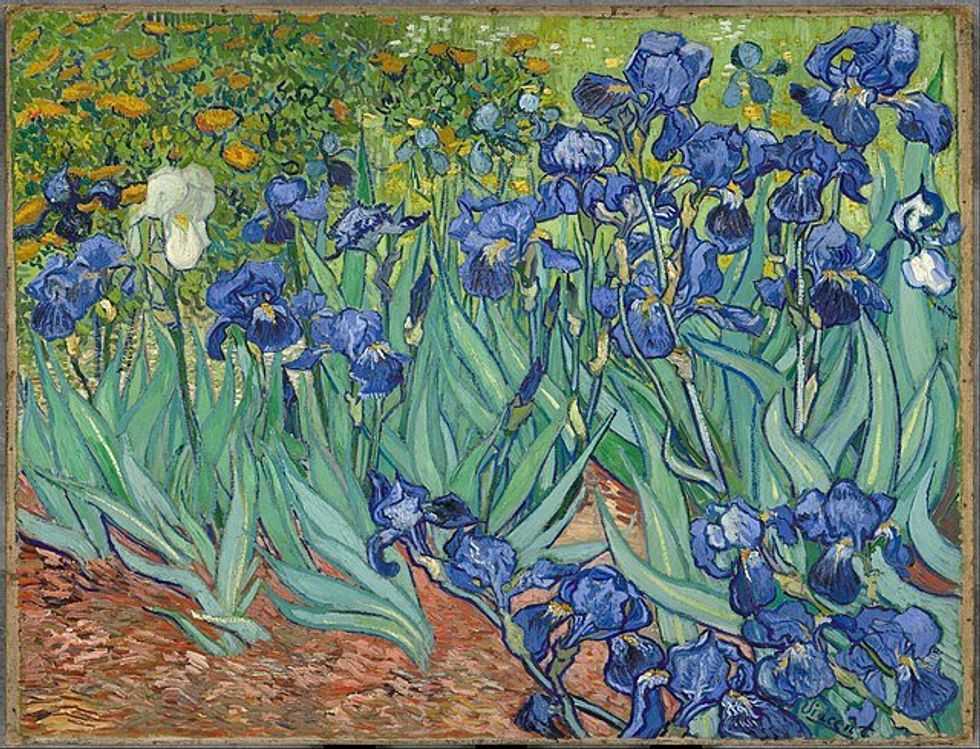
3) He was perfectly lucid and rational most of the time.
Today, van Gogh would likely be diagnosed with bipolar disorder, and his behavior during manic episodes—like cutting off his own ear and giving it to a prostitute—has planted in people’s minds a picture of van Gogh as a crazed lunatic. However, he was actually lucid and rational most of the time. Not only that, but he was intelligent and extremely well-read, spoke four languages, and had lifelong friends as well as a close relationship with his brother and sister-in-law. The history-defining ear incident was not his usual modus operandi. In fact, the video notes that he was “probably the sanest patient at St. Remy.”
4) He also had syphilis.
This fact can’t really be separated from his mental illness challenges, as syphilis can cause psychiatric problems.
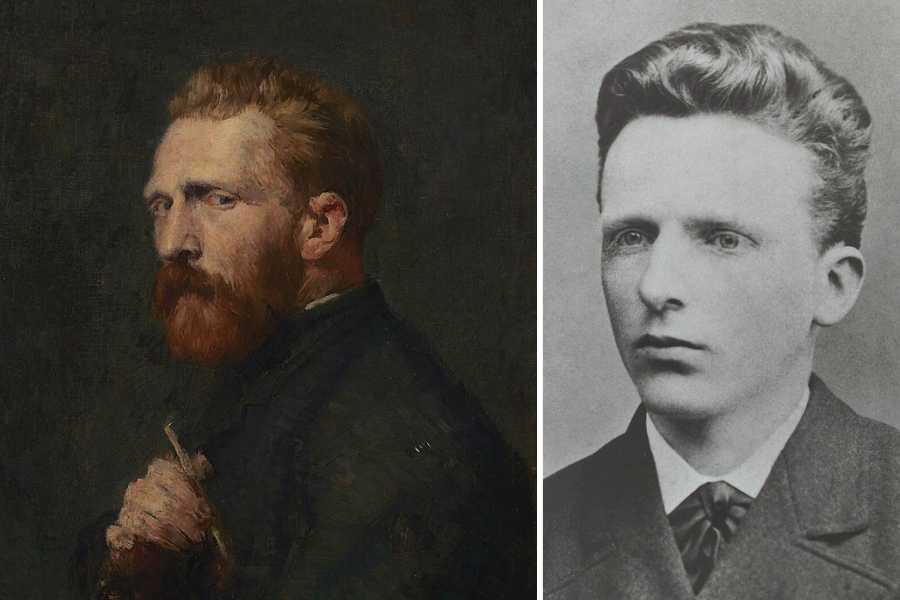
5) Van Gogh’s brother Theo was his biggest supporter.
Throughout his life, van Gogh’s younger brother Theo supported him in every way: financially, emotionally, and artistically. An art dealer himself, Theo encouraged his brother to develop his painting skills. Theo paid for Vincent’s treatment at the asylum and was also the one who insisted that he be able to paint there. Much of what we know about van Gogh comes from letters he wrote to Theo, and the two shared a close bond. Theo was with Vincent when he died, two days after shooting himself in the chest. Theo, who also had syphilis, would die just six months later from the effects of the disease.
6) Van Gogh’s “The Starry Night” was influenced by Japanese art.
Like many of his Western colleagues at the time, van Gogh was influenced by art from Japan, and many of his paintings reflect elements of Japanese prints. He was an admirer of Hokusai’s “The Great Wave Off Kanagawa,” and it’s not a stretch to see how it may have inspired the swirl pattern and blue colors of “The Starry Night.”
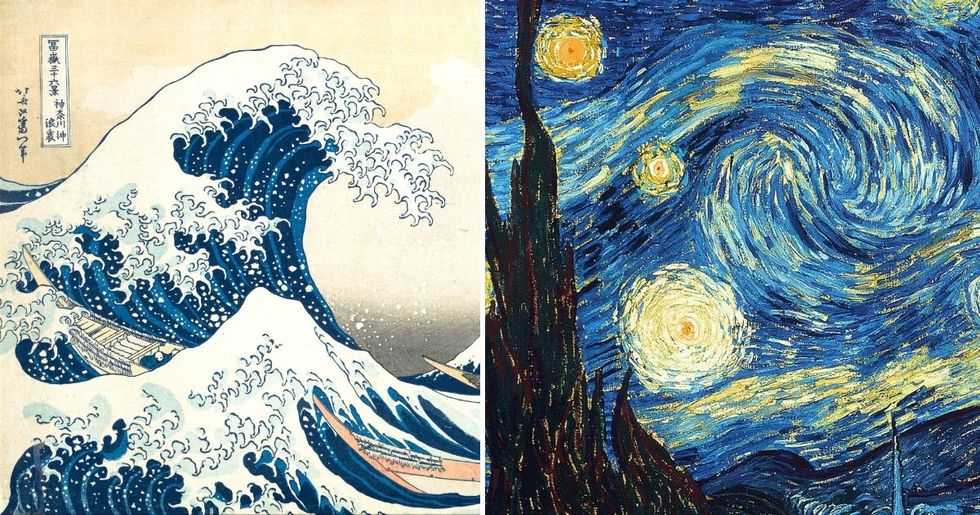
7) Van Gogh tried to poison himself with paints and turpentine a few weeks before painting “The Starry Night.”
The bright colors that marked the last five years of van Gogh’s art also nearly took his life. New techniques in creating pigments in paints led to a dramatic shift from dark, brooding paintings to bright, colorful ones as van Gogh entered his peak years. But his mental health also took dramatic turns, and prior to painting “The Starry Night” in 1889, medical notes from the asylum indicate that he drank paint and turpentine as a suicide attempt.
8) Van Gogh became very religious but eventually lost his faith in Christianity.
Van Gogh was raised by a Christian minister father and developed a deep religious faith, even becoming an evangelical preacher himself for a time. But later, his relationship with religion morphed into a belief that the divine was expressed in nature, art, and human emotion rather than the church.
9) Van Gogh considered “The Starry Night” a failure.
With his standards for himself set impossibly high, van Gogh felt that many of his paintings were failures, including, apparently, “The Starry Night.” He wrote to fellow painter Emile Bernard several months after painting it, “I have been slaving away on nature the whole year, hardly thinking of impressionism or of this, that and the other. And yet, once again I let myself go reaching for stars that are too big—a new failure—and I have had enough of it.”
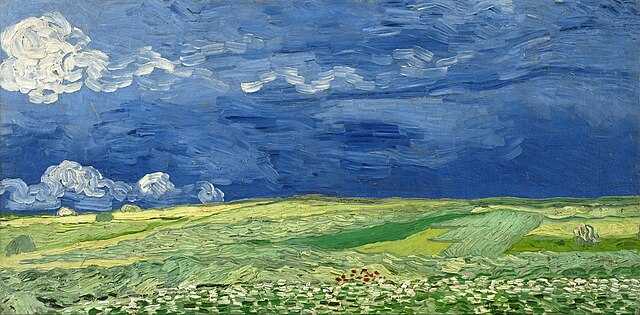
10) Van Gogh painted wheatfields with turbulent skies shortly before taking his life in a wheatfield.
Through letters to his brother and art created near the time of his death, we get a glimpse into van Gogh’s mindset leading up to his suicide. He wrote to Theo on July 10, 1890:
“. . . knowing clearly what I wanted I’ve painted another three large canvases since then. They’re immense stretches of wheatfields under turbulent skies, and I made a point of trying to express sadness, extreme loneliness. You’ll see this soon, I hope – for I hope to bring them to you in Paris as soon as possible, since I’d almost believe that these canvases will tell you what I can’t say in words, what I consider healthy and fortifying about the countryside.”
Sadly, a wheatfield in the “healthy and fortifying countryside” was where van Gogh shot himself in the chest with a pistol just over two weeks later. He would die of his injuries two days later with Theo by his side.
11) Van Gogh was entirely wrong about his own legacy.
Less than two months before his suicide, van Gogh wrote to a critic who had praised his work in a Paris newspaper, “It is absolutely certain that I shall never do important things.” Though he had started to see some success as an artist, there was no inkling that he would become one of the most famous and iconic artists of all time. If he had lived, he might have seen the full recognition of his artistic genius in his lifetime or he may not have. But as it was, he died believing himself to be an insignificant failure, which might be the most tragic fact of all.
There may be many lessons we can glean from van Gogh’s story, but perhaps the biggest is to not discount our own talents, skills, or contributions. Like him, we may not be seeing the full picture.
This article originally appeared in July. It has been updated.