upworthy
Add Upworthy to your Google News feed.
Google News Button
Body Image

People who are 'good at flirting' are sharing the clues that tell if someone likes you

Here are 15 great tips.
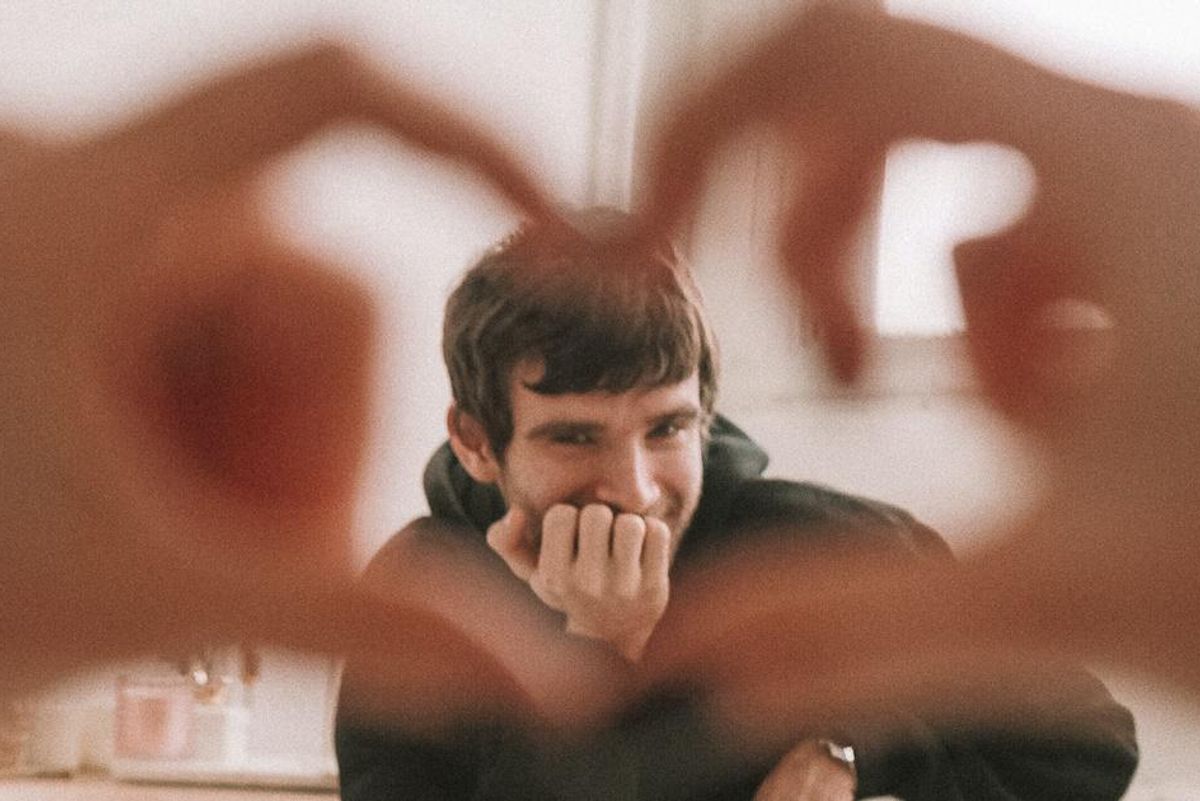
Man smiling behind heart hands
via Pexels

Are they flirting with me or just being nice?

Most of the time it’s tough to know if someone is flirting with you because they have to be subtle. They can’t be too obvious because if the feeling isn’t mutual it can be pretty embarrassing. It’s also tough to detect if someone is flirting because most of the time it’s someone you don’t know very well. Do they like me or are they normally friendly?

It hurts to imagine the number of times we’ve all missed signals that someone was interested in us and a potentially wonderful romance never happened. However, studies show that it happens more often than not.

A study on heterosexuals published in Psychology Today found that women were only 18% accurate in recognizing men’s flirting, while 36% of men were accurate about women's flirting. However, we’re really good at knowing when people aren’t flirting with us.

In the same study, women were 83% accurate in seeing friendliness as just friendliness, and men performed about the same at 84% accuracy.

Jeffery Hall, an assistant professor of communication studies at the University of Kansas in Lawrence, says there are five main styles of flirting: physical, traditional, polite, sincere, and playful.

Physical flirting involves “communicating sexual interest” to a potential partner. Traditional flirting is a tactic primarily used by introverts, where men tend to take the lead and women assume a passive role. Polite flirting involves the use of “proper manners” and is a cautious way of showing you like someone.

Sincere flirting involves telling the person you’re interested, and playful flirts like joking around but their efforts rarely turn into substantial relationships.

A Reddit user, who has since deleted their profile, asked a great question on the AskReddit subforum that should be a big help to those who have a hard time spotting flirtation. They asked, "People who are good at flirting, what are some social cues us oblivious people should watch out for?"

A large number of people who responded to the thread gave practical advice on the behaviors that are a giveaway that someone is flirting. The most popular responses are eye contact and laughing at your jokes, even if they aren’t funny.

Here are 15 of our favorite social cues that show someone is interested.

1. The dance of plausible deniability.

"Everyone is giving good advice, but flirting didn't click for me until i heard it described not as a set of behaviors to look out for, but as an escalation of suggestive behaviors couched in plausible deniability.

"Put practically, if someone is doing something to engage you that feels extra (lots of touching, looking at you in a way that feels a bit to long, or doing a lot of poking fun and complimenting you), then that might be flirting or it might not. That's the whole point. Plausible deniability. They can safely disengage at any time.

"If you want to know if someone's flirting, you need to test it. You do that by escalating things, but just a bit, so that now you have plausible deniability (touch them back in a comfortable way, maintain eye contact, or joke-compliment them back). If they escalate back and continue to do so as you escalate in turn, that is flirting. Eventually one of you will break cover and do something with clear intent (a kiss, an approach + ask for a number, or straight up telling them what you think of them and that you're interested). Otherwise, if you escalate and they don't change their behavior or they back off, then they were probably just being friendly and you should take the hint and do the same.

"Dunno if that's something obvious to people, but it was definitely not for me, and college parties would have been way less fun had i not known. Hopefully this can help someone else too :)" – three_furballs

2. Give 'em a chance to be alone.

"If you're in a group of friends (new or old), find a natural opportunity to hang back. Someone who's interested in you will notice and take the opportunity to talk to you in private. Now this isn't full [fool] proof but it'll at least give you the opportunity to feel for any chemistry between you." – Kagamid

3. Conversation should be two-sided.

"Be wary of a one-sided conversation. If your responses are met with mostly "yeps" and "uh huh" and nothing without meat, its probably not going well." – ViciousKnids

4. Ignoring their friend.

"If they look directly at you while talking to their friend it's a good sign." – yassis_bru

5. The reaction shot.

"I read once that if someone looks at you after someone (doesn't have to be you) said something funny and everyone is laughing, they like you. From personal experience, it's true." – luv_sicK

6. Lots of eye contact.

"They make a lot of eye contact. They are interested in what you have to say and ask you lots of questions. They laugh at your jokes, even the lame ones. They initiate physical contact. They try to find space where you can talk more privately (this does not always mean sex but it often means they wish for more quality time with you)." – TheSurfingRaichu

7. Trust then test.

"In my experience, almost everyone can get a sense that someone is into them, but most people second guess themselves until they convince themselves it's nothing. I say trust that sense. It's based off all of these factors that we pick up consciously and subconsciously, and almost always it's not a coincidence.

"When you think someone likes you, you can test that theory in a few ways. A subtle but effective example is inviting them to something you know they can't or don't want to attend. If they express interest in rescheduling or finding some other way to spend time with you, they like you. Otherwise they'll just say no, sorry I can't make it ... Of course, you could also just ask. In my experience anyone worth getting intimate with is mature enough to deal with that question." – MildlyWyld

8. Mirroring.

"Does their body turn toward you or away from you when you talk? Do they mirror your body language?" – Perfect_Draw516

9. They touch you.

"Physical contact. Granted, not everyone flirts the same way but a good sign is if they touch your arm (or the like) or you find them smiling the whole time that you’re talking to them." – Cosmic_Marman

10. Special eye contact.

"When you're in a public space, the direct eye contact (for a beat or two too long) and the look away. One of my go-to moves that always yielded results." – LuLu42

11. Bad jokes.

"Seriously tell a bad joke - look for laughter and smiles that should not be there but are. Then it’s you they are into, definitely not what you said." – YukonBrawler

12. Facial gestures.

"According to Sherlock: licking lips, eyes cast down towards the other persons lips, quirky smile of the lips, dilated eyes. And if the person has long hair, tucking it behind their ear or other fidgety behavior." – fandomfangirl1

13. Mimicking body language.

"In the case of someone who likes you, while interacting, watch for repetitious patterns and mimic their body language. Eventually, if you cross your arms and the person whose attention you are seeking does the same, for example, you can rely on that being a good sign." – flungkle

14. Little adjustment.

"I've noticed that women will do a little adjustment to you, like brushing off a little piece of lint off your lapel or moving a stray hair off your face while talking to you. At least they did back in my rogue days." – robfrankel1

15. Take your shot.

"If you're at a bar and a woman makes eye contact for more than a second without looking away, shoot your shot." – sle7in360

There you have it! If you're picking up any of these signs, it might mean you can go ahead and shoot your shot (respectfully!). Good luck out there!

This article originally appeared three years ago.

Once a refugee seeking safety in the U.S., Anita Omary is using what she learned to help others thrive.
Pictured here: Anita Omary; her son, Osman; and Omary’s close friends
True

In March 2023, after months of preparation and paperwork, Anita Omary arrived in the United States from her native Afghanistan to build a better life. Once she arrived in Connecticut, however, the experience was anything but easy.

“When I first arrived, everything felt so strange—the weather, the environment, the people,” Omary recalled. Omary had not only left behind her extended family and friends in Afghanistan, she left her career managing child protective cases and supporting refugee communities behind as well. Even more challenging, Anita was five months pregnant at the time, and because her husband was unable to obtain a travel visa, she found herself having to navigate a new language, a different culture, and an unfamiliar country entirely on her own.


“I went through a period of deep disappointment and depression, where I wasn’t able to do much for myself,” Omary said.

Then something incredible happened: Omary met a woman who would become her close friend, offering support that would change her experience as a refugee—and ultimately the trajectory of her entire life.

Understanding the journey

Like Anita Omary, tens of thousands of people come to the United States each year seeking safety from war, political violence, religious persecution, and other threats. Yet escaping danger, unfortunately, is only the first challenge. Once here, immigrant and refugee families must deal with the loss of displacement, while at the same time facing language barriers, adapting to a new culture, and sometimes even facing social stigma and anti-immigrant biases.

Welcoming immigrant and refugee neighbors strengthens the nation and benefits everyone—and according to Anita Omary, small, simple acts of human kindness can make the greatest difference in helping them feel safe, valued, and truly at home.

A warm welcome

Dee and Omary's son, Osman

Anita Omary was receiving prenatal checkups at a woman’s health center in West Haven when she met Dee, a nurse.

“She immediately recognized that I was new, and that I was struggling,” Omary said. “From that moment on, she became my support system.”

Dee started checking in on Omary throughout her pregnancy, both inside the clinic and out.

“She would call me and ask am I okay, am I eating, am I healthy,” Omary said. “She helped me with things I didn’t even realize I needed, like getting an air conditioner for my small, hot room.”

Soon, Dee was helping Omary apply for jobs and taking her on driving lessons every weekend. With her help, Omary landed a job, passed her road test on the first attempt, and even enrolled at the University of New Haven to pursue her master’s degree. Dee and Omary became like family. After Omary’s son, Osman, was born, Dee spent five days in the hospital at her side, bringing her halal food and brushing her hair in the same way Omary’s mother used to. When Omary’s postpartum pain became too great for her to lift Osman’s car seat, Dee accompanied her to his doctor’s appointments and carried the baby for her.

“Her support truly changed my life,” Omary said. “Her motivation, compassion, and support gave me hope. It gave me a sense of stability and confidence. I didn’t feel alone, because of her.”

More than that, the experience gave Omary a new resolve to help other people.

“That experience has deeply shaped the way I give back,” she said. “I want to be that source of encouragement and support for others that my friend was for me.”

Extending the welcome

Omary and Dee at the Martin Luther King, Jr. Vision Awards ceremony at the University of New Haven.

Omary is now flourishing. She currently works as a career development specialist as she continues her Master’s degree. She also, as a member of the Refugee Storytellers Collective, helps advocate for refugee and immigrant families by connecting them with resources—and teaches local communities how to best welcome newcomers.

“Welcoming new families today has many challenges,” Omary said. “One major barrier is access to English classes. Many newcomers, especially those who have just arrived, often put their names on long wait lists and for months there are no available spots.” For women with children, the lack of available childcare makes attending English classes, or working outside the home, especially difficult.

Omary stresses that sometimes small, everyday acts of kindness can make the biggest difference to immigrant and refugee families.

“Welcome is not about big gestures, but about small, consistent acts of care that remind you that you belong,” Omary said. Receiving a compliment on her dress or her son from a stranger in the grocery store was incredibly uplifting during her early days as a newcomer, and Omary remembers how even the smallest gestures of kindness gave her hope that she could thrive and build a new life here.

“I built my new life, but I didn’t do it alone,” Omary said. “Community and kindness were my greatest strengths.”

Are you in? Click here to join the Refugee Advocacy Lab and sign the #WeWillWelcome pledge and complete one small act of welcome in your community. Together, with small, meaningful steps, we can build communities where everyone feels safe.

This article is part of Upworthy’s “The Threads Between U.S.” series that highlights what we have in common thanks to the generous support from the Levi Strauss Foundation, whose grantmaking is committed to creating a culture of belonging.

Education

How embracing the 'Empty Boat Theory' can help you keep anger and anxiety in check

The classic Taoist parable has found new life on TikTok, but its core message stays the same.

empty boat theory, taoism, buddhism, psychology, mindset, anger, anxiety, self help, mindfulness

Ancient wisdom for the modern day.

We all have moments where it feels like the world is against us. When we assume people are thinking negatively about us, we act accordingly by becoming angry or anxious. Once that mindset latches on, it can be tough to let go.

But one simple Taoist parable-turned-viral-TikTok-hack offers a gentle yet powerful reminder that we are not the main character in everyone’s story.


What is the “Empty Boat Theory”?

@sean.of.the.living The “empty boat” theory has me brain spinning lately. This is a brain hack to staying in a happier mindset. #advice #emptyboat #lifehack ♬ original sound - sean.of.the.living

Think of it as a thought experiment. Imagine yourself on a boat in the middle of a lake, as another boat drifts towards you, threatening to knock right into you. The closer this incoming vessel gets, the angrier you become.

Then, at the last second, you steer your boat out from the path of collision, only to notice that the other boat is empty. What this really puts into perspective, as TikToker @sean.of.the.living put it, is “There was never anybody to be angry with in the first place.”

“That’s life, isn’t it?” he said. “We assume everything’s about us. ‘They’re just doing that to screw me, to piss me off.’”

“Most of the time, nobody’s thinking about you.”

The Empty Boat Parable

@aliabdaal The Empty Boat: A Lesson in Letting Go A man gets furious when another boat crashes into him, shouting and ready to fight. But when the fog clears, he sees the boat is empty. No one was steering, no harm was intended. His anger disappears. Most frustrations in life are just empty boats. People are dealing with their own struggles, not trying to hurt you. Next time you feel anger rising, ask yourself – am I just reacting to an empty boat?
♬ original sound - Ali Abdaal

However, long before it was a viral brain hack on TikTok, this story taught how much self-inflicted suffering comes simply from the stories we tell ourselves about other people's attitudes towards us.

As the parable goes, a young monk (or simply a young man, depending on which version you read) hops onto a boat in hopes of finding a quiet spot to meditate. Suddenly, he is bumped by another boat. Furious, the monk opens his eyes and lashes out at the person responsible for disrupting his flow. There is, however, no one to blame. The boat is empty. Knowing there's now no one to be mad at, truly, the man's anger instantly dissipates.

The core message is that sometimes a bump is just a bump. We need not assume malicious intent, and would be better equipped to handle life’s collision with grace if we didn’t.

The Spotlight Effect

Bringing it into therapy-speak, the Empty Boat Theory/Parable also relates to the spotlight effect, which is the tendency to wrongly believe that others are mentally scrutinizing us when, in fact, they are likely not thinking about us at all.

This bias is a symptom of egocentrism. You don’t have to be a full-blown narcissist to be egocentric. We all, from time to time, consider ourselves to be the center of the universe in some way. It’s part of being an individual! But without mindfulness, we can let our egos overestimate how many eyes are actually on us at any given time, which only leads to a lot of unnecessary anxiety.

Whether you wanna call it a brain hack, ancient wisdom, or a psychological principle, we could all benefit from reminding ourselves to really pick our battles. Easier said than done in today’s world, but vital nonetheless. Here's to hoping that being aware of all the empty boats out there will lead to smoother sailing for everyone.

And if you're wondering just who’s to blame for letting that rogue boat out to wreak havoc on the water…? Well, that’s a different conversation.

This article originally appeared last year.

grass skiing, 1980s, '80s nostalgia, skiing, sports
Photo credit: YouTube screenshots via Warren Miller Entertainment

People are blown away by this '80s video of people grass skiing.

The video absolutely screams "1980s": a group of young men walk up a grassy hill with some kind of equipment on their backs, clad in short shorts and loud-looking wind breakers. But then something weird happens: as retro synthesizers blare in the background, they strap on what look like tricked-out roller skates and start gliding down a grassy hill. They perform gleeful mid-air splits, leap over tree trunks, and enjoy the editing benefits of super-cool slow-mo. What exactly is happening here?

The video, which appears to be compiled from a 1984 skiing documentary, went viral in January 2026 through an X post captioned "In the 1980s many were certain summer skiing would become a thing." People responded with a blend of confusion and nostalgia—wondering if the video was even real, pointing out how dangerous this sport looked, and asking why they'd never even heard of grass skiing to begin with.


"Well, why didn't it catch on?"

Here are some of the best reactions:

"This looks like a great way to frolic"

"This looks incredibly fun"

"LOL! The body english on the jumps is peak 80s. I wanna go back, go back, and do it all over but I can't go back I know...."

"Yep Still have mine but wouldn't dare nowadays."

"Guessing the broken arms, legs, backs, and necks convinced people it was not a great idea. Snow is far more forgiving."

"Where does one find a grassy hillside like this?"

"Wait…… HOW IS THIS NOT A THING?!!!! Somebody make them now!!!!! I swear I’ll buy the first pair!!!!"

"Looks fun until you faceplant right into dirt"

"80s seemed like so much fun. I’m a 90s kid and that was fun too but 80s feels like it was more raw"

"Fun fact: crashing hurts less and causes less damage in the snow."

"Well, why didn't it catch on?"

- YouTube www.youtube.com

The history of grass skiing

If you're like most people in the comments, you'd probably never seen this footage, which appears to be taken from the Warren Miller documentary Ski Country. According to The Ski Journal, that film "marked the height of grass skiing in the United States," 21 years after the sport was invented by Josef Kaiser in Germany. They note an average pair of these skis "consist of 192 rolls and some 1,500 individual pieces," with variations depending on the discipline and application.

The ultra niche design, The Ski Journal writes, is part of the activity’s "downfall" in the U.S. "The skis are made to be carved, and so snow-plowing and hockey-stopping aren't possible," they note, "meaning options for stopping are limited to falling or running out of momentum at the bottom of the hill." Nonetheless, the activity did have a brief moment in the sun. It's reportedly been Stateside since 1966, when it first hit Bryce Mountain Resort in Virginia. In 2024, SnowTrex Magazine notes that competitions are still held in Europe.

If you want to learn more about grass skiing, check out the detailed page at the International Ski and Snowboard Federation website.

- YouTube www.youtube.com

Gen X; Gen X grandparents; absent grandparents; Gen X worst grandparents; Millennials; worst grandparents; Gen Z

Gen X designated the 'worst grandparents' by Millennials

Generation X, typically the children of Baby Boomers born between the years of 1965-1980 tend to have a complicated reputation depending on who you ask. Some view them as a feral generation never to be spoken of poorly without consequence, while others view them as innovators pushing us into the future. But in recent years, Gen Xers have been dubbed the "worst grandparents" by social media users.

This multi-year conversation started when a video went viral calling Gen X out for being "terrible" grandparents, claiming that they never want to help with grandchildren. It didn't take long before other Millennials piled on to air their own grievances about Gen X grandparents. Most people criticizing the "new grandparents" were genuinely perplexed as to how they did not want to be more involved in the lives of their grandchildren.


Gen X; Gen X grandparents; absent grandparents; Gen X worst grandparents; Millennials; worst grandparents; Gen Z Family baking fun in the kitchen.Photo credit: Canva

Kylie Muse reveals in a video that she felt neglected by her Gen X parents growing up, saying, "It's quite a common theme for Gen X parents to be neglectful in some capacity and it's just crazy to me how more of them haven't learned from the past 20 to 30 years, instead of these grandparents seeing their kids having kids as an opportunity to restore the health in their relationships with their kids by showing up and helping them during the hardest transition of their lives, they would rather double down and compromise their relationship with that next generation. All for the sake of hyper-individualism and pride."

@kylies.muse

Gen x grandparents and their beloved empty nest 🥴 just say you hate having a family 😭 #grandparents #grandparentsoftiktok

The critique coming from the younger generation is not lost on Gen X, and they started coming out in force to respond with such vigor you'd think John Hughes had just announced the re-release of The Breakfast Club. It would seem that some of the people complaining of the lack of involvement have not considered that Gen X could have valid reasons for not immediately jumping in to take on grandparenting in the way some expect. A man by the name of John S. Blake gives a candid look into why Gen X was neglected as children and, in turn, became hype-independent at an early age.

"As a Gen X who's been on this earth long enough to have some hindsight I can tell you this, being independent at a young age is not a flex, what it actually means is capitalism is so brutal that our parents were forced to neglect their own children to stay alive. My generation was struggling so much that we had to leave our children unattended in order to produce enough so that we could afford to exist," Blake says.

@blackfluidpoet

Replying to @ellens0061 #foryoupage #homealone #fyp #foryou

But perhaps one of the most heart wrenching explanations comes from an elder Millennial who goes by the name Amazing Dea. In response to another Millennial who asks about Gen X being let off the hook, Dea shares, "Being as though you look like you might be a younger Millennial, let me go ahead and enlighten you. Generation X and older Millennials had to live through more than just this pandemic. We had the crack epidemic, we had the AIDS epidemic and let me tell you something, it was scary as f***."

Dea went on to explain that there were apartment complexes burned due to high populations of people with AIDS living in them and how they would witness people go from being completely normal to being addicted to crack in a matter of weeks. It seems that depending on socioeconomic status, Gen Xers lived wildly different lives with the common theme being growing up entirely too fast at an extremely young age.

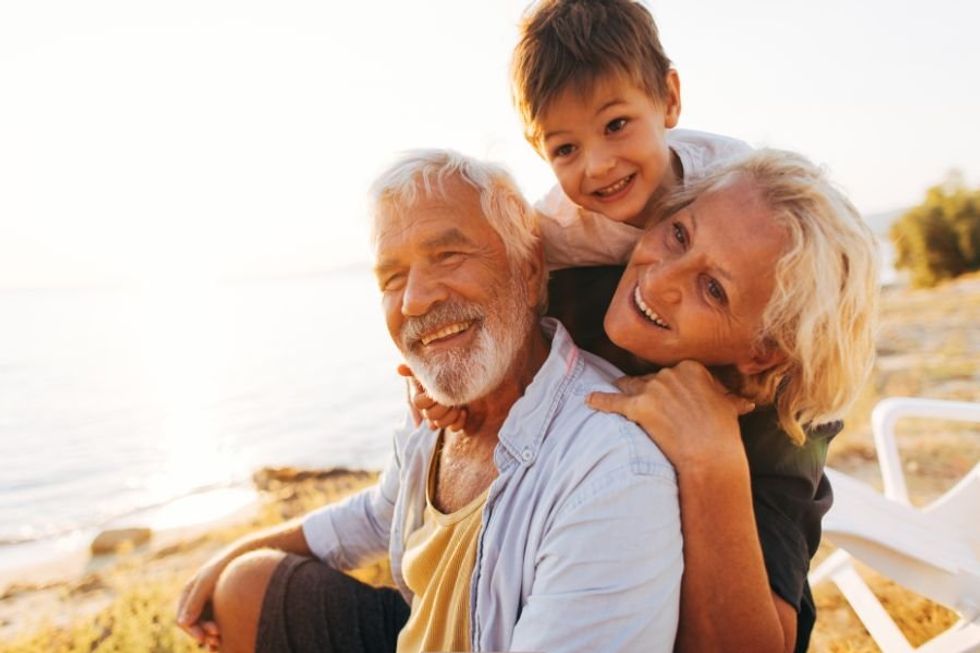
Gen X; Gen X grandparents; absent grandparents; Gen X worst grandparents; Millennials; worst grandparents; Gen Z Three generations smiling by the sea.Photo credit: Canva

Another person kindly breaks down the confusion over why Gen X isn't rising to the occasion of being award-winning grandparents. In response to the criticism she replies, "We grew up in a different time, first of all. A lot of us, meaning me, Gen X, I was raised by boomers. A lot of us did not get raised by our grandparents. We were like the feral kids, like by 7 and 9 years old we were actually babysitting our brothers and sisters, alright."

The woman explains further in the video that Gen X doesn't want to raise their grandchildren or simply be babysitters, that there's a difference between expecting grandparents to be involved and expecting them to be babysitters.

@that1crazy72

Let’s take it a step further. You share DNA with your grandkids they are part of you not everyone gets the privilege of being a grandparent so if you are one take that as a blessing #genxgrandparents

In many of the response videos shared by Gen Xers, they certainly seem to love their grandchildren and children alike, but there's a discrepancy in expectation. The consensus of the forgotten generation seems to be that they had adult responsibilities much too early, were exposed to adult life experiences at a young age, and were often left to their own devices for long periods of time while also being told that their voices didn't matter.

While the argument seems to be around their lack of involvement as grandparents, they appear to be saying that they want to enjoy the freedom they didn't have as children, while being valued as a person and not a babysitter. In many follow up videos, Gen Xers gushed over their grandchildren and how they loved when they were around. It's just that they draw the line at raising them. Maybe for some, their experiences with their own childhood isn't enough to move Gen X out of the "worst grandparents" category, but for others it provides much needed context.

This article originally appeared in June.

Health

Caregivers at senior living home share the 3 hard truths they wish everyone knew

"Sometimes people forget how much we love the elderly we work with."

caregiving, caregivers, elderly, senior living, senior citizens
Photo credit: Canva

A caregiver helps their patient.

While caring for the elderly can be extremely rewarding, it comes with a specific set of challenges that aren't often discussed. Delivering high-quality care is vital for anyone in this position, but this must come with a level of patience many of us might take for granted.

While visiting my own mother in the senior living home where she resides, I was able to sit down for heart-to-hearts with a few of the caregivers who work for various residents. They opened up in a way I found beautifully vulnerable and surprising. Here are their stories. (At their request, I have changed their names.)


Setting boundaries with families

caregiving, caregivers, nursing, family dynamics, elderly, senior living Caregiver discusses a patient with another family member.Photo credit: Canva

A woman named Veronica shared that she often feels stuck in the middle of family disputes. "I don't like it when I'm just trying to do my job and take care of clients and I've got 20 people calling me. Sisters, wives, brothers, daughters, sons, and even best friends. Everyone has an opinion. I wish they'd have family meetings and decide what to do without sticking me in the middle."

Another woman, Anne, added her two cents, saying, "Family dynamics are tricky. I want to respect how hard it is to age on everyone in the family, without feeling like I'm inserting myself in the drama."

They want to be asked about their day

caregiving, caregivers, burnout, nursing, elderly, senior citizens A caregiver takes a break. Photo by Vladimir Fedotov on Unsplash

Anne shares that she sometimes feels invisible. "Sometimes I wish they would ask how things are in my life. What my hopes and wishes are. I would like it if they understood that sometimes I need a day off, or that my body hurts sometimes."

On a resource site for caregivers, one of the helpful tips is finding the balance between helping others and self-care. This means paying attention to their own mental and physical health needs. "Maintaining your health is crucial for being able to care effectively for your loved one. Take care of your own health by focusing on nutrition, exercise, and sufficient rest. Regular self-care routines can help you stay strong and resilient in the face of caregiving demands."

Mental Health America also has a few articles dedicated to self-care as a caregiver. "If you cannot remember the last time you slept properly, ate adequately, exercised weekly, or did not feel guilty about taking a sick day, then you're probably feeling the impacts of caregiving on your mental and physical health. Ask yourself: 'What could I do to replenish myself?'"

They go on to give tips: "Is there any small action that could improve my life or make me feel more content with my present state? If you're treating yourself fairly, the answer should be yes. Everyone always has some need that could be better fulfilled—caregivers are no exception."

Hard to say goodbye

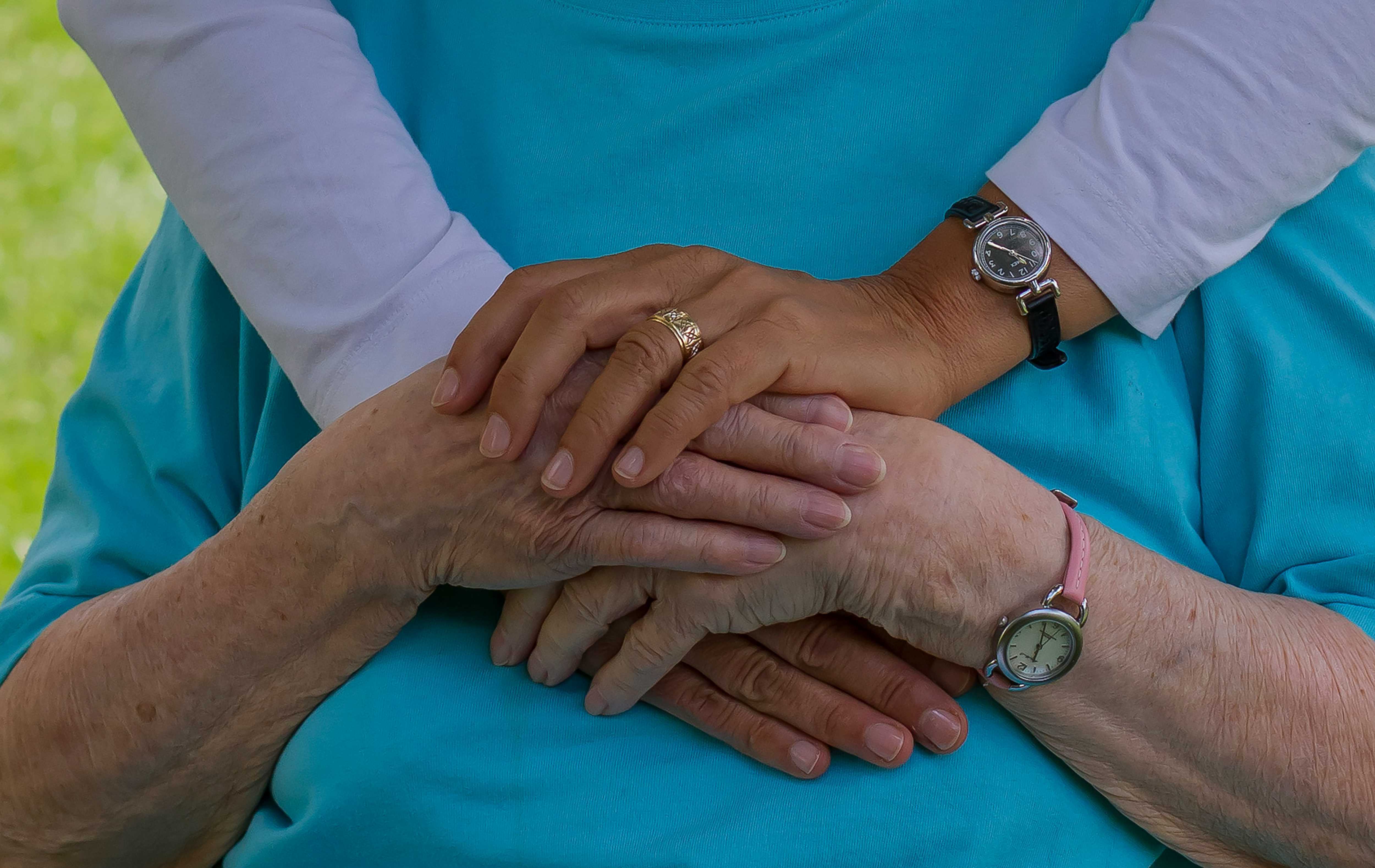
caregiving, caregiver, elderly, senior citizens, loss, grief Elderly people holding hands. Photo by Dulcey Lima on Unsplash

Sometimes, especially after a caregiver has worked with a person for more than a month or two, they develop a true bond. While the connection is genuinely satisfying, it can make the loss of that patient even harder.

Mark, who has been working with senior citizens for two decades, explains how devastating the losses can feel. "I worked with a woman named Evelyn for seven years. She passed away at the age of 94. It's especially hard because when you're in this business, you might have three clients pass in the span of a few weeks."

Veronica added, "Sometimes people forget how much we love the elderly we work with."

These sentiments come back to decompression. Processing just one loss can be difficult. Having to do so for multiple people in a short amount of time takes extra healing time for everyone.

The resource site also notes how important it is to take breaks when needed. "Caregiving can be overwhelming, so taking respite breaks regularly is important. These breaks can help prevent burnout and give you time to recharge. Schedule time for yourself to engage in activities that you enjoy and that help you relax."

vegan, bacon, habits, food, vegetarian, eating

The "vegan but bacon" message went viral.

Most of us have things we want to do in life, goals we want to achieve, but find that all kinds of obstacles get in our way. Sometimes those obstacles are external things we can't control, and sometimes they are internal things we aren't consciously aware of that hold us back.

For instance, certain mindsets can keep us from making progress, from negative thinking to creating rules for ourselves that don't actually exist. One example of the latter was brilliantly challenged by a vegan content creator named Liz, who had someone tell her that they'd go vegan if it weren't for their love of bacon. Her response was powerfully simple: "So do it. Go vegan but bacon."


Liz, Tiktok, video, viral, content creator, vegan TikTok · liz 🌱🥕🪱🤎 www.tiktok.com

The TikTok post was viewed nearly three million times, topped only by her similar post that said the same thing, but with cheese instead of bacon. Lots of people in the comments of both posts shared that they eat vegan 95% of the time, eat vegan only at home but not at other people's houses, or that they have one specific non-vegan food they eat but stick to plant-based foods otherwise. As Liz says, "Harm reduction is harm reduction," and most people do things a step at a time, not all at once.

The idea that you don't have to take an all-or-nothing approach to a certain diet or lifestyle was a revolutionary one for people who struggle with perfectionism. And, as another creator pointed out, this theory can apply to lots of areas of our lives.

"Stop making arbitrary rules for yourself," wrote Addie the Optimist on TikTok. "It prevents you from actually reaching your goals." She said if you don't have 100% of your energy to put in at the gym, go to the gym anyway and give 50%. It doesn't have to be all or nothing.

The truth is, there are very few actual rules in life. Aside from laws of the land and whatever spiritual laws someone might feel are obligatory, the "rules" we tend to live by are generally optional and largely arbitrary. Three meals a day? Totally made up. Wearing workout clothes to exercise? Genuinely optional. You can just do things. You rarely have to do them any particular way, and you rarely have to do them all the way.

Giving yourself permission to do something imperfectly is incredibly freeing, and may actually lead to greater progress than perfectionism, as many people shared in the comments:

"I was like 'I need to go the gym but I only like cardio' then I realized I can do just the cardio and no one will come arrest me."

"Sometimes washing most of the dishes is washing enough."

"Half-assing is the stepping stone to whole-assing. 🙂↕️"

"If you only have 10% to give and you give 10% you have just given 100%."

"Sloppy success beats perfect failure!"

"Perfect is the enemy of done."

"Once you get out of the all or nothing mindset the possibilities are endless."

vegan, habits, food, vegetarian, eating You don't have to take an all or nothing approach to change. Photo credit: Canva

As Addie said in her video, "You don't have to be imprisoned by your own rules." That's easier said than done for some of us, perhaps, but seeing a mindset shift demonstrated like this can sometimes help us snap out of our own self-limiting thoughts. Additionally, having a short slogan to remind ourselves to ditch all-or-nothing thinking can also be helpful. So, the next time you find yourself feeling like you have to do something all the way or not at all, just tell yourself "vegan but bacon," and give yourself permission to follow your own rules.