upworthy
Add Upworthy to your Google News feed.
Google News Button
Pop Culture

Adults who lived through the 80s share what pop culture gets wrong about the time period

"Pop culture acts like the '80s were just a sea of nothing but neon for 10 years."

80s, 80s in pop culture, 80s movies, ask reddit, 80s fashion
Representative Image from Canva

Okay, but everyone DID have big hair. Right?

Judging by Gen Z’s Y2K-inspired fashion trends, you’d think the 2000s were nothing but people walking around the mall in pleated miniskirts and bucket hats. We can mostly chalk this up to the depiction of the era in movies like “Clueless” and “13 Going on 30.” Anyone born before the 90s can tell you that life was definitely not like that. But hey, sometimes fantasy is more fun.

Same goes for other time periods as well. For those of us without a degree in history, much of how we picture other eras is influenced by pop culture. Like how we think of Victorian women being obsessed with waist cinching thanks to almost every Hollywood movie showing a woman getting bound by an excruciating tight corset. Yep, that was previously debunked.


And sure, some movies and TV series, like “Mad Men” or “Schindler’s List,” make painstaking efforts to achieve historical accuracy. But often, they are works of fiction, and creative liberties are taken. And those liberties create the world for those who did not live in it.

That can even be said of the 80s, rife with Cold War threats and colorful leggings. Or…was it?

Recently, user Jerswar asked Reddit: "People who were adults in the 1980s: What does pop culture tend to leave out?"

Here are the raddest, gnarliest, most tubular response people gave.

1."The insane amounts of smoking inside. Especially in restaurants."

"When I worked in a restaurant, the smokers (backroom dishwashers/cooks) got more chances to sit around and take breaks to smoke. Then, when I got an office job, people had ashtrays at their desks. Often, the ashtrays were hand-made by a young relative in an elementary school class."

2." Anything we wore that wasn't neon. Pop culture acts like the '80s were just a sea of nothing but neon for 10 years."

via GIPHY

“And as if every girl and woman was dressed up in tulle tutus with off-the-shoulder lace shirts and a giant bow tied atop our heads.Not all of us were lucky enough to have our parents buy us new outfits like that. My wardrobe was full of old hand-me-downs. No neon, lace or tulle in the bunch."

"I graduated high school in 1984, and never dressed like Madonna or wore neon anything. We were poor, so it was crappy jeans that never got soft and T-shirts until I got a job. Even after that, I wore cords and overalls and sweaters from Chess King."

3. "How much decor from the '70s and '60s were still in houses and offices throughout the decade."

"This is something that I thought 'Stranger Things' REALLY got right. All the kids' houses look like they were built and decorated in the 1960s–'70s, which is how it really was. Nobody was living in fancy candy-colored Memphis-style apartments except California yuppies."

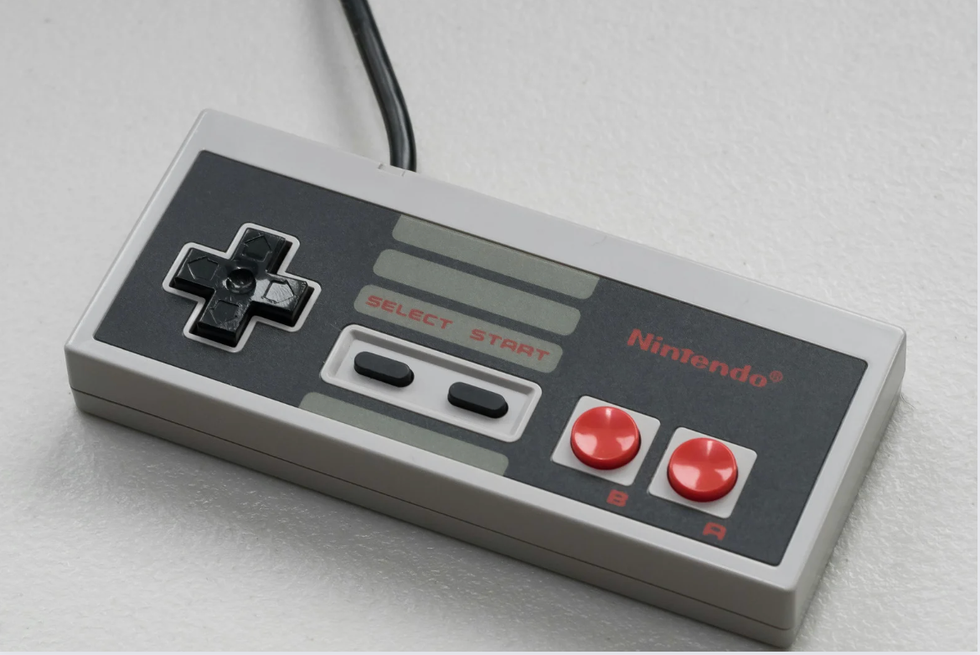
4. "I was born in the early '80s. I've been totally blind since birth. In the '80s, accessibility was virtually non-existent.That new Nintendo that the kids had? Good luck. Scholastic Book Club? Not in braille or audio. Everything is in print. Nothing to see here for me or mine. Then computers finally got accessible and Windows came out and they had to start all over again. I wouldn't want to go back to the '80s. I now have my phone that I can use to access the world, read what is on my grocery labels, have pictures described to me, and basically know what's going on in the world. In the '80s, so much went by without any context, and that was in the formative years of my childhood."
nintendo, 80s nintendo, braille

We've come a long way when it comes to accessibility.

Representative Image from Canva

5. "Reading everything — literally everything — I could get my hands on. Cereal boxes, newspapers, magazines. Luckily, my library was a bike ride away but carrying those back on my bike was fun."

"OMG, you are so right. That reminds me of things I hadn't thought about in ages.I used to feel so very bored that I'd read anything that had text on it, from cans of food to cereal boxes to whatever books (however insipid) I could lay my hands on. Even the obituary notices in the newspaper were worth a read. The internet really did away with the boredom, didn't it?!"

Speaking of reading…

6. "Trying to find something to read in the bathroom to pass the time. I remember shampoo bottles and the contents of my wallet were my go-to's when a magazine or book was unavailable." "Yes! Shampoo bottles for desperate moments of boredom."


7. "Might be my own bias but being a kid in the '80s there was a lot of casual bullying and conformism. Not that bullying and conformism ever went away, but the '90s was more about counter-culture a bit."

8. "I was a child in the '80s, but something that I don't think I've ever seen in modern pop culture retellings of '80s life, which I recall witnessing, is this: people think of the weird, wacky, fun colors and hair, etc., of the 1980s — like Madonna, Cyndi Lauper, Boy George styles. BUT for many people and mainstream communities, that was considered a 'weird' or 'rock and roll character' kind of presentation. People would often openly stare, laugh at, or disparage people who looked openly unique. It took a lot of courage to go out styled like that. It was acceptable to have a more 'subtle' take on the fun color trends."

via GIPHY

"I believe the best real-time representation/evidence of this is in Cyndi Lauper's 'Time After Time' music video, there’s a scene where she sits down in a diner with her boyfriend and his friends. She pulls off her cap to reveal her new hairstyle - half-shaved and dyed bright colors. Her boyfriend's friends start hysterically laughing, the boyfriend is quietly embarrassed, and she runs out of the diner in tears."

9. "TV was just adult shows for most of the week, especially during summer break. Just soap operas and other boring things." "Staying home sick from school and all there was to watch were game shows and soap operas until the Gilligan's Island reruns came on."

10. "The sheer sense of doom and pervasive low-key terror of nuclear war. The Soviets' nuclear arsenal pointing at us, and their nihilistic posturing in some ways remind me of the climate change dread we now have. Living with an existential threat is not something new."

"This is so completely underestimated or misunderstood. All through high school, I was convinced that the world would just end one day, and I'd have to figure out how to survive in a post-apocalyptic world afterwards. Yeah, we thought that people would survive an all-out nuclear war."

11. "The homophobia."

"It was casual, rampant, and virtually unquestioned. If you were gay or lesbian, and not living in a major city like New York or San Francisco, you were probably in the closet, at least to everyone but some close friends and (maybe) family. If you were trans, forget about it. Enjoy your life of dysphoria and misery. You don't really see that depicted so much in pop culture now."

"AIDS and '80s homophobia went hand in hand, and it's hard to overstate how much AIDS destroyed the gay community and how the dominant culture thought that was a good thing."

12. "Being a latchkey kid it was no frequent communication with your parents. I can't tell you how many times I stayed out all night as an 18-year-old and no one but who I was with knew where I was or what I was doing. My parents didn't know what I was doing all day as a 12–17-year-old, either! You only called your parents at work only if it was an emergency."

"Yes. It's almost like a 'parents didn't care' attitude that would be ascribed to that behavior now (but that wasn't right). Ma needed to work and that she didn't get home until 7 p.m. was just a reality. Oftentimes, she was gone when I got up and we had zero communication until she got home. I was just responsible for the whole shpiel of keeping myself alive."

13.The obsession people/media had about the '50s and '60s.”

via GIPHY

“Part of it was stuff like 'Back to the Future,' '50s-themed diners and baseball jackets being popular, then there was the 20th anniversary of things, like various Beatles albums. I think the boomers at that point were in positions of influence and were looking back on their teens and twenties with rose-tinted glasses, so the rest of us had to suffer these cultural echoes from the generation before."

14."Cruising. Before social media, we would drive up and down the street, see and be seen. Stop at different businesses, the cool kids hung out at the Walgreens parking lot, the jocks at the McDonald's. But it was a small town so we would stop at all of them during the evening. That was our social world along with keggers in the desert all through high school and for folks that stayed in town for years after high school.

"It was like a social network but with your car."

And lastly…

15. "What a mess it was to get cleaned up!”

via GIPHY

“That sparkle-blue eye shadow didn't come off easily and if it got in your eyes it was torture! That red lip gloss ran all over. And shampooing your hair three times to get out all the hairspray and the mousse. I loved the '80s and I had a marvelous time. But it was messy... but way worth it!"


This article originally appeared in April.

black lab, dog walker, dog walker near me, dog walker ap, neighbors, good news, pets, feel good news

black lab (left. Handwritten letter (right)

If you've lived your whole life with a dog, a home has to feel pretty empty without one. Your heart has to feel like there's something missing as well. When Jack McCrossan, originally from Scotland, moved to Bristol, England with his three friends, they were bummed out to learn that their landlord didn't allow dogs.

So when they saw a beautiful black Sheprador (a German Sheppard Lab mix) in their neighbor's window, they knew that had to become buddies with her. They wrote the dog's owner, Sarah Tolman, a letter asking to arrange a play date with the dog. "If you ever need someone to walk him/her, we will gladly do so," they wrote.


"If you ever get bored (we know you never will, but we can dream), we are more than happy to look after him/her. If you want to come over and bring him/her to brighten our day, you are more than welcome. If you want to walk past our balcony windows so we can see him/her, please do," the letter continued.

"We hope this doesn't come too strong, but our landlord won't allow pets, and we've all grown up with animals. The adult life is a struggle without one," they wrote. "Yours sincerely, The boys from number 23," the letter concluded.

Soon after, the boys in 23 received a response from the dog herself, Stevie Ticks, accepting the offer. However, it may have been written by her human, Sarah Tolman. In the letter, Stevie shares a bit about herself, saying she's two years and four months old, was adopted in Cyprus, and that she's "very friendly and full of beans." (The boys shouldn't worry about a gassy hound, in England, "full of beans" means lively.)

"I love meeting new people and it would be great if we can be friends. I must warn you that the price of my friendship is 5 x ball throws a day and belly scratches whenever I demand them," the letter continued. A few days later, the boys got to meet Stevie.

"Meeting Stevie was great!" McCrossan told Buzzfeed. "She was definitely as energetic as described. We got to take her for a walk and she wouldn't stop running!"

Tolman thought the boys' letter was a fantastic gesture in an era where, quote often, neighbors are strangers. "In a day and age where people don't really know or speak to their neighbors, it was really nice for them to break down that barrier," she said. After the story went viral, she saw it as an opportunity for people to share their love of dogs with the world. "My mother and I are amazed at all the love we've received from around the world these past few days," Tolman wrote as Stevie. "If you have a doggo in your life, share that love with those around you."

A lot has changed since this story first warmed hearts around the globe. The boys have since moved away, but as of September 2024, Stevie is around 8 years old and still living her best life. Recently, she even made it to the doggie wall of fame at her local coffee shop.

In the years since this story first went viral, pet-sharing and neighbor dog borrowing have actually become more common, especially in cities where landlords restrict pets. Several platforms (like BorrowMyDoggy) and community groups now exist to pair dog owners with trusted neighbors who want occasional playtime, walks, or dog-sitting without having to own a pet. It’s a small but growing trend that reflects how deeply animal companionship is needed—even for people who can’t adopt a dog full-time. In many apartment buildings, these kinds of informal arrangements help reduce loneliness, build community, and give non-owners the emotional benefits of living with pets.

Just goes to show the power of a dog's love…even if that dog isn't your own.

This article originally appeared six years ago.

college classroom, class, classmates, taking someone's seat

Don't judge a book by its cover.

You know that feeling you get when you walk into a classroom and see someone else's stuff on your desk? OK, sure, there are no assigned seats, but you've been sitting at the same desk since the first day and everyone knows it. So why does the guy who sits next to you put his phone, his book, his charger, his lunch, and his laptop in the space that's rightfully yours? It's annoying.

All you want to do was walk in, sit down, get out your notebook and (try to) pay attention. But now? Now you've got to talk to a stranger about moving their stuff and there goes your day, already bogged down with petty annoyances. Sound familiar?


classroom, desk, classmates, claiming a seat Even when there's no assigned seat, everyone knows where they usually sit.Photo credit: Canva

We've all got so much to do these days that interacting with people we see every day — not our friends, but our classmates, fellow commuters, co-workers, the people in line for coffee with us every day — can feel like a burden. So, when these people do something we perceive as annoying, like putting their stuff on our desks, we don't have the time or the energy to assume their intentions or think about the lives they're leading.

But if we stepped out of ourselves for a second, we might just realize that we're all much more connected than we think, that our preconceived notions of others are usually just that — preconceived. And, often, inaccurate.

That's why this X story about a guy who learned an important life lesson from a classmate he was frustrated with has resonated with thousands. It's the perfect example of that "don't judge a book by its cover" adage we should have all learned in preschool but sometimes forget. And it starts the exact same way as this post — with a college student groaning on the inside as he sees someone's stuff on his desk.

Thomas McFall (@thomas___mcfall) wrote:

"So in one of my Management classes I sit in the same seat in the front every day. Every single day I sit there. Now, I also sit next to some foreign guy that barely speaks English. The most advanced thing I've heard this guy say in English is 'Wow, my muffin is really good.'

This guy also has a habit of stacking every item he owns in the exact space I sit. His bag, his food, his books, and his phone are ALWAYS right on my desk space.

Now, every single time I walk into class this guy says 'Ah, Tom. You here. Okay.' And starts frantically clearing my desk of his belongings. He then makes it a habit to say 'Ready for class, yeah?' And gives me a high five. Every day this guy gives me a high five.

I was ALWAYS annoyed with this guy. I'm thinking 'Dude, you know I sit in this seat every day. Why are you always stacking your shit here? And the last thing I want to do is give a guy who barely speaks my language high fives at 8 in the morning.' Just get your shit off my desk.

But today I came to class and was running a few minutes late. I'm standing outside because I had to send a quick text. I could see my usual space through the door out of the corner of my eye. Of course, my desk was filled with his belongings. The usual.

As I'm standing there on my phone another guy who was also late walks into the class before me and tried to take my seat since it's closest to the door. The guy sitting next to me stops this dude from sitting down and says 'I'm sorry. My good friend Thomas sits here.'

It was then that I realized this guy wasn't putting stuff on my seat to annoy me. He was saving me the seat every morning. And this whole time he saw me as a friend but I was too busy thinking about myself to take him into consideration. Cheesy as it sounds, I was touched.

I ended up going into class and of course he cleared the seat and said 'Ah, Tom. You here. Okay.' And I did get a high five. At the end of class I ended up asking him if he wanted to get a bite to eat with me. We did. And we talked for a while. I got through the broken English.

The guy moved here from the Middle East to pursue a college education in America. He plans to go back after he gets his degree. He's got two kids and a wife. He works full time and sends his all his left over money back home to his wife.

I asked him how he liked America as well. He said he misses his family but it's exciting to be here. He also said 'Not every American is nice to me like you are, Tom.' I bought lunch, of course. Dude deserves it. He gave me a high five for buying lunch. Gotta keep up tradition.

Moral of the story? Don't do what I do and constantly only think about yourself. It took me nearly the entire semester to get my head out of my ass and realize this guy was just trying to be my friend. Better late than never I suppose."

If not for this one day running late, McFall may have never realized what his classmate was trying to do. And he may have continued to think of him as annoying, maybe telling others about "the weird guy who was always trying to take up my space"... when all the guy was really trying to do was be kind. We all misinterpret the actions of others sometimes. It's easy to do that!

But if there's one thing this story reminds us, it's that it's important to stop and remember that while you're living your life, other people are living theirs, so assuming best intentions can do us a great favor. That's why we should step outside of our bubbles and engage with the world on a regular basis. You could make a new friend. You might brighten someone's day.

But most importantly, getting out of your own head, checking your own biases, and giving others the benefit of the doubt will make you a more compassionate person. You don't have to engage with everyone you meet, but the next time someone smiles and offers you a high-five? Maybe just take them up on it.

This article was originally published seven years ago.

predators, forensics, crime, women, awareness
via Екатерина Шумских/Pexels, Vladimir Konoplev/Pexels and Teona Swift/Pexels

Three women walking down city streets.

A forensics student named Alexandria recently shared vital information on TikTok that all women should know. She detailed the specific signs male predators are looking for when they choose a victim.

Her video is based on a 2013 study entitled “Psychopathy and Victim Selection: The Use of Gait as a Cue to Vulnerability.” For the study, researchers interviewed violent criminals in prison and asked them the type of women they’d be most likely to victimize.


The study found that the criminals all agreed that how the woman walked was a deciding factor.

“What the selected women all had in common was the way that they walked and how they generally held themselves in public,” Alexandria says in the video she later deleted but has been shared broadly across the platform.

@_alf_90_

How to walk for your safety! #women #safety #tips #walking #kidnapping #murder #attacks #fyp

“The selected women all had a similar ‘awkwardness’ to the way that they walked and carried themselves,” she continued. “The first part of the woman had a gait that was a little bit too small for their body, which resulted in smaller steps, slower speed and their arms more typically to their sides, or crossed, as well as their heads being down and not really taking in their general surroundings, which indicated three different things to these potential attackers.”

The woman’s body language signaled to attackers that she was fearful and anxious and because her head was down, she'd be easier to surprise. Alex then described the second type of woman the criminals said they’d target.

“On the other hand, the other part of the women that were selected had a gait that seemed a bit too big for their body and their arms tended to flail to the sides and seemed just overly awkward,” Alexandria continued.

The woman with the bigger gait signaled to potential attackers that she may be clumsy and won’t put up a good fight. “Because their arms were out and flailing to the side, it left the lower body open to, again, come around and grab them,” she said.

women, walking, predators, crime, body language Women walking down a street.Image via Canva Photos.

The video was helpful because Alexandria also discussed the types of women the attackers wouldn’t pursue. Alex says these women “walked with a gait that tended to be more natural to their body.” She adds they moved at the same pace as those in the immediate area, with their shoulders back and chins up and asserting a general sense of confidence.

“Essentially, the women that were not selected gave off an energy that said, ‘Don’t mess with me. I will put up a good fight.’ And that’s why they weren’t selected,” Alex said. “I know that it sounds silly, but something as simple as the way you walk or the way that you carry yourself in public could determine the likelihood that you become a target of a predator.”

According to the Center for Violence Prevention and Self Defense Training, detecting vulnerability is the biggest factor in who predators choose to victimize. Confusion, isolation, appearing insecure, unaware, unassertive, or distracted all play a part in who predators target, but being aware of these factors can increase safety considerably. They also note that access plays a part in being targeted, stating that, "Attackers tend to target people positioned near entrances, exits, or secluded areas where they can quickly grab and escape without arousing suspicion."

woman, crime, predator, safety, awareness Woman aware of her surroundings in a parking garage. Image via Canva Photos.

Alexandria concluded her video by sharing an acronym that can help prevent women from being victimized while in public: STAAR.

S(tride): Walk with a natural stride to your body with steps that are not too far apart or short.

T(all): Stand tall. Keep your shoulders back and your chin up. Assert a natural confidence and dominance to those around you.

A(rms): Swing your arms naturally by your sides, avoiding keeping them too close to your body or flailing out of your natural range of motion.

A(wareness): Stay aware of your surroundings. Take notice if something feels or looks off.

R(elax): Stay cool, calm, and collected and don’t indicate to a potential attacker that you feel or see something is wrong.


This article originally appeared last year. It has been updated.

chris starkey, dad daughter dance, dance battle, dance off

The Starkeys' epic dance battle.

It may be hard to remember now, but back in March of 2020, the world underwent a startling shift. People were asked to stay at home to keep the virus from spreading out of control. We made masks. We sanitized our groceries. Concern and uncertainty permeated our daily existence as news reports of outbreaks and full ICUs became more and more prevalent. Words like "lockdown" and "quarantine" and "super-spreader" and "PPE" became part of our collective vernacular.

That was a difficult time, but as humans do, we tried to make the most of it. Being stuck at home meant more time with our families. Not being able to go out to a show or concert or get together with friends meant all of our entertainment had to happen in our houses. That's how one dad-daughter duo ended up with a viral dance battle that hit the internet at just the right time.


Season 3 Dancing GIF by Party Down Giphy

Chris Starkey posted a video to Facebook on March 23, 2020, of himself and his daughter Brooklyn doing a dance-off to Flo Rida's "Low"—and it's unexpectedly awesome. Starkey wrote, "My daughter challenged me to a dance off and said I don't have it anymore. See that closet in the back she is still crying in it!!!" So much silly shade thrown around in this family, it's delightful.

When you see their fun banter and Starkey's middle-aged-man moves, you'll see why the video was shared more than 280,000 times in two days and has racked up over 14 million views since. Starkey wrote in a comment that the reaction brought tears to his eyes and encouraged everyone to "Give back to your community." This kind of levity and sense of community was definitely needed in that moment, but it still delights even now.

- YouTube youtu.be

People greatly appreciated getting dose of unbridled joy.

"Thank you guys soooo much i am crying right now because it felt so good to laugh and smile....thank you sooo much!!!!!" wrote on commenter.

"This seriously made my day," wrote another.

Starkey asked people to vote for who they think won the battle, and the results were split, though Dad had a whole lot of fans rooting for him.

"Dad gets my vote!!!"

"Dad!!! winner winner chicken dinner."

music video happy dance GIF by Apple Music Giphy

"DAD totally wins!!"

"You still got it dude!"

"Truth be told I had the sound off, but would have to say DAD wins this one strictly due to facial expressions. Both dancers were equally as good in my eyes. On a side note, quarantine looks like it isn't so bad when you have a HOUSE instead of a TINY NYC ONE-BEDROOM."

"Daddy’s got the moves!!! Great job having fun together!!!""

Since 2020, life hasn't exactly gone back to the way it was, but normalcy has returned to most of our day-to-day lives. For Starkey, life has added a grandbaby, but if you think Dance Dad wasn't going to become Dance Grandad, you couldn't be more wrong.

Check this out—the old man's still got it:

- YouTube www.youtube.com

Families that can have fun and laugh together are a gift. Here's to the dads, daughters, grandpas, uncles, aunts, and everyone else who don't take themselves too seriously and aren't afraid to let loose to bring a little unexpected joy to themselves and others.

You can follow Dance Dad TV on YouTube and find more from Chris Starkey on his website.

This article originally appeared five years ago. It has been updated.

wealth, boots, Terry Pratchett, bootstraps, money, poor
Photo by Maxim Hopman on Unsplash

The Sam Vimes "Boots" Theory of Socioeconomic Unfairness explains one way the rich get richer.

Any time discussions of wealth and poverty come up, people inevitably start talking about boots. The standard phrase that usually gets thrown around is "pull yourself up by your bootstraps," which is shorthand for "work harder and don't ask for or expect help." (The fact that the phrase was originally used sarcastically because pulling oneself up by one's bootstraps is physically impossible is rarely acknowledged, but c'est la vie.)

The idea that people who build wealth are able to do so because they individually work harder than poor people is baked into the American consciousness and wrapped up in the ideal of the American dream. A different take on boots and building wealth, however, paints a more accurate picture of what it takes to get out of poverty.


 boots, poverty, economic inequality A boots story shows why it can be so hard to climb out of poverty. Giphy by DurangoBoots

Author Terry Pratchett is no longer with us, but his writing lives on and is occasionally shared on his official social media accounts. In 2022, his Twitter page shared the "Sam Vimes 'Boots' Theory of Socioeconomic Unfairness" from Pratchett's 1993 book "Men At Arms." This boots theory explains that one reason the rich are able to get richer is because they are able to spend less money.

If that sounds confusing, read on:

Pratchett wrote:

The reason that the rich were so rich, Vimes reasoned, was because they managed to spend less money.

Take boots, for example. He earned thirty-eight dollars a month plus allowances. A really good pair of leather boots cost fifty dollars. But an affordable pair of boots, which were sort of OK for a season or two and then leaked like hell when the cardboard gave out, cost about ten dollars. Those were the kind of boots Vimes always bought, and wore until the soles were so thin that he could tell where he was in Ankh-Morpork on a foggy night by the feel of the cobbles.

boots, work boots, economic inequality, rich get richer, climbing out of poverty A good pair of work boots will save you money in the long run, but only if you can afford them in the first place.Photo credit: Canva

But the thing was that good boots lasted for years and years. A man who could afford fifty dollars had a pair of boots that’d still be keeping his feet dry in ten years’ time, while the poor man who could only afford cheap boots would have spent a hundred dollars on boots in the same time and would still have wet feet."

In other words, people who have the money to spend a little more upfront often end up spending less in the long run. A $50 pair of boots that last five years essentially cost you $10 a year. But if you can only afford $10 upfront for a pair of boots that last six months, that's what you buy—and you end up paying twice as much over a five-year period.

There are so many areas in which this principle applies when you're poor. Buying in bulk saves you money over the long run, but you have to be able to afford the bulk cost up front. A reliable car that doesn't require regular repairs will cost more than a beater, but if the beater is all you can afford, that's what you're stuck with. You'll likely spend the same or more over time than if you'd bought a newer/higher quality car, but without the capital (or the credit rating) to begin with, you don't have much choice.

buying a car, used car, new car, economic inequality More reliable cars cost more up front. Giphy GIF by LSD

People who can afford larger down payments pay lower interest rates, saving them money both immediately and in the long run. People who can afford to buy more can spend more with credit cards, pay off the balances, build up good credit and qualify for lower interest rate loans.

There are lots of good financial decisions and strategies one can utilize if one has the ability to build up some cash. But if you are living paycheck to paycheck, you can't.

Climbing the financial ladder requires getting to the bottom rung first. Those who started off anywhere on the ladder can make all kinds of pronouncements about how to climb it—good, sound advice that really does work if you're already on the ladder. But for people living in poverty, the bottom rung is just out of reach, and the walls you have to climb to get to it are slippery. It's expensive to be poor.

poverty, wealth, climbing a ladder, getting out of poverty It's hard to climb out of poverty when you can't reach the ladder. Photo credit: Canva

When people talk about how hard it is to climb out of poverty, this is a big part of what they mean. Ladder-climbing advice is useless if you can't actually get to the ladder. And yet, far too many people decry offering people assistance that might help them reach the ladder so they can start taking advantage of all that great financial advice. Why? Perhaps because they were born somewhere on the ladder—even if it was the bottom rung—and aren't aware that there are people for whom the ladder is out of reach. Or perhaps they're unaware of how expensive it is to be poor and how the costs of poverty keep people stuck in the pit. Hopefully, this theory will help more people understand and sympathize with the reality of being poor.

Money makes money, yes, but having money also saves you money. The more money you have, the more wealth you're able to build not only because you have extra money to save, but also because you can buy higher quality things that last, therefore spending less in the long run.

Thanks, Terry Pratchett, for the simple explanation.

This story originally appeared three years ago.