


How to tell your kids the truth about Santa.
"It's the mooost wonderful tiiiiime of the — OH NO, did Charlie just ask if Santa is real?!"
If you're a parent in a household that celebrates Christmas, you can likely relate to the dreaded Santa Claus conversation. It may come with tears, it may come with tantrums, and it may even be worse for you, seeing that heart-wrenching look of disappointment spread across your child's once-merry face.
It's a dilemma Charity Hutchinson of British Columbia was pondering, as a mom to two young boys and the two nephews she cares for as well.

Hutchinson family and the truth about Santa.
Photo by Theresa Easter Photography.
One of Hutchinson's nephews raised the notorious question, telling her he no longer believed in Santa Claus.
"I felt sad because he seemed disappointed telling me his news," she explained in a message. "And in that moment I didn't know what to say to him."
Hutchinson soon stumbled upon some advice online, finding what she described as “by far the best idea I’ve seen about telling your kids about Santa."
The idea of Santa may seem frivolous to many adults, but to believe in something much bigger than yourself, only to learn you've been lied to by the people you trust most in the world? That can be a really big deal to a kid (and can possibly even create long-term trust issues for them, as one study found). The Santa conversation is one many parents understandably want to get right.
So when Hutchinson saw one of her friends on Facebook share an anonymous post detailing a strategy for breaking the news to your kids without disappointing them, she was thrilled.
Hutchinson loved the idea so much, she shared it on Facebook as well:
This is by far the best idea I've seen about telling your kids about Santa. Had to share! *********"In our family, we...
Posted by Charity Hutchinson on Tuesday, November 29, 2016
This is how it works:
1. Find a time to take your kid out, one-on-one, to a favorite spot and deliver the great news: The time has come for them to become a Santa.
"When they are 6 or 7, whenever you see that dawning suspicion that Santa may not be a material being, that means the child is ready. I take them out 'for coffee' at the local wherever. We get a booth, order our drinks, and the following pronouncement is made: 'You sure have grown an awful lot this year. Not only are you taller, but I can see that your heart has grown, too.'"
The post suggests pointing to a few different examples of how your kid has shown empathy or done something nice for another person throughout the past year. Let them know it was in those moments they proved themselves worthy of finally "becoming a Santa" themselves.
2. Assure your kid that they're ready to become a Santa because they understand the true meaning of giving (it's not just about the milk and cookies).
"You probably have noticed that most of the Santas you see are people dressed up like him. Some of your friends might have even told you that there is no Santa. A lot of children think that because they aren't ready to BE a Santa yet, but YOU ARE."
Get them talking about all the reasons they think Santa's the best. They may start out by pointing to his sleigh-riding skills or the fact he can go around the whole world in just one night. But move the conversation toward Santa being not so much of a cool person, but a cool concept that's focused on giving. Handing out presents makes the spirit of Santa a spectacular thing. Because your kid understands why giving back matters too, it's time they become a Santa themselves.
Also, "make sure you maintain the proper conspiratorial tone," the post notes.
3. Now that they're in on the secret, have them choose someone who could really use a great gift and devise a plan to give it away — secretly, of course.
"We then have the child choose someone they know — a neighbor, usually. The child's mission is to secretly, deviously, find out something that the person needs, and then provide it, wrap it, deliver it — and never reveal to the target where it came from. Being a Santa isn't about getting credit, you see. It's unselfish giving."
In the original post, the writer explains that their oldest child decided to buy a gift for a neighbor who always walked out to get the newspaper without her shoes on. Their son spied on the neighbor one day from the bushes to estimate her shoe size — he predicted she wore mediums — and then slipped a pair of slippers under her driveway gate one evening with a note "from Santa." The following morning, the neighbor was spotted wearing the slippers. Their son was ecstatic.
4. Remind them that being a Santa is top-secret business. And that, next year, they can carry on with their selfless Santa duties once again.
"I had to remind him that NO ONE could ever know what he did or he wouldn't be a Santa. Over the years, he chose a good number of targets, always coming up with a unique present just for them."
One year, for instance, he polished up a bike for a family friend's daughters. The writer's son was just as over the moon about giving the gift as the daughters were about receiving it.
In a little over a week, Hutchinson's post has racked up thousands of Likes and shares, with plenty of thankful parents chiming in in the comments.
"I never imagined it would be so popular!" Hutchinson explains. "I mean, it felt special when I read it and completely gave me goosebumps, but I didn't realize it would go this far."
Where the original post came from is still somewhat of a mystery. As The Huffington Post reported, it seems to have first cropped up in 2007 in an online forum. Ever since, the idea has floated around the web here and there, but has only made waves recently with Hutchinson's post going viral.
The secret of being a Santa, so to speak, has already worked its holiday magic on Hutchinson's once-suspicious nephew.
Filling him in on becoming a Santa was an instant game-changer, she says.
"His eyes lit right up," she writes. "That excitement and joy returned to him and he couldn't stop asking me questions! ... Instantly I could see the wheels were turning and he started planning who his special target would be and what he would get them and how he'd pull it off."
Hutchinson is happy her simple Facebook post has turned into something so special. "It isn't just a nice way to break the news to your kids," she writes. "But it really teaches them about the true meaning of Christmas and how you should always give to others."
This article originally appeared on 12.09.16
- A racist threatened him for his Black Santa decoration. His neighbors responded beautifully. ›
- What Christmas means to me now as an adult with a troubled childhood ›
- 10-year-old launched DNA investigation into Santa - Upworthy ›
- 10-year-old launched DNA investigation into Santa - Upworthy ›
- Questions to ask your kids about school - Upworthy ›
- Artist Cristina Martinez on how technology can bring stories of hope and joy to new communities - Upworthy ›
- Mom makes hilarious PSA to leave cookies out for Mrs. Claus instead of Santa - Upworthy ›
- Dad uses slick video editing to convince his skeptical 8-year-old that Santa's real - Upworthy ›





 A woman is getting angry at her coworker.via
  A man with tape over his mouth.via
  A husband is angry with his wife. via
 Curling requires more athleticism than it first appears.
 When you meet someone in Japan for the first time, you say "hajimemashite," which literally translates as "first time."
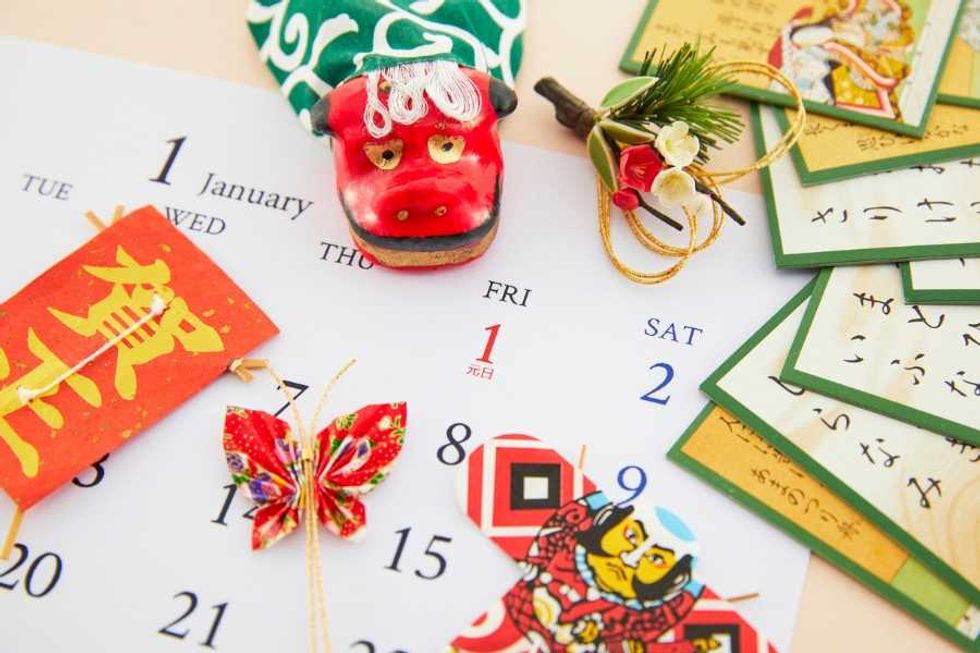 Sharing your age in Japan involves a whole other way of measuring time.

 Comfort in a hug: a shared moment of empathy and support.
 A comforting hug during an emotional moment.
 Woman seated against brick wall, covering ears with hands.