Scientists have just discovered the ‘anxiety gene’ and what turns it off
This could completely change how we treat anxiety and depression.

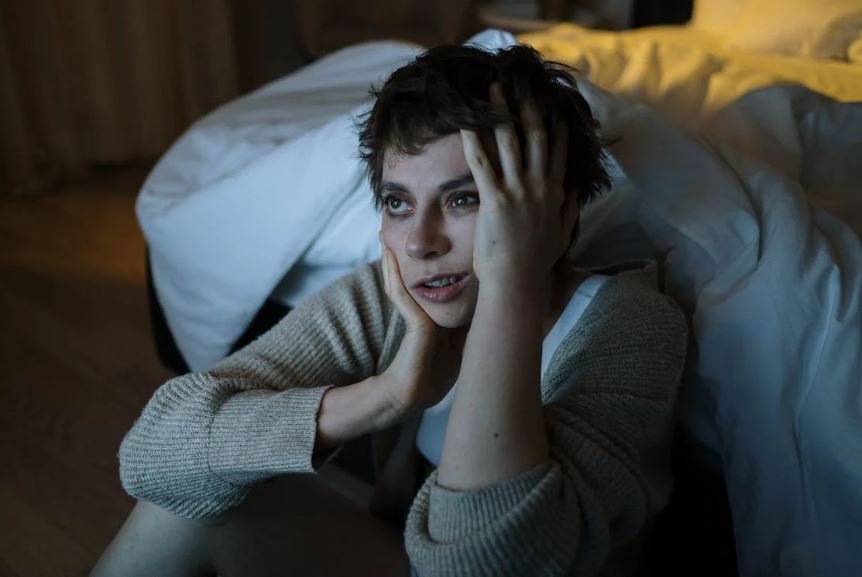
A young woman struggles with anxiety.
Living with an anxiety disorder can feel like a constant battle against an invisible enemy. People with anxiety disorders feel constant, excessive worry, restlessness and irrational fears, often accompanied by physical symptoms such as rapid heartbeat, tightness in the chest and difficulty breathing.
These overwhelming feelings cast a shadow over daily life and make it difficult to focus or enjoy simple pleasures. Anxiety disorders can also feel isolating, as the sufferer may struggle to communicate their feelings, making it hard to receive support and understanding.
Anxiety disorders are among the most common forms of mental illness and studies show that an estimated 31.1% of U.S. adults experience an anxiety disorder at some time in their lives. Around half of all people who suffer from anxiety disorders go into remission at some point.
The interesting thing about such a common mental health problem is that the cause of anxiety disorders is currently unknown. But they’re believed to stem from a combination of factors that are developmental, psychological, environmental and genetic in nature.
However, all of that may soon change. Researchers at the University of Bristol have identified a gene responsible for driving anxiety symptoms in mice and learned how it can be suppressed. The research was first published in Nature Communications.
To gain deeper insight into the underlying causes of anxiety, scientists restrained the mice for 6 hours to elicit a stress response and then examined their brains at a molecular level.
The researchers realized that the stress response resulted in elevated levels of 5 microRNAs (miRNAs) in the amygdala, determining which genes in a cell are expressed and which are not. The amygdala is the brain's integrative center for motivation, emotions and emotional behavior.
Most importantly, the researchers noted that the gene Pgap2 caused behavior associated with anxiety and miR483-5p worked as a molecular “brake” to prevent the feelings of anxiety.
To put it simply, researchers have determined the gene that creates anxiety symptoms and the gene that puts a stop to them. This revelation could lead to new medications that target and suppress the specific cause of anxiety in the human brain. It may also completely change the current trial-and-error approach that doctors use to treat anxiety through medications.
“miRNAs are strategically poised to control complex neuropsychiatric conditions such as anxiety. But the molecular and cellular mechanisms they use to regulate stress resilience and susceptibility were until now, largely unknown,” Dr. Valentina Mosienko, one of the study’s lead authors said, according to Neuroscience News.
“The miR483-5p/Pgap2 pathway we identified in this study, activation of which exerts anxiety-reducing effects, offers a huge potential for the development of anti-anxiety therapies for complex psychiatric conditions in humans.”
The findings are exciting to many people who wouldn't mind having their anxiety gene turned off right about now.
Omg yay they found the anxiety gene. Poke it till it turns off.
— Johanna M.🧚🏼♀️ (@JM_Luna) May 1, 2023
Scientists in the UK think they have located the gene that causes anxiety. I’m gonna need them to delete mine immediately
— Yagoobian (@GnosticGnocchi) April 25, 2023
The next step for researchers is to see if further research can be validated in humans.
This important development comes at a time when anxiety and depression are on the rise across the globe. According to the World Health Organization, the COVID-19 pandemic triggered a 25% rise in anxiety and depression worldwide.

- What's rape anxiety? This woman explained it to her favorite men, and they were shocked. ›
- Ever heard of emetophobia? The oddly common phobia often misdiagnosed as anxiety or anorexia ›
- Ryan Reynolds revealed how intense his anxiety can be. Here's how he manages it. ›
- Therapist explains panic attacks and how to control them - Upworthy ›
- How Gen X and boomers handled anxiety and depression - Upworthy ›
- Mom shares mantra song to help kids and adults stop worrying - Upworthy ›
- Health experts created a patch that can repair damaged hearts - Upworthy ›
- Mans builds his stressed fiancee an 'anxiety chair' and sweetly (but firmly) puts her in time-out - Upworthy ›


A Generation Jones teenager poses in her room.Image via Wikmedia Commons
An office kitchen.via
An angry man eating spaghetti.via 


An Irish woman went to the doctor for a routine eye exam. She left with bright neon green eyes.
It's not easy seeing green.
Did she get superpowers?
Going to the eye doctor can be a hassle and a pain. It's not just the routine issues and inconveniences that come along when making a doctor appointment, but sometimes the various devices being used to check your eyes' health feel invasive and uncomfortable. But at least at the end of the appointment, most of us don't look like we're turning into The Incredible Hulk. That wasn't the case for one Irish woman.
Photographer Margerita B. Wargola was just going in for a routine eye exam at the hospital but ended up leaving with her eyes a shocking, bright neon green.
At the doctor's office, the nurse practitioner was prepping Wargola for a test with a machine that Wargola had experienced before. Before the test started, Wargola presumed the nurse had dropped some saline into her eyes, as they were feeling dry. After she blinked, everything went yellow.
Wargola and the nurse initially panicked. Neither knew what was going on as Wargola suddenly had yellow vision and radioactive-looking green eyes. After the initial shock, both realized the issue: the nurse forgot to ask Wargola to remove her contact lenses before putting contrast drops in her eyes for the exam. Wargola and the nurse quickly removed the lenses from her eyes and washed them thoroughly with saline. Fortunately, Wargola's eyes were unharmed. Unfortunately, her contacts were permanently stained and she didn't bring a spare pair.
- YouTube youtube.com
Since she has poor vision, Wargola was forced to drive herself home after the eye exam wearing the neon-green contact lenses that make her look like a member of the Green Lantern Corps. She couldn't help but laugh at her predicament and recorded a video explaining it all on social media. Since then, her video has sparked a couple Reddit threads and collected a bunch of comments on Instagram:
“But the REAL question is: do you now have X-Ray vision?”
“You can just say you're a superhero.”
“I would make a few stops on the way home just to freak some people out!”
“I would have lived it up! Grab a coffee, do grocery shopping, walk around a shopping center.”
“This one would pair well with that girl who ate something with turmeric with her invisalign on and walked around Paris smiling at people with seemingly BRIGHT YELLOW TEETH.”
“I would save those for fancy special occasions! WOW!”
“Every time I'd stop I'd turn slowly and stare at the person in the car next to me.”
“Keep them. Tell people what to do. They’ll do your bidding.”
In a follow-up Instagram video, Wargola showed her followers that she was safe at home with normal eyes, showing that the damaged contact lenses were so stained that they turned the saline solution in her contacts case into a bright Gatorade yellow. She wasn't mad at the nurse and, in fact, plans on keeping the lenses to wear on St. Patrick's Day or some other special occasion.
While no harm was done and a good laugh was had, it's still best for doctors, nurses, and patients alike to double-check and ask or tell if contact lenses are being worn before each eye test. If not, there might be more than ultra-green eyes to worry about.