American English includes one of the rarest sounds on Earth, but we use it all the time
Er…this is odd.

Learning to make sounds we didn't grow up with can be tricky.
When (or if) kids learn phonics at school, they're taught the symbols that go with sounds of their country's native language or languages. People all around the world grow up learning to make specific sounds with their mouths by imitating the language(s) they are immersed in, which can leave us completely unaware of how many other sounds there are until we hear a language that's far different from our own.

Babbel’s Biggest Sale of the Year: Get 67% off. Lifetime Subscriptions For $199
Even the common foreign languages that American school kids learn have sounds that can be tricky to get down. The rolled "r" in Spanish. The nuances of French vowel pronunciations. The glottal stops in German. The sound that's a mix between "r" and "l" in Japanese. And for people learning English, one of the trickiest sounds to get down is "er," as in the American pronunciation of "bird," "world," "summer," or "percent."
Oddly enough, for as common as the "er" sound is in English, it's linguistically rare. According to the Linguistics Channel @human1011, the "er" sound is found in less than 1% of the world's languages, rarer than the click consonants found in some languages in East and Southern Africa.
- YouTubewww.youtube.com
As rare as the sound is, there are a lot of people in the world who use it, mainly because it's also used in Mandarin Chinese, or at least many variations of it. So, while there aren't many languages that use it, by sheer numbers of people, it's not that uncommon.
"So, a sound that's so rare that it's in less than 1% of the world's languages just happens to exist in the two most spoken languages on Earth? Can that really be a coincidence?" the @human1011 video asks. Well, yes. English and Chinese don't share a common linguistic root, so those sounds just happened to evolve in very different parts of the planet. According to some people in the comments of the video, there are regional dialects in Brazil where the "er" sound is used and in certain parts of the Netherlands as well.
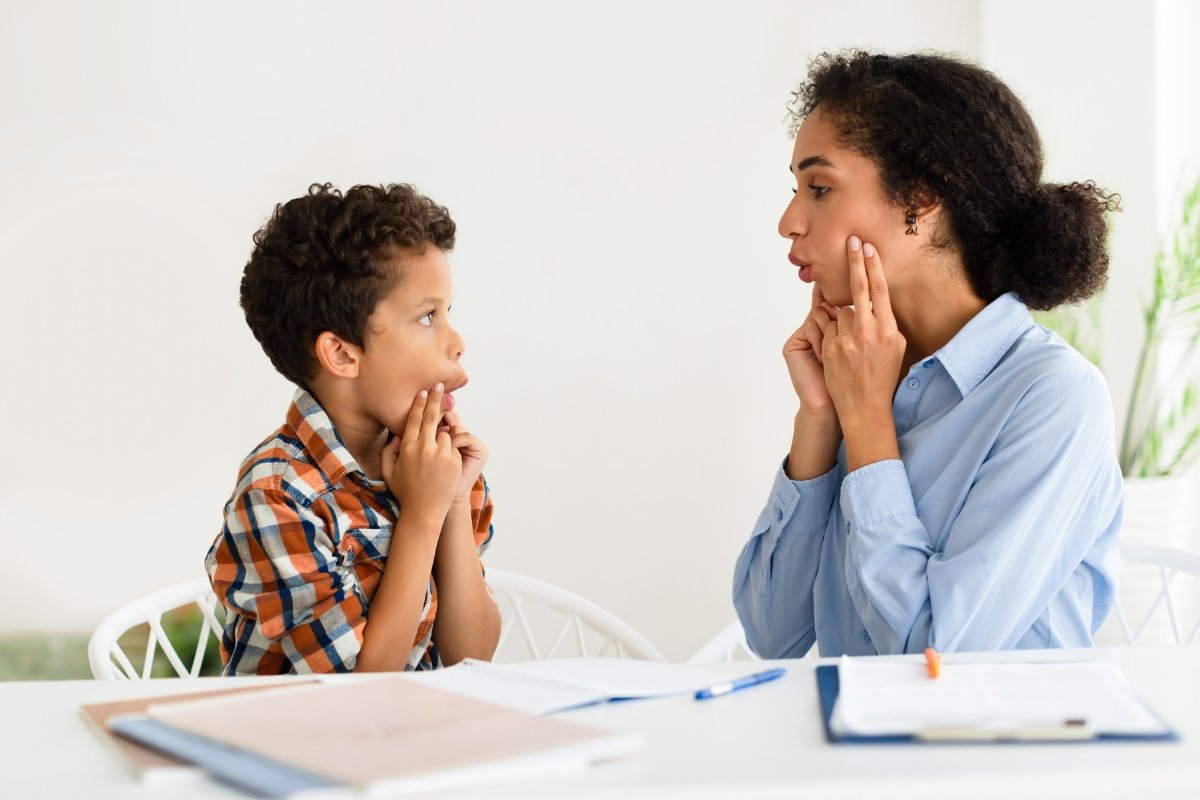
Pronouncing the "er" sound is hard if you don't grow up with it, largely because it's all about the placement and shape of the tongue inside the mouth combined with the way the lips are positioned. That combination is physically tricky to show someone. This video, from a non-native-English-speaker does a good job of explaining the mouth movements that create the sound.
- YouTubewww.youtube.com
What's particularly interesting about the "er" sound in American English is that it functions as a vowel sound. Most of us learned that the vowels in English are a, e, i, o, u, and sometimes y, and that's true as far as written vowels go, but vowel sounds are different. In the word "bird," the letter "i" is a vowel, but doesn't make any of the "i" sounds that we learned in school. Instead, the "ir" combine to make the "er" vowel sound. It's called an r-controlled vowel, and we see it in tons of words like "work," "were," "burn," "skirt," etc.
Learn something new every day, right?
Here's another video that explains the physical aspects of articulating the r-controlled vowel sound.
- YouTubewww.youtube.com
Most of us don't think about the fact that sounds we pronounce without even thinking about it have to be specifically learned and practiced by people who didn't grow up with them. It's not until we start trying to learn a language that's different from our own that we see how many sounds we have to work hard to make, sometimes even having to train our mouth muscles in ways they've never been used before.
It's also a good reminder to be patient and kind with people who are learning a language. It's not easy, and anyone making an effort to communicate in someone else's language deserves our grace and kudos.
You can follow @human1011 on YouTube for more interesting linguistics trivia.

- Language expert shares what English sounds like to people who don't speak it ›
- Video shows the ridiculousness of the English language validating people everywhere ›
- Comedian's 'English lessons' highlight the absurdity of English spelling and pronunciation ›
- What did the Lord's Prayer sound like in medieval English? - Upworthy ›
- People debate sexiest accent and some answers are shocking - Upworthy ›
- The American Island where residents speak a fascinating blend of Southern and Old English - Upworthy ›
- Parisians laugh trying to pronounce tricky English words - Upworthy ›
- How soldiers and sports helped shape the cringey corporate jargon we all despise - Upworthy ›
- 9 things that make English weird among world languages - Upworthy ›
- Linguist explains why Brits add an 'r' sound to certain words - Upworthy ›
- British language expert shares 7 tricky American accents - Upworthy ›
- What English would sound like if we pronounced silent letters - Upworthy ›


American portion sizes are colossal.
Tax shouldn't be a not-so-fun surprise at the end of your shopping trip.
A trip to the doctor shouldn't break the bank.
This totally isn't weird at all. Right?
It's a choice.
America loves extra sugar in savory foods.
Princess Odette Girl GIF by The Swan Princess
Rose GIF
sailor moon GIF
river phoenix 80s GIF 
All of this will be ours one day. Yay.
Elderly woman with white hair on phone, sharing a story about a dead person her child has never met.
Surprised elderly man in blue shirt against a yellow background.
Elderly woman in pink shirt using a smartphone on a garden swing.
TV for waking. TV for sleep.
Elderly man using a magnifying glass to read a piece of mail
Mom is totally humiliated after her kindergartner tells the teacher what she does for work
She was clearly mortified.
A mom is embarrassed by her child.
One of the great joys and stresses of parenting is that you never know what will come out of your child’s mouth. When you have young, inquisitive kids, they can say really inappropriate things to people without realizing they were being rude or possibly offensive. TikTok influencer Aurora McCausland (@auroramccausland), known for her DIY cleaning tips, recently told a funny story on the platform about how her son believes she makes a living. The problem was that she heard about it from her child's teacher.
Mom is embarrassed by her child
“The other day, I went and picked my five year old up from school and when I get to his classroom his teacher pulls me inside and says, ‘Hey, today he wanted to tell us about what Mommy does for work and said that Mommy makes videos in her bedroom but only when I'm [he’s] not at home,” McCausland recalled.
Given her body language while telling the story, McCausland was clearly mortified after hearing what her child said to his teacher. It makes it look like she may be posting videos to adult sites while her child is at school, which most people wouldn’t want their son’s teacher to know about.
The good news is that another teacher was there to clarify the young boy's comments by adding, “I think she makes TikTok videos.” The uncomfortable situation was a great invitation to chat with her son about what she does for a living. “So I have to have a conversation with my son about how he tells people what I do for work,” she finished her video.
The funny video went viral, earning over 1.7 million views on TikTok, and inspired many people to share the times when their children had funny ways of explaining their careers. The commenters were a great reminder to parents everywhere that if your child says something embarrassing, it's ok, just about everyone has been through it.
Moms share their most embarrassing moments
A lot of parents spoke up in the comments to show McCausland that she's not the only one to feel embarrassed in front of her child's teacher.
"My son told everyone that we were homeless (because we don’t own our home, we rent)," KBR wrote.
"I work in ortho.. my daughter told her teacher I steal people's knees bc she heard me talking to my husband about a knee replacement," Aingeal wrote.
"My son told a teacher we were living in our car over the summer. Camping. We went camping," Kera wrote.
"In kinder, my son thought Red Bull was alcohol and told his teacher I liked to have beer on the way to school," Ashley wrote.
My niece told her teacher her mom and dad work at the wh*re house. They work at the courthouse," Ellis wrote.
"My husband works as a table games dealer at a casino. Kindergartener, 'Daddy's a Dealer!' We now start every school year clearly stating he works at the casino," CMAC
"My son said we lived in a crack house…There’s a tiny chip in the wall from the doorknob," KNWerner wrote.
"My dad is a hospice chaplain and officiates a lot of funerals. My son and nephew were asked by their preschool teacher if their papa was retired or had a job. They told her his job was to kill people," Tiffyd wrote.
"My son said "my dad left me and I'm all alone" to a random person at the zoo. My husband was just at work," Shelby.
"I am now in my 70s. In my gradeschool, during the McCarthy era, I told my teacher my dad was a communist. He was an economist," Crackerbelly wrote.
"In Kindergarten, my daughter told her teacher that mommy drinks and drives all the time. Coffee. From Starbucks," Jessica wrote.
"Well I once told my kindergarden teacher a man climbs over our fence to visit my mom when her husband is not home... It was a handy man who came to fix gates when they were stuck," Annie wrote.
Ultimately, McCausland’s story is a fun reminder of how children see things through their own unique lens and, with total innocence, can say some of the funniest things. It’s also a great warning to parents everywhere: if you aren’t clear with your kids about what you do for a living, you may be setting yourself up for a very embarrassing misunderstanding. So, even if you think they know what you do ask them as see what they say, you could save yourself from a lot of embarrassment.
This article originally appeared last year and has been updated.