upworthy
Add Upworthy to your Google News feed.
Google News Button
Identity

Formerly enslaved man's response to his 'master' wanting him back is a literary masterpiece

"I would rather stay here and starve — and die, if it come to that — than have my girls brought to shame by the violence and wickedness of their young masters."

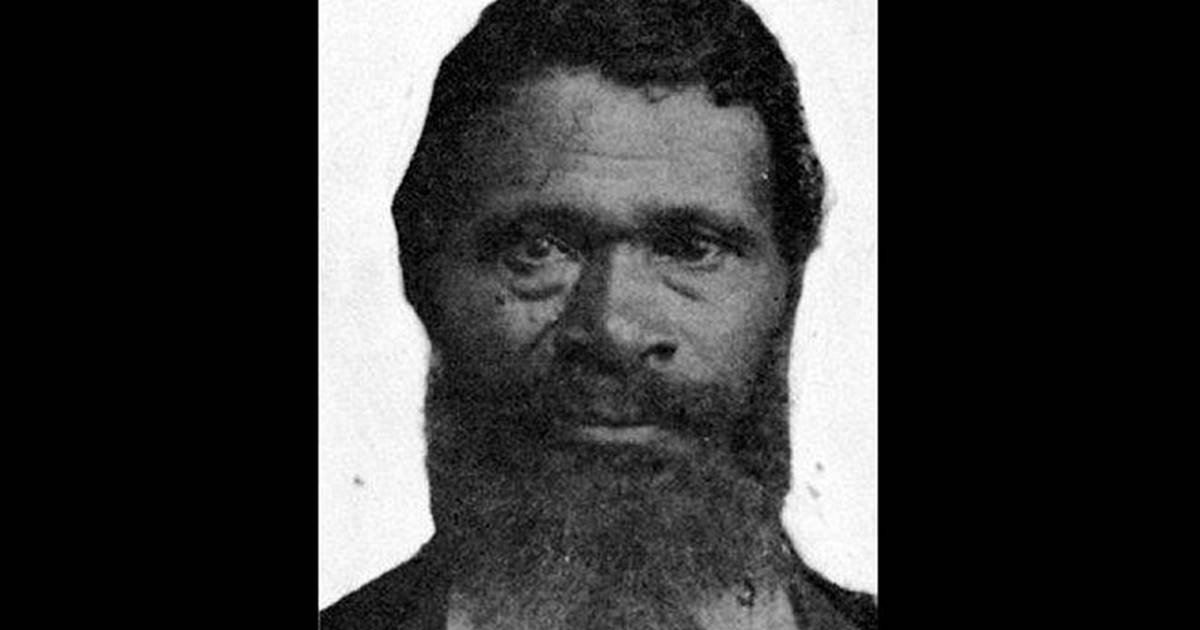
portrait of former enslaved man, Jordan Anderson

A photo of Jordan Anderson.

In 1825, at the approximate age of 8, Jordan Anderson (sometimes spelled "Jordon") was sold into slavery and would live as a servant of the Anderson family for 39 years. In 1864, the Union Army camped out on the Anderson plantation and Jordan and his wife, Amanda, were liberated. The couple eventually made it safely to Dayton, Ohio, where, in July 1865, Jordan received a letter from his former owner, Colonel P.H. Anderson. The letter kindly asked Jordan to return to work on the plantation because it had fallen into disarray during the war.

On Aug. 7, 1865, Jordan dictated his response through his new boss, Valentine Winters, and it was published in the Cincinnati Commercial. The letter, entitled "Letter from a Freedman to His Old Master," was not only hilarious, but it showed compassion, defiance, and dignity. That year, the letter would be republished in the New York Daily Tribune and Lydia Marie Child's The Freedman's Book.

The letter mentions a "Miss Mary" (Col. Anderson's Wife), "Martha" (Col. Anderson's daughter), Henry (most likely Col. Anderson's son), and George Carter (a local carpenter).

Dayton, Ohio,
August 7, 1865
To My Old Master, Colonel P.H. Anderson, Big Spring, Tennessee

Sir: I got your letter, and was glad to find that you had not forgotten Jordon, and that you wanted me to come back and live with you again, promising to do better for me than anybody else can. I have often felt uneasy about you. I thought the Yankees would have hung you long before this, for harboring Rebs they found at your house. I suppose they never heard about your going to Colonel Martin's to kill the Union soldier that was left by his company in their stable. Although you shot at me twice before I left you, I did not want to hear of your being hurt, and am glad you are still living. It would do me good to go back to the dear old home again, and see Miss Mary and Miss Martha and Allen, Esther, Green, and Lee. Give my love to them all, and tell them I hope we will meet in the better world, if not in this. I would have gone back to see you all when I was working in the Nashville Hospital, but one of the neighbors told me that Henry intended to shoot me if he ever got a chance.

I want to know particularly what the good chance is you propose to give me. I am doing tolerably well here. I get twenty-five dollars a month, with victuals and clothing; have a comfortable home for Mandy, — the folks call her Mrs. Anderson, — and the children — Milly, Jane, and Grundy — go to school and are learning well. The teacher says Grundy has a head for a preacher. They go to Sunday school, and Mandy and me attend church regularly. We are kindly treated. Sometimes we overhear others saying, "Them colored people were slaves" down in Tennessee. The children feel hurt when they hear such remarks; but I tell them it was no disgrace in Tennessee to belong to Colonel Anderson. Many darkeys would have been proud, as I used to be, to call you master. Now if you will write and say what wages you will give me, I will be better able to decide whether it would be to my advantage to move back again.

As to my freedom, which you say I can have, there is nothing to be gained on that score, as I got my free papers in 1864 from the Provost-Marshal-General of the Department of Nashville. Mandy says she would be afraid to go back without some proof that you were disposed to treat us justly and kindly; and we have concluded to test your sincerity by asking you to send us our wages for the time we served you. This will make us forget and forgive old scores, and rely on your justice and friendship in the future. I served you faithfully for thirty-two years, and Mandy twenty years. At twenty-five dollars a month for me, and two dollars a week for Mandy, our earnings would amount to eleven thousand six hundred and eighty dollars. Add to this the interest for the time our wages have been kept back, and deduct what you paid for our clothing, and three doctor's visits to me, and pulling a tooth for Mandy, and the balance will show what we are in justice entitled to. Please send the money by Adams's Express, in care of V. Winters, Esq., Dayton, Ohio. If you fail to pay us for faithful labors in the past, we can have little faith in your promises in the future. We trust the good Maker has opened your eyes to the wrongs which you and your fathers have done to me and my fathers, in making us toil for you for generations without recompense. Here I draw my wages every Saturday night; but in Tennessee there was never any pay-day for the negroes any more than for the horses and cows. Surely there will be a day of reckoning for those who defraud the laborer of his hire.

In answering this letter, please state if there would be any safety for my Milly and Jane, who are now grown up, and both good-looking girls. You know how it was with poor Matilda and Catherine. I would rather stay here and starve — and die, if it come to that — than have my girls brought to shame by the violence and wickedness of their young masters. You will also please state if there has been any schools opened for the colored children in your neighborhood. The great desire of my life now is to give my children an education, and have them form virtuous habits.

Say howdy to George Carter, and thank him for taking the pistol from you when you were shooting at me.

From your old servant,
Jordon Anderson

Learn more about Jordan Anderson here.


This article originally appeared eight years ago.


Health

Psychologists say there are 4 types of introverts. These are the personality traits of each one.

The four types of introverts: Social, Thinking, Anxious, and Restrained.

introvert, introvers, types of introverts, introverted, introvert types, 4 introvert types

A woman sits in a chair reading a book.

Introverts can have many personality stereotypes. Many people assume they are quiet homebodies who prefer alone time, but not all introverts are the same.

Psychologist Jonathan M. Cheek, along with his colleagues Jennifer Grimes and Julie Norem at Wellesley College, presented findings in a 2011 study identifying four types of introverts: Social, Thinking, Anxious, and Restrained (STAR).


"Many people assume introversion is fixed, but introversion is on a spectrum," Chloë Bean, a somatic trauma therapist in Los Angeles, told Upworthy.

- YouTube www.youtube.com

Essentially, there is no one-size-fits-all type of introvert.

"It can shift depending on life phase, your stress level, burnout, support system, and trauma history," Bean said. "What looks like 'being introverted' is sometimes the nervous system doing it's job, protecting you especially when you're feeling overwhelmed or need to connect with yourself more."

Four types of introverts

In an interview with The Cut, Cheek explained that these introvert "types" are more like "shades," and that introverts are often a mix of each one. Here's what you need to know about each type of introvert:

introvert, introverts, being introverted, social introvert, introverts hanging out Three women sit on a blanket in the park. Photo credit: Canva

Social introverts

Bean noted that social introverts may be selective about who they connect with. They enjoy spending time with others but need downtime to recover.

"They prefer to stay home with a book or a computer, or to stick to small gatherings with close friends, as opposed to attending large parties with many strangers," Cheek explained.

How to tell if it's you:

"You may tend to lose a lot of energy when socializing in large groups even when they're fun and prefer one-on-one time," said Bean. "You may feel more regulated with one person at a time, as you can feel overstimulated with more than one person at a time."

Thinking introverts

Thinking introverts are internally rich, deep, and active but appear quiet on the outside, Bean noted. They spend a lot of time reflecting, imagining, creating, or analyzing.

"You're capable of getting lost in an internal fantasy world," Cheek said. "But it's not in a neurotic way, it's in an imaginative and creative way."

How to tell if it's you:

"You feel energized and excited by ideas but you feel exhausted when there is constant feedback and stimulation externally," Bean explained. "You need time to be with your thoughts to come to your conclusion so staying with your inner voice and process is supportive because you can get easily distracted by others' thoughts and opinions."

@onlyjayus

The 4 Types Of Introverts

Anxious introverts

Bean said that anxious introverts deal with anxiety and avoidance driven by fear, as the body anticipates rejection or not being accepted socially.

How to tell if it's you:

"You might replay conversations, dread upcoming plans and cancel them when the tension and anxiety gets too strong," Bean shared. "This is often less about your personality and more about your nervous system feeling dysregulated by thoughts about socializing."

Restrained introverts

Restrained introverts are highly observant, take time to warm up to others, and are cautious about who they spend their energy with, Bean explained.

How to tell if it's you:

"It might take you some time to feel like you can trust others and feel safe enough to speak up," Bean said. "You might also avoid being put on the spot or being the center of attention."

teenage boy, teenage girl, conversation, meeting people, talking
Photo credit:Canva/Photos

A teenage girl and boy having a nice chat.

You’re standing in line at the grocery store and you see someone cute. You’d like to strike up a conversation without it being awkward...but that feels kinda nerve-wracking, right? Or maybe you’re standing around at a party and see someone you’d like to get to know, and want to approach them in a way that doesn’t feel uncomfortable. That probably feels a little scary, too.

The good news is that with a few easy tricks, you can improve your communication skills and feel confident approaching anyone.


According to years of psychological research, several principles can help make striking up conversations with strangers easier. The great thing is that they all work best when approached in a casual, effortless way.

1. Comment on the environment

Let’s say you’re at a party in someone’s living room. You can comment on physical objects: “Gee, this guy sure has a lot of books.” Or maybe you’re at a party where everyone brought food: “The food smells great. What are you grabbing first?” You can also comment on people’s behavior: “Is it me, or is everyone really well dressed tonight?”

This works because of the Joint Attention Effect, which says that when two people pay attention to the same thing at the same time, they create a common point of reference. This shared focus can immediately make people feel closer, even in social situations.

man and woman, wine, social skills, conversation

2. Make a playful comment

People will usually respond when you make a playful or unexpected comment, as long as it isn’t threatening. For example, if the person you want to talk to is holding a cocktail, you might joke, “That drink looks serious.” If you’re stuck in a long line: “Do you know why we’re here? I almost forgot why we’re in line—it’s been so long.” Or if you’re at a child’s birthday party and spot another parent you’d like to talk to: “Be honest, how tired of Little Caesars’ pizza are you?”

This works because of the Benign Violations Theory, which suggests that when someone violates a social norm in a non-threatening way, it makes people laugh and activates bonding mechanisms. It signals to your new friend that you’re playful and friendly, and when they laugh at your joke, it shows that you share similar values.

man and woman, people laughing, sitting on couch, good company, jokes

3. Ask their opinion

Another effortless way to engage someone you don’t know is to ask their opinion. For example, if you’re in the produce section at the supermarket, you might ask, “Do these peaches look good to you?” Or if you’re at a party and bring up a pop culture moment most people watched: “So, was Bad Bunny great at the Super Bowl, or is he overrated?”

This works because of what’s known as Cognitive Ease: people are more likely to respond to questions that are easy to process. Asking someone for their subjective opinion is non-threatening, and it’s easy for them to come up with an answer that makes them feel comfortable. Plus, if social media has taught us anything, it’s that everyone loves to share their opinions.

drinks, bar, socializing, man and woman, party

Next step: Pivot and ask questions

Given that all of these strategies are psychologically designed to elicit a response, even from someone you’ve never met, you have a strong chance of sparking a conversation. The key is to widen the exchange once you get that response by asking two more questions. In fact, a Harvard University study found that one of the easiest ways to be likable is to start a conversation with a question and then follow up with two more.

“We identify a robust and consistent relationship between question-asking and liking,” the study's authors wrote. “People who ask more questions, particularly follow-up questions, are better liked by their conversation partners.”

These three psychological rules show that it doesn’t take a Herculean effort to coax a stranger into having a conversation. All you have to do is make an effortless invitation by tapping into the environment you share with them, make a playful joke, or ask their opinion. Then ask a few questions, listen, and there’s a good chance you’ve made a new friend.

generation jones, gen jones, gen jonesers, girls in 1970s, 1970s, teens 1970s
Image via Wikimedia Commons

Generation Jones is the microgeneration of people born from 1954 to 1965.

Generational labels have become cultural identifiers. These include Baby Boomers, Gen X, Millennials, Gen Z and Gen Alpha. And each of these generations is defined by its unique characteristics, personalities and experiences that set them apart from other generations.

But in-between these generational categories are "microgenerations", who straddle the generation before and after them. For example, "Xennial" is the microgeneration name for those who fall on the cusp of Gen X and Millennials.


And there is also a microgeneration between Baby Boomers and Gen X called Generation Jones, which is made up of people born from 1954 to 1965. But what exactly differentiates Gen Jones from the Boomers and Gen Xers that flank it?

- YouTube www.youtube.com

What is Generation Jones?

"Generation Jones" was coined by writer, television producer and social commentator Jonathan Pontell to describe the decade of Americans who grew up in the '60s and '70s. As Pontell wrote of Gen Jonesers in Politico:

"We fill the space between Woodstock and Lollapalooza, between the Paris student riots and the anti-globalisation protests, and between Dylan going electric and Nirvana going unplugged. Jonesers have a unique identity separate from Boomers and GenXers. An avalanche of attitudinal and behavioural data corroborates this distinction."

Pontell describes Jonesers as "practical idealists" who were "forged in the fires of social upheaval while too young to play a part." They are the younger siblings of the boomer civil rights and anti-war activists who grew up witnessing and being moved by the passion of those movements but were met with a fatigued culture by the time they themselves came of age. Sometimes, they're described as the cool older siblings of Gen X. Unlike their older boomer counterparts, most Jonesers were not raised by WWII veteran fathers and were too young to be drafted into Vietnam, leaving them in between on military experience.

How did Generation Jones get its name?

generation jones, gen jones, gen jones teen, generation jones teenager, what is generation jones A Generation Jones teenager poses in her room.Image via Wikmedia Commons

Gen Jones gets its name from the competitive "keeping up with the Joneses" spirit that spawned during their populous birth years, but also from the term "jonesin'," meaning an intense craving, that they coined—a drug reference but also a reflection of the yearning to make a difference that their "unrequited idealism" left them with. According to Pontell, their competitiveness and identity as a "generation aching to act" may make Jonesers particularly effective leaders:

"What makes us Jonesers also makes us uniquely positioned to bring about a new era in international affairs. Our practical idealism was created by witnessing the often unrealistic idealism of the 1960s. And we weren’t engaged in that era’s ideological battles; we were children playing with toys while boomers argued over issues. Our non-ideological pragmatism allows us to resolve intra-boomer skirmishes and to bridge that volatile Boomer-GenXer divide. We can lead."

@grownupdish

Are you Generation Jones? Definitive Guide to Generation Jones https://grownupdish.com/the-definitive-guide-to-generation-jones/ #greenscreen #generationjones #babyboomer #generationx #GenX #over50 #over60 #1970s #midlife #middleage #midlifewomen #grownupdish #over50tiktok #over60women #over60tiktok #over60club

However, generations aren't just calculated by birth year but by a person's cultural reality. Some on the cusp may find themselves identifying more with one generation than the other, such as being culturally more Gen X than boomer. And, of course, not everyone fits into whatever generality they happened to be born into, so stereotyping someone based on their birth year isn't a wise practice. Knowing about these microgenerational differences, however, can help us understand certain sociological realities better as well as help people feel like they have a "home" in the generational discourse.

As many Gen Jonesers have commented, it's nice to "find your people" when you haven't felt like you've fit into the generation you fall into by age. Perhaps in our fast-paced, ever-shifting, interconnected world where culture shifts so swiftly, we need to break generations into 10 year increments instead of 20 to 30 to give everyone a generation that better suits their sensibilities.

This article originally appeared two years ago. It has been updated.

Jim Henson interviewing with Muppets is a delightful reminder of his magical genius

Even adults would forget that his characters weren't actually alive.

jim henson, muppets, puppets, puppeteering, the muppet show
Public domain

Jim Henson with some of his Muppets

Few individuals have had an impact on the childhoods of millions and the imaginations of people of all ages like Jim Henson. From Sesame Street to The Muppet Show to The Dark Crystal and Labyrinth, Gen Xers grew up with Henson's magic being a familiar and comforting presence. And to this day, over three decades after his death, the characters he created are still household names.

For those of us who were raised on Big Bird, Bert and Ernie, Kermit, and Miss Piggy, Henson's creatures feel as real as any living, breathing performer from our childhoods. But it's not just because we were kids when we were introduced to them. Even adults who met the Muppets found themselves transported into Henson's imaginary world, and after seeing interviews of the puppeteer with his creatures, it's easy to see why.


Watch:

Henson didn't even pretend to not be controlling Kermit. He didn't bother with ventriloquism. And yet, Kermit feels truly alive and separate from the person animating him. It almost feels surreal. Or perhaps just...real.

Henson's characters even convinced film crew members

Both guests and crew members alike found themselves pulled into Henson's world, even while fully understanding that the puppets were being controlled by people. The crew would sometimes move the boom mic to a puppet instead of the puppeteer. Directors would sometimes give stage directions directly to the Muppet instead of the human animating it. Dick Cavett, who interviewed Henson with his Muppets, said, “No matter how much you know about this, it’s completely convincing.”

Even when a Muppet would explain the fact that the person was speaking to a puppet, it still seemed like a sentient being. Case in point:

(This may be the one time you see Henson swear, but in context, it's brilliantly wholesome.)

@guygilchrist

My old boss’s last public performance as Rowlf.🐶🙏🏻 . . #jimhenson #jimhensonscartoonist #themuppets #fyp #foryoupage


Frank Oz shared what it was like to work with Henson

Of course, Henson didn't work alone. Bringing his characters to life in all the ways he envisioned took the work of many people, but none were more aligned with Henson himself than his partner-in-puppetry, Frank Oz. Oz was the Miss Piggy to Henson's Kermit, the Bert to his Ernie, the Animal to his Dr. Teeth.

Oz started working with Henson when he was just 19 years old, and for 27 years the duo created unforgettable magic together. It wasn't just the puppets. It was the voices, the comedic timing, the way they could make you laugh in one moment and well up with tears in the next. Their creatures entertained us but also taught us about being human, which was a truly remarkable feat.

Oz shared what it was like to work with Henson with Gene Shalit after Henson's death in 1990:

- YouTube www.youtube.com

Like Fred Rogers, Jim Henson is remembered for being a distinctly decent person in addition to his creative work. He brought the ancient art of puppetry into the modern world, touching every generation in his lifetime and after in a way that remains unmatched. As the tribute song "A Boy and His Frog" by Tom Smith says:

"They say, 'Oh that's foam and a wire, attached to a green velvet sleeve. Anyone can do that.' Well, that's true, I suppose, but who else can make them believe?" (Grab a tissue before listening to this song, Henson lovers. It's a doozy.)

- YouTube youtu.be

How his legacy lives on

Henson’s children, Lisa, Cheryl, Brian, John, and Heather, have carried on his work by running the Jim Henson Company and Jim Henson Foundation, performing themselves, and continuing to advocate for the art of puppetry. They've also kept Jim Henson's Creature Shop running, creating puppets, animatronics, and even digital puppetry. The shop designed and built the full-size animatronic puppets for the 2023 Five Nights at Freddy's movie and works on television, commercial, and themed projects as well.

In 2024, renowned director Ron Howard released a documentary about Henson's life and work, Jim Henson: Idea Man, which can be found on Disney +.

- YouTube www.youtube.com


Malala Yousafzai, Khushal Yousafziai Pakistan, siblings, support, family
Photo credit: Used with permission from Khushal Yousafzai

Malala Yousafzai and her brother, Khushal, pose for a photo.

Malala Yousafzai most certainly has a lot of light. At the young age of 11, she began advocating for education for girls after the Taliban took over her district of Swat in Pakistan. About three years later, she—alongside two other girls—was shot in the head on a bus for her passionate, outspoken views.

She survived and went on to address the United Nations about the importance of education. According to her nonprofit's website:


"The U.N. recognized July 12 as Malala Day, in honour of her courageous advocacy and to highlight the global struggle for education. With her father, her ally and inspiration, she established Malala Fund, an organisation dedicated to giving every girl the opportunity to learn and choose her own future."

Just one year later, she became the youngest-ever recipient of the Nobel Peace Prize. She has received numerous awards, been honored by Time Magazine, and continues to inspire people around the world.

Recently, one of her younger brothers, Khushal Yousafzai, was speaking at the Oxford Scholars Program when he was asked whether he ever felt "overshadowed" by his sister's accomplishments. His answer was vulnerable, heartfelt, and lovely:

"My sister nearly died. Forget her winning the Nobel Prize. Forget her getting the limelight. I would give up my life for you to have a life. Death puts things into perspective like nothing else does."

He pauses, then says, "Why would her success take anything away from me? I'm not in my sister's shadow. I'm in my sister's light. And Rumi has this beautiful quote: 'A candle doesn't lose its light when it lights up another candle.' Actually makes the world a brighter place. It lights up the whole room."

He continues with a message about supporting the people you love:

"So guys, uplift each other. If you see your friend, uplift them. Because guess what? We all are gonna die someday. And your friends, I'm sure they mean a lot to you. And at times, there is that feeling of jealousy. You don't want to be going to their funeral and telling their parents how amazing they were. Because guess what? It's too late. So tell them while they're still alive. You don't want to live with that, so uplift people while they're still here."

Khushal speaks frequently to students about his journey. He is also a fierce advocate for education and finding the fuel to live life to its fullest. According to a biography he shared with Upworthy: "Through his educational platform, Yousafzai Academy, he mentors students about personal and academic growth, learning from setbacks, and leadership."

Many commenters on Instagram expressed heartfelt support and said they were deeply touched by his words.

"So beautiful to see his immense love for his sister shared so honestly, vulnerably, and without any hint of shame or resentment," one commenter said. "And the Rumi quote is just so perfect. ❤"

Another notes that his wisdom isn't surprising, considering his whole family is involved in activism: "This family has got all the right things going on! What a gift to the world."

This person was moved by his words, especially by the idea of uplifting people while there's still time: "Wisdom. Beautiful. Fabulous. What a family! Uplift your friends. Uplift people while they are still here. Yes!"

And this commenter deduces that the trauma his family has been through has created a thoughtful empath: "You have a high level of empathy 🙏🏽💕. Only people who have come close to death know the depth of your words and the bond you share with your sister."