You’ve heard of old quotes, interviews, and predictions that “aged like milk,” but here’s one that aged like a fine wine.
While astronomer Carl Sagan would likely be the first to scoff at the idea of him being a fortune teller, the man certainly had a prescient way of looking ahead during his lifetime. Sagan was the original host of a show called “Cosmos” back in 1980 and it became the most watched show in public television history. Sometimes called the “Mister Rogers of science,” few science communicators have been able to match Sagan’s talent for stoking wonder about the universe and our place in it.
Sagan passed away in 1996, 30 years ago, from pneumonia. He was only 62, and it was a tragedy that he was taken so soon with so much good work left to do.
His final warning was about all of us
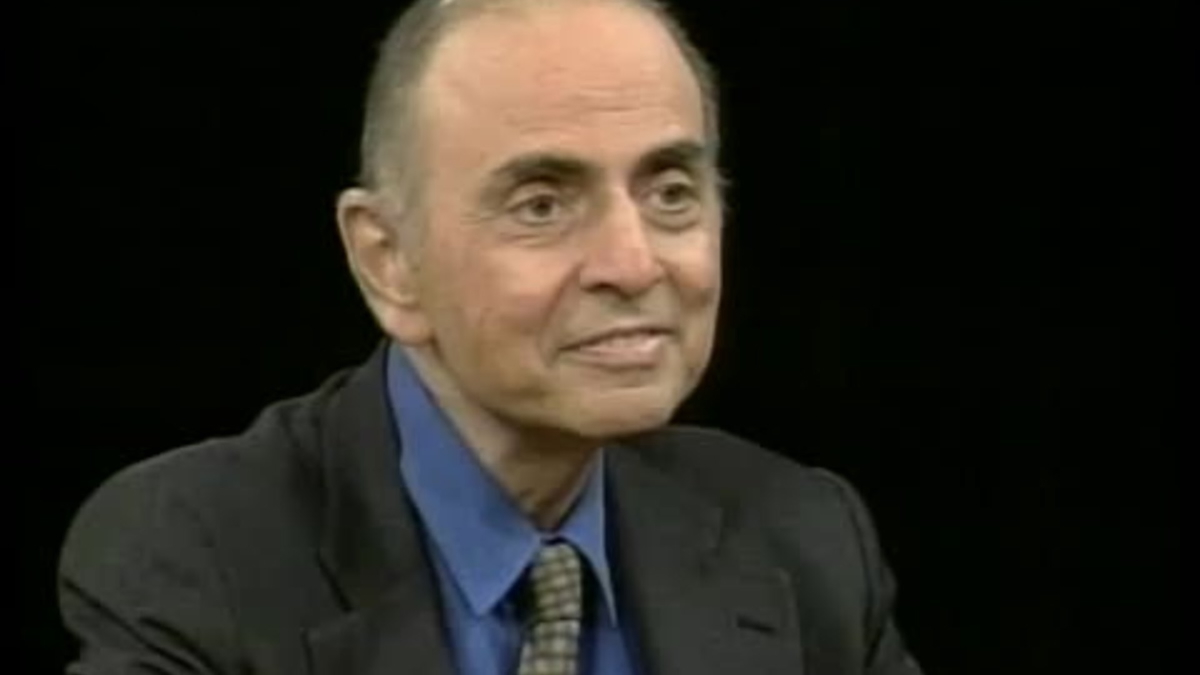
Shortly before his death, however, Sagan appeared on “Charlie Rose” and made one final prediction: A dire warning about how susceptible America would be to the next “charlatan” politician who might come along.
Sagan said that Americans’ lack of skeptical, scientific thinking could lead to disastrous consequences down the road. As a man who dedicated his life to science and education, he knew exactly how bad things could and would get.
How accurate was his warning?
Today, we can see the problems that are happening due to America’s anti-science streak whether it’s anti-vaxxers, conspiracy theories, or climate change deniers.
Sagan was right, America will suffer due to a lack of scientific skepticism. Not skepticism of sound, peer-reviewed science, but skepticism of salesmen and frauds and conmen who come along and claim to have all the answers despite having put in none of the work.
“We’ve arranged a society on science and technology in which nobody understands anything about science and technology, and this combustible mixture of ignorance and power sooner or later is going to blow up in our faces,” he told Rose. “I mean, who is running the science and technology in a democracy if the people don’t know anything about it?”
He then warned that our lack of critical thinking leaves us vulnerable to those who wish to exploit our ignorance.
“Science is more than a body of knowledge, it’s a way of thinking,” he says. “A way of skeptically interrogating the universe with a fine understanding of human fallibility. If we are not able to ask skeptical questions to interrogate those who tell us that something is true, to be skeptical of those in authority, then we’re up for grabs for the next charlatan, political or religious, who comes ambling along.”
Sagan believes that a democracy cannot function without an educated populace.
“It’s a thing that Jefferson lay great stress on. It wasn’t enough, he said, to enshrine some rights in the Constitution and the Bill of Rights, the people had to be educated and they have to practice their skepticism and their education,” he says. “Otherwise, we don’t run the government, the government runs us.”
What scientific skepticism actually means
One key to remember is that good scientists are inherently skeptical. NASA writes beautifully about the difference between scientific skepticism and the “do your own research” crowd, “Skepticism helps scientists to remain objective when performing scientific inquiry and research. It forces them to examine claims (their own and those of others) to be certain that there is sufficient evidence to back them up. Skeptics do not doubt every claim, only those backed by insufficient evidence or by data that have been improperly collected, are not relevant or cannot support the rationale being made.”
Part of the problem we face in the present is that what constitutes education, including science and technology education, is being debated at the highest levels.
Institutions of higher learning are undergoing attacks by the government, traditional education is being devalued by powerful parts of the political world, and positions that were traditionally filled by public servants with credentialed expertise are now being filled by political loyalists instead.
Critical thinking has also taken a beating. People believe themselves to be “critical thinkers” simply because they go against scientific consensus, but that’s not how critical thinking and skepticism really work. When political ideologies take precedence over genuine scientific inquiry and investigation, we all lose out.
In fact, many believe there is a concerted effort to discredit science; not just for kicks, but because those with ulterior motives need the populace to be uneducated, uninformed, and skeptical of those that might speak truth to power. This is not a new phenomenon, but it’s reached new levels in the modern age.
Have we already reached that place?
Some might even say we’ve already reached the place Sagan tried to warn us about. The “next political charlatan,” certainly sounds more than familiar to some. Of course, that’s up for debate as well, but regardless, Sagan certainly seemed to have his finger on the pulse of humanity’s tendencies. Hopefully people will heed his words and put science education in its rightful place as part of a thriving democracy.
This article originally appeared six years ago. It has been updated.