Budweiser cancelled its Super Bowl ad and donated the money to fight COVID anti-vaxxers

Budweiser beer, and its low-calorie counterpart, Bud Light, have created some of the most memorable Super Bowl commercials of the past 37 years.
There were the Clydesdales playing football and the poor lost puppy who found its way home because of the helpful horses. Then there were the funny frogs who repeated the brand name, "Bud," "Weis," "Er."
We can't forget the "Wassup?!" ad that premiered in December 1999, spawning the most obnoxious catchphrase of the new millennium.
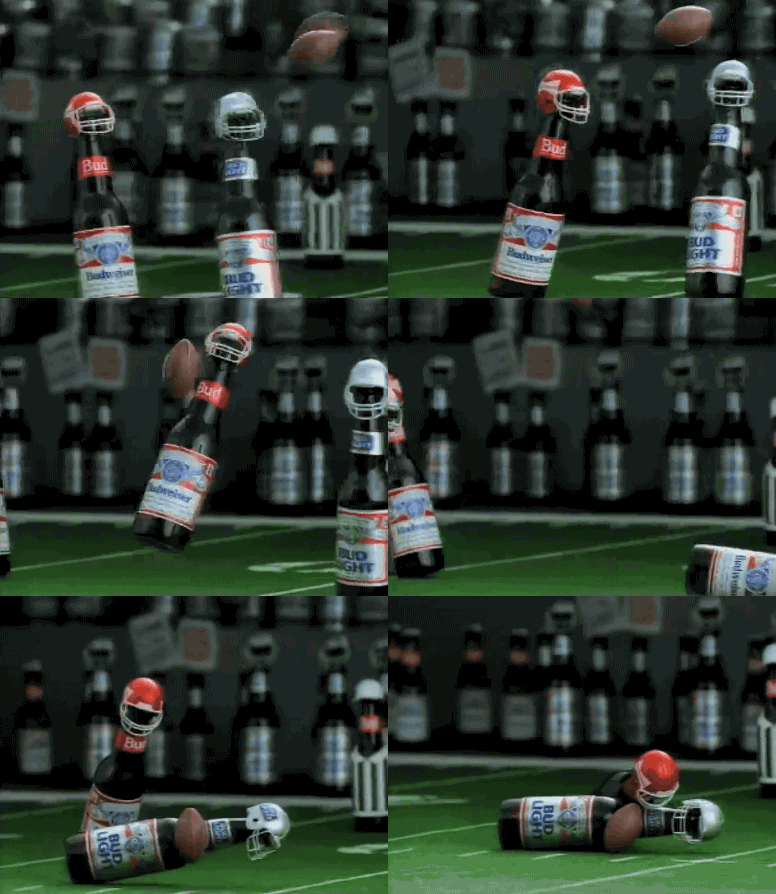
And who amongst us hasn't lost a bet on the Bud Bowl?
However, when you turn on the TV on February 7 to watch Tom Brady's Buccaneers go up against Patrick Mahomes and the Kansas City Chiefs, you won't find a 30-second TV spot from Budweiser beer.
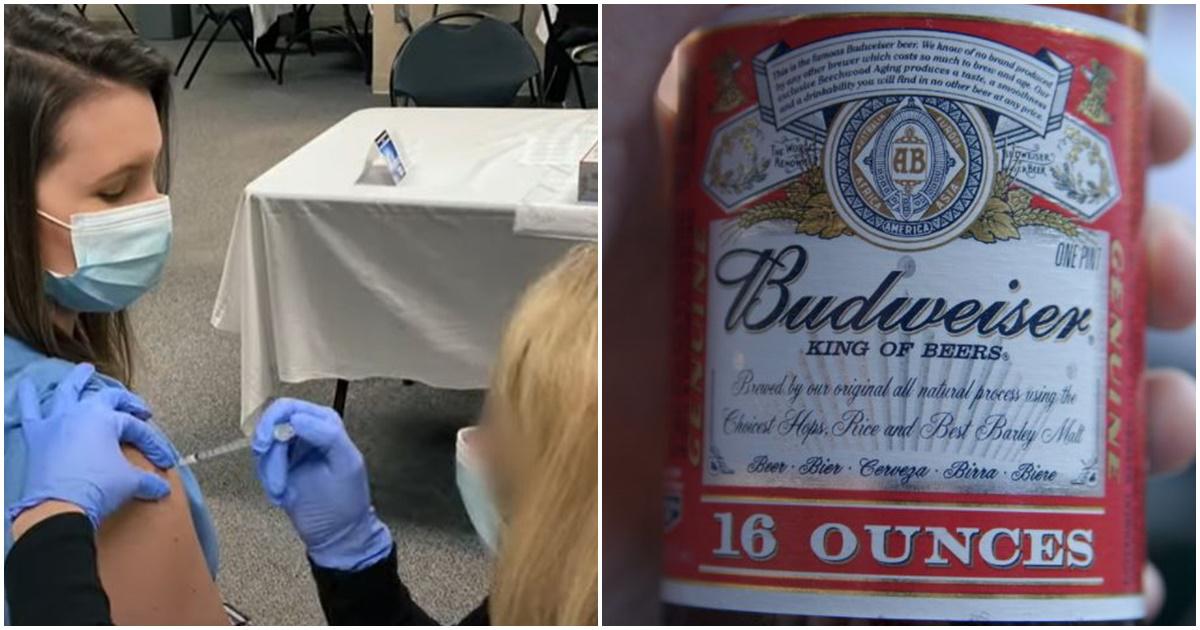
Instead, the beer's parent company, Anheuser-Busch InBev, has decided to donate portions of its advertising budget this year to the Ad Council, a nonprofit heading a $50 million campaign to fight back against COVID-19 vaccine skepticism.
The current cost of a 30-second TV ad during the Super Bowl on CBS is roughly $5.5 million.
The decision comes at a time when shares of AB InBev have fallen 14.5% over the past year. Although at-home beer consumption has risen during the pandemic, COVID-19 has drastically reduced the sales of alcohol in bars and at sporting events.
"For the first time in 37 years, Budweiser isn't airing a commercial during the Super Bowl. Instead, we're redirecting our advertising dollars to support COVID-19 vaccines awareness and education," a spokesperson said in a statement. "Working with partners like the Ad Council and COVID Collaborative, we're helping to safely bring people back together again soon.
Who knew that America's most iconic beer would one day lead the fight against anti-vaxxers?
In the run-up to the big game, the beer brand has created a 90-second online pro-vaccination ad voiced by "The Office" star Rashida Jones. In the ad, Jones urges viewers to "turn our strength into hope" while "Lean on Me" plays in the background.
Bigger Picture | Budweiser Super Bowl Commercialwww.youtube.com
Last November, the Ad Council and COVID Collaborative, a coalition of experts in health, education, and the economy, launched the vaccine education campaign
At the time, polls showed that 40% of Americans were not confident in a potential vaccine. That level of vaccine skepticism could seriously endanger any chance of a full recovery.
"Frankly, this is the biggest public health crisis we've ever faced, and we don't have time to waste," said Lisa Sherman, the group's chief executive. "We're working in advance so that once those vaccines are proven to be safe and approved by all the right people, we're ready to go."
The Ad Council launched a similar campaign back in the 1950s when it was tasked with encouraging Americans to get vaccinated against polio.
Budweiser isn't the only Super Bowl regular to pull its ads from this year's broadcast. PepsiCo and Coca-Cola have said they won't be running ads during the broadcast. Although Pepsi will be sponsoring the halftime show.

- Why you should see the full version of the Super Bowl commercial ... ›
- Helen Mirren slams drunk drivers in this epic, hilarious Super Bowl ... ›
- Check out Budweiser's powerful Super Bowl ad celebrating ... ›
- Tom Brady says parents today don't let kids fail enough - Upworthy ›


Student smiling in a classroom, working on a laptop.
Students focused and ready to learn in the classroom.
Fish find shelter for spawning in the nooks and crannies of wood.
Many of these streams are now unreachable by road, which is why helicopters are used.
Tribal leaders gathered by the Little Naches River for a ceremony and prayer.

Communications expert shares the perfect way to gracefully shut down rude comments
Taking the high ground never felt so good.
A woman is insulted at her job.
It came out of nowhere. A coworker made a rude comment that caught you off guard. The hair on the back of your neck stands up, and you want to put them in their place, but you have to stay tactful because you're in a professional setting. Plus, you don't want to stoop to their level.
In situations like these, it helps to have a comeback ready so you can stand up for yourself while making making sure they don't disrespect you again.
Vince Xu, who goes by Lawyer Vince on TikTok, is a personal injury attorney based in Torrance, California, where he shares the communication tips he's learned with his followers. Xu says there are three questions you can ask someone who is being rude that will put them in their place and give you the high ground:
Question 1: "Sorry, can you say that again?"
"This will either make them have to awkwardly say the disrespectful remark one more time, or it'll actually help them clarify what they said and retract their statement," Xu shares.
Question 2: "Did you mean that to be hurtful?"
The next step is to determine if they will repeat the disrespectful comment. "This calls out their disrespect and allows you to learn whether they're trying to be disrespectful or if there's a misunderstanding," Xu continues.
Question 3: "Are you okay?"
"What this does, is actually put you on higher ground, and it's showing empathy for the other person," Xu adds. "It's showing that you care about them genuinely, and this is gonna diffuse any type of disrespect or negative energy coming from them."
The interesting thing about Xu's three-step strategy is that by gracefully handling the situation, it puts you in a better position than before the insult. The rude coworker is likely to feel diminished after owning up to what they said, and you get to show them confidence and strength, as well as empathy. This will go a lot further than insulting them back and making the situation even worse.
Xu's technique is similar to that of Amy Gallo, a Harvard University communications expert. She says that you should call out what they just said, but make sure it comes out of their mouth. "You might even ask the person to simply repeat what they said, which may prompt them to think through what they meant and how their words might sound to others," she writes in the Harvard Business Review.
More of Gallo's suggested comebacks:
“Did I hear you correctly? I think you said…”
“What was your intention when you said…?”
“What specifically did you mean by that? I'm not sure I understood.”
“Could you say more about what you mean by that?”
Ultimately, Xu and Gallo's advice is invaluable because it allows you to overcome a negative comment without stooping to the other person's level. Instead, it elevates you above them without having to resort to name-calling or admitting they got on your nerves. That's the mark of someone confident and composed, even when others are trying to take them down.