


Checking expiration dates is always a good idea, but so is knowing when they matter.
You're getting ready to cook dinner, so you start pulling ingredients out of your pantry. As you pick up a package of pasta, you realize you bought it a long time ago, so you search for a date. The "best by" date passed two months ago. Is it okay to eat it? Will it make you and your family sick? Is it worth taking a risk? Is there really a risk at all with pasta?
That's only the beginning of the questions when it comes to dating food items. What's the difference between "sell by" and "best by" and "use by" and "expiration" dates? What if the package just has a date with no words or letters to indicate which of those it is? Does "best by" mean it just isn't fresh past that date? Does "expires" mean it might kill you if you eat it?
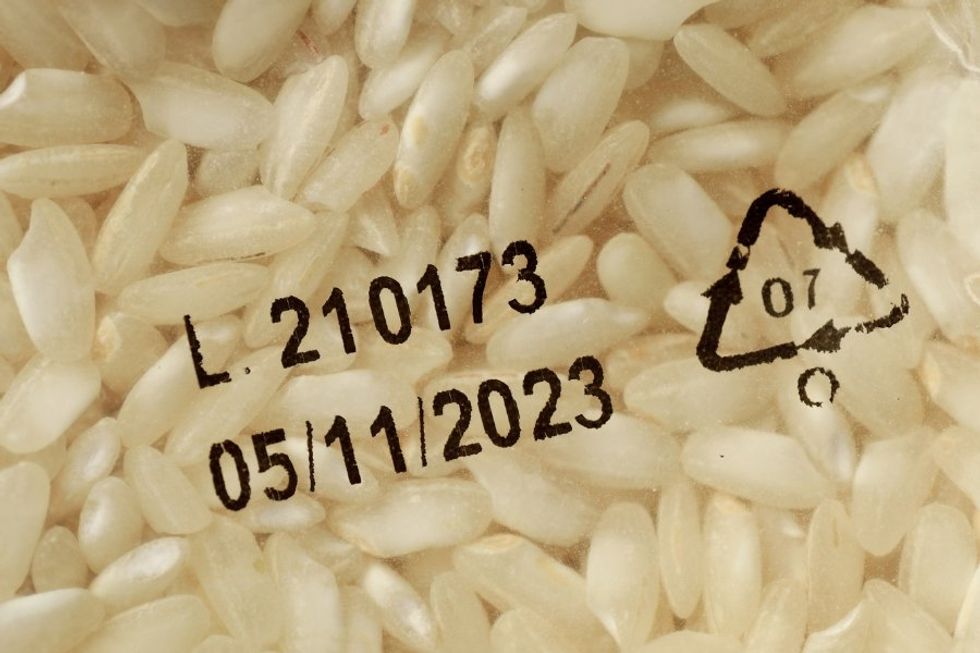 What if a food just has a date but no other indicators on it? Photo credit: Canva
You're not alone. Food packaging dates are befuddling because get this: there are no real regulations or national standards that determine how they're decided.
In reality, a lot of foods—especially dry packaged foods—can be safely consumed well past any of those dates. They may lose optimal freshness, and they might taste stale, but generally speaking, the dates don't mean what people think they mean. In fact, they don't really have a well-defined meaning at all.
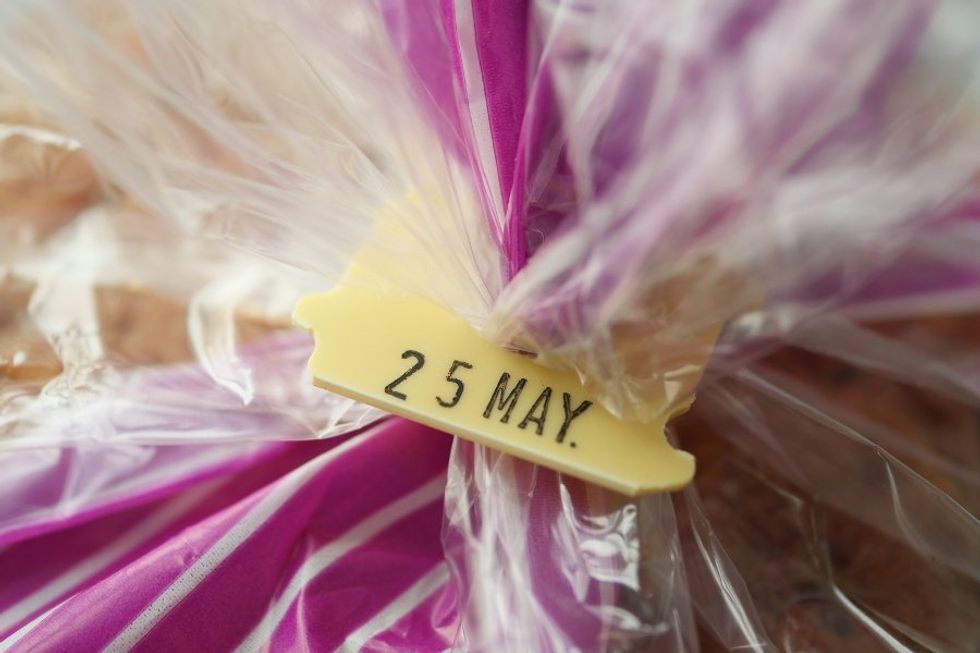 Is this a package date? Sell by date? Use by date? Best by date? Photo credit: Canva
“It is a complete Wild West,” Dana Gunders, executive director of ReFed (a nonprofit trying to end food waste) told CNN. "Many consumers really believe that they are being told to throw the food out, or that even when they don’t make that choice, that they’re sort of breaking some rule."
According to America's Test Kitchen's science editor Paul Adams, the dates on foods are almost entirely about freshness and taste quality and not about safety. The USDA website states, "Manufacturers provide dating to help consumers and retailers decide when food is of best quality. Except for infant formula, dates are not an indicator of the product’s safety and are not required by Federal law."
- YouTube www.youtube.com
Which brings us to the handful of foods whose expiration dates actually do matter and that you shouldn't overlook or ignore because there is some food safety risk involved. No one wants listeria, salmonella, botulism, or other forms of foodborne illness (more commonly known as food poisoning).
Along with baby formula, it's important to pay attention to dates on fresh meat and fish, deli meats, and unpasteurized cheeses. But for the vast majority of other foods, using your senses to check for signs of spoilage and having a sense of how long certain foods will last once opened will tell you more than the date on the package will.
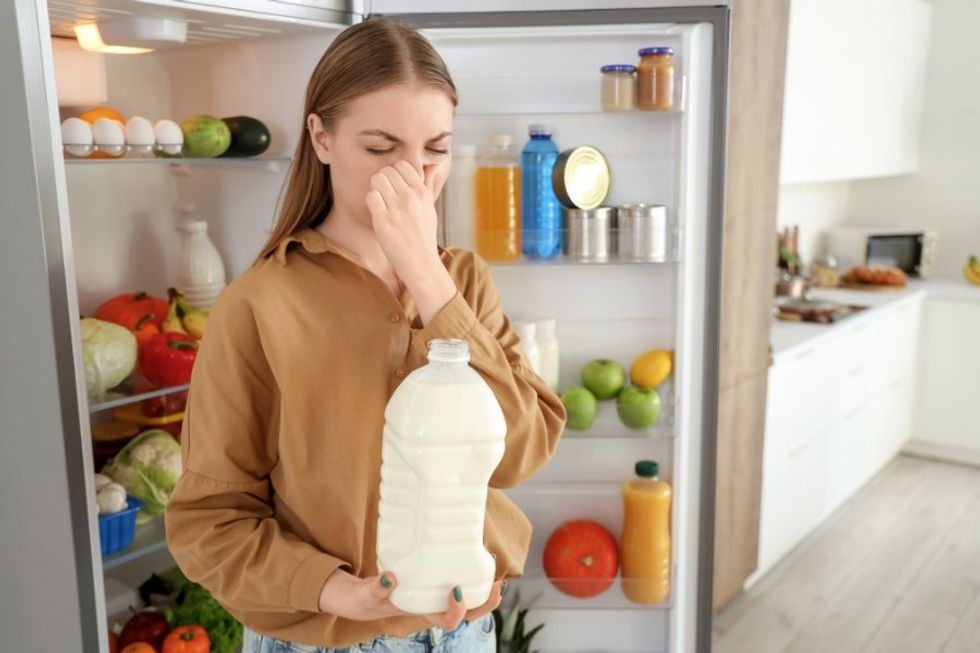 Your senses can tell you a lot about whether food is good to consume.Photo credit: Canva
Signs of spoilage include an "off" smell or taste, a change in color, and changes in texture (many foods develop a slippery or slimy feel when they start to spoil). If you see signs of mold, in some cases the whole package should be thrown out (such as bread) or the moldy parts can be cut off (such as hard cheeses, cutting off an inch past the mold). For fresh fruits and vegetables that start to get moldy, a general rule is if it's hard/firm, you can cut the moldy part off plus an inch, and if it's soft/squishy, throw it out. (The USDA has a helpful chart to see which foods can still be used with mold cut off and which should be tossed.)
Knowing how long foods generally last once opened or purchased will also help you gauge when a food is too iffy to consume. FoodSafety.gov has a handy cold food storage chart that you can even download as a PDF if you want to print it out and put it in your kitchen for quick reference.
And, of course, there's the wise adage, "When in doubt, throw it out." But with the few exceptions listed above, dates on packages aren't the primary thing that should lead you to doubt.

 A Generation Jones teenager poses in her room.Image via Wikmedia Commons
 An office kitchen.via
  An angry man eating spaghetti.via



An Irish woman went to the doctor for a routine eye exam. She left with bright neon green eyes.
It's not easy seeing green.
Did she get superpowers?
Going to the eye doctor can be a hassle and a pain. It's not just the routine issues and inconveniences that come along when making a doctor appointment, but sometimes the various devices being used to check your eyes' health feel invasive and uncomfortable. But at least at the end of the appointment, most of us don't look like we're turning into The Incredible Hulk. That wasn't the case for one Irish woman.
Photographer Margerita B. Wargola was just going in for a routine eye exam at the hospital but ended up leaving with her eyes a shocking, bright neon green.
At the doctor's office, the nurse practitioner was prepping Wargola for a test with a machine that Wargola had experienced before. Before the test started, Wargola presumed the nurse had dropped some saline into her eyes, as they were feeling dry. After she blinked, everything went yellow.
Wargola and the nurse initially panicked. Neither knew what was going on as Wargola suddenly had yellow vision and radioactive-looking green eyes. After the initial shock, both realized the issue: the nurse forgot to ask Wargola to remove her contact lenses before putting contrast drops in her eyes for the exam. Wargola and the nurse quickly removed the lenses from her eyes and washed them thoroughly with saline. Fortunately, Wargola's eyes were unharmed. Unfortunately, her contacts were permanently stained and she didn't bring a spare pair.
- YouTube youtube.com
Since she has poor vision, Wargola was forced to drive herself home after the eye exam wearing the neon-green contact lenses that make her look like a member of the Green Lantern Corps. She couldn't help but laugh at her predicament and recorded a video explaining it all on social media. Since then, her video has sparked a couple Reddit threads and collected a bunch of comments on Instagram:
“But the REAL question is: do you now have X-Ray vision?”
“You can just say you're a superhero.”
“I would make a few stops on the way home just to freak some people out!”
“I would have lived it up! Grab a coffee, do grocery shopping, walk around a shopping center.”
“This one would pair well with that girl who ate something with turmeric with her invisalign on and walked around Paris smiling at people with seemingly BRIGHT YELLOW TEETH.”
“I would save those for fancy special occasions! WOW!”
“Every time I'd stop I'd turn slowly and stare at the person in the car next to me.”
“Keep them. Tell people what to do. They’ll do your bidding.”
In a follow-up Instagram video, Wargola showed her followers that she was safe at home with normal eyes, showing that the damaged contact lenses were so stained that they turned the saline solution in her contacts case into a bright Gatorade yellow. She wasn't mad at the nurse and, in fact, plans on keeping the lenses to wear on St. Patrick's Day or some other special occasion.
While no harm was done and a good laugh was had, it's still best for doctors, nurses, and patients alike to double-check and ask or tell if contact lenses are being worn before each eye test. If not, there might be more than ultra-green eyes to worry about.