upworthy
Add Upworthy to your Google News feed.
Google News Button
Family

Dad writes touching letter to himself on his worst day reminding him that "it gets better"

"If you can just hang in there, better days are ahead. I promise."

dads, fatherhood, parenting

We should all write ourselves letters like this

"Hey man, I know today was rough. I'm really sorry. I heard it was a doozy.

It started a lot earlier than it should have. I guess you could say the previous day never really ended.

You put your daughter down for bed around 8 p.m., like usual. You scarfed some food and chugged some NyQuil to try to knock out your throbbing cold, the one you caught from her (love those daycare germs!). Two hours later, you woke up to the sound of her coughing through the baby monitor. Then came the crying.


You rolled out of bed in a glassy-eyed, cold medicine-induced fog. You stumbled your way up the stairs to soothe her. Nothing worked. She cried every time you tried to lay her back down. Your head was throbbing. Your eyes dry and heavy. Her cries like nails on a chalkboard. You got frustrated and had to just put her down, let her cry while you walked away to cool off. "I can't do this," you thought, exhausted, drained. It didn't matter if you could do it or not because she kept crying, and she needed you.

The whole night went on like this before the sun mercifully came up.

Breakfast time. You sleepwalked your way through cooking an omelet (you burned one side, but does it really matter?). She threw it on the floor and wailed. Did she want a banana? More water? Crackers? Was something hurting? You didn't know. You just kept handing her things.

This was your entire day.
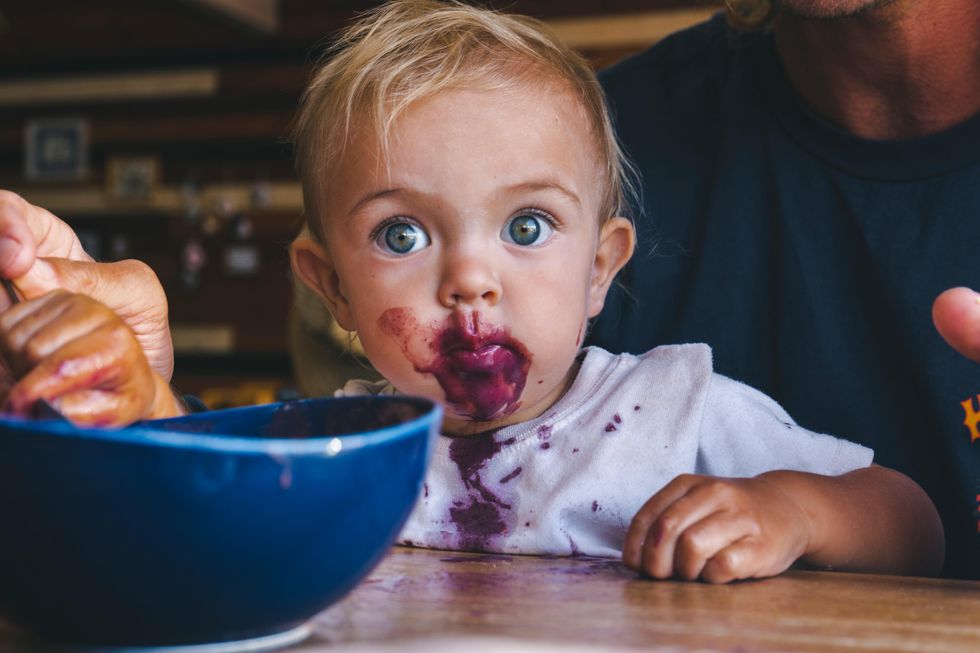
kidsPhoto by Derek Owens on Unsplash

After that, you carried her over to her toy bin and let her play. She was joyful, finally smiling and laughing. You sat, zombie-like, sipping your coffee and enjoying the brief moment of peace. Then she tripped over a wooden puzzle piece and hit the ground hard. More tears. And then more. Normally she wouldn't cry this hard, but she was sick. She wasn't herself. You picked her up and held her and kissed the boo-boo, but she wouldn't stop crying.

You put her back down because the crying in your ear was like a power drill to your temple. Normally, you'd be so much more patient and nurturing. But you weren't yourself either.

The whole day was like this. You took her to the store where she refused to stay in the cart. She wanted to run up and down the aisles, which was fine, but then she tripped and fell. Again. More tears. She threw her lunch on the floor and cried about it. You tried to put her down for a nap, but she kicked and flailed until you gave up.

It didn't matter if you could do it or not because she kept crying, and she needed you.

There were things to be done around the house: chores, projects, cleaning. You had nothing in you but medicine and whatever food you were able to scarf down between tantrums. It was all you could do to muscle your way through bath time and get her into bed.

And you weren't far behind her. You crawled into bed, drained, knowing she'd probably be up within a matter of hours, hacking and coughing and crying. Poor thing.

When it was finally quiet, you felt bad for her. She didn't mean to be a pain; she's just a baby. A baby with a cold, at that. You were so disappointed with yourself. Why couldn't you have been more patient, more loving? She had a hard day too.

You have to be better than that.

You drifted off to sleep locked in on one single thought: Maybe I'm not cut out for this dad thing.

I know your day was bad. Really bad. But mine was great, and I'm sorry, but I just need to tell someone about it.

Get this: It started at 8 a.m. 8 a.m.!

I know, I know. My daughter slept great. It's hard to believe she's so grown up. It doesn't seem that long ago that she was only sleeping a few hours here and there, then struggling through the night. Last night we put her down at 8.p.m. and didn't hear a peep out of her for 12 hours. I slept gloriously.

So. Much. Better.
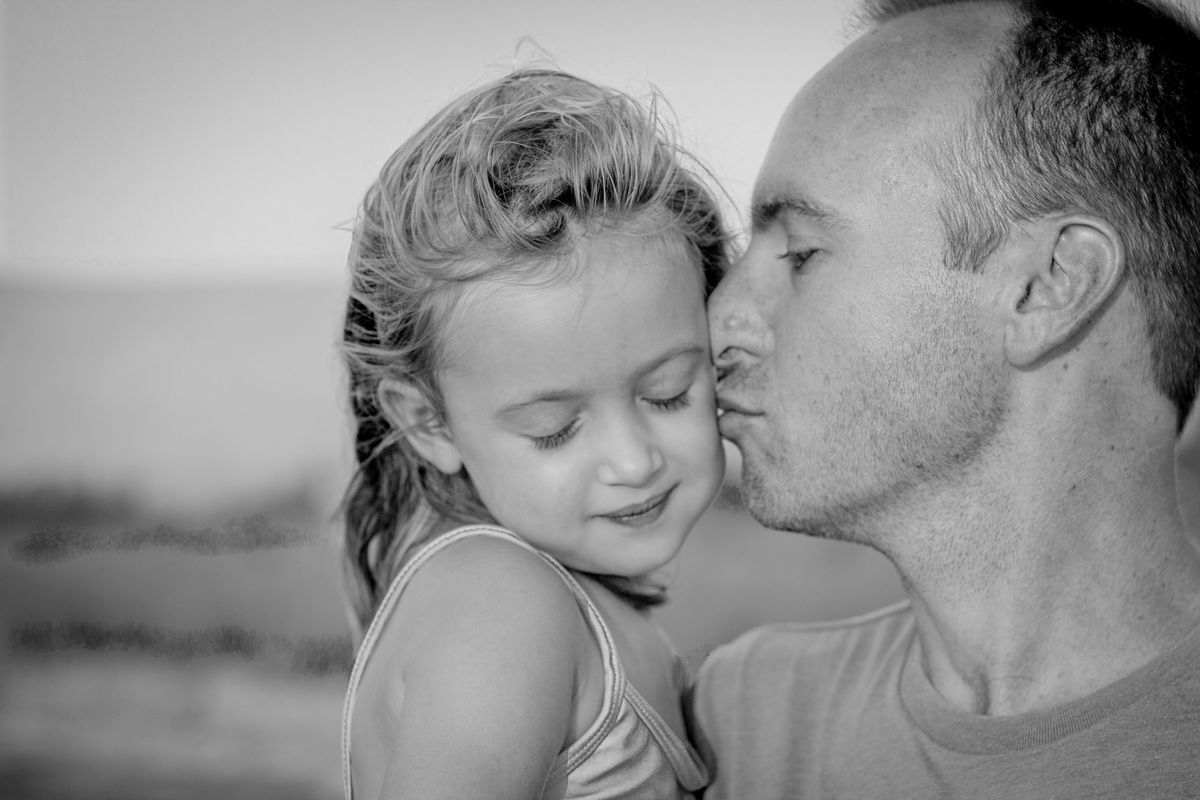
fatherhoodPhoto by Limor Zellermayer on Unsplash

The baby monitor gently crackled to life with her quietly babbling to herself. But I was already up. I climbed the stairs and pushed the door open to her room. She jumped to her feet and saw me, and she smiled the biggest smile I've ever seen and bounced up and down in her crib. As I got closer, she shot her arms into the air so I could pick her up. I did, and she laid a sleepy head on my shoulder.

She was a joy at breakfast. She sat in her chair and gulped down her banana while I cooked up an omelet (I nailed it, by the way, perfectly cooked, 10/10). I put on some music and she playfully shimmied her shoulders to the beat. When the eggs were ready, first she blew on them to cool them down, just like I taught her. She then showed off her fork skills and wolfed down the entire plate.

The rest of the day went by in a blur. There was the quick run to the store, where she helped put things in the cart and waved at every single person who passed by. Then, a trip to the park where she finally went down the big scary slide by herself. She came out the bottom giggling and ran to me.

I didn't want the day to end.

And after I kissed her good night and mommy rocked her to sleep, I was left with just one thought: I am doing pretty OK at this dad thing.

It's hard to believe sometimes that we are the same person, living the same life. But here's what I know: Tomorrow is a new day.

I don't know whether it'll be good or bad. I really don't. (I hope it's good!)

But you know what? At some point, you're going to look at that spot on the floor where your daughter tripped and face-planted, and you're going to laugh. When you think about it, it was kind of funny, right? (She was totally fine.)

And eventually you're going to find an old piece of omelet wedged under the kitchen table, covered in dust after she chucked it over her shoulder, and you're going to roll your eyes lovingly as you scoop it up and throw it away.

Take it from me: You're doing the best you can. You're going to have those days where you wish you could keep it together better, where you wish you could be the perfect parent.

But if you can just hang in there, better days are ahead. I promise.

Trust me, I just had one. And it was totally worth the wait."

This article originally appeared on 11.23.16

discussion, debate, disagreement, conversation, communication, curiosity

How do you get someone to open their minds to another perspective?

The diversity of humanity means people won't always see eye to eye, and psychology tells us that people tend to double down when their views are challenged. When people are so deeply entrenched in their own perspectives they're refusing to entertain other viewpoints, what do we do?

Frequently, what we do falls into the "understandable but ineffective" category. When we disagree with someone because their opinion is based on falsehoods or inaccurate information, we may try to pound them with facts and statistics. Unfortunately, research shows that generally doesn't work. We might try to find different ways to explain our stance using logic and reasoning, but that rarely makes a dent, either. So often, we're left wondering how on Earth this person arrived at their perspective, especially if they reject facts and logic.


According to Stanford researchers, turning that wondering into an actual question might be the key.

discussion, debate, disagreement, conversation, communication, curiosity Questions are more effective than facts when it comes to disagreements.Photo credit: Canva

The power of "Tell me more."

Two studies examined how expressing interest in someone's view and asking them to elaborate on why they hold their opinion affected both parties engaged in a debate. They found that asking questions like, "Could you tell me more about that?” and ‘‘Why do you think that?" made the other person "view their debate counterpart more positively, behave more open-mindedly, and form more favorable inferences about other proponents of the counterpart’s views." Additionally, adding an expression of interest, such as, ‘‘But I was interested in what you’re saying. Can you tell me more about how come you think that?” not only made the counterpart more open to other viewpoints, but the questioner themselves developed more favorable attitudes toward the opposing viewpoint.

In other words, genuinely striving to understand another person's perspective by being curious and asking them to say more about how they came to their conclusions may help bridge seemingly insurmountable divides.

discussion, debate, disagreement, conversation, communication, curiosity Asking people to elaborate leads to more open-mindedness.Photo credit: Canva

Stanford isn't alone in these findings. A series of studies at the University of Haifa also found that high-quality listening helped lower people's prejudices, and that when people perceive a listener to be responsive, they tend to be more open-minded. Additionally, the perception that their attitude is the correct and valid one is reduced.

Why curiosity works

In some sense, these results may seem counterintuitive. We may assume that asking someone to elaborate on what they believe and why they believe it might just further entrench them in their views and opinions. But that's not what the research shows.

Dartmouth cognitive scientist Thalia Wheatley studies the role of curiosity in relationships and has found that being curious can help create consensus where there wasn't any before.

“[Curiosity] really creates common ground across brains, just by virtue of having the intellectual humility to say, ‘OK, I thought it was like this, but what do you think?’ And being willing to change your mind,” she said, according to the John Templeton Foundation.

discussion, debate, disagreement, conversation, communication, curiosity Curiosity can help people get closer to consensus. Photo credit: Canva

Of course, there may be certain opinions and perspectives that are too abhorrent or inhumane to entertain with curious questions, so it's not like "tell me more" is always the solution to an intractable divide. But even those with whom we vehemently disagree or those whose views we find offensive may respond to curiosity with more open-mindedness and willingness to change their view than if we simply argue with them. And isn't that the whole point?

Sometimes what's effective doesn't always line up with our emotional reactions to a disagreement, so engaging with curiosity might take some practice. It may also require us to rethink what formats for public discourse are the most impactful. Is ranting in a TikTok video or a tweet conducive to this shift in how we engage others? Is one-on-one or small group, in-person discussion a better forum for curious engagement? These are important things to consider if our goal is not to merely state our case and make our voice heard but to actually help open people's minds and remain open-minded in our own lives as well.

spray tans, spray tan, spray tan care, hygiene after spray tan, how to make spray tan last, truth behind spray tans
Photo credit: Canva
Woman is disgusted after learning the truth behind lasting spray tans.

Spray tans are seemingly the perfect answer for people who want a summer glow year-round. Not only is the application time quick (some take as little as 5 minutes), sprays tans also deliver sun-kissed skin without excessive UV exposure, essential for reducing the risk of skin cancer and premature excess wrinkles.

If you've never had a spray tan before, you may have lots of questions like: how long does a spray tan last? How do you care for your skin after getting a spray tan? And how can you make your spray tan last longer?


These are exactly the queries a woman on TikTok named Miss Redacted had after getting her first spray tan. But when given the instructions for how to extend the life of her spray tan through "proper care," she was left flabbergasted.

Spray tan aftercare

Spray tans take time to "develop" on the skin, so she was not surprised to receive the rundown on making sure her skin remained glowingly sun-kissed for as long as possible. What she wasn't expecting was the lack of care. Or maybe the better description would be the lack of hygiene required to maintain her newly tanned skin.

"Recently I got a spray tan for the first time because I really like being tan but I don't want to have wrinkles later because I'm obviously very vain. So I went the first time and I expected that I wouldn't be able to shower normally for the first 12-24 hours, and that didn't bother me that much because I'm like, okay, I understand the tan has to set in. I can be gross for a half a day, a day max, whatever, it's not that serious," Miss Redacted says before explaining the woman who did her spray tan began talking her through the process.

- YouTube www.youtube.com

The confused woman recalls a roommate in college who used to get spray tanned all the time as she put the pieces together on hygiene and spray tans. She tells the person doing her spray tan that she generally showers twice a day using soap and a silicone scrubber to wash her entire body, to which the spray tan artist immediately tells her not to use the scrubber on her body because it will take her tan off.

"I was like, 'Oh so don't use it the first shower?' and she was like 'No, like not at all.' And I was like 'What should I use instead of that?'" the first-time customer explains.

She was shocked to hear the artist tell her that she needed to switch to a washcloth and only use it to wash her, "underarms, your bikini area, and under your bra line." Again, Miss Redacted clarifies that means for the first shower only, but the artist reiterates not to put soap on your body "at all" for the first shower, only using a washcloth in the areas she previously mentioned. Once again, the woman was dumbfounded and asks again, what the spray tan artist means.

spray tan spray tans, spray tanning, fake tan, how long do spray tans last A woman gets a spray tan applied to her skin.Photo credit: Canva

"Because I got down this rabbit hole, I started reading about it on Reddit and some of the ways that girls were saying they maintained their spray tans is absolutely insane. Absolutely insane. Like y'all need a bath. Y'all need a...actually a hose down. Let's like put you in the yard with some Dawn, like you're one of the ducks in an oil spill. I think that's what's needed at this point," the woman jokes before clarifying that she doesn't think every woman getting spray tanned is avoiding bathing.

But when it comes to the ick factor over the ones who have been skipping the shower for weeks at a time, the woman isn't the only one feeling the heebie jeebies. Commenters are also shocked and a little grossed out.

This article originally appeared two years ago. It has been updated.

Science

Her groundbreaking theory on the origin of life was rejected 15 times. Then biology proved her right.

Lynn Margulis had the audacity to challenge Darwin. And we're lucky she did.

lynn margulis, lynn margulis symbiosis, biology, scientific breakthroughs, darwin, darwinism, women in science
Facts That Will Blow Your Mind/Facebook

A photo of Lynn Margulis.

Throughout her prolific and distinguished career, biologist Lynn Margulis made several groundbreaking contributions to science that we take for granted as common knowledge today. For example, she championed James E. Lovelock’s “Gaia concept,” which posited that the Earth self-regulates to maintain conditions for life.

But by far, her most notable theory was symbiogenesis. While it was first written off as “strange” and “aesthetically pleasing” but “not compelling,” it would ultimately prevail, and completely rewrite how we viewed the origin of life itself.


In the late 1960s, Margulis wrote a paper titled "On the Origin of Mitosing Cells," that was quite avant-garde. In it, she proposed a theory: that life evolved through organisms merging together to become inseparable.

In essence, cooperation is the driver of life, not competition and domination. This directly went against Darwin’s “survival of the fittest” principle that was considered gospel in scientific circles. Margulis’ paper was rejected by fifteen journals before getting accepted into the Journal of Theoretical Biology.

- YouTube www.youtube.com

Time would be on Margulis’ side, however. By the late ‘70s and early ‘80s, research proved that the two major building blocks of plants and animals, chloroplasts and mitochondria were at one time independent bacteria. This solidified the fact that on a biological level, connection trumps autonomy for longevity. And now that fact is written in textbooks, with no real story of the adversity it overcame to get there.

While it is customary for most new scientific theories to be met with criticism, especially those that completely shift the current narrative, many have noted that sexism played a key part in Margulis’ initial lack of acceptance. On more than one occasion, she herself had hinted that women were seen as mothers and wives first, and scientists second. She recalled that while married to fellow scientist Carl Sagan that “Carl would finish his sentence, unperturbed” while she was expected to “handle all the duties of a 1950s housewife, from washing dishes to paying the household bills.”

And yet, Margulis would have other ideas that were controversial that had nothing to do with her gender. Most famously, she did not believe that AIDS was caused by HIV, and instead believed it was cause by a syphilis-causing type of bacteria, despite there already being decades of research proving otherwise. That view was seen as an endorsement of AIDS denialism, which undermined prevention and treatment effort. Then later in life, Margulis became a vocal proponent of 9/11 conspiracy theories suggesting government involvement the in Twin Towers attacks.

And yet, perhaps this is one of those “you gotta take the good with the bad” situations. Margulis’ inherent contrarian nature gave us both these unfounded, even harmful stances, in addition to entirely new paradigms that altered our understanding of life itself.

And if nothing else, it illuminated the need for science to include multiple points of view in order to unlock the truth. It seems life is, after all, about coming together.

island, ocracoke, north carolina, southern, old english, language, outer banks, accents, dialects
BBC Global/YouTube

An isolated island called Ocracoke is home to a unique dialect not found anywhere else in the world.

American accents are a ton of fun, and they're far more varied than most of us even realize. For example, the Baltimore dialect shares some dialectical DNA with the accent you find in other Northeastern cities like Philadelphia. Baldamor, hon! There's the New England dialects, most famously the Boston accent: Pahk the cah at Havahd yahd! The New York accent is world famous, as is the deep Southern twang, which gives way to a thick Cajun accent the closer you get to the water in Florida and Louisiana. These are all different versions of the greater American dialect.

But there is one place, a tiny island off the coast of North Carolina, where a few residents speak in such a unique way that it's not even identified as American by most people around the world. If you thought you'd heard it all, wait until you get an earful of this one.


Ocracoke, North Carolina, is home to a unique dialect called the Brogue: A strange blend of American Southern, Old Elizabethan English, with little bits of Irish and even Australian thrown in.

island, ocracoke, north carolina, southern, old english, language, outer banks, accents, dialects The Ocracoke light station.Kari Nousiainen/Flickr

The Brogue, also known as Hoi Toider, is absolutely fascinating to hear in action. When you watch interviews with the locals of the island, they at first appear to be speaking a form of deep American southern—you can hear the twang the way you might in parts of Georgia of Alabama.

But then, without warning, a word or phrase will slip out that sounds distinctly British. Old English even. Then you'll swear you hear a bit of Irish.

- YouTube www.youtube.com

The dialect owes its roots to a surprising source: Pirates.

Pirates loved to hide out on Ocracoke as the island is incredibly remote, about 20 miles from the mainland of North Carolina. Even today there are no bridges or flights to Ocracoke; it can only be reached by a (quite lengthy) boat ride. Eventually, the island was actually purchased by the Blackbeard's quartermaster (yes, that Blackbeard), William Howard, where he created something of a pirate settlement. English sailors and Native American tribes also passed through and had their own unique impact on the culture and developing language of the island.

In case have your doubts about the island's buccaneerish roots: "In one popular island legend, Ocracoke comes from the phrase, 'Oh, crow cock,' which was spoken by the infamous pirate Blackbeard as he waited to do battle at sunrise with the governor’s forces that had come to capture him," writes a guide from NC State University.

The dialect had a lot of room to develop without much outside influence. The BBC's Brian Carlton writes, "Howard's community lived in near-isolation for almost two centuries. Electricity didn't arrive at the island until 1938 and a ferry service didn't start until 1957, leaving the islanders cut off except for the occasional supply trip to the mainland."

That's why Hoi Toider is still alive to this day, although its speaking population has dwindled.

Here are a few hallmark phrases of the unique dialect:

  • A "dingbatter" is anyone not from the island; a tourist.
  • An "O'Cocker" is anyone born on the island of Ocracoke.
  • A "buck" is a good male friend, while a "puck" is a female friend.
  • The Brogue uses "weren't" liberally for singular nouns ("The sun weren't out yesterday.") and frequently adds an "a" in front of verbs. ("We went a-fishin' this morning.")

But to fully appreciate Hoi Toider, you've got to hear it in action:

- YouTube www.youtube.com

Experts say that as awesome as the Brogue is, it will likely disappear within the next 50 years.

Though the island remains about as remote as it comes, in 2025 there's no escaping the influence of social media, television, and film. Every generation born on the island is a smidge less-adoptive of the Brogue than the one that came before.

It will probably be mostly gone in the next couple of generations, which feels like a tragedy. Instead of "dingbatter" and "buck," the kids will be saying "Skibidi toilet" and "rizz." OK, maybe that's an exaggeration, but young people growing up on the island won't be as immersed in the language as their elders and will begin to speak more and more like your average American.

- YouTube www.youtube.com

There's a concept called culture homogenization.

It's the idea that over time, because of technology and globalization, unique individual cultures from around the world will all start to look more and more the same. It's why you see fast food restaurants directly next to the Leaning Tower of Pisa and people all over the globe listening to the same handful of musical artists.

island, ocracoke, north carolina, southern, old english, language, outer banks, accents, dialects The Ocracoke ferry.Kari Nousiainen/Flickr

Ocracoke has managed to hang on longer than most places due to how difficult it is to reach. Here's hoping that the Ocracoke Brogue can survive somehow, some way, in little pockets of the island. It's just too dang cool and interesting to go away just yet.

This article originally appeared last year. It has been updated.

guitar, learning a skill, neuroscience, music, exposure, passive exposure, gardening

A woman learning how to play guitar.

Learning a new skill, such as playing an instrument, gardening, or picking up a new language, takes a lot of time and practice, whether that means scale training, learning about native plants, or using flashcards to memorize new words. To improve through practice, you have to perform the task repeatedly and receive feedback so you know whether you’re doing it correctly. Is my pitch correct? Did my geraniums bloom? Is my pronunciation understandable?

However, a new study by researchers at the Institute of Neuroscience at the University of Oregon shows that you can speed up these processes by adding a third element to practice and feedback: passive exposure. The good news is that passive exposure requires minimal effort and is enjoyable.


"Active learning of a... task requires both expending effort to perform the task and having access to feedback about task performance," the study authors explained. "Passive exposure to sensory stimuli, on the other hand, is relatively effortless and does not require feedback about performance."


woman reading, woman book, young woman, studying, new skills A woman reading a book.via Canva/Photos

How to pick up new skills faster?

So, if you’re learning to play the blues on guitar, listen to plenty of Howlin’ Wolf or Robert Johnson throughout the day. If you’re learning to cook, keep the Food Network on TV in the background to absorb some great culinary advice. Learning to garden? Take the time to notice the flora and fauna in your neighborhood or make frequent trips to your local botanical garden.

If you’re learning a new language, watch plenty of TV and films in the language you are learning. The scientists add that auditory learning is especially helpful, so listen to plenty of audiobooks or podcasts on the subject you’re learning about.

But, of course, you also have to be actively learning the skill as well by practicing your guitar for the recommended hours each day or by taking a class in languages. Passive exposure won't do the work for you, but it's a fantastic way to pick up things more quickly. Further, passive exposure keeps the new skill you're learning top-of-mind, so you're probably more likely to actively practice it.

What is passive exposure?

Researchers discovered the tremendous benefits of passive exposure after studying a group of mice. They trained them to find water by using various sounds to give positive or negative feedback, like playing a game of “hot or cold.” Some mice were passively exposed to these sounds when they weren't looking for water. Those who received this additional passive exposure and those who received active training learned to find the water reward more quickly.

gardening, woman gardening, gardening shears, leaning gardening, weeds A woman tending to her garden.via Canva/Photos


“Our results suggest that, in mice and in humans, a given performance threshold can be achieved with relatively less effort by combining low-effort passive exposure with active training,” James Murray, a neuroscientist who led the study, told University of Oregon News. “This insight could be helpful for humans learning an instrument or a second language, though more work will be needed to better understand how this applies to more complex tasks and how to optimize training schedules that combine passive exposure with active training.”

The one drawback to this study was that it was conducted on mice, not humans. However, recent studies on humans have found similar results, such as in sports. If you visualize yourself excelling at the sport or mentally rehearse a practice routine, it can positively affect your actual performance. Showing, once again, that when it comes to picking up a new skill, exposure is key.

The great news about the story is that, in addition to giving people a new way to approach learning, it’s an excuse for us to enjoy the things we love even more. If you enjoy listening to blues music so much that you decided to learn for yourself, it’s another reason to make it an even more significant part of your life.

- YouTube www.youtube.com

This article originally appeared last year.