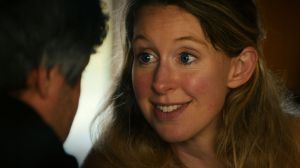
Evan Rachel Wood accuses Stranger Things of glamorizing toxic relationships.
Stranger Things recently got called out for having characters smoke, but cigarette use wasn’t the only thing that was unhealthy in season three of the popular show. Evan Rachel Wood took to Twitter to slam the depiction of a toxic relationship between Stranger Things characters Hopper and Joyce. “You should never date a guy like…
Stranger Things recently got called out for having characters smoke, but cigarette use wasn’t the only thing that was unhealthy in season three of the popular show. Evan Rachel Wood took to Twitter to slam the depiction of a toxic relationship between Stranger Things characters Hopper and Joyce.“You should never date a guy like the cop from #strangerthings Extreme jealousy and violent rages are not flattering or sexy like TV would have you believe. That is all,” Wood wrote on Twitter.
In season three, it seems like there’s sexual tension between Hopper and Joyce. But if you break down the actual actions of Hopper, at the end of the day, he’s just controlling and angry. Their “will-they-won’t-they” relationship is more of a “they shouldn’t” kind of deal.
Some people fired back, saying that Stranger Things is a work of fiction. The Upside Down doesn’t exist in our world, but toxic behavior, unfortunately, is very real. “Yes I am aware its ‘just a show’ and its set ‘in the 80s’ even though this stuff was unacceptable then too, but thats exactly my point. Its just a show and this is a gentle reminder not to fall for this crap in real life. Red flags galore,” Wood wrote in a follow up Tweet.
In one scene, Joyce and Hopper are supposed to go on a date that isn’t labeled as a date. Joyce stands up Hopper and his reaction is anything but healthy. “She rescheduled the date he yelled and got in her face about while policing every guy she spoke to. No thanks,” Wood Tweeted.
Wood also had a problem with the fact that Joyce later rescheduled her “non-date” with Hopper. “She is allowed to stand him up without being screamed at. Especially when she is worried about her children. Priority number 1. He also insisted it wasnt a date and clearly he lied. She shouldn’t have rescheduled,” Wood wrote.
Portraying a toxic relationship as “flirting” isn’t cute. It’s problematic. The last time we checked, you can’t make someone fall in love with you by just yelling at them. Stranger Things has taught us how to defeat a Mind Flayer, but it hasn’t taught us how to defeat relationship red flags.

A single door can open up a world of endless possibilities. For homeowners, the front door of their house is a gateway to financial stability, job security, and better health. Yet for many, that door remains closed. Due to the rising costs of housing, 1 in 3 people around the world wake up without the security of safe, affordable housing.
Since 1976, Habitat for Humanity has made it their mission to unlock and open the door to opportunity for families everywhere, and their efforts have paid off in a big way. Through their work over the past 50 years, more than 65 million people have gained access to new or improved housing, and the movement continues to gain momentum. Since 2011 alone, Habitat for Humanity has expanded access to affordable housing by a hundredfold.
A world where everyone has access to a decent home is becoming a reality, but there’s still much to do. As they celebrate 50 years of building, Habitat for Humanity is inviting people of all backgrounds and talents to be part of what comes next through Let’s Open the Door, a global campaign that builds on this momentum and encourages people everywhere to help expand access to safe, affordable housing for those who need it most. Here’s how the foundation to a better world starts with housing, and how everyone can pitch in to make it happen.
Volunteers raise a wall for the framework of a new home during the first day of building at Habitat for Humanity’s 2025 Carter Work Project.
Globally, almost 3 billion people, including 1 in 6 U.S. families, struggle with high costs and other challenges related to housing. A crisis in itself, this also creates larger problems that affect families and communities in unexpected ways. People who lack affordable, stable housing are also more likely to experience financial hardship in other areas of their lives, since a larger share of their income often goes toward rent, utilities, and frequent moves. They are also more likely to experience health problems due to chronic stress or environmental factors, such as mold. Housing insecurity also goes hand-in-hand with unstable employment, since people may need to move further from their jobs or switch jobs altogether to offset the cost of housing.
Affordable homeownership creates a stable foundation for families to thrive, reducing stress and increasing the likelihood for good health and stable employment. Habitat for Humanity builds and repairs homes with individual families, but it also strengthens entire communities as well. The MicroBuild® Initiative, for example, strengthens communities by increasing access to loans for low-income families seeking to build or repair their homes. Habitat ReStore locations provide affordable appliances and building materials to local communities, in addition to creating job and volunteer opportunities that support neighborhood growth.
Marsha and her son pose for a photo while building their future home with Southern Crescent Habitat for Humanity in Georgia.
Everyone can play a part in the fight for housing equity and the pursuit of a better world. Over the past 50 years, Habitat for Humanity has become a leader in global housing thanks to an engaged network of volunteers—but you don’t need to be skilled with a hammer to make a meaningful impact. Building an equitable future means calling on a wide range of people and talents.
Here’s how you can get involved in the global housing movement:
Speaking up on social media about the growing housing crisis
Volunteering on a Habitat for Humanity build in your local community
Travel and build with Habitat in the U.S. or in one of 60+ countries where we work around the globe
Join the Let’s Open the Door movement and, when you donate, you can create your own personalized door
Every action, big and small, drives a global movement toward a better future. A safe home unlocks opportunity for families and communities alike, but it’s volunteers and other supporters, working together with a shared vision, who can open the door for everyone.
“I had to cut my hair out because of you!” Singer Natalie Jane’s reaction when her childhood bully showed up at her concert with flowers and an apology.
What she didn’t expect was a sign that would stop her mid-performance.
“What does that sign say?” Jane asked into the mic, squinting to make out the words in the dark theater. The camera panned to reveal a big white sign with a simple question: “Do you remember me from 2nd grade?”
Curious, Jane responded, “I can’t see. Who are you?”
The fan flipped the sign over. The back read: “I put gum in your hair.”
Jane let out a shriek. “Benji! I hate you!”
The crowd erupted. The camera found Benji in the audience, and Jane wasn’t done. “I had to cut my hair out because of you,” she yelled, pointing straight at him.
Benji’s response was simple and sincere: “You were in town. I had to come by and say I’m sorry for many years ago.”
Then, from somewhere in the crowd, a bouquet of roses appeared. The audience went wild. Someone handed the flowers to Jane, and her face lit up with a mix of nostalgia, surprise, and what looked like genuine forgiveness.
“Benji, you are forgiven. Thank you. I love you,” she said into the mic. “Shout out, Benji!”
She galloped across the stage, whipping her long blonde hair around (the hair that Benji once put gum in, apparently), and continued the show.
Jane posted the moment on Instagram on March 28, and people immediately started imagining it as the plot of a future rom-com. The comments were full of people joking about wedding invitations and asking if this was staged (it doesn’t appear to be).
But beyond the rom-com potential, there’s something genuinely touching about someone tracking down a person they wronged as a child and making the effort to apologize decades later. Benji could have just stayed home. Instead, he showed up to her concert, made himself vulnerable in front of hundreds of people, and gave her something most of us never get: actual closure on a childhood hurt.
Jane walked off that stage a little more healed than when she walked on. And honestly? That’s probably the best kind of encore.
“Yep, he saved my life.” A Massachusetts basketball coach on the rival coach who grabbed an AED and shocked him back after cardiac arrest on the court.
Ian Haffer, the coach from the opposing Belmont team, saw it happen. He didn’t hesitate. He yelled for someone to get an AED (automated external defibrillator), ran over to Poirier, and started cutting off his shirt.
Parents in the stands watched in shock as Haffer, who had medical training, got the AED hooked up and delivered the shock. A parent named Reed Bundy called 911. Paramedics arrived minutes later and rushed Poirier to the hospital, where he was treated for cardiac arrest in the ICU.
Haffer had been coaching in Belmont for years, but he’d never faced anything like this. “I was unsure about what was going to happen,” he told WAGMTV. “However, I knew I had to act as fast as I could.”
On the court, they were rivals. Off the court, Poirier now credits Haffer with giving him a second chance at life. When asked about it later, he got emotional and choked up.
“Yep, he saved my life,” Poirier said.
A high school basketball coach watches his players. Photo credit: Canva
Poirier was still in the hospital awaiting further testing when he gave that interview, still processing what had happened. The whole thing, from collapse to shock to ambulance, probably took less than ten minutes. But those ten minutes were the difference between walking out of that gym and not walking out at all.
Haffer didn’t think about the game. He didn’t think about the scoreboard or the fact that Poirier was technically his opponent that day. He just saw someone who needed help and moved.
We’ve all been there. We’ve discovered the perfect Airbnb, maybe a little cottage in the mountains, or a condo with stunning beach views. And the price is right in our budget. Hallelujah! Then, unfortunately, when we get to the booking page we realize our total cost is far higher than expected. Why? It’s the dreading cleaning fee.
Airbnb defines its notorious cleaning fee as a “one-time charge” set by the host that helps them arrange anything from carpet shampoo to replenishing supplies to hiring an outside cleaning service, all in the name of ensuring guests have a “clean and tidy space.”
One host decided to try something different
But as many frustrated Airbnb customers will tell you, this feature is viewed as more of a nuisance than a convenience. According to NerdWallet, the general price for a cleaning fee is around $75, but can vary greatly between listings, with some units having cleaning fees that are higher than the nightly rate (all while sometimes still being asked to do certain chores before checking out). And often none of these fees show up in the total price until right before the booking confirmation, leaving many travelers feeling confused and taken advantage of. It’s certainly a case of sticker shock if you’re used to staying in hotels.
However, some hosts are now opting to build cleaning fees into the overall price of their listings, mimicking the strategy of traditional hotels.
Rachel Boice runs two Airbnb properties in Georgia with her husband Parker—one being this fancy glass plane tiny house (seen below) that promises a perfect glamping experience.
Like most Airbnb hosts, the Boice’s listing originally showed a nightly rate and separate cleaning fee. According to her interview with Insider, the original prices broke down to $89 nightly, and $40 for the cleaning fee.
But after noticing the negative response the separate fee got from potential customers, Rachel told Insider that she began charging a nightly rate that included the cleaning fee, totaling to $129 a night.
It’s a marketing strategy that more and more hosts are attempting in order to generate more bookings (people do love feeling like they’re getting a great deal) but Boice argued that the trend will also become more mainstream since the current Airbnb model “doesn’t feel honest.” Which is funny, because if anything listing the cleaning charge is more transparent! But users tend to feel duped because they can’t see the full price when they’re browsing the listings.
“We stay in Airbnbs a lot. I pretty much always pay a cleaning fee,” Boice told Insider. “You’re like: ‘Why am I paying all of this money? This should just be built in for the cost.’”
Since combining costs, Rachel began noticing another unexpected perk beyond customer satisfaction: guests actually left her property cleaner than before they were charged a cleaning fee.
Her hypothesis was that they assumed she would be handling the cleaning herself.
“I guess they’re thinking, ‘I’m not paying someone to clean this, so I’ll leave it clean,’” she said.
This discovery echoes a similar anecdote given by another Airbnb host, who told NerdWallet guests who knew they were paying a cleaning fee would “sometimes leave the place looking like it’s been lived in and uncleaned for months.” So, it appears to be that being more transparent and lumping all fees into one overall price makes for a happier (and more considerate) customer.
The psychology behind why it works
This phenomenon has been studied by economists across many different fields. A blueberry farmer once considered charging customers for grazing on blueberries as they walked until an economist told him paying the fee would just encourage people to eat even more. Daycares who charge parents fees for picking their kids up late often find the fee increases the number of late parents instead of decreasing it.
It comes down to the “cost” of a decision. If you pay the same cleaning fee no matter what condition you leave the property in, a lot of people will find it’s just not worth their time to tidy up after themselves. When the cost of leaving the place filthy is more nebulous, or human (forcing another person to do it), people are more willing to help out.
These days, it’s hard to not be embittered by deceptive junk fees, which can seem to appear anywhere without warning. These can include surprise overdraft charges, surcharges on credit cards and the never convenient “convenience charge” when purchasing event tickets. Junk fees are so rampant that certain measures are being taken to try to eliminate them outright in favor of more honest business approaches.
And now, the rules are changing for everyone
Speaking of a more honest approach, Airbnb has gone even further since 2022. As of April 2025, Airbnb eliminated the opt-in toggle entirely and made total price display, including all mandatory fees before taxes, the automatic global default for all users. The change was driven partly by the FTC’s Junk Fees Rule, which took effect May 12, 2025, requiring short-term rental platforms to clearly display the full price upfront.
As for Boice, business is booming. After her story went viral on TikTok, she decided to expand her property business with another glass house.
Users were thrilled, especially ones who live in Georgia, within shouting distance of her properties. And after all the viral exposure, she’s still not charging cleaning fees. Although, there’s not much she can do about those pesky “Airbnb service fees.” Oh well. You can’t win ’em all.
This article originally appeared three years ago. It has been updated.
Photo credit: Grandma goes viral for her three simple yet hilarious ‘funeral rules’ – Grandma goes viral for her three simple yet hilarious 'funeral rules'
Forget kids. Grandmas say the darndest things. One grandma in particular took TikTok by storm for her brutally honest, yet hilarious “funeral rules.” And though Grandma Lill adds the caveat that it won’t be anytime soon, you had better remember these rules when the day finally comes. Or there might be two funerals to plan.
But this video takes the cake at a whopping 50 million views. She’s gone full-blown viral now. Probably because she inadvertently brings up some little gems of wisdom we could all apply to dealing with the passing of a loved one.
Or, as Grandma Lill puts it, “don’t make a fool of yourself.”
Funerals can be just as much about commemorating as they are expressing grief. We can also share the happy memories we have of those who have passed, not just shed tears.
I think this is what grandma Lill was getting at. Or maybe she just doesn’t like you stealing the attention.
2. Bertha ISN’T invited
Whoever this Bertha chick is … she messed up. She messed up big time. Bertha, you have been CANCELED.
And hey, why shouldn’t we decide who’s on the invite list for our last big day? If, for example, there’s a family member who caused a lot of pain, or with whom we just didn’t share a kinship … perhaps there doesn’t have to be an obligation to invite them to these major life moments.
Basically, this is your permission slip to openly decline any and all Berthas in your life. That goes for weddings, birthday parties, baby showers … you name it. Don’t let her in!
3. Get drunk afterward
As long as you take a shot for Grandma Lill.
After the ceremony honors what’s lost, take a moment to let go and move forward with the life that is still around you. Something tells me that letting it all go and celebrating life is something Grandma Lill’s a pro at.
Thousands of commenters chimed in to celebrate Lill’s rules. But the overwhelming sentiment from almost every single one of them was: We need the full story of the beef with Bertha!
We finally found out who Bertha is
Lucky for us, all was revealed two years later when Grandma Lills made a video about attending Bertha’s funeral. Bertha had, allegedly, tried to hook up with Lill’s late husband. Not cool, Bertha! “I always knew I would outlive her,” grandma joked.
In another recent viral video, Lill spoofs popular “Get Ready With Me” videos from other influencers by bringing the viewer along as she gets dressed for a funeral. Of course, funerals aren’t the only topic Grandma Lill can make you laugh about.
Her TikTok channel is a carefully curated gallery of pure funny. Everything from bingo jokes to advice for getting back at your ex (yeah, she shows no mercy) can be found here.
No one likes funerals, least of all the person who’s there to be mourned. It’s why the idea of the Irish Wake is so popular: a spirited celebration of life that encourages laughter and merriment. Grandma Lills definitely has the right idea about how she wants to go out, and now that it’s cemented in Internet lore, her kids and grandkids will be forced to honor her wishes when the day comes.
This article originally appeared four years ago. It has been updated.
Are you an American who has fantasized about having dual citizenship with Canada, our neighbor to the north? It opens you up to greater job opportunities, allows you to move between countries depending on economic conditions, and lets you qualify for domestic tuition in both nations. Further, with two passports, international travel becomes a lot easier, and you have more options when it’s time to retire.
Dual citizenship also gives you greater freedom when it comes to health coverage. Would you prefer the private system in the United States or the single-payer system in Canada?
Millions of Americans may now qualify for Canadian citizenship
After a new Canadian law was passed in December 2025, millions of Americans, especially those in the Northeast, may be able to qualify for Canadian citizenship more easily. The passage of Bill C-3, part of the Canadian Citizenship Act, reversed a 2009 law that limited eligibility for Canadian citizenship to first-generation relationships only.
As droves of Americans apply for proof of Canadian citizenship, processing times have doubled https://t.co/YMDoQ3XBhF
Now, Canadian citizenship is open to anyone who can provide proof of direct lineage from a parent, grandparent, or even great-grandparent who became a Canadian citizen on or after January 1, 1947 (this date differs for those who lived in the province of Newfoundland). However, if the ancestor renounced Canadian citizenship, eligibility stops there.
Are those with dual American-Canadian citizenship eligible for Canadian healthcare?
Americans who are eligible for dual citizenship and want to take advantage of Canada’s universal healthcare can qualify if they live in Canada for a certain number of days each year. For example, if you live in Ontario for at least 153 days a year, you can qualify for Canada’s healthcare system. However, if you have dual citizenship, you can’t simply travel from Detroit to Windsor whenever you want to see a doctor.
Since the law was passed in late 2025, thousands of Americans have applied for dual citizenship. Nicholas Berning, an immigration attorney at Boundary Bay Law in Bellingham, Washington, said that his legal practice has been “flooded” with applicants. Amandeep Hayer, an immigration attorney in Vancouver, British Columbia, told The Associated Press that his practice went from 200 cases a year to over 20 consultations a day. Hayer estimated that millions of Americans could qualify for dual citizenship under the new law.
Cassandra Fultz, an Ottawa-based immigration consultant, said that her American caseload has surged from 10 applicants a month to 100. “There’s been a very steady increase in interest in moving to Canada since November 2024, which is unprecedented. I’ve never seen this in my 17 years in the industry,” Fultz told CNN.
If you have documents proving that you had a parent, grandparent, or great-grandparent who was a Canadian citizen, the cost to apply for Canadian citizenship is only $75 CA ($55 U.S.). However, costs can quickly rise if you need to hire an attorney or obtain death or marriage certificates to prove your case.
There’s an old saying: “But without one nest, a bird may call the world its home.” If you’re an American who wants to broaden your horizons and expand your opportunities to choose the life you wish, check your family tree. You may be eligible for Canadian citizenship.
“Canada is north of the United States” sounds like a basic fact that even elementary school children know to be true. But is it really? It turns out, the actual geographic reality isn’t quite that simple.
In fact, the Canadian-American border is all kinds of weird when you start examining it closely. The long part that looks like a straight line on the map is actually 900 zigzagging lines. Sometimes that “straight” line along the 49th parallel varies by hundreds of feet. There’s a disputed island along the border that both countries claim as their own.
But perhaps the most surprising factoid about the border is how much of it (and the Canadian population that lives above it) is actually south of the northernmost U.S. states.
If someone told you half of Canadians live south of North Dakota and Washington, it sounds wrong, right? But it’s right.
As a geomap.bytes TikTok video explains, about 70% of Canadians have historically lived south of the 49th parallel. But even more surprising is that around half of all Canadians live south of the southern borders of North Dakota and Washington. An even wilder fact is that the southernmost point in Canada sits south of some part of 27 U.S. states. It’s even slightly south of a small part of Northern California.
According to the video, more Americans than Canadians live north of Canada’s southernmost point, Middle Island in Lake Erie. How is that true? Let’s look at the math.
The population of Canada as of 2026 is approximately 40 million people, so 50% would be around 20 million. The U.S. population is a little over 342 million, so only about 6% of the U.S. population needs to live north of Middle Island for that math to work out. It does, as RealLifeLore explains:
Commenters (especially those who don’t live near that part of either country) are bewildered by these counterintuitive facts:
“Wow this is crazy: if you go south from Detroit you end up in Canada 🤯🤯🤯”
“Journey: ‘born and raised in South Detroit’ …so Canada.”
“I mean it’s like I knew this because I know where the border is yet I’ve never really thought about it or really registered it in my brain.”
“Geography can be really weird at times.”
Though it may sound strange at first, the way the populations pan out actually does make sense geographically. Canada may be enormous land-wise, but the most easily habitable parts, climate-wise, are in the southern part of the country. The major population centers of Toronto, Montreal, and Ottawa are all in that triangular area between Michigan and New York. And the vast majority (90%, according to the CBC) of Canadians live within 100 miles (160 km) of the U.S. border.
More surprising facts about Canadian-American geography (from Across the Globe):
The U.S.-Canada border is delineated by the longest clear-cut strip of land in the world.
Point Roberts, Washington, is only accessible by car if you drive through part of Canada.
The northernmost point in the contiguous U.S. is a bit of Minnesota jutting up into Canada. It was the result of a mapmaking mistake.
The disputed island mentioned at the beginning of this article is home to nearly 10,000 puffins.
The international border runs along the yellow centerline of a street that separates Derby Line, Vermont from Stanstead, Quebec.
At the border crossing in Blaine, Washington, a 67-foot concrete arch straddles the border between the two countries. The words “Children of a common mother” mark the American side. “Brethren dwelling together in unity” is written on the Canadian side.
The Great Lakes that sit between the two countries hold 21% of the world’s fresh water.
Lake Michigan is the only one of the Great Lakes that lies entirely within the U.S.
Canada and the U.S. have been on friendly terms for the vast majority of their mutual history, which is quite remarkable considering the history of the world. There’s a lot to love about our northern neighbors and a lot to know about the crooked line that delineates the two nations.
Finland gets a lot of attention for its approach to work-life balance, from four-day workweek experiments to generous parental leave policies. This has created some pretty entertaining stereotypes about what working in Finland must be like. Dan Toomey, an American who works for Morning Brew in Finland, decided to lean all the way into those stereotypes with a pair of TikTok videos that have people laughing at how painfully accurate they are.
In the first video, Toomey shows what Americans think the average Finnish workday looks like. It starts with him stepping out of his morning sauna, followed by hot chocolate hand-delivered by his company.
Around 11 AM, he finally sits down to work. “Since we all work at Spotify,” he explains, he begins his day by listening to ambient synth music while wrapped in a felt blanket. His daily $5,000 bonus arrives in the mail. He has a casual chat about Eurovision with Finland’s 36-year-old Prime Minister. Lunch is cold herring and more pine needles, followed by a walk through Narnia. He wraps up at 3:30 PM after his first and only meeting of the day, just in time for his second bonus to arrive.
The American workday video, on the other hand, looks like something from a particularly dark comedy sketch.
It begins at 4:30 AM on a Sunday. The American worker “sprints out of bed in record time,” recites the pledge of allegiance, and prepares breakfast: 12 eggs and a gallon of whole milk, consumed while staring at his phone. He writes emails for three hours straight before his first meeting, where everyone “shares big numbers, then makes a million dollars” as cash literally rains down on him.
Lunch is “every fast food there is,” eaten quickly before he squats at his desk to memorize a PowerPoint presentation. The workday finally ends at 1 AM when he places a spreadsheet under his pillow and gets tucked into bed by Jeff Bezos himself.
The videos are obviously satirical, but they hit a nerve because they’re rooted in real cultural differences. Finland genuinely does have policies that prioritize employee well-being in ways that seem almost fictional to American workers. Meanwhile, American hustle culture has created an environment where working yourself to exhaustion is often worn as a badge of honor.
Both videos have been praised not just for their humor, but for their critique of what we’ve normalized in our work cultures. As conversations about sustainable work practices continue, maybe the real question isn’t whether the stereotypes are accurate. It’s which version of the workday we actually want to be living.
If you’ve traveled on an airplane in the last several years, you know it’s much cheaper to choose the basic seats in the main cabin. There’s nothing inherently different about these particular seats, other than the fact that it will be randomly selected by the airline. If you’re traveling alone, that’s really not a bad deal, but if you’re traveling with a party that you’d like to keep together, like your children, the risk gets to be a little higher. One mom traveling with an 11 and 15-year old took the risk and banked on a stranger accommodating…that’s not quite how it played out.
Her seat was taken, on purpose
Tammy Nelson did a double take at her ticket after seeing the mom in her window seat. Of course, people accidentally sit in the wrong seats on planes all the time. However, Nelson quickly realized that this was no accident. This mom boarded the plane with her older children and had taken it upon herself to sit in the same row as her children, essentially commandeering a stranger’s seat. Nelson assumed it was a mistake and informed the woman that the seat was in fact hers but the response she received was surprising.
“She said, ‘Oh, you want to sit here?’,” Nelson told Good Morning America. “She said, ‘Oh, well I just thought I could switch with you because these are my kids.’”
That’s an interesting assumption considering seats are assigned and many people, like Nelson, pay extra to have the seat they prefer. Now, there’s no telling if funds were tight and this was an unplanned trip for the mom and kids which caused her to buy the more budget friendly tickets or if she was simply being frugal and was banking on the kindness of a stranger.
Either way, Nelson specifically paid for a window seat due to motion sickness and though she paid extra, she was willing to sit in the other row if that seat was also a window seat. But it turns out, it was a middle seat.
Surely there’s someone out there that loves the middle seat. Maybe a cold natured person that enjoys the body heat of two strangers sitting uncomfortably close. Or perhaps someone that doesn’t mind accidentally sleeping on an unsuspecting passenger’s shoulder. But that person wasn’t Nelson, so when the middle seat was offered in exchange for her bought and paid for window seat, she politely but firmly declined.
Having had only 90 minutes of sleep the night before and knowing I had to give a presentation to 500 people, I desperately needed some sleep, so I did not agree to switch seats. 🤷♀️ Before anyone comes after me… the kids looked like they were about 11 and 15 years old. And the mom was in arms-reach of both of them from the middle seat in the row behind us. The mom proceeded to complain for at least 15 minutes to the person next to her loud enough for me to hear. But the woman actually defended me – several times. It was so kind and I appreciated it so much because I was feeling really guilty. 🤦♀️ #airplaneseat#seatswitching#airplanekarens
Her refusal to give in to the mom’s seemingly entitled request for Nelson’s seat has resulted in parents and child-free people cheering her on after she posted the details on her TikTok page, MyCONQUERing, which quickly racked over 3.4 million views.
“Nope. If it’s not an upgrade it’s a sacrifice,” a commenter wrote.
“You did the RIGHT thing. Folks need to plan their travel together. Lack of planning on their part does not constitute an inconvenience on yours,” one person said.
“I have 3 kids and have sat in different rows when they were passed toddler age. I agree, book your flight earlier,” another said.
“You were right. As a woman with 3 children, I always pay extra so we’re sat together,” another mom said.