One of the strangest things about highly intelligent people is that they are very aware of what they don’t know. The psychological phenomenon known as the Dunning-Kruger effect suggests that the more intelligent someone is, the more they fixate on their perceived gaps in intelligence, leading them to underestimate themselves. Conversely, those who aren’t very intelligent overestimate their knowledge on a subject.
The great mind might be more preoccupied with the gaps in its knowledge than the smaller mind that thinks it knows everything. How can someone see if they have a great mind? Philosophy expert Julian de Medeiros says it all goes back to Aristotle’s “rule of thumb.” De Medeiros writes a Substack on philosophy and has over 1.4 million followers on TikTok, where he analyzes the mysteries of love, intelligence, and friendship.
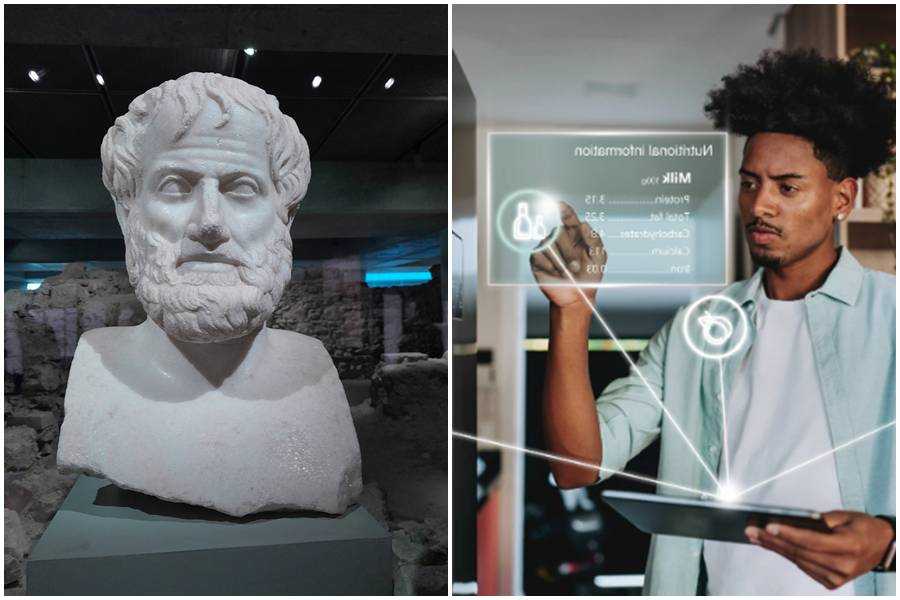
“Here’s a simple sign that you are intelligent, that you have a great mind, and it’s a simple theory, a rule of thumb, that goes back to an observation by the philosopher Aristotle, who once wrote: ‘No great mind has ever existed without a touch of madness,’” de Medeiros says. “By which he meant that there’s a fine line indeed between being a genius and being a madman.”
Schopenhauer on what makes a genius
“As the philosopher Schopenhauer once wrote: ‘Talent is when you can hit a target no one else can hit. Genius is when you can hit a target no one else can see,” de Medeiros continued. “Now to have a great mind, therefore, means that you can see and think things that other people can’t. But this puts you on a kind of border where there’s a liminal line between what is real and what is not. Your mind is a double-edged sword, both a blessing and a curse, and that very intelligent people can also fall off the edge into the abyss.”
Aristotle lived more than 2,300 years ago, when our knowledge of mental and physical health was a fraction of what we know now. But, interestingly, he was correct in believing that highly intelligent people may face greater psychological struggles than those of normal intelligence.
A study published by Mensa foundthat knowledgeable people are are 20% more likely to have an autism spectrum disorder (ASD) diagnosis. They are 80% ore liekly to be diagnosed with ADHD and 182% more likely to have a mood disorder.
Why is it that highly intelligent people are more likely to suffer from mental disorders? A study found that it may be caused by psychological excitability. Highly intelligent people are known to fixate on things. This can be a big help when you are problem-solving at work, but it can become a problem when you become preoccupied with a comment from your boss or a social interaction that you can’t stop playing over and over in your head.
There is a funny way that life always seems to balance things out. You can either be unintelligent and think you know everything, or be brilliant and focused on everything you don’t know. It shows that, with respect to intelligence, having a psychological understanding of yourself is one of the keys to living a healthy and happy life. Or, as Aristotle once put it: “Knowing yourself is the beginning of all wisdom.”
In a small village in Pwani, a district on Tanzania’s coast, a massive dance party is coming to a close. For the past two hours, locals have paraded through the village streets, singing and beating ngombe drums; now, in a large clearing, a woman named Sheilla motions for everyone to sit facing a large projector screen. A film premiere is about to begin.
It’s an unusual way to kick off a film about gender bias, inequality, early marriage, and other barriers that prevent girls from accessing education in Tanzania. But in Pwani and beyond, local organizations supported by Malala Fund and funded by Pura are finding creative, culturally relevant ways like this one to capture people’s interest.
The film ends and Sheilla, the Communications and Partnership Lead for Media for Development and Advocacy (MEDEA), stands in front of the crowd once again, asking the audience to reflect: What did you think about the film? How did it relate to your own experience? What can we learn?
Sheilla explains that, once the community sees the film, “It brings out conversations within themselves, reflective conversations.” The resonance and immediate action create a ripple effect of change.
MEDEA Screening Audience in Tanzania. Captured by James Roh for Pura
Across Tanzania, gender-based violence often forces adolescent girls out of the classroom. This and other barriers — including child marriage, poverty, conflict, and discrimination — prevent girls from completing their education around the world.
Sheilla and her team are using film and radio programs to address the challenges girls face in their communities. MEDEA’s ultimate goal is to affirm education as a fundamental right for everyone, and to ensure that every member of a community understands how girls’ education contributes to a stronger whole and how to be an ally for their sisters, daughters, granddaughters, friends, nieces, and girlfriends.
Sheilla’s story is one of many that inspired Heart on Fire, a new fragrance from the Pura x Malala Fund Collection that blends the warm, earthy spices of Tanzania with a playful, joyful twist. Here’s how Pura is using scent as a tool to connect the world and inspire action.
A partnership focused on local impact, on a global mission
Pura, a fragrance company that recognizes education as both freedom and a human right, has partnered with Malala Fund since 2022. In order to defend every girl’s right to access and complete 12 years of education, Malala Fund partners with local organizations in countries where the educational barriers are the greatest. They invest in locally-led solutions because they know that those who are closest to the problems are best equipped to solve and build durable solutions, like MEDEA, which works with communities to challenge discrimination against girls and change beliefs about their education.
But local initiatives can thrive and scale more powerfully with global support, which is why Pura is using their own superpower, the power of scent, to connect people around the world with the women and girls in these local communities.
The Pura x Malala Fund Collection incorporates ingredients naturally found in Tanzania, Nigeria, Pakistan, and Brazil: countries where Malala Fund operates to address systemic education barriers. Eight percent of net revenue from the Pura x Malala Fund Collection will be donated to Malala Fund directly, but beyond financial support, the Collection is also a love letter to each unique community, blending notes like lemon, jasmine, cedarwood, and clove to transport people, ignite their senses, and help them draw inspiration and hope from the global movement for girls’ education. Through scent, people can connect to the courage, joy, and tenacity of girls and local leaders, all while uniting in a shared commitment to education: the belief that supporting girls’ rights in one community benefits all of us, everywhere.
You’ve already met Sheilla. Now see how Naiara and Mama Habiba are building unique solutions to ensure every girl can learn freely and dare to dream.
Naiara Leite is reimagining what’s possible in Brazil
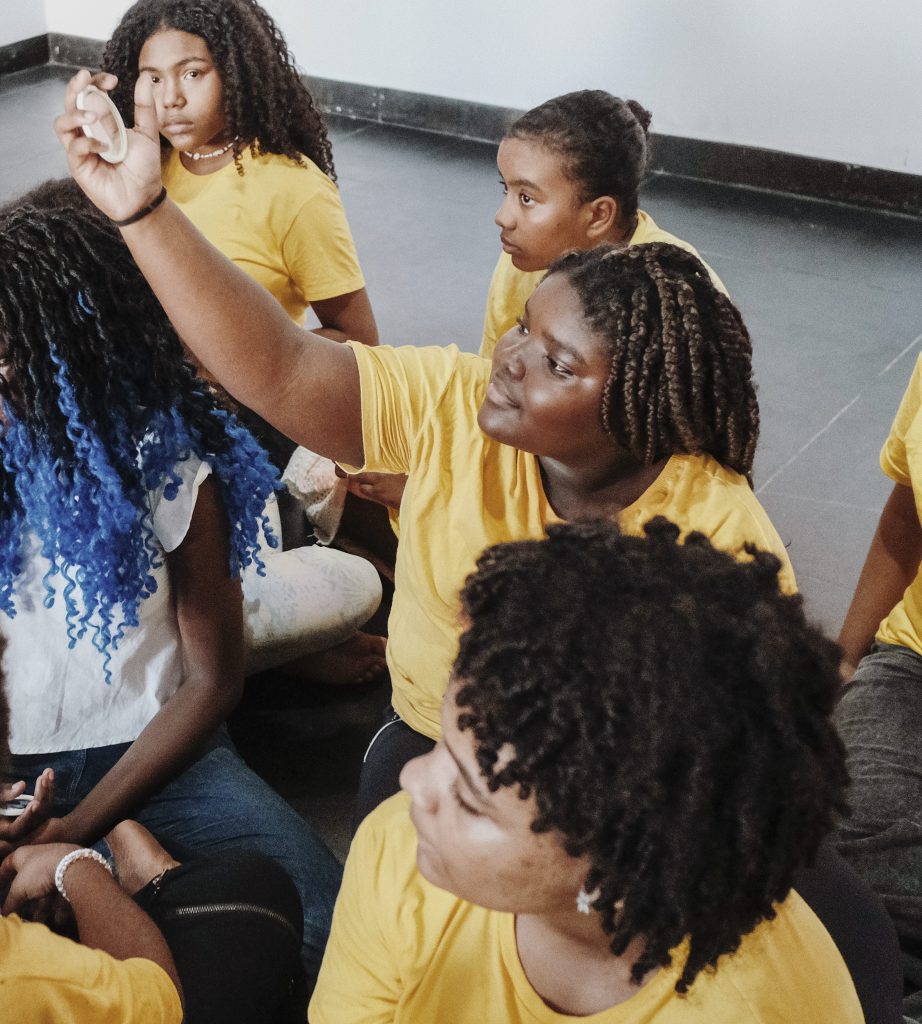
Julia with Odara in Brazil. Captured by Luisa Dorr for Pura
In Brazil, where pear trees and coconut plantations cover the Northeastern Coast, girls like ten-year-old Julia experience a different kind of educational barrier than girls in Tanzania. Too often, racial discrimination contributes to high dropout rates among Black, quilombola and Indigenous girls in the country.
“In the logic of Brazilian society, Black people don’t need to study,” says Naiara Leite, Executive Coordinator of Odara, a women-led organization and Malala Fund partner. Bahia, the state where Odara is based, was once one of the largest slave-receiving territories in the Americas, and because of that history, deeply-ingrained, anti-Black prejudice is still widespread. “Our role and the image constructed around us is one of manual labor,” Naiara says.
But education can change that. In 2020, with assistance from a Malala Fund grant, Odara launched its first initiative for improving school completion rates among Black, quilombola, and Indigenous girls: “Ayomidê Odara”. The young girls mentored under the program, including Julia, are known as the Ayomidês. And like the Pura x Malala Fund Collection’s Brazil: Breath of Courage scent, the Ayomidês are fierce, determined, and bursting with energy.
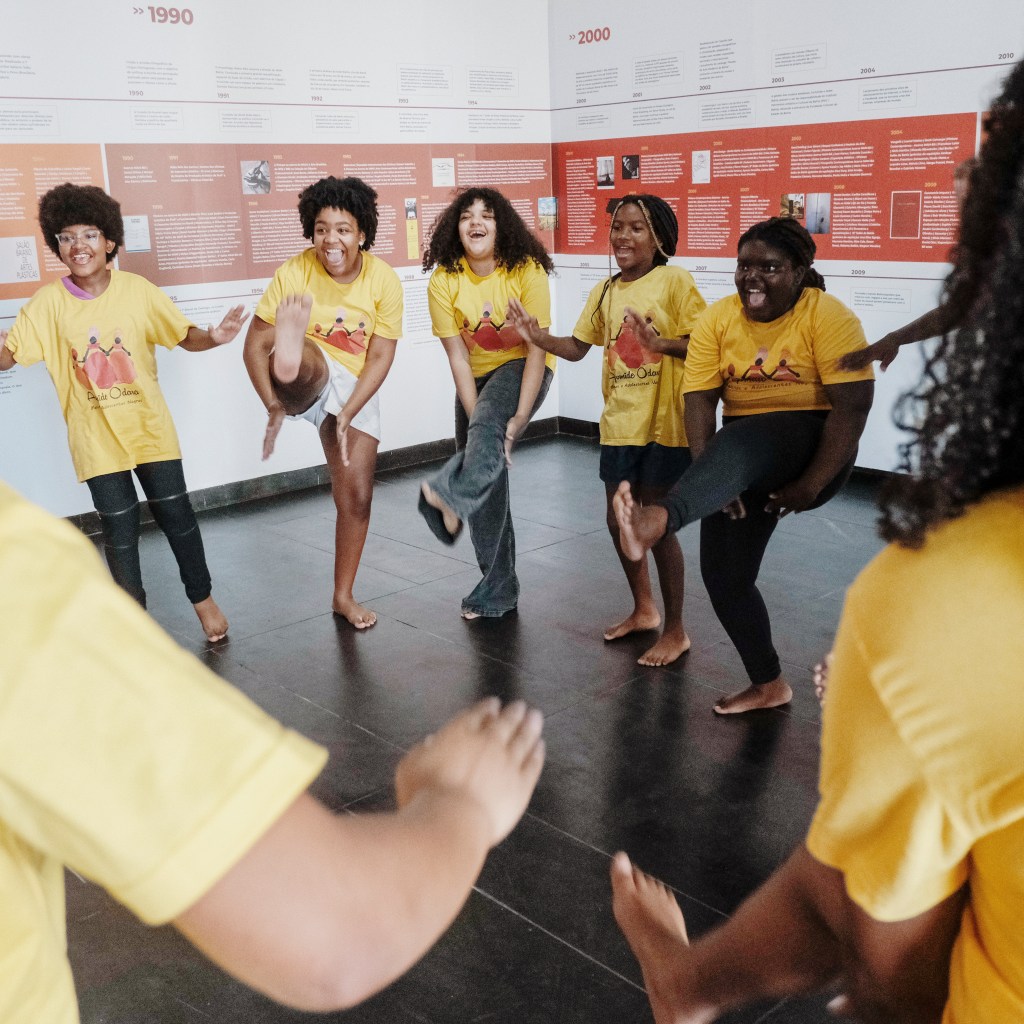
Ayomidês with Odara in Brazil. Captured by Luisa Dorr for Pura
Ayomidês take part in weekly educational sessions where they explore subjects like education and ethnic-racial relations. The girls are encouraged to find their own voices by producing Instagram lives, social media videos, and by participating in public panels. Already, the Ayomidês are rewriting the narrative on what’s possible for Afro-Brazilian girls to achieve. One of the earliest Ayomidês, a young woman named Debora, is now a communications intern. Another former Ayomidê, Francine, works at UNICEF, helping train the next generation of adolescent leaders. And Julia has already set her sights on becoming a math teacher or a model.
“These are generations of Black women who did not have access to a school,” Naiara says. “These are generations of Black women robbed daily of their dreams. And we’re telling them that they could be the generation in their family to write a new story.”
Mama Habiba is reframing the conversation in Nigeria
Centre for Girls' Education, Nigeria. Captured by James Roh for Pura
In Mama Habiba’s home country of Nigeria, the scents of starfruit, ylang ylang and pineapple, all incorporated into the Pura x Malala Collection’s “Nigeria: Hope for Tomorrow,” can be found throughout the vibrant markets. Like these native scents, Mama Habiba says that the Nigerian girls are also bright and passionate, but too often they are forced to leave school long before their potential fully blooms.
“Some of these schools are very far, and there is an issue of quality, too,” Mama Habiba says. “Most parents find out when their children are in school, the girls are not learning. So why allow them to continue?”
When girls drop out of secondary school, marriage is often the alternative. In Nigeria, one in three girls is married before the age of 18. When this happens, girls are unable to fulfill their potential, and their families and communities lose out on the social, health and economic benefits.
Completing secondary school delays marriage, and according to UNESCO, educated girls become women who raise healthier children, lift their families out of poverty and contribute to more peaceful, resilient communities.
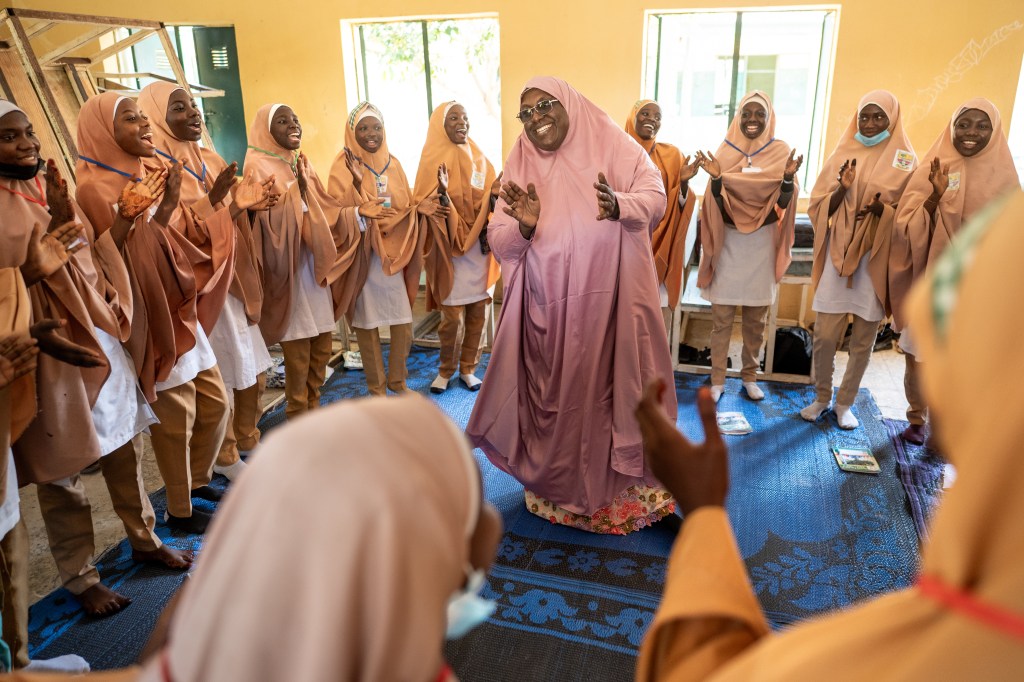
Centre for Girls’ Education, Nigeria. Captured by James Roh for Pura
To encourage young girls to stay in school, the Centre for Girls’ Education, a nonprofit in Nigeria founded by Mama Habiba and supported by Malala Fund and Pura, has pioneered an initiative that’s similar to the Ayomidê workshops in Brazil: safe spaces. Here, girls meet regularly to learn literacy, numeracy, and other issues like reproductive health. These safe spaces also provide an opportunity for the girls to role-play and learn to advocate for themselves, develop their self-image, and practice conversations with others about their values, education being one of them. In safe spaces, Mama Habiba says, girls start to understand “who she is, and that she is a girl who has value. She has the right to negotiate with her parents on what she really feels or wants.”
“When girls are educated, they can unlock so many opportunities,” Mama Habiba says. “It will help the economy of the country. It will boost so many opportunities for the country. If they are given the opportunity, I think the sky is not the limit. It is the starting point for every girl.”
From parades, film screenings to safe spaces and educational programs, girls and local leaders are working hard to strengthen the quality, safety and accessibility of education and overcome systemic challenges. They are encouraging courageous behavior and reminding us all that education is freedom.
Experience the Pura x Malala Fund Collection here, and connect with the stories of real girls leading change across the globe.
Glenda Bridges had none of the usual warning signs. The 83-year-old Naples, Florida, woman wasn’t obese, didn’t have diabetes, didn’t have high blood pressure. But in the span of just a few days, she had three strokes. She said that one morning she woke up and “had no balance, and my vision was blurry,” according to the Gulf Coast News.
With each stroke, her brain was sustaining more damage, and doctors at NCH (the only Joint Commission-certified comprehensive stroke center in southwest Florida) needed answers fast.
Dr. Viktoria Totoraitis, a vascular neurologist at NCH, noticed something that other doctors might have missed: all three strokes had occurred in exactly the same location in Bridges’ brain. That wasn’t typical. “Blood vessels are like highways,” Dr. Totoraitis explained, “meaning they each go to a specific territory. So when a patient has a stroke, I know what blood vessel supplies that territory.” The fact that every stroke hit the same spot pointed to a single, consistent cause rather than random clotting events.
The strokes were what neurologists call wake-up strokes, meaning Bridges had gone to sleep without symptoms and woken up with them. Research suggests that roughly one in five acute ischemic strokes falls into this category, and they’re notoriously difficult to treat because the exact time of onset is unknown, complicating eligibility for clot-busting medications.
What Dr. Totoraitis needed to know next was exactly how Bridges slept. When she asked, Bridges answered: “On my side, kind of all curled up in a fetal position.” That detail, combined with something else in Bridges’ medical history, several prior neck surgeries and significant cervical spinal arthritis, led to an imaging test with Bridges positioned the same way she slept every night. The results were clear. “When she’s sleeping and curled up like that, because she does have a lot of cervical spinal arthritis, some narrowing, she was pinching off one of her vessels.”
The fix required no surgery. Dr. Totoraitis recommended Bridges change her sleeping position and wear a soft cervical collar at night. She also clarified that the fetal position is not dangerous for people without prior neck surgeries. For Bridges, though, the combination of arthritis, surgical history, and a habitual curl was cutting off blood flow to her brain every night.
Since making that small change, Bridges has not had another stroke.
Her case is an unusual one, but it carries a useful reminder: strokes don’t always look the way we expect. The fastest way to identify one remains the F.A.S.T. method: Face drooping, Arm weakness, Speech difficulty, Time to call 911. The sooner someone gets to a hospital, the more brain tissue can be saved.
Nobody knows how many days they have on this earth, and, in a way, that makes every moment feel more valuable. Since we don’t know how much time we have, it’s best to cherish every moment on this beautifulplanet with the people we love. It’s also a good idea to stay in shape so you can enjoy the greatest longevity possible.
An interesting new study from the University at Buffalo involving 5,000 women cannot tell you the exact number of days you have left. Still, it suggests that after the age of 60, it is relatively easy to determine whether you can look forward to a long life. The study found that a two-step test—in which participants first demonstrate handgrip strength and then complete five consecutive sit-to-stand chair lifts—is a good indicator of longevity.
The study found that women with higher grip strength and faster sit-to-rise scores had a significantly lower risk of death over the next eight years. In fact, for every 15-pound increase in grip strength, mortality risk was reduced by 12%. Women who scored highest on grip strength had a 33% lower risk of death compared with those in the lowest group. For chair stands, moving from the slowest to the fastest time in six-second increments was associated with a 4% lower risk of death.
“If you don’t have enough muscle strength to get up, it is going to be hard to do aerobic activities, such as walking, which is the most commonly reported recreational activity in U.S. adults ages 65 and older,” said study lead author Michael LaMonte, PhD, a research professor of epidemiology and environmental health in UB’s School of Public Health and Health Professions.
Women 63 and up with the strongest grip had a 33% lower risk of death over eight years compared to those with the weakest grip. Grip strength predicted longevity independent of how much women moved each dayhttps://t.co/TpdCkr52lk
“Muscular strength, in many ways, enables one to move their body from one point to another, particularly when moving against gravity,” LaMonte added. “Healthy aging probably is best pursued through adequate amounts of both aerobic and muscle-strengthening physical activities. When we no longer can get out of the chair and move around, we are in trouble.”
How to improve grip strength
Grip strength has come to be seen as an “indispensable” biomarker of aging because it reflects strength in the hands, forearms, and throughout the body. Looking to improve yours? Here are five expert-based ways to boost grip strength:
Use a stress ball
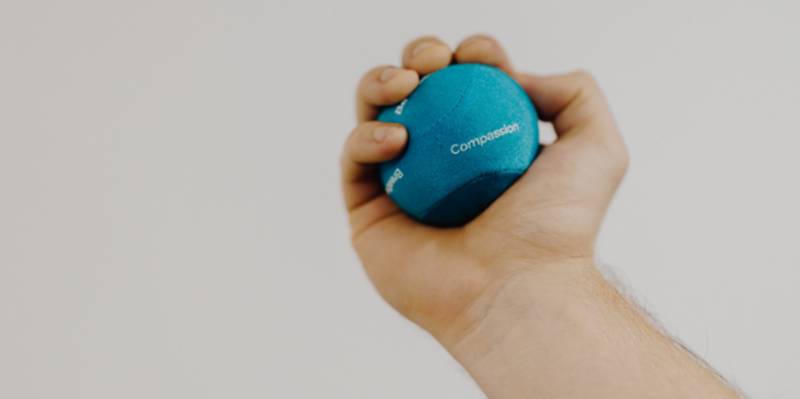
Grab a tennis ball or hand gripper and squeeze as hard as you can for five to 10 seconds, then repeat for 10 to 20 reps.
Seniors can perform dead hangs from a pull-up bar while keeping their feet on the ground or on a bench for 10 to 30 seconds at a time. The goal is to build up to hanging for 60 seconds.
Functional movements
The key is to get some real-world exercise that uses your hands, such as gardening, playing a sport like bowling, or carrying heavy grocery bags.
Eat a lot of protein
Protein supports muscle function and growth, so according to Health, it’s a good idea to eat one gram of protein per pound of body weight per day.
Lift weights
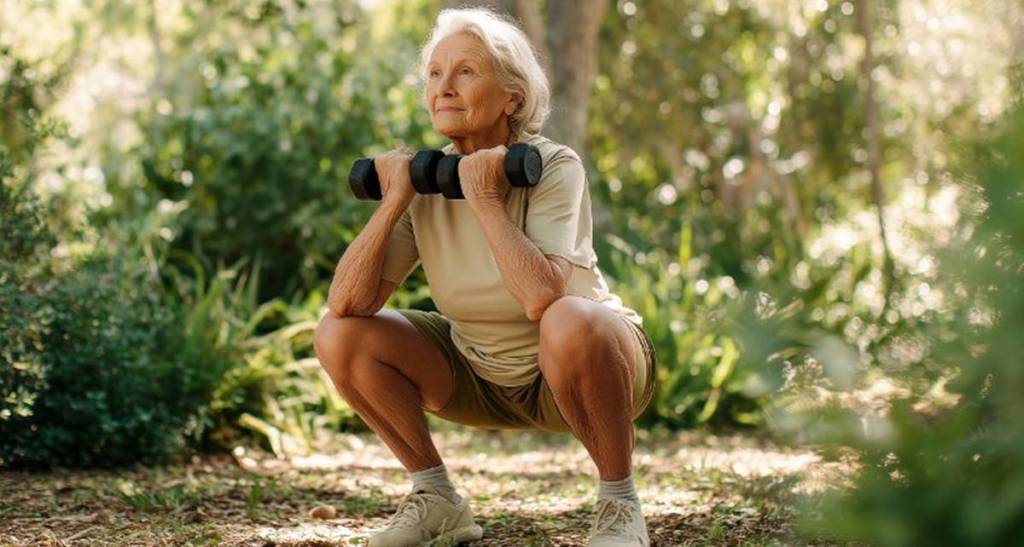
Use free weights such as kettlebells, barbells, or dumbbells to challenge and strengthen your hands. “Even using soup cans or books as a form of resistance provides stimulus to skeletal muscles and could be used by individuals for whom other options are not feasible,” LaMonte said.
In recent years, women have become more open about what happens leading up to and during menopause. As a result of this public sharing, younger women are learning about a shocking possible side effect of depleted estrogen: the shrinking, and in some cases the disappearance, of the labia.
As our parents prepare us for adulthood, some things slip through the cracks. We learn about puberty, how babies are conceived, and then the conversation stops. One area with a large information-sharing gap is the process of menopause. This lack of information puts both women and the people who love them at a disadvantage. It can leave people confused and frustrated.
Perimenopause, which is the time leading up to menopause, is not a short process. Hormone levels can begin to fluctuate widely as early as a woman’s 30s. At the same time, the average age of menopause is about 51, though it can occur as late as 60, according to the American Medical Association.
The Cleveland Clinic explains that “Menopause is a point in time when a person has gone 12 consecutive months without a menstrual period.” It is a natural part of the aging process for women, but for decades, if not centuries, the menopausal experience has been shrouded in coded language and silence. Not anymore.
The habit of Millennials seeking community in online spaces is opening the blackout curtains on the taboo subject. This has led to honest conversations about what happens when women go through “the change,” and the revelation about shrinking labia is causing a bit of panic.
Labia are the outer visible anatomy of the female genitalia, consisting of the labia minora and labia majora. This tissue protects the urethra, vaginal opening, and other sensitive areas from infection and friction, Dr. Somi Javaid, OB-GYN and founder of HerMD, tellsThe Flow Space.
So the idea of losing them due to a lack of estrogen has some women calling for a timeout as they try to process this previously unheard-of information. Several of these women took to social media to seek clarity and support.
“So nobody was going to tell me that one day I could lose my coochie lips?” one woman asks in an Instagram video. “That one day, my bean could just decide to clock out for the rest of my life? Why aren’t the older women sharing with us? Why aren’t the elders sharing this with us, cause this lady got on here and said if you start your estrogen early when you first go through menopause, you can save your lips.”
“I just saw this post of this doctor lady explaining that your labia minora grows during puberty, and then you lose it in menopause,” another concerned woman says in a TikTok video. “Come again? You’re telling me…is it…where does it go? Where is it gonna…does it just…I have so many questions. Does it just…one day I’m gonna wake up, and I’m gonna have no labias? Does it slowly disappear?”
These were not the only people concerned. Video after video showed women, and some men, flabbergasted and concerned about the mystery of the disappearing labia. Commenters were equally freaked out. All of this open confusion and fear created a perfect learning opportunity. OB-GYNs, urologists, and other medical professionals took to their own platforms to ease people’s stress about the process.
“So yes, the labia can shrink around menopause, and this is because estrogen levels are dropping, and this affects the tissues. The good thing is, you can prevent it. Start vaginal estrogen really early, as soon as you start to notice any of these changes, and it improves blood flow, elasticity, and lubrication, relieves dryness and soreness.”
Can your labia change around perimenopause and menopause? Yes and no one really talks about it!!! As oestrogen levels drop during perimenopause and menopause, vulval and vaginal tissues can become thinner, drier and lose elasticity. Some women even notice their labia shrinking, which can feel worrying if you’re not expecting it. The good news? Vaginal oestrogen can help. Used early, it supports blood flow, elasticity and lubrication, and can relieve dryness, soreness and discomfort. It’s a safe, local treatment and can be used long-term. If you notice changes, you don’t have to ignore them, support exists 💛 #perimenopause#menopause#HRT#womenshealth#hormones
Doctors and nurses online continue to reassure viewers that, while it sounds scary, vaginal estrogen can prevent it. One urologist explains that after women go through menopause, their estrogen levels are lower than those of men. This drop in estrogen causes structural changes in the labia, which can also lead to adhesions and pain.
“Let’s be clear: you do not lose your labia, but the tissues do undergo significant and visible changes,” says Dr. Mary Claire Haver, a menopause specialist. She adds, “The labia minora may shrink, flatten, or adhere to adjacent tissues. The labia majora can sag or retract due to tissue thinning.” She also says that prescription estrogen is the only way to prevent the issue.
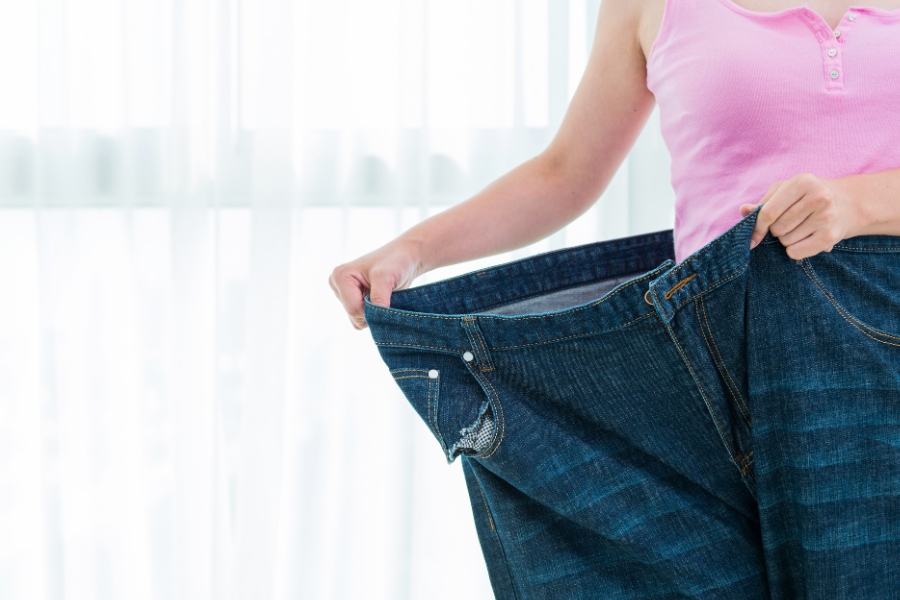
In an era when both obesity and “heroin chic” trends are growing concerns, weight loss can be a touchy topic. Society’s ever-changing views on body size are worthy of their own discussion, of course. But as the link between obesity and health risks has been well-established, the reality is that many adults want and need to lose weight for health reasons.
People who are looking to lose weight know to expect certain things—an increased focus on nutrition and exercise, for example. Some weight loss journeys might include surgery or GLP-1 medications, which have exploded in recent years. But some parts of the journey can still take people by surprise, especially as they get closer to their goal.
Many people shared that they felt colder after losing weight. Body fat acts as an insulator, so losing it can make people more sensitive to cold temperatures. Changes in metabolism and hormones that accompany weight loss can also temporarily make you feel cold. However, nutritional deficiencies can cause similar symptoms, so it may be worth checking with your doctor if it becomes a concern.
“How well the fat insulates heat. On the positive note, I can tolerate hot and humid weather much better now. But I have to wear a lot of extra layers when it is cold, and I don’t enjoy swimming in the sea anymore even in height of summer, because it is too cold all the time (I am in the UK).”
“Oh man, so true, I’m still a big person but much smaller than I was and in winter I’m shaking like a Chihuahua, even with a lot of layers on.”
wanna know the most ANNOYING side effect of losing weight? i’m cold ALL the time. 72 degrees has me in a hoodie and i don’t like that 😂
“Absolutely correct! I get frustrated at how easily I get cold now. It was not something I anticipated.”
“Same, I absolutely cannot tolerate the cold anymore. But warm weather is much easier to cope with, so it’s not a bad tradeoff.”
“I lost 6 stone last year and this winter has been COLD but I’m looking forward to not being a gross sweaty mess this summer!”
Armpits are pits
Armpits are just arm pits, right? Not necessarily. When extra fat in that area fills in the hollow, it doesn’t appear as much of a “pit.” Losing weight revealed the actual pit feature for some folks.
“That your armpits are actually pits, they’re not just called that. When you’re fat, you just have underarms.”
“Just got here. Asked my wife why she was staring at me oddly, she said my pits were hollow.”
“From my all time heaviest I am down 90 pounds to 279 as of this morning. For about a month I’ve really been feeling the pits come in…lol. The joy this brought was very surprising.”
“Fair warning: now I have pits I absolutely cannot figure out the right angles to shave at anymore lmao. A blessing and a curse. A blurse.”
“Yes!! I have to change how I shaved them.”
Feeling your bones
When you become accustomed to having a layer of cushion around your body, losing it can be disconcerting—especially when you start feeling hard, knobby things that you might mistake for growths of some kind.
“I fairly recently lost 50 lbs. Imagine my surprise when I scheduled a doctors appointment thinking there was some sort of tumor in my chest only for them to tell me I have bones.”
“I’ve lost 50kg. I panicked when I felt my sternum.”
“Yes! I felt this with my chest. 😂😭 I thought I had some kind of chest cancer lump. This is the part of weight loss I did not expect.”
losing weight and start feeling bones you’ve never felt before
“I was very muscular in high school. Then gained a bunch of weight in college. Then lost the weight (and a fair bit of muscle) a few years after that. One day I thought I felt a lump in my boob and panicked. Turns out it was a rib that had been previously covered in muscle or fat.”
“I’m so glad I’m not the only one 🤣 I once went to the doctor thinking I had breast cancer. The doctor asked me if I had recently lost a lot of weight, then explained I was feeling my ribs.”
“When I lost 100 lbs and all of a sudden I could feel like wtf there’s actually a spooky skeleton inside me I would just sit there grabbing bones in bewilderment and mild horror.”
People treat you differently
Perhaps the hardest realization people shared was how being overweight had made them invisible to so many. A lot of commenters said people became nicer to them after they lost weight. That’s food for thought for all of us.
“How much nicer people are. As someone who’s lost and gained and lost again, it’s something I’ve noticed. People aren’t noticeably rude or dismissive to me as a bigger person, it’s more like they just don’t really acknowledge you. The world is just nicer when you’re smaller.”
“I’m male. I lost 140 lb and got fit in my mid-40s after living all my late teen and adult years being 300+. That was almost a decade ago. I can honestly say that everything in this thread has been, to some degree, true for me as well, but the most startling has been the way people react to me. It’s unbelievable. Male or female, stranger or acquaintance or friend, passing or casual or business, I’m treated differently. It’s like stepping into another reality and also makes me sad for all those years. Sure, I was fat, but man, I was treated like a subspecies.”
“Yes. I didn’t even realize how much being a fat woman over 40 negatively impacted me professionally until I lost 70 pounds right after Covid. My income more than doubled within a year. It has now nearly tripled. Is it partly because of increased confidence on my part? Probably. Does that explain it entirely? Probably not.”
“My least favorite experience with significant weight loss was experiencing ‘pretty privilege’ for the first time, realizing how mean people had been all my life, and why.”
“I’ve been losing weight and exercising regularly, and suddenly women are interested in me again. I knew logically that humans have a general preference for people of a healthy weight, but I feel like I’ve crossed some threshold of no longer being invisible to them. Wild.”
“I was telling my dad how it blew my mind how differently I was treated and he almost couldn’t believe the difference I was describing.”
Having energy
Carrying excess weight is physically demanding and requires extra energy for everyday activities. Obesity and sleep problems are also linked, often leading to fatigue. Many people found that their exhaustion eased and that they felt much more energetic after losing weight.
“That being tired all the time isn’t normal and I have a lot more energy to get things done than I thought.”
Losing weight is never fun.
But life is so much better after you lost it, because it improves your health, increases your energy levels, and makes you look, feel and perform better.
— P.D. Mangan Health & Freedom Maximalist 🇺🇸 (@Mangan150) September 9, 2025
“When people ask me what I feel like after losing 120lbs, the best explanation I can come up with is that I didn’t realize how sick and miserable I felt all the time until I didn’t feel sick and miserable all the time.
The energy, the aches, the poor sleep, the brain fog…i frog boiled myself into that being my new normal, and now it’s all gone and I can’t believe that’s how I lived for so many years.”
“It’s crazy how many people think constant exhaustion is just ‘normal life’ until they finally fix whatever’s causing it. Feels like getting a whole different version of your day back.”
“It’s crazy how easy it is to assume that’s just your normal baseline. Then you lose weight and you find that you’ve been running on hard mode the entire time. And after losing weight I felt like I had superpowers…”
These revelations are a good reminder of how much of a difference focusing on health can make in our own lives—and how much kindness can make a difference for others.
Andrew Bustamante (@Andrew-Bustamante) spent years as a covert CIA intelligence officer. When Lex Fridman asked him to name the single most useful spy trick that anyone could apply to their everyday life, his answer wasn’t about surveillance, or reading body language, or disappearing off the grid.
Here’s the distinction he draws, as he explained to Fridman and as YourTango reported in covering the exchange. Perception is how each of us interprets the world around us. It’s personal, it’s filtered, and it’s entirely our own. There’s nothing wrong with it, but the problem is that most people treat their perception as objective reality and then spend enormous energy trying to convince everyone else of it. “That’s why so many people find themselves arguing all the time,” Bustamante said, “trying to convince other people of their own perception.”
Perspective is different. It’s not just feeling what someone else feels, which Bustamante distinguishes from empathy. It’s actively placing yourself in someone else’s position and asking what their life actually looks like. What did they wake up worried about? What are they afraid of? What pressures are they carrying that you can’t see? “Perspective is the act or the art of observing the world from outside of yourself,” he told Fridman. “You sit in the seat of the person opposite you and think to yourself, ‘What is their life like?’”
The intelligence application is obvious. An officer who can only see a situation through their own cultural and personal lens is going to miss things. One who can genuinely inhabit another person’s point of view, their incentives, their fears, their constraints, is going to understand things that others don’t. But Bustamante’s point is that this skill doesn’t stay in the field.
“If you do that to your boss, it’s gonna change your career,” he said. “If you do that to your spouse, it’s gonna change your marriage. If you do that to your kids, it’s gonna change your family legacy. Because nobody else out there is doing it.”
That last line is the part that tends to land. Most interpersonal friction, whether in a marriage, a workplace, or a friendship, comes not from bad intentions but from two people each arguing from their own perception without pausing to genuinely inhabit the other’s. Bustamante is saying the CIA trains people to close that gap, and that closing it is available to anyone who practices it deliberately.
The comment sections on the viral clips reflect how directly this lands for people. “He just put it into words for me,” one viewer wrote. Another added that taking on multiple perspectives is “a way to find useful truths and do skillful systems analysis.” The observation isn’t new, but something about hearing it framed as tradecraft, as a skill that professionals train for rather than a platitude, seems to give it traction.
Bustamante runs his own platform, Everyday Spy, where he teaches intelligence-based skills for civilian use. His core argument, across the podcast appearances and the books, is that 95% of what CIA officers are trained to do applies directly to ordinary life. The perception versus perspective shift, he says, is where most people could start.
This article originally appeared earlier this year.
Accidents and medical emergencies happen every day, but, unfortunately, many Americans do not feel prepared to jump into action when they do. According to a poll from the American College of Emergency Physicians (ACEP), most Americans report feeling comfortable calling 911 and speaking with dispatchers. However, the number drops to just 55% for life-saving CPR—and…
Accidents and medical emergencies happen every day, but, unfortunately, many Americans do not feel prepared to jump into action when they do.
According to a poll from the American College of Emergency Physicians (ACEP), most Americans report feeling comfortable calling 911 and speaking with dispatchers. However, the number drops to just 55% for life-saving CPR—and only 46% feel comfortable applying a tourniquet.
Without medical training, confidence wanes and fear likely sets in for the average civilian. And since first responders may not be present when a medical emergency happens, an emergency room nurse with 11 years of experience shared their medical insights with the average person on Reddit.
They explained four essential medical skills everyone should know that could potentially save someone’s life.
“I know everyone wants the dramatic skills,” they wrote. “But these four things, done correctly, will genuinely make a difference in the scenarios most of us are actually likely to face.”
Medical skill #1: Wound packing and pressure
Learning how to pack wounds and apply pressure is the most important medical skill civilians should know, according to the ER nurse. These skills are more important than learning how to suture.
“Suturing a wound that isn’t fully clean can trap infection inside and make things significantly worse,” they wrote. “What saves lives in the field is knowing how to pack a deep wound with gauze and hold real pressure for long enough.”
They explained that most people apply only one-fifth of the pressure actually needed to help.
“Most people stop after 2 minutes. You need at least 10, sometimes more,” they added. “This one skill has a higher chance of keeping someone alive until they can get real help than almost anything else on the average prep list.”
Medical skill #2: Recognizing shock
The next most important medical skill people should learn is how to recognize shock, which, according to the nurse, is “not just ‘they look pale.’”
“I mean understanding the progression: restlessness and anxiety first, then skin changes, then the dangerous drop in blood pressure that most people think comes first,” they explained. “By the time someone looks classically ‘shocky’ you’re already behind. Learning the early signs gives you a real window to act.”
Medical skill #3: Splinting, not setting
Next up is dealing with possible bone breaks. The ER nurse emphasizes that people should absolutely not try to set broken bones. Instead, they should know how to splint them.
“Splint them where they are, immobilize the joint above and below the break, and focus on getting the person calm and still,” they shared. “A bad reduction attempt can damage nerves and vessels in ways that are very hard to fix later.”
Medical skill #4: Medication interactions and allergy documentation
Finally, the fourth medical skill recommended by the ER nurse is knowing which medications (including dosages) family members or close friends take, as well as any allergies they may have, in case of a medical emergency.
“Keep a physical list. Not just in your phone. Know what everyone in your household takes, the doses, and any known allergies,” the nurse explained. “In a chaotic situation this single piece of paper can prevent a serious medication error if someone else has to help you.”
Most people assume that by the time you hit your 60s, you’ve reached the point of continuous mental and physical decline. The mind just isn’t as sharp, and the body becomes overtaken by inflammation, stiff joints, and brittle bones. However, a new study from Yale University says that, for the most part, this is only true for those who believe it.
A new study published in the journal Geriatricsfound that when researchers followed 11,000 participants over the age of 65 for up to 12 years, 45% of them improved in either the mental or physical domains, with some improving in both. About 28% improved physically, and 32% improved mentally. To determine whether the participants improved or declined, they completed a global mental performance assessment and a walking test.
“Many people equate aging with an inevitable and continuous loss of physical and cognitive abilities,” lead author Becca R. Levy, an international expert on psychosocial determinants of aging health, said in a statement. “What we found is that improvement in later life is not rare, it’s common, and it should be included in our understanding of the aging process.”
Older adults improve cognitive function, physical function over time, disproving common views of aging. Individuals with more positive age https://t.co/3xI8pAhqjt
— Reddit Journal of Science (@rsciencejournal) March 8, 2026
When it comes to aging, attitude is everything
The researchers hypothesize that the major reason some people show improvements is their beliefs about aging. Those who have a more positive view of the aging process were much more likely to show improvements in their mental and physical health. Those with negative views on aging were much less likely to show any improvement.
It makes sense because if you believe that you can improve after the age of 65, you’re much more likely to try. If you think that you can or cannot improve your health over the age of 65, you’re probably right.
“Our findings suggest there is often a reserve capacity for improvement in later life,” Levy said. “And because age beliefs are modifiable, this opens the door to interventions at both the individual and societal level.”
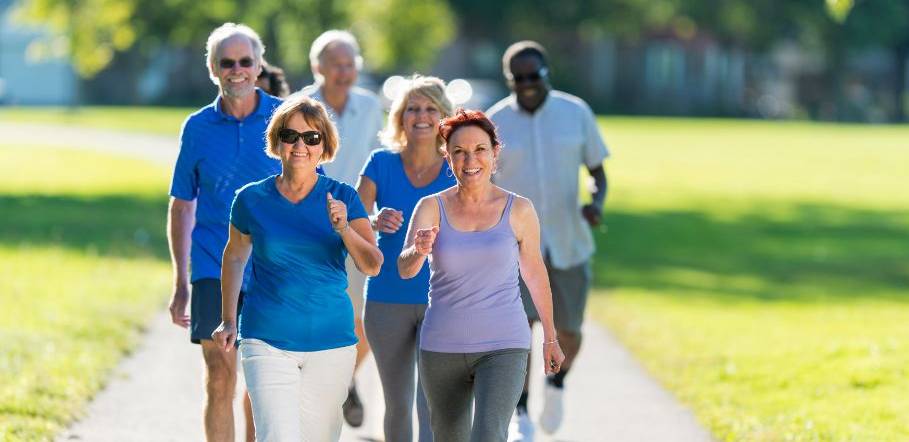
Improvement after 65 requires regularly performing age-appropriate mental and physical exercises. The Centers for Disease Control and Prevention recommends at least 150 minutes of moderate-intensity physical activity per week, which can be divided into about 22 minutes a day.
Here are exercises that can help people age well:
1. Brisk walking
Studies show that walking is great for seniors’ mental and physical health and can help reduce the chances of developing cardiovascular problems as well as cognitive issues, including dementia and Alzheimer’s.
Resistance exercises, or strength training, can help prevent muscle loss and improve metabolic health. They’re also known to elevate mood and improve sleep quality. Examples of strength training exercises include light weights, squats, and standing push-ups against a wall.
3. Meditative movements
Mental and physical exercises such as tai chi and yoga have been shown to improve health in older adults. They are great for flexibility, mental sharpness, and muscle strength. The combination of mindfulness, breathing, and movement benefits both the body and mind.
Dogs can be weird. Any dog owner will tell you that, but typically their shenanigans are just personality quirks. Unfortunately for Colleen Ferguson of Kent, England, her dog’s weird behavior wasn’t just a silly personality thing. For several weeks, Ferguson’s German Shepherd was obsessively sniffing her mouth. This was a new behavior that she found…
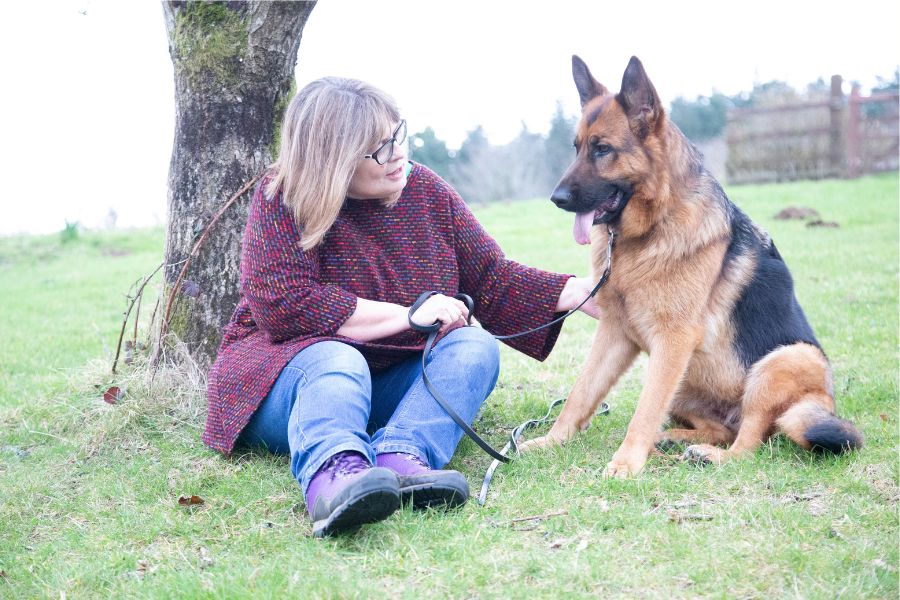
Dogs can be weird. Any dog owner will tell you that, but typically their shenanigans are just personality quirks. Unfortunately for Colleen Ferguson of Kent, England, her dog’s weird behavior wasn’t just a silly personality thing.
For several weeks, Ferguson’s German Shepherd was obsessively sniffing her mouth. This was a new behavior that she found quite odd. The dog, Inca, was only two years old, but she seemed to know something was wrong with her owner and was doing her best to let her know. Inca constantly sniffed around Ferguson’s mouth and frowned.
The dog’s persistence caused the then 60-year-old woman to become concerned, which led her to the dentist. Everything checked out fine, but Inca was still frowning after sniffing Ferguson’s mouth. This prompted Ferguson to visit her doctor to be tested for other things that might change the smell of her breath.
According to Medical News Today, diabetes can cause the breath to smell differently. Gluten intolerance and Celiac disease can also cause bad breath, according to Imperial Dental Center. Ferguson was cleared of any gut-related issues after tests from her doctor. Yet Inca would not stop telling her something was wrong. Growing more concerned about her dog’s new behavior, Ferguson decided to do a full-body scan to rule out anything unusual.
“Her behavior towards me changed, she just started homing in on my mouth. Every time she could get a sniff of my mouth she would frown,” Ferguson told The Mirror. “She just had this focused intent on my mouth, and you couldn’t push her away until you had done an outbreath. When she got that she would give me such a look and walk away. In no way did I expect lung cancer at all. It was such a shock because I am a non-smoker, and because I taught biology, I was very anti-smoking.”
Turns out, Inca was trying to tell her she had a tumor growing in her lungs. Thanks to the dog’s keen nose and insistent behavior, Ferguson was able to catch the cancer early. Before long, the science teacher was off to surgery, where doctors removed a golf-ball-sized tumor.
“The surgeon said…’that dog saved your life. We never catch it at stage one,’” Ferguson told the BBC.
This remarkable discovery took place in 2015, and since then scientists have been working on recreating a nose like Inca’s. The Massachusetts Institute of Technology is currently developing an “e-nose,” a mechanical nose that scientists are training with AI to detect cancer. They have moved to the trial phase, testing more than 500 urine samples to see if the artificial nose is as accurate as a dog’s nose in detecting cancer.
Dr. Andreas Mershin, a quantum physicist, developed the device that will be used to screen donated urine samples. The samples were prescreened by Medical Detection Dogs, and the results of the e-nose will be compared with those of the dogs.
“This is a major milestone,” Mershin told Medical Detection Dogs. “We’ve worked to emulate the dogs’ abilities and train machines in a similar way—rewarding them for correct identifications. It’s like giving our devices a new sense: a nose. Phones already have eyes and ears, but machine olfactors are the next frontier in health technology and AI sensing. This could transform the world of diagnosis, screening, and early detection.”
While the e-nose is currently designed to detect prostate cancer, once it’s perfected, the mechanical nose will hopefully detect other cancers as well.
Ferguson, for one, is thankful that her dog’s nose detected her lung cancer early, giving her a renewed chance at life.
“I was just so lucky,” she told The Mirror. “Every day is special with her. To catch it at stage one is just remarkable. I don’t know how I would have survived with radiotherapy and chemotherapy. She saved me a lot of fuss. It was meant to be.”