upworthy
Add Upworthy to your Google News feed.
Google News Button
Culture

Viral video of the last day of high school in 2001 has millennials noticing these 5 things

It was filmed just a few months before things changed forever.

high school, school, millennials, nostalgia, 2000s, 2000s nostalgia, 2001, 9/11, teenagers, adults
Peter Taylor/Flickr & Taber Andrew/Flickr

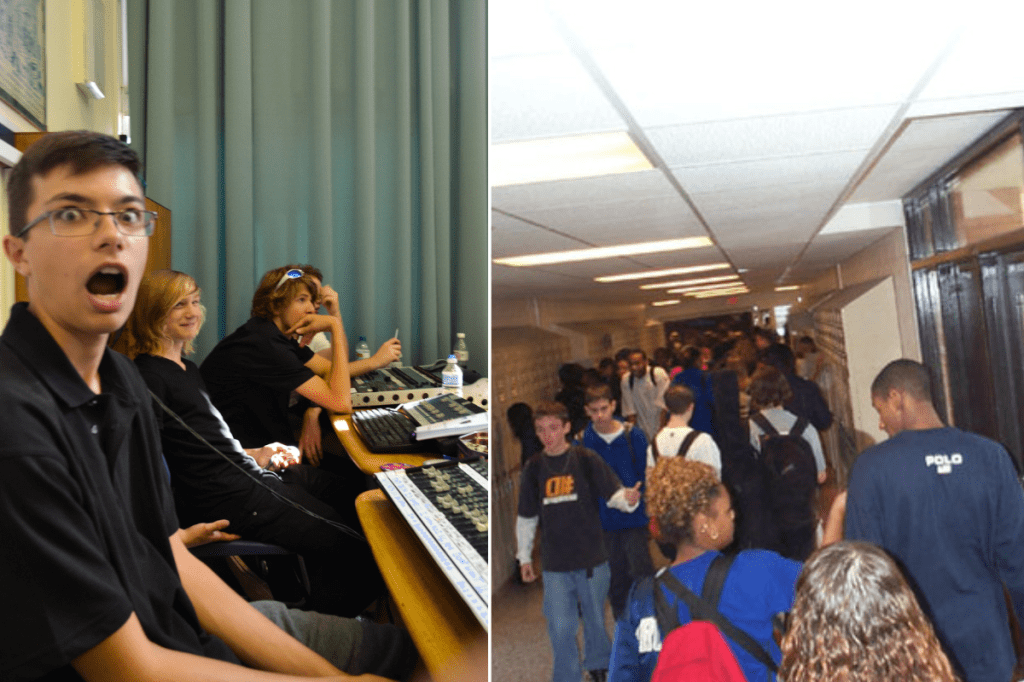
A video of high school in 2001 has Millennial adults wishing they could go back to a simpler time.

Although hard to measure, nostalgia certainly feels to be close to an all-time high. Millennials, in particular, are one of the key drivers of nostalgia, with 14% preferring to think about the past rather than the future, according to market research firm GWI. Even younger Gen Zers are extremely nostalgic for what they view as a simpler time.

We live in a highly divisive and chaotic era, so it's no wonder that people in the Millennial age bracket—late 20s to early 40s— look back fondly at the "before times," notably, the early 2000s.

A recently unearthed clip of the last day of high school in 2001 has millennials feeling all kinds of emotions.

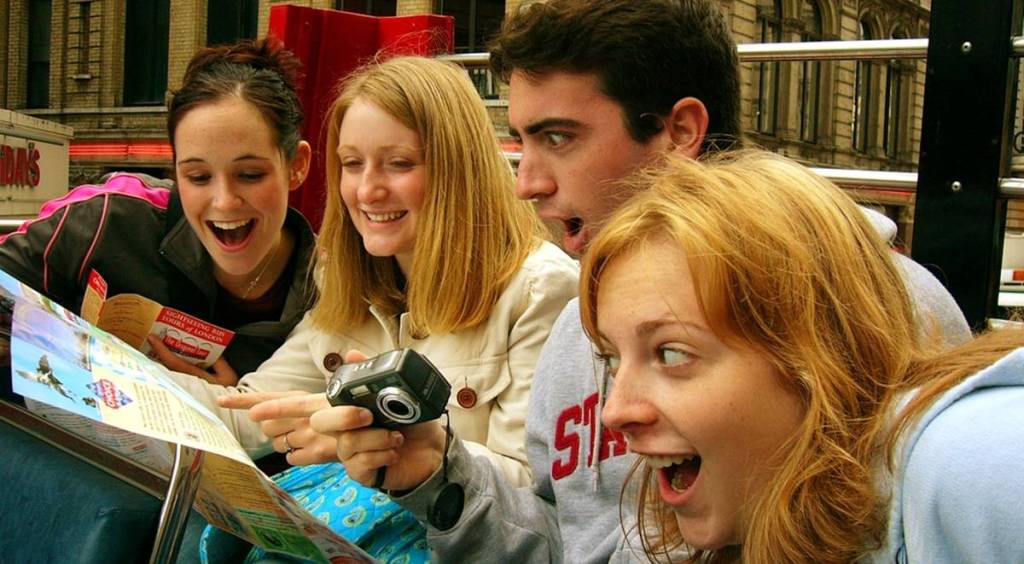
In the viral video, a student films a few brief interactions on his last day at the unnamed school, with classmates wishing each other well and offering cheery goodbyes. He even runs into a few other students filming on their own comically gigantic cameras, predating modern camera phones by about a decade.

Though the dialogue and interactions are simple and sometimes hard to hear in the old footage, you really get a visceral sense of being there from the grainy clips. If you lived it, you can still smell the school cafeteria and feel the painted stone walls in the hallway. These 48 seconds are a perfect encapsulation of what it was like to be a graduating high school senior in 2001.

- YouTube www.youtube.com

The clip racked up over 3 million views on YouTube. Here are the 5 things that stood out to millennials who lived through this period themselves the most.

1. Teenagers looked different back then.

Teen style in the 2000s was extremely casual, with most of the girls in the footage wearing tank tops and jeans while the boys wore short-sleeve button downs or t-shirts. (Okay, the one exception might be the guy wearing the sideways Adidas visor with matching track suit.) But otherwise, commenters were struck by how normal everyone looked.

"Kids looked happier, healthier, and more stylish 24 years ago"

"Girls looked so normal, it's almost weird to see them like that, they weren't with that much of make-up and they looked very friendly"

Several viewers pointed out how, pre-social media, teenagers weren't under nearly as much pressure to look perfect compared to their favorite celebrities and influencers at all times. Of course, '90s and 2000s beauty standards were incredibly brutal, especially for women, but the pressure wasn't as ever-present and it was still OK to wear a t-shirt to school instead of "looksmaxxing."

2. Millennials pointed out how refreshingly awkward and camera shy a lot of the students seem to be.

Several students in the clip seem to go out of their way to not to be captured on film, and there are cheesy smiles and waves galore. In 2001, there were no TikTok dances, and, in fact, selfies didn't even exist yet. Most people had no idea how to behave in front of a camera. The innocence is so endearing.

"We used to dodge cameras, remember?!" one commenter wrote.

"Look how they shy away from the camera, its so natural, so beautiful."

"Having grown up in this era, I honestly forgot that people are sometimes shy about being on camera. It seems like everyone these days must be the main character, especially with a camera or phone around."

The lack of awkwardness in modern teens is a common source of commentary and comedy on social media.

@karsonrheamorrow

How time is so fast. #teenagersthenvsnow #thegooddays #teenagers #early2000s #teenagersscarethelivingshitoutofme #2000s #timesflies #millinials #90sbabies #90skids #90sthrowback #millennial ##90smusic

3. It could just be because the video is from the last day of school, but the teenagers in the clips definitely have a joyful brightness about them.

"Anyone else notice how genuinely happy and soulful they are…?" someone wrote.

"Look at how happy and interactive everyone was. These weren't good times, they were great times."

"Everyone looked so happy, healthy, and very 'in the moment'."

"It’s hard to put my finger on, but there was a unique spirit and lightness everyone had the"

"Listen to how we talked and treated each other back then 'I’m gonna miss you' 'I love you', I feel like we treated each other so much better back then. We weren’t perfect and we had our demons, but it felt like the sun shined differently in the 90’s"

Yes, there is some nostalgic fawning coloring some of the comments, but the data doesn't lie. Teens and young adults today have been shown to suffer more depression and anxiety, with happiness for 13 to 18-year-olds peaking in the early 2000s.

4. Crucially, the video is an amazing snapshot of a pre-9/11 society. The world would change forever just a few short months after it was filmed.

Anyone who was there can remember exactly where they were when news broke of the planes hitting the Twin Towers on September 11, 2001. What we didn't know at the time was how fundamentally everything would change after that day. Politics became sharply more divisive, the country went to war, and travel and the economy were altered forever.

Sobering clips of students sitting in class and learning about the tragedy have been going around social media for years.

The clip of the final day of high school in 2001 from a few months prior has struck so many viewers as one of the last moments untainted by what would ultimately happen.

5. So many commenters admitted they would do almost anything to go back.

High school wasn't kind to everyone, of course. Even through our rose-colored glasses of the time, we can remember there was bullying, racism, and cruelty. But almost all Millennials yearn for a time that was, if nothing else, simpler.

Many commenters quoted Andy Bernard from The Office as they looked back on a time where they probably couldn't wait to grow up and see what else life had in store for them: "I wish there was a way to know you're in the good old days before you've actually left them."

Planet

Our favorite giveaway is back. Enter to win a free, fun date! 🌊 💗

It's super easy, no purchase or donation necessary, and you help our oceans! That's what we call a win-win-win. Enter here.

Our favorite giveaway is back. Enter to win a free, fun date! 🌊 💗
True

Our love for the ocean runs deep. Does yours? Enter here!

This Valentine’s Day, we're bringing back our favorite giveaway with Ocean Wise. You have the chance to win the ultimate ocean-friendly date. Our recommendation? Celebrate love for all your people this Valentine's Day! Treat your mom friends to a relaxing spa trip, take your best friend to an incredible concert, or enjoy a beach adventure with your sibling! Whether you're savoring a romantic seafood dinner or enjoying a movie night in, your next date could be on us!

Here’s how to enter:


  • Go to upworthy.com/oceandate and complete the quick form for a chance to win - it’s as easy as that.
  • P.S. If you follow @oceanwise or donate after entering, you’ll get extra entries!

Here are the incredible dates:

1. Give mom some relaxation

She’s up before the sun and still going at bedtime. She’s the calendar keeper, the lunch packer, the one who remembers everything so no one else has to. Moms are always creating magic for us. This Valentine’s Day, we’re all in for her. Win an eco-friendly spa day near you, plus a stash of All In snack bars—because she deserves a treat that’s as real as she is. Good for her, kinder to the ocean. That’s the kind of love we can all get behind.


Special thanks to our friends at All In who are all in on helping moms!

2. Jump in the ocean, together

Grab your favorite person and get some much-needed ocean time. Did you know research on “blue spaces” suggests that being near water is linked with better mental health and well-being, including feeling calmer and less stressed? We’ll treat you to a beach adventure like a surfing or sailing class, plus ocean-friendly bags from GOT Bag and blankets from Sand Cloud so your day by the water feels good for you and a little gentler on the ocean too.

Special thanks to our friends at GOT Bag. They make saving the ocean look stylish and fun!

3. Couch potato time

Love nights in as much as you love a date night out? We’ve got you. Have friends over for a movie night or make it a cozy night in with your favorite person. You’ll get a Disney+ and Hulu subscription so you can watch Nat Geo ocean content, plus a curated list of ocean-friendly documentaries and a movie-night basket of snacks. Easy, comfy, and you’ll probably come out of it loving the ocean even more.

4. Dance all day!

Soak up the sun and catch a full weekend of live music at BeachLife Festival in Redondo Beach, May 1–3, 2026, featuring Duran Duran, The Offspring, James Taylor and His All-Star Band, The Chainsmokers, My Morning Jacket, Slightly Stoopid, and Sheryl Crow. The perfect date to bring your favorite person on!

We also love that BeachLife puts real energy into protecting the coastline it’s built on by spotlighting ocean and beach-focused nonprofit partners and hosting community events like beach cleanups.

Date includes two (2) three-day GA tickets. Does not include accommodation, travel, or flights.

5. Chef it up (at home)

Stay in and cook something delicious with someone you love. We’ll hook you up with sustainable seafood ingredients and some additional goodies for a dinner for two, so you can eat well and feel good knowing your meal supports healthier oceans and more responsible fishing.

Giveaway ends 2/15/26 at 11:59pm PT. Winners will be selected at random and contacted via email from the Upworthy. No purchase necessary. Open to residents of the U.S. and specific Canadian provinces that have reached age of majority in their state/province/territory of residence at the time. Please see terms and conditions for specific instructions. Giveaway not affiliated with Instagram. More details at upworthy.com/oceandate

arthur c. brooks, harvard, psychology, happiness research, bucket list

Harvard researcher Arthur C. Brooks studies what leads to human happiness.

We live in a society that prizes ambition, celebrating goal-setting, and hustle culture as praiseworthy vehicles on the road to success. We also live in a society that associates successfully getting whatever our hearts desire with happiness. The formula we internalize from an early age is that desire + ambition + goal-setting + doing what it takes = a successful, happy life.

But as Harvard University happiness researcher Arthur C. Brooks has found, in his studies as well as his own experience, that happiness doesn't follow that formula. "It took me too long to figure this one out," Brooks told podcast host Tim Ferris, explaining why he uses a "reverse bucket list" to live a happier life.


bucket list, wants, desires, goals, detachment Many people make bucket lists of things they want in life. Giphy

Brooks shared that on his birthday, he would always make a list of his desires, ambitions, and things he wanted to accomplish—a bucket list. But when he was 50, he found his bucket list from when he was 40 and had an epiphany: "I looked at that list from when I was 40, and I'd checked everything off that list. And I was less happy at 50 than I was at 40."

As a social scientist, he recognized that he was doing something wrong and analyzed it.

"This is a neurophysiological problem and a psychological problem all rolled into one handy package," he said. "I was making the mistake of thinking that my satisfaction would come from having more. And the truth of the matter is that lasting and stable satisfaction, which doesn't wear off in a minute, comes when you understand that your satisfaction is your haves divided by your wants…You can increase your satisfaction temporarily and inefficiently by having more, or permanently and securely by wanting less."

Brooks concluded that he needed a "reverse bucket list" that would help him "consciously detach" from his worldly wants and desires by simply writing them down and crossing them off.

"I know that these things are going to occur to me as natural goals," Brooks said, citing human evolutionary psychology. "But I do not want to be owned by them. I want to manage them." He discussed moving those desires from the instinctual limbic system to the conscious pre-frontal cortex by examining each one and saying, "Maybe I get it, maybe I don't," but crossing them off as attachments. "And I'm free…it works," he said.

- YouTube www.youtube.com

"When I write them down, I acknowledge that I have the desire," he explained on X. "When I cross them out, I acknowledge that I will not be attached to this goal."

The idea that attachment itself causes unhappiness is a concept found in many spiritual traditions, but it is most closely associated with Buddhism. Mike Brooks, PhD, explains that humans need healthy attachments, such as an attachment to staying alive and attachments to loved ones, to avoid suffering. But many things to which we are attached are not necessarily healthy, either by degree (over-attachment) or by nature (being attached to things that are impermanent).

"We should strive for flexibility in our attachments because the objects of our attachment are inherently in flux," Brooks writes in Psychology Today. "In this way, we suffer unnecessarily when we don't accept their impermanent nature."

What Arthur C. Brooks suggests that we strive to detach ourselves from our wants and desires because the simplest way to solve the 'haves/wants = happiness' formula is to reduce the denominator. The reverse bucket list, in which you cross off desires before you fulfill them, can help free you from attachment and lead to a happier overall existence.

This article originally appeared last year.

Sustainability

A new school for girls in India stays cool in 120 degree desert heat without air conditioning

The award-winning structure is a huge step forward for sustainable design.

schools, india, desert, architecture, buildings, design, sustainable design, sustainable architecture, women, girls
Mike Rowe/Flickr & Canva Photos
Revolutionary school building stays cool even in 120 degree desert heat—with no air conditioning

Michael Daube, founder of the nonprofit CITTA, wanted to bring a school for girls to one of the most rural and conservative parts of India. In the region known as Rajasthan, the literacy rate for women was among the lowest in the country. There were few to no opportunities for girls to learn, and, for many, the only path in life was marriage.

There was just one problem with the plan: the rural desert community called Jaisalmer had almost no infrastructure to support a building that would meet the potential students' needs, and the nearest city was 40km away. Further complicating things, it would be challenging to build a low-tech outside venue for kids to learn in because of sweltering desert temperatures that routinely reach over 120 degrees Fahrenheit.


Luckily, architect Diana Kellogg was up to the challenge.

"I was so struck by Jaisalmer, the beauty of the place and how difficult it is to build in the climate," she told Stir World. "There was something very captivating about Jaisalmer and I also learned more about the situation of women and girls in that area. I was affirmed by the fact that education is better not just for individuals, but for the society as a whole. It changes the whole dynamic in societies."

She worked closely with the community to design the school, The Rajkumari Ratnavati Girls School, in a way that would empower women, give girls a safe place to learn, and stand up to the desert heat.

What's incredible is that the school building is able to stay relatively cool with no air conditioning even in the 120 degree heat using both ancient and local techniques:

  • Locally sourced sandstone gives the building its golden color and helps keep heat out of the interiors
  • Lining the inner walls with a material called lime plaster reduces humidity
  • A courtyard, which is customary in India, provides shade at many times throughout the day and can also be covered by a canopy
  • A jali wall—a grid-like structure—allows air to accelerate into the courtyard creating a breeze
  • High ceilings with window vents encourage hot air to escape
  • The elliptical shape of the building encourages air flow and allows high desert winds to flow around the structure

These techniques miraculously allow the indoor spaces to remain about 20-30 degrees cooler than the outside temperature.

- YouTube youtu.be

The school building is also completely solar and wind powered, while a water harvesting system helps recycle the school's graywater and harvest fresh rainwater.

Not only does the sustainable building look and feel like an extension of its desert surroundings, it uses building techniques, materials, and technology that the girls in the region are familiar with. It's all designed to help them feel safe and unencumbered in their learning.

There are plans to expand the school in the near future, adding more buildings that will support a women's cooperative, a marketplace, a library, museum, and an exhibition space that will serve the extremely remote and rural community.

- YouTube youtu.be

Kellogg and CITTA hope that the school can become a blueprint for more just like it around the world.

School is something many kids and families take for granted as a part of their communities, but there are plenty of areas like Jaisalmer where lack of infrastructure, poverty, and gender inequality keep kids from educational opportunities. In 2015, Global Citizen estimated about 60 million kids worldwide do not have access to a formal education. The Rajkumari Ratnavati Girls School is a wonder of modern architecture, but it also proves that it is possible through creative engineering to bring safe educational spaces to kids no matter where they live.

The building also won several architecture awards, including a prestigious recognition in the 2023 AIA Architecture Awards. It all helps get the word out.

"The comments that have come in are heart-warming. The girls find the space to be free and comfortable," Kellogg told Stir World. In a 2023 interview with CNN, she added that she's already seen a difference in the local girls who have attended school in the building she designed.

"[I've seen] the change in the girls, from being quite shy to being these bright lights that are devouring whatever kind of information you put in front of them."

Learning

27 English words people have a hard time enunciating properly, even native speakers

"The word I notice people struggle with is 'vulnerable'. Something about that N following an L is tricky."

enunciate, enunciation, english, words hard to say, hard to pronounce
Image via Canva/Povozniuk

English words that are difficult to enunciate.

The English language is hard to master, even for native speakers. With over an estimated one million words in the language, not only are English words hard to memorize—they can be hard to properly pronounce and enunciate. Getting tripped up with pronunciation can make your communication unclear, or worse—make you sound uneducated.

As American English teacher Vanessa explains, many mispronounced words are common and used in daily conversation due to tricky consonants and vowels in English words. But by knowing the proper pronunciation, it can help you become a more confident speaker, which is why she shared 33 words that are hard for English language learners to pronounce, such as "probably," "drawer," and "sixth."


On the subreddit r/words, a person posed the question: "What's a word you've noticed many native English speakers have difficulty enunciating even though the word is used fairly often?"

Turns out, there are a menagerie of words people notoriously stumble over. These are 27 English words that people say are the hardest to enunciate.

- YouTube www.youtube.com

Tricky 'R' words

"The word I notice people struggle with is 'vulnerable'. Something about that N following an L is tricky." - common_grounder

"Rural." - Silent-Database5613

“'Nucular' for nuclear." - throwawayinthe818

"Remuneration v renumeration (first one is correct)." - RonanH69

"February. It sounds like you're pronouncing it like it's spelled Febuary. But it's spelled February." - SDF5-0, ShadedSpaces

"Mirror. Some people pronounce it 'meer'." - weinthenolababy, diversalarums

"Anthropomorphize is a word I have to use semi-frequently with limited success each attempt." - ohn_the_quain

"I can’t say the phrase 'rear wheel' without considerable effort." - ohn_the_quain

"Eraser (erasure, but they're talking about the pink rubber thing)." - evlmgs

- YouTube www.youtube.com

Multiple syllables

"Exacerbated vs exasperated." - SNAFU-lophagus

"'Asterisk'. A lot of people wind up inadvertently name-checking Asterix. I think it's best for those who struggle to use the alternative name for that punctuation mark, the 'Nathan Hale', after the American patriot who famously declared, 'I can only regret that I have but one asterisk for my country!'" - John_EightThirtyTwo

"I realized recently I have always mispronounced mischievous. It's mis-chiv-us, not mis-chee-vee-us. I don't know if I've ever heard anyone pronounce that correctly." - callmebigley"

'Supposebly' [supposedly]. Drives me up the wall." - BlushBrat

"Library. My coworker knows I hate it, so he’ll say Liberry every time." - Jillypenny"ET cetera, not 'ect' cetera. I think people are used to seeing the abbreviation etc and since there is no diphthong tc in English their mind bends it into ect." - AdFrequent4623

"The amount of people who say Pacific when they're trying to stay specific is pretty alarming. I'm not even sure if they know it's a different word sometimes." - Global-Discussion-41

"Then there was my old boss who would confidently and consistently use the word tenant when he meant tenet." - jaelith"

"Probably." - Rachel_Silver

"Contemplate. It's one of those word I hear people stumble over more than anything, often it comes out as Comtemplate, Contempate or a combination of both." - megthebat49

- YouTube www.youtube.com

Foods

"Turmeric. People drop the first R. It drives me nuts!" - Jillypenny

"Oh, and it’s espresso, no X [ex-presso]." - Jillypenny

"Also cardamom with an N." - nemmalur

"Pumpkin (punkin)." - evlmgs

espresso, espresso gif, sipping espresso, espresso drink, drinking espresso sipping modern family GIF Giphy

Awkward vowels

"Crayon 👑. My ex pronounced it 'cran'. Drove me up a wall." - rickulele, premeditatedlasagna

'Mute' for moot. A good friend of mine, who's extremely intelligent and articulate otherwise, says that. Unfortunately, it's a word she likes to use. I haven't had the heart to tell her she's pronouncing it incorrectly, and it's been three decades." NewsSad5006, common_grounder

"Jewelry." - weinthenolababy

"I hear grown adults calling wolves woofs and they're not doing it to be funny." - asexualrhino


This article originally appeared last year.

Joy

Thomas Jefferson coined a hip and funny phrase for abrupt goodbyes that still holds up today

A great phrase for when you've just gotta leave without explanation.

thomas jefferson, goodbye, name is haines, woman waving, us history

Thomas Jefferson and a woman waving.

"Irish goodbye" is a term for when someone slips out of an event without telling anyone, avoiding the awkwardness of announcing their departure. (Though the Irish didn't necessarily invent the phenomenon.) But what do we call it when someone decides to turn tail and leave a situation immediately, without any explanation at all? These days, there doesn't seem to be a name for a sudden, unexpected exit. Back in the 1800s, however, there was one, courtesy of the third president, Thomas Jefferson.

The phrase: "My name is Haines."


This may sound a bit strange, but it all stems from an unusual interaction Jefferson had while in office with a member of the opposition party. According to Monticello.org, The Weekly Picayune originally published the story in New Orleans on February 17, 1840.

The story behind "My name is Haines"

In 1805, during his second term as president, Jefferson was riding near Monticello, his Virginia residence, when he struck up a conversation with another man on the road. Amusingly, the man had no idea who he was speaking to, and as a rank-and-file member of the Federalist Party, which opposed Jefferson's Democratic-Republican Party, he had plenty of harsh words for the president.

monticello, thomas jefferson, jefferson house, virginia, famous houses Thomas Jefferson's Monticello.via Martin Falbisoner/Wikimedia Commons

The Weekly Picayune wrote:

"Haines took particular pains to abuse Mr. Jefferson; called him all kinds of hard names, ran down every measure of his administration, poked the non-intercourse and embargo acts at him as most outrageous and ruinous, ridiculed his gun-boat system as preposterous and nonsensical, opposed his purchase of Louisiana as a wild scheme — in short, took up every leading feature of the politics of the day, and descanted upon them and their originator with the greatest bitterness."

Jefferson simply listened, neither in the mood to argue nor to reveal his identity. When the two arrived at Jefferson's home, the president invited the man inside for refreshments. At one point, the visitor asked the president for his name. Here is how it was reported in The Weekly Picayune:

"Jefferson," said the President, blandly.

"The [devil]! What, Thomas Jefferson?"

"Yes sir, Thomas Jefferson."

"President Thomas Jefferson?" continued the astonished Federalist.

"The same," rejoined Mr. Jefferson.

"Well, my name is Haines!" and putting spurs to his horse, he was out of hearing instantly.

jefferson memorial, tidal basin, washington d.c., historical monuments, american history The Jefferson Memorial in Washington, D.C.via Joe Ravi/Wikimedia Commons

Why did Haines ride off so quickly?

There are many reasons Haines may have decided to bail on the president so abruptly. He was likely embarrassed after bad-mouthing the president to his face and may not have wanted to risk any reprisal for his harsh words. And as someone who harbored deep ill will toward the president, he probably had no interest in entertaining his company. Regardless, "My name is Haines" became a popular phrase after appearing in The Weekly Picayune , and it was used whenever someone wanted to leave a situation suddenly and without explanation.

The phrase would be used until around the Civil War, but by the beginning of the 20th century, it, too, had said goodbye. It faded away rather than vanishing in an instant, as Mr. Haines famously did.

olympics, athletes, sports, athletics, heartwarming moments, kindness, fathers, dads, fathers and sons, heroes
Canva Photos & Parliament Speakers Limited/Wikimedia Commons

Sprinter Derek Redmond made Olympic history after injuring his hamstring during a semi-finals run in 1992.

Starting in the mid to late 1980s, Derek Redmond was one of Great Britain's top sprinters. One of his greatest accomplishments was helping to guide his team to a shocking victory over the United States at the 1991 World Championships. However, Olympic success eluded him due to injuries that forced him to pull out of the games in 1988.

But 1992 was going to be his year. The summer Olympics were being held in Barcelona and, despite all the surgeries and rehab he went through leading up to the events, Redmond was well-positioned to earn a medal for his country.


In the quarter-finals of the men's 400m sprint, his chosen event, Redmond actually posted a personal best time and easily won his heat. That meant he got to move on to the semi-finals. If he could post a similar time in that trial, he'd be up for medal contention in the finals.

olympics, athletes, sports, athletics, heartwarming moments, kindness, fathers, dads, fathers and sons, heroes The 1992 Olympics were held in Barcelona. Photo by Douglas Schneiders on Unsplash

Redmond's semi-final race got off to a fast start, but with about 250m left to go in the race, tragedy struck. Redmond was spotted on camera slowing up and clutching the back of his right hamstring. It had torn. He was unable to run, and collapsed to the ground in pain. His Olympic dream was over once again.

Redmond was a proud competitor, however, and managed to peel himself off the track. He began to hobble and limp toward the finish line, determined not to earn a "Did Not Finish" disqualification. And that's when an Olympic legend was born.

Redmond's father, Jim, was caught on live television storming the track. Training and security personnel tried to restrain him, but there was no stopping this dad. He made it to his son and gave Derek a shoulder to lean on as both men stumbled toward the finish. Again, security tried to remove Jim, but he waved them off.

- YouTube www.youtube.com

With his father's support, Derek Redmond broke down in a powerful display of emotion. The physical pain likely couldn't compare to the agony of watching his Olympic dream go up in smoke again. Still, the two men pressed on, and yet another Olympic official tried to intervene and was yet again waved off by the determined dad.

Eventually, the Redmonds were able to cross the finish line together to the roar of a standing ovation from the nearly sixty-five thousand spectators watching.

Unfortunately, Derek was still disqualified from the race as he had assistance in finishing. But that official Olympic record does not diminish his accomplishment, which continues to live on as one of the greatest Olympic moments of all time—even being officially recognized by the Olympics as such.

- YouTube www.youtube.com

The moment was so powerful because it underscored the sacrifices made by both athletes and their parents. They train their whole lives for often just one opportunity to showcase their skills on the world stage. When it goes wrong, the results can be devastating. Win or lose, the parents are right there with them. Olympic fathers like Jim Redmond make immense sacrifices for their children to be able to chase their dreams, often spending a fortune on equipment and training, giving up career opportunities, family vacations, personal hobbies, friendships, and more to carve out enough time. Famously, gymnast Gabby Douglas spent two years living with a host family across the country from her parents so she could be closer to a top trainer. Other Olympic families spend $60-100,000 per year in training and equipment fees for their budding stars.

All the sacrifice and hope is on display in just this one short clip. The athletic displays at the Olympics are amazing to behold, but what we really fall in love with are the stories of persistence and perseverance, and there's none better than the story of the Redmonds.

Derek Redmond rehabbed relentlessly after his injury but ultimately had to give up running—though he did enjoy a run as a professional basketball player before retiring from athletics altogether. His father, Jim, passed away in 2022, ten years after being honored as a torchbearer for the 2012 Olympics.