This common interview question can trip up even the most qualified candidates. Should you share specifics, and if so, which ones? Would being vague raise suspicion? Could some details come off as too negative? One career coach offers a smart approach that keeps the focus on the one thing everyone is invested in: filling the vacant role.
“You should frame it as a pull instead of a push,” career coach Madeline Mann said in a TikTok video.
Rather than answering the question with common replies such as wanting a different opportunity or having no room for advancement in your current role, which “push” you away from your current employer, shift the focus of your answer to the “pull” of the open position. That includes the job description, the appeal of the company, and the factors that drew you to apply or prompted a recruiter to reach out.
Instead of saying, “I’m looking for a different job,” try something like: “I wasn’t actively looking for a new role, but after learning about this position, I wanted to know more and share what I could bring to the team.”
Nearly every company will ask you why you left your job or why you are leaving your current job, it will sound like: “why did you leave your job?” “Why do you want to leave your current job?” They asked this in the job interview to get an understanding of your motivations and desires. They will also make assumptions that history will repeat itself, so be careful with your answer and what it says about you! Here is how to answer it with answer examples and samples. Follow for more job interview strategies and tips. #JobInterviewTips#JobSearch#jobinterview♬ original sound – Madeline Mann
Mann said this approach helps you avoid any generic, and sometimes uncomfortable, responses. She argued that it positions you as a qualified candidate who is excited to join the team, rather than someone who can’t wait to leave their current one.
Other experts weigh in
Many of Mann’s fellow career experts who spoke with Upworthy agreed with her approach and offered additional advice on how to answer, “Why do you want to leave your current job?”
“Madeline Mann’s approach in the clip–developing a ‘pull’ narrative rather than a ‘push’ narrative–is absolutely spot on,” said Lili Foggle, director of the Professional Association of Résumé Writers & Career Coaches Interview Institute. “An interview is a competition, and in most cases there’s just one winner. A candidate who is miserable and desperate to leave their current role, is not going to be the number one candidate that they can’t wait to hire.”
“‘Why are you leaving your current job?’ is a common trap,” said career coach Brian Pulliam. “Honestly, it’s none of their damn business, but it is an opportunity to share more about yourself to help you stand out.”
“Responses to questions like these reveal more than ‘why’ you’re really leaving a company. A good manager or HR professional is seeking to learn more about you by asking this,” said Dr. Antoinette M. Boyd, a former HR professional and current assistant professor at Maryville University. “For this reason, the best answers combine honesty with information that helps the interviewer understand your current aspirations and future ambitions, so they have an understanding of why this opportunity and company are in alignment with your professional goals.”
While the majority of Mann’s peers agreed that focusing on the positive aspects of your current role and what you can offer a potential employer is a smart approach, not all of them felt it was the best way to highlight your strengths.
“I respectfully disagree with [Mann’s advice] and here’s why,” remarked career coach Renessa Boley Layne. “There are two things employers are looking for with this question: performance risk and fit risk. Candidates who proactively address both in their answer are the ones who win. This advice, however, runs the risk of marking a candidate as a ‘job hopper,’ and that’s a huge fit risk for managers.”
Formulaic interview questions or not, it’s important to know that the interview process is just as much about you evaluating them as a potential employer as it is about appealing to them as a future employee.
“The biggest miss with interviews is treating it like a test,” added Pulliam. “It’s far more effective to think of it like ‘Career Tinder’: you need to know enough to decide if you want to swipe right on them, not just convince them to swipe right on you.”
In a small village in Pwani, a district on Tanzania’s coast, a massive dance party is coming to a close. For the past two hours, locals have paraded through the village streets, singing and beating ngombe drums; now, in a large clearing, a woman named Sheilla motions for everyone to sit facing a large projector screen. A film premiere is about to begin.
It’s an unusual way to kick off a film about gender bias, inequality, early marriage, and other barriers that prevent girls from accessing education in Tanzania. But in Pwani and beyond, local organizations supported by Malala Fund and funded by Pura are finding creative, culturally relevant ways like this one to capture people’s interest.
The film ends and Sheilla, the Communications and Partnership Lead for Media for Development and Advocacy (MEDEA), stands in front of the crowd once again, asking the audience to reflect: What did you think about the film? How did it relate to your own experience? What can we learn?
Sheilla explains that, once the community sees the film, “It brings out conversations within themselves, reflective conversations.” The resonance and immediate action create a ripple effect of change.
MEDEA Screening Audience in Tanzania. Captured by James Roh for Pura
Across Tanzania, gender-based violence often forces adolescent girls out of the classroom. This and other barriers — including child marriage, poverty, conflict, and discrimination — prevent girls from completing their education around the world.
Sheilla and her team are using film and radio programs to address the challenges girls face in their communities. MEDEA’s ultimate goal is to affirm education as a fundamental right for everyone, and to ensure that every member of a community understands how girls’ education contributes to a stronger whole and how to be an ally for their sisters, daughters, granddaughters, friends, nieces, and girlfriends.
Sheilla’s story is one of many that inspired Heart on Fire, a new fragrance from the Pura x Malala Fund Collection that blends the warm, earthy spices of Tanzania with a playful, joyful twist. Here’s how Pura is using scent as a tool to connect the world and inspire action.
A partnership focused on local impact, on a global mission
Pura, a fragrance company that recognizes education as both freedom and a human right, has partnered with Malala Fund since 2022. In order to defend every girl’s right to access and complete 12 years of education, Malala Fund partners with local organizations in countries where the educational barriers are the greatest. They invest in locally-led solutions because they know that those who are closest to the problems are best equipped to solve and build durable solutions, like MEDEA, which works with communities to challenge discrimination against girls and change beliefs about their education.
But local initiatives can thrive and scale more powerfully with global support, which is why Pura is using their own superpower, the power of scent, to connect people around the world with the women and girls in these local communities.
The Pura x Malala Fund Collection incorporates ingredients naturally found in Tanzania, Nigeria, Pakistan, and Brazil: countries where Malala Fund operates to address systemic education barriers. Eight percent of net revenue from the Pura x Malala Fund Collection will be donated to Malala Fund directly, but beyond financial support, the Collection is also a love letter to each unique community, blending notes like lemon, jasmine, cedarwood, and clove to transport people, ignite their senses, and help them draw inspiration and hope from the global movement for girls’ education. Through scent, people can connect to the courage, joy, and tenacity of girls and local leaders, all while uniting in a shared commitment to education: the belief that supporting girls’ rights in one community benefits all of us, everywhere.
You’ve already met Sheilla. Now see how Naiara and Mama Habiba are building unique solutions to ensure every girl can learn freely and dare to dream.
Naiara Leite is reimagining what’s possible in Brazil
Julia with Odara in Brazil. Captured by Luisa Dorr for Pura
In Brazil, where pear trees and coconut plantations cover the Northeastern Coast, girls like ten-year-old Julia experience a different kind of educational barrier than girls in Tanzania. Too often, racial discrimination contributes to high dropout rates among Black, quilombola and Indigenous girls in the country.
“In the logic of Brazilian society, Black people don’t need to study,” says Naiara Leite, Executive Coordinator of Odara, a women-led organization and Malala Fund partner. Bahia, the state where Odara is based, was once one of the largest slave-receiving territories in the Americas, and because of that history, deeply-ingrained, anti-Black prejudice is still widespread. “Our role and the image constructed around us is one of manual labor,” Naiara says.
But education can change that. In 2020, with assistance from a Malala Fund grant, Odara launched its first initiative for improving school completion rates among Black, quilombola, and Indigenous girls: “Ayomidê Odara”. The young girls mentored under the program, including Julia, are known as the Ayomidês. And like the Pura x Malala Fund Collection’s Brazil: Breath of Courage scent, the Ayomidês are fierce, determined, and bursting with energy.
Ayomidês with Odara in Brazil. Captured by Luisa Dorr for Pura
Ayomidês take part in weekly educational sessions where they explore subjects like education and ethnic-racial relations. The girls are encouraged to find their own voices by producing Instagram lives, social media videos, and by participating in public panels. Already, the Ayomidês are rewriting the narrative on what’s possible for Afro-Brazilian girls to achieve. One of the earliest Ayomidês, a young woman named Debora, is now a communications intern. Another former Ayomidê, Francine, works at UNICEF, helping train the next generation of adolescent leaders. And Julia has already set her sights on becoming a math teacher or a model.
“These are generations of Black women who did not have access to a school,” Naiara says. “These are generations of Black women robbed daily of their dreams. And we’re telling them that they could be the generation in their family to write a new story.”
Mama Habiba is reframing the conversation in Nigeria
Centre for Girls' Education, Nigeria. Captured by James Roh for Pura
In Mama Habiba’s home country of Nigeria, the scents of starfruit, ylang ylang and pineapple, all incorporated into the Pura x Malala Collection’s “Nigeria: Hope for Tomorrow,” can be found throughout the vibrant markets. Like these native scents, Mama Habiba says that the Nigerian girls are also bright and passionate, but too often they are forced to leave school long before their potential fully blooms.
“Some of these schools are very far, and there is an issue of quality, too,” Mama Habiba says. “Most parents find out when their children are in school, the girls are not learning. So why allow them to continue?”
When girls drop out of secondary school, marriage is often the alternative. In Nigeria, one in three girls is married before the age of 18. When this happens, girls are unable to fulfill their potential, and their families and communities lose out on the social, health and economic benefits.
Completing secondary school delays marriage, and according to UNESCO, educated girls become women who raise healthier children, lift their families out of poverty and contribute to more peaceful, resilient communities.
Centre for Girls’ Education, Nigeria. Captured by James Roh for Pura
To encourage young girls to stay in school, the Centre for Girls’ Education, a nonprofit in Nigeria founded by Mama Habiba and supported by Malala Fund and Pura, has pioneered an initiative that’s similar to the Ayomidê workshops in Brazil: safe spaces. Here, girls meet regularly to learn literacy, numeracy, and other issues like reproductive health. These safe spaces also provide an opportunity for the girls to role-play and learn to advocate for themselves, develop their self-image, and practice conversations with others about their values, education being one of them. In safe spaces, Mama Habiba says, girls start to understand “who she is, and that she is a girl who has value. She has the right to negotiate with her parents on what she really feels or wants.”
“When girls are educated, they can unlock so many opportunities,” Mama Habiba says. “It will help the economy of the country. It will boost so many opportunities for the country. If they are given the opportunity, I think the sky is not the limit. It is the starting point for every girl.”
From parades, film screenings to safe spaces and educational programs, girls and local leaders are working hard to strengthen the quality, safety and accessibility of education and overcome systemic challenges. They are encouraging courageous behavior and reminding us all that education is freedom.
Experience the Pura x Malala Fund Collection here, and connect with the stories of real girls leading change across the globe.
Remember when you bought something, you owned it and, for the most part, only paid once? These days, companies try to extract the most value from their customers by getting them to pay more by tacking on surprise fees or add-ons that function as a subscription.
Remember when you bought software once and, if you wanted to upgrade to the latest version, you paid extra? But if you liked the old version, you kept it and it worked fine? These days, you’re forced to pay a monthly fee to use the software and are forced to pay for the upgrades whether you like them or not.
If you’re allergic to paying additional surprise fees, don’t go to Las Vegas. These days, you’ll get hit with a hefty resort fee upon checkout. Some hotels charge you up to $50 to use the in-room mini-fridge, $60 if you want to check in early, a phone-booking fee, and the most infuriating: a $25 fee to use the silverware with room service. At a time when inflation is hitting people hard, these feel like an insult to injury.
People are seriously fed up with being nickel-and-dimed everywhere they turn, so a Redditor asked people to share the subscription fees they’ve recently encountered that they need to “collectively refuse to pay” so they don’t become normalized. We chose some to be aware of and shared information on how you can avoid paying fees—or at least whittle the number of subscriptions you have to a bare minimum.
1. The online convenience fee
“I wish we could stop ‘online convenience fee’ when there is essentially no other way to pay.”
“They shouldn’t exist anyway because paying online isn’t just more convenient for the customer— it’s more convenient for the company, too! They can cut tons of positions when no one has to open actual mail or enter checks/CC numbers manually.”
If you’re tired of paying online convenience fees, one way to avoid them is to set up auto-pay with your bank, which often lets you bypass them. You can also pay by check. If you don’t want to waste paper by receiving a bill in the mail, you can usually print out a payment stub online and pay it that way.
2. School lunch fees
“Our school required us to use an app to deposit lunch money to our children’s school accounts. Each deposit cost a $2.75 ‘processing fee’ to the app itself, paid for by the parent. I started packing lunches.”
“Yes! Our school uses this, and in addition, they cap how much you can deposit at a time, which forces you to do multiple deposits and get multiple processing fees. The cap doesn’t change if you have multiple kids either, so like every 2 months I have to do a deposit for each kid and pay separate processing fees.”
“Subscriptions to streaming services that show ads. Big media is getting two bites of the apple.”
“Oh, and when you pay extra for ad-free, they stop showing advertisements from outside companies, but they replace them with ads for their own services and programming.”
Want to make sure you don’t let your subscriptions pile up unnecessarily and avoid a big squeeze on your budget? One Redditor on the thread r/LifeProTips had a great idea: write down all of your monthly subscriptions on Post-it notes and keep them in a place you look every day, like where you put your keys. As the old saying goes, out of sight, out of mind. Seeing what you’re paying for each month can help you rethink your spending.
4. A/C repair subscription
“We have a local heating and air conditioning company that’s rated near the best in the business. However, as the wife I found out, their business model is incredibly scummy and we’ve made other people aware of it because it’s predatory. If you call them for a checkup on your furnace or AC they have a normal fee for that… but if you need any type of repairs or anything you have to pay for that repair AND they make you sign up for a monthly fee that allows you to be a customer if you have issues moving forward. If you do not agree to this fee, they won’t fix your unit – regardless of you paying for the parts or not. It was like $45 a month.”
5. Subscription fees for car features
“Subscriptions for hardware features your car already has. BMW tried to charge a subscription for heated seats, and now other companies are watching.”
“Honestly, they just need to make it a law that if the functionality is present in the finished product, they by law cannot disable it. The reason why auto manufacturers used to charge more for the higher trim packages was because there was more work involved in producing them. But now they’ve capitalized on economies of scale and figured out a way to just make all the cars identical and selectively turn off features unless you pay shakedown money to the manufacturers.”
6. Utility add-ons
“In the city I live in, some teledoc company has convinced them to automatically add a $7 a month charge to the electric/water bill so everyone will have access to their service. It’s automatic, so if we don’t want it, we have to have the option removed. Most people get their bills electronically and pay automatically and won’t even notice the charge. Scammers!”
“My bank started charging a fee of $5 monthly for “undeliverable mail”. When I called to fix the prob, the security question was: What’s your address.”
Did a service you pay for recently go up in price? Tiktoker @SavingMoneySabrina has a great way to lower your bill when you call customer service. She has a simple script to follow: “Hi, my name is [insert name]. I saw that my Internet went up about $25 this month. Unfortunately, I’m not able to afford that. So if I can’t get it down to the rate that it was last month, I’m gonna have to cancel. Is this something you can help me with?” Here’s how she does it:
I hope this helps you save some money on your bill! Important note tho: when I say that I will “have to cancel,” I actually do mean it. Sometimes you’ll have to get close to cancelling for anything to happen. Trust the process! #howtosavemoney
“My wife had one of those HP subscription printers, which worked fine for her needs, and her job reimbursed her for it, so it wasn’t really a problem for her. When she changed jobs, we decided to cancel the subscription because we weren’t using the printer nearly as much, thinking we’d use up the ink in the cartridges and then just buy new cartridges ourselves. NOPE. It turns out, the whole thing stops working as soon as you cancel your subscription, and you can’t buy normal ink cartridges to put in it; it only accepts the ones specifically made for the subscription service. So now we have a big plastic paperweight with mostly full ink cartridges.”
9. Personalized pricing
“That ‘personalized pricing’ bs they are considering. The price should be the same for everyone, everywhere, and every time from the same physical store or website. If I want to order in-store pickup from the website, it should be the same price on the shelf. If I use the website at home, in the store, or down the street from inside a competitor’s store it should be the same price. If I order online from my friend’s pc it should be the same price as ordering from my own pc. The price should be the same whether I’m using the app, the website, or the physical store, not talking about delivery fees. The entire idea that a store can change the price of an item arbitrarily to what they think YOU will pay for it compared to someone else should be absolutely illegal.”
“Would you like to use our personal shopping assistant? Guaranteed to give you the lowest price offered to any customer! And it only costs 25% to use!”
10. No free parking here
“Parking fees at suburban hotels. I don’t have an issue obviously when you’re in downtown Chicago or San Francisco, but charging $20/day to park in a huge suburban hotel with a lot that holds 500 cars is obnoxious.”
“Also, parking fees at your job. I’m a nurse in Chicago. All of the major hospitals charge us a parking fee on our paychecks. Like… I get that it’s the city and parking is limited, but the hospitals own their own lots. Why are you making me to pay to come to work? Lol.”
“Back in the day, someone would write a piece of software you actually found useful, so you bought it. Later, the developer added some nice new features, you thought the upgrade was worth it, and you bought the new version. Then the next version came along with features you didn’t care about (bloatware), so you skipped it. The developer sees their income dropping and decides the solution is… a subscription.”
If you are locked into subscription software for the next few months, be sure to flip off the auto-renewal switch on the site. If they won’t allow you to do so, then set a calendar reminder on your phone for the last month of service so you can cancel before it auto-renews for another year.
Being approached by a salesperson when making a big purchase, such as a car or an appliance, is an experience most people find to be at least a little uncomfortable. Heck, even much smaller stakes shopping like walking through the mall or browsing jewelry can be wracked with anxiety over potentially running into a pushy salesman. Salespeople can provide help and expertise, of course, but they can also be pushy and add unnecessary pressure especially for people who aren’t quite ready to buy.
Car salesmen, in particular, have the worst reputation. Surveys show a large chunk of consumers have felt pressured by salesmen to buy add-ons they don’t need, felt like they were being tricked, or otherwise felt the salesperson was being dishonest.
Even if you say, “I’m just looking.” The words will not deter them, as they’re trained to push past those objections by pestering with you questions and “encouraging” you to move the sale forward.
A car salesman on TikTok recently went viral with a video explaining why “I’m just looking” doesn’t work on a car lot and, crucially, providing more effective phrases you can use instead.
Russell of RussFlipsWhips normally gives advice to car dealers and salespeople on how to generate leads and close more sales, but he occasionally helps out the average consumer with behind-the-scenes information that helps them make better decisions.
“There’s two main reasons, and here’s what you should say instead of ‘I’m just looking,’” he said in a video with nearly 2 million views. “One is, we hear it every single day. So when somebody tells me, ‘I’m just looking,’ I’m so used to hearing that, I almost like brush it off and ignore it because I’m like, ‘That’s what the customer’s supposed to say.’ “
‘Secondly,” he goes on, “every car salesman has had a customer say, ‘I’m just looking,’ and we ended up selling them a car.”
It’s a harsh and slightly grimy truth of the business, but there’s no arguing with the realities.
Instead, Russell suggests you say: “Hey, I’d really like to look alone. Can I please have your business card?”
The second phrase, which is even more clear that you want the salesman to go away, is: “I’m really not in the market for a car.”
These responses are firm and direct, leaving little to no room for interpretation or push back. As much as salespeople want to make a deal, they really don’t want to waste their own time. So being firm and clear in the fact that you’re not ready is a great way to make them go away.
Watch Russ explain the process and why it works here:
The post received funny responses from folks who had a few effective ideas of their own:
“The ‘I have 2 repos and no money down’ line works wonders,’” one TikToker joked.
“I just tell them my credit score and they run,” another added.
“If ‘I’m just looking’ doesn’t work, I usually wait until they go home, follow them home, stare into their bedroom window at night, and repeat the line when he comes out to ask what I’m doing,” someone commented.
Others chimed in with their own stories, or support of Russ’ advice:
“My first week in the business, one of the older guys told me to say ‘I’ll look with ya’ the first time I used that line, sold a car to the customer’s daughter and upgraded his lease”
“I just say ‘Ill come get you when Im ready’ and if they dont immediately go away, and I do find a car that I want, they will not be the one catching the sale.”
“I once told a salesman I was just looking and ended up leaving with a new car”
Plenty of viewers chimed in that the really good salespeople know when to respect someone’s wishes and back off. If a salesman is too pushy, it can be a huge turnoff for customers — even if they really are almost ready to buy. Russell’s audience is made up primarily of dealers and salesmen, so they know all too well that pushing too hard can backfire.
In the end, Russell’s suggestions show that sometimes, the best way to get our point across is to be direct and honest. There’s absolutely nothing wrong with wanting to shop alone and if the salesperson can respect that request, they deserve the sale if you decide to buy something.
Russ has developed a following of over 750,000 followers giving advice to people in the auto industry and helping customers be prepared for one of the biggest purchases of their lifetime.
With so much info at our fingertips, we’ve come a long way from the days of car salesmen holding all the power and tricking customers with elaborate games and negotiating tricks. But… that doesn’t change the fact that, sometimes, we just want to look around without being pressured.
This article originally appeared two years ago. It has been updated.
Job interviews or any form of public speaking can easily trip a person up, even when they’re totally prepared. It’s human to get lost and go blank in the middle of a thought, or get stuck on a question you’ve been asked. Well, one expert says that your best ally in such situations is your glass of water.
Behavioral therapist Dr. Shadé Zahrai shared on her TikTok that the next time you go blank during a job interview or a presentation, pause and take a sip from a glass or bottle of water. This isn’t just to refresh your throat, but to buy you time to refresh your mind. Not only does taking a drink of water buy you time to get your mind refocused, but the pause psychologically resets the conversation overall.
It also puts you back in control. Whomever you’re talking to will politely wait for you to finish your sip, allowing you to get the first word in after you’ve regained your composure. This pause can also provide more control in that it forces the conversation to slow down so you can think it through and speak thoroughly and clearly. It eliminates the feeling of needing to match speedy or frantic energy that may have built up during the chat.
In a job interview, it’s likely that the interviewer will offer you water. Some people online have interpreted this gesture as a form of test or mind game, but its actually nothing to worry about in most cases. You won’t be judged on whether you drink the water, and it’s better to have it if you need it. Career experts also say that, whether you feel thirsty or not, the safest bet is to accept the offer of water during an interview.
Beyond potentially feeling parched or needing a moment to pause Zahrai suggests you should go ahead and say yes to an offering of water from your interviewer. In some cases, there is a psychological component to accepting an offer of a glass of water that increases your chances of getting the job.
By accepting the water, you’re allowing your interviewer to feel like an accommodating guest. It creates a friendly give and take before you both sit down to discuss the job.
Furthermore, saying “no” to the water offer may unintentionally throw off the vibe since, polite or not, “no” is a rejection. That feeling could carry over into the interview, and you’ll go into it at a disadvantage. By saying “yes” to the water offer, however, your interviewer is more likely to take a shine to you. In short, your “yes” might just lead to a job offer down the line.
It can be deeply frustrating when an argument, debate, complaint, or negotiation goes off the rails. The fallout can include hurt feelings, mental exhaustion, and even damaged relationships, whether the disagreement happens in a business meeting or around the kitchen table. But one CEO and corporate communication expert suggests three questions he says can help bring a positive conclusion to almost any argument.
Steven Gaffney has worked for more than 30 years as an advisor and communicator for Fortune 500 companies, helping leaders communicate plans and negotiate deals. He said that conversations inside and outside the boardroom can be disrupted and steered toward solutions when one person asks the other party three simple questions.
1. What would you suggest?
Instead of trying to convince another person of your point, it may be more fruitful to give them the opportunity to suggest a solution to the shared problem or propose the plan they prefer. This can surface an option they already support, one the two of you can agree on or negotiate further. It can also redirect the conversation toward solution-finding, or help them realize they do not have a clear alternative and may be more open to yours.
2. What would it take for you to agree?
Gaffney said that when this question is asked enough times, the conversation naturally shifts toward finding a solution. It helps clarify what the other person wants, what concerns they have with a proposal, and what they ultimately want the outcome to look like. This provides direct insight into their priorities and allows those concerns to be addressed, which can reduce resistance by helping them feel heard.
3. Can you live with it?
There are times when one or neither person gets 100 percent of what they want. That is simply part of life. Asking this question aloud can surface minor hang-ups that may be blocking an agreement or compromise by encouraging self-reflection, both for the other party and for yourself. If you can “live with it,” you have reached a point of agreement. If they can live with it, that is a success as well.
The worst case is that someone cannot live with it, and that is fine. If that happens, Gaffney recommends starting the questioning over with “What would you suggest?” to move past a stopping point in the conversation and explore what other options might be available to both of you.
Communication professionals told Upworthy that they largely agree with the themes and intent behind Gaffney’s three questions.
“Gaffney’s three questions provide a framework that encourages contribution and ensures commitment,” said Joel Simon, attorney at Simon Perdue Law Firm. “They create a structured path from uncertainty to clarity and action. I agree these questions work because they redirect dialogue from blame or debate toward collaboration and problem-solving. Each question encourages ownership, transparency, and commitment which aligns with negotiation principles I use daily, where resolving conflicts efficiently while preserving relationships is paramount.”
However, while Gaffney has a proven track record and the intent behind his questions is sound, not all of his contemporaries agree that his style of questioning is one-size-fits-all. Jennifer Martin, a communications expert and business consultant with 25 years of experience, said that while she appreciates Gaffney’s direct approach, it may not be effective for everyone.
“Just like the world is not filled with only tech gurus and accountants, as leaders we have to be prepared to style-flex and communicate in the language of creatives, salespeople, people pleasers, and the just-the-facts types among others,” said Martin. “This is why personality tests are so popular in business.”
Communication and workplace culture expert Dallin Cooper largely agreed with the broader intent of Gaffney’s questions, saying they place people in an “outcome-focused mindset” that “creates introspection.” That said, he also noted that the approach is not foolproof, particularly the final question.
“The key to de-escalating a conversation is to avoid defensiveness, and if you exasperatedly ask someone ‘Can you just live with it?,’ that often isn’t going to end well,” explained Cooper. “The delivery, the tone, and the wording of a question like that can make a huge difference in making it feel non-combative.”
Like Cooper, Martin was also concerned with how the questions are asked. She suggested that, depending on the other person’s personality, communicators may need to tailor their message in a way the audience can best receive. Some people respond well to direct bluntness, while others may require more finesse.
Martin recommended approaching the other party with the intention of allowing them to express their point of view, while keeping the focus on understanding what they want in order to find a solution that fits.
“As all any of us really want is to be seen, heard, respected, and considered,” she said.
“One thing these questions all have in common is that they are undeniably good questions to ask yourself,” concluded Cooper. “They will help you understand why you’re having the conversation, whether it’s worth having, and keep you focused on a solution. All great things to ask yourself. And all good things to ask someone else if you ask them at the right time, and in the right way.”
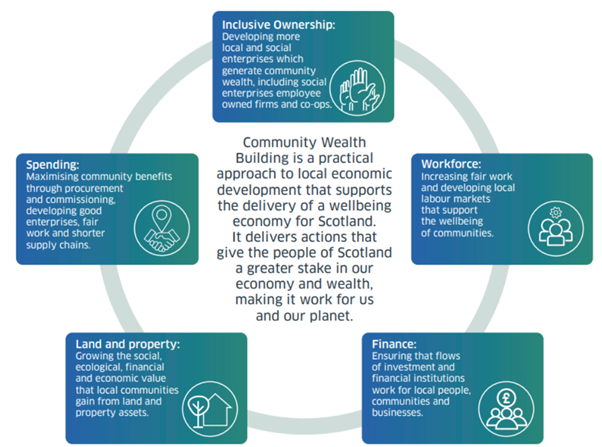
The proposed framework would legally require public institutions to make spending, investment, and development decisions that prioritize the betterment of the local community, rather than growth alone, to create a fairer, more resilient economy.
The CWB would operate on the Five Pillars below:
Inclusive Ownership: Priority will go to developing local businesses, including employee-owned firms and co-ops
Spending on Community Benefits: Public spending first goes to support the local economy, rather than large corporations.
Fair Employment: this includes fair pay and work that supports wellbeing.
Socially Productive Land/Assets: Ensuring land and property serve community benefit.
Fair Financial Power: Again, money circulates into local areas.
The goal is simple: shift wealth towards local communities rather than shareholders. And it’s not necessarily a new concept. Other places have experimented with similar programs, like Preston in England, Arrasate/Mondragón in Spain, and Emilia-Romagna in Italy, along with USA cities like Cleveland, Richmond, Detroit, and Albuquerque, and found success.
What makes Scotland’s CWB different, however, is that it would be permanent law, not a temporary policy change, marking a bigger, more fundamental paradigm shift in how prosperity is defined.
“Incoming legislation will solidify gains and ensure that activity is not done in isolation, but comprehensively, helping Scotland go further in creating a dynamic economy, where more wealth can be generated, circulated, and retained for the benefit of all Scots,” wrote The Democracy Collaborative’s Neil McInroy, who helped develop the CWB.
The CWB comes as a potential solution to Scotland’s hugely uneven wealth distribution. According to a report from the Resolution Foundation, the top 10% own 200 times more wealth than the bottom 10%, with 25% of Scottish people having less than $500 of net savings, and 7% of those with zero savings are in debt.
Compare that to the US, where Federal Reserve data shows that the richest 10% of American households now own over two-thirds of the nation’s total wealth. The top 1% holds 31.0% of total wealth, equaling to only slightly less than the entire bottom 90% of U.S. households. According to Inequality.org, the United States has a wider wealth disparity between rich and poor than any other major developed nation in the world.
Whether or not we can all agree that the CWB specifically is the best move to take, most of us can concur that some collective legislative action is needed to bridge this growing gap. If the CWB does what it sets out to do, it could mean that a mutually beneficial solution is not only possible, but already here.
No matter how often we encounter them, people often overlook the “people in our neighborhood,” as Mister Rogers would call them. Their presence is so common that we don’t always notice them until they’re gone for a day or two. These are people like school bus drivers, sanitation workers, delivery drivers, and postal workers. Of course, people know they exist and that they do a job, but because their presence is in the background of daily life, we may not give their jobs much thought.
There’s the thought that “someone has to do it” when it comes to the service they provide, but sometimes that “someone” is you. Or at least it could be you, especially after hearing how much one of those jobs pays. It’s a common misconception that work like sanitation or postal service is menial and low-paying, but the truth is that this essential work can be quite lucrative in the right circumstances.
The post office continues to have a shortage of mail carriers in certain areas, especially in rural settings. This shortage causes delays in receiving mail and longer hours for current mail carriers. While the post office has been working to fill gaps by increasing hiring, it still isn’t enough, given the large number of USPS workers nearing retirement. It seems to be a constant struggle to keep an adequate number of mail carriers throughout the areas that need them most.
One barrier to people applying to the Postal Service may be that they don’t realize the Postal Service is hiring, since some people may see mail carriers as background characters.
Another concern may be whether people can earn a livable wage working for the post office, but Lukas’ video can help fill in the blanks.
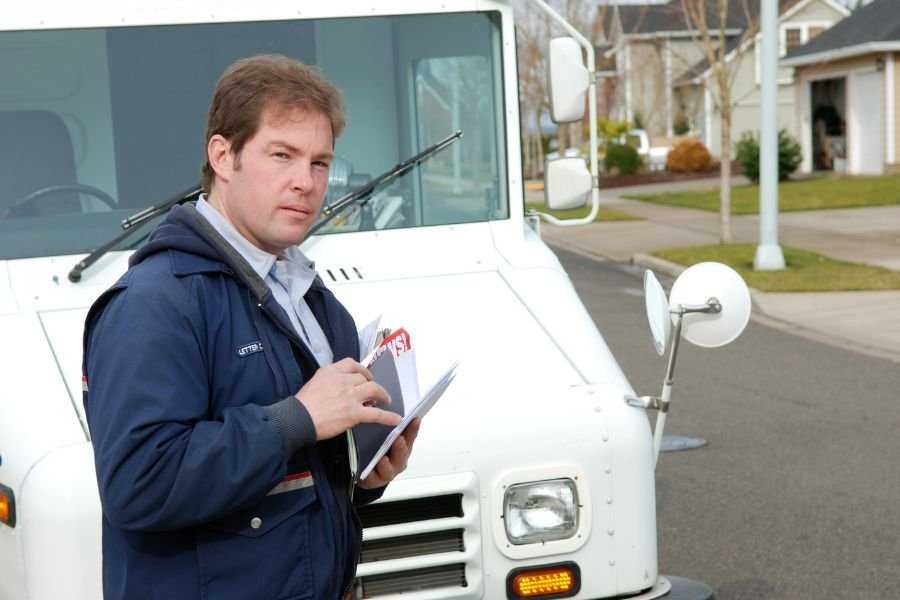
In response to viewers who don’t believe he actually makes six figures, the Missouri mailman and TikTok creator shares a screenshot of his paycheck showing he brings home $4,423.09 every other week, which averages out to just over $100K a year.
Being fully transparent, Lukas shares that his paycheck includes 23 hours of overtime because he has to work extra hours due to being short-staffed.
How much do U.S. postal workers make?
“On one of my previous videos, somebody said, ‘prove it’ on one of my checks, so here’s one of my last checks. As you can see, the overtime hours, plus my normal pay all equals up to $4,423…so, and that’s for two weeks of work. I’m working too much, but if you were to multiply that by 26 weeks, that’s over $100,000. We need help, and the post office pays well,” he says.
Lukas repeatedly states in his video that the post office is hiring and needs help desperately, but comments were mixed on whether working at the post office was a good move.
“I mean he’s technically making 25.00 hourly and $38 for each hour of OT. You’re forgetting the minimum wage in majority of states is 7.25,” one person writes.
“Post office is recession-proof. Been there 30 years,” another commenter shares.
Someone else chimes in, “been working at the post office for 5 years just made regular. it is not easy when you start but once you know how to do it it’s a BREEZE.”
A former postal worker reveals, “I worked there 6 years and had no life. Worked 12 + hrs for 7 days a week. I wasted most of my 20s working. NO THANK YOU!!!!, before adding. “When I started years ago it was $15 an hr when I left it was $25.”
To be fair, while Lukas is doing well for himself (and working quite hard for the money), many mail carrier shortages are partly due to wages that don’t cover the cost of living in certain areas. So there’s definitely room for improvement, and the American Postal Workers Union is fighting for higher pay and better hours all the time.
What’s the average USPS mail carrier salary?
According to Glassdoor, the median pay for a USPS mail carrier is $66,000 a year, with an average range of $55,000 to $81,000, and that’s before overtime. In addition, they receive generous benefits, including health, dental, and vision insurance; flexible spending accounts; long-term care insurance; a retirement package; up to 15 days of leave; and 11 Postal Service holidays.
The post office seems to be much like any other job. Some people have a great experience working there, while others do not, but if someone is looking for a chance at a new career with retirement benefits, USPS could be a place to land.
This article originally appeared last year. It has been updated.
Given today’s shaky economy, things are tough for young job-seekers. The unemployment rate for those aged 16 to 24 climbed to 10.5% at the end of 2025, the highest it’s been in four years.
There are many reasons getting a gig is tough for younger people right now: AI is eating up many junior-level jobs, tariffs have slowed U.S. manufacturing, and people are clinging to their current roles, creating fewer opportunities.
Although there’s no surefire tactic for landing a job in today’s tough economy, a recent LinkedIn post from Diary of a CEO podcast host Steven Bartlett sheds light on what employers are looking for in young workers. He recently hired a woman with zero experience because of the exceptional people skills she demonstrated in a job interview. Bartlett is a Dragon on the UK’s Dragon’s Den (similar to Shark Tank in the U.S.) and the founder of Flightstory, a media, marketing, and investment company.
“I hired someone whose CV was two lines. Their experience was zero… this taught me a critical hiring lesson,” Bartlett wrote. “Much of the reason why I gave her the job was because: She thanked the security guard by name on the way into the building.”
She turned her weakness into a strength
In addition to showing exceptional conscientiousness by thanking the security guard, she leveraged her inexperience to highlight other aspects of her skill set. “When she didn’t know something, in the interview she said, ‘I don’t know that yet, but here’s how I’d figure it out.’ After the interview, she went and self-taught herself the answer she didn’t know, and emailed it to me within hours,” Bartlett continued. “She sent a thank-you note. To everyone after the interview.”
Six months later, Bartlett says she’s one of the best hires he’s ever made. “This is the lesson… HIRE THE HARD THING. By this I mean hire the thing that’s hardest to teach,” he wrote. “You can show someone how to do marketing in a few weeks, you can’t teach them real EQ [emotional intelligence] in a few weeks.”
Bartlett’s post illustrates how, in today’s world, companies place greater value on emotional intelligence, recognizing it as the special sauce that keeps an organization running smoothly. Emotional intelligence is the ability to identify and manage one’s own emotions and those of others.
The importance of emotional intelligence
“The importance of emotional competence comes from the observation in the business world, in academia, the military, and every human enterprise, that there are people who are highly competent in technical and analytical skills, but when they interact with others, projects stall,” Ron Siegel, assistant professor of psychology at Harvard Medical School, told The Harvard Gazette. “I suspect that business leaders have realized that it’s relatively easy to get technical expertise in almost anything, but to get people who can understand and get along with one another, that is a challenge. In many projects, there is a growing awareness that this skill is going to be the one that carries the day.”
The post should offer some solace to young job hunters who lack experience but have strong emotional intelligence. A thin resume can be padded out by showing that you can be an incredible asset to the company culture.
“15 years of hiring has taught me that culture fit and character is MUCH harder to hire than experience, skills, or education,” Bartlett wrote. “You can teach someone Excel in a weekend. You can’t teach them to really give a sh*t about the work in a week.”
Forget the corner office. Gen Z is rewriting the rules of professional success—and their approach might save us all from burnout.
While previous generations dutifully climbed the corporate ladder rung by rung, Gen Z is choosing to do things differently. These youngsters, born between 1997 and 2012, embrace a clear philosophy: work should fund your life, not consume it. It’s a simple dogma. This emerging trend, dubbed “career minimalism,” goes beyond the corporate buzzword, representing a fundamental shift that challenges what we thought we knew about ambition, success, and the definition of “making it” in today’s economy.
The statistics are striking: 68% of Gen Z workers claim that they would not pursue management rolesunless they came with higher pay or a better title. This isn’t laziness—it’s a well-thought-out strategy. Generation Z watched Millennials sacrifice their twenties to corporate culture, only to face economic uncertainty, housing crises, and unprecedented stress levels.
Gen Z is boldly saying “No thanks” to that traditional blueprint.
Janel Abrahami, Glassdoor’s Career Pivot Strategist, puts it perfectly. “Gen Z is more willing to embrace a flex mindset than older generations,” Abrahami tells Upworthy. “While past generations often prioritized climbing the corporate ladder, Gen Z is looking for the career equivalent of a lily pad: a sustainable route where they can jump to whatever opportunity best fits their needs at the moment. That could mean taking a pay cut for more free time, accepting a lower title for a more creative role, or switching to an industry they see as more stable—since 70% of Gen Z questions their job security as AI advances in the workplace, many are proactively moving toward sectors like skilled trades, healthcare, and education.”
This lily pad mentality represents a profound shift in how an entire generation views professional growth. Instead of linear progression within a single company, Gen Z sees their careers as a series of strategic moves that prioritize personal fulfillment, financial stability, and—crucially—time for the things that actually matter to them.
Generation side hustle
Despite the moniker “career minimalism,” 57% of Gen Z employees have at least one side hustle—more than any generation before them. Is it about the money? Not exactly. For Gen Z, side hustles are where their ambition thrives.
Nearly half (49%) of Gen Z side hustlers say their primary motivation is to be their own boss, while 42% are driven by the desire to pursue their passions. These numbers tell a story about a generation that refuses to wait for opportunities. When their 9-to-5 doesn’t provide creative fulfillment or meaningful impact, they create it themselves.
A teacher in Iowa sums it up, saying, “I always joke that I don’t dream of labor… If people were truly passionate about their job, it wouldn’t pay anything. Passion is for your 5-9 after the 9-5.”
Similarly, a research analyst echoes this sentiment, saying, “While having a job that you’re passionate about is really cool, it’s important to have other interests that are not tied to your work life.”
The broader statistics are even more telling: 66% of Gen Z and Millennials have started or plan to start side hustles, with 65% intending to continue their entrepreneurial ventures through 2025. Meaning, this isn’t a phase—it’s a fundamental reimagining of how work fits into a fulfilling life. The pattern is clear: younger generations are diversifying their income streams and refusing to put all their professional eggs in one corporate basket.
Work-life balance as a non-negotiable priority
While older generations might view work-life balance as a nice idea, Gen Z regards it as essential infrastructure for a sustainable life. Thirty-two percent of Gen Z rank work-life balance as the most critical aspect of a job, compared to 28% of Millennials and 25% of Gen X. More significantly, they’re willing to prioritize this balance over higher compensation—a move that would have been unthinkable to previous generations entering the workforce.
“Employers may be surprised by the changing attitudes of Gen Z in the workplace,” says Abrahami. “However, this doesn’t mean that Gen Z is abandoning work; instead, they are redefining ambition through career minimalism. If Gen Z feels unsupported in achieving the work-life balance they seek, they may become less motivated or start looking for opportunities that align better with their values and lifestyles.”
Canva provides a standout example: through initiatives like “Force for Good,” the company encourages employees to contribute over 10,000 hours annually to community projects. This commitment to purpose-driven work has helped Canva achieve a 92% employee satisfaction rate.
These changes aren’t just nice-to-haves—they’re competitive advantages. Companies that embrace Gen Z-friendly policies are seeing measurable improvements in engagement, retention, and overall performance.
What every generation can learn from career minimalism
Gen Z’s approach to work is not radical; it’s rational. After watching previous generations sacrifice their health, relationships, and personal fulfillment for corporate success that often proved fleeting, Gen Z chose a different path.
These lessons are valuable for everyone, regardless of age:
Boundaries create sustainability. Gen Z’s insistence on work-life balance is a nugget of wisdom. By setting clear boundaries, they dodge the burnout that has plagued older generations and create space for long-term productivity and creativity.
Diversification reduces risk. While previous generations sought security in a single employer, Gen Z believes that proper security comes from multiple income streams and transferable skills. Their side hustles are money-generating insurance policies against rapidly changing industries and A.I.
Values-driven work increases engagement. When work aligns with personal values, engagement and performance naturally increase. Gen Z’s demand for meaningful work benefits everyone by forcing companies to clarify their purpose and impact.
Flexibility enhances productivity. The data is precise: flexible work arrangements lead to higher retention, better performance, and increased job satisfaction across all generations.
For Abrahami, the way Gen Z operates in the workplace feels like a breath of fresh air, and she encourages managers to get to know their Gen Z direct reports. “Gen Z’s habits will continue to shape our workforce, so it’s important employers take the time to truly understand them,” Abrahami notes. “Their approach isn’t about laziness; rather, it’s a new representation of how they define success. They want sustainable careers that align with their goals, whether that means prioritizing a job that prevents burnout or one that provides security from layoffs. Older generations have much to learn from Gen Z, and we’re likely to start to see these values become more widely accepted.”
Gen Z’s philosophy in the workplace offers a compelling answer to the age-old question: “What if there’s a better way?” Their formula is refreshingly simple: stable jobs for security, side hustles for passion, and strict boundaries for sustainability.
As workplace dynamics continue to evolve, the rise of career minimalism—fueled by Gen Z’s values—will reshape not only how we define professional success but also how we experience fulfillment. The future of work may belong not to the climbers, but to those content to hop from lily pad to lily pad with purpose and self-awareness.
The corner office can keep its view. Gen Z has found something better: a career that actually fits their life, instead of consuming it. And honestly? The rest of us should take notes.