upworthy
Add Upworthy to your Google News feed.
Google News Button
Pets

Woman saved an 'aggressive, unadoptable' cat from euthanasia. It was clearly a good call.

"Grumpy Barbara" had been found with her owner a week after he died.

cat, aggressive cat, angry cat, rescue cat, hissing cat

Cats can be aggressive for many reasons, but this one was heartbreaking.

Just as you can't judge a book by its cover, you can't judge an animal by their behavior at an animal shelter. Barbara the cat (also known as "Grumpy Barbara") had been through a traumatic experience before she was surrendered to a local shelter. Her long-time owner had died and she was found with his body a week later. She and her human dad had had a strong bond—it had been just the two of them living together her whole life—and clearly losing him affected her behavior. The man's family brought her to the shelter because they couldn't handle her, and the shelter workers didn't have much luck with her, either.

Barbara was aggressive with everyone and deemed "unadoptable." When an animal is brought to an open intake shelter and thought to be a danger to humans and other animals, euthanasia is often seen as the only option. But animal rescue advocate Beth Stern felt like Barbara deserved a chance, so she took her in as a foster.
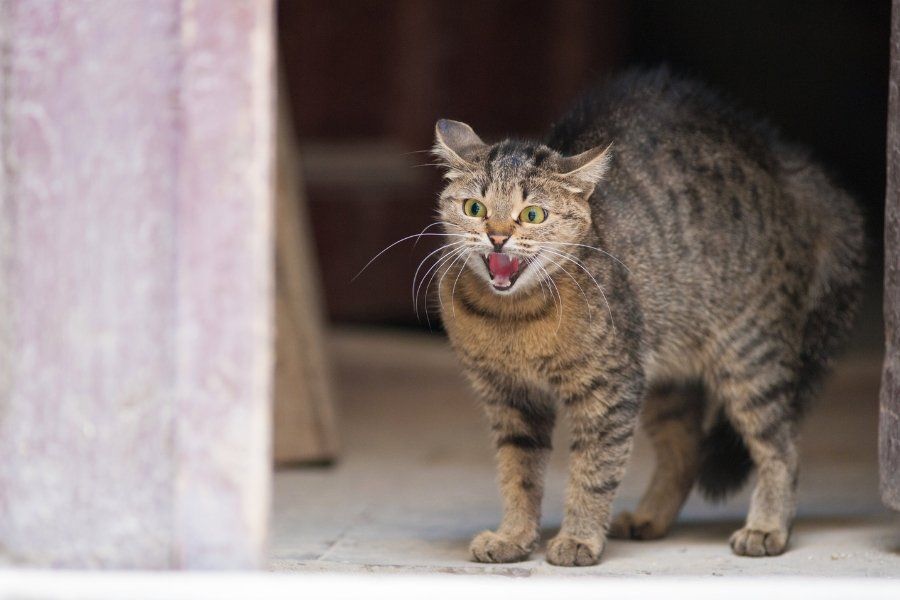
cat, aggressive cat, angry cat, rescue cat, hissing cat Aggressive cats can be scary.Photo credit: Canva

"It was a challenge I wasn't necessarily prepared for," Stern told GeoBeats Animals. "She did not want to see me or talk to me."

Barbara hid in Stern's floorboard in her closet for a week, only coming out at night to eat, drink and use the litter box. It took about a month before Stern was able to touch the volatile kitty, and then she went through several phases of Barbara chasing and attacking her.

"We were both scared of each other," Stern said. "I had to wear knee-high boots to protect myself from her." But she didn't give up on Barbara.

Finally, one night at around 3:00 a.m., Stern woke up to find Barbara purring beside her ear and then nuzzling into her chin. Like flipping a switch, Barbara went from fearful and aggressive to cuddly and affectionate with Stern.

"She became almost suffocatingly affectionate," Stern said. "She follows me around. She will sit with me when I'm working. If I'm on my phone, she wants me to get off my phone."

Barbara had a complete turnaround with Stern, leading commenters to the conclusion that she was traumatized and grieving the loss of her owner. She needed time to be able to trust and feel safe to bond with a human again, which Stern gave her.

"The most valuable lesson I learned from a cat like Barbara is that humans impose their own needs on animals," said Stern, "and understandably they want to feel a bond, but it's much more important to give them the space to tell you what they need first and adapt around that."

People shared their own Barbara-like stories of aggressive animals they adopted who took varying lengths of time to come around:

"My grandfather passed away and I was told his cat Lucy escaped his house. She was in the house hiding and was alone for two weeks without food or a litter box. I brought her home and it took a year for her to come out of my room and be social with her cat sibling and my two cats. She was traumatized. She used to only let me pet her while she was eating. We can pet her more now. It just takes time. ❤️❤️"

"Sounds like our Pearly Pearl. Her momma had to enter care when she was 13. She was about to be euthanized because no one could get near her after months of trying when I got a call asking if we would consider her. She would launch herself across the room and attack you. I had to be fully covered at any interaction. 6 months later she decided we’re were not going to eat her and from then on, she became more loving daily. She’s become the sweetest little cuddle bug and demands to be cuddled and follows us around like a puppy. She just needed time to trust."

pets, cat, cuddly cat, animal rescue, foster animals Some aggressive cats just need time to feel comfortable and safe.Photo credit: Canva

"We took on a kitten that had been returned to the breeder by three different groups because she didn’t like to be touched. At all, she was not socialized (story behind this of course) The breeder told everybody this,but they didn’t listen. We lost one of our cats and the breeder decided to try one last time with us. The agreement was it didn’t matter if she never let us touch her. Same story, and same ending. Now she’s the most affectionate of cats. It took about four months before she let me touch her and now she will not let me go anywhere without her."

However, one commenter pointed out that not all aggressive animals become affectionate like Barbara or the other cats people described, but that doesn't mean they don't also deserve a loving home.

"Thirteen years ago, I adopted an aggressive cat who was scheduled to be euthanized. Not all cats will come around like Barbara. My cat is still aggressive. I cannot hold her or pet her, but I love her and she has a happy, safe home that she loves, despite her behaviour. She is permitted to be herself. Please don't adopt an aggressive pet unless you are committed to whatever may be. Some just don't ever heal from their past but they still need safety, understanding and compassion."

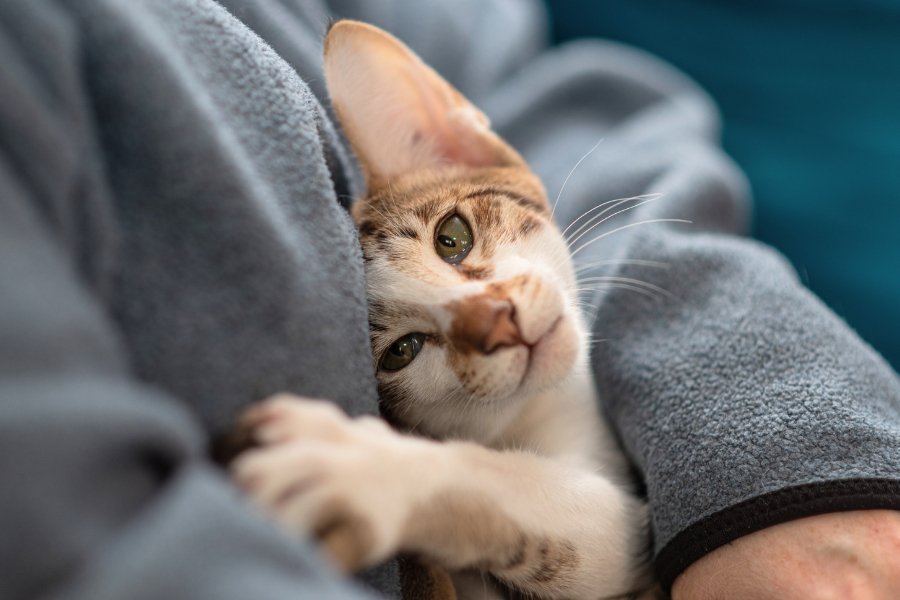
cat, aggressive cat, rescue animals, foster animals, pet adoption Not all aggressive cats will become affectionate, but they still need a home. Photo credit: Canva

The reality is there are too many animals for shelters to care for and without people to step up and foster or adopt them, a percentage of them are going to be put down. Stern is an example of someone willing to give a problematic animal a chance for a caring home, which the world desperately needs more of.


You can follow Grumpy Barbara on Instagram.

snl, christmas, holidays, satire, comedy, kristen wiig, saturday night live, humor, youtube, christmas presents, moms
SNL/YouTube

Classic SNL Christmas sketch has people rethinking the holiday dynamics in their family.

Five years ago, one of the most iconic Christmas sketches ever aired on Saturday Night Live. It's called simply, "Christmas Robe," and it depicts an average American family excitedly waking up on Christmas morning, running to the tree, and opening their presents. In song form, each member of the family takes turns rapping about their own gift haul: A hat, a drone, a pinball machine...

Except for poor mom, played perfectly by Kristen Wiig, who only got a robe—that was 40% off. Things only get worse for Mom as she discovers that her stocking is also empty and she must now go make the family breakfast while everyone plays with their new gifts.


If you haven't seen it, here it is. It's well worth watching in its entirety:


- YouTube www.youtube.com

The sketch got a lot of laughs and resonated deeply with people—especially moms—who watched it.

It's no big secret that moms are the primary makers of Christmas magic in most Western families. While they get joy out of making the holidays special for their families, it's a lot of exhausting work, made worse when it goes unnoticed and unappreciated. It's implied, of course, that Kristen Wiig's character bought everyone their presents while no one in the family bothered to think of her at all.

Jessica Cushman Johnston writes for Motherly: "[Making Christmas magic] is not something my husband or my kids put on me, it’s my own deal. It’s also a tinsel-covered baton handed down from generation to generation of women. As a kid, I just thought the warm fuzzy feelings I felt on Christmas morning 'happened.' Now I know that the magic happens because someone is working hard, and now that someone is me."

Kristin Wiig's character beautifully says it all with the dead-inside expression as she feigns excitement over her lonely robe. In just two and a half minutes, the cast and writers managed to capture a frustrating feeling that millions of women relate to.

The sketch spawned discussions, think pieces, and even parodies when it aired in 2020. Real moms took to social media to "show off" their own robes in an act of solidarity. The sketch had, one could say, a moment. And then, quietly, it retired and took its place in the SNL holiday hall of fame, destined to be re-watched for years to come.

And then something funny happened. People kept tuning in. The skit continued to reach new viewers, and somewhere along the line, a few people actually learned something from the extremely silly sketch.

Saturday Night Live's YouTube and social media are full of comments from viewers who say the sketch opened their eyes in a very real way. And even better, that they're changing their behavior because of it:

"As a retail worker, I actually heard multiple people reference this sketch while buying presents for their wife/mom this year. Thanks SNL!"

"This skit changed Christmas in our house. The year it aired my husband made sure I didn’t get a robe and since this aired (okay, two Christmases have gone by) it’s a joy to see boxes under the tree and a full stocking- now in our house when I’m forgotten my husband says, “you got a robe” and adjusts the situation. Never thought a skit could change my life."

"I just saw this first time. I'm definitely going to buy better present next Christmas to my mom."

"A few years ago, I got a robe. This year, I got a new iPad plus all the accessories. SNL doing all the moms a solid."

"As a grown man, this skit is the first time I've realized how true this is. And now I feel so damn awful :( Gonna bombard moms with the presents this year"

"Seriously! I got a bunch more stuff for my mom after seeing this! It's so accurate. No more robes for mom!"

"I was laughing at this, then realized my mom's stocking was empty and ran out and bought her a truckload of stuff. Love you Mom!"

"Thanks, SNL. After watching this with the family, I had the most bountiful Christmas ever!! And the gifts were wrapped instead of left in the bags the came in."

"This video did more to stimulate spending on Moms this year than almost anything else, guaranteed. Look at SNL actually making a difference with their humor"

The comments go on and on, with the video now reaching over 12 million views. Some moms changed their behavior, too, after seeing the sketch:

"This is spot on, and exactly why I now buy myself Christmas presents, without feeling guilty about it."

The trouble of moms unfairly shouldering too much labor around the holidays (and, well, most other times of the year) is not a new problem. Not by a long shot. So why has this skit reached people when other forms of messaging has failed to sway them?

Marie Nicola, a pop culture historian and cultural analyst, says that no amount of deeply serious essays or shrugged off "mom is complaining again" can fix what satire easily addresses. That's the power of comedy at its best:

"It allows the audience see what was historically unseen or ignored, and it validates the labour as visible and concrete, without being accusatory because it wraps the whole thing up in camp comedy and exaggeration. The skit makes it safe to laugh. This is what psychologists call benign violation," she says. "SNL is showing viewers that something is wrong but they have made it safe enough that people can laugh at it instead of feeling attacked. Once the defenses drop, then recognition can flow through that opening."

The Humor Research Lab writes that humor occurs when an accepted "norm" is violated in a benign way—that's the benign violation Nicola's referring to. "Jokes ... fail to be funny when either they are too tame or too risqué."

The best pieces of satire—the ones that reach the highest levels of cultural relevance—thread that needle perfectly. The norm, in this case, according to Nicola, is that it is "a privilege to curate the perfect holiday experience for the family, the gift is the joy in the moment and their memories for years to come." We're not allowed to talk about the dejection and exhaustion that come from all that hard work. This sketch gave a lot of people permission for the first time to do so.

It’s not the first time that SNL’s comedy and satire have had a palpable effect on how we view the world.


- YouTube www.youtube.com

Once SNL performed the "More Cowbell" sketch, none of us could look at the bizarrely overproduced "Don't Fear the Reaper" the same way again. An old Eddie Murphy sketch got a lot of laughs out of the idea of "white privilege" long before it became a commonly known concept. And people had a hard time taking Sarah Palin seriously after Tina Fey's spot-on yet over-the-top impersonation, with studies later investigating the "Tina Fey Effect's" impact on the election.

And now, the more than 12 million people who have seen "Christmas Robe" are going to have a hard time looking at Mom’s empty stocking without being reminded of Kristen Wiig’s pitch-perfect performance.

Of course, "Christmas Robe" continues to land and connect with viewers today in part because it has not solved the problem of household inequities. The phenomenon continues to exist in spades. But the fact that it’s made even a small dent is pretty remarkable for a two-and-a-half-minute parody rap song.

parents, parenting, moms, motherhood, dads, fatherhood, family, kids, teens, anxiety, anxious generation, gen alpha, mental health
Breakingcycles.co/Instagram & Canva

Is your child always trying to cheer you up? It's sweet and shows empathy, but one expert says it could be a warning sign.

Parents are people, too. Despite shouldering the immense and constant responsibility of raising kids, we have bad days like anyone else. We get sad, frustrated, dejected, and angry. And yet, we can't disappear to go process our emotions, not when the kids need breakfast, and help getting dressed, and dinner, and bedtime.

Kids are self-centered by nature, but they're smart enough to know when we're struggling. And often, they want to help us feel better. Sometimes it's with a hug, an "I love you," or by drawing us a picture to cheer us up. These are moments most parents cherish. Adorable, right?


One expert says that this sweet "cheering-up" behavior may be cute in little kids, but it's not something parents should encourage.

Jaclyn Williams is clinical mental health counseling grad student specializing in children and adolescents and posts on social media under Breakingcycles.co. She recently posted a gut-punch of a reel to Instagram that had a lot of parents rethinking how they view their children's displays of empathy.

"Your kiddo tries to comfort you when you're upset..." the caption reads. "It feels sweet but here's what you need to do."

"Your kid sees you're stressed and says: 'Don't be sad, Mom!'" the post continues. "Your instinct: Let them comfort you. It's sweet. It shows they care. But here's what's happening in their nervous system... They're learning that YOUR emotional state is their responsibility to manage."

It's a topic Williams discusses often on social media. In another Facebook post, she elaborates on what's really happening and how that adorable, innocent behavior might evolve as your kids grow into teenagers and young adults. She says that what feels like love when your child is five can feel like a huge burden on them when they're 15:

Age 5: "Don't be sad, Mommy! Look, I drew you a picture!"
Age 15: Panic attacks when anyone's upset because they feel responsible for everyone's emotions
Age 5: Never complains when you seem stressed
Age 15: Can't advocate for their needs without crushing guilt about being "selfish"
Age 5: "So mature" and "emotionally wise beyond their years"
Age 15: Chronic anxiety from carrying emotional weight that was never theirs

It's not just Williams' opinion or her experience with her own teenage children. It's what she sees in her practice day in and day out:

"I started seeing... kids coming in with anxiety, people-pleasing, perfectionism. And when I'd trace it back—it started with them trying to make their parents feel better when they were little. We all think... 'They're so sweet. So empathetic.' Actually? They're working. Trying to regulate US."

Parents have strong, visceral reactions to Williams' advice whenever she posts about the topic. One instance even had over a million views on Facebook:

"Wish more parents knew this," one commenter wrote. "My parents didn’t and [now] I’m so hyper aware of the emotions of everyone around me. My poor fiancé can’t be in any type of mood without me immediately picking up on it and asking him what’s wrong."

"I'm literally healing from this EXACT thing, down to the letter," said another. "Learning how to regulate, to know my worth doesn't have to be earned, to find my identity, to set boundaries. Its been a WILD ride"

But that doesn't mean the posts haven't generated their share of debate. Not everyone agrees with Williams' words, with many commenters arguing that it's a good thing when kids show empathy and kindness to others, and that it's not something we should squash.

"Some modeling of comforting is natural and healthy bc they are learning from you how to respond when someone is upset. By stopping their comfort I worry that you're teaching them that mom has to be strong and always make it about other people," one commenter suggested.

Williams agrees that empathy and compassion are important skills to nurture, but clarifies that children should never feel like it's their "job" to make sure adults feel better. She says you can gently redirect them in a way that doesn't dismiss their kindness by saying something like:

"Hey I really love that you're checking in and helping me feel better, thank you so much! I'm gonna go call [your aunt] or go for a walk with dad about it cause it's some grown up stuff that you don't need to worry about."

In fact, she offers slightly different scripts parents can use depending on how old their kids are:

Ages 4-7: "Mom's having some big feelings, but I'm taking care of them. This isn't your job. Want to go play while I take some deep breaths?"

Ages 8-12: "I'm stressed about some grown-up stuff, but I'm handling it with Dad/my friend. You don't need to worry about me. This isn't yours to carry."

Ages 13-18: "I appreciate you noticing I'm stressed. I'm working through it. You don't need to fix it or manage it. That's not your responsibility."

It's not about hiding negative feelings or pretending everything's fine. It's about drawing the correct boundaries between child and adult, teaching them how to recognize and label emotions, and most importantly, modeling how to deal with them. Today's Parent writes, for example, that it's OK to cry in front of your kids—as long as you describe what you're going to do about feeling sad, like taking some quiet time, or going for a walk.

"Emotional parentification" is a concept that refers to children taking care of their parents emotionally, often far before they're ready to do so.

parents, parenting, moms, motherhood, dads, fatherhood, family, kids, teens, anxiety, anxious generation, gen alpha, mental health It's sweet when they make you a "cheer up" card, but it shouldn't be happening all the time. Photo by Kelly Sikkema on Unsplash

Psychology Today writes, "Emotionally parentified kids learn that it is their job to grow up fast and swallow their own emotional and developmental needs to keep the peace at home and manage their parents. These kids may get 'so mature for their age' or 'so low maintenance.' While meant as a compliment, these phrases simply describe children who were asked to bypass their own developmentally appropriate role of child to become a little grown-up. And those roles take a toll."

The toll being far higher instances of anxiety and depression as they grow up, among other adverse effects. If you've ever wondered how people-pleasers are born, this is one way.

"Boundaries are what sets empathy/compassion apart from people-pleasing," Williams says. "Which is what can happen to these littles when they get older, they get really validated and praised for taking such good care of everyone, they might feel like it's their job/responsibility and instead of being able to advocate and take care of their own needs, they're stuck people-pleasing everyone else."

A sweet gesture from your kid every now and then is just that—sweet. But Williams and other parenting experts warn not to let it become a pattern.

time, neil degrasse tyson, time flies, perception of time. clock, science,

A clock and Neil deGrasse Tyson.

When you’re a kid, time passes a lot more slowly than when you’re an adult. At the age of seven, summer seems to go on forever, and the wait from New Year’s Day to Christmas feels like a decade. As an adult, time seems to go faster and faster until one weekend you’re putting up your Christmas lights though you swear you just took ‘em down a month ago.

Why does time seem to speed up as we get older? Astrophysicist Neil deGrasse Tyson recently explained the phenomenon in a video posted to Instagram. He also offered tips on how to slow the passage of time as you age. DeGrasse Tyson is one of the most popular science communicators in the world and the host of 2014's Cosmos: A Spacetime Odyssey and 2020’s Cosmos: Possible Worlds.


Why does time appear to speed up as we get older?


“When you're young, everything is new. Your brain is constantly recording fresh memories, and the more memory your brain stores, the longer the experience feels. But then something changes. As you get older, routines take over. Your brain stops saving so much detail. It switches to autopilot because everything feels familiar and predictable,” deGrasse Tyson explains. “And when your brain stores fewer new memories, your perception of time compresses. That's why childhood feels long, and adulthood feels like a blur.”


Steve Taylor, PhD, author of many best-selling books including Time Expansion Experience, The Leap, and Spiritual ScienceThe Leap, and Spiritual Science, agrees with deGrasse Tyson.

“This is mainly because, as children, we have so many new experiences, and so process a massive amount of perceptual information,” Taylor writes at Psychology Today. “Children also have an unfiltered and intense perception of the world, which makes their surroundings appear more vivid. However, as we get older, we have progressively fewer new experiences. Equally importantly, our perception of the world becomes more automatic. We grow progressively desensitized to our surroundings. As a result, we gradually absorb less information, which means time passes more quickly. Time is less stretched with information.”

How do we make time slow down?

There’s something a little depressing about the idea that time speeds up as we age because we have fallen into predictable routines. The good news is that we can break this cycle by changing our habits and having new experiences. The more novel information we can process and the less routine our lives become, the slower time will move.

DeGrasse Tyson believes that with some change in our behaviors, we can get back to longer summers and Christmases that aren’t perpetually around the corner.

“You can actually slow time down again. Do something unfamiliar,” deGrasse Tysons says. "Travel somewhere new. Break a routine you've repeated for years. Learn a skill your brain hasn't mapped yet. Because the more new memories your brain forms, the slower time feels as it passes. So if life feels like it's accelerating, it's not your age. It's your brain, and you can reboot it.”

Community

Frugal people share 14 small, daily habits that stop them from wasting money

"Use it up. Wear it out. Make it do, or do without. Cook at home. Need vs. want."

frugal habits, frugal money habits, saving money, how to save money, stop wasting money

The small, daily money-saving habits frugal people say save them tons of money.

Putting a stop to frivolous spending can help you save lots of money. Frugal people know this well—they carefully watch their spending habits and patterns, and find ways to cut back on wasteful spending wherever possible.

However, it can be a hard habit to break. According to a 2025 survey by Motley Fool Money, nearly 1 in 10 millennials report wasting money every day—while 45% of Gen Zers reported the same.


Cutting back on mindless spending can really add up, and frugal people on Reddit shared the simple, daily ways they avoid spending money unnecessarily after one member posed the question: "What small daily habits actually help you stay frugal for good? [...without feeling like I'm budgeting every second of my life which is not life imo.]"

- YouTube www.youtube.com

These are 14 small, daily habits that frugal people say prevent them from wasting money:

"I think the biggest thing that’s helped me is being prepared. I realized I was spending money on convenience things—food and drinks on the go, mostly. Make sure you keep an eye on your car’s gas so you can go to a place with decent prices, eat before you go out and/or bring snacks with you, carry a thermos of coffee or water." - PutNameHere123

"What routines or mindset shifts helped you the most? Use it up. Wear it out. Make it do, or do without. Cook at home. Need vs. want." - mac_a_bee

"Utilizing my public library. I will never stop recommending this." - ThisIsACompanyCar

"If I am going to buy anything online let it sit in the cart for at least a day, longer if it’s a larger purchase. Half the time I decide I don’t really need/want it." - ZDub77

"Life will not find me hungry or thirsty out of my house, ever. I eat at home and leave 5 minutes after, with my bottle of water, specially if I have to get groceries at any point during that outing. Also, I bring fruit and sandwiches if I know I’m going to out for a few hours. I have a big appetite but I refuse to waste my money when I have food at home. And because I’m an adult, I get the groceries and ingredients I like so no excuses." - mariruizgar

@diaryofacheapskate

Finding new ways to save money every day 💷 every little counts. #frugalliving #cheaptok #cheapskate #frugal #simpleliving #underconsumption #reducereuserecycle #reducewaste

"I take out cash every month for 'treat yourself' purchases. Coffee, snacks, whatever I want. But when that money runs out, I’m done. It is easier for me than tracking tiny purchases since my empty wallet will tell me when I need to chill out. Sadly some places are going cashless, but this has still worked really well for me. You could also do something similar with a 2nd checking account, but I enjoy the visual reminder of how much I have left to spend." - grillcheezi

"Another habit I've been cultivating is asking for help. Most people are happy for the chance to help you out as long as you don't get cheeky. A lot of money we spend is replacing social connections - a good example is getting an uber to the airport instead of getting a ride from a friend. Just by having a good relationship with our neighbors we can save a lot, and cultivate good relationships, which is a win-win." - mycopunx

"If you like subscription services for shows/movies, buy one month then immediately cancel it. You will still be able to watch for the month you paid for, but you won't forget to cancel when renewal comes along. Then try another streaming service next month instead of having all of them all the time." - cloverthewonderkitty

"Remembering that there’s a reason for it. That is to say, my priorities. It’s so easy to go buy some cool stuff, or eat takeout, buy coffee, stay in hotels, get my hair done monthly, buy a second car, etc. But then if I do that stuff, I can’t go on very many great vacations or pay for activities for myself, partner or kiddo. So yeah, remember why you’re doing it." - robin-bunny

- YouTube www.youtube.com

"Encouraging friends to be frugal. 'Come for dinner, bring some drinks/dessert' vs 'let’s go out'." - robin-bunny

"Buying/making good quality treats. After a few weeks of eating high-quality stuff, the cheap things lose their appeal and there's no more impulse purchasing, or desire to eat the freebies at work that are all horrifically cheap. Good chocolate, good brownies/cookies made with real butter (Irish is best), fruit pies with fresh fruit and a high-quality crust, that sort of thing. I can't get within a mile of grocery-store birthday cakes anymore, they smell like cheap chemicals." - VernalPoole

"I’ve said it before in this sub but I stopped caring about what others think and noped out of mainstream society. So much of our culture here in the U.S. is built around buying stuff, eating out, taking expensive vacations, new cars, new phones, etc. etc. I was forced to live very frugally for years and it helped me to see this clearly and to stop caring about keeping my hair highlighted, having tons of clothes and shoes, spending lots of money on leisure activities, and making everything look 'perfect' on the outside. It’s not easy for a lot of people, especially in the age of social media, but it shifted everything for me and helped me to build a truly meaningful and beautiful life for myself and my kids." - SomeTangerine1184

"I have an ongoing wish list on one note that I keep updating with what I want, the price, why I want it and why I’m hesitant to buy it. I let sit things on there until I decide I want to buy them or remove them off the list." - Right_Speaker1394

"I had to go out and run some errands but should have been home before supper. But I took longer so I got hungry. I went to a grocery store and got a rotisserie chicken. I ate and brought the rest home. And boiled the carcass for soup. I felt better after also then I would have eating fast food." - Crazyforlou

Identity

Woman on a plane who saw man's body-shaming texts about her handles the situation with pure grace

“I was afraid that if I started this conversation with him, I would be asked to leave the plane.”

social media, screen shot, body shaming, people, flight
via Canva/Photos and Sober Spouse/TikTok (used with permission)

Screenshots of woman speaking to camera; a plane taking off.

Vanessa, a TikTok user who goes by (@soberspouse), is an inspiration to many because of the way she handled an incredibly uncomfortable situation on a flight from Tampa, Florida, to New York on Delta Airlines. It all started when she sat down beside a man, who immediately rolled his eyes at her.

When she sat down, she noticed he had sent a text message to someone that read: “Ugh, HUGE woman sat next to me,” she recalled. “As soon as I sat, I just glanced over, and I saw it. It was right there in front of my face, and after he had to hit send, he sent a series of empty texts to essentially push what he had written off the view of his screen,” Vanessa told The Mary Sue. Before the plane took off for the two-hour flight of misery, she posted a TikTok sharing her story while asking for kindness.


“Be kind. If you’re feeling inclined, can you send some love? I lost 60+ lbs and have actually been feeling good about myself,” she requested.

After two hours of torture in the sky, Vanessa landed in New York to countless well-wishers congratulating her on her weight loss. "You lost 60 lbs?!? CONGRATULATIONS! That clearly took a lot of effort from you… Don’t let the jerk derail you as you are on a JOURNEY!" one TikTok commenter wrote. "CONGRATS on losing 60lbs! That’s amazing!! So proud of you! Keep feeling good about yourself and do NOT let someone else that clearly doesn’t even like themselves make you doubt yourself!" another added.

During the flight, Vanessa wanted to speak her mind and tell the guy off, but she didn’t want to cause drama on the airplane. To make it through two hours without causing a scene was a lesson in grace. “I didn’t wanna say anything because I really needed to get home to my kids, and I was afraid that if I started this conversation with him, I would be asked to leave the plane,” she told The Mary Sue. “So I took a few deep breaths, made the TikTok or two. I remember thinking I wish I could tell the flight attendant, but I didn’t even wanna get up or move.”

texts, fat-shame, airplanes, mean texts, rude texts, body positivity, A representative image of a text.via Tod Perry

Vanessa attributes her self-control to the personal development she’s made as a sober spouse. “When it happened, my husband was the first person I texted,” she told Upworthy. “He responded by validating the situation I was in and then reassured me I am beautiful, to take a deep breath, and that I would be home soon. If he didn't have the tools from the program, I'm sure the conversation would have looked different.”

Even though she stayed quiet, Vanessa had some things she would have wished she could have told the man. “I’ve thought about this a lot. Part of me has some choice words for him and his khaki pants and his manspread, but then I remember the whole lesson in kindness here. I'm going to assume he's been through something or has been hurt before, and just remember that his comment was more about what he's experienced than me. I honestly have prayed for him and hope he can find some kindness to pay forward in his life,” she told Upworthy.

Vanessa shared a follow-up video sharing the real lesson of the incident. "I'm so glad this little moment of lemons has turned into so much lemonade for so many people," she said. "The amount of kindness that's been spread and shared is really unbelievable."