America has never been a perfect place, but since the Civil War, it has been one where most people bought into the idea of the country and supported the institutions that keep it running. People may disagree on politics and culture, but when America was threatened, whether it was 9/11 or World War II, people came together to fight for the country they love, even though the reasons may have differed.
However, it’d be naive to say that sentiment is still as strong as it once was. Since The Great Recession, many people have felt that the vibes are off in America, and polls and research back those feelings. Right around 2012, when smartphones became ubiquitous, there was a considerable rise in the number of people who felt that America was on the wrong track and that racism and sexism were considerably worse than they were just a year before. There was also a big spike in mental illness.
So what happened in 2012? Did the world suddenly become drastically worse overnight, or had our perceptions been changed?
Why does it feel like America is on the decline?
Other developed countries have experienced similar vibe shifts since 2012, but it has hit America the hardest. Economics blogger Noah Smith explains why this feeling of malaise has hit America so hard, and he illustrates it perfectly in a viral Substack piece called “Social media destroyed one of America’s key advantages.” Smith is an American blogger and commentator on economics and current events and former assistant professor of behavioral finance at Stony Brook University.
In his Substack post, Smith postulates that the technological change hit America the hardest because it punctured our geographical buffers. “A hippie in Oakland and a redneck in the suburbs of Houston both fundamentally felt that they were part of the same unified nation; that nation looked very different to people in each place,” Smith writes. “Californians thought America was California, and Texans thought America was Texas, and this generally allowed America to function.”
Why did America fundamentally change in 2012?
Here’s an excerpt from Smith’s piece. Please check out the entire piece on the Noahpinion Substack.
Like some kind of forcible hive mind out of science fiction, social media suddenly threw every American in one small room with every other American. Decades of hard work spent running away from each other and creating our ideologically fragmented patchwork of geographies went up in smoke overnight, as geography suddenly ceased to mediate the everyday discussion of politics and culture.
The sudden collapse of geographic sorting in political discussion threw all Americans in the same room with each other — and like the characters in Sartre’s No Exit, they discovered that “Hell is other people.” Conservatives suddenly discovered that a lot of Americans despise Christianity or resent White people over the legacy of discrimination. Liberals suddenly remembered that a lot of their countrymen frown on their lifestyles. Every progressive college kid got to see every piece of right-wing fake news that their grandparents were sharing on Facebook (whereas before, these would have been quietly confined to chain emails). Every conservative in a small town got to see Twitter activists denouncing White people. And so on.
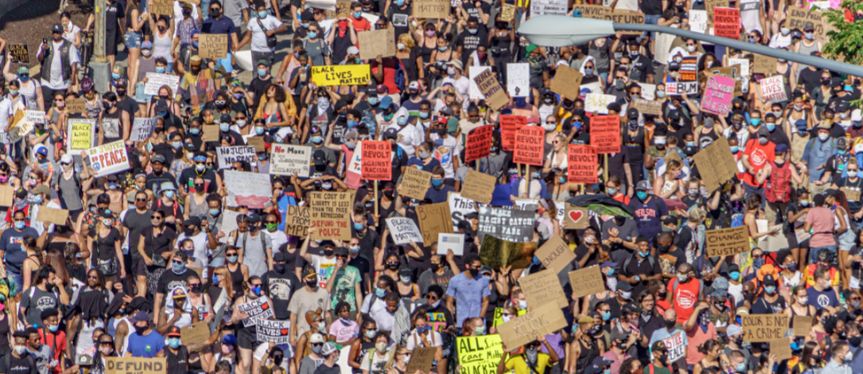
It may sound cynical to believe that America was a better place when people were less likely to talk to people with a different worldview. But, given how things have gone in the past 15 years, it’s fair to say that putting every American in a proverbial ring to fight it out just makes everyone feel under attack… and the fight never ends.
The problem with the Like button
Another development around the same time that many believe negatively affected the country was the development of the Like button on Facebook. The button made its debut in 2009, and it, along with the share button, which came in 2010, incentivized people to create content that their audience agreed with, creating echo chambers. The buttons also incentivized people to make outrage-provoking posts and create fake stories to go viral and increase advertising revenue.
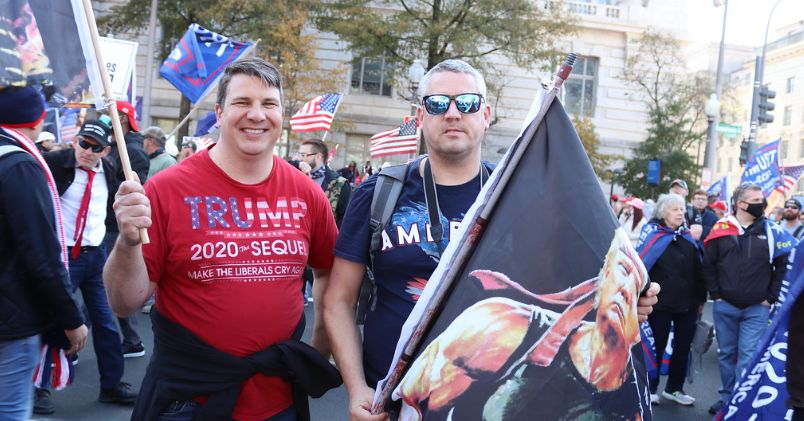
The positive takeaway from Smith’s geographical sorting theory is that, quite possibly, many people’s perceptions about life in Amerca are wrong because we’re seeing it through the distorted, funhouse mirror of social media that shows us every bad deed in a country of 330 million people and amplifies the voices of the unscroupulous. By pinpointing the moment that America “went to hell,” as author Jonathan Haidt says, we also have a roadmap to get back to when people had greater faith in America’s institutions and people.
This article originally appeared in June.