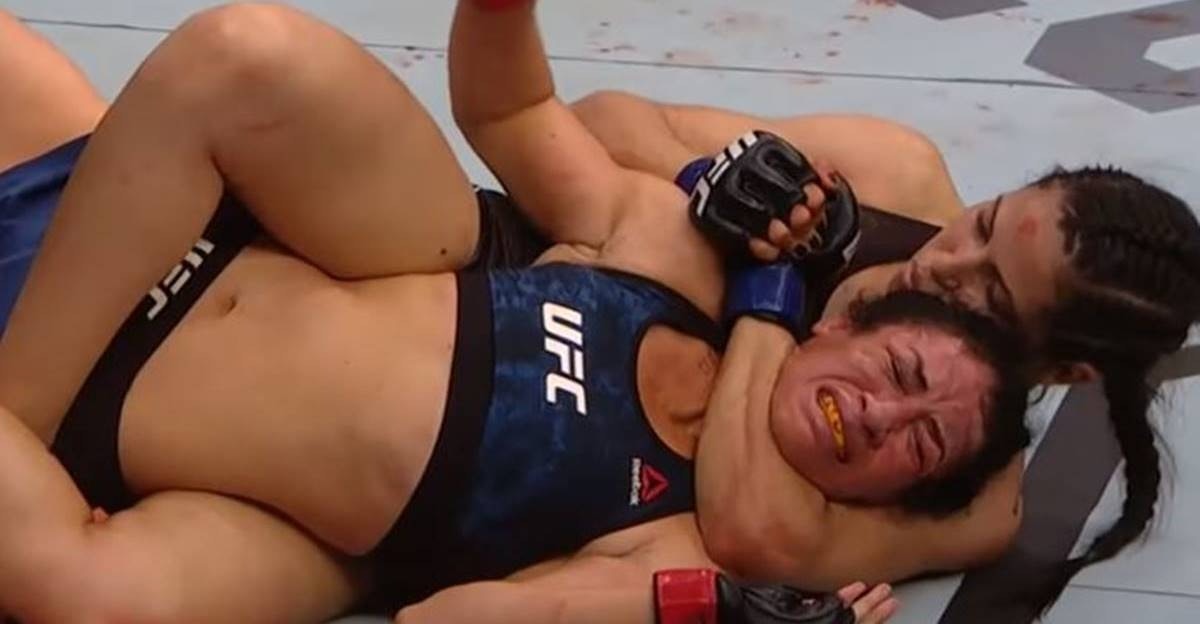
A thief tried to steal a woman’s phone and quickly learned she was an MMA fighter the hard way.

Recently, our partners at GOOD shared the story of a would-be kidnapper who chased a woman into a karate dojo and got what was coming to him.

A week later, we have another story of poetic justice from Brazil.

Polyana Viana is a 26-year-old mixed martial artist with an impressive 10-2 record. On Saturday January 5, she stood outside of an apartment building waiting for an Uber when a sketchy guy approached her.


He asked her the time and she told him, but he wouldn’t leave. “Give me the phone,” the thief said motioning to her smart phone. “Don’t try to react, because I’m armed.”

The thief half-concealed a gun with one hand, but Viana thought the visable part of the object was “too soft” to be a weapon. So she opened up a can of whoop ass on the thief that he had no idea was coming.

“I threw two punches and a kick,” Viana told MMA Junkie. “He fell, then I caught him in a rear-naked choke. Then I sat him down in the same place we were before and said, ‘Now we’ll wait for the police.’”

The thief then dropped the “gun” which was actually made of cardboard.

UFC president Dana White shared a photo of the thief’s rearranged face after the altercation.

The thief asked to be released from her MMA hold, but Viana wouldn’t let go until the police arrived. According to Viana, the thief was happy when the police arrived “because he was scared I was going to beat him up more.”

via Chris Potter / Flickr and Mike Mozart / Flickr

In the '80s, Americans lived through the Cola Wars, one of the most aggressive battles in the history of corporate junk food giants. Back then, there were only two real choices: Coke or Pepsi. Which, if you could tell the difference, kudos for your amazing sense of taste.

Today, America is besieged by the Chicken Sandwich Wars which began as a skirmish between Chick-fil-A and Popeyes and has since grown to include Burger King, McDonald's, and Wendy's.

A recent report found that Americans' spending on chicken sandwiches has quadrupled since Popyeys challenged Chick-fil-A. Although other companies have since jumped into the fray, Popeyes appears to have benefitted the most from the skirmish.

Keep Reading Show less
via Chris Potter / Flickr and Mike Mozart / Flickr

In the '80s, Americans lived through the Cola Wars, one of the most aggressive battles in the history of corporate junk food giants. Back then, there were only two real choices: Coke or Pepsi. Which, if you could tell the difference, kudos for your amazing sense of taste.

Today, America is besieged by the Chicken Sandwich Wars which began as a skirmish between Chick-fil-A and Popeyes and has since grown to include Burger King, McDonald's, and Wendy's.

A recent report found that Americans' spending on chicken sandwiches has quadrupled since Popyeys challenged Chick-fil-A. Although other companies have since jumped into the fray, Popeyes appears to have benefitted the most from the skirmish.

Keep Reading Show less
True

If you've ever donated to a cause but worried that your contribution wasn't really enough to drive real change, you're not alone. As one person, it can be tough to feel like you're making a real difference, especially if you don't have a lot to donate or if times are tough (aka there's a worldwide pandemic going on.)

That's why, for years, the idea of philanthropy felt a little bit like a rich person's thing: if you had millions, you could donate and make change. The rest of us were just tossing pennies into a cup without really doing much.

But that's a problem: the priorities of a wealthy few don't represent the priorities of many, which means that good causes are often left underfunded, leading to a lack of meaningful action.

The thing is: it doesn't have to be like this. We can all make a difference, especially if we pool our money together.

Enter: Giving Circles. These are when groups of people with shared values come together to drive change. They do it by pooling their time and money together, then deciding as a circle where it should go. That way, they can cause a real targeted change in one place quickly in a very people-powered way by giving what they can, whether that's volunteer hours, money, or a mix of both. Best of all, Giving Circles are a social experience — you get to work together as a community to make sure you do the most good you can.

In other words, giving circles are a way to democratize philanthropy, making it more accessible regardless of your age, income, gender, or race.

That's why this year, The Elevate Prize, a nonprofit founded in 2019, is launching a new pop-up "Giving Circle" program so that problem solvers, budding philanthropists, and anyone that wants to do good can come together and drive real impact at a large scale. And you can do it all in just 90 minutes.

All you have to do is join one of the Elevate Giving Circles online. Learn about organizations doing good for the world, then pool your money together, and as a group, direct it where you think that donation could make the most difference.

But that's not all: every single donation made is matched by the Elevate Prize Foundation — basically guaranteeing that you double your impact for good. The theme for the first cycle is education, and Elevate Giving will match up to $75,000 in total donations for each cycle.

Ready to get involved? Elevate Giving experiences start June 26th, so sign up now for your spot to make a difference. There's no minimum fee to join either — so get involved no matter what you have to give. Now that's philanthropy for all.