
upworthy
Add Upworthy to your Google News feed.
Google News Button
Family

17 assumptions modern newlyweds are sick of people making about their marriages.

Pro tip: Don't ask newlyweds about babies.

17 assumptions modern newlyweds are sick of people making about their marriages.


If you just got married, chances are lots of people think they know what your life is like.

These people are totally well-meaning! And also, mostly wrong.

Being married isn't exactly like it used to be. Which is great, as there are so many different, amazing ways to be newlyweds than ever before. But it's also occasionally frustrating, as we newlyweds are frequently forced to dispel a lot of myths about our relationships.

So let's get them out of the way in one fell swoop.

Here are the most common (but mistaken) assumptions strangers make when you're a newlywed couple, and what our lives are really like.


Assumption #1: We went on our honeymoon already, and we left right after the wedding.

Just like we imagined it. Because we did imagine it.

Photo via iStock.

Reality: In our dreams, we definitely did — and we had a great time!

In real life, however, most of us can't just take a week (or more) off work at will. The office is hella busy, and on top of that, we live in the only wealthy country in the world that doesn't mandate any paid vacation. Many of us were barely able to get the day of our actual wedding off (ultimately, we compromised with our manager and took a half-day).

We're planning to get to it ... eventually. But it might be a while. We promise we'll send pictures!

Assumption #2: We're going to have babies ASAP.

Yay?

Photo via iStock.

Reality: We love being married! But, you know, we actually haven't decided? About babies? We're just enjoying being married right now. But we'll let you know when it happens. We promise.

Assumption #3: We're going to move out of "the city" one day.

So many cheap noodles, so little time.

Photo by Anthony Quintano/Flickr.

Reality: It makes sense to assume that, like so many newly married couples in generations past, we're already planning our escape from our local metropolis to a less population-dense area TBD. But many of us who live in the city really, really like it! The city is great. There are good schools here. We can get nachos delivered at 3 a.m.! From either the good nacho place or the OK-but-cheap nacho place.

Sure, some of us are planning to one day move to the 'burbs for more space (and many already are), but many of us aren't. And still others of us who already live in the suburbs are making the suburbs more like the city.

Having a yard is really nice, but so is not having car insurance payments.

Assumption #4: We feel superior to our second-cousin Frieda whose boyfriend of 19 years still hasn't proposed.

Look! They seem happy!

Photo via iStock.

Reality: Even though we're feeling pretty good about being married, Frieda and Richard are adults and get to make their own decisions — no matter what Aunt Cindy thinks. Maybe they have financial reasons. Maybe they decided a long time ago they don't want to be married. Maybe they believe marriage is an oppressive, archaic, patriarchal institution that they don't want to participate in, and also they're vegan now.

In any case, leave Frieda and Richard alone.

Assumption #5: We're going to have babies soonish.

Aw?

Photo via iStock.

Reality: So, yeah. Like I said. Really haven't decided about babies. Keeping our options open. But probably not soon? You know?

Assumption #6: One of us changed our last name.

Uncanny, really.

Image by Mary Rose Pickett/Sketchport.


Reality: There's totally nothing wrong with couples who decide that one partner will take the other's last name, of course. But not all of us do. At least 1 in every 5 women decide to keep their maiden names, according to a New York Times survey. And if you haven't taken your partner's last name, it's kind of frustrating to constantly hear yourself referred to as Mr./Mrs. Someone Else (for opposite-gender couples, this pretty much applies exclusively to women).

If you're not sure what last name to use, just ask! We'll tell you what the deal is.

Assumption #7: We're having Guinness Book of World Records amounts of sex.

Photo via iStock.

Reality: For those of us who waited to have sex until marriage — which is, of course, totally cool — you might need a supercomputer to tabulate. But lots of us have been together for a long time already and may even have been living together already, so we're probably having whatever amount of sex is normal for us. It's just a regular part of our lives that throwing a wedding doesn't really have a magical impact on.

After many years in a relationship, most of us take "Netflix and chill" quite literally. And seriously.

Assumption #8: We've finished all our thank-you notes.
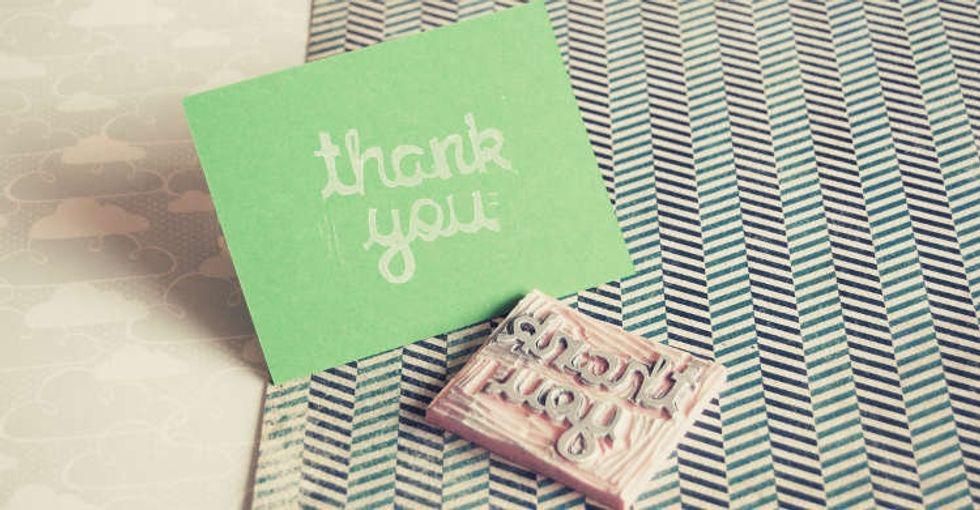
It. Just. Doesn't. Get. Easier.

Photo by happy_serendipity/Flickr.

Reality: Never. We'll be writing these until the end of time.

Assumption #9: Hanging out with one of us means hanging out with both of us.

You will listen to us talk about our trip to Block Island and you will enjoy it.

Photo via iStock.

Reality: We're still different people. Each of us is a self-sufficient being with free will. And we're probably totally down to hang out with you, even if our spouse isn't available.

Except you, Greg. We're totally avoiding you.

Assumption #10: We're going to have babies ever.

Bujjy bujjy boo?

Photo via iStock.

Reality: So um, like I said, there's actually a chance we might never have babies? We might decide we don't want them after all. We might find out we can't — in which case, these questions might become extremely invasive and painful. We might adopt a child ... who's not a baby. We haven't figured it out yet.

At the end of the day, It's kinda up to us, you know?

Assumption #11: We never use the garlic press you got us.

Such a great gift.

Photo by Lee Kindness/Wikimedia Commons.

Reality: We use it all the time! Thank you so much!

Assumption #12: One of us is going to stay home and take care of the house from here on in.

We will still make the hell out of some lemonade, though.

Photo via iStock.


Reality: Some of us might want to be a housewife or husband. Others of us shudder at the thought of giving up our careers, or urging our spouse to give up theirs. Still others of us might want to, but might not be able to forfeit the second income. There's really no right — or standard — way to do it anymore.

Assumption #13: We both have all the same likes, dislikes, preferences, outlooks, and opinions now.

Missy and I have been getting really into '80s ice dancing.

Photo via iStock.

Reality: My wife will never convince me to like jazz. And I will probably never convince her to like "Captain Phillips" fan fiction. And you know what? We're OK with that.

For the things that matter, we're committed to presenting a united front. But we're still individuals with different thoughts, feelings, and opinions about what Tom Hanks was up to two weeks before the Somali pirates attacked, 'cause honestly, that's where the real drama of the story probably is.

Assumption #14: We wear wedding rings.
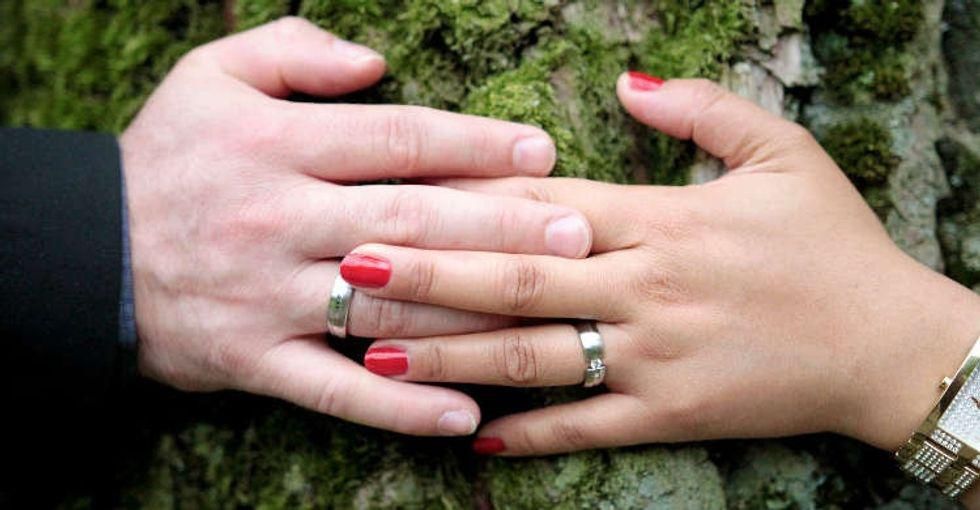
Help. Someone glued our hands together. Please call the cops.

Photo by TanyaVdB/Pixabay.

Reality: Some of us like wearing a physical symbol of our connection and duty to our spouse. Some of us don't as much. So we don't wear them. But don't worry! We're still extreme double married 5000.

Assumption #15: Making us a pink cake that says "baby" on it is going to change our mind about babies.
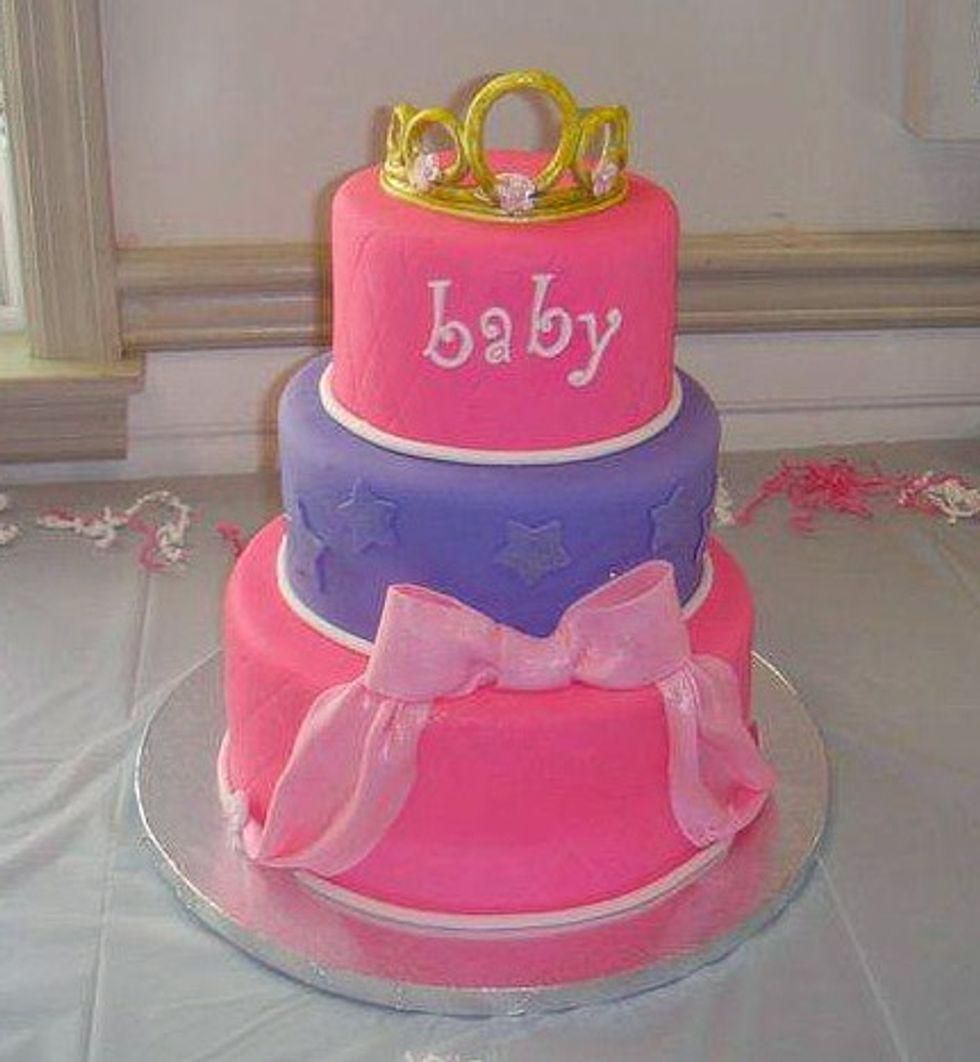
Mmmmmmmm. Nope.

Photo by Frosted with Emotion/Flickr.

Reality: It won't. But we will definitely eat that cake.

Assumption #16: Our lives are a lot different now.

Married or not, we still have three more seasons of "Justified" to get through.

Photo via iStock.

Reality: Beginning roughly seven seconds after we say, "I do," lots and lots and lots of well-intentioned people ask: "How does it feel?!" seemingly expecting to hear: "So much has changed! We got matching ponies! Being married really is a whole new world!" It feels like we're disappointing them when we answer, "Pretty much the way we did the day before the wedding." Which is silly, since there's no shame in that.

For some couples, life is a lot different after marriage, and that's great. But if stuff is kinda sorta the same, that's OK too! Life was great before. That's why we decided to get married.

Assumption #17: If we're not going to lay out a precise plan for having babies, at least we'll probably get a pet.

Blah.

Photo by Madalena Provo, used with permission.


Reality: OK. This one is true.


This article originally appeared on 11.06.15


ideas, homelessness, prodigy, social work, solutions
Photo credit: @ribalzebian on Instagram

Ribal Zebian is going to test a house he designed by living in it for a year.

Ribal Zebian, a student from the city of London in Ontario, Canada, already made headlines last year when he built an electric car out of wood and earned a $120,000 scholarship from it. Now, he's in the news again for something a little different. Concerned with homelessness in his hometown, Zebian got to work creating a different kind of affordable housing made from fiberglass material. In fact, he’s so confident in his idea that the 18-year-old plans on living in it for a year to test it out himself.

Currently an engineering student at Western University, Zebian was concerned by both the rising population of the unhoused in his community and the rising cost of housing overall. With that in mind, he conjured up a blueprint for a modular home that would help address both problems.


Zebian’s version of a modular home would be made of fiberglass panels and thermoplastic polyethylene terephthalate (PET) foam. He chose those materials because he believes they can make a sturdy dwelling in a short amount of time—specifically in just a single day.

“With fiberglass you can make extravagant molds, and you can replicate those,” Zebian told CTV News. “It can be duplicated. And for our roofing system, we’re not using the traditional truss method. We’re using actually an insulated core PET foam that supports the structure and structural integrity of the roof.”

Zebian also believes these homes don’t have to be purely utilitarian—they can also offer attractive design and customizable features to make them personal and appealing.

“Essentially, what I’m trying to do is bring a home to the public that could be built in one day, is affordable, and still carries some architecturally striking features,” he said to the London Free Press. “We don’t want to be bringing a house to Canadians that is just boxy and that not much thought was put into it.”

Beginning in May 2026, Zebian is putting his modular home prototype to the test by living inside of a unit for a full year with the hope of working out any and all kinks before approaching manufacturers.

“We want to see if we can make it through all four seasons- summer, winter, spring, and fall,” said Zebian. “But that’s not the only thing. When you live in something that long and use it, you can notice every single mistake and error, and you can optimize for the best experience.”

While Zebian knows that his modular homes aren't a long-term solution to either the homeless or housing crisis, he believes they could provide an inexpensive option to help people get the shelter they need until certain policies are reformed so the unhoused can find affordable permanent dwellings.

@hard.knock.gospel

What to buy for the homeless at the grocery store. 🛒 Most people get it wrong. After being there myself, these are the survival items that actually matter 💯 The 2nd to last one is about more than survival—it’s about DIGNITY. We are all one circumstance away from the same shoes 🙏 SAVE this for your next grocery run. 📌 IG@hardknockgospel Substack@ Outsiders_Anonymous #homelessness #helpingothers #kindness #payitforward #learnontiktok

Zebian’s proposal and experiment definitely inspires others to try to help, too. If you wish to lend a hand to the unhoused community in your area in the United States, but don’t know where to look, you can find a homeless shelter or charity near you through here. Whether it’s through volunteering or through a donation, you can help make a difference.

communication, public speaking, speaking skills, speaker, presentation

Analyzing a recording of yourself in three steps can help you be a better speaker.

Public speaking often tops people's lists of biggest fears, probably because they imagine it means giving a speech on stage in front of thousands of people. While it can mean that, public speaking can also mean giving a presentation in front of your coworkers, sharing your thoughts and opinions in a meeting, or even just telling a story to a small group of people. Public speaking is just communicating to an audience, and it's something most of us do more often than we might think.

It's also a skill we can improve, as communication expert Vinh Giang helps people do. Someone asked Giang what three tips he would give to become a "brilliant" public speaker, and he responded with super-specific advice.


"One of the most powerful things you can do is a process called 'record and review,'" he said in a YouTube video. "Simply record a 5-minute video of yourself. And you need to speak improvised. Don't look at it straightaway; you are too damn self-critical."

It's not the video itself, but how you review it the next day, that really matters.

- YouTube www.youtube.com

Giang says you should review the video in three stages, each focused on a different element of speaking:

Step 1: Analyze how you sound

Turn the volume up, press play, then set your phone face down so you don't see yourself. "Just listen," Giang said. "Audit the auditory component of your voice, known as your 'vocal image.' What do you like about it? What don't you like about it?"

Step 2: Analyze how you look

Now do the opposite. Turn the volume all the way down, press play, and watch the video. "Just look at yourself," said Giang. "How's your body language? What are your facial expressions like? Do a visual audit of your visual image."

Step 3: Analyze what you say

Lastly, transcribe your video. Make sure you leave in all of the fillers like "um" and "uh" and "like." "Bring all your non-words and filler words to the forefront of your mind," Giang said. "That's robbing you of clarity every time you talk."

communication, public speaking, speaking skills, speaker, presentation Most of us can improve our speaking skills.Photo credit: Canva

Doing those three things allows you to see the specific places where your speaking skills have room for improvement. "You basically have a mirror in front of you," said Giang. Part of what makes it hard to improve as a speaker is that we can't see ourselves doing it, and we're so inside our own heads when we speak that we have trouble even hearing ourselves. In less than one minute, Giang offered an actionable, step-by-step way to overcome those problems.

According to comments on the video, people appreciated his clear, concise advice:

"Really good advice. At root he's talking about self-awareness: Being aware of what works and what doesn't work when speaking in public. The more you are self-aware, the more control you have, and the more control you have the more confident you become, which in turn means the more impact your speaking will have on others."

"Facial expressions can be a significant impediment. I was reviewing a knowledge transfer video call with a colleague that I recorded and realized my resting face is an angry face. I'm determined to make an effort to relax my scowl and smile more."

communication, public speaking, speaking skills, speaker, facial expressions Facial expressions make a difference in how an audience feels about your speaking.Photo credit: Canva

"Also if you do this with this video its all on point - listen no video, he sounds great, good vocal image watch no video, he looks great, good visual image captions have no filler, good use of every utterance good to know that he himself uses these teachings."

"Pretty solid advice. Most of the time we fail to perceive how we look in front of people. What we think and what people actually see are often vastly different. This not only solves that but also makes you practice for more clarity."

"Such a humbling experience to watch and listen to yourself, especially if public speaking is not your strength."

Most of us have some room for improvement in our speaking skills, so this advice is helpful for a wide range of people.

You can follow Vinh Giang on YouTube for more communication tips.

washer, washing machine setting, how to use washing machine, laundry, laundry tips
Image courtesy of @granolabarpan/Instagram (with permission)

Stay-at-home mom Catrina shares shock at learning what the 'heavy' setting on her washer means.

Knocking out loads of laundry is a feeling of accomplishment that is unmatched. Depending on what needs to be washed, washing machines offer a variety of settings for the ideal clean. But even the most seasoned laundry pros can admit that they don't fully understand how to use them properly.

One stay-at-home mom shared her funny and relatable washing machine mistake. Catrina (@granolabarpan) got the shock of a lifetime when she realized that she had been using the "heavy" setting on her washer wrong for years.


"POV: today years old when it clicks why my blankets are sopping wet!!! I thought HEAVY meant heavy items being washed," she wrote in the video's overlay.

"Heavy on my machine means heavily soiled," she went on to add in the comments. "I thought it meant the stuff I was putting in the machine was heavy in weight/pounds."

Some moms are also realizing this for the first time. "Ok.. so I am 66 years old learning this???!! I always thought that heavy meant weight also😂," one person commented. Another person wrote, "Well I was today years old when I learned what heavy meant too…😂"

Others expressed confusion with so many settings, and reminiscing on simpler times. "Wait a minute. 😂. I think I need to for once go and read the manual because I have been wondering about all of the options," another user wrote. And another chimed in, "I want my old $250 3 options hot/warm/cold on/off washer back. It didn’t die it rusted out but took 25yrs to do it. I had 5 kids, plus my ex in-laws living with me."

Washing machine settings, explained

Struggling to understand the settings on your washing machine? You're not alone.

"Knowing these settings helps avoid common laundry mistakes, such as using the heavy cycle for heavy fabric weight instead of heavy soil, which can lead to ineffective cleaning or damage over time," Vanessa Ruiz, a professional organizer at Sparkly Maid San Antonio, tells Upworthy.

These are five washing machine settings and how they work:

1. Normal/Regular Cycle
Ruiz explains that this is your typical setting for day-to-day loads such as t-shirts, jeans, sheets, and underwear.

"These laundry loads are typically washed in warm water and the setting is rinsed with medium spin speeds through agitation in order to properly clean moderately soiled garments," she says. "This cycle is safe enough to wash a variety of different fabric content with a somewhat dirty load."

2. Delicate/Gentle Cycle
Ruiz notes that the delicate cycle is created specifically for delicate fabrics—lingerie, silk, lace, or embellished clothing—that may become damaged in a normal or regular wash.

"This cycle will use moderate spin speeds through gentle agitation to thoroughly dry clean and not damage clothes too easily," says Ruiz. "This is the preferred cycle when laundry items that require extra care or are labeled 'delicate' or 'hand wash' need to be washed."

3. Heavy Duty Cycle
The heavy duty cycle is specifically for heavily soiled items like work clothes, kitchen towels, and bedding.

"This setting uses higher water temperatures, longer wash times, and powerful agitation to remove stubborn dirt and grime. It’s perfect for those tough laundry jobs, but not recommended for delicate fabrics," explains Ruiz.

- YouTube www.youtube.com

4. Bulky/Bedding Cycle
This cycle is often confused with "heavy."

"This cycle accommodates larger, heavier items that absorb a lot of water, such as comforters, pillows, and sleeping bags," says Ruiz. "It uses more water, medium spin speeds, and longer wash times to thoroughly clean bulky items without causing damage or imbalance."

5. Quick Wash
In a rush? This is the perfect setting to use.

"It is an accelerated wash cycle designed for small loads of lightly soiled clothes, usually lasting 15 to 40 minutes," says Ruiz. "It’s great for when you need clean clothes fast and can save energy compared to longer cycles."

This article originally appeared last year.

Justice

Ex-convict buys North Carolina prison and turns it into housing for other former inmates

It could solve one of the biggest challenges facing people who have served time.

second chance, prison, ex-convict, jobs, feel good story

Kerwin Pittman wants to give ex-convicts like him a better chance at a new life.

When Kerwin Pittman was 18 years old, he was convicted and served 11 years and six months in prison for conspiracy to commit murder. Now, eight years after his release, he returns to another prison, not to serve time, but to offer hope for other former inmates. Pittman purchased an abandoned correctional facility to create a campus that helps former inmates transition back into life outside prison.

Since his release, Pittman has founded and serves as the executive director of Recidivism Reduction Educational Program Services, Inc. (RREPS), a nonprofit organization committed to helping incarcerated people reintegrate into society after completing their sentences. Through a series of donations and grants, Pittman was able to purchase the former Wayne Correctional Center in Goldsboro, North Carolina. He is believed to be the first formerly incarcerated person in the United States to have purchased a prison.


- YouTube youtu.be

Pittman aims to transform the 400-bed correctional facility into a campus where former inmates in his program can live for six months while earning certifications in trades such as electrical work, plumbing, HVAC, and construction. Pittman's formation of RREPS and purchase of the abandoned prison were inspired by seeing too many former cellmates return to prison because of the stigma attached to incarceration.

"I had family support, so I had housing. But a lot of my friends didn't have any place to go. Or if they did, there was a time limit on how long they could stay," Pittman told NC Newsline. "The campus would be like a stabilization phase for guys coming out of jail or prison, to give them a six-month pause so they can get their life back on track."

@kerwin.pittman.activist

It’s A Blessing To Be A Blessing ~ over 250 plus lives touched, 100 plus records cleared, and countless new beginnings sparked. RREPS Wake County Expungement Clinic reminded us what it truly means to serve with purpose. Throughout the day, well over 200 people showed up, each one ready to take a step toward a fresh start. By the end, over 120 plus people had dismissed charges and convictions cleared from their records, giving them a real chance at new opportunities. We also helped folks obtain birth certificates, Social Security cards, and IDs, while connecting them to housing, jobs, food, and more! Heartfelt thanks to all the attorneys and law students who volunteered their time and expertise, and to our incredible partners: SouthLight, North Carolina Empowerment Organization, The Black Coalition of Forensic Peer Support Specialists, Wake LRC, Affluent Logistics and Transportation and Healing Transitions for standing alongside us in this work. Photos by:Glenn Alan #RREPS #ExpungementClinic #ReentryMatters #viral #fyp

Once the prison has been refurbished and looks less like a correctional facility, Pittman plans to have up to 300 residents live on the campus during a six-month training program designed to help them acclimate to life outside prison, learn a trade, and prepare to live and work independently. After that six-month period, a new group of 300 former inmates will be granted the same opportunity, and the cycle will continue.

"Normally, people will go to a halfway house or a reentry house, and those individuals will have to go outside for services," retired correctional officer Mario Davis told WITN. "But what he's done here is bringing formerly incarcerated people in, so they don't have to go out to get services."

In the U.S., a combination of stigma and lack of education makes it difficult for many former prisoners to find jobs. This often leaves former inmates desperate and unhoused, forcing some to return to crime to make ends meet or, in some cases, to be incarcerated again. For many, it's better to be in prison than to be homeless. By offering both shelter and what is essentially a trade school, Pittman can give former prisoners the chance not only to find jobs through trade certification, but also to work for themselves as independent contractors.

@brentcassity

The Shocking Truth About Recidivism: Employment as the Key Recidivism rates are alarmingly high, with 77% of former inmates returning to prison within a year due to joblessness. Richard Bronson on the NIghtmare Success Podcast explores how securing stable employment can drastically change lives and reduce reoffending—revealing the true silver bullet for lasting change. #Recidivism #EmploymentMatters #nightmaresuccess #JobOpportunities #PrisonReform #ReentrySuccess #SecondChances #SocialImpact #ReduceRecidivism #prison #resilience #fyp

"For me to be a beacon of light in somebody's life when they're in a dark place, I know how it feels," said Pittman. "I remember when I was in that dark place of having to transition and not knowing what the possibility of my life could become, so to be able to guide somebody into that next step is extremely important, and I'm grateful to be able to do it."

If Pittman's mission inspires you to support people who have served their time and are seeking a second chance, there are resources available to donate your time, skills, or money.

paul mccartney, mccartney acoustic, wings, linda mccartney, mccartney tv special, blackbird mccartney

Paul McCartney performing on the "James Paul McCartney" special.

In the aftermath of The Beatles' earth-shattering 1970 breakup, each member of the Fab 4 started solo careers in their own lane. John Lennon chose self-reflective, stripped-down songs about vulnerability and his love for Yoko Ono. George Harrison released the epic triple album All Things Must Pass, steeped in spirituality and warnings against the dark forces in life. Ringo Starr leveraged his affable personality by recording pop standards and country songs to surprising success.

Much was expected of Paul McCartney as a solo artist, but his early work, drawn heavily from his new life in the Scottish countryside with his wife, Linda, was often dismissed as superficial compared with that of his former bandmates, Lennon and Harrison. It also didn't help that, after the breakup, McCartney bore the brunt of the criticism for the band's demise because he was the first to go public with the news.


In 1973, he was given a TV special that aired in the U.S. and the UK, allowing him to showcase his full range of talents as an entertainer. The special featured a Busby Berkeley–style musical number, a segment introducing his new band, Wings, and a performance of "Mary Had a Little Lamb" in a bucolic country setting.

Critical reception to the James Paul McCartney TV special

Unfortunately, McCartney's special did little to change critics' minds. "McCartney has always had an eye and ear for full-blown romanticism, and nothing wrong with that, but here he too often lets it get out of hand, and it becomes over-blown and silly," Melody Maker wrote.

Nestled within the spectacle was a quiet acoustic performance in which McCartney played four songs from his Beatles and solo careers: "Blackbird," "Bluebird," "Michelle," and "Heart of the Country," showcasing his angelic voice and remarkable fingerpicking. He is also joined by his wife, Linda (a famous photographer), who sings a lovely harmony with him while she takes photos. The simple medley is a wonderful example of McCartney's musical skill, blending his past and present. It's also worth noting that in most of The Beatles' public performances, McCartney played bass guitar or piano. Here, he shows that he was a virtuoso on the acoustic guitar as well.

- YouTube www.youtube.com

McCartney's big comeback

History would prove McCartney's early critics wrong. Later that year, he released "Live and Let Die," the theme for the James Bond film of the same name, which became an international hit. By the end of the year, Wings released their third album, Band on the Run, which became McCartney's biggest-selling post-Beatles album and featured massive hits such as the title track, "Jet," and "Let Me Roll It."

McCartney and Wings would go on to have tremendous success throughout the decade, both on the charts and with audiences, including a 1975-76 tour that played 66 shows worldwide.


Over the years, critics would reevaluate McCartney's early releases, especially McCartney (1970) and Ram (1971).

"What's interesting to me is that Ram has now come to be heralded as a masterpiece, with younger generations recognizing its loose performances and off-handed charm as its own form of brilliance," Pop Matters notes.

James Paul McCartney was never released on home video, but was issued on DVD as part of the Red Rose Speedway super deluxe boxed set in 2018.

You can watch the entire special below:

- YouTube www.youtube.com