upworthy
Add Upworthy to your Google News feed.
Google News Button
Health

Inside the heads of people who are always late, as explained by stick figures.

Everyone knows a person like this or is one themselves!

relationships, brain, time

I’m late.


This post was written by Tim Urban and originally published on Wait But Why.

I woke up this morning to a text. It was a link:

"optimistic-people-have-one-thing-common-always-late.”

Intriguing. Nothing's better than the headline: "The reason people are [bad quality that describes you] is actually because they're [good quality]."

I got to reading. And as it turns out, according to the article, late people are actually the best people ever. They're optimistic and hopeful:

"People who are continuously late are actually just more optimistic. They believe they can fit more tasks into a limited amount of time more than other people and thrive when they're multitasking. Simply put, they're fundamentally hopeful."

They're big-thinking:

"People who are habitually late don't sweat over the small stuff, they concentrate on the big picture and see the future as full of infinite possibilities."

Late people just get it:

"People with a tendency for tardiness like to stop and smell the roses…life was never meant to be planned down to the last detail. Remaining excessively attached to timetables signifies an inability to enjoy the moment."

By the end of the article, I had never felt prouder to be a chronically late person.

But also, what the hell is going on? Late people are the worst. It's the quality I like least in myself. And I'm not late because I like to smell the roses or because I can see the big picture or because the future is full of infinite possibilities. I'm late because I'm insane.

So I thought about this for a minute, and I think I figured out what's going on. The issue is that there are two kinds of lateness:

1. OK lateness. This is when the late person being late does not negatively impact anyone else — like being late to a group hangout or a party. Things can start on time and proceed as normal with or without the late person being there yet.

2. Not-OK lateness. This is when the late person being late does negatively impact others — like being late to a two-person dinner or meeting or anything else that simply can't start until the late party arrives.

John Haltiwanger's Elite Daily article is (I hope) talking mostly about OK lateness. In which case, sure, maybe those people are the best, who knows.

But if you read the comment section under Haltiwanger's article, people are furious with him for portraying lateness in a positive light. And that's because they're thinking about the far less excusable not-OK lateness.

1. OK lateness. This is when the late person being late does not negatively impact anyone else — like being late to a group hangout or a party. Things can start on time and proceed as normal with or without the late person being there yet.

2. Not-OK lateness. This is when the late person being late does negatively impact others — like being late to a two-person dinner or meeting or anything else that simply can't start until the late party arrives.

John Haltiwanger's Elite Daily article is (I hope) talking mostly about OK lateness. In which case, sure, maybe those people are the best, who knows.

But if you read the comment section under Haltiwanger's article, people are furious with him for portraying lateness in a positive light. And that's because they're thinking about the far less excusable not-OK lateness.

All of this has kind of left me with no choice but to take a quick nine-hour break from working on a gargantuan SpaceX post to discuss not-OK late people.

When it comes to people who are chronically not-OK late, I think there are two subgroups:

Group 1: Those who don't feel bad or wrong about it. These people are assholes.

Group 2: Those who feel terrible and self-loathing about it. These people have problems.

Group 1 is simple. They think they're a little more special than everyone else, like the zero-remorse narcissist at the top of Haltiwanger's article. They're unappealing. Not much else to discuss here.

Punctual people think all not-OK late people are in Group 1 (as the comments on this post will show) — because they're assuming all late people are sane people.

When a sane person thinks a certain kind of behavior is fine, they do it. When they think it's wrong, they don't do it. So to a punctual person — one who shows up on time because they believe showing up late is the wrong thing to do — someone who's chronically late must be an asshole who thinks being late is OK.

But that's misunderstanding the entire second group, who, despite being consistently late, usually detest the concept of making other people wait. Let call them CLIPs (Chronically Late Insane Persons).

While both groups of not-OK late people end up regularly frustrating others, a reliable way to identify a Group 2 CLIP is a bizarre compulsion to defeat themselves — some deep inner drive to inexplicably miss the beginning of movies, endure psychotic stress running to catch the train, crush their own reputation at work, etc., etc. As much as they may hurt others, they usually hurt themselves even more.

I spent around 15% of my youth standing on some sidewalk alone, angrily kicking rocks, because yet again, all the other kids had gotten picked up and I was still waiting for my mom. When she finally arrived, instead of being able to have a pleasant conversation with her, I'd get into the car seething. She always felt terrible. She has problems.

My sister once missed an early morning flight, so they rescheduled her for the following morning. She managed to miss that one too, so they put her on a flight five hours later. Killing time during the long layover, she got distracted on a long phone call and missed that flight too. She has problems.

I've been a CLIP my whole life. I've made a bunch of friends mad at me, I've embarrassed myself again and again in professional situations, and I've run a cumulative marathon through airport terminals.

When I'm late, it's often the same story, something like this:

I'll be meeting someone, maybe a professional contact, at, say, a coffee place at 3:00. When I lay out my schedule for the day, I'll have the perfect plan. I'll leave early, arrive early, and get there around 2:45. That takes all the stress out of the situation, and that's ideal because non-stressful commutes are one of my favorite things. It'll be great — I'll stroll out, put on a podcast, and head to the subway. Once I'm off the subway, with time to spare, I'll take a few minutes to peruse storefronts, grab a lemonade from a street vendor, and enjoy New York. It'll be such a joy to look up at the architecture, listen to the sounds, and feel the swell of people rushing by — oh magnificent city!

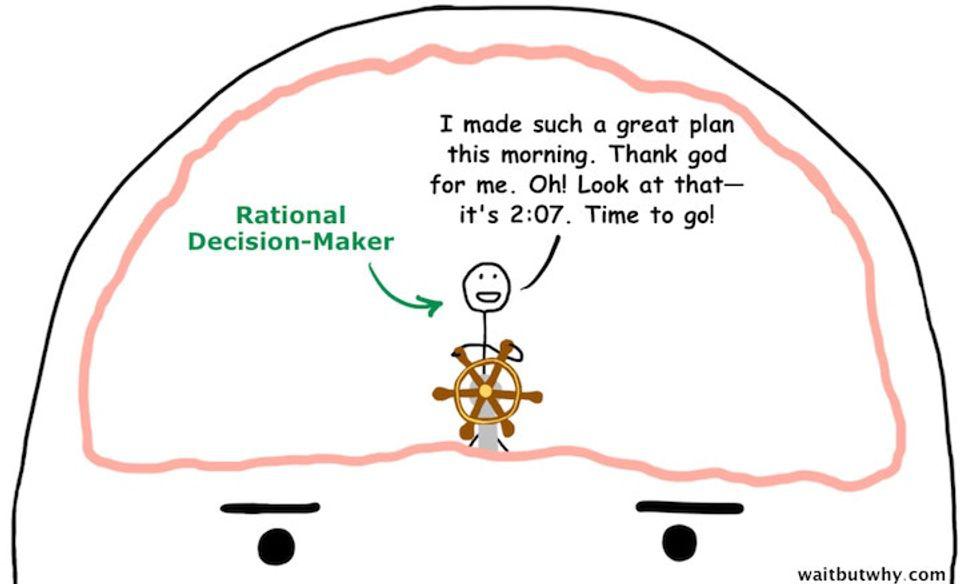
All I have to do is be off the subway by 2:45. To do that, I need to be on the subway by 2:25, so I decide to be safe and get to the subway by 2:15. So I have to leave my apartment by 2:07 or earlier, and I'm set. What a plan.

Here's how it'll play out (if you're new to WBW, you're advised to check this out before proceeding):
lateness, behavior, science

Making plans on time.

psychology, procrastination, patient

Maybe some procrastination.

avoidance, mental health, mistakes

Avoiding the issues.

delay, loafing, trifling

Arguing over avoiding the issues.

toying, delaying, loitering

Some dawdling.

dabbling, frittering, dilly-dallying

Some more dawdling.

frizzling, puttering, excuses

And some lingering.

last-minute, slow, delayed

And some more lingering.

belated, tardy, jammed

Is this dragging my feet?

lagging, dilatory, unpunctual

This is dragging my feet.

held up, in a bind, missed the boat

This is becoming a problem.

tired, worn, strained

This is feeling uncomfortable.

thin, peaked, pinched

This IS uncomfortable.

fraught, haggard, worn

This IS a problem.

dependable, accurate, conscientious

But I’m cool.

periodic, timely, ready

So cool.

quick, reliable, heedful, meticulous

Ice cold like a fighter pilot.

minutes, seconds, careful

I’m a chillin’.

lag, postpone, setback

Now worries my way.

stoppage, filibuster, hindrance

Not thinking about it.

bind, lingering, tarrying

Positive thoughts.

stoppage, difficulty, gridlock

Positive action... well now.

obstinate, customs, method

It will all workout.

madness, mental health, regulations

Maybe I’m gonna be late.

anxiety, despair, dismay

I’m gonna be late.

aversion, disquiet, distress

Oopsie.

fearless, logjam, impasse

And that’s the traffic.

furious, frantic, rash, audacious

It’s the traffics fault.

careless, foolhardy, hopp

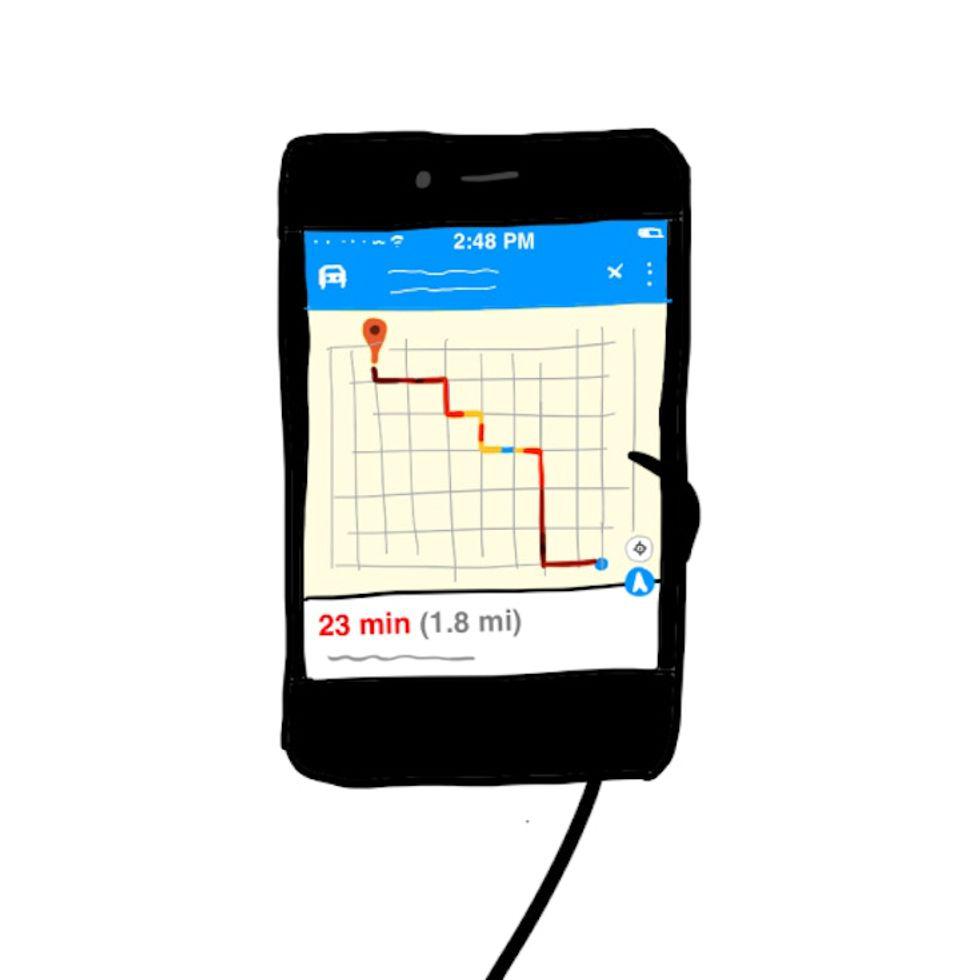
This map is broken.

denial, circumstances, schedule, madcap, impetu

Perfect timing on being late. Nailed it.

CLIPs are strange people. I'm sure each CLIP is insane in their own special way, and to understand how they work, you'll usually have to get to some dark inner psychology.

For me, it's some mix of these three odd traits:

1. I'm late because I'm in denial about how time works.

The propensity of CLIPs to underestimate how long things take comes out of some habitual delusional optimism. Usually what happens is, of all the times the CLIP has done a certain activity or commute, what they remember is that one time things went the quickest. And that amount of time is what sticks in their head as how long that thing takes. I don't think there's anything that will get me to internalize that packing for a weeklong trip takes 20 minutes. In my head, it's eternally a five-minute task. You just take out the bag, throw some clothes in it, throw your toiletries in, zip it up, and done. Five minutes. The empirical data that shows that there are actually a lot of little things to think about when you pack and that it takes 20 minutes every time is irrelevant. Packing is clearly a five-minute task. As I type this, that's what I believe.

2. I'm late because I have a weird aversion to changing circumstances.

Not sure what the deal is with this, but something in me is strangely appalled by the idea of transitioning from what I'm currently doing to doing something else. When I'm at home working, I hate when there's something on my schedule that I have to stop everything for to go outside and do. It's not that I hate the activity — once I'm there I'm often pleased to be there — it's an irrational resistance to the transition. The positive side of this is it usually means I'm highly present when I finally do haul my ass somewhere, and I'm often among the last to leave.

3. Finally, I'm late because I'm mad at myself.

There's a pretty strong correlation here — the worse I feel about my productivity so far that day, the more likely I am to be late. When I'm pleased with how I've lived the day so far, the Rational Decision-Maker has a much easier time taking control of the wheel. I feel like an adult, so it's easy to act like an adult. But times when the monkey had his way with me all day, when the time rolls around that I need to stop working and head out somewhere, I can't believe that this is all I've gotten done. So my brain throws a little tantrum, refusing to accept the regrettable circumstances, and stages a self-flagellating protest, saying, "NO. This cannot be the situation. Nope. You didn't do what you were supposed to do, and now you'll sit here and get more done, even if it makes you late.”

So yeah, that's why I'm late. Because I have problems.

Don't excuse the CLIPs in your life — it's not OK, and they need to fix it. But remember: It's not about you. They have problems.


This article originally appeared on 04.07.16



ideas, homelessness, prodigy, social work, solutions
Photo credit: @ribalzebian on Instagram

Ribal Zebian is going to test a house he designed by living in it for a year.

Ribal Zebian, a student from the city of London in Ontario, Canada, already made headlines last year when he built an electric car out of wood and earned a $120,000 scholarship from it. Now, he's in the news again for something a little different. Concerned with homelessness in his hometown, Zebian got to work creating a different kind of affordable housing made from fiberglass material. In fact, he’s so confident in his idea that the 18-year-old plans on living in it for a year to test it out himself.

Currently an engineering student at Western University, Zebian was concerned by both the rising population of the unhoused in his community and the rising cost of housing overall. With that in mind, he conjured up a blueprint for a modular home that would help address both problems.


Zebian’s version of a modular home would be made of fiberglass panels and thermoplastic polyethylene terephthalate (PET) foam. He chose those materials because he believes they can make a sturdy dwelling in a short amount of time—specifically in just a single day.

“With fiberglass you can make extravagant molds, and you can replicate those,” Zebian told CTV News. “It can be duplicated. And for our roofing system, we’re not using the traditional truss method. We’re using actually an insulated core PET foam that supports the structure and structural integrity of the roof.”

Zebian also believes these homes don’t have to be purely utilitarian—they can also offer attractive design and customizable features to make them personal and appealing.

“Essentially, what I’m trying to do is bring a home to the public that could be built in one day, is affordable, and still carries some architecturally striking features,” he said to the London Free Press. “We don’t want to be bringing a house to Canadians that is just boxy and that not much thought was put into it.”

Beginning in May 2026, Zebian is putting his modular home prototype to the test by living inside of a unit for a full year with the hope of working out any and all kinks before approaching manufacturers.

“We want to see if we can make it through all four seasons- summer, winter, spring, and fall,” said Zebian. “But that’s not the only thing. When you live in something that long and use it, you can notice every single mistake and error, and you can optimize for the best experience.”

While Zebian knows that his modular homes aren't a long-term solution to either the homeless or housing crisis, he believes they could provide an inexpensive option to help people get the shelter they need until certain policies are reformed so the unhoused can find affordable permanent dwellings.

@hard.knock.gospel

What to buy for the homeless at the grocery store. 🛒 Most people get it wrong. After being there myself, these are the survival items that actually matter 💯 The 2nd to last one is about more than survival—it’s about DIGNITY. We are all one circumstance away from the same shoes 🙏 SAVE this for your next grocery run. 📌 IG@hardknockgospel Substack@ Outsiders_Anonymous #homelessness #helpingothers #kindness #payitforward #learnontiktok

Zebian’s proposal and experiment definitely inspires others to try to help, too. If you wish to lend a hand to the unhoused community in your area in the United States, but don’t know where to look, you can find a homeless shelter or charity near you through here. Whether it’s through volunteering or through a donation, you can help make a difference.

pen drill, life hack, speech tips, enunciation, pronunciation

Want to speak better? Put a pen in your mouth.

Ever been told that you mumble? Or that your way of speaking is quiet or lacking confidence? It could be affecting you in a range of situations, from asking someone out to giving a presentation at work or interviewing for a job. Well, a behavior researcher has a solution for you: put a pen in your mouth.

Behavior expert and speaker Dr. Shadé Zahrai shared a technique in a social media video that could help people who mumble, rush through speeches, or generally struggle to enunciate when speaking aloud. She recommends taking a clean pen and placing it horizontally in your mouth, like a horse biting a bridle. Then take out a book and read it aloud to yourself for one minute, even overpronouncing some words if you need to. After a minute has passed, take the pen out of your mouth and continue reading the rest of the page. Doing this "Pen Drill" once a day should help you speak more clearly and effectively overall.


@shadezahrai

I promise you - so this for 60 seconds and you’ll enunciate better.

This may sound silly, but there's solid reasoning behind it. Because you're trying to hear yourself clearly while speaking with a pen in your mouth, you naturally slow down as your mouth opens wider than usual. This makes your speech and enunciation clearer by forcing you to slow down and articulate each word. A side benefit is that speaking slowly and enunciating clearly makes you appear more calm, confident, and authoritative.

@joseczuniga

Try this pen trick to enunciate better and get a deeper more confident voice #josezuniga

There are additional benefits beyond clearer speech. Content creator Jose Zuniga claims the technique can help men deepen their voices. Zuniga says that when men speak from their chest rather than their throat during the "Pen Drill," the wider mouth opening allows them to speak at a lower pitch than usual. Singers and vocal coaches also recommend putting a pen in your mouth in order to reduce vocal strain.

@sophiesaidcoaching

A tip guarenteed to help with vocal strain!! Just grab a pen or a chopstick #vocalcoach #singing #singer

Speaking clearly is incredibly beneficial, not only because it helps you be understood and get what you want, but also because it makes you appear more eloquent and intelligent. Speaking in a clear, calm way makes you sound confident, which helps people believe your words and arguments more than if they were delivered meekly, filled with "ums" and "uhs." Combined with strong body language, it can mean the difference between being believable and being believed.

"Clear speech signals calm authority, and calm authority is magnetic," explains Zahrai in her video. "You don't sound rushed, you don't sound unsure, you sound like someone who expects to be listened to."

@gentlemens_collective

To be become a better speaker FAST… slow down.

If you want to improve your speech, whether to reduce mumbling, slow a rushed, worried pace, or sound more confident, put a pen in your mouth and swallow your pride (but not the pen!). With time and practice, it could change your speech patterns into ones people clearly understand and feel compelled to listen to.

washer, washing machine setting, how to use washing machine, laundry, laundry tips
Image courtesy of @granolabarpan/Instagram (with permission)

Stay-at-home mom Catrina shares shock at learning what the 'heavy' setting on her washer means.

Knocking out loads of laundry is a feeling of accomplishment that is unmatched. Depending on what needs to be washed, washing machines offer a variety of settings for the ideal clean. But even the most seasoned laundry pros can admit that they don't fully understand how to use them properly.

One stay-at-home mom shared her funny and relatable washing machine mistake. Catrina (@granolabarpan) got the shock of a lifetime when she realized that she had been using the "heavy" setting on her washer wrong for years.


"POV: today years old when it clicks why my blankets are sopping wet!!! I thought HEAVY meant heavy items being washed," she wrote in the video's overlay.

"Heavy on my machine means heavily soiled," she went on to add in the comments. "I thought it meant the stuff I was putting in the machine was heavy in weight/pounds."

Some moms are also realizing this for the first time. "Ok.. so I am 66 years old learning this???!! I always thought that heavy meant weight also😂," one person commented. Another person wrote, "Well I was today years old when I learned what heavy meant too…😂"

Others expressed confusion with so many settings, and reminiscing on simpler times. "Wait a minute. 😂. I think I need to for once go and read the manual because I have been wondering about all of the options," another user wrote. And another chimed in, "I want my old $250 3 options hot/warm/cold on/off washer back. It didn’t die it rusted out but took 25yrs to do it. I had 5 kids, plus my ex in-laws living with me."

Washing machine settings, explained

Struggling to understand the settings on your washing machine? You're not alone.

"Knowing these settings helps avoid common laundry mistakes, such as using the heavy cycle for heavy fabric weight instead of heavy soil, which can lead to ineffective cleaning or damage over time," Vanessa Ruiz, a professional organizer at Sparkly Maid San Antonio, tells Upworthy.

These are five washing machine settings and how they work:

1. Normal/Regular Cycle
Ruiz explains that this is your typical setting for day-to-day loads such as t-shirts, jeans, sheets, and underwear.

"These laundry loads are typically washed in warm water and the setting is rinsed with medium spin speeds through agitation in order to properly clean moderately soiled garments," she says. "This cycle is safe enough to wash a variety of different fabric content with a somewhat dirty load."

2. Delicate/Gentle Cycle
Ruiz notes that the delicate cycle is created specifically for delicate fabrics—lingerie, silk, lace, or embellished clothing—that may become damaged in a normal or regular wash.

"This cycle will use moderate spin speeds through gentle agitation to thoroughly dry clean and not damage clothes too easily," says Ruiz. "This is the preferred cycle when laundry items that require extra care or are labeled 'delicate' or 'hand wash' need to be washed."

3. Heavy Duty Cycle
The heavy duty cycle is specifically for heavily soiled items like work clothes, kitchen towels, and bedding.

"This setting uses higher water temperatures, longer wash times, and powerful agitation to remove stubborn dirt and grime. It’s perfect for those tough laundry jobs, but not recommended for delicate fabrics," explains Ruiz.

- YouTube www.youtube.com

4. Bulky/Bedding Cycle
This cycle is often confused with "heavy."

"This cycle accommodates larger, heavier items that absorb a lot of water, such as comforters, pillows, and sleeping bags," says Ruiz. "It uses more water, medium spin speeds, and longer wash times to thoroughly clean bulky items without causing damage or imbalance."

5. Quick Wash
In a rush? This is the perfect setting to use.

"It is an accelerated wash cycle designed for small loads of lightly soiled clothes, usually lasting 15 to 40 minutes," says Ruiz. "It’s great for when you need clean clothes fast and can save energy compared to longer cycles."

This article originally appeared last year.

housekeeper, housekeepers, housekeeping, housekeeping tips, housekeeping advice

People share tips from housekeepers that they do to keep their homes organized and clean.

Keeping a clean house is not easy. Approximately 21% of Americans report that they find cleaning tasks overwhelming according to a survey from the American Cleaning Institute, and approximately 10% of Americans enlist extra help to keep their homes spotless from housekeepers, notes the Home Cleaning Centers of America.

In an online discussion about cleaning tips on Reddit, people shared the most impactful housekeeping advice they've gleaned from housekeepers that have helped them keep their homes not just clean, but free from clutter.


"When I think of a clean home, it’s not just a wiped down surface; it’s tidy, organized, decluttered and presentable," one person wrote. "These tips contribute to the feel of a tidy, intentional and presentable home."

- YouTube www.youtube.com

These are 18 helpful housekeeping tips that will help you keep your home orderly and sparkling clean.

"I wrap my phone charger through my bed frame so it’s always easy to grab. It used to just hang on the ground. It was life changing when I first got into bed and saw my housekeeper did this for me." - Bubbly_Picture_9876

"I open ALL blinds and curtains. I used to clean but keep it pretty dim, but opening ALL blinds makes a huge difference! Feels so much cleaner immediately." - Bubbly_Picture_9876

"[Having a handheld vacuum]. LIFE CHANGING!!! Taking out the vacuum was a pain so I did it when crumbs would accumulate. Having a small one in the kitchen drawer makes it so easy, so I don’t mind quickly vacuuming crumbs and dirt whenever I see them." - Bubbly_Picture_9876

"Wipe down the bathroom surfaces with toilet paper before cleaning to get the dust up. Then clean. So much quicker. Even better - cut a small piece of a disposable duster off and use it to dust the toilet first. It works SO well and gets in the weird nooks and crannies of the exterior toilet where dust and whatnot accumulates." - Advanced-Public4935, dodie437

"I worked as a housekeeper for a while and picked up the habit of vacuuming the bathroom before cleaning anything. It picks up dust, hair, and any other miscellaneous things you might not want to grab with bare hands." - iufgv

"Baseboards wiped with a dryer sheet 🙏🏻." - dphiloo

- YouTube www.youtube.com

"LIGHT SWITCHES! It’s the first thing I notice in homes and I would say in general one of the big 'blind spots' for people. And refrigerator and oven handles, wipe daily with a damp micro fiber and you’ll notice such a nicer feeling grabbing them." - ccoopp10

"Scrub the door that goes from the house to garage. It is usually filthy, and we rarely think of it cuz guests don’t usually use it." - ExpressionKey2820

"I have a step to climb to get into my bed. My ladies put my slippers there. It made me feel cared for, like when I was a child." - Lily_V_

"I clean off the counters / wipe them down, then sweep, BEFORE doing the dishes. I always get water on the floor while doing dishes and then either mess up my broom / sweeping bc it’s wet or have to get on my hands and knees to clean up the water and waste paper towels or a dirty up a towel. So my order goes: counters, sweep, dishes, mop." - Sanch0panza

"Dishwashing soap to clean my glass shower stall." - wildblueberry9

"Dusting & disinfecting the underside of the toilet. So between the seat and the floor. So many people miss this area and it's like night and day. Most don't notice dust there because you'd have to get up close to see it, or deliberately look at the underside of the toilet, but once it is dusted you can tell right away from a distance. The whole bathroom feels so clean." - DaisyFart

"Invest in a steam cleaner. It cleans everything." - iNerdRage

steam cleaner, steam cleaning, steam cleaners, steam cleaning rug, using steam cleaner Woman uses a steam cleaner on a rug.Photo credit: Canva

"I found some cable clips that I love for my cell phone, iPad, and watch charging cables. They’re attached to the side of my nightstand. Go to Amazon and search for 'cable clips.' Then I can find the charging cable I need within reach." - blueSnowfkake

"When my fridge starts running low on food and I’m purging I do a quick inside wipe down / sink wash of a couple of fridge shelves and also wipe down the inside and around the fridge." - No-Rush8716

"I also got some rubber gap covers that cover the slit in between the stove and counter. It’s been a game changer because it keeps that spot clear. It use to drive me crazy to clean and stuff would stuck in there all the time." - No-Rush8716

"My last cleaning crew used a mop that had clips. They could attach microfiber or other cloths to use depending. I couldn't find exactly the model they used but found one on Amazon called Mr. Siga. I buy 50 packs of terry shop cloths at Costco and similar packs of microfiber cloths. They all fit on the head of this mop. For me, these are so much better than Swiffers. I use a spray bottle with all purpose cleaner dilution when I'm doing the floors. It also works much better than a broom when dry." - gripping_intrigue

"I keep a dish scrubber brush in the shower, and in the soap reservoir of it I use 1/2 cleaning vinegar and 2/3 dish soap. Once a week while I'm in the shower I can scrub the shower down while I'm in it and it makes it so much easier. Got it from a housekeeper on Tiktok." - tatertots8sunburns

oscar wilde, smart woman, famous authors, books, oscar wilde photo, library

A woman carrying books and writer Oscar Wilde.

People are quick to point out when someone has changed their mind on a topic, whether it’s in the political world, where switching sides on an issue makes you a flip-flopper, or in our personal lives. When a friend suddenly changes their mind on an important issue, we become skeptical of their motives or whether they even have any genuine beliefs in the first place.

Are we a little too harsh on people who change their views? Don’t intelligent people change their minds when presented with new information, while those who are more interested in protecting their ego cling to incorrect ideas even more strongly?


Oscar Wilde on intelligence

Legendary author, humorist, and raconteur, Oscar Wilde, sang the praises of those who can freely change their mind in an 1885 piece on painter James McNeill Whistler in The Pall Mall Gazette of London. “Consistency is the last refuge of the unimaginative,” he famously wrote.

Dr. Emma Jones, a physician and burnout coach, elaborated on Wilde’s quote in a recent viral Instagram post. She agrees that the ability to change your mind is a hallmark of brilliance.

“Here's how you know someone is highly intelligent: It's not their degrees. It's this. It's what led Oscar Wilde to say that ‘consistency is the last refuge of the unimaginative.’ What he meant by that was that highly intelligent people know how to change their minds,” Jones says. Jones goes on to say that intellectually gifted people use phrases such as “I used to think,” or “That's a good point, let me reconsider.”


Jones adds that mental flexibility is a sign of strong character. “Most people double down to protect their ego. But intelligent people update their beliefs. They get more curious instead of more defensive,” Jones continues. “They don't tie their identity to being right. And they treat being wrong like data, not humiliation.”

Oscar Wilde had no problem with people who changed their mind

Wilde firmly believed that people should be mentally flexible and had zero issue with those who were wildly inconsistent in their views, as long as they were charming. “The well-bred contradict other people. The wise contradict themselves,” he wrote in 1894’s Phrases and Philosophies for the Use of the Young.

He’s got a point. Who's to say that we all have to carry around rigid worldviews and must be consistent 100% of the time?

Adam Grant, an organizational psychologist and author of Hidden Potential: The Science of Achieving Great Things and Think Again: The Power of Knowing What You Don't Know, also believes that being able to change your mind is a hallmark of intelligence.

“A sign of intellect is the ability to change your mind in the face of new facts. A mark of wisdom is refusing to let the fear of admitting you were wrong stop you from getting it right. The joy of learning something new eventually exceeds the pain of unlearning something old,” Grant wrote on Twitter.

Ultimately, maybe inconsistency isn’t a personal flaw but a way of adapting to a world constantly in flux. Those who lack imagination cling to their strongly-held views, while the wise continue to change. Great thinkers and psychologists agree that changing your mind shouldn’t be seen as a weakness but as a sign of a strong mind and character.