Many citizens of western countries have no experience living in a war zone and the toll it takes on a person’s overall wellbeing. Usually to protect the civilian population, other countries open their borders to allow those vulnerable inside so their needs can be met without the constant threat of harm. But not every population has the option to leave their war torn country for safety with the comfort of knowing they’ll be able to return when it’s safe.
For some people, they have to stay where they are and make do with what’s available. This means dealing with situations that people who are donating to assist innocent civilians may not realize things that are needed outside of food, water and baby formula.
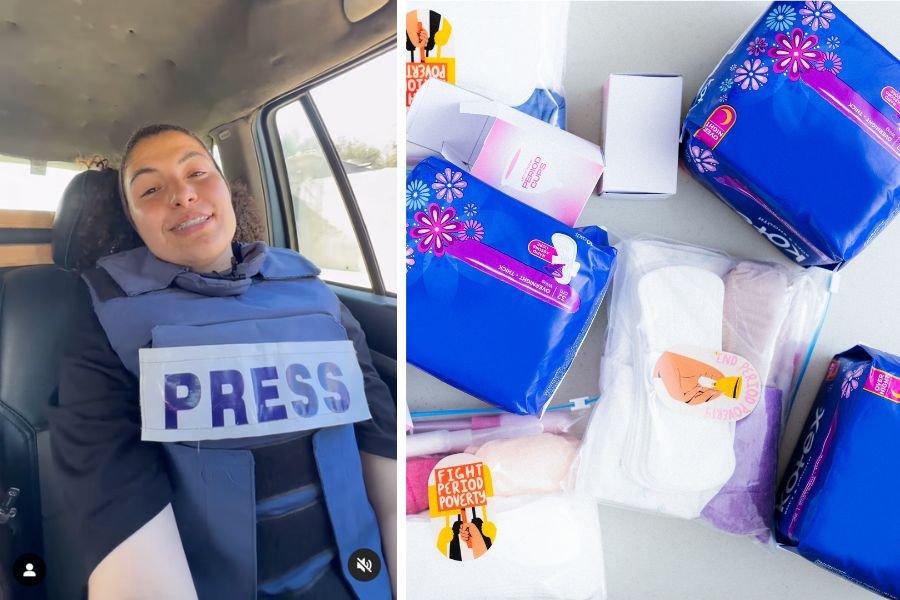
Bisan Owda, 25, is a journalist in Gaza who has made it her mission to strip the shame away from an issue unique to women trapped in the middle of a war.
In a now expired Instagram story, Owda explained that when the war between Israel and Hamas started, women took birth control pills to delay their menstrual cycles. The hope was to avoid their periods until the war was over as it would be an inconvenience while displaced from their homes. Except, this conflict has lasted longer than most anticipated, which means women and girls have found themself in an unsanitary predicament unique to them.
“The population of Gaza strip is 2.2 million people, 49 percent of them are women and women in Gaza do not have access to hygiene water, to personal hygiene supplies, to menstrual supplies, to sanitary pads,” Owda says in a video uploaded to Instagram in early December. “They don’t have access to all these things and women now are simply exposed to psychological and physical health risks because there’s no products to use during their periods. Women are shy to tell you this but they don’t have to be shy actually.”
This is a reality that many people don’t think about, including the organizations sending aid to the area as Owda points out in her video, it seems to be missing from the few aid trucks that are allowed into Gaza. The conditions are overcrowded and there are very few functioning bathrooms that these women have access to. But it’s not just the women who are experiencing their monthly menstrual cycles that are suffering, it’s women who have just given birth as well.
Postpartum women are instructed to keep good hygiene by changing their sanitary pad 4 or more times a day, using a squirt bottle after using the bathroom, and soak in a bath to aid with wound cleaning. Women who have just given birth are at a much higher risk for infection of their uterus if they contract common vaginal infections that can be the result of a lack of sanitary items.
“We’re suffering from being hungry, from being thirsty, from being bombed. We’re suffering from being displaced. Now we are suffering also because there are no pads. It’s just a new suffering,” Owda said.
When Owda interviewed Nour, a young woman living in Gaza about the lack of menstrual products, Nour explains, “many young women are grappling with this challenge, resorting to alternatives such as tissues or scraps of cloth, all of which are unhygienic. The cloth requires regular washing, cleaning and changing.”
A local doctor reveals to Owda, “each day we encounter numerous instances of fever, directly linked to vaginal yeast infections arising from inadequate hygiene and the absence of feminine hygiene products. Sanitary pads can’t be found anywhere.”
The situation is dire and medical doctors in the region are expressing the danger that comes with lack of access to this critical sanitary supply.
“It’s extremely dangerous because we’re talking about hygiene. When a woman is in good health, maintains cleanliness, and has access to fundamental necessities, it significantly contributes to the baby’s well-being. Cleanliness is crucial for ensuring the health of both mother and baby. The lack of feminine hygiene products is not only a matter of health but also brings about a sense of humiliation,” another doctor explains to Owda.
After sharing about the struggles women are facing in Gaza, Egyptian Cure Bank, a hospital in Egypt has begun accepting donations to send medical supplies to Gaza, which include feminine hygiene products. Even though people are in imminent danger, they’re still people so women will continue to need sanitary pads and babies will continue to need diapers. Hopefully more shipments of these imperative supplies will make it to the people that need it most because all people that have periods deserve dignity while managing it.