upworthy
Add Upworthy to your Google News feed.
Google News Button
Family

Nine things new parents think they need and the more practical alternatives.

No, you actually don't need a 'pee pee teepee.'

new parents; baby; newborn; baby items
Photo by Kelly Sikkema on Unsplash

Things new parents think they need but don't.

There's nothing like preparing for a new baby. The excitement and anticipation take hold and before you know what's happening, your baby registry is five pages long full of things you've probably never heard of. I've been there before, and now, four kids later, I can tell you with absolute certainty that there are tons of things you actually don't need. It's easy to get carried away when everything is so tiny and cute, especially 'cause marketing around baby stuff is bananas. The following offers some alternative items to the ones you'll likely only use a limited number of times before practicality takes over.


Many of us have been there, standing in the baby aisle looking like we're smuggling an oddly shaped beach ball under our now-too-small maternity shirt contemplating between the many styles of pacifiers and different types of bottles. You'd be forgiven for spending an insane amount of money on bottles shaped like a deflated spaceship that guarantee your baby will never burp, when two weeks after they're born you find out your baby actually prefers the $0.98 ones from Walmart. Figuring out what you really need is tricky enough, so let me help you out. Hold on to your bellies or shiny new babies folks, this list might blow your mind.

Baby wipes.

Baby wipes from Amazon

1. Put the Pee Pee Teepee down and back away slowly.

Aside from the word "teepee" being highly inappropriate for non-Indigenous people to use, you can go ahead and take this bad boy off your baby registry. If you're not familiar with a "pee pee teepee," it's a cone-shaped item that goes on top of your little guy's business so he doesn't accidentally pee in his eyes or on the unsuspecting diaper changer. Here's the thing, baby wipes or a baby washcloth work just as well. When my boys were little I'd just throw a wipe over their baby business while I changed the diaper, and once the dirty diaper was off, it's easy to toss the used wipe in before trashing the diaper. Easy peasy and it's one less thing to put on your list.
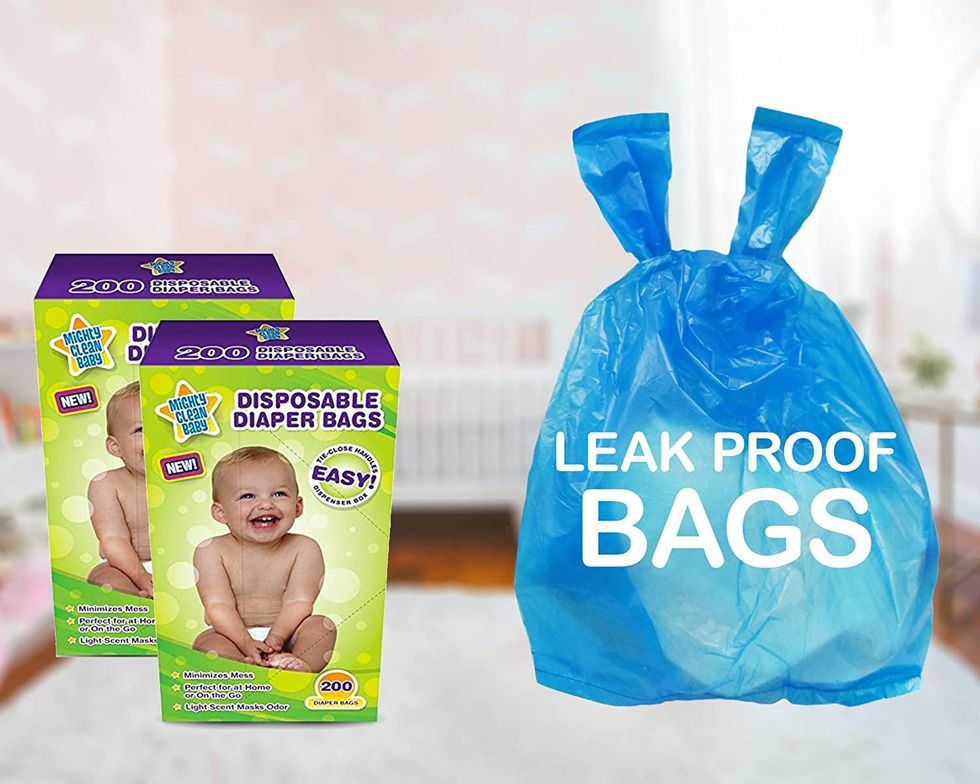
Disposable diaper bags.

Disposable diaper bags from Amazon

2. Diaper Genies are unnecessary and it's easy to forget they exist.

I had such high hopes for my Diaper Genie as a first-time mom. They're so cool, you shove a dirty diaper in there and twist. That's it. It locks in the odor and makes a weird-looking segmented snake of dirty diapers. Alas, when your diaper pail is in one room and you're changing a diaper on a wiggly baby in another, most times the diaper just winds up in the closest trash can. So just buy some small cheap trash cans to put in different rooms and then empty them at the end of the day. There's only so much odor a diaper genie can hold and they only take special expensive trash bags. Save your money. Get some small trash cans and those little smell good bags to toss the smelly diapers.
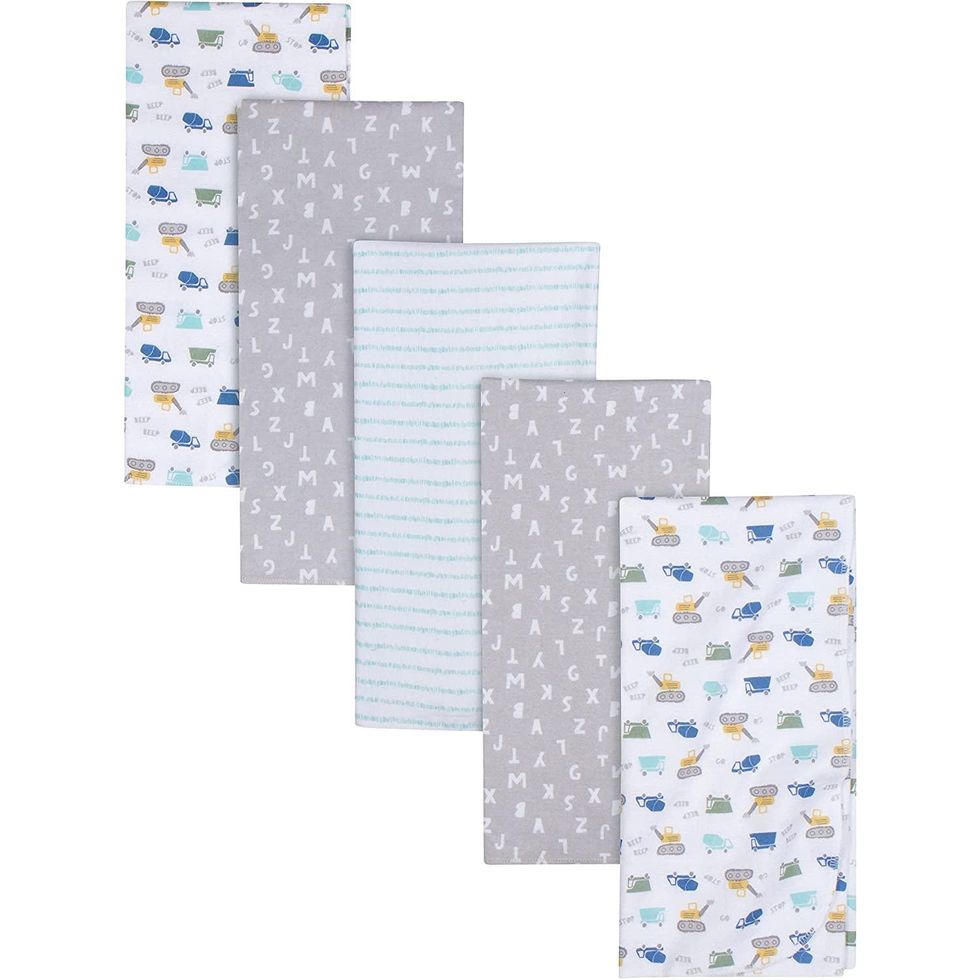
Receiving blankets.

Receiving blankets from Amazon

3. You can buy a swaddler but you don't actually need it.

I know this might be a controversial statement, but honestly those swaddlers are really expensive and babies quickly outgrow them. You can do the perfect swaddle with a receiving blanket for a fraction of the price and just as much energy. You know how babies come all bundled up when the nurse brings them in from the nursery? Yeah, that's a really good swaddle that will give your snuggle bug the same coziness as an expensive swaddler.
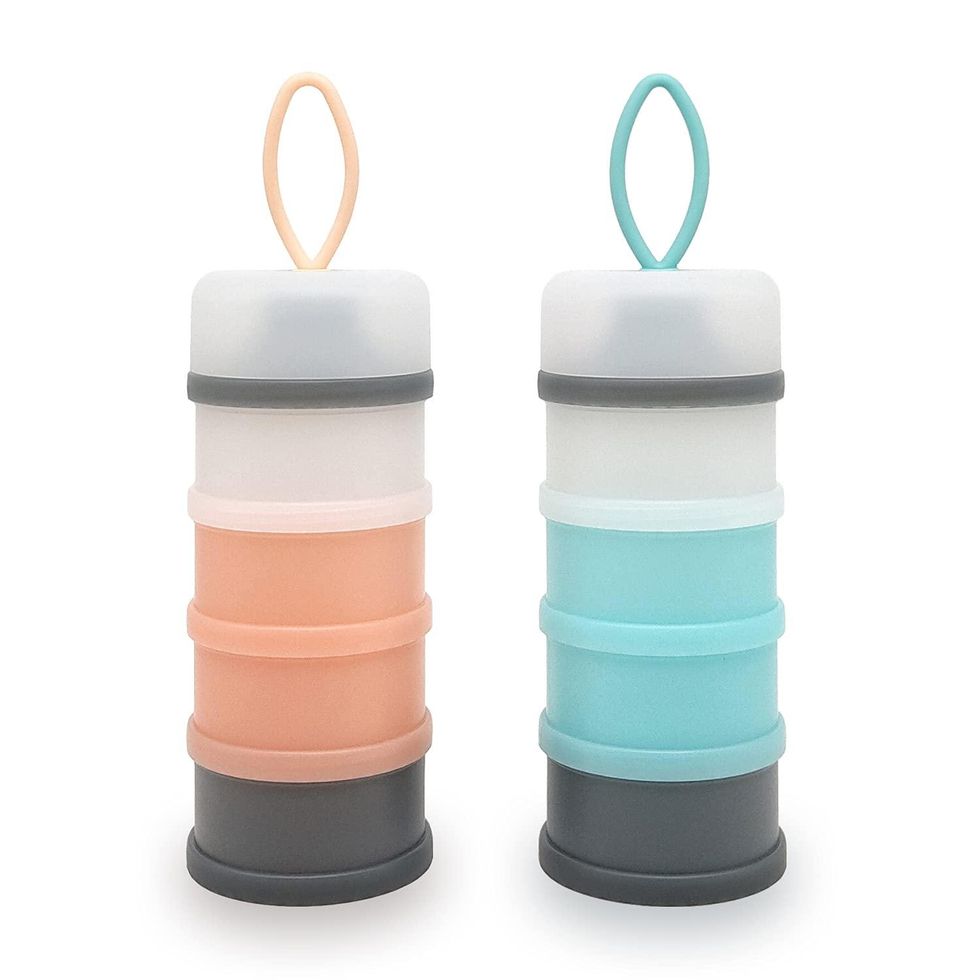
Portable baby formula dispenser.

Portable baby formula dispenser from Amazon

4. You don't have to be fancy and get a Baby Brezza.

Honestly, I had never heard of a Baby Brezza until I had my youngest, so I'm assuming its a newer invention. They're certainly cool and also really expensive and unnecessary. These little doodads are like baby Keurigs but for formula. They hold powdered formula and water, you press a button and it supposedly perfectly mixes up a warm bottle of sustenance. The price tag on these things are about the same as a larger much more needed baby item, like a car seat-stroller combo. There have also been some concerns raised by pediatricians due to some bottles not getting enough formula added.

Take the guesswork out of it and just fill the bottles by hand. You can even put water in the bottles in advance and leave them out at room temperature and use a portable formula container to put premeasured scoops in. I know it's no Baby Brezza, but you'll be $200 richer and know exactly how much formula is going into your baby's bottle.
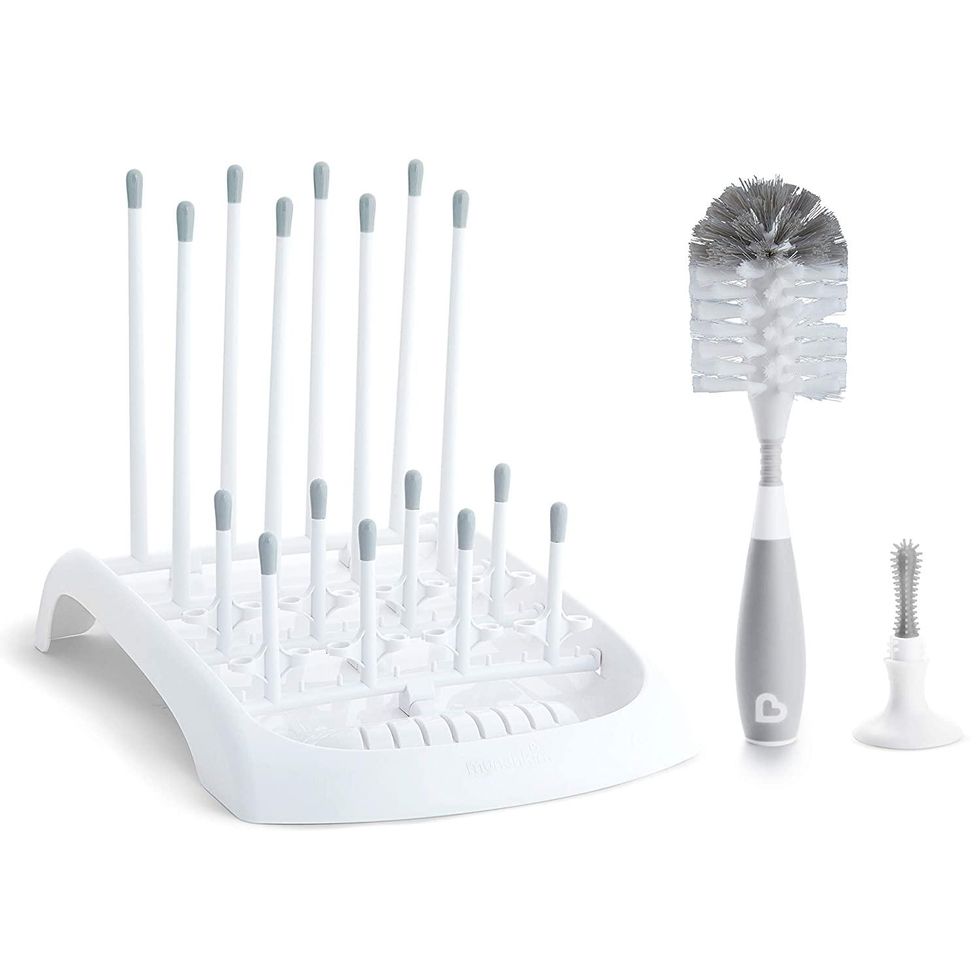
Bottle drying rack.

Bottle drying rack from Amazon

5. Your baby doesn't need fake grass to dry their bottles on.

Don't laugh, a fake grass bottle dryer is something that actually once sat on my kitchen counter. That's about all it did because I dang sure didn't use it for more than the first week. When you're sleep deprived, you want the easiest thing available and oftentimes that's the top rack of the dishwasher or the dish rack that's already on your countertop. The things we get suckered into buying is laughable sometimes. Besides it being esthetically pleasing, you don't actually need it and a regular bottle rack, in fact, works better because there are no removable trees holding the nipples.
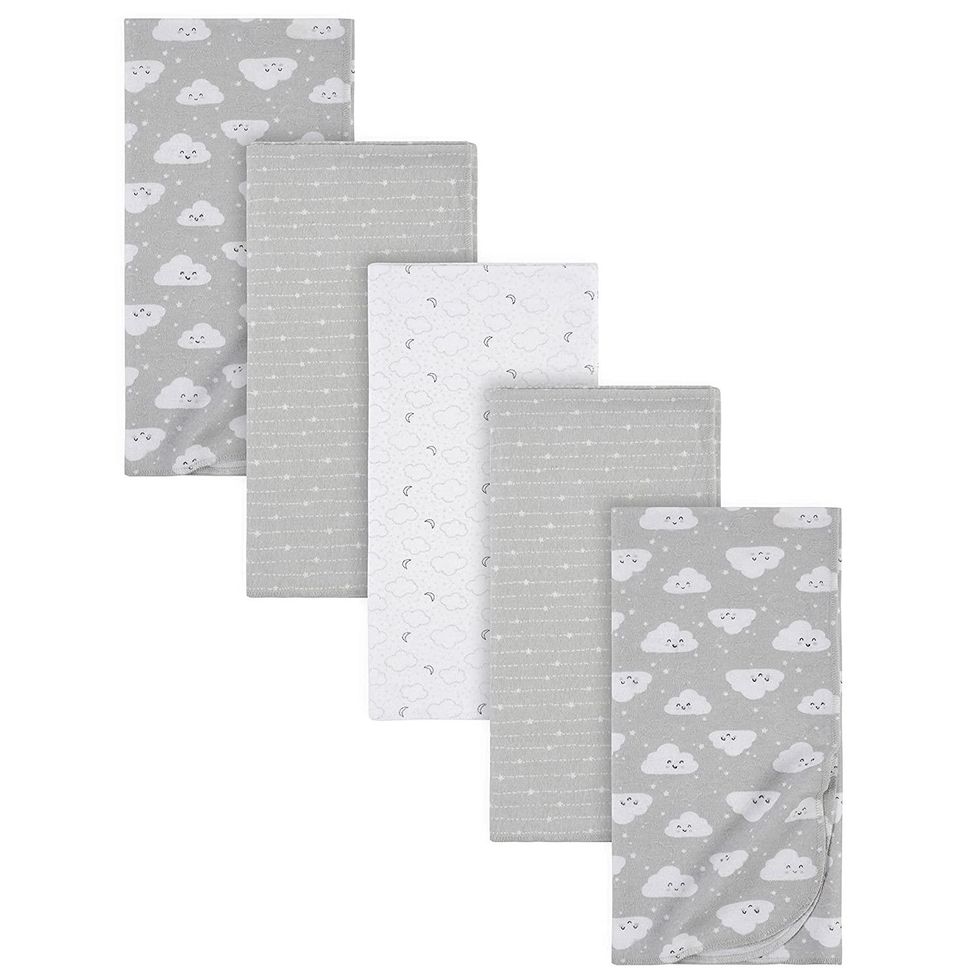
Receiving blankets.

Receiving blankets from Amazon

6. Side eye anyone that says you need embroidered burp cloths.

Don't fall for it. Yes, purpose-made burp cloths can be super cute but they're literally used to catch baby puke. These things are too small to cover the area needed to prevent your back and shoulder from becoming a casualty of a little guy eating too fast. Remember those receiving blankets we talked about earlier? Yeah, they are much more absorbent and cover more of your body to spare you having to change clothes. Those flannel blankets are versatile. You can use them for swaddling, to cover a car seat or stroller, for burp cloths or even a clean area to change the baby on. There's no such thing as too many receiving blankets. I'll make it easy for you, grab a pack here.
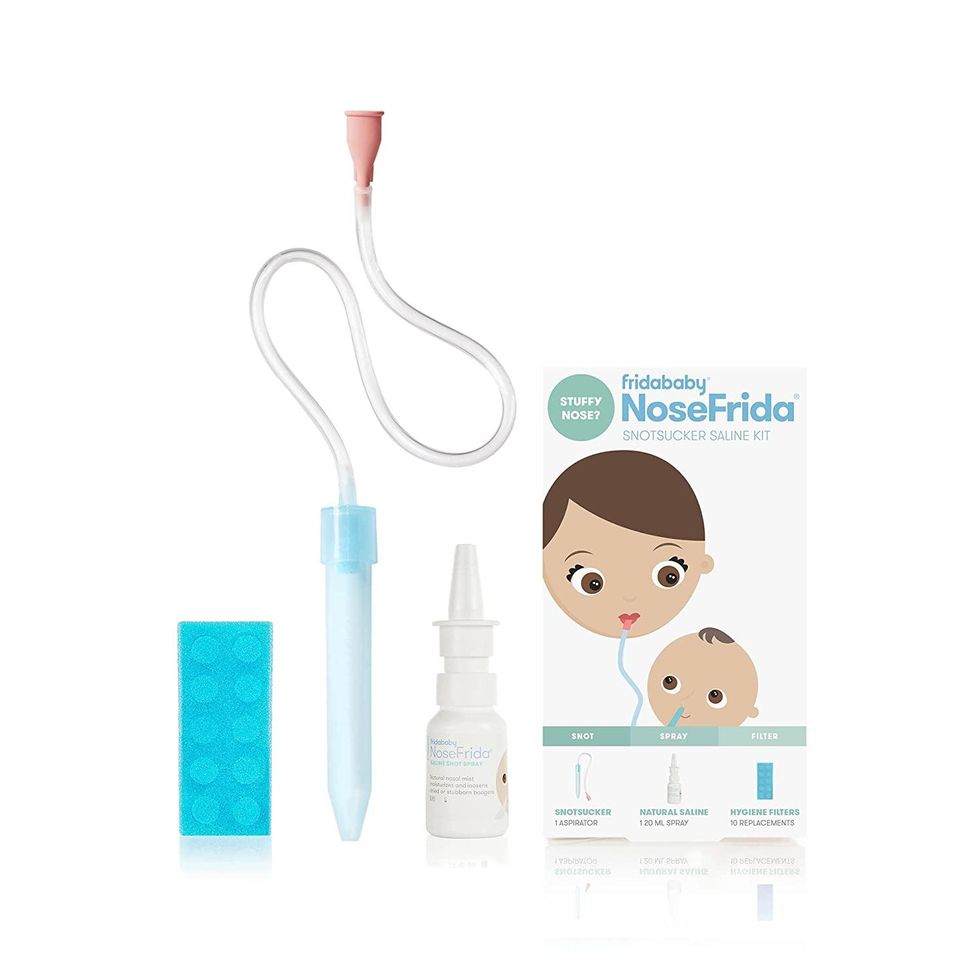
NoseFrida.

NoseFrida from Amazon

7. Skip the bulb syringe and splurge on the NoseFrida.

The hospital will give you a useless bulb syringe that only the nurses know how to work, because I swear no matter how hard you squeeze the bulb you barely get anything out. Bulb syringes even come with many newborn essential sets. I'm sure they work, but they seem to take way too much effort for the little bit of mucus they pull out. Get the NoseFrida—yes, it's a little more expensive but it's worth it, even though it seems gross. I promise the hygiene filter that goes in the tube will spare you from getting baby boogers in your mouth. You can literally use that thing well into the toddler years until your little one learns to blow their nose. Can't speak highly enough of this thing and here's a link to it here.
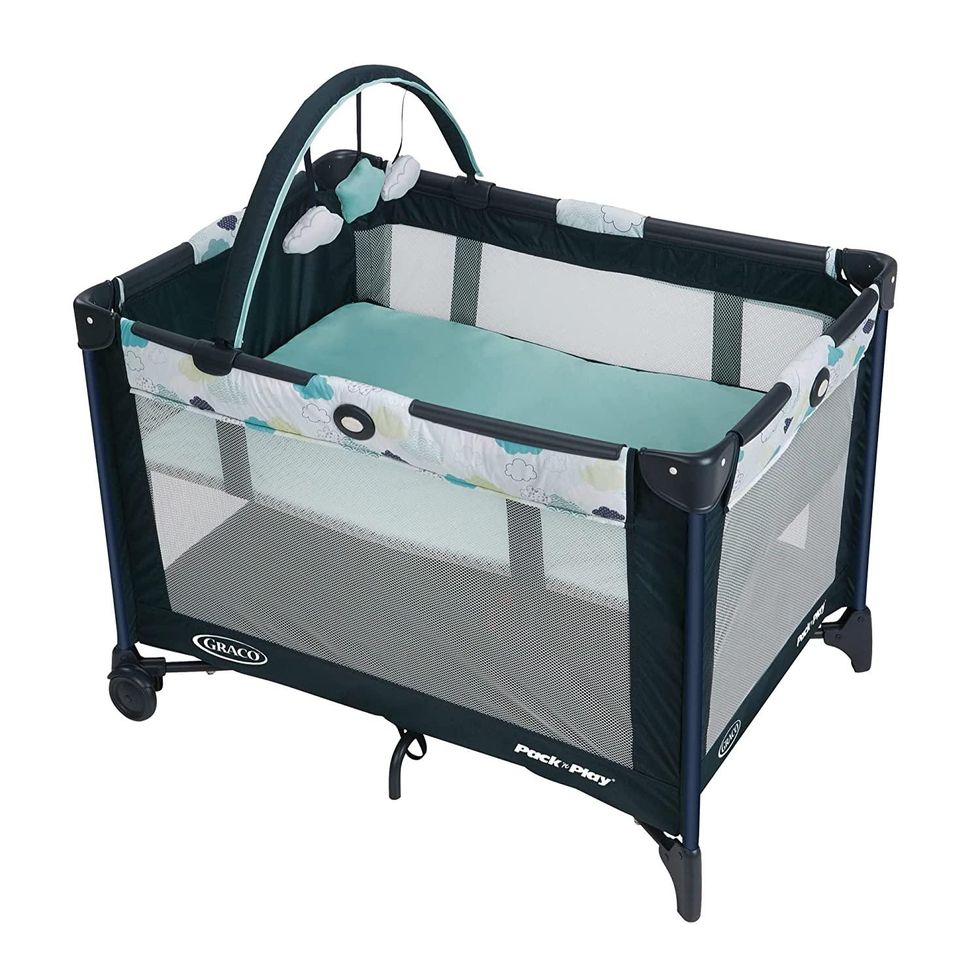
Pack 'n' Play

Basic Pack 'n' Play from Amazon

8. Do you really need a Pack 'n' Play that turns into a rocket ship?

OK, maybe it doesn't turn into a rocket ship but some of those things are so outrageous that you might need to be a rocket scientist to put it together. Pack 'n' Plays are really convenient and a great investment for new parents, especially if you like to travel or have family out of state. You can use it so your baby can sleep in your bedroom until you're ready for the switch to sleeping away from your little one. Just try not to get distracted by all the bells and whistles and stick to the basics. A Pack 'n' Play with a bassinet is really all you need. It's much cheaper and you'll use the bassinet piece much longer than the ones that come with other parts.
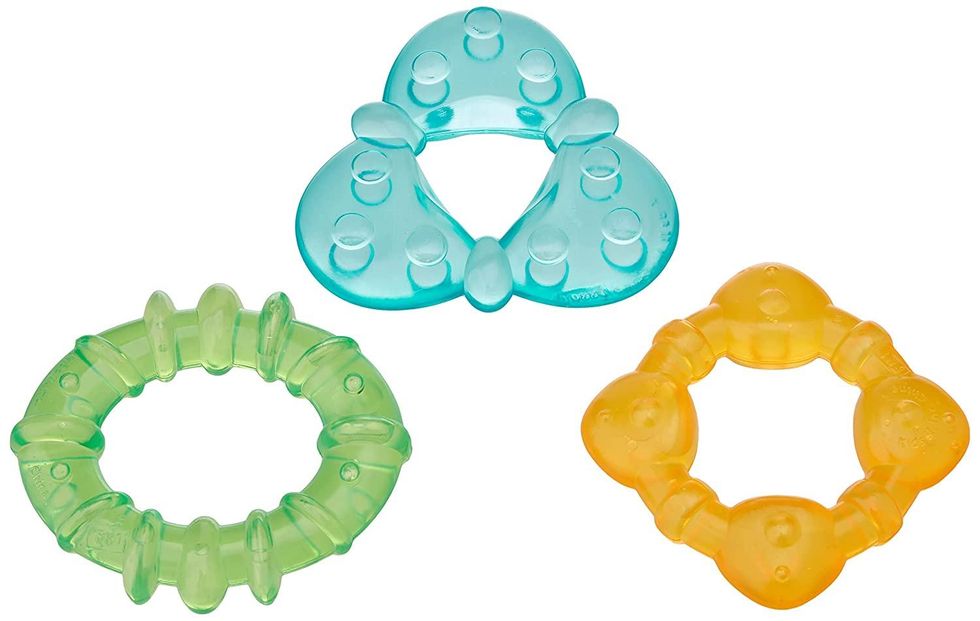
Teething rings.

Teething rings from Amazon

9. Expensive teething jewelry is overrated.

Fancy teething jewelry is cute and has become quite popular lately, but babies don't really need it. They are perfectly happy with the normal water-filled teething rings or rubber ones that can be thrown in any diaper bag. They're tried and true, plus they're designed specifically for teething. While the jewelry is marketed for teething babies, doctors have warned that they're not safe enough to use for that purpose. Besides, having a baby is expensive enough, no need to add to it when you can pick up teething rings at just about any store for a reasonable price.

The idea that everything for babies has to be the most expensive top-of-the-line things is just marketing. When it comes down to it, babies need very basic things: a safe place to sleep, food, diapers and lots of love. Everything else is extra and you can be as extra as you'd like but it should never feel like it's a necessity. Your baby will love you whether you have the Baby Brezza or mix their bottles by hand, promise.


This article originally appeared on 9.16.22

the great depression; Florence Thompson; Mona Lisa of the Great Depression; Mona Lisa; the depression; depression era
Photo by Dorothea Lange via Library of Congress
The woman from the famous Great Depression photo didn't know about her fame for 40 years.

It's one of the most iconic and haunting photos of all time, up there with the likes of Hindenburg, The Falling Soldier, Burning Monk, Napalm Girl, and many others. It's called simply Migrant Mother, and it paints a better picture of the time in which it was taken than any book or interview possibly could.

Nearly everyone across the globe knows Florence Owens Thompson's face from newspapers, magazines, and history books. The young, destitute mother was the face of The Great Depression, her worried, suntanned face looking absolutely defeated as several of her children took comfort by resting on her thin frame. Thompson put a human face and emotion behind the very real struggle of the era, but she wasn't even aware of her role in helping to bring awareness to the effects of the Great Depression on families.


It turns out that Dorothea Lange, the photographer responsible for capturing the worry-stricken mother in the now-famous photo, told Thompson that the photos wouldn't be published.

Of course, they subsequently were published in the San Francisco News. At the time the photo was taken, Thompson was supposedly only taking respite at the migrant campsite with her seven children after the family car broke down near the campsite. The photo was taken in March 1936 in Nipomo, California when Lange was concluding a month's long photography excursion documenting migrant farm labor.

the great depression; Florence Thompson; Mona Lisa of the Great Depression; Mona Lisa; the depression; depression era Worried mother and children during the Great Depression era. Photo by Dorthea Lange via Library of Congress

"Migrant worker" was a term that meant something quite different than it does today. It was primarily used in the 30s to describe poverty-stricken Americans who moved from town to town harvesting the crops for farmers.

The pay was abysmal and not enough to sustain a family, but harvesting was what Thompson knew as she was born and raised in "Indian Territory," (now Oklahoma) on a farm. Her father was Choctaw and her mother was white. After the death of her husband, Thompson supported her children the best way she knew how: working long hours in the field.

"I'd hit that cotton field before daylight and stay out there until it got so dark I couldn't see," Thompson told NBC in 1979 a few years before her death.

the great depression; Florence Thompson; Mona Lisa of the Great Depression; Mona Lisa; the depression; depression era A mother reflects with her children during the Great Depression. Photo by Dorthea Lange via Library of Congress

When talking about meeting Thompson, Lange wrote in her article titled "The Assignment I'll Never Forget: Migrant Mother," which appeared in Popular Photography, Feb. 1960, "I saw and approached the hungry and desperate mother, as if drawn by a magnet. I do not remember how I explained my presence or my camera to her, but I do remember she asked me no questions. I made five exposures, working closer and closer from the same direction. I did not ask her name or her history. She told me her age, that she was thirty-two. She said that they had been living on frozen vegetables from the surrounding fields, and birds that the children killed."

Lange goes on to surmise that Thompson cooperated because on some level she knew the photos would help, though from Thompson's account she had no idea the photos would make it to print. Without her knowledge, Thompson became known as "The Dustbowl Mona Lisa," which didn't translate into money in the poor family's pocket.

In fact, according to a history buff who goes by @baewatch86 on TikTok, Thompson didn't find out she was famous until 40 years later after a journalist tracked her down in 1978 to ask how she felt about being a famous face of the depression.

@baewatch86

Florence Thompson, American Motherhood. #fyppppppppppppppppppppppp #historytok #americanhistory #migrantmother #thegreatdepression #dorthealange #womenshistory

It turns out Thompson wished her photo had never been taken since she never received any funds for her likeness being used. Baewatch explains, "because Dorothea Lange's work was funded by the federal government this photo was considered public domain and therefore Mrs. Florence and her family are not entitled to the royalties."

While the photo didn't provide direct financial compensation for Thompson, the "virality" of it helped to feed migrant farm workers. "When these photos were published, it immediately caught people's attention. The federal government sent food and other resources to those migrant camps to help the people that were there that were starving, they needed resources and this is the catalyst. This photo was the catalyst to the government intercepting and providing aid to people," Baewatch shares.

- YouTube www.youtube.com

As for Lange, Migrant Mother was not her only influential photograph of the Great Depression. She captured many moving images of farmers who had been devastated by the Dust Bowl and were forced into a migrant lifestyle.

"Broke, baby sick, and car trouble!" is just one of her many incredible photos from the same year, 1937.

She also did tremendous work covering Japanese internment in the 1940s, and was eventually inducted into the International Photography Hall of Fame and Museum and the National Women's Hall of Fame.

the great depression; Florence Thompson; Mona Lisa of the Great Depression; Mona Lisa; the depression; depression era Families on the move suffered enormous hardships during The Great Depression.Photo by Dorthea Lange via Library of Congress

Thompson did find some semblance of financial comfort later in life when she married a man named George Thompson, who would be her third husband. In total, she had 10 children. When Thompson's health declined with age, people rallied around to help pay her medical bills citing the importance of the 1936 photo in their own lives. The "Migrant Mother" passed away in 1983, just over a week after her 80th birthday. She was buried in California.

"Florence Leona Thompson, Migrant Mother. A legend of the strength of American motherhood," her gravestone reads.

Joy

Adults share their parents' most laugh-out-loud 'gramnesia' moments, and it's so relatable

"Sometimes I wonder if my parents have ever actually met a child."

gramnesia, gramnesia moment, boomer parents, boomer grandparents, gen x parenting, millennial parenting, family, family humor

If only raising kids was this easy.

"Gramnesia" is a term coined by Gen Xers and Millennials to poke fun at the way their parents seem to suddenly forget how truly difficult it is to raise young children once they've entered their grandparent era.

This leads to some pretty perplexing memories, like zero tantrums and no issues with sugar, all of which the now-adult children don't remember, because it didn't quite happen that way.


Recently, a woman named Ally Glasgow (@allyglasgow) shared a perfect example of this sometimes mind-boggling phenomenon, explaining how she and her mom had entirely different memories of potty training.

"[My mom] said, 'All of you were potty trained by two. All four girls.' And I'm like... I just don't feel like we were... I mean maybe?" Glasgow says in a TikTok video.

An even bigger "gramnesia" moment came while Glasgow was driving her mom to the airport, when she suggested that Glasgow "instill into your kids that when they wake up, they shouldn't talk until a certain time."

Perplexed, Glasgow asked, "Mom, what do you mean they don't talk?" Her mom finally acquiesced, adding, "Maybe they could whisper."

As though any parent in all of history has ever successfully instilled a rule like that. Maybe in Victorian times, but still. Do we really want to go back to that in this instance?

Glasgow's video inspired others to share their own equally funny "gramnesia" moments in an act of lighthearted solidarity:

"My mom has completely made up an entirely different childhood in her head lmao and when I call her out she gets SO MAD."

"Sometimes I wonder if my parents have ever actually met a child."

"My son has eczema and my mom says none of her kids ever had it but I literally have had eczema my entire life 😂"

"My mom says I was speaking sentences by 9 months old. No I was not. There's no way."

"My parents both SWEAR that I was sleeping through the night at 3 weeks old and didn't need to wake up to feed or anything. So like okay you starved me???"

"My mom comments on my kids eating unhealthy as if I didn't grow up eating cereal, ramen, frozen meals, etc every single day because she didn't cook for us, like what?"

"My parents swear I was walking at 6 months old. Once I had kids I was like there is no physical way that is possible. They still swear it happened."

"My MIL had four boys and she tried to convince me that they didn't make much noise. lol okay 👌🏽"

"My mom said 'kids need routine and structure' to me once but we were homeschooled and only did school when she felt like it."

"My mom said my sisters and I never snacked 🙄"

"My mom claims we never threw tantrums. Huh?! I remember throwing tantrums 😂"

"I can't remember details from when my kids were babies…and they are currently 3. You're telling me our parents remember tiny details from 35 years ago?!"

Bottom line: "gramnesia" is very real and, apparently, very universal. But maybe, in this instance, we can give grandparents some slack. Parenting is hard no matter what generation you hail from. Who knows? Many of us might also use rose-colored glasses as a coping mechanism at some point.

Pop Culture

In an iconic 1975 clip, a teenage Michael Jackson stuns Cher during hypnotic robot dance duet

The clip marks a turning point in Michael Jackson's iconic public persona.

jacksons, michael jackson, robot dance, Cher, 1970s TV

Cher and The Jackson 5 doing the robot dance.

One of the most distinctive aspects of Michael Jackson's mega-stardom was that he grew up almost entirely in the public eye. He began performing with his brothers at age five and remained a significant figure in American pop culture until he died in 2009.

He burst onto the scene as a child with an incredibly soulful voice. He became an electrifying performer as a teen before rocketing to superstardom at 20 with the release of his first solo album, 1979's Off the Wall. One of the pivotal moments when the public witnessed this transformation came in 1975, when 16-year-old Michael performed with his brothers, The Jackson 5, on The Cher Show.


The Jackson 5 and Cher performed a medley of the band's biggest hits, including "I Want You Back," "I'll Be There," and "Never Can Say Goodbye." But the most memorable moment came when Michael and his brothers broke into the robot dance during "Dancing Machine," and Cher did her best to keep up.

The Jackson 5 and Cher do the robot dance

It's fun watching Cher try to fall in line with the Jacksons, while Michael absolutely kills it, gyrating like an animatronic on hyperdrive during his solo.

- YouTube www.youtube.com

The Jackson 5 may have helped bring the robot dance into the public consciousness by incorporating it into performances of their 1973 hit "Dancing Machine." But it traces back to mechanical "mannequin" dances from the early days of film. In the 1960s, Robin Shields, a popular mime, performed as a robot on late-night talk shows. By the 1970s, dancers had set those moves to music on shows such as Soul Train.

- YouTube www.youtube.com

In a 2003 interview, Cher said she had to learn the moves on the fly from the Jacksons.

"Think of how hard it was for me to learn to do that, and the guys just knew how to do it. I've been working all day, and they just came on and said, 'Okay, sure, this is how you do it,'" Cher recalled. "I had a lot of fun on that show. It was a lot of work, but I had a lot of fun. You know, and I got to work with some great people."

What's also notable about the performance is that Michael's voice had changed, and he sang in a deeper register than he had as a child a few years earlier.

Things changed for Cher and the Jacksons in 1976

By the following year, things had changed for both The Jackson 5 and Cher. Cher reunited with her ex-husband, Sonny Bono, for The Sonny and Cher Show, which ran until 1977. In 1976, The Jackson 5 left Motown Records for Epic Records and changed their name to The Jacksons. Jermaine Jackson temporarily left the group to pursue a solo career, and he was replaced by his brother, Randy.

Here's The Jackson 5's complete performance on The Cher Show from March 16, 1975:

- YouTube www.youtube.com

pet, pet owners, veterinarian, euthanasia, dog

It's hard to know when it's time to say goodbye to a beloved pet.

When we bring a new pet into the family, the last thing we want to think about is saying our final goodbyes to them. But life expectancies being what they are means the vast majority of pet owners will have to let go of their furry family members at some point. Either old age or terminal illness will force difficult decisions about when "it's time" for a dog or a cat, and determining if or when to euthanize can feel like an impossible choice.

Popular foster dog mom Isabel Klee found herself in a position of having to make that choice with a foster dog she had only been caring for for a short time. Zero came to her as a 12-year-old dog with medical and behavioral issues, and when it became clear that medical treatment and loads of love weren't enough to keep him from suffering, Klee decided the kindest course of action was to give Zero a loving family to hold him as he crossed "the rainbow bridge."


@simonsits

Two days ago, as our final act of love, Zero officially became part of our family ❤️ @Muddy Paws Rescue @Animal Care Centers of NYC

Klee received a lot of understanding and empathy, but also some criticism for putting Zero down, which prompted some discussion on the topic of when and how to determine when euthanasia is the right choice.

Euthanasia literally means "good death," though people often use other terminology like "putting down" or "putting to sleep" to describe the process of conscientiously ending an animal's life to save them from suffering. Our pets don't have the cognitive abilities to understand why they are experiencing pain or confusion and they don't have the ability to tell us what they are experiencing. So how do we know when it's time to make the choice to give them a painless end?

We asked veterinarians and people who work with end-of-life care for animals to weigh in.

pet, pet owners, veterinarian, euthanasia, dog Animals aren't able to tell us exactly how they are feeling.Photo credit: Canva

Prioritize the pet's quality of life

Dr. Bethany Hsia is a veterinarian and co-founder of CodaPet, a network of vets offering compassionate in-home euthanasia. She tells Upworthy that the primary consideration should always be a pet's quality of life and offers a "quality of life scale" to help owners objectively assess various aspects of their pet's daily life, such as pain, hunger, hydration, hygiene, happiness, and mobility.

Hsia says vets often see owners waiting until the animal is in severe pain or distress before deciding to euthanize, often due to emotional attachment. "Veterinarians are trained to guide owners toward the most humane decision without directly imposing it," she says, offering five approaches vets might use to help empower and support owners to arrive at the decision themselves, rather than feeling pressured:

1. First of all, a vet might say, "How many good days would you say your pet has had this week compared to bad days?" or "When the bad days start to outnumber the good days, that's often a sign that their quality of life is significantly impacted.”

2. Second, a vet may emphasize pain management limitations by saying, "We've tried increasing the pain medication, but it doesn't seem to be providing lasting relief anymore, and we're reaching the maximum safe dosage" or "At this point, any further increase in medication would likely cause more side effects than benefits.”

3. Third, a vet may highlight basic needs by saying, "Is he still eating and drinking adequately on his own?" or "Are you finding it increasingly difficult to keep him clean and comfortable?”

4. Fourth, a vet might describe the next phase of a disease by saying, “Given the progression of cancer, we anticipate that his condition will continue to worsen, and he will likely experience more discomfort in the coming weeks.”

5. Finally, a vet may discuss the "Gift of Euthanasia." While not directly saying it is time, a vet might gently introduce the concept of euthanasia as a final act of kindness. The most compassionate thing we can do for our pets is to prevent them from experiencing further pain and suffering.

pet, pet owners, veterinarian, euthanasia, cat Vets often share clues that "it's time."Photo credit: Canva

Don't wait for their worst day

Dr. Elizabeth Benson, veterinarian and founder of Paws into Grace, a Southern California-based company that specializes in end-of-life pet care, says that vets also help by ruling out things that are treatable. "For example, if a pet is vomiting and having anorexia, rule out pancreatitis or simple gastroenteritis," she says. "These are treatable diseases that can affect older pets. These diseases are very different from cancer that can present with the same clinical symptoms.”

"If I have a diagnosis and we know that something isn't treatable, then it goes into quality of life,” says Dr. Benson. “Is their physical health deteriorating and not responding to care? Is their social emotional health compromised? Are they in pain? Are there red flags that can have an acute crisis and we should intervene to prevent suffering? All of these things should be considered when deciding if it’s time.”

“Many times, we have pet parents who cancel their euthanasia appointment because they think the pet is recovering one day, only to later have an emergency situation where the pet is suffering and actively dying in their presence, unassisted by a veterinarian,” adds Dr. Benson. “As hard as it is to make the decision to euthanize a pet during this time, we encourage owners to let their pets be at peace while they are having a good day in order to minimize suffering and avoid an emergency.”

pet, pet owners, veterinarian, euthanasia, dog A little early is better than too late.Photo credit: Canva

Don't overemphasize eating or not eating

"Many owners become reluctant to euthanize their pet because they are still eating," says Dr. Ray Spragley of Zen Dog Veterinary Care. "Eating is necessary for survival and most pet's will eat unless they are very nauseous or extremely weak. If their pet cannot walk and is in pain but still eating their quality of life is not good. Owners should think about their pet's pain levels, overall independence, and ability to partake in things they enjoy. In many pets they will not have overt disease but due to age related decline they may have cognitive dysfunction (Dementia). If mentally they are not able to process what is going on around them and are confused that also constitutes a poor quality of life. Signs of pain pet owners should look for are excessive panting, shivering, sensitivity to touch, and aggression."

As a companion animal death doula, Kate LaSala, owner of Rescued By Training LLC shares similar advice:

"When assessing quality of life, it’s not just 'is he still eating?' Quality of life isn’t just about physical health but whether the animal still enjoys daily activities. Can they eat, drink, move and interact with family and their environment in a meaningful way? Are there things that still bring joy to them every day? Are they having more good days than bad days?

It can also help to understand the difference between pain and suffering when making end-of-life decisions. Pain can often be managed but suffering is not only physical but psychological.

I coach clients to look for behavior changes, like a pet that is confused, anxious, chronically uncomfortable, or unable to perform basic functions like breathing, walking, moving, eating, grooming, or relieving themselves. Even if their pain is 'under control' they are likely suffering if they cannot perform basic functions without struggling or assistance."

- YouTube www.youtube.com

Start thinking about end-of-life details early

Lisa Franzetta is also an animal end-of-life doula and a doctor of acupuncture and integrative medicine who treats animals at a holistic veterinary practice in the San Francisco Bay Area. She recommends pet owners pay attention to the signs their animal is well and happy before they decline:

"Ideally, I encourage companion animal guardians to start the process of end-of-life decision making before their animal is very sick, if they have this opportunity. If pet parents tell me their animal is feeling great–I ask them to describe how their animal shows them this. Are they eating their favorite food with gusto? Enjoying their daily walks? Seeking out snuggles and playtime?

By having these mental notes about our animals at their happiest, it can be easier to track when, closer to end-of-life, our beloved animals are no longer able to experience their greatest joys.

Conversely, if a pet parent relays that they think their animal is uncomfortable, stressed, or otherwise not thriving, I ask for details about how they show this. Does a dog who always loved walks now refuse to get out of bed? Does a formerly social cat now hide under the bed much of the day? I will also ask if their animal seems to have more good days than bad days, and help them see when there might be a shift occurring, if an ailing pet is now having more bad days than good ones.

Similarly, if the medication or treatment required to sustain an animal’s life is very stressful for the animal and/or their guardian, I like to share that this is also a quality of life factor worthy of consideration. For instance, if veterinary treatment requires frequent vet visits which are terrifying to a very anxious dog; or if a cat who formerly followed you around your home now hides from you to avoid daily medications–these factors are very reasonable to consider as part of assessing your animal’s quality of life."

Ultimately, end-of-life decisions boil down to what is kindest and most humane for our pet companions. Experts agree that quality of life is key, and that erring on the side of too early is better than too late. As hard as it is to let them go, a peaceful, painless passing is often the best gift we can give to thank our animal family members for the joy and love they shared with us throughout their lives.

advice; generational advice; overrated goals; gen z; millennials; life goals

Adults share 'overrated adult goals' younger people should avoid

It can feel nearly impossible to get around all of the things society tells young adults they should be striving for, but everyone doesn't want the same things. Many adults have fallen into the trap of collective thinking based on societal indications of success. Some of those adults have decided to leave a few wise words for the generations coming up behind them.

In an effort to ensure that young people don't make the same mistakes, adults on Reddit are sharing "adult goals" that are actually overrated. Everyone doesn't need or even wants to be a "hashtag boss babe." Some people are perfectly happy knitting hats for cats without attempting to turn it into a side hustle for extra cash.


Overwhelmingly, warn young people against making hobbies into a side business

advice; generational advice; overrated goals; gen z; millennials; life goals Relaxed moment by the window with a thoughtful gaze.Photo credit: Canva

"Turning every single hobby into a 'side hustle.' The Internet has convinced us that if you’re good at something, you must monetize it. No, Sarah, I don’t want to start an Etsy shop for my paintings. I just want to be mediocre at something for fun without checking my profit margins or SEO. Not everything needs to be a business," Reddit user JulMayoooo responds to the question, "What's the most overrated 'adult goal' people chase" on the AskReddit forum.

"The best way to ruin your favorite hobby is to try to turn it into your side hustle. Now it’s not that fun thing that you look forward to doing, now it’s work and you have forever ruined something that used to bring you joy," v4v4v4v4 agrees.

People remind others that it's fine to be mediocre at your job

advice; generational advice; overrated goals; gen z; millennials; life goals Friendly conversation in a bright office setting.Photo credit: Canva

"The idea that you need to be passionate about your career and do what you love. Sometimes a job is just a paycheck that funds the life you actually want to live. There’s nothing wrong with being mediocre at work if you’re thriving elsewhere," viedoklis writes.

"I think it should be more acceptable for white collar jobs especially to just be a means to an end, rather than a sort of 'life passion'. As long as you do the job competently and take it seriously then you should be free to enjoy your life outside of work and pay your bills in peace," I-love-you-Dr-Zaius says.

GeneralLeeFrank shares, "I think people get stuck in this idea that we all have to chase the job that relates to our personal interests. I think sometimes it just doesn't work that way. It's an easy way to burn out and hate what you used to love."

advice; generational advice; overrated goals; gen z; millennials; life goals Understanding the Parent-Teen Connection: A Digital Moment.Photo credit: Canva

Relationships shouldn't be a goal, but a "pleasant outcome"

"I think there are things that shouldn’t be a “goal” at all but just a pleasant outcome, like getting married or being in a relationship or having kids. People that are dogmatic about stuff like this and kind of force it usually create a disaster," Ancient_Surprise_198 tells others.

"100% agree, so many couples that get married because it's the next step then get a kid and talk divorce in the span of like 3 to 5 years. You don't have to do things because they were presented has a life goal, that's how you end up 25 divorced and resentful but still attached for life at that person because you had a kid," fafarex says.

Others debunk the overrated goal of being your own boss

advice; generational advice; overrated goals; gen z; millennials; life goals Photo credit: Canva

"'Being your own boss.' People look at owners of already successful businesses and think that is what starting your own business i like. Unless you are already rich and are able to just pay other people to do all the work, starting and owning your own business means you spend every waking hour working to keep your business afloat," EnycmaPie reveals.

"Couldn't agree more. When i started my business i was not earning no money for the first 6-7 months. Then it was constant work, no days off. I wasn't working physically everyday (Independent house builder) but there was always phone calls or emails to be had. Sometimes i do think that a good paying job would be better," Wise-Pay-8993 shares.

advice; generational advice; overrated goals; gen z; millennials; life goals Older man talking to younger man.Photo credit: Canva

Owning a home doesn't have to be the goal.

"Buying a house. Would be nice if you can but it doesn’t make you a failure if you can’t. Especially in this economy," ryanorion16 writes.

"I used to own a house and now rent. I actually prefer renting for various reasons. My parents thought it was throwing money down the toilet until I told them how much my mortgage was, how much I got from the sale of the house after 10 years, and all the unexpected expenses that popped up as a homeowner," canteatsandwiches agrees.