
Here’s to Mr. Dan, the widower whose sweet friendship with a 4-year-old won all of our hearts

Array
Photo credit: Tara Wood/FacebookArray

“I like old peoples the best,” 4-year-old Norah told her mother one day, “‘cos they walk slow like I walk slow and they has soft skin like I has soft skin. They all gonna die soon so I’m gonna love ’em all up before they is died.”

If only Norah knew how much her soft heart for elderly folks would change one man’s life—and hers—forever.


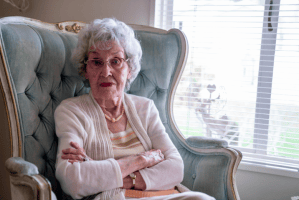
Norah’s mother, Tara Wood, shared the heartwarming story of how Norah met her best friend, 82-year-old Mr. Dan, in a grocery store in 2016. The widower had recently lost his wife, and Norah reaching out her hand in friendship led to one of the most wholesome and beautiful BFF stories ever.

In a Facebook video, Upworthy shared how Norah and Mr. Dan met and how their friendship blossomed:

Wood set up a Facebook page after the story went viral for people to follow the unexpected friendship, which has been going strong for the past three years. Here’s one video that exemplifies the sweet bond these two shared.

“I’m not sure what she was thinking about,” wrote Wood, “but while we were sitting on Dan’s back porch, Norah started crying. Mr. Dan asked her what was the matter. ‘Nothing. I just love you a lots’ she said.”

Sadly, this week Wood shared the news that Mr. Dan passed away on February 10.

“Unsurprisingly, the timing was just as extraordinary and remarkable as Norah and Mr. Dan’s initial meeting…” Wood wrote. “We’d spent the morning with him just the day before. He was in good spirits, joyful, and happy. He had a belly full of pancakes and a heart full of love.”

“I want to thank you all for being part of Norah and Mr. Dan’s beautiful friendship,” she added. “Your comments, cards, letters and gifts certainly made him feel beloved and cherished. He was grateful for and appreciated every one of you.”

Rest in peace and love, Mr. Dan. Thank you for showing us how much kindness and compassion matters in all stages of our lives.

  • Man’s raw truth about why he hasn’t gotten over his mom’s death hits home: ‘I don’t want to.’
    Photo credit: CanvaA man lying in bed in a state of grief.

    Losing a loved one is arguably one of the hardest human experiences, but also one of the most universal. Few of us will go through life untouched by grief, but some losses hit harder than others, even when we know they are coming. For instance, most people expect their parents will die before they do, but that doesn’t make the loss any easier when it happens.

    One man’s raw embrace of grief after losing his mother is resonating with people everywhere.

    “You said you’re a middle-aged man who hasn’t gotten over the loss of his mother,” Steven Bartlett, host of The Diary of a CEO podcast, said to guest Scott Galloway, a New York University marketing professor. “Is there a way to?”

    “I don’t want to,” replied Galloway, wiping away his tears.

    Grief isn’t a bug, but a feature

    “I think the receipts for love is grief,” Galloway said. “I hope my boys feel the same way about me. It hasn’t gotten in the way of my life. It makes me be more bold with my emotions. I used to see it as a problem. I went to grief counseling. Now I see it not as a bug, but as a feature. And so what I would tell every young person is I hope they have a lot of joy in their life. I also hope they have a decent amount of grief, because that means they have people they love immensely.”

    “You can never tell your parents how much you love them too much,” he continued. “Forgive them, and…my mom died slowly, which was bad for her, but it was good for me because nothing went unsaid. I miss my mom terribly. I’m a middle-aged man who hasn’t gotten over the death of his mother. Light of my life. Raised me on her own. Secretary’s salary. Gave me confidence. Everything.”

    Do we really need to “get past” the loss of a loved one?

    Galloway’s honesty about not wanting to get over his mom’s death hit home for a lot of people. So often, grief gets treated as a problem to fix, rather than an integral part of the human experience. Counseling can help when grief interferes with someone’s daily life, of course. But the idea that we need to “get over” or “get past” the loss of a loved one doesn’t make sense for a lot of people, as evidenced by the Instagram comments:

    “Profound grief has not hindered my life. I welcome the tears. Heart forever broken but still beating.”

    “My mom passed away 10 years ago and the pain can be unbearable. This is a beautiful way to frame this as ‘Receipts for love is Grief’ 🥹 I needed to hear this 🙏🏾 Thanks for sharing Scott.”

    “Lost my mum 3 years ago and miss her everyday – the reason the way I am is because of her and I can never thank her enough – single mother warrior queen. ❤️”

    “Exactly what I say when people tell me I need to get over losing my mom 🥹❤️ thank you.”

    grief, loss, grave
    Grief can last a lifetime. Photo credit: Canva

    “I’ve never ever gotten over my mother passing nor will I ever and I am pleased to watch this video as I know I’m not alone. 💔”

    “We need more of this type of conversation – BE BOLD WITH YOUR EMOTIONS! ♥️ People run away and hide from grief, pain and the uncomfortable – grief really is the receipts for LOVE ❤️ Grief doesn’t need fixing, just honour 🤍”

    “I wonder at what point did humanity veer so off course that we started seeing grief as a problem. Thank you for this conversation! Grief is here because love was here first! ❤️”

    “Grief is healthy. And we’re not supposed to ‘get over’ the loss of loved ones, in my opinion, we learn to love them and honor them differently.”

    “This is exactly how I feel about my dad. What a beautiful way of looking at grief.”

    Grief is evidence of love, and in Galloway’s case, the evidence clearly speaks for itself. What a beautiful tribute to his mother and a relatable approach to processing a profound loss.

  • Mom draws all over her toilet to teach her kids a lesson on cleanliness
    Photo credit: via Canva and Tod PerryA confused child and a toilet with artwork.
    ,

    Mom draws all over her toilet to teach her kids a lesson on cleanliness

    It may seem a little odd, but it’s pretty brilliant.

    Teaching kids how to clean up after themselves is one of the hardest things to do as a parent…mainly because it’s difficult to make taking out the trash or washing the dishes exciting.

    Jayne Ann Osborne, the creator behind MommingonPurpose, deserves love from parents everywhere because she took an incredibly icky chore, cleaning the toilet, and turned it into an activity her kids enjoyed. “Ready to teach your kids how to level up their toilet cleaning skills? You’re just a dry-erase marker game away!” Osborne opens her video.

    To teach her kids how to clean the toilet, Osborne first disinfected it herself, so her young kids wouldn’t be exposed to any germs. Then, she drew all over it with a dry-erase marker that wipes off easily with a wet rag. She told her kids that all the marks on the toilet were germs and that they all had to be wiped away. 

    Mom has a fun way of teaching her kids to clean the toilet

    “By scrubbing the dry-erase marker off, they are learning all the nooks and crannies of the toilet in a way that is fun, challenging, and memorable. Without the ick,” she captions the video.

    The dry-erase marker game works well because it teaches multiple lessons. Firstly, there are many hidden spots on a toilet that need cleaning and may not be noticed at first glance. Secondly, a toilet should be thoroughly cleaned because germs have many places to hide. After the job was complete, she gave her kids a prize depending on how well they wiped away all the evil germs.

    germs, bacteria, cleanliness, disease, microscopic bacteria
    Microscopic bacteria. Credit: TrueCreatives/Canva

    Be careful when drawing on the lid

    Osborne does have a big note for everyone who tries this at home: “Keep a little isopropyl alcohol handy in case the dry-erase marker scribbles leave anything behind.”

    Editor’s note: I tried this on my own toilet, and it took a little soap and water to get the dry-erase marker off the plastic toilet lid. It doesn’t wipe down as easily as porcelain. 

    toilet, gloves, cleaning backroom, cleanser, antibacterial cleanser
    Someone cleaning a toilet. Credit: PixelShot/Canva

    Shifrah Combiths, a writer at Apartment Therapy, tried the toilet game and made sure her children understood the importance of cleaning the entire bowl. “The kids were exuberant about wiping off the marker, and we had to make sure they didn’t scrub the toilet tank lid too hard. My husband was worried it might crack! I also let them discover and wipe down all the marker lines as they found them, but I made sure after they were done, to explain to them that when cleaning a dirty toilet for real, it’s very important to start with the cleanest areas on the toilet and then work their way to the dirtiest. Of course, this only teaches them about the outside and lid of the toilet and not the bowl, but it’s still a useful lesson,” Combiths wrote.

    Combiths also had a little difficulty getting the marker off the toilet lid. “The marker wiped perfectly clean from the porcelain surfaces of the toilet, but left marks behind on the plastic lid. Osborne recommends using isopropyl alcohol if this happens, and a Magic Eraser got most of it off in our case,” she wrote.

    Osborne’s toilet-cleaning hack is a great way to teach kids how to clean one of the dirtiest and trickiest parts of the house, but she also has a great lesson for parents. With a little creativity and a sense of humor, just about anything can be made to be fun, even cleaning the toilet.

  • Millennial mom is stunned when grandma compares parenting in the 80s to now
    "My anxiety could not have handled the 80s."
    ,

    Millennial mom is stunned when grandma compares parenting in the 80s to now

    Taylor Wolfe couldn’t believe her mom slept soundly without any kind of baby monitor.

    Raising kids is tough no matter what generation you fall into, but it’s hard to deny that there was something much simpler about the childrearing days of yesteryear, before the internet offered a million and one ways that parents could be, and probably are, doing it all very, very wrong.

    What’s especially fascinating is that our data and best-practices have gotten so much better over time. Parents in the 80s had no idea that crib bumpers were dangerous, just like their parents didn’t know that using whiskey as a sleep aid probably wasn’t the best idea! We know better, and yet, we’re burdened by the overwhelming amount of knowledge and potential dangers around us.

    Taylor Wolfe, a millennial mom, nails this conundrum perfectly as she asks her own mother a series of rapid-fire questions about raising her during the 80s and the stark contrast in attitudes becomes blatantly apparent.

    The conversation that hit a collective nerve

    In a clip posted on TikTok, Wolfe and her mom sit side by side on the couch and have a fascinating discussion.

    First off, Wolfe can’t comprehend how her mom survived without being able to Google everything. (Not even a parent, but I feel this.)

    “What did we have to Google?” her mom asks while shaking her head incredulously.

    “Everything! For starters, poop!” Wolfe says. “Cause you have to know if the color is an okay color, if it’s healthy!”

    “I was a nursing mom, so if the poop came out green, it was because I ate broccoli,” her mom responds.

    …Okay, fair point. But what about handy gadgets like baby monitors? How did Wolfe’s mom keep her kid alive without one?

    “I was the monitor, going in and feeling you,” she says. Wolfe asked her mom how she slept without a baby monitor and knowing for certain, at every instant, that she was safe? “We just slept” her mom deadpanned.

    Her mom’s answers are something else entirely

    Could it really be that easy? It was for Wolfe’s mom, apparently. Rather than relying on technology, she simply felt her child and adjusted accordingly.

    “If you were hot, you slept in a diaper. If you were cold, you had a blanket around you.” Done and done.

    Wolfe then got into more existential questions, asking her mom if she ever felt the stress of “only having 18 summers” with her child, and how to make the most of it.

    Without missing a beat, Wolfe’s mother says, “It’s summer, I still have you.”

    Cue the tears!

    Going by Wolfe’s mom, the 80s seems like a time with much less pressure on parents.

    From feeding her kids McDonald’s fries guilt-free to being spared the judgment of internet trolls, she just sort of did the thing without worrying so much if she was doing it correctly.

    Parents today are feeling it too

    That’s nearly impossible in today’s world, as many viewers commented.

    “Google just gives us too much information and it scares us,” one person quipped.

    Another seconded, “I swear social media has made me wayyyy more of an anxious mom.”

    “it’s almost like all the technology, and it’s advertising, leads to so much unnecessary anxiety” someone added.

    Even a professional noted: “As someone who has worked in pediatrics since the 80s, the parents are way more anxious now.”

    It’s no wonder that parents’ mental health is, collectively, in the toilet. We’re more stressed today about money, work-life balance, getting into good schools, signing up for activities that gobble up all our time… everything.

    So what can modern parents actually do?

    Experts say there are ways parents can manage the stresses of modern life, though. Reducing phone and social media use, for starters, is a good way to avoid ruminating on all the potential dangers of the world. Parents are also challenged to push themselves out of their comfort zone by allowing their child more freedom and independence than they’d normally be comfortable with. For example, letting your kids walk to school or go buy something from a store without your help.

    I don’t think anyone truly wants to go back in time, per se. But many of us are yearning to bring more of this bygone mindset into the modern day. And the big takeaway here: No matter how many improvements we make to life, if the cost is our mental state, then perhaps it’s time to swing the pendulum back a bit.

    This article originally appeared three years ago. It has been updated.

  • Mom shares 19  gems of knowledge for her daughter’s 19th birthday
    Photo credit: CanvaA young woman blows out her birthday candles, left, and a birthday cake, right.

    A woman who uses the Instagram handle Hope with Holly often makes videos in which she imparts wisdom from her own experiences. She’s candid in her discussions about feminism, marriage, divorce, finding courage, and much more. So when her daughter turned 19, it seemed like the perfect time to share 19 pieces of advice for a better life.

    In a Reel dedicated to her daughter, she lays it all out with precision and love. Casually putting her hair in a ponytail while slicing a watermelon—and later placing strawberries on a white-frosted birthday cake—she looks straight into the camera and declares, “This is what all women should know by the time they turn 19.”

    1. You are not here to be chosen. You are here to choose.
      “And if you build your life around being picked, then you will tolerate things that you should walk away from.”

    2. Your ability to earn money will determine your freedom.
      “Love matters. But money determines if you can leave if it turns unhealthy.”

    3. Attraction is not a sign of safety.
      “Your nervous system can be drawn to chaos. It’s not a sign of safety. Know the difference.”

    4. A man’s potential is irrelevant. His patterns are everything.
      “Only patterns matter. Patterns are who he is.”

    5. Chemistry can lie. Character doesn’t.
      “Butterflies are often anxiety. And peace often feels like boredom. But it’s what lasts.”

    6. If he can’t regulate his emotions, he will regulate them through you.
      “That means control, blame, withdrawal, anger, or defensiveness. Don’t let that happen.”

    7. You cannot love someone into being healthy.
      “Love does not fix trauma. Only therapy, accountability, and effort do.”

    8. Marriage will not fix a relationship.
      “It will amplify whatever’s there, whether it’s good or bad.”

    9. Children will expose a relationship, not save it.
      “They do not bring you closer. They just expose what’s already broken…or strong.”

    10. Your standards will cost you relationships—and that’s the point.

    11. Loneliness is not an emergency.
      “Rushing to fill it is how you end up in the wrong life.”

    12. A man who wants you will pursue you with clarity.
      “If you feel confused about him, that’s your answer. Walk away.”

    13. Sex is not a currency for love.
      “Instead, it’s the byproduct of a healthy relationship—and an emotionally safe relationship.”

    14. Your body will change. Your value does not.
      “Anyone who ties your worth to your youth is not a safe person.”

    15. Pay attention to how he handles the word “no.”
      “That will tell you everything you need to know about him.”

    16. You teach people how to treat you by what you tolerate.
      “Boundaries are not words. They’re decisions. Enforce them.”

    17. Healing is your responsibility.
      “What happened to you was not your fault. But what you allow to continue is your responsibility.”

    18. Build a life that you do not need to escape from.
      “Then choose a partner who enhances it.”

    19. You are allowed to want more.
      “More respect. More peace. Settling is not maturity. It’s just fear dressed up as acceptance.”

    She adds, “Now I don’t need you to be perfect, girl. But I do need you to be powerful enough to walk away from anything that’s not perfect for you. Happy birthday, honey!”

    The comment section is filled with support, especially from people who say they wish they’d learned these lessons earlier.

    “I can only imagine how different my life would have looked had I heard this narrative by 19. Learning all this by 39. Better late than never. Thanks, mama.”

    Some are also highly focused on her decorating and baking skills: “Now let me watch this again but this time without getting highly distracted by all the layers of that awesome fruit tower.”

    And one 19-year-old was especially grateful, writing, “I turned 19 two months ago, seeing every woman wishing they heard these when they were younger, I would like thank you so much that you reached me in the right time 🙂 Happy birthday to your daughter and wishing your family the best 💛”


  • Nutrition expert demonstrates foolproof method to get her picky kids to ‘eat anything’

    Photo credit: Canva Photos

    A woman preparing meals, left, and a child eating broccoli, right.

    Picky eaters are a huge challenge for many parents, even though it’s considered a normal developmental stage. Harvard Health Publishing writes that young children being picky about food is one way they learn to assert their independence, for example.

    Even though it’s extremely common and normal, experts also recommend that parents start early to break picky eating habits; once those habits get locked into place, they’re even tougher to break. Which is just one more thing for overloaded parents to worry about when planning meals is already difficult enough.

    One well-qualified mom demonstrates her thoughtful technique for getting picky eaters to “eat anything”

    Fitness coach Mel Avan, who has taught university-level health, wellness, and nutrition courses, has developed a method. It involves a lot of trial and error while raising a picky eater of her very own.

    moms, motherhood, parenting, kids, toddlers, food, picky eaters, groceries, meal planning, budgeting, family, children, picky eating hacks
    Picky eating is a challenge as old as parenting itself. Photo credit: Canva

    In a video posted to YouTube, she not only explains the technique, but also demonstrates it in real time as she attempts to feed her skeptical son a noodle.

    It starts with creating a little scarcity. She’s not overly animated about it, but she subtly creates the mystique that the pasta is something of a treat. “Come try this,” she says. “You can only have one piece.”

    Then, she stays completely neutral. She doesn’t hype up how good it is or rave about how healthy it might be. Her son says it looks like a noodle. She agrees stoically. “It is a noodle.”

    Then she, in her words, shuts up. “I let him lead the interaction. I ask questions, but I don’t share my opinion or give praise.” Not even to applaud him for being willing to try it.

    Finally, she waits. Sure enough, a few minutes later, her son announces he’s hungry and that he “wants the pasta.”

    Mission accomplished.

    She elaborates in the caption that the entire thing hinges on decreasing pressure. A small portion lowers pressure. A neutral tone lowers pressure. A slow pace lowers pressure. And allowing the child to come to you when they want more makes it their idea to eat the food, rather than a way of appeasing you. Again, pressure.

    Mom gets challenged to repeat the demonstration under more difficult circumstances

    While the video went viral to the tune of more than a million views, and many viewers loved the technique on display, not everyone was satisfied.

    This being the Internet, it was only a matter of time before Avan got called out and challenged: A noodle? Really? Try a piece of broccoli or some spinach.

    She accepted the challenge and, in a follow-up video on Instagram, introduced a few new techniques for more challenging foods that still fit within her core philosophy.

    First, she introduces an element of choice. “Do you want me to serve your vegetables, or do you want to do it with the tongs?”

    Next, and once again, tiny portions. A heaping pile of something they’re skeptical about eating only makes the task more overwhelming.

    Then there’s one of her more unique tactics: serving food family-style. In this case, she made her son a plate with a small amount of veggies, but also offered the entire tray at the table, where he could easily grab more with a “fun utensil.” It’s a way of giving him control.

    And finally, finding even more opportunities for autonomy and control. Since picky eating is often about independence, she lets her son control things that aren’t as important, like where the ketchup goes on his plate.

    Mom, and experts, weigh in on “Eat what I made or don’t eat”

    In another follow-up video, Avan responds to comments suggesting that she was doing too much coddling and manipulating. Instead, some old-school parents favor the “Either you eat what I made, or you don’t eat” approach.

    Avan says that, in her personal experience, this approach backfired spectacularly. When kids don’t eat, not only is it unsafe and unhealthy, but you’ll also run into a host of behavior problems as they get crankier.

    At least one study has found that putting pressure on children to eat, or to eat more, can actually have the opposite effect: “Children consumed significantly more food when they were not pressured to eat and they made overwhelmingly fewer negative comments.”

    And if things aren’t going well, research cited by Children’s Hospital of Philadelphia says you shouldn’t give up: It can take eight to 15 exposures to a new food before a child will willingly accept it.

    The old-school parents of yesteryear got a lot more right than we’re often willing to give them credit for. However, our understanding of child psychology has grown by leaps and bounds, and clinically validated research can teach us a lot about how to handle challenges like picky eating. Lowering pressure instead of increasing it, and remaining neutral rather than excited or angry, is far more effective.

    But in the end, picky eating is normal for young kids, and as long as you make a solid effort, most eventually grow out of the phase.

  • His daughter crashed on a skate ramp, and his response was a masterclass in awesome parenting
    As a parent, it's not always easy to know how to react in the moment.

    As a parent, it’s not always easy to know how to help your kids learn from life experiences. Some lessons they learn naturally and others they learn through parental guidance, but discerning which is which and how those things overlap can be challenging.

    Kids don’t come with instruction manuals, of course, but sometimes we see examples of great parenting we can point to and say, “AHA! That’s how it’s done.”

    One such example comes from a dad named Robert. Back in 2022, he was teaching his then-5-year-old daughter Aubrin to skateboard and set up a mini half pipe for her to learn on. In a video on Instagram, Robert shared an exchange he had with Aubrin after she crashed hard on the ramp during a lesson.

    Watch:

    What happened after she fell is the real story

    It’s a sweet video that doubles as a masterclass in effective parenting. Robert communicates with a perfect blend of empathy, encouragement, and empowerment, which gives his daughter exactly what she needs to tackle her fears and persevere in what she wants to do.

    Even his initial question after she fell, “Did it scare you or did it hurt you?” is helpful for making her more aware of what she’s actually feeling as well as knowing how best to help her.

    Seeing this gentle parenting scenario play out is just so heartwarming. (And if Aubrin’s voice sounds familiar, you may have seen the viral “stuck-asaurus” video in which she offered delightfully colorful commentary while snowboarding in a dinosaur suit.)

    Here is what was going through his mind

    Robert explained his thinking behind the way he responded to Aubrin’s fall:

    “Trying something new can be scary but re-trying something after slamming can be terrifying.

    I had to re-gain her trust and she needed to re-establish her confidence after this slam and it was a tough but beautiful rollercoaster experience.

    This is one of the biggest psychological battles we face as humans, because once that negative experience has made its home in our brain it’s very hard to get it out.

    I know from intense personal experience that a bad fall can have long lasting [psychological] effects and truly believe, that when possible, it’s best to get back up and try it again with the goal being to end the session with a positive experience; to not have that negative memory ruminating in your head until the next time you return to try.

    I’ve been asked a lot ‘How do you know what to say in these moments?’ and the truth is I absolutely don’t know what to say.

    Seeing her slam sucks the air out of my lungs and my heart drops but I just try to stay calm and redirect with some questions or comments while surveying the situation. A parent’s emotions (depending on how you instinctively react) will oftentimes influence the child’s emotional response and it’s my goal to remove my influence and allow her to just be, to feel, to hurt at her pace and it allows me to get a better reading of how she’s truly feeling in these pivotal moments.

    Ultimately I just respond from the heart. If you calmly lead with empathy and support without applying pressure you’ll do just fine.”

    Beautiful insight and advice. Unfortunately, many parents are raising kids while working through wounds from their own childhoods, and when you’re battling parental instincts that aren’t particularly healthy or helpful, having it all laid out like this is really valuable.

    The comments showed just how much this resonated

    Commenters on Instagram and Reddit have expressed how much they appreciate seeing supportive parenting in action.

    “I actually got emotional watching this…” wrote one person. “I am learning so much from your posts!!! As someone whose parents led from a place of fear a lot of the time, this is showing me so much possibility of what the opposite can look like. Thank you for being so open, we are all made the better from it.”

    dad on skateboard, kids skating, parenting
    Parents often set the tone for how kids react. Photo credit: Canva

    “I wish I had a dad like you growing up. She’s so lucky,” wrote another.

    “Made me smile and also as a grown ass man, gave me watery eyes – as someone that never had this kind of treatment growing up and kind of needed it – this is the kind of dad I will be if I ever meet someone and have kids,” shared another.

    Whether we were raised by gentle, supportive parents or the opposite, we can all recognize effective parenting when we see it. Thank you, Robert, for sharing such a stellar example we can all watch and learn from.

    You can follow Robert and Aubrin’s ongoing family adventures on Instagram (@chasing.sage).

    This article originally appeared four years ago. It has been updated.

  • Mom realizes she’s been using the ‘heavy’ setting on her washer wrong for years—and fellow moms are shook
    Photo credit: Image courtesy of @granolabarpan/Instagram (with permission)Stay-at-home mom Catrina shares shock at learning what the 'heavy' setting on her washer means.

    Knocking out loads of laundry is a feeling of accomplishment that is unmatched. Depending on what needs to be washed, washing machines offer a variety of settings for the ideal clean. But even the most seasoned laundry pros can admit that they don’t fully understand how to use them properly.

    One mom’s washing machine mistake went viral

    One stay-at-home mom shared her funny and relatable washing machine mistake. Catrina (@granolabarpan) got the shock of a lifetime when she realized that she had been using the “heavy” setting on her washer wrong for years.

    “POV: today years old when it clicks why my blankets are sopping wet!!! I thought HEAVY meant heavy items being washed,” she wrote in the video’s overlay.

    “Heavy on my machine means heavily soiled,” she went on to add in the comments. “I thought it meant the stuff I was putting in the machine was heavy in weight/pounds.”

    Some moms are also realizing this for the first time. “Ok.. so I am 66 years old learning this???!! I always thought that heavy meant weight also ,” one person commented. Another person wrote, “Well I was today years old when I learned what heavy meant too… “

    Turns out, a lot of us have been confused

    Others expressed confusion with so many settings, and reminiscing on simpler times. “Wait a minute. . I think I need to for once go and read the manual because I have been wondering about all of the options,” another user wrote. And another chimed in, “I want my old $250 3 options hot/warm/cold on/off washer back. It didn’t die it rusted out but took 25yrs to do it. I had 5 kids, plus my ex in-laws living with me.”

    Struggling to understand the settings on your washing machine? You’re not alone.

    Knowing these settings helps avoid common laundry mistakes, such as using the heavy cycle for heavy fabric weight instead of heavy soil, which can lead to ineffective cleaning or damage over time,” Vanessa Ruiz, a professional organizer at Sparkly Maid San Antonio, tells Upworthy.

    Washing machine settings explained

    These are five washing machine settings and how they work:

    1. Normal/Regular Cycle

    Ruiz explains that this is your typical setting for day-to-day loads such as t-shirts, jeans, sheets, and underwear.

    “These laundry loads are typically washed in warm water and the setting is rinsed with medium spin speeds through agitation in order to properly clean moderately soiled garments,” she says. “This cycle is safe enough to wash a variety of different fabric content with a somewhat dirty load.”

    2. Delicate/Gentle Cycle

    Ruiz notes that the delicate cycle is created specifically for delicate fabrics—lingerie, silk, lace, or embellished clothing—that may become damaged in a normal or regular wash.

    “This cycle will use moderate spin speeds through gentle agitation to thoroughly dry clean and not damage clothes too easily,” says Ruiz. “This is the preferred cycle when laundry items that require extra care or are labeled ‘delicate’ or ‘hand wash’ need to be washed.”

    3. Heavy Duty Cycle

    The heavy duty cycle is specifically for heavily soiled items like work clothes, kitchen towels, and bedding.

    “This setting uses higher water temperatures, longer wash times, and powerful agitation to remove stubborn dirt and grime. It’s perfect for those tough laundry jobs, but not recommended for delicate fabrics,” explains Ruiz.

    4. Bulky/Bedding Cycle

    This cycle is often confused with “heavy.”

    “This cycle accommodates larger, heavier items that absorb a lot of water, such as comforters, pillows, and sleeping bags,” says Ruiz. “It uses more water, medium spin speeds, and longer wash times to thoroughly clean bulky items without causing damage or imbalance.”

    5. Quick Wash

    In a rush? This is the perfect setting to use.

    “It is an accelerated wash cycle designed for small loads of lightly soiled clothes, usually lasting 15 to 40 minutes,” says Ruiz. “It’s great for when you need clean clothes fast and can save energy compared to longer cycles.”

    Mystery solved

    So the next time your blankets come out of the wash sopping wet, or your delicates come out looking worse for wear, you’ll know exactly where things went wrong. A little knowledge about what each cycle actually does can save you time, energy, and a lot of unnecessary re-washing. And honestly, if you’ve been doing it wrong for years? You’re in very good company.

    This article originally appeared one year ago. It has been updated.

  • Fed-up mom creates ‘TV schedule’ to mimic ’90s television for her kids
    Photo credit: officialstephwise/YouTubeA mom and therapist has a unique hack for bringing back the low-key childhood experience of the ’90s for her kids.
    ,

    Fed-up mom creates ‘TV schedule’ to mimic ’90s television for her kids

    “There are almost no natural limits anymore, so parents have to become the limit.”

    We live in an age of unlimited choice, thanks to modern technology. At any given time, most of us have access to the entirety of recorded music, thousands of on-demand movies, and even more individual episodes of our favorite shows.

    This amount of choice is enough to make a person’s brain combust, especially when that person is a child.

    Therapist says “parenting was easier in the 90s” and has a clever idea to fix it

    Stephanie Wise, a licensed couples therapist and coach, recently took to social media to share one of her most effective and unique parenting hacks.

    “Parenting was easier in the 90s (and no one wants to admit why),” the YouTube video headline reads.

    She goes on to explain her favorite hack: “Bring back ’90s tech.”

    “One of the hardest parts of parenting is that everything is available all the time. Every show, every song, every snack, every answer, every distraction. And then we wonder why our kids struggle when the answer is No,” she said.

    Setting up an old tube TV in the living room with only basic channels sounds great, but it isn’t super feasible in the modern world. So what Wise does in her household is create a “TV schedule” in which “certain shows only play on certain days,” she said.

    An example schedule she drew up on a whiteboard shows that Sunday is for Bluey, Wednesday is for Spidey and His Amazing Friends, and Thursday is for Puffin Rock. Other days include a few options—such as The Joy of Painting or Mister Rogers’ Neighborhood, old-school choices—or may call for a movie, where the kids can pick from a limited supply of physical VHS tapes.

    Choices are either extremely limited or nonexistent most days, and it makes her life much simpler.

    “There are almost no natural limits anymore, so parents have to become the limit,” Wise said. “All day long. And it’s so exhausting.”

    This is just one small way she gives everyone a well-deserved mental break.

    Well over a million people watched Wise’s video across YouTube and other social media platforms, with commenters weighing in on how the advice resonated with them.

    “The other thing you’re doing is bringing back that feeling of specialness we had when we couldn’t have everything on demand. That’s priceless,” one person wrote.

    “This is so brilliant. You’re also giving your kids the ability to wait, to be bored, to adapt. Those are invaluable in this instant gratification age,” another wrote.

    The kids are more relaxed with fewer choices and have a new “bad guy” to blame

    Wise says that her TV schedule doesn’t just make her own life easier—it eliminates the daily battles: Can I watch this? How about this? No, I don’t like this. Change it to something else.

    If the kids aren’t happy with what’s on TV, Mom is no longer the bad guy—the schedule is.

    She also turns any frustration into a teachable moment: “I know, babe, waiting is so hard. I wish it was Spidey day, too.”

    Not only are kids more than capable of surviving such a cruel exercise in deprivation, it’s actually good for them. Wise says she uses a similar technique in the car, listening only to the radio (no Spotify), and jokes that sometimes the kids have to deal with “a song they hate and have to survive for three minutes…That’s frustration tolerance, baby.”

    What is frustration tolerance? It shouldn’t come as a huge shock that it’s not great for kids (or anyone) to get exactly what they want all the time. “I try to give her opportunities to learn to cope with frustration, boredom, or disappointment,” Wise said. “I don’t want her to feel overwhelmed or controlled by her emotions, so that’s important to me.”

    Researchers agree with Wise that frustration management is a crucial skill for kids to learn before becoming adults.

    Her method also reduces decision fatigue for all parties involved.

    Decision fatigue, especially in an era of unlimited access, can be absolutely exhausting. Research even shows that people who have to make too many decisions day in and day out can simply give up and suffer from a severe lack of willpower.

    Wise tells Upworthy that she and her husband aim to keep things as simple as possible for themselves when it comes to dinner menus and weekend plans, but it’s even more important for the kids. This is where she breaks from some of the more traditional parenting advice:

    “For kids, we keep it simple. I don’t do choices on things like which cup or plate or spoon. I don’t do choices for clothes. For some kids that might be helpful—let them make ‘unimportant’ choices so they don’t fight the important things—but for my daughter, I found it stressed her out and resulted in way more tantrums.”

    Wise admits, though, that what works for her and her family may not be right for everyone.

    Wise is part of a growing movement that aims to bring back the lower-stimulation childhood many Millennials and Gen Xers grew up with. Research suggests that the media kids watch can be especially impactful, and slower-paced cartoons like Franklin or Arthur may help children with emotional regulation.

    The data coming to light on modern kids’ television, screen time, and social media is alarming, but opting out completely feels difficult. Wise’s method struck a chord with other parents because it’s a simple tweak that can make a huge difference.

Uncategorized

Mom has comical response to commenters who complained she was too old for her outfit choices

Pets

Family stages an intervention for pit bull that only misbehaves when Grandma is around

Culture

Middle schoolers in New Hampshire created an adorable mini boat that sailed all the way to Norway

Pop Culture

At 83, Paul McCartney reveals 10 songs that are the ‘soundtrack to his life’