upworthy
Add Upworthy to your Google News feed.
Google News Button
Health

Inside the heads of people who are always late, as explained by stick figures.

Everyone knows a person like this or is one themselves!

relationships, brain, time

I’m late.


This post was written by Tim Urban and originally published on Wait But Why.

I woke up this morning to a text. It was a link:

"optimistic-people-have-one-thing-common-always-late.”

Intriguing. Nothing's better than the headline: "The reason people are [bad quality that describes you] is actually because they're [good quality]."

I got to reading. And as it turns out, according to the article, late people are actually the best people ever. They're optimistic and hopeful:

"People who are continuously late are actually just more optimistic. They believe they can fit more tasks into a limited amount of time more than other people and thrive when they're multitasking. Simply put, they're fundamentally hopeful."

They're big-thinking:

"People who are habitually late don't sweat over the small stuff, they concentrate on the big picture and see the future as full of infinite possibilities."

Late people just get it:

"People with a tendency for tardiness like to stop and smell the roses…life was never meant to be planned down to the last detail. Remaining excessively attached to timetables signifies an inability to enjoy the moment."

By the end of the article, I had never felt prouder to be a chronically late person.

But also, what the hell is going on? Late people are the worst. It's the quality I like least in myself. And I'm not late because I like to smell the roses or because I can see the big picture or because the future is full of infinite possibilities. I'm late because I'm insane.

So I thought about this for a minute, and I think I figured out what's going on. The issue is that there are two kinds of lateness:

1. OK lateness. This is when the late person being late does not negatively impact anyone else — like being late to a group hangout or a party. Things can start on time and proceed as normal with or without the late person being there yet.

2. Not-OK lateness. This is when the late person being late does negatively impact others — like being late to a two-person dinner or meeting or anything else that simply can't start until the late party arrives.

John Haltiwanger's Elite Daily article is (I hope) talking mostly about OK lateness. In which case, sure, maybe those people are the best, who knows.

But if you read the comment section under Haltiwanger's article, people are furious with him for portraying lateness in a positive light. And that's because they're thinking about the far less excusable not-OK lateness.

1. OK lateness. This is when the late person being late does not negatively impact anyone else — like being late to a group hangout or a party. Things can start on time and proceed as normal with or without the late person being there yet.

2. Not-OK lateness. This is when the late person being late does negatively impact others — like being late to a two-person dinner or meeting or anything else that simply can't start until the late party arrives.

John Haltiwanger's Elite Daily article is (I hope) talking mostly about OK lateness. In which case, sure, maybe those people are the best, who knows.

But if you read the comment section under Haltiwanger's article, people are furious with him for portraying lateness in a positive light. And that's because they're thinking about the far less excusable not-OK lateness.

All of this has kind of left me with no choice but to take a quick nine-hour break from working on a gargantuan SpaceX post to discuss not-OK late people.

When it comes to people who are chronically not-OK late, I think there are two subgroups:

Group 1: Those who don't feel bad or wrong about it. These people are assholes.

Group 2: Those who feel terrible and self-loathing about it. These people have problems.

Group 1 is simple. They think they're a little more special than everyone else, like the zero-remorse narcissist at the top of Haltiwanger's article. They're unappealing. Not much else to discuss here.

Punctual people think all not-OK late people are in Group 1 (as the comments on this post will show) — because they're assuming all late people are sane people.

When a sane person thinks a certain kind of behavior is fine, they do it. When they think it's wrong, they don't do it. So to a punctual person — one who shows up on time because they believe showing up late is the wrong thing to do — someone who's chronically late must be an asshole who thinks being late is OK.

But that's misunderstanding the entire second group, who, despite being consistently late, usually detest the concept of making other people wait. Let call them CLIPs (Chronically Late Insane Persons).

While both groups of not-OK late people end up regularly frustrating others, a reliable way to identify a Group 2 CLIP is a bizarre compulsion to defeat themselves — some deep inner drive to inexplicably miss the beginning of movies, endure psychotic stress running to catch the train, crush their own reputation at work, etc., etc. As much as they may hurt others, they usually hurt themselves even more.

I spent around 15% of my youth standing on some sidewalk alone, angrily kicking rocks, because yet again, all the other kids had gotten picked up and I was still waiting for my mom. When she finally arrived, instead of being able to have a pleasant conversation with her, I'd get into the car seething. She always felt terrible. She has problems.

My sister once missed an early morning flight, so they rescheduled her for the following morning. She managed to miss that one too, so they put her on a flight five hours later. Killing time during the long layover, she got distracted on a long phone call and missed that flight too. She has problems.

I've been a CLIP my whole life. I've made a bunch of friends mad at me, I've embarrassed myself again and again in professional situations, and I've run a cumulative marathon through airport terminals.

When I'm late, it's often the same story, something like this:

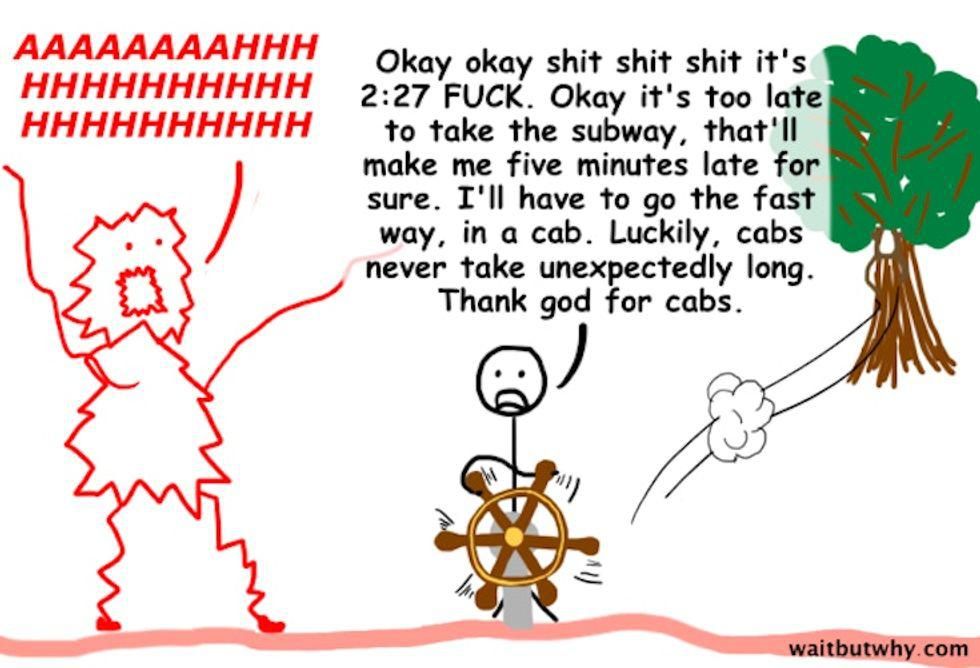
I'll be meeting someone, maybe a professional contact, at, say, a coffee place at 3:00. When I lay out my schedule for the day, I'll have the perfect plan. I'll leave early, arrive early, and get there around 2:45. That takes all the stress out of the situation, and that's ideal because non-stressful commutes are one of my favorite things. It'll be great — I'll stroll out, put on a podcast, and head to the subway. Once I'm off the subway, with time to spare, I'll take a few minutes to peruse storefronts, grab a lemonade from a street vendor, and enjoy New York. It'll be such a joy to look up at the architecture, listen to the sounds, and feel the swell of people rushing by — oh magnificent city!

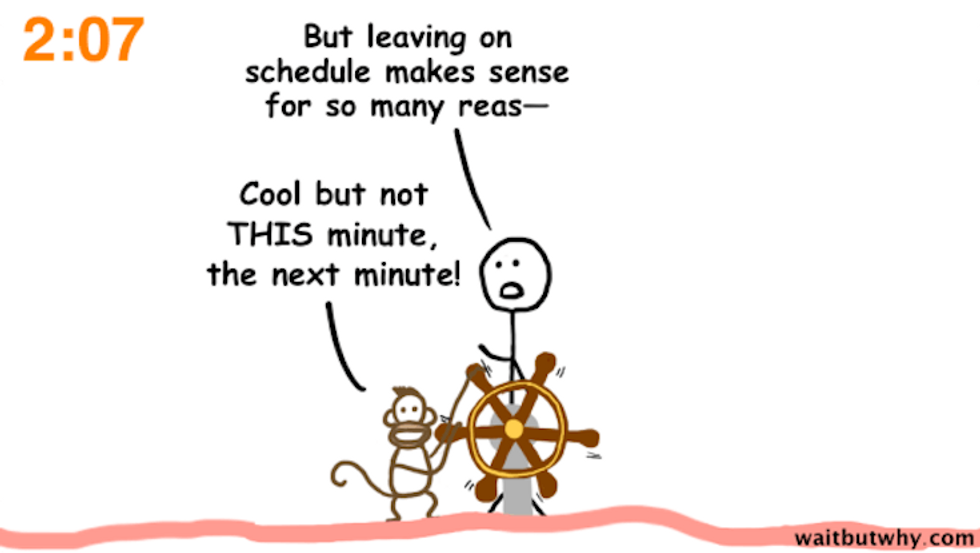
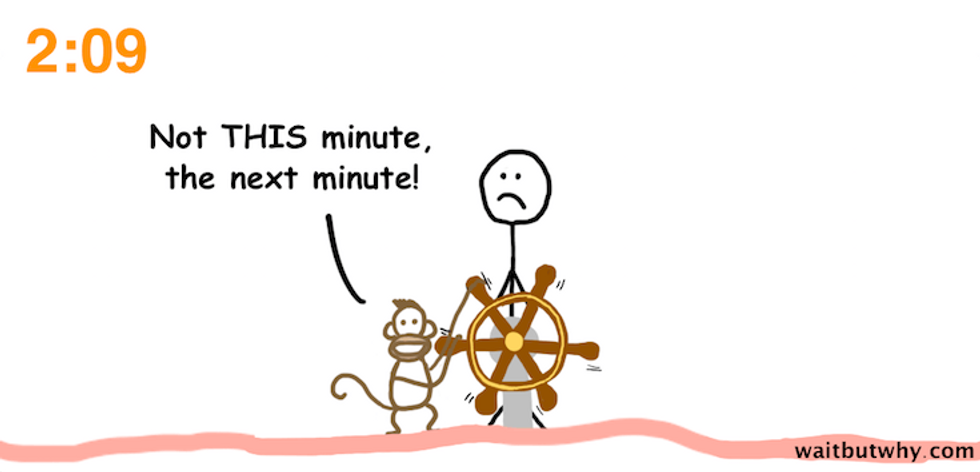
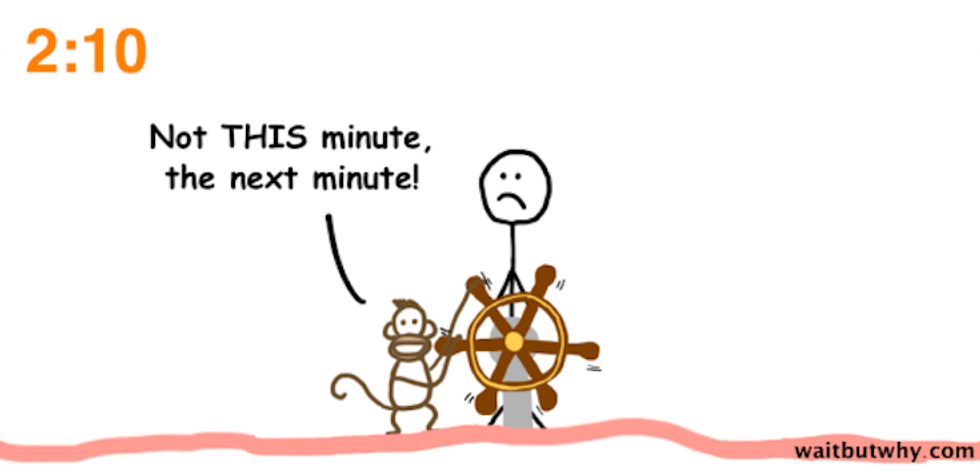
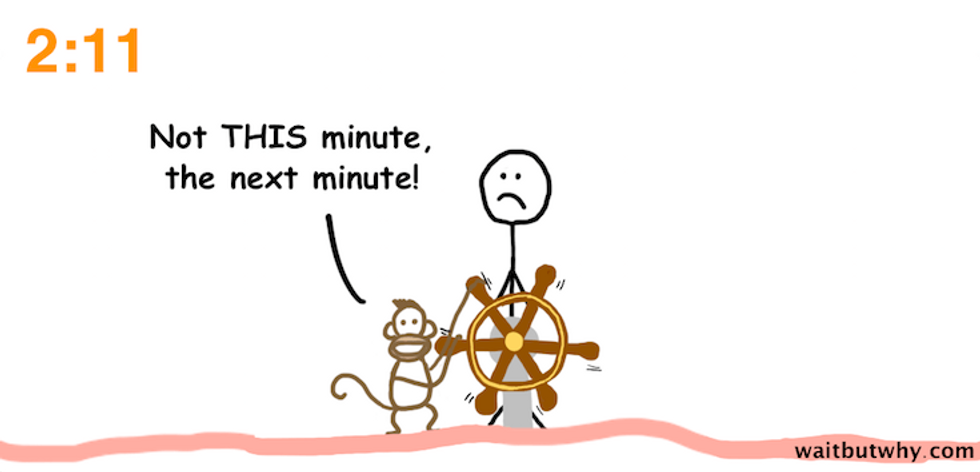
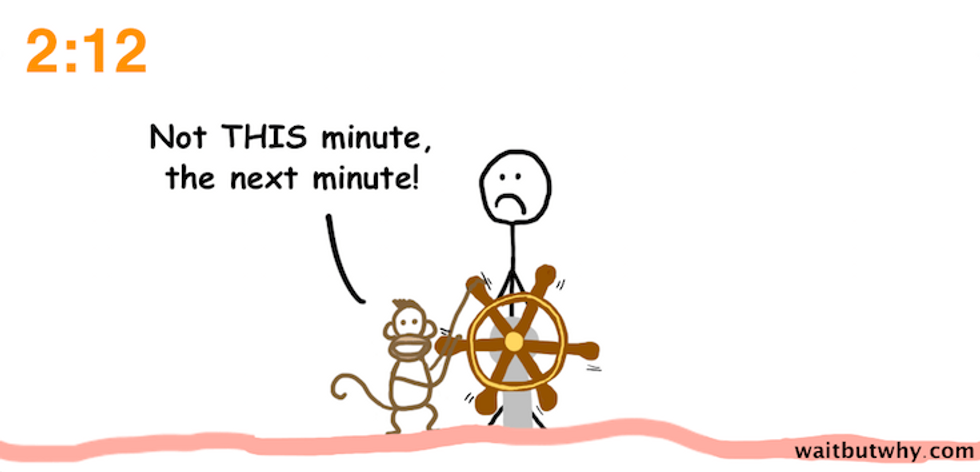
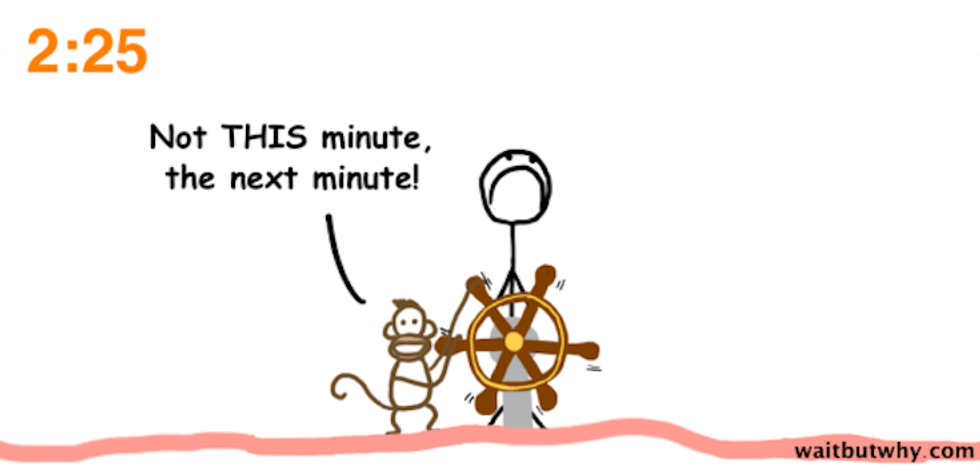
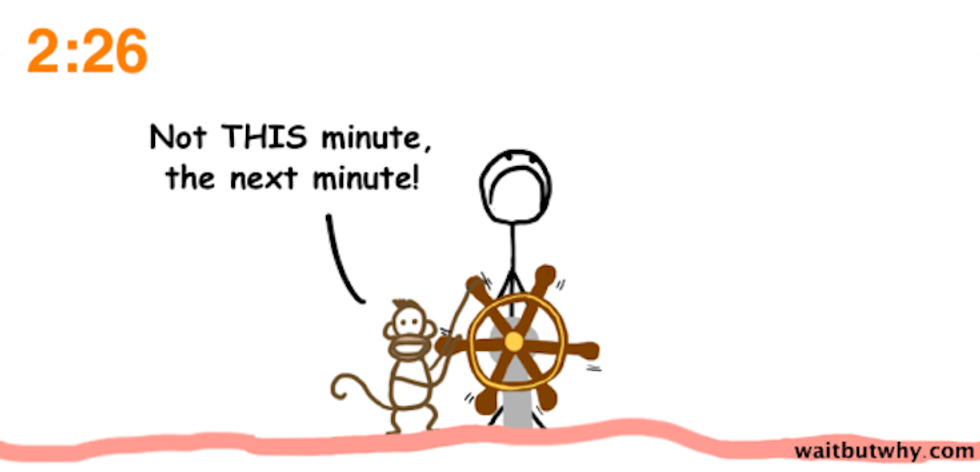
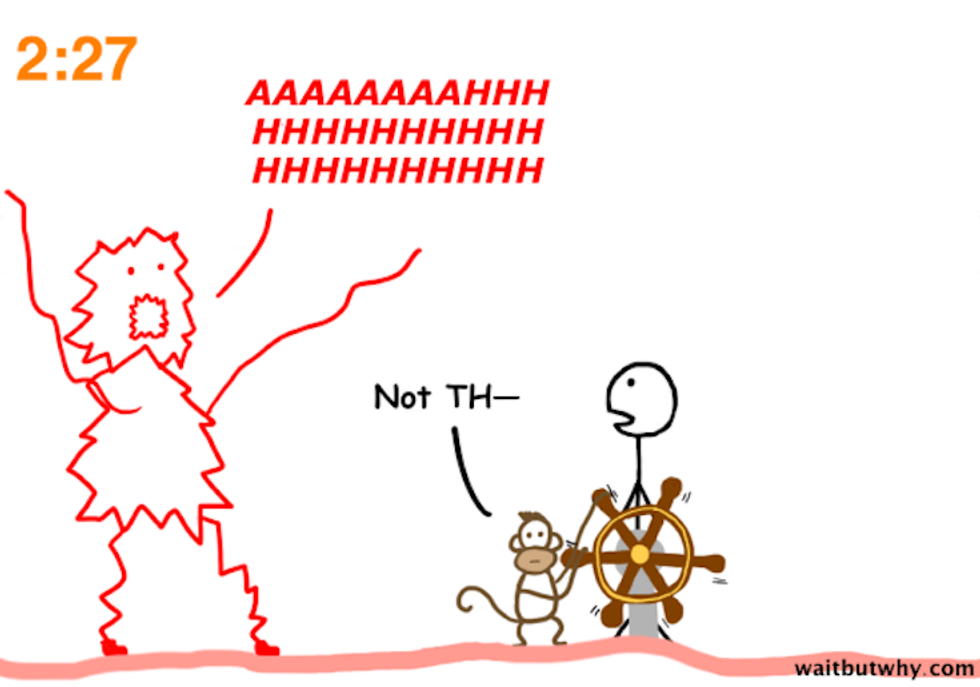
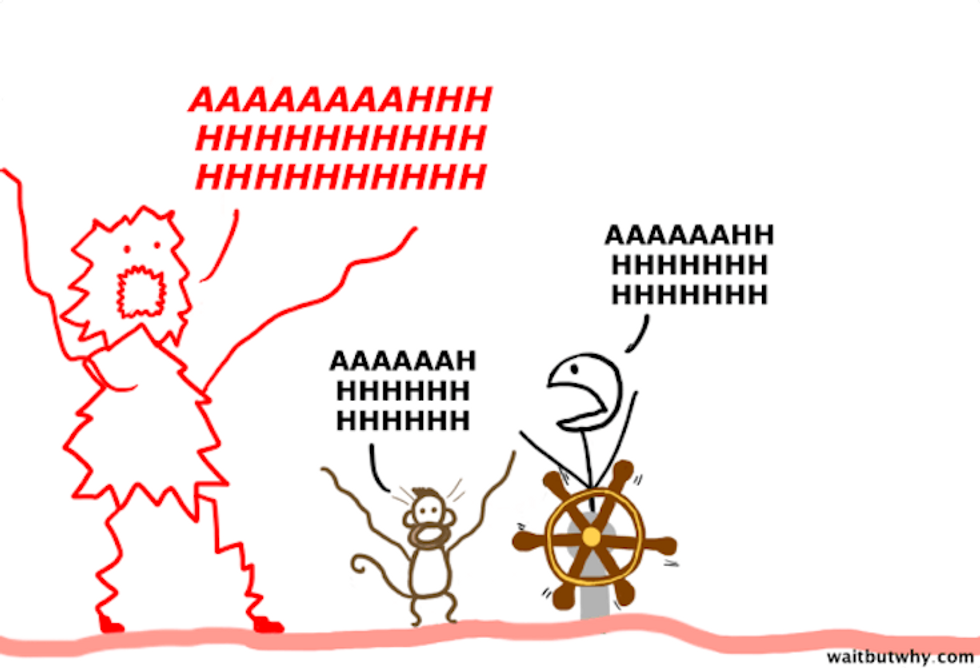
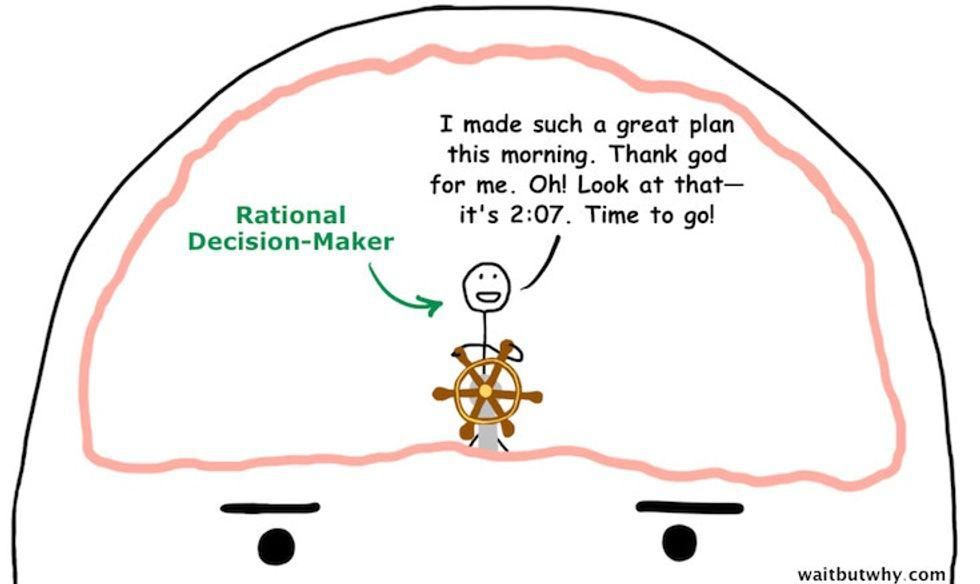
All I have to do is be off the subway by 2:45. To do that, I need to be on the subway by 2:25, so I decide to be safe and get to the subway by 2:15. So I have to leave my apartment by 2:07 or earlier, and I'm set. What a plan.

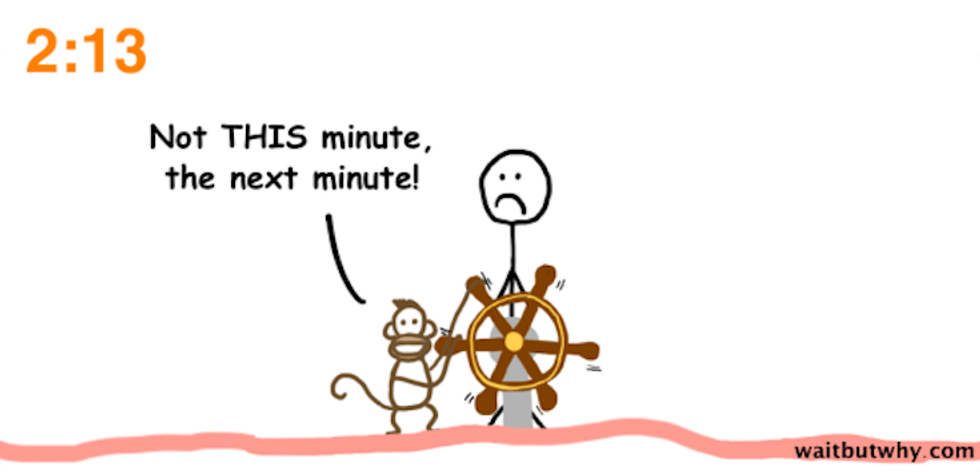
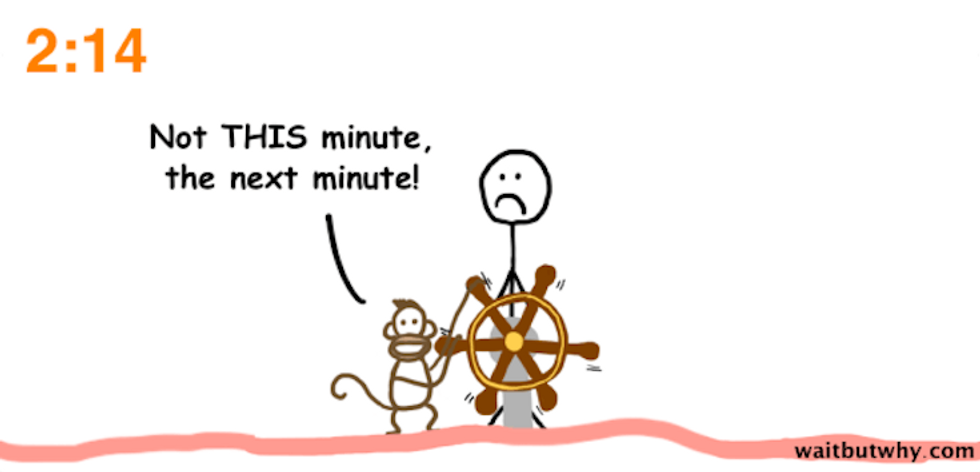
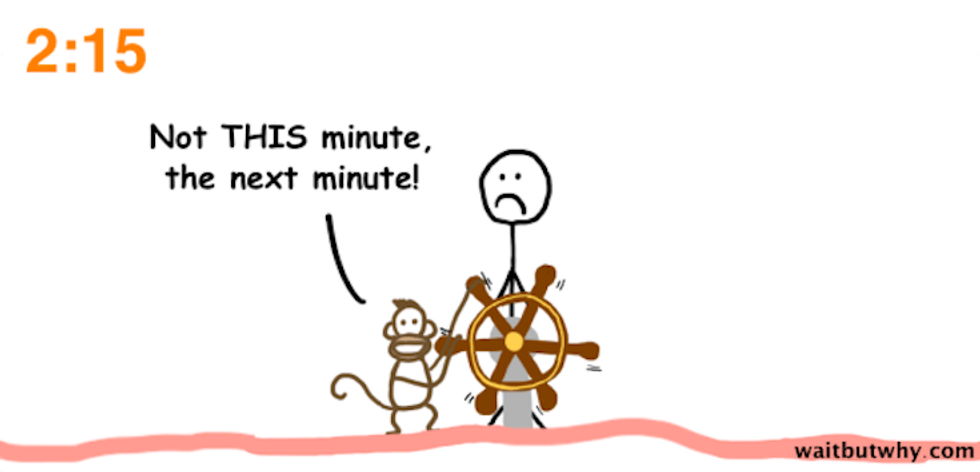
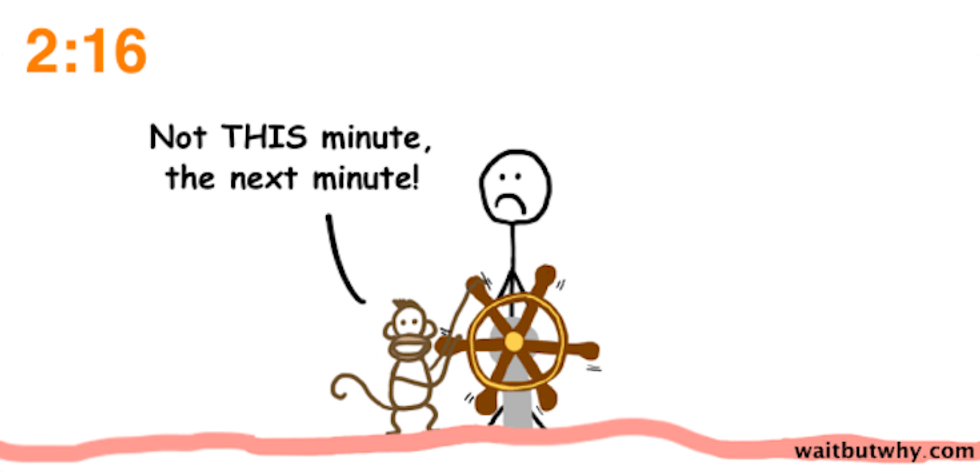
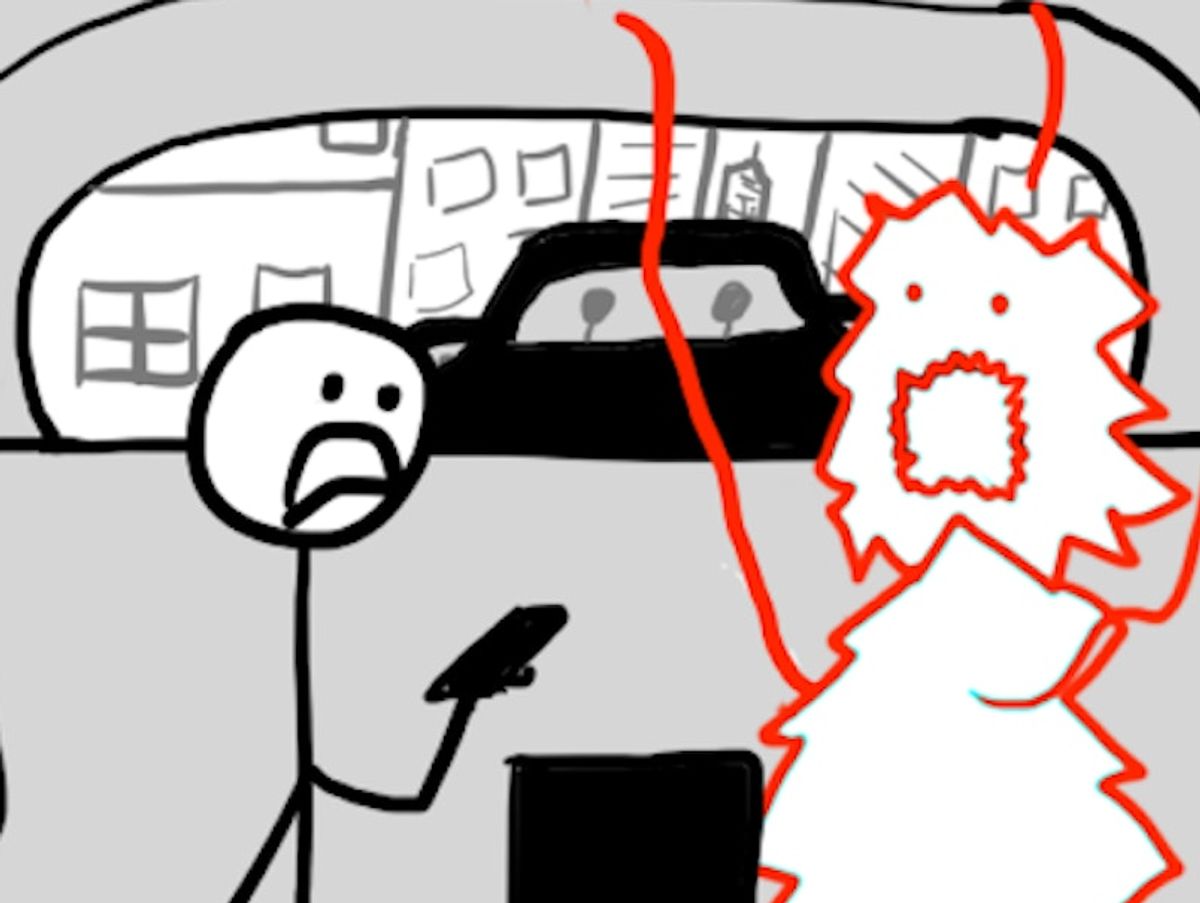
Here's how it'll play out (if you're new to WBW, you're advised to check this out before proceeding):
lateness, behavior, science

Making plans on time.

psychology, procrastination, patient

Maybe some procrastination.

avoidance, mental health, mistakes

Avoiding the issues.

delay, loafing, trifling

Arguing over avoiding the issues.

toying, delaying, loitering

Some dawdling.

dabbling, frittering, dilly-dallying

Some more dawdling.

frizzling, puttering, excuses

And some lingering.

last-minute, slow, delayed

And some more lingering.

belated, tardy, jammed

Is this dragging my feet?

lagging, dilatory, unpunctual

This is dragging my feet.

held up, in a bind, missed the boat

This is becoming a problem.

tired, worn, strained

This is feeling uncomfortable.

thin, peaked, pinched

This IS uncomfortable.

fraught, haggard, worn

This IS a problem.

dependable, accurate, conscientious

But I’m cool.

periodic, timely, ready

So cool.

quick, reliable, heedful, meticulous

Ice cold like a fighter pilot.

minutes, seconds, careful

I’m a chillin’.

lag, postpone, setback

Now worries my way.

stoppage, filibuster, hindrance

Not thinking about it.

bind, lingering, tarrying

Positive thoughts.

stoppage, difficulty, gridlock

Positive action... well now.

obstinate, customs, method

It will all workout.

madness, mental health, regulations

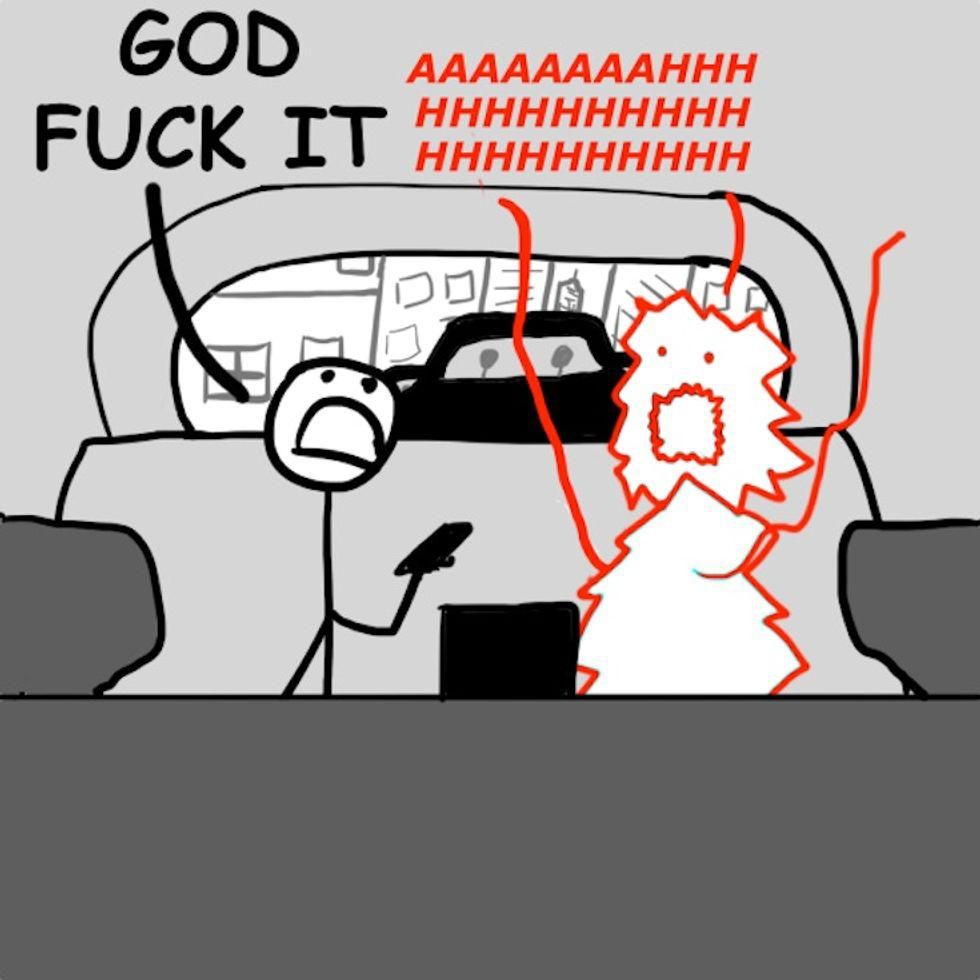
Maybe I’m gonna be late.

anxiety, despair, dismay

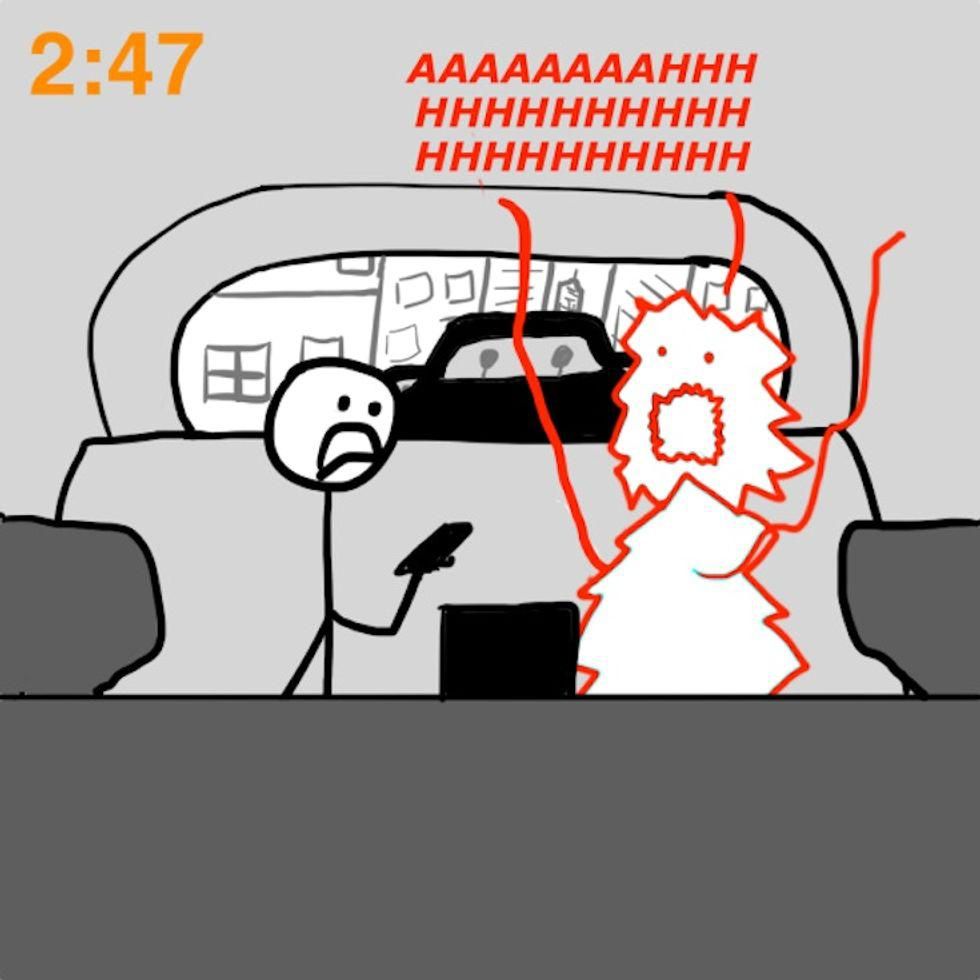
I’m gonna be late.

aversion, disquiet, distress

Oopsie.

fearless, logjam, impasse

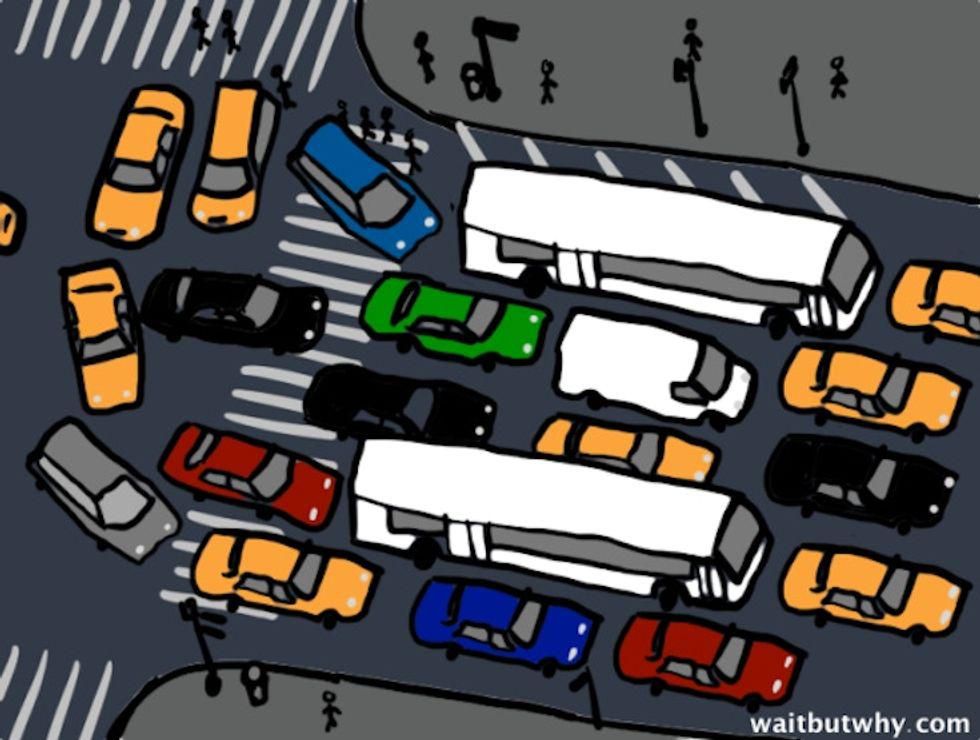
And that’s the traffic.

furious, frantic, rash, audacious

It’s the traffics fault.

careless, foolhardy, hopp

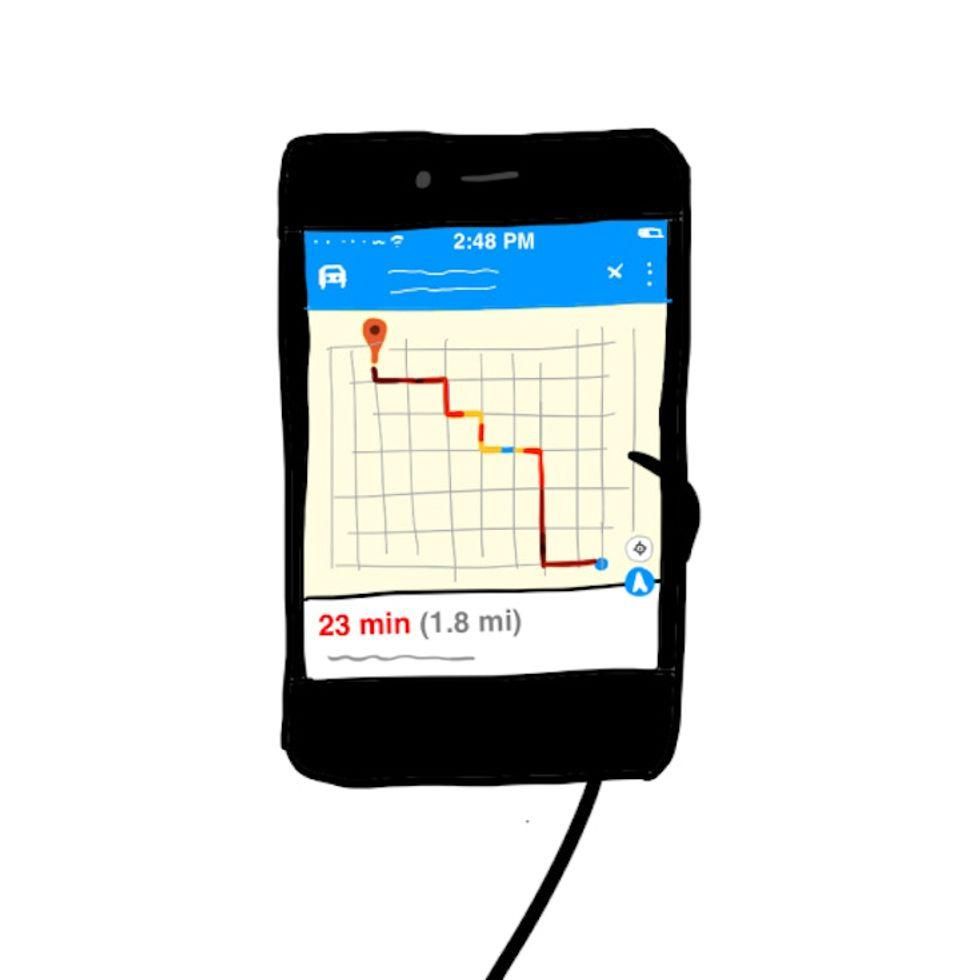
This map is broken.

denial, circumstances, schedule, madcap, impetu

Perfect timing on being late. Nailed it.

CLIPs are strange people. I'm sure each CLIP is insane in their own special way, and to understand how they work, you'll usually have to get to some dark inner psychology.

For me, it's some mix of these three odd traits:

1. I'm late because I'm in denial about how time works.

The propensity of CLIPs to underestimate how long things take comes out of some habitual delusional optimism. Usually what happens is, of all the times the CLIP has done a certain activity or commute, what they remember is that one time things went the quickest. And that amount of time is what sticks in their head as how long that thing takes. I don't think there's anything that will get me to internalize that packing for a weeklong trip takes 20 minutes. In my head, it's eternally a five-minute task. You just take out the bag, throw some clothes in it, throw your toiletries in, zip it up, and done. Five minutes. The empirical data that shows that there are actually a lot of little things to think about when you pack and that it takes 20 minutes every time is irrelevant. Packing is clearly a five-minute task. As I type this, that's what I believe.

2. I'm late because I have a weird aversion to changing circumstances.

Not sure what the deal is with this, but something in me is strangely appalled by the idea of transitioning from what I'm currently doing to doing something else. When I'm at home working, I hate when there's something on my schedule that I have to stop everything for to go outside and do. It's not that I hate the activity — once I'm there I'm often pleased to be there — it's an irrational resistance to the transition. The positive side of this is it usually means I'm highly present when I finally do haul my ass somewhere, and I'm often among the last to leave.

3. Finally, I'm late because I'm mad at myself.

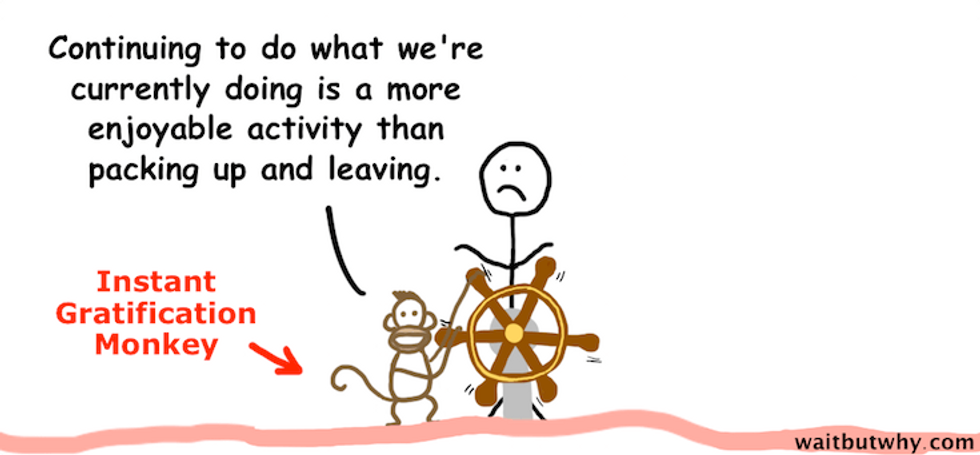
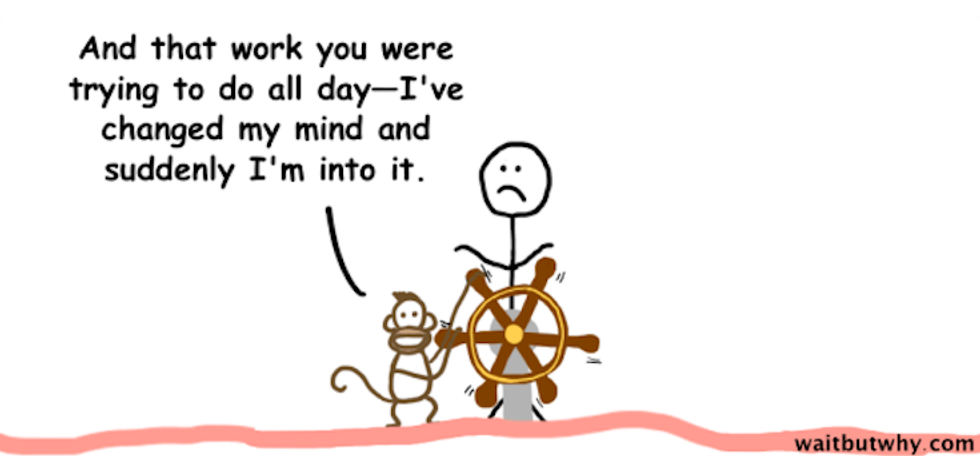
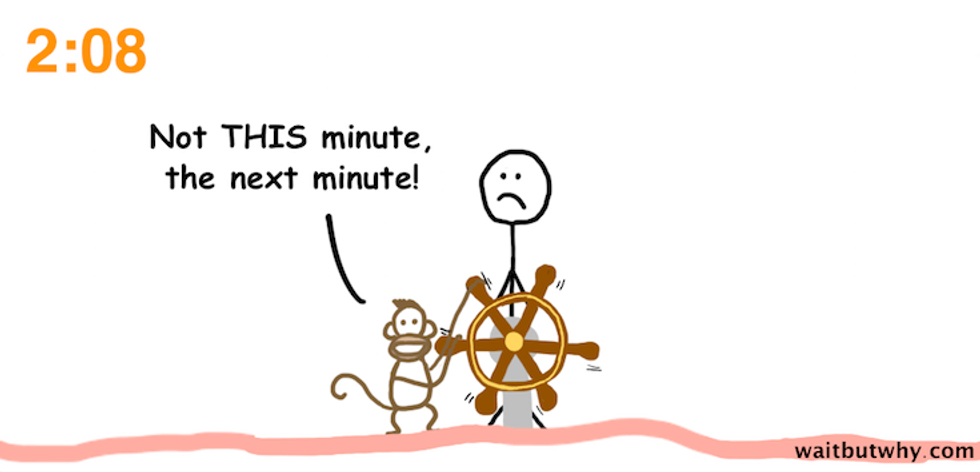
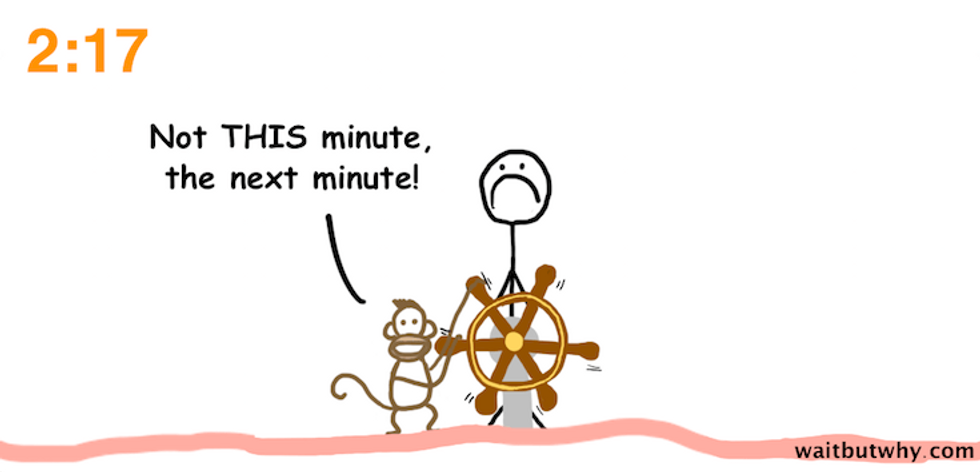
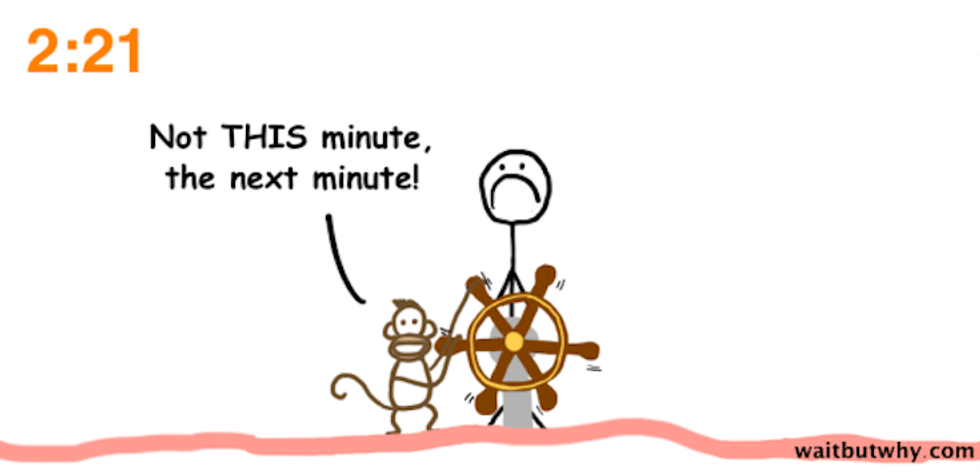
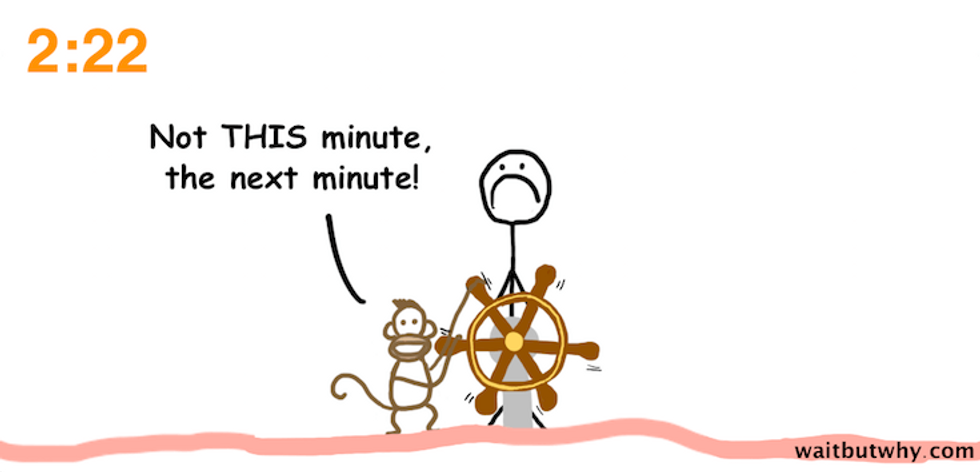
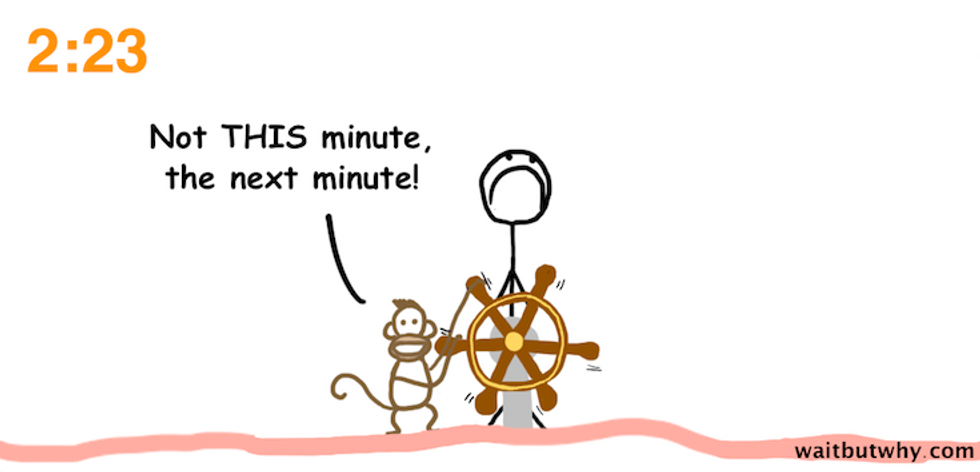
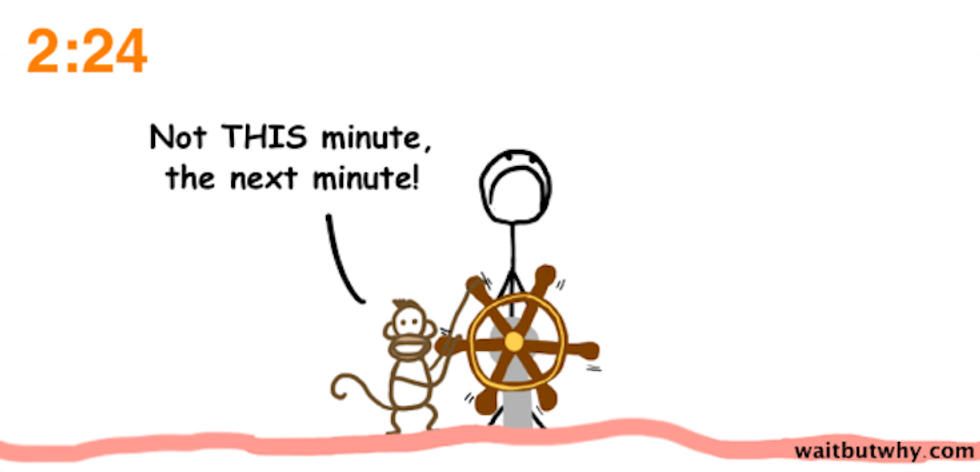
There's a pretty strong correlation here — the worse I feel about my productivity so far that day, the more likely I am to be late. When I'm pleased with how I've lived the day so far, the Rational Decision-Maker has a much easier time taking control of the wheel. I feel like an adult, so it's easy to act like an adult. But times when the monkey had his way with me all day, when the time rolls around that I need to stop working and head out somewhere, I can't believe that this is all I've gotten done. So my brain throws a little tantrum, refusing to accept the regrettable circumstances, and stages a self-flagellating protest, saying, "NO. This cannot be the situation. Nope. You didn't do what you were supposed to do, and now you'll sit here and get more done, even if it makes you late.”

So yeah, that's why I'm late. Because I have problems.

Don't excuse the CLIPs in your life — it's not OK, and they need to fix it. But remember: It's not about you. They have problems.


This article originally appeared on 04.07.16


dance, motherhood, mommy daughter dance, mother daughter relationship, parenting, wholesome
Umi4ika/Youtube

Svetlana Putintseva with her daughter Masha.

In 2005 at only 18 years old, Russian rhythmic gymnast Svetlana Putintseva became a world champion, after which she retired and eventually became a mom. Then, in 2011, Putintseva came out of retirement for one special Gala performance.

Little did anyone know that her then two-year-old daughter named Masha would be the key to making that performance so special.


As the story goes, the young child refused to leave her side that night. But rather than stopping the performance, Putintseva did what so many incredible moms do: she masterfully held space for two different identities.

As we see in the video below, Putintseva simply brought Masha onto the dance floor and incorporated her into the routine—holding and comforting her at times, performing impressive moves while she ran around at others…letting it all become a lively, endearing interaction rather than a rote routine. It became something really touching:

Watch:

Now, a bit of fact-checking as this video has once again started going viral. Despite what many captions say, Putintseva‘s daughter was likely always a planned part of the performance (the tiny leotard is a bit of a giveaway). But that doesn’t really take away from the message behind it: motherhood weaves another soul into one's identity, forever. And one of the biggest lessons it teaches is how to hold someone else steady, all while becoming ourselves.

Every day, moms are engaging in a similar type of “dance”: navigating through the world while guiding and nurturing their little ones. It probably doesn't always feel quite as graceful as what Putintseva put out, and, yet, it is just as beautiful.

dance, motherhood, mommy daughter dance, mother daughter relationship, parenting, wholesome A mother hugging her daughter.Photo credit: Canva

Maybe so many thought it was an improvised moment because improvising is a very real parent superpower. That’s certainly the takeaway we get from some of these lovely comments:

“You cannot control life but you can learn to dance with it. 🤍”

"This is beyond beautiful. 🥲"

“If this isn't a metaphor for motherhood. We improvise so much.”

“A mother’s unconditional love 🥹❤️ She just made my whole month.”

“I do this sometimes while deejaying. My daughter comes up so I hit the slicer and let her chop it up. A few chops and she is happy and goes about her business. 🥰”

“I can see my daughter doing this to me soon whenever I get up on stage on perform. She already stares long and hard at me whenever I am onnstage singing. She doesn't take her eyes off me. Sure she would be running up to stand with me when she starts walking 😂😂 i look forward to it tho”

“Sobbing 😭😭😭😭 As a dancer who hasn’t performed since having a kid, this inspires me in so many ways 🥹🥹 So beautiful and it’s clear that she admires her mom so much 🥰”

- YouTube www.youtube.com

Though not much is written on Putintseva following this performance, one blog post says that Masha has followed in her footsteps by getting into rhythmic gymnastics. Maybe it all started with this one performance. ❤️

Pets

Elderly rescue dog can't stop putting random items in his bed, keeping his family entertained

"He has stolen a lamp, framed poster art, a cooler. He took a teapot."

rescue dog; elderly dog; dog that steals; resource guarding; dog ptsd

A dog lies in a bed.

Not all dogs are created equal. Some don't get the best start in life and end up in situations where they need rescuing. That was the case for an elderly golden retriever named Duke, who had been returned to a rescue so many times that he was nearly labeled unadoptable. His "bad dog" reputation wasn't due to aggression or destructive behavior. Instead, some might say Duke simply has sticky paws.

The golden retriever is something of a canine kleptomaniac, constantly stealing objects from around the house only to put them in his dog bed. He's not eating them, burying them, or even playing with them. Duke is a collector of sorts, a trait his previous owners couldn't get used to. But his current owner, Cathy Hoyt, understands the pup's strange behavior and rolls with it.


rescue dog; elderly dog; dog that steals; resource guarding; dog ptsd A lazy afternoon nap on the couch.Photo credit: Canva

According to Hoyt, the sweet rescue originally came from a home with domestic violence, which likely left Duke with lasting trauma. Dogs, like humans, can be affected by trauma in ways that surface through behaviors others may find confusing. While some dogs become skittish, aggressive, or have accidents when they are nervous, others engage in resource guarding, as Duke does. Although resource guarding typically involves food, the behavior this elderly golden retriever displays is still classified as such.

Duke doesn't steal sandwiches or other edible items. Instead, the pooch absconds with household objects that make little logical sense for a dog to want.

"Duke has very severe resource guarding," Hoyt tells GeoBeats. "Most dogs have it with food, but Duke does not have it with food. He has it with the items he steals. Household items."

rescue dog; elderly dog; dog that steals; resource guarding; dog ptsd A happy golden retriever relaxing indoors. 🐕❤️Photo credit: Canva

In clips shown in a video by GeoBeats, Duke can be seen trotting away with his dad's pants before the footage cuts to him carrying something else. Hoyt explains:

"He steals electronics, my Kindle, my phone, laptops. He has stolen a lamp, framed poster art, a cooler. He took a teapot. He took creamer, a sugar bowl. Just the oddest items. He just places them on his bed. He guards them. We've spoken to professionals about this, but because of his age, it's very difficult to reverse."

There isn't much Duke's new parents can do to reverse a behavior that has likely been with him for most of his life. Thankfully, the Hoyts understand his condition and meet him with patience. They don't punish him for snagging things that aren't his, nor do they try to force him to give the items up. Instead, Hoyt says they simply wait until Duke is ready to allow them to retrieve the item from his bed.

"So we give him space. He will just have them around him, especially the household items. He just takes such comfort in them. It's really remarkable," Hoyt shares.

Hoyt says that while some people have suggested Duke's item collecting could be a sign of canine dementia, she insists his behavior is intentional. Duke isn't confused. Hoyt believes that after leaving behind so many people and belongings throughout his life, he has developed what she calls a "hoarding personality." By collecting items around the house, even ones that make no sense to anyone else, Duke creates a sense of safety and security for himself.

"We'll never really know, but he's happy doing it, so we let him do it," Hoyt exclaims.

People who've watched the video can't get enough of Duke's bizarrely sweet behavior.

One person gushes, "Poor Duke. Sweet boy. He's an emotional hoarder. Poor guy. I'm so grateful he's found acceptance and safety with you. Thank you for not allowing him to be abandoned once again!"

rescue dog; elderly dog; dog that steals; resource guarding; dog ptsd Gentle comfort for a sleepy golden retriever.Photo credit: Canva

Someone else shares, "He is seeking stability. These things represent you and he's trying to keep you. Poor old fella. So happy you are kind. Let him have this. Very loving."

One woman points out Hoyt's calming voice, writing, "I've seen a few videos of this dog. I love how mom speaks to him with such a kind, soft voice all the time even when he's taking something she really doesn't want him to have. Her tone of voice never communicates anger…perhaps bewilderment at times but never anger. Great mom!"

90s smells, scents of the 90s, bath and body works 90s, cucumber melon, runts, runts candy
Images via Reddit/Dove04

Gen Xers and Millennials describe what the '90s smelled like, from Bath & Body Works' Cucumber Melon to banana-flavored Runts.

The '90s were a decade like no other. With TV psychics, parachutes in gym class, and iconic TV shows binged during sick days, the era was packed with uniquely memorable moments that Generation X and Millennials still feel nostalgic about today.

Beyond the epic CDs and cartoons, the '90s were also defined by specific scents. Gen Xers and Millennials on Reddit recently discussed the nostalgic smells of the decade—from specific foods like banana-flavored Runts to the distinct scent of roller-rink carpet and classic Bath & Body Works fragrances. Here's what they had to say:


@jennaabarclay

‘90s bath & body works scents WITH the ‘90s label 🥹 the nostalgia hit so hard and I’m so happy #90s #bathandbodyworks

"Cigarettes and this [roller rink] carpet….Ahhhhh memories." - Battlerapschef

"And teen spirit." - UbermachoGuy

"5 year old Runts in the quarter vending machine. Banana." - 9829eisB09E83C

"Cucumber Melon and Camel Lights." - Heatherjjjjjjjj

"This nasty [Glad Country Garden] potpourri spray. I can hear the very specific sound that spray made with its thick *ss pressed button. CHSHHHHH." - abby-rose, Constant-Net-4652, D4FF00

"[Victoria's Secret] Love Spell." - a_solid_6

" McDonald's happy meal toys had a certain smell that I can remember to this day. Probably poison." - ogmoss

"CK one everywhere." - snn1326j

"Clove cigarettes and espresso. Especially for goths." - Lost_Balloon_, Vesper2000

"Let's not forget Drakkar Noir." - Technical-Donut-7354

- YouTube www.youtube.com

"LA Looks hair gel." - FarAd1429

"Electronics. The smell of cathode ray monitors and TVs, Blockbuster VHS tape boxes, the inside of Nintendo cartridges when you blew the dust out, etc." - oceanicwhitetip

"Fresh vinyl from blowup furniture." - Asterclad

"Herbal Essence." - barcham22

"The 90's had a number of unique smells. Especially if you were a kid. Lots of toys had these weird off gassing smells, like the creepy crawlers set. Sort of a sweet plastic smell. We also had the blessing of grandparents old Christmas decorations that smelled different from the stuff manufactured overseas today. The things our grandparents stored were probably slightly toxic but had a very, very nostalgic energy to them. You could almost smell the past." - TrillDough

"Like dew evaporating off the pavement." - zekerthedog

"Nautica, Cool Water, Hugo Boss, Curve and Polo Sport." - GurrenLagann214

"Apple shampoo, mall food courts, and movie theater popcorn." - thatmattschultz

@tara_town

The smells of our childhood 🥰 #90s #2000s #millennial #nostalgia

"Elizabeth Arden Sunflowers or Gap Grass." - Apprehensive-Stay196

"The smell from traffic…inescapable. Before catalytic converters were regulated you could smell transportation on you. Go stand in a busy covered parking garage and you will get a hint of what the cities smelled like." - h1storyguy

"LEMON PLEDGE!!!!!" - BlackDynamite58990

"I remember many girls almost choking us with their vanilla perfume. God it was sickening." - fettoter84

"Little incense candles inside incense warmers. Bong hits filtered thru a shampoo bottle stuffed with dryer sheets. Ralph Lauren Polo. JOOP! Any cologne/perfume sample from a magazine. Marlboro Lights. Empty Busch Light cans. And the sweet sweet smell of slacking..." - Live_Past_8978

"The inside spine of a plastic VHS tape cover." - canoe4you

"Wet JNCO's and wet barefoot sandals with a mix of Polo or Pear Berry Splash and cigarette smoke." - xxMalVeauXxx

"Fruitopia." - No_Tart686

"Go into a old school bowling alley and that's exactly what 90's smelled like." - ItsBal707

"And Extra chewing gum." - Ill-Emu-1121

"Sbarro pizza in a mall. That weird smell of water from a hose in the heat. Sunblock. The smell of a new Gameboy game." - Eris_Balm

Joy

New study reveals dogs are smarter than originally thought, anticipating unsaid commands

"They are really tuned in to our communication and are prepared to look to us for information."

dogs; smart dogs; Duke study; dogs read minds; puppies; puppies vs wolf pups

A dog and their owner in a sunny field.

Most dog owners think their dog is the best, smartest dog to ever walk the planet. Of course, they're all correct because it's obviously a tie between every dog that has ever existed. But a new study from Duke's Canine Cognition Lab confirms that dogs are actually a lot smarter than humans initially gave them credit for.

The study spanned five years as PhD student, Hannah Salomons and the rest of the Duke team partnered with a national service dog organization, Canine Companions. They were joined by other organizations to assess the cognitive abilities of puppies from eight weeks to 20 weeks of age. The puppies were tested every two weeks until they hit the age threshold of 20 weeks.


All 100 puppies involved in the study were golden retrievers and golden retriever mixes. The team of scientists set out to discover how dog intelligence was developed. They wanted to know whether abilities were developed in different chunks or if they developed together as general intelligence. The results were fascinating to the team. Salomons tells Duke Today, “There hasn't really been a study of this size at this fine scale of detail done on puppy cognitive development before. It was a big undertaking."

dogs; smart dogs; Duke study; dogs read minds; puppies; puppies vs wolf pups Training time: Puppies learning tricks with their trainer.Photo credit: Canva

What they found is that dogs have an ability to "read minds"—or anticipate what a command will be. This cooperative communication skill develops remarkably early, much earlier than anticipated by those completing the study. Duke Today writes, "Skills such as understanding simple human gestures emerged early, alongside basic skills like working memory." Turns out that this communication skill is unique to dog puppies. Salomons explains to the school's digital outlet that wolf puppies do not display this level of understanding of cooperative communication with humans at such a young age.

"Molly is exceptionally intelligent. She picks up on everything, and she doesn't forget," Jamie Tan tells WBZ News Boston, an affiliate of CBS, about her one-year-old rescue dog. "She's very emotionally intelligent."

In the news segment, they show how the puppies participated in the study, explaining that the dogs had to find treats with only non-verbal cues.

One puppy fell asleep on the job, still inside the clear tube with a treat right in front of his nose. Being a puppy is hard work, especially when they are essentially expected to read minds to find a piece of kibble.

Salomons explains to WBZ News Boston, "They are really tuned in to our communication, and they are prepared to look to us for information. We tested how they look to humans and make eye contact to maybe make a connection or ask for help."

dogs; smart dogs; Duke study; dogs read minds; puppies; puppies vs wolf pups Man and dog share a joyful moment in the park.Photo credit: Canva

According to the scientists who conducted the study, there's no need to do anything extra to apply this new information. The puppies in the study that were exposed to hundreds of students and staff on any given day at Duke University displayed the same level of socialization skills as a puppy raised within a family unit.

"You're enough for your dog, and giving them a nice, loving home is going to help them develop really well, and [that] your dog is looking to you for information," Salomons shares with the news outlet.

haggis, beans, bacon, english food, scottish food, mushrooms

A plate of tasty food from the United Kingdom.

In the 1993 cult comedy So I Married an Axe Murderer, actor Mike Myers takes a big shot at Scottish cuisine: "My theory is that all of Scottish cuisine is based on a dare." Obviously, that's an exaggeration. There are many wonderful Scottish treats that Americans love.

Every time you eat a tasty, buttery shortbread cookie, you can thank Scotland. The roast beef and gravy meal many people savor on Sunday nights also traces its roots to Scottish culinary tradition, as does oatmeal, once a humble peasant food that has since become a wellness staple.


What is haggis?

However, Myers may be onto something when it comes to haggis, a traditional Scottish dish made from lamb lung, sheep's heart, liver, suet, minced onion, stock, and spices. While Americans enjoy lamb from time to time, the heart and lungs tend to fall outside our culinary comfort zone. And to take things up a notch, the dish is traditionally cooked inside a sheep's stomach. Talk about using the entire animal.

- YouTube www.youtube.com

Americans who have tasted it have compared it favorably to meatloaf and less favorably to "creamy oatmeal and meatloaf."

Why is haggis banned in the U.S.?

To take the dare analogy a step further, in 1971 the United States Department of Agriculture (USDA) banned haggis from being imported into the U.S. because it is illegal to eat sheep lung, or the lungs of any livestock. During slaughter, fluids from other parts of the body, including stomach contents, can collect in the lungs, creating a potentially toxic environment. Additionally, livestock lungs tend to contain higher levels of environmental toxins and microorganisms than other organs.

haggis, big haggis, sheep stomach, cooked haggis, scottish food A large haggis.via Mr. F/Flickr

As if the 1971 ban weren't enough, in 1989 the USDA banned the import of United Kingdom sheep meat due to concerns about a neurodegenerative disease in livestock.

The haggis ban must be especially hard for people of Scottish heritage on Burns Night, which takes place every year on January 25. Haggis is the evening's official dish, as it was a favorite of the poet Robert Burns, who is celebrated that night. He even penned an ode to the dish in "Address to a Haggis." Here's an excerpt:

Ye Pow'rs wha mak mankind your care,

And dish them out their bill o' fare,

Auld Scotland wants nae skinking ware

That jaups in luggies;

But, if ye wish her gratefu' prayer,

Gie her a Haggis!


haggis, sheep stomach, cooked haggis, scottish food, haggis and gravy A plate of haggis and gravy.via Umami/Flickr

Is haggis ready for a comeback?

For Americans hoping to enjoy haggis on Burns Night in 2027, there's a chance the delicacy could finally be on the menu. In 2021, then-President Joe Biden struck a deal with then–U.K. Prime Minister Boris Johnson that reopened the door for sheep meat imports to the U.S. Meanwhile, Scotland's largest haggis producer, Macsween of Edinburgh, has been working on a U.S.-friendly version of haggis that includes everything except the lamb lung.

Whether you're brave enough to chow down on haggis or prefer to stick with shortbread cookies, the dish serves as a reminder of a time when people used every part of the animal to sustain themselves and their families. But its ban raises one lingering question. If haggis is considered too dangerous to import into the U.S., why hasn't it posed any real danger to the people of Scotland?