Movie magic is an amazing thing. A crack team of writers, actors, set designers, directors, cinematographers, and more come together to make a totally fictitious world and story come to life seamlessly. When done well, it all seems perfectly real—from the characters and their emotions to the world the characters inhabit.
Even the food they eat seems real, when the reality is it’s anything but. However, there are some clues that it’s all an illusion if you’re really paying attention.
Eagle-eyed social media users have been pointing out the ridiculous spreads of food that are always on the table during meal times in movies and television.
Dinner? A gigantic roasted turkey, plates piled high with dinner rolls, a heaping bowl of steamed vegetables. Lunch? A platter of sandwiches gorgeously spread out as if prepared at a deli. Even the classic “quick breakfast before school” scene in TV shows is bound to feature bagels, scrambled eggs, fresh fruit, orange juice, bacon, muffins, and more.
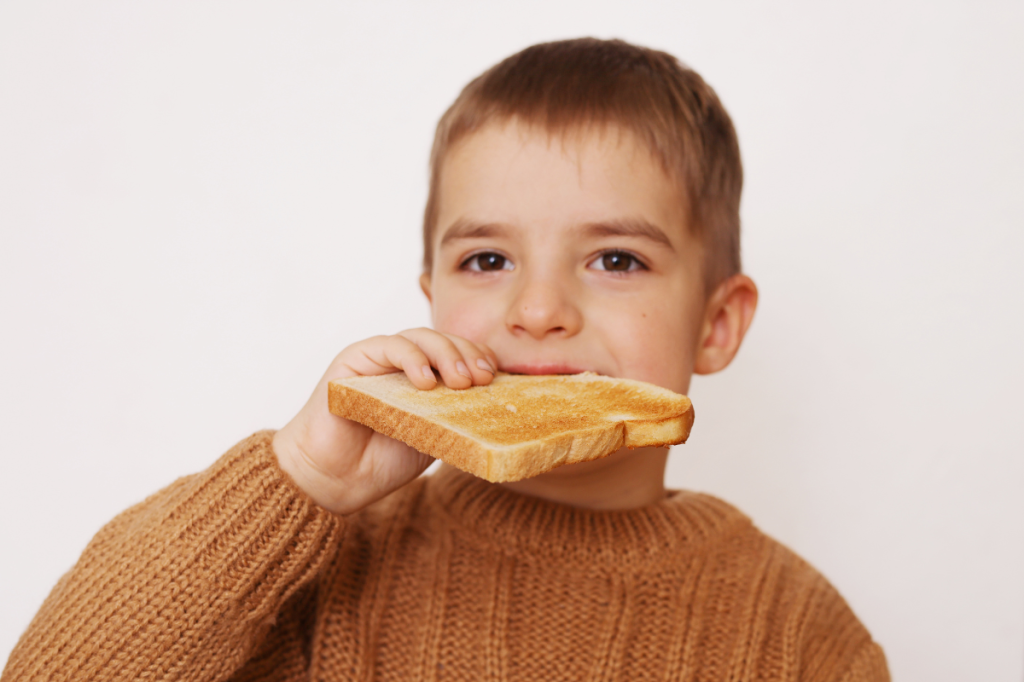
Worse yet, no one ever seems to eat any of it, save for a bite or two of toast, bread, or crackers.
More people continued to pile on on the trope after the above post went viral.
“Never understood the American TV and movie cliche where the parents make a lavish breakfast, no one touches it, and the kid maybe takes one piece of toast or sip of orange juice before heading out.” another user wrote.
“It’s the dumbest trope ever. Parents won’t make such a breakfast … Maybe rich Hollywood people see this because they have employed cooks and are super-wasteful, but no normal people,” another added.
A classic example is the breakfast scene in Cheaper By The Dozen (2003) where the parents, played by Steve Martin and Bonnie Hunt, pass out a few pieces of dry toast (despite a glorious feast of eggs, fruit, and other goodies on the table) and a few nibbles are had before everything goes haywire when a frog falls from the ceiling.
The trope was even perfectly lampooned by College Humor:
Dr. Travis Lee Clark, an adjunct professor in Art History at the Department of Art and Design at Utah Valley University, took the opportunity to educate people about the logistics and gross realities of behind-the-scenes filmmaking.
In a now-viral response post on X, Clark explained that the reasoning behind the lavish food displays that no one eats, and why toast in particular is often the one thing that does get eaten, is multi-faceted and not just lazy writing.
“It’s not what you think at all. It’s a silent battle between the conflicting goals of directors, set dressers, screen writers and actors, and the cost benefits of set dressing and redressing, that eventually settled on a weird convention where no one really eats in movies or TV shows. “
On why there’s always way too much food on the table:
“First, no director likes an empty table at a meal. It looks dull, and lacks vital interest. So the director tells the set dresser, make it look good! So the set dresser piles on food and other things to fill up the empty space, often far more than would be rational at a regular meal because film is a visual medium and it’s easier to make something look good with MORE than less.”
In film, they have to visually get the idea of a homemade breakfast across on the screen with few or even no words at all. A frozen waffle and a banana will disappear on screen, even if it’s more realistic, and the table will look bare. A big display of multiple foods is colorful, lively, and makes the scene look homey even if it’s a little comical.
“BUT,” Clark adds, “it’s not actually made to be eaten.”
On why you almost never see an actor take even a single bite of scrambled eggs or sausage during those lavish breakfast scenes:
Actors notoriously don’t like acting and saying lines while chewing food. Plus, it’s not reasonable to have several bites of food across various takes of the same meal scene. But still…couldn’t they just have a little bit to make it look convincing?
“[The food’s] gotta last for several takes, which could take HOURS to film, so some of it isn’t even actual real food, just props, and the stuff that is real food, is cold, congealed (and not really sanitary or safe to eat after hours under hot lamps) and it’s also covered in more carnuba wax than you can find at a car detailer. It’s only made to look good on camera, and only a little of it is actually designed to be eaten by the actors, but here’s the thing, even that small part has gotta look good too. “
Not only that, but eating the actual food on the table—even if it’s disgusting—would be a continuity nightmare from take to take.
On the magic of toast, or sometimes crackers:
“So what is stable, safe and doesn’t need a lot of [maintenance] to look good on camera? You got it…TOAST. Toast is dry, can last for hours without much hassle, it doesn’t go off, etc., so it’s usually the part of the meal on set that someone can actually eat. Either that or something like crackers or breadsticks. If it’s mass-produced crackers, all the better because it’s easier to match shot after shot.
“Also, actors tend to be particular about what they eat and no sane person wants to eat cold, congealed food covered in carnuba wax for hours on end anyway. So they pretend to eat or only nibble on the safe things to eat, which is most often again, something like toast.”
Toast is also a continuity hack. Every piece of toast looks pretty much the same, so it’s easy to restock the scene from take to take with more toasted bread without the viewer noticing.
“It’s so funny how all the behind-the-scenes logistics and drama is the actual source for so many of the tropes we see in TV and film,” Clark concludes.
Food scenes are surprisingly one of the trickiest things to film in television and film. Here are a few lesser known behind-the-scenes hacks:
Opaque cups – If you’ve ever watched Love Is Blind, you’re probably familiar with the signature shiny gold wine glasses the cast uses. Why a gold metal wine glass? Because an opaque container disguises the level of the liquid inside, allowing editors to cut clips together out of order without destroying the illusion of continuity.
Some viewers have noticed that actors’ cups in films appear to be empty, based on the way they hold them and gesture with them. Prop masters say that they prefer to put something in the cup, but the logistics of filming don’t always allow it. For example, if they’re filming an outdoor scene and suddenly get a request for the actor to be holding a cup of coffee, they may not have anywhere to fill the cup up. And since liquid can spill during takes, some even like to put something solid—like an unopened mini bottle of water—inside the cup for realistic weight.
Chinese food – Similar to the use of opaque cups for continuity, Chinese food is a surprisingly popular choice when characters on TV are eating dinner. They’ll eat right out of the white, opaque containers so the viewer can’t see how much food is (or isn’t) inside. It makes the editor’s job far easier when they don’t need to calibrate for the changing levels of food in the scene.
Spit buckets – Actors typically don’t enjoy acting and eating at the same time, but sometimes it’s necessary for the production to actually show them eating the food and not just pushing noodles around on their plate. Again, with multiple takes involved, it would be miserable and unfeasible to have an actor take several bites of a real cheeseburger again and again. That’s why many productions use spit buckets, according to Backstage, who quote actor Nick Offerman as saying: “You learn with food: If you have to take a bite of something, don’t swallow it, and get a spit bucket. Even if you’re eating one bite of cake, you may end up eating four pieces of cake by the time you add them all up.”
Unless, of course, you’re an actor on The Sopranos. The show was famous for its authentic portrayal of Italian-American cuisine, and it rarely went to waste. “I was allowed to eat chicken cacciatore at 7 o’clock in the morning,” one actor on the show said. “It was amazing. I ate a lot on the show.”