Welcoming a new baby to the world is a wonderful but daunting experience, and no matter how much you try to prepare, there will always be something you aren’t fully prepared for.
For many parents, that thing is lack of sleep.
You can hear parents talk about exhaustion and sleep deprivation and still be wholly unprepared for what a baby who isn’t a great sleeper does to to your psyche. It’s no surprise that many parents turn to parenting books and “experts” to try to figure out how to get their babies to sleep, which is where the idea of “sleep training” comes in.
Sleep training is a broad term for teaching or training a baby to go to sleep (or back to sleep) without needing to be soothed by a parent or other caregiver. There are many sleep training methods that range from fairly common sense to borderline abuse, which is one reason it seems to spark big debates between parents. Everyone’s talking about a different method when they defend or vilify sleep training.
Sleep training usually involves letting a baby fuss or cry for some length of time, which some see as problematic because of research on the importance of responding to babies’ cries. Others say that a little crying is a small price to pay because it’s healthier in the long run for baby and parents to get good sleep.
Of course, there’s a huge difference between “crying or fussing for a few minutes” and “wailing and screaming with no end in sight,” and that’s where the big disconnect comes in. For some parents, sleep training entails the former, and it works, so they swear by it. For others, it entails the latter, and it’s a nightmare, so they think it’s horrible.
There’s also a huge difference between “I’d love it if my baby would sleep all night without waking” and “I think I might die if I don’t get a 4-hour stretch of uninterrupted sleep.” Desperation makes many parents who might not love the idea of sleep training to give it a go.
I have some personal experience with this. My first baby wasn’t a great sleeper. I remember thinking, at six weeks postpartum, “There’s no way a person can survive on this little sleep.” I adored my baby, but the sleep deprivation from waking up several times a night for weeks on end felt like literal torture.
She started sleeping through the night when she was a few months old, but that didn’t last long. Teething happened. Then crawling happened. It seemed like just when she’d get into a nice sleep routine, some milestone would throw us right back to waking up and crying multiple times a night. She slept in our room next to our bed, so it was easy enough to nurse her back to sleep, but it was still night after night of disrupted sleep.
I was desperate to try something, but I wasn’t keen on the idea of sleep training. It’s a natural instinct to respond to your baby’s cries, so walking away didn’t feel right. One book had suggested leaving the baby in their crib to cry by themselves and not pick them up no matter what. If they got so upset that they threw up, you were just to clean them up and do the same thing again. Um, no thank you.
But I had heard other parents say they tried different sleep training methods that involved leaving them to cry for just a few minutes, going in to pat/comfort them, leaving them again for a little longer, and going back and forth until they eventually fall asleep. I read so many parents say something like, “It took like 15 minutes of fussing for them to fall asleep the first night, 5 minutes the second and after that they just went right to sleep and didn’t wake up until morning!”
That sounded reasonable. So I tried it, a couple of times.
It went nothing like how those parents described. Not even close.
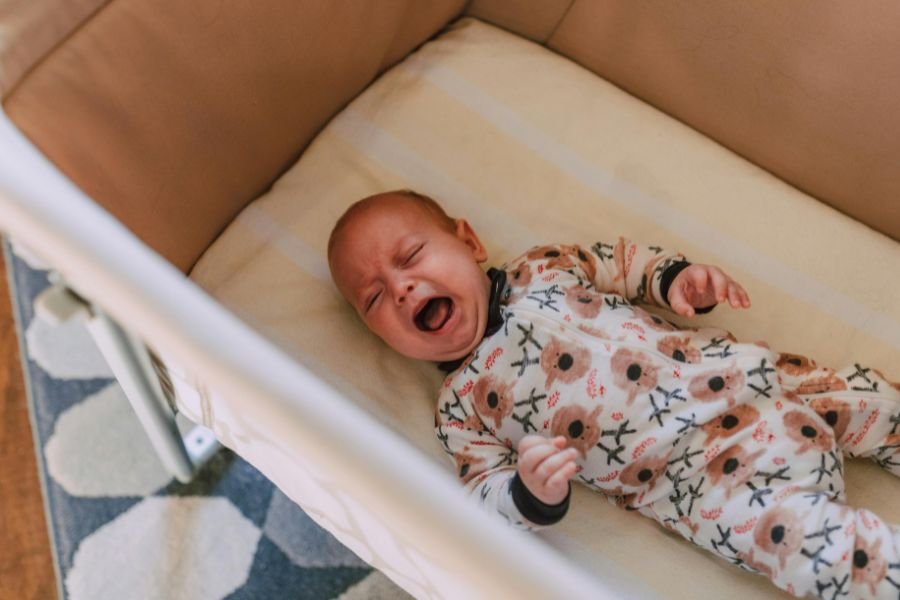
First of all, my baby did not “fuss.” It was full-on crying, wailing and screaming with snot and drool involved. Secondly, there was no patting her to calm her down—she would only calm down if I picked her up. Third, the wailing when I left the room didn’t ever subside, it only got worse and worse. I felt like I was torturing my baby and it was breaking my mama heart, so we gave it up.
I have no doubt that those parents were telling the truth about how sleep training worked with their child. It just absolutely did not work that way with mine.
That baby is now 24 and has slept in her own bed all night for over two decades. My other two kids had their own sleep personalities as babies—one of them super easy and the other more like my first. I didn’t do anything different to make them that way—it’s just how they were. It was hard sometimes. We co-slept as needed. It all worked out in the end.
There are a few things I know for sure after parenting three kids and talking with countless other parents:
1) Every baby, child and family is different and what works for one won’t necessarily work for another. As long as no one is actually being abused or neglected, do what works for your kid and your family.
2) Anyone who offers definitive, one-size-fits-all advice on any part of parenting is flat-out wrong. One size most definitely does not fit all.
3) Sleep is important, but unless you’ve slept a night in their bed, don’t judge a parent for how they choose to handle sleep with their baby. What’s right for you may not be right for them.