upworthy
Add Upworthy to your Google News feed.
Google News Button
Let's Do More Together

Two heroic teachers refuse to let a pandemic stop them from reaching underserved youth in their communities

Two heroic teachers refuse to let a pandemic stop them from reaching underserved youth in their communities
Photo courtesy of Lily Read
True

Now more than ever, teachers are America's unsung heroes. They are taking on the overwhelming task of not only educating our children but finding creative and effective ways to do it in an unpredictable virtual learning environment.

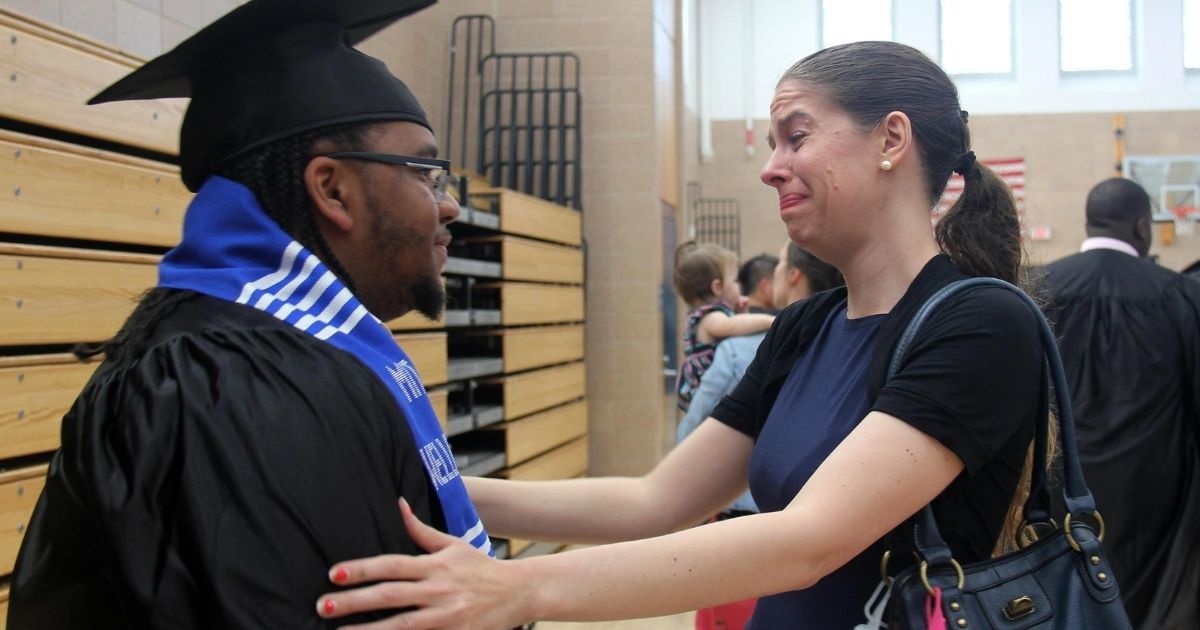
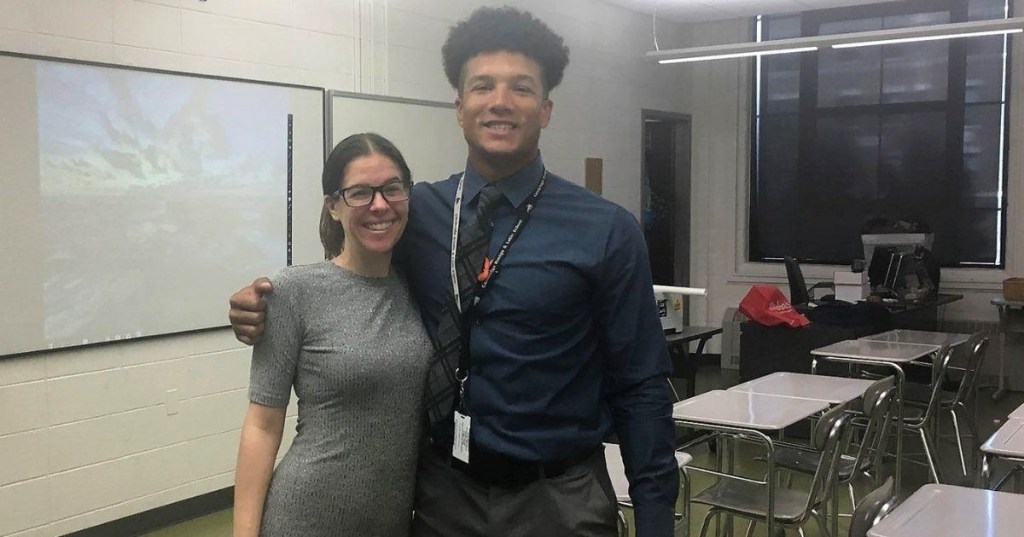
Lily Read and Justin Bernard, two Massachusetts educators from one of the most diverse public high schools in the U.S. (over 25 different languages are spoken in the student body!), feel ready to meet the challenges of this unprecedented school year. Their goal: find ways to make virtual education "as joyful as possible" to help support teenagers during quarantine.

"Our school is very economically, racially, and linguistically diverse," said Read, "which means meeting the needs for all those students is incredibly complex." That wide range of diversity means that they spend a lot of time in professional development, preparing to meet students where they are. This summer, educators in their district spent weeks learning everything from how to provide emotional and social support via virtual platforms, to meeting 504 plans and Individual Educational Plans for disabled students virtually, to mastering the various online programs necessary for instruction.

Bernard, now in his fifth year of teaching, also coaches the high school football team. Prior to the pandemic, there were clear expectations for student athletes, with clear goals and incentives to keep their grades up. Now, Bernard is concerned that student athletes will begin to fall through the cracks without the structure of physically going to school each day, and he is on a mission to do everything he can to keep that from happening.


Photo courtesy of Justin Bernard

"We have students from all different backgrounds and sports are important to them, not just because they have fun, but also because it also involves study hall, team building stuff, accountability for staying on top of their grades, and making sure they are going to class." When Covid-19 hit, all of that disappeared and students felt the impact immediately. Bernard stepped in to open spaces for socially distant workouts to provide a sense of normalcy. And in the months since the onset of the pandemic, he began running study halls for his football players, checking in and keeping communication open to support the kids as much as possible beyond the field and the classroom.
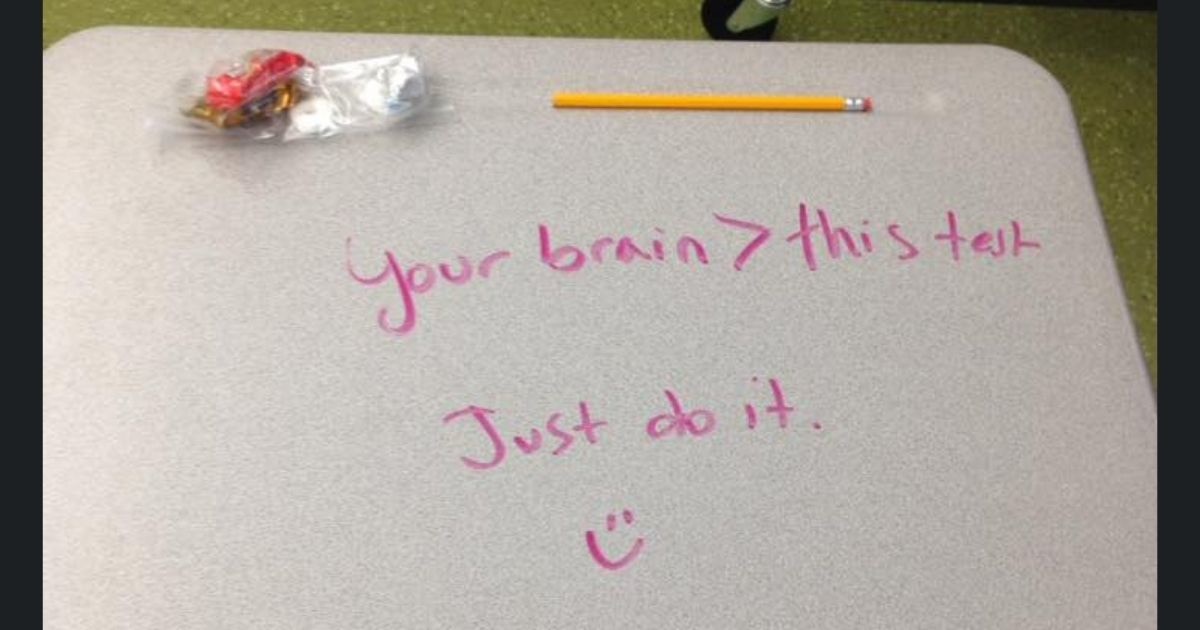
Photo courtesy of Lily Read

"Aside from a child's home, no other setting has more influence on a child's health and well-being than their school," according to the Center for Disease Control. Schools not only provide educational instruction, but also social and emotional guidance, predictability, meals, and safety. When schools unexpectedly shut down in March 2020 due to Covid-19, over 56 million students lost access to that safety net.

Lack of structure and supervision aren't the only challenges students face as they transition into a virtual learning environment. With virtual learning, their home lives are now on display. Read recognized this immediately when students expressed their concerns. "One of the things that we know is an issue for a lot of our students is the fact that they may live in situations that are maybe not conducive to showing their classmates on Zoom or Google Meets...it just causes them additional stress."

Because of this, one of the things she did to prepare for this school year involved buying every trifold poster board she could find—really brightly colored ones—and offer them to her students to decorate and put behind themselves when they are in "class." Read plans to personally deliver the boards to students and/or meet them at a local park so they can pick up art supplies and poster boards and hopes to make the project fun. "We are hoping this will get kids to have more face time because we know that having students on camera is actually going to benefit them if we do so in a way that will avoid actually increasing their anxiety."

The transition from in-person instruction to virtual classrooms isn't easy, but kids need structure—especially those who live in high-risk environments. And educators are thinking creatively to solve the challenges that students are facing, again reminding us how valuable teachers are to the future of our society.

"We are committed to doing everything we can to help our students feel safe, loved, supported, and keep them learning. No matter what happens in the next few months, we are all experiencing these challenges together—and we will overcome them, together," said Read.

Photo courtesy of Lily Read

Another hurdle is figuring out how to virtually teach the incoming preschoolers and kindergarteners who are not yet able to read or type and getting crucial internet access to those families. Teaching a room full of wiggly 4-year-olds is challenging in a regular classroom setting—finding ways to keep them engaged through a screen is a whole new level of difficulty.

These concerns are part of the reason why getting kids back in school (safely!) and with equitable access to technology has been the top priority of educators and parents. Procter & Gamble and United Way are working together to bridge the digital divide. No matter what age, in times when kids can't be in the classroom, families need to have affordable internet so they can stay on track with their education; otherwise, students will fall further behind.

If you would like to help teachers and families during this incredibly challenging time, P&G Good Everyday make it easy by turning your everyday actions into extraordinary acts of good.


shhh, quiet, zip it, mouth closed, say nothing, be quiet

A woman zipping up her lips.

There are times to speak up, moments when it’s best to say nothing, and opportunities be very considerate in your response. But when you’re on the receiving end of a back-handed compliment, a foolish remark, or a coworker takes you down a peg, and your emotions are up, it can be hard to have a thoughtful response. Often, we say something we shouldn’t.

How is it that some folks fly off the handle and say things they’ll later regret, while others can stay calm and remove themselves from the situation or take the high ground? One way to be less impulsive with your words is to use the “name it to tame it” neuroscience hack, originally coined by author and psychiatrist Dr. Dan Siegel. When used properly, it allows you to step back from the moment and choose the best response in a challenging situation.


shhh, quiet, zip it, mouth closed, say nothing, be quiet A man saying "be quiet."via Canva/Photos

How to use the ‘name it to tame it’ hack

When someone upsets you, the first thing to do is to go inside yourself and describe the emotion that you feel in your body. Are you angry? Are you sad? Are you afraid? Do you feel rejected? Are you disappointed? The moment you name the emotion, it will begin to subside and give you the emotional and mental room to respond to the person who caused the negative emotion, rather than impulsively reacting.

How to respond to a reactive emotion so you don’t fly off the handle:

Event happens:

1. Your body stiffens up

2. You feel an intense emotion

3. You examine the emotion and give it a name: “My body is telling me I am angry.”

4. You should feel the emotion beginning to subside

5. Choose your response instead of being impulsive

shhh, quiet, zip it, mouth closed, say nothing, be quiet A woman zipping up her mouth.via Canva/Photos

Why does ‘name it to tame it’ work?

“Name it to tame it” works because, when we have a strong emotional reaction, our lizard brain kicks in, and we go into fight, flight, or freeze mode. The lizard brain is not known for giving thoughtful and strategic responses to challenging situations. When we name the emotion, our prefrontal cortex, or the thinking brain, kicks in. The thinking brain looks at the situation and says, “Alright, we don’t need to run or fight here. It's best to give a strategic response.”

When we tune into the negative emotions by naming them, they relax because they feel heard, like when a child has hurt their knee or a loved one has real concern and you gives them undivided attention. Once the emotions are named, they are tamed. Then, you are more likely to respond to the negative person with grace and speak from the best part of yourself.

Dr. Dan Siegel, who coined the phrase “Name it to tame it,” explains the brain science behind the technique in the video below. He does a great job of explaining how it allows us to transfer our thoughts from the downstairs brain (the lizard brain) to the upstairs brain (the thinking brain), so we can calm down and respond appropriately to the situation.

- YouTube www.youtube.com

tipping culture debate, server tip note receipt, Lionell Carr Threads viral, restaurant tipping 2026, tipping etiquette US, Pew Research tipping survey, server minimum wage tips, cash tip restaurant, tipping fatigue America, viral restaurant receipt
Canva

A restaurant customer looks at his bill

Lionell Carr (@lionellsaidit2) stopped for breakfast while traveling over the holidays. His bill came to $33.06. He paid on the card, leaving the tip line blank because he planned to leave cash on the table. Before he could, the bill came back.

Written on the receipt in bold red letters: "Learn to TIP. It's not my job to serve you FOR FREE!"


Carr posted a photo of it to Threads last December, with a caption that summed up his reaction: "On my holiday travels, I stopped and had breakfast. this occurred afterwards. I was gonna leave a cash tip......" He added, "These servers are out of control, a lot of times they blocked their blessings for greed!"

The post has since pulled in 4.5 million views, according to Newsweek, and the comment section became exactly what you'd expect: a full-scale argument about one of the most reliably combustible topics in American public life.

On one side, people who felt the server crossed a line. "If you're not getting paid by your EMPLOYER, that's your fault. Tipping is OPTIONAL," wrote @gaga.looie. @trice_the_bea added, "U.S.A. should start learning how to pay its workers. Tips should be a reward for kind service, not their paycheck."

On the other, people who felt the server's frustration was completely understandable given the economic reality behind it. "greed? in U.S. servers get a base salary of $2.13/hour on average," wrote @lucy.vard. "The majority of the money they make is tips. We can argue that the system is broken, and restaurant owners should pay their employees, and, while valid, it's a different point. This is how system works, and we shouldn't punish people for the system's imperfection."

tipping culture debate, server tip note receipt, Lionell Carr Threads viral, restaurant tipping 2026, tipping etiquette US, Pew Research tipping survey, server minimum wage tips, cash tip restaurant, tipping fatigue America, viral restaurant receipt YouTube

Both responses capture something true, which is probably why this post keeps spreading.

The structural reality is that the American tipping system puts servers and customers in an uncomfortable position that neither of them created. According to a 2023 Pew Research Center survey, 72% of U.S. adults say they are being asked to tip in more places than five years ago. More Americans oppose businesses suggesting tip amounts (40%) than support it (24%). And 77% of diners say the quality of service is their primary factor in deciding how much to tip, which means a server's income is perpetually attached to variables outside their control.

That pressure is real. So is the frustration of a customer who genuinely intended to leave cash and got a lecture in red ink before he had the chance.

What makes this story harder to resolve than it looks is that the server's note wasn't wrong about the economics. It was just aimed at the wrong person. The broken part of the system isn't the customer who leaves cash instead of a card tip. It's the system that pays servers $2.13 an hour and asks both parties to sort out the rest between themselves.

@azjohnsons put it plainly in the comments: "Tips are their salary. Not a blessing. They worked and should be paid. Sorry for the frustrated note but I get it."

That might be the most honest sentence in the whole thread.

tipping culture debate, server tip note receipt, Lionell Carr Threads viral, restaurant tipping 2026, tipping etiquette US, Pew Research tipping survey, server minimum wage tips, cash tip restaurant, tipping fatigue America, viral restaurant receipt YouTube

You can follow Lionell Carr (@lionellsaidit2) on Instagram Threads for more content on lifestyle.

This article originally appeared earlier this year.

Health

Psychologists say there are 4 types of introverts. These are the personality traits of each one.

The four types of introverts: Social, Thinking, Anxious, and Restrained.

introvert, introvers, types of introverts, introverted, introvert types, 4 introvert types

A woman sits in a chair reading a book.

Introverts can have many personality stereotypes. Many people assume they are quiet homebodies who prefer alone time, but not all introverts are the same.

Psychologist Jonathan M. Cheek, along with his colleagues Jennifer Grimes and Julie Norem at Wellesley College, presented findings in a 2011 study identifying four types of introverts: Social, Thinking, Anxious, and Restrained (STAR).


"Many people assume introversion is fixed, but introversion is on a spectrum," Chloë Bean, a somatic trauma therapist in Los Angeles, told Upworthy.

- YouTube www.youtube.com

Essentially, there is no one-size-fits-all type of introvert.

"It can shift depending on life phase, your stress level, burnout, support system, and trauma history," Bean said. "What looks like 'being introverted' is sometimes the nervous system doing it's job, protecting you especially when you're feeling overwhelmed or need to connect with yourself more."

Four types of introverts

In an interview with The Cut, Cheek explained that these introvert "types" are more like "shades," and that introverts are often a mix of each one. Here's what you need to know about each type of introvert:

introvert, introverts, being introverted, social introvert, introverts hanging out Three women sit on a blanket in the park. Photo credit: Canva

Social introverts

Bean noted that social introverts may be selective about who they connect with. They enjoy spending time with others but need downtime to recover.

"They prefer to stay home with a book or a computer, or to stick to small gatherings with close friends, as opposed to attending large parties with many strangers," Cheek explained.

How to tell if it's you:

"You may tend to lose a lot of energy when socializing in large groups even when they're fun and prefer one-on-one time," said Bean. "You may feel more regulated with one person at a time, as you can feel overstimulated with more than one person at a time."

Thinking introverts

Thinking introverts are internally rich, deep, and active but appear quiet on the outside, Bean noted. They spend a lot of time reflecting, imagining, creating, or analyzing.

"You're capable of getting lost in an internal fantasy world," Cheek said. "But it's not in a neurotic way, it's in an imaginative and creative way."

How to tell if it's you:

"You feel energized and excited by ideas but you feel exhausted when there is constant feedback and stimulation externally," Bean explained. "You need time to be with your thoughts to come to your conclusion so staying with your inner voice and process is supportive because you can get easily distracted by others' thoughts and opinions."

@onlyjayus

The 4 Types Of Introverts

Anxious introverts

Bean said that anxious introverts deal with anxiety and avoidance driven by fear, as the body anticipates rejection or not being accepted socially.

How to tell if it's you:

"You might replay conversations, dread upcoming plans and cancel them when the tension and anxiety gets too strong," Bean shared. "This is often less about your personality and more about your nervous system feeling dysregulated by thoughts about socializing."

Restrained introverts

Restrained introverts are highly observant, take time to warm up to others, and are cautious about who they spend their energy with, Bean explained.

How to tell if it's you:

"It might take you some time to feel like you can trust others and feel safe enough to speak up," Bean said. "You might also avoid being put on the spot or being the center of attention."

Joy

A man tried to fix a female golfer's swing. He didn't know she was a PGA pro.

“What you are doing there … you shouldn’t be doing that.”

mansplaining, golf, swing change golf, humor, golfing, sports, athletes, female athletes, womens sports, sexism
Representative Image from Canva

A man tried to tell a pro golfer she was swing too slow.

We’re all probably familiar with the term “mansplaining,” when a man explains something to a woman in a condescending or patronizing way. Often, this takes the form of a man explaining a subject to a woman who already knows it at an expert level. The female neuroscientist who was told by a man that she should read a research paper she actually wrote comes to mind.

Often, mansplaining can show up in small interactions that minimize or infantilize a woman's knowledge and expertise. It can be a man spouting off facts because he thinks it makes him seem interesting, or giving unsolicited fitness advice at the gym in a poorly disguised flirting attempt. But sometimes the irony at play is just too much to bear. Frankly, it's often delicious.


In 2024, some next-level mansplaining was caught in the wild. Georgia Ball, a professional golfer and coach who’s racked up over 3 million likes on TikTok for all her tips and tricks of the sport, was minding her own business while practicing a swing change at the driving range.


golf, practice tee, driving range, range balls, golf clubs People practicing on the driving range. via Canva/Photos

A man tries to give a female PGA pro golf tips

It takes all of two seconds on Google to see that when it comes to incorporating a swing change, golfers need to swing slower, at 50-75% their normal speed…which is what Ball was doing. And this is what prompted some man to insert his “advice.”

In the clip, we hear the man say “What you are doing there … you shouldn’t be doing that.” Exhibiting the patience of a nun, Ball simply tells him that she’s going through a swing change. But her attempts at reason are unfortunately interrupted, multiple times, when the man repeatedly assures her that, since he’s been playing golf for 20 years, he knows what he’s talking about.

He then insists, repeatedly cutting her off, that she’s going too slow on her swing and should be following through. Cue Ball’s incredulous look to the camera.

Watch the whole, cringe-inducing interaction here:

@georgiagolfcoach

Can you believe he said this? 😳⛳️👀 #golf #golfswing #golflife #golftok #golftiktok #golfer #golfing #golfgirl #golfpro #golftips #golfclub #drivingrange


Hoping to appease him, Ball finally gives a hearty swing, writing “I knew I had to make this a good one” on the onscreen text. As the ball sails through the air, the man says, “See how much better that was?" completely taking credit for her swing. Which is hilarious because she didn't change a thing she was doing.

Poor Ball then tries to tell him that even the “best players in the world” slow down their swing when going through a swing change. And she'd know. Not only is she a golf coach, but she's also a certified PGA professional. “No, I understand what you’re saying, but I’ve been playing golf for 20 years,” the man repeats. At this point, Ball is just “trying to keep it together.”

golf group, fiarway, co-ed golf group, tee time, links A group of people playing golf. via Canva/Photos

People in the comments couldn't handle the mansplaining

Sure, this guy might not have known who Ball was, but it’s pretty evident that the last thing she needed was this guy’s “advice.” And thus, the “mansplaining” jokes commenced in the comments section.

Here’s a small sampling:

“As a guy, this is the first time I’ve ever seen ‘mansplaining’ happen.”

“The way he took credit for your next swing.”

“But did you consider that he’s been playing golf for 20 years?”

“*implement nothing he says* ‘See how much better that was’ HAHAHAHAH.”

“My hope is that he comes across this video and it keeps him up at night."

Others couldn’t help but praise Ball for keeping her cool.

“He doesn’t even give you a chance to explain, just forces his opinion and advice onto you. Goon on you for staying calm and polite,” one person wrote. Of course, others felt Ball was being “too nice” to the man. One even exclaimed, “there’s no reason to be so polite!”

Ball told BBC that it wouldn't be in her nature to shut the man down harshly, even if that's what he deserved. "I wouldn't interrupt and say that," she says. "I suppose it's just the humble side of me."


@georgiagolfcoach

Play a hole with me ⛳️🏌🏽‍♂️25mph wind 🤯🤣 #golf #golftiktok #golftok #golfer #golfswing #golfing #golflife #golftips #golfcourse #golfclub #golfgirl #golfdrills #playaholewithme #golfpro


Perhaps worst of all, this kind of behavior is pretty common, especially for female athletes. A fellow female golfer even commented, “So glad you posted this because it is my BIGGEST frustration when I’m at the driving range. Unfortunately, men always feel the need to comment on my swing or want to coach me. Guys take note: Please don’t.”

On the bright side: as annoying as it is that Ball had to endure that (not to mention what it says about the very real b.s. that women in general have to put up with on the regular), she laughed it off and just went on about her life being awesome at what she does. Just like the other smart, capable women of the world. It’s almost like…maybe women don’t need advice, so much as they need

Ball isn't holding onto any grudges over the incident

"I have a lot of interaction with males and females every single day [on the course]. And I'd say it's mostly always positive," she says. "I'm just glad I can look back at it now and laugh about it because the majority of people and golfers are all just out to help each other."

Even though her time on the golf tee with the mansplainer was uncomfortable, the reaction to her discomfort has been positive. "The reaction has been so positive," she told the BBC. "All the support, the comments, the messages, it's just been so good. And I'm just so grateful for everything that's come through."

This article originally appeared two years ago. It has been updated.


maikon alves, maykon alves, agt, dance, robot dance, dance tutorials, tiktok dance, agt dance
Maikon Alves | Instagram

Maikon Alves has people shook over is robotic style dancing.

"The Robot" is a classic dance move that's been seen on dance floors since the early 1900s, according to Vox. The mechanical move was also mastered and brought to the mainstream by dance legend Michael Jackson.

And a dancer from Brazil has put his own modern (and humorous) twist on the dance technique. Maikon Alves has been turning heads on social media with moves so fluid and robotic that people around question if he's human.


Alves got a big break after a dance to to "Boom Boom Pow" by the Black Eyed Peas went viral back in 2024—to say his moves are impressive would be an understatement. Alves popped his chest to the beat while slowly stepping in place making it look like he was gliding from move to move. Some movements were crisp and sharp like a robot while others were so fluid it was nearly unbelievable that it could be coming from a human.

Viewers respond to Maikon's moves

Comments on the video ranged between being in awe of his abilities to questioning if he was truly part robot.

"Loved. I like how everything is in sync - from the music to the moves to face expressions. 👏👏👏 and your cool personal style," one person writes.

"Doesn’t even look real it’s that good..!! Love this," someone says.

"You will be the dance instructor for the children of our AI overlords someday," a commenter thinks.

"Nah, this is God-level pop-locking," someone compliments.

"You are a legend!" Nicole Scherzinger, actress, singer and former member of the pop group and dance ensemble, Pussycat Dolls, wrote.

@maykonreplay

Minha apresentacao no AGT para vocês com as musicas originais… heheh. 🤖❤️ #agt #robot #talent

Alves' uncanny robot dance even made its way to Season 19 of America's Got Talent in 2024. His audition routine included pretending to play the violin and a fun moonwalk to robotic themed music.

During a June 2024 interview with Chupim Metropolitana, he shared about his experience on the show. "It was a dream come true because since I was a child I watched videos of the dancers I used as inspiration from there," he said. "It was magical."

Where is Maikon Alves now?

Since then, Alves has continued to display his unique robot dances on social media. Another robot dance he posted in July 2025 garnered over 60 million views on TikTok (@maykonreplay), where he has grown a strong following of fans in awe of his moves.

@maykonreplay

Hahahahahahaha

"I know it's talent but it low-key scares me," one viewer commented. And another added, "this gives me uncanny valley vibes. like great job, but I'm uncomfortable 😅."

How did Maikon Alves start dancing?

Alves shared more about how he got into dancing during his interview with Chupim Metropolitana.

"Since I was a kid I watched Michael Jackson videos in the living room. My mom would put them on," he said. "I watched the Michael Jackson videos and I took them as a reference. As I grew up, I saw other dancers too, like Chris Brown and Usher. And then I mixed everything, adding humor too. And I just kept growing."

- YouTube www.youtube.com

Alves also explained that his style of robotic dancing has taken lots of "dedication", and it started by learning Michael Jackson's classic Moonwalk dance.

"I was very shy, so dancing with humor helped me a lot," he shared. "I watched his videos and practiced a lot. In the beginning it was very difficult. I did a lot of mime."

This article originally appeared two years ago. It has been updated.