upworthy
Add Upworthy to your Google News feed.
Google News Button
Pets

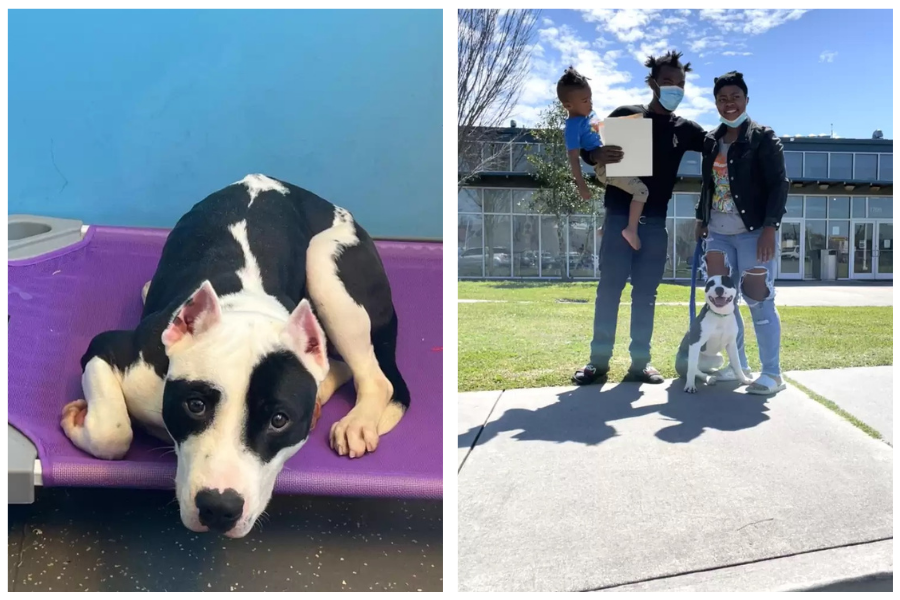
This adorable dog named Cow had the best reaction to reuniting with the family he'd lost

We really don't deserve dogs.

This adorable dog named Cow had the best reaction to reuniting with the family he'd lost

Cow and his family.

Dogs love their humans and have the best reaction when they return home, even if they just left to go to the mailbox. It’s happy tails and doggy kisses when you get back, so it’s heartbreaking when a pet actually gets separated from its family. Back in 2022, a dog named Cow found himself in just that predicament. Cow was somehow stolen from his family, according to the information received by Louisiana SPCA from the pooch’s family. The dog found his way to the animal shelter after being found tied to a fence outside the SPCA. Cow was afraid of his new surroundings at the shelter and it took him a while to warm up.

NeNe Lewis of the Louisiana SPCA told The Dodo “He was very fearful and would low growl when meeting new people. When he was given treats and people would ‘baby talk’ him, he would stop. Since he was found tied to our fence, it makes his reaction common.” VCA Hospitals report that “Fear- and anxiety-related aggression are commonly manifested in the veterinary hospital or in situations of social approach and handling. Dogs that display aggression are not mean or bad dogs. They are simply afraid/fearful and anxious/nervous about a perceived or anticipated threat or unpleasant outcome.”

In the case of Cow, it’s understandable why he would be displaying fearful aggression after being in a new environment away from the family he knows and loves. Cow began to relax in his new environment after being there a while as the staff members searched for a family to adopt the black and white pup. To Cow and the SPCA’s surprise, the perfect family was the one he was missing all along. In March, the shelter found out that Cow’s family had been frantically searching for their lost dog and were ecstatic to find out he was safe in the shelter.

Cow

Louisiana SPCA

While Cow had gotten used to his new people at the shelter, he was beyond excited when his owners showed up to take him home. He jumped off walls and his owner's back after lunging directly into her arms to be held like a baby. It’s clear that he missed his family and he was in his rightful place, right in their arms. The workers at the SPCA had never seen Cow so happy. Shelter life is generally hard on dogs, as they're constantly trying to protect their space from different people coming through. Dogs often become anxious when they're sheltered too long, always on alert and prone to panic, which is why Cow’s initial reaction is so common.

According to the ASPCA there are approximately 6.3 million pets in animal shelters across America right now, about 3.1 million of those are dogs. Each year more than 920,000 animals are euthanized, which is why the push to “adopt don’t shop” is so prevalent. While animals are in the care of shelters, they are looked after and treated by veterinarians until they are placed into a forever home or reunited with their family, which is always favorable over euthanization. More than 4.1 million shelter animals are adopted each year and around 810,000 of them are lucky enough to be reunited with their families, just like Cow.

If you’re interested in adopting a shelter animal, check out your local animal shelter or ASPCA.

This article originally appeared two years ago.

angela duckworth, grit, ted talk, success, psychologist, therapist
via TED / YouTube

Angela Duckworth speaking at a TED event.

Why is it that some people are high achievers who have a track record of success and some people never come close to accomplishing their dreams? Is it talent, luck, or how you were raised? Is it that some people are just gifted and have exceptional talents that others don't?

The good news is, according to psychologist Angela Duckworth, the most critical factor in being a high achiever has nothing to do with talent or intelligence. It’s how long you can keep getting back up after getting hit. She calls it “grit” and, according to Duckworth’s research, it’s the common denominator in high achievers across the board, whether it’s cadets at West Point or kids in a spelling bee. Duckworth goes into depth on the topic in her book Grit: The Power of Passion and Perseverance.


What personal traits make someone successful?

“The common denominator of high achievers, no matter what they’re achieving, is this special combination of passion and perseverance for really long-term goals,” Duckworth revealed on The Mel Robbins Podcast. “And in a word, it’s grit.”


“Partly, it’s hard work, right? Partly it’s practicing what you can’t yet do, and partly it’s resilience,” she continued. “So part of perseverance is, on the really bad days, do you get up again? So, if you marry passion for long-term goals with perseverance for long-term goals well then you have this quality that I find to be the common denominator of elite achievers in every field that I've studied."

When pressed to define the specific meaning of grit, Duckworth responded: “It’s these two parts, right? Passion for long-term goals, like loving something and staying in love with it. Not kind of wandering off and doing something else, and then something else again, and then something else again, but having a kind of North Star."

- YouTube www.youtube.com

For anyone who wants to achieve great things in life, grit is an attitude that one can develop for themselves that isn’t based on natural abilities or how well one was educated. Those things matter, of course, but having a gritty attitude is something someone can learn.

"I am not saying that there aren't genes at play because every psychologist will tell you that's also part of the story for everything and grit included,” Duckworth said. “But absolutely, how gritty we are is a function of what we know, who were around, and the places we go."

Why grit is so important

Grit is critical for people to become highly successful because it means that you stick with the task even when confronted with barriers. In every journey of taking an idea that you love and turning it into reality there is going to be what’s known as the dark swamp of despair—a place that you must wade through to get to the other side. It takes grit and determination to make it through the times when you fear that you might fail. If it were easy, then everyone could be high achievers.


Grit is what keeps people practicing in their room every night as teenagers and makes them an accomplished guitar player. Grit is what makes a basketball player the first one in the gym and the last to leave so that they make the starting lineup. Grit is knocking on the next door after 12 people have just slammed their doors in your face.

The wonderful thing about Duckworth’s work is that it presents an opportunity for everyone willing to do the work. You can no longer use the fact that you may not have specialized intelligence or a God-given talent as an excuse. All you need is perseverance and passion and you have as good a shot as anyone at achieving your dreams.

This article originally appeared last year.

Ethan Hawke shares why he didn't get along with Robin Williams filming 'Dead Poets Society'

Dead Poets Society was one of the most popular coming-of-age films of the late '80s, showcasing Robin Williams' acting range and launching several young actors into their Hollywood careers. But according to Ethan Hawke, who played the timid Todd Anderson (the student who stands on his desk first) in the film, the famous comedian didn't make his own job easy.

Hawke shared on The Graham Norton Show what working with Williams was like after Norton said he understood their on-set relationship to be "a bit fractious."


- YouTube www.youtube.com

"Well, he was incredibly funny, right?" said Hawke. "And he was very relaxed and very inventive…and he would just improv constantly, all day long, and the more the crew laughed, the more he would go."

Despite Williams' hilarious antics, the film wasn't a comedy. Hawke struggled with the constant improv in light of his own acting work.

"I really wanted to be a serious actor," he said. "You know, I had read Stanislavski, and I had what was supposed to be in my pockets, and I really, really wanted to be in character, and I really didn't want to laugh. And the more I didn't laugh, the more insane he got. And he'd make fun, 'Oh, this one doesn't want to laugh,' and the more smoke would come out of my ears. He didn't understand I was trying to do a good job…so I thought he hated me, because he just constantly would lay into me."


After filming, Hawke went back to school thinking Williams "hated" him. Then one day, he got a phone call.

"It was from a big Hollywood agent. This guy says, 'I'm Robin Williams' agent, and he says that you're gonna be somebody, and that I should sign you.' And I was like, really? And so he got me my first agent, who's still my agent now."

Many stories of Williams' behind-the-scenes acts of kindness have come to light after his passing, so the fact he recommended Hawke unasked isn't too surprising. Knowing the context from Hawke's perspective, however, makes it all the more delightful.

Hawke spoke to Vanity Fair about his experience observing Williams and director Peter Weir interact on the Dead Poets Society set:


- YouTube youtu.be

“I’m watching [Weir] direct Robin Williams, not an easy thing to do, ’cause Robin was a comic genius," Hawke said. "But dramatic acting was still new to Robin at that time. And watching that relationship like, in the room—I was four feet away while they’re talking about performance—and that was something you don’t unsee.”

Williams taught Hawke that a script isn't always set in stone.

“Robin Williams didn’t do the script, and I didn’t know you could do that," Hawke recalled. "If he had an idea, he just did it. He didn’t ask permission. And that was a new door that was opened to my brain, that you could play like that. And Peter liked it, as long as we still achieved the same goals that the script had."

“They had a very different way of working, but they didn’t judge one another or resist one another,” Hawke continued. “They worked with each other. That’s exciting. That’s when you get at the stuff of what great collaboration can do. You don’t have to be the same, but you don’t have to hate somebody for being different than you are. And then the collective imagination can become very, very powerful, because the movie becomes bigger than one person’s point of view. It’s containing multiple perspectives.”


- YouTube www.youtube.com

The lessons Hawke learned from watching and working with Robin Williams have followed him through more than three decades in film. It’s delightful to see how Williams’ influence lives on in many small ways the world may not be aware of. His is an incredible legacy.
Kaitlyn Brande TikTok, boomers vs Gen Z restaurant, waitress table etiquette, generational debate TikTok, stacking plates restaurant, server etiquette viral, boomer Gen Z manners, restaurant worker TikTok, viral waitress video, dining etiquette generational
Canva

Young people enjoying a big dinner

In March 2020, an 18-year-old waitress from Utah named Kaitlyn Brande (@katebrande) pointed her phone camera at two tables in her section and said exactly what she was thinking. The video was 20 seconds long. It hit 9.3 million views, got her reprimanded by her employer, and launched a generational argument that apparently has no expiration date, because here we are again.

The setup is simple. Brande pans to the first table, still scattered with plates, napkins, and leftover food. "Here's all I'm saying," she says. "This is a table of five boomers that I took some plates out of the way of already." Then she swings the camera to the table next to it, where every plate has been stacked neatly at one end, cups grouped together, trash consolidated. "This is a table of six Gen Zs. They did that. Just saying."


Her caption did the rest: "They get paid to do that" VS "We know restaurant life is hard, here, let us help you out."

@katebrande

“They get paid to do that” VS “we know restaurant life is hard, here, let us help you out”

When the video hit 9.3 million views, corporate noticed. Brande deleted it. Then she quit the job and reposted it. In a BuzzFeed interview at the time, she was careful to clarify what she was and wasn't saying. "I'm not saying I expect people to ever stack their plates like that, because hey, I'm a person too," she told BuzzFeed. "All I'm saying is it was cool and helpful of the younger people, and I appreciated it." Her stated motivation was the irony of it: older generations tend to be the ones demanding respect from younger ones. "I posted it because I thought it was ironic since older people always expect respect," she said.

Kaitlyn Brande TikTok, boomers vs Gen Z restaurant, waitress table etiquette, generational debate TikTok, stacking plates restaurant, server etiquette viral, boomer Gen Z manners, restaurant worker TikTok, viral waitress video, dining etiquette generational Dirty dishes left on a tableCanva

The comments, then and now, split in every direction. Some people praised the Gen Z table for the gesture. Others pushed back on the framing entirely, pointing out that stacking plates isn't automatically helpful, and can actually make a server's job harder depending on how it's done. @rayvenia wrote: "Half of your server squad would prefer the plates not stacked. You all need a handbook to get it together." @skyerose1213 the more measured version of that argument: "I was taught by the main dishwashers to always be cautious about how you stack, and leave it if you don't know how. However, there is a difference between cleaning up your area and 'leaving it.'"

Kaitlyn Brande TikTok, boomers vs Gen Z restaurant, waitress table etiquette, generational debate TikTok, stacking plates restaurant, server etiquette viral, boomer Gen Z manners, restaurant worker TikTok, viral waitress video, dining etiquette generationalGif of overwhelmed waitress via Giphy


Others bypassed the plate-stacking question and went straight to the generational read. @bhaobansidhe commented: "It doesn't matter even if they do get paid for it, it helps the staff out, especially if it is hella busy and they don't get as much money as you think." @mariannlws52, who identified as Gen X, wrote: "I have been cleaning up tables for waitstaff for decades. Not only is it helpful, but it's also the right thing to do." And some people on the other side simply noted that clearing tables is, in fact, part of the job description, and that customers shouldn't feel obligated to do it.

What keeps this video resurfacing every year or two isn't really about plates. It's about what those plates represent: who sees service workers as people doing a hard job under pressure, and who doesn't register them much at all. That's a question without a clean generational answer, which is probably exactly why nobody can stop arguing about it.

Kaitlyn Brande TikTok, boomers vs Gen Z restaurant, waitress table etiquette, generational debate TikTok, stacking plates restaurant, server etiquette viral, boomer Gen Z manners, restaurant worker TikTok, viral waitress video, dining etiquette generational YouTube

This article originally appeared earlier this year.

Woman on a mission to bring back lost Black American recipes has people gasping at vinegar pie

Most of the recipes were created out of poverty to provide families with a sweet treat.

lost recipes; Black American recipes; pie; Black history; vinegar pie
Images via Canva

Woman on a mission to bring back lost recipes has people gasping at vinegar pie.

People get very creative when it comes to cooking with limited ingredients and no budget. This combination is something people who lived through the Great Depression were very familiar with. It's also something Black Americans experienced frequently in the 1800s, but time has stolen many of the ingenious recipes. Until now.

One woman is on a mission to dig up these lost recipes for Black History Month. All February, Sonja Norwood, who runs the social media page for Wick'd Confections and owns Sonja Norwood Custom Cookies, has been baking up long-lost Black American recipes. Though the ingredients have folks scratching their heads, her videos clear things up by sharing each dish's history.


@wickdconfections

Peanuts became a major Southern crop after the Civil War, and at Tuskegee Institute, George Washington Carver helped popularize peanuts as an affordable, soil-restoring crop with hundreds of uses. In Black Southern kitchens, that peanut power turned into breads, cookies, cakes, candy… and survival baking. During the Great Depression and WWII rationing, butter, eggs, and milk were often scarce. Peanut butter became the substitute for fat and protein, and peanut butter bread became a school-lunch staple and family recipe passed down through generations. Serve warm with a nostalgic molasses glaze and you’ll understand why this deserves a comeback 🤎 🥜 Peanut Butter Bread (One-bowl, no eggs, no butter) Ingredients 1 ¾ cups all-purpose flour (220 g) ½ cup granulated sugar (100 g) ¼ cup brown sugar (50 g) 1 tbsp baking powder ½ tsp salt 1 cup milk (240 ml) ¾ cup creamy peanut butter (190 g) 1 tsp vanilla extract Optional topping: 2 tbsp sugar Instructions 1️⃣ Preheat oven to 350°F / 175°C. Grease a 9×5 loaf pan. 2️⃣ Whisk flour, sugars, baking powder, salt. 3️⃣ Add milk, peanut butter, vanilla. Mix until just combined. 4️⃣ Spread into pan, sprinkle sugar if using. 5️⃣ Bake 50–60 min until toothpick comes out clean. 6️⃣ Cool 15 min, remove, slice. ✨ Molasses Glaze 2 tbsp butter (28 g) 3 tbsp molasses (45 ml) 2 tbsp milk (30 ml) 1 cup powdered sugar (120 g) ¼ tsp vanilla + pinch salt Optional: pinch cinnamon or ginger Melt butter, whisk in molasses + milk until warm. Remove from heat and whisk in powdered sugar until smooth. Stir in vanilla and salt. #BlackHistory #BlackHistoryn#TikTokLearningCampaign##FoodHistorye#VintageRecipes

One particular recipe caused the former Food Network contestant to give a disclaimer before tasting it, saying, "Before I try this, we understand that there's a reason this pie exists, right? It's genius. Very creative. That does not mean I have to like it."

A unique recipe

Norwood tried her hand at vinegar pie, and just like viewers of the video, the baker was unsure how the dessert would turn out:

"Vinegar pie, also known as desperation pie, is classified as a pantry or make-do pie. As you can tell, this pie was born out of necessity, when fruit or citrus lemons were hard to come by. Home cooks used what they had on hand. Simple pantry staples to make something sweet, like sugar, eggs, butter, flour, and salt. A lot of people associate vinegar pie with the Great Depression, when fresh fruit was super expensive and scarce, but recipes go back much further. As early as 1855."


@wickdconfections

Navy Bean Pie 🥧✨ A true heritage dessert with deep roots in Black American food culture. This traditional navy bean pie has a smooth, firm custard texture — rich, lightly spiced, and beautifully sliceable without hours of chilling. Simple ingredients, timeless flavor, and a recipe shaped by community and history. 🥧 Classic Navy Bean Pie (9-inch) Texture: traditional • smooth • firm custard • faster set Crust
• 1 (9-inch) pie crust (homemade or store-bought) Filling
• 1½ cups cooked navy beans (300 g) OR 1 (15-oz) can, drained & rinsed
• ¾ cup unsalted butter, melted (170 g)
• 1 cup evaporated milk (240 ml)
• 4 large eggs
• 1 cup granulated sugar (200 g)
• 2 tbsp all-purpose flour (15 g)
• 1 tbsp cornstarch (8 g)
• 1 tbsp vanilla extract
• 1 tsp cinnamon
• ½ tsp nutmeg
• ½ tsp salt ⭐ If using canned beans (flavor boost)
• Rinse well
• Simmer in fresh water 5–10 minutes
• Drain completely Instructions
1️⃣ Preheat oven to 350°F / 175°C
2️⃣ Blend beans until completely smooth and creamy
3️⃣ Whisk butter, sugar, eggs, milk, vanilla, spices, flour, and cornstarch
4️⃣ Stir in blended beans until smooth
5️⃣ Pour into crust and smooth top
6️⃣ Bake 45–55 minutes (edges set, center barely jiggles)
7️⃣ Cool 1 hour at room temp, chill 1 hour for clean slices Slice, serve, and enjoy ✨ #BlackHi#BlackHistoryn#LearnOnTikToke#BeanPies#FoodHistoryalCooking

For the recipe, the custom cookie maker used vanilla, honey, and apple cider vinegar in the runny mixture. At first glance, it’s hard to see how this could turn into a pie meant to be cut and eaten with a fork, as it has the consistency of French toast batter. But once it’s poured into a pie pan and popped into the oven, it begins to look like a pie.

"Black cooks in the South and the Midwest adapted pantry-based dishes like this into their family food culture," Norwood shares while mixing ingredients. "So you were going to see this pie at Sunday dinner and on special occasions, and it doesn't taste the way you think a vinegar pie would taste. The acidity cuts through the sweetness and mimics lemon pie without the fruit."


@wickdconfections

Lost Black American Recipes: Vinegar Pie 🥧 To kick off Black History Month, I’m starting a series honoring lost and forgotten Black American recipes—beginning with vinegar pie. Also known as desperation pie or pantry pie, this dessert was born from necessity. When fruit and citrus were scarce, home cooks used simple pantry staples to create something sweet, comforting, and joyful. Made with sugar, eggs, butter, and a splash of apple cider vinegar, vinegar pie has a flaky crust and a rich custard filling. The vinegar doesn’t make it sour—it adds brightness, mimicking the tang of fruit and balancing the sweetness. It’s a reminder of how Black foodways transform struggle into creativity and care. 🖤 Vinegar Pie Recipe (9-inch pie): 4 eggs ½ cup sugar ½ cup brown sugar ½ tsp vanilla 6 tbsp butter, melted 2 tbsp apple cider vinegar 2 tbsp honey 2 tbsp flour ¾ tsp salt Unbaked 9-inch pie crust Blind bake crust at 350°F (175°C). Whisk remaining ingredients until smooth, pour into crust, and bake 35–45 minutes. The center should still wobble slightly when gently shaken. Cool completely and dust with powdered sugar. Follow along as we honor Black history through food—one lost recipe at a time. #BlackHistoryMonth #BlackAmericanFood #LostRecipes #BlackFoodHistory #FoodReels

Viewers were shocked at how good the pie looked when it was done. Some even plan to give the Black American recipe a try. One person writes, "I[t] looks good and it was way less vinegar than my mind thought lol."

Another says, "This looks so good! My grandma is 93 born & raised in Georgia and she swears by this pie & buttermilk pie. She watched this & just kept saying 'yup, yup' so I know it’s good."

This person appreciates the history: "I appreciated acknowledging that it came out of necessity and that you don't have to like it. Sometimes people have to make due with what they have and it's not always what you necessarily want."


@wickdconfections

Lost Black American Recipes: Blackberries & Dumplings 🍇🥟 Blackberries and dumplings is a sweet summertime dish rooted in Black American food culture. When sugar and money were scarce, the land provided. Black families relied on foraging, gathering blackberries that grew freely along fence lines, woods, and roadsides across the South. What began as necessity became tradition — turning simple ingredients into a communal, nourishing meal. Passed down orally and cooked intuitively, this dish was rarely written into cookbooks. Flour stretched what little was available, dumplings absorbed the berry juices, and one pot could feed many for very little. Though we still see cobblers today, blackberries and dumplings remain a largely forgotten seasonal treat — one deeply connected to land, resilience, and care. Blackberries & Dumplings Recipe Blackberry Syrup: 4 cups blackberries 1 cup sugar 2 cups water 1 tbsp lemon juice Lemon zest Dumplings: 2 cups flour ¼ cup sugar 1½ tsp baking powder ½ tsp salt ¼ tsp nutmeg ¾ cup milk 1 egg 1 tsp vanilla Simmer blackberries with sugar, water, lemon juice, and zest until juicy. Mix dumpling dough until it feels right. Drop spoonfuls into simmering berries, don’t stir, cover and cook 15 minutes. Uncover and simmer 5 more minutes. Serve warm with plenty of syrup. Follow along as I honor Black history through lost recipes — one pot at a time. #BlackHistory #TikTokLearningCampaign #BlackAmericanFood #LostRecipes #FoodHistory

"This is brilliantly done," someone else writes. "Showing the ingenuity and innovation of Black folks is beautiful! This video is information and funny! I'm glad you actually liked the pie. Def going to ask my 90 year old granny about this recipe. Thanks for posting this."

Vinegar Pie Recipe (9-inch pie):

4 eggs
½ cup sugar
½ cup brown sugar
½ tsp vanilla
6 tbsp butter, melted
2 tbsp apple cider vinegar
2 tbsp honey
2 tbsp flour
¾ tsp salt
Unbaked 9-inch pie crust

Blind bake crust at 350°F (175°C). Whisk remaining ingredients until smooth, pour into crust, and bake 35–45 minutes. The center should still wobble slightly when gently shaken. Cool completely and dust with powdered sugar.