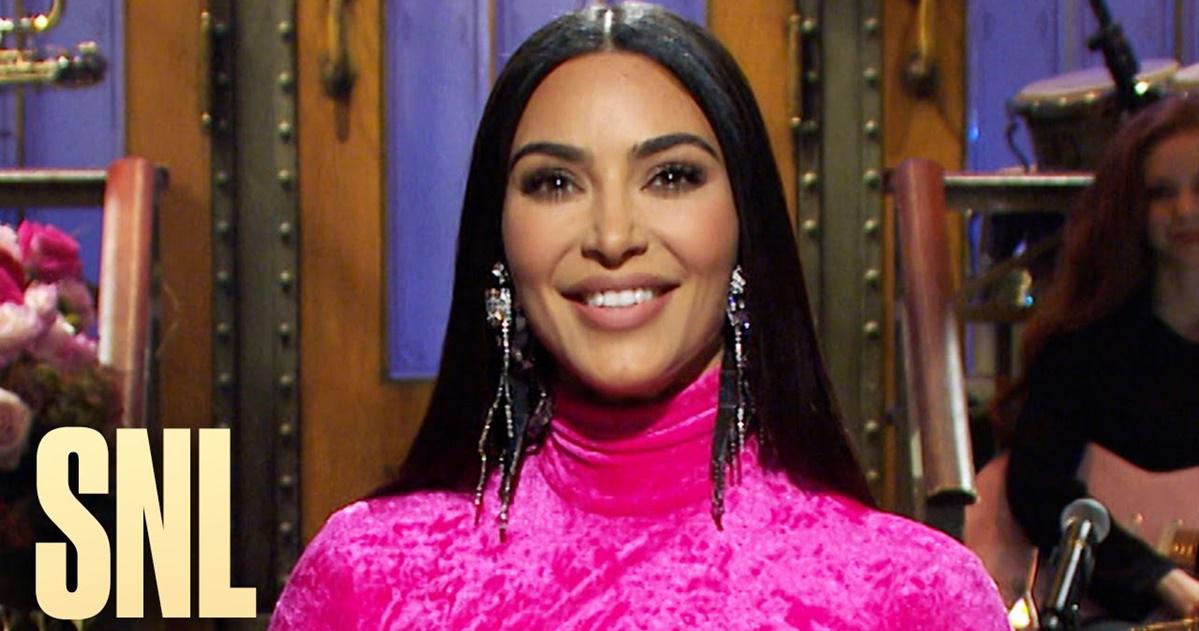
Kim Kardashian roasted her family on ‘SNL’ and even people who aren’t fans had to love it

Kim Kardashian is one of the most polarizing people in American popular culture. She’s been the queen of reality television since “Keeping Up With the Kardashians” premiered in 2007 and is the 10th most popular social media influencer in the world. However, for many, she is nothing more than an arrogant, spoiled and greedy reality…

Array
Kim Kardashian on "Saturday Night Live"Photo credit: via Saturday Night Live / YouTube

Kim Kardashian is one of the most polarizing people in American popular culture. She’s been the queen of reality television since “Keeping Up With the Kardashians” premiered in 2007 and is the 10th most popular social media influencer in the world.

However, for many, she is nothing more than an arrogant, spoiled and greedy reality star whose only talent is an incredible knack for self-promotion.

(Although, she was able to charm former President Trump into letting a grandmother who got busted for pot out of jail and that was pretty awesome.)


A lot of folks were angry that Kardashian was chosen to host the second episode of the 47th season of “Saturday Night Live” this weekend. How could someone with little comedy or acting experience pull off one of the toughest jobs on television?

Well, she actually pulled it off and a lot of her success came from the ability to make fun of herself and her family.

Kardashian’s monologue played like a roast of her family, O.J. Simpson and herself.


Kardashian made fun of her 2007 leaked sex tape.

“When they asked me to host [SNL], I was like, why? I haven’t had a movie premiere in a long time,” she quipped. “I mean actually, I only had that one movie come out, and no one even told me it was premiering … It must’ve slipped my mom’s mind.”

She knows that her soon-to-be ex-husband is obnoxious.

“I married the best rapper of all time,” she began. “Not only that, he’s the richest Black man in America. A talented, legit genius who gave me four incredible kids.

“So, when I divorced him, you have to know it came down to just one thing: his personality,” she joked.

She brought up another subject that’s taboo in the Kardashian house, her father’s relationship with O.J. Simpson.

“It’s because of [my father] that I met my first Black person. Wanna take a stab in the dark at who it was?” she joked. “I know it’s sort of weird to remember the first Black person you met, but O.J. does leave a mark—or several—or none at all, I still don’t know.”
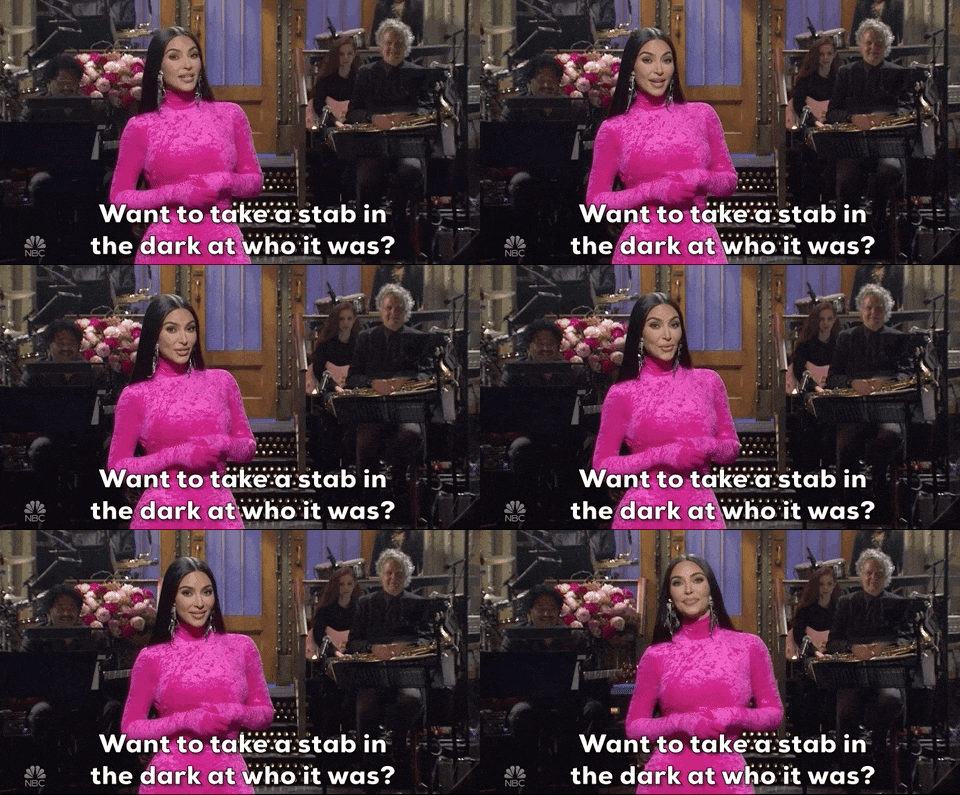

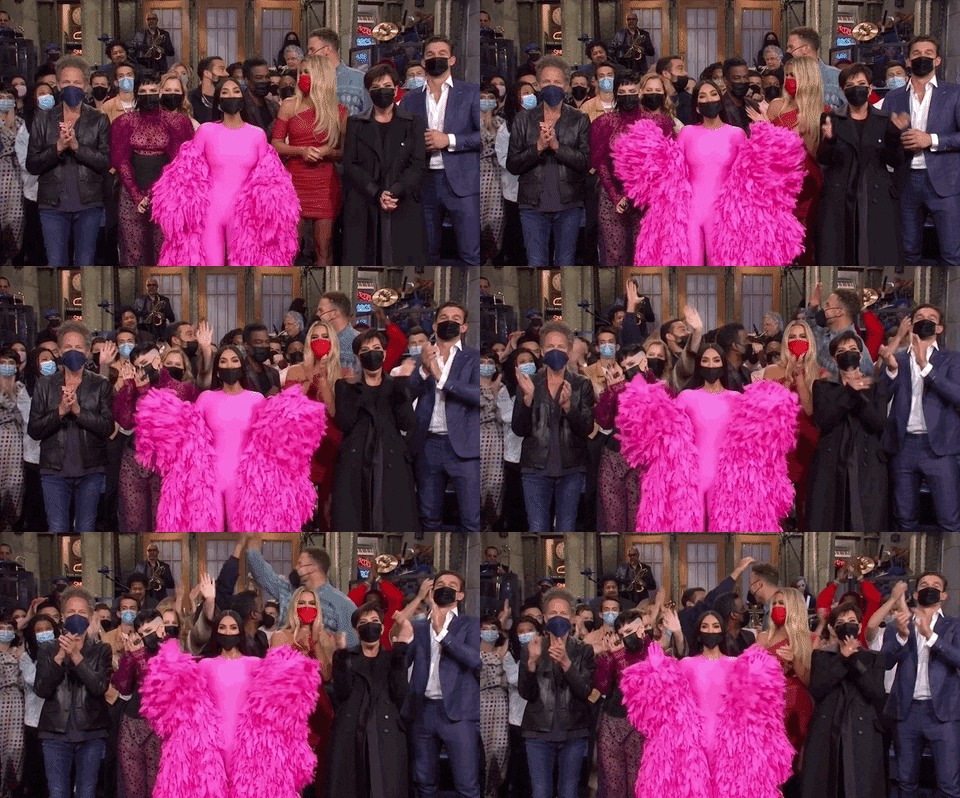
Even the most hardcore Kim haters had to love the shade she threw at her sisters.

“I’m excited to be here tonight to show you guys that I’m so much more than a pretty face … and good hair, and great makeup, and amazing boobs and a perfect butt. Basically, I’m just so much more than that reference photo my sisters showed their plastic surgeons,” she said.

Later in the show, she continued sticking it to her family by playing a perfectly sluggish version of her sister Kourtney in a “People’s Court” parody called “People’s Kourt.” In the sketch, Kourtney is a judge overseeing all of her family’s cases.

“SNL”‘s Heidi Gardner played Kim in the sketch, wearing a body-concealing outfit like the one she debuted at Kanye’s first “Donda” album listening party in July.


Kardashian proved that she learned a little something about hip-hop from Kanye in a musical number featuring Cecily Strong, Ego Nwodim and Punkie Johnson called “Ladies Night Song.”

It’s all about what happens when “grown” women try to party like they did in their 20s.


Regardless of your opinion of Kardashian, she did a great job on the show because she was a good sport and showed everyone that she’s totally self-aware. She knows who she is and why she and her family are such polarizing figures. So maybe that just proves she’s been acting all along?




  • Shocked to see her DoorDash driver was 78, woman raises $960K so he can ‘rest again’
    Richard Pulley making a DoorDash delivery.Photo credit: GoFundMe
    ,

    Shocked to see her DoorDash driver was 78, woman raises $960K so he can ‘rest again’

    After 13 years of retirement, Richard Pulley returned to work after his wife lost her job.

    On March 10, 78-year-old Richard Pulley of eastern Tennessee gingerly walked up the stairs at Brittany Smith’s house to deliver Starbucks to her husband, who is quadriplegic.

    “I open up the (Ring) camera, and I see this little old man walking up my steps with a Starbucks bag and … my heart just sank,” Smith told Today. She never had the chance to interact with him because her husband chose the “leave at door” option.

    After seeing the video, Smith wanted to get in touch with the man, but all she knew was his name was Richard. So she posted the Ring video to Facebook, asking if anyone knew where he lived.

    “Help me find this precious man!” she wrote on Facebook, adding a link to the donation page. “Why is he having to DoorDash his name is Richard! Help me find him.”

    doordash, richard pulley, human kindness, delivery man, retirement
    Richard Pulley’s DoorDash delivery changed his life. Photo credit: GoFundMe

    Why Pulley went back to work

    Smith located the man, spoke with him, and learned that after retiring at 65, he returned to work as a DoorDash driver because his wife lost her job and they couldn’t afford her healthcare, which costs thousands a year.

    “My wife [Brenda] was working for an insurance company, and they ended up letting her go,” Pulley told Today, adding that their Social Security payments weren’t enough to make ends meet.

    So the Pulleys teamed up, with Brenda driving and Richard picking up and dropping off deliveries. “With just one income in the family, you have to push… Just losing that, we had to supplement it,” Richard told WSMV.

    Smith stopped by the Pulley residence to give the couple $200, but she knew it wasn’t enough to ease their financial strain. She then created a GoFundMe page to raise money for Pulley so he could “rest again.” “Let’s help Richard go back into retirement!” she wrote on the campaign page.

    In eight days, the GoFundMe campaign raised more than $960,000.

    GoFundMe funds were life-changing for the Pulleys

    The extra money has brought peace of mind to the Pulley family. “It’s taking a lot of pressure off of us. And making life livable once again,” Richard told WSMV. “We appreciate every one of them [donors].”

    The campaign has helped the Pulleys gain some financial breathing room, but it has also created a new friendship. “I just love this man,” Smith said. “I want him to be my grandpa,” Smith’s daughter added.

    Even though the money has made the Pulleys more comfortable, Richard has found a new sense of purpose in delivering food and doesn’t want to give it up.

    “I taught myself how to be a good worker again, although the last couple of shifts have worked out hard because people stop and take pictures with me and all sorts of things,” he told Today. “I’ll get back to work in the next few days.”

  • Man shares ‘traumatic’ PSAs from his childhood in New Zealand. People can’t look away.
    An injured woman sits on the steps, in pain.Photo credit: Canva

    Childhood commercials often bring back positive memories—unless you’re from New Zealand, it seems.

    New Zealander Tyler Warwick decided to take a stroll down memory lane while visiting a friend from the United States. The experience proved slightly traumatic for his American friend in a weirdly funny way.

    Warwick recently uploaded an Instagram video capturing his friend’s reaction to a “traumatic” PSA that aired in New Zealand during his childhood. The video begins with a woman casually strolling through the frame, with children playing in the background.

    At first, it looks like a typical commercial for a snack bar: a suburban mom with a Kiwi accent talking about the “right snacks” to keep kids going. But as soon as she shows the snack bar, she trips over a toy dump truck, falling face-first through a glass coffee table. What starts as an innocent commercial quickly turns into a mini horror movie.

    The American friend lets out a loud “Oh my God!” followed by an uncomfortable laugh. As the woman lies on the floor, whimpering, a male voiceover says, “Preventing trips around your home can be as easy as tidying up toys.”

    “Ok I was completely unprepared for the emotional whiplash,” a viewer writes in the comments.

    Warwick shared even more comically unhinged commercials with his friend. In a second video, the Kiwi points out that the ad they’re watching aired during the Rugrats cartoon. In the clip, a man happily climbs a ladder to paint the trim on his house. Suddenly, he plummets from the ladder and lands on his back.

    “…Is New Zealand okay?!” a concerned commenter asks.

    In another video, Warwick shows his friend a similarly traumatic fall. The commercials have people wondering how often New Zealanders were taking extreme tumbles. Was there no gentler way to reinforce securing ladders, picking up toys, or using a bath mat when getting out of the shower? But apparently, New Zealand didn’t have a monopoly on these memory-searing ads. Some viewers report seeing similar ads as children in Canada, Australia, and Ireland.

    An Aussie writes, “In Australia we had a work safe ad of a girl working in a bakery severing a finger in the bread slicer.” A Canadian shares, “Canada had the avoidable accidents ads with teenage girls falling through display cases, a guy impaled with rebar, and a woman dumping a boiling pot all over herself.”

    These commercials aired during children’s cartoons as ad breaks. While the ones from New Zealand are jarring, the Canadian ads take it up a notch. In one Canadian workplace safety PSA, now on YouTube, a chef works in a busy kitchen. She studies her engagement ring, then announces there won’t be a wedding—a terrible accident is coming.

    Seconds later, she’s moving a large pot of boiling water when she slips on something spilled on the floor, dumping it over her face. She screams as her skin visibly burns.

    It seems these three countries may have used the same advertising agency. It’s unclear whether the ads were meant to provoke shock or simply to be seen as honest. Judging by the comments on Warwick’s videos, some people who saw these ads as children still feel a bit traumatized.

    One Kiwi asks, “Why were all our ads so terrifying?”

    Another writes, “It worked though. I’m still reminded as an adult today from watching this as a kid.”

    Further in the comments, one New Zealander puts in a request: “NOW SHOW HIM THE 2002 FIRE AD!!!! That was trauma at its finest!!!!”

    “New Zealand…I’m starting to become concerned,” an American chimes in.

  • Video of young fan and baseball player opening a pack of cards together is sports at its very best
    Young baseball players (left) and an autograph signing (right).Photo credit: Canva
    ,

    Video of young fan and baseball player opening a pack of cards together is sports at its very best

    “You never see a professional player interact with a fan this long.”

    For young baseball fans, meeting a Major League Baseball player can be a memorable highlight of a trip to the ballpark. However, one fan not only got to enjoy their favorite hobby with a player, but also walked away with two impromptu autographs from others thanks to him.

    MLB veteran Paul Lo Duca met a young baseball card collector named Noah and his brother on the sidelines before a Mets game. He took the time to open a pack of 2008 Topps baseball cards with Noah, even joking that one of his own cards might appear. When the pack was opened, Lo Duca wasn’t among the players—but two of his former teammates were: Mike Piazza and Johan Santana. Without prompting, Lo Duca grabbed the cards and a pen and ran onto the field to have both players autograph them.

    @orangekids29

    Watch til the end! Our number 1 video of the season! We rip a pack of 2008 Topps with Paul Lo Duca! He pulls both a Mike Piazza AND Johan Santana! He then goes and gets both signed! #baseballcards #packrip #sportscards #topps #baseball @Topps @MLB Network @MLB @ESPN @Collect @Fanatics @Baseball Lifestyle @The Athletic @New York Mets

    ♬ original sound – Orange Kids Pack Rips!

    It would have been understandable for Lo Duca to just give Noah a quick hello, maybe even sign a card if one of his had turned up in the pack. Instead, he went out of his way to get signatures from other players for the young fan. Noah graciously thanked Lo Duca for the gesture and even posed for a photo with him.

    The comments on the boy’s TikTok were abuzz with praise for Lo Duca and the interaction:

    “You never see a professional player interact with a fan this long. He opened a pack and then RAN to get both the cards he got signed. What an amazing guy.”

    “That’s so cool, ripping packs with the pros 💪”

    “It was unbelievable. The kids will never forget this.”

    “This is why baseball will forever be America’s favorite pastime…My friend’s daughter was lucky enough to get a game-used Bryce Harper bat from Harp himself at one game.”

    “How can you not be romantic about baseball?”

    “Outstanding! Made a lifelong memory for the kids and cost nothing but kindness.”

    “I love EVERYTHING about this!!! 💙 I have two grandsons who play baseball and I think I would be literally in tears if this were to happen to them because I know how much they love the game and look up to men like this in the sport! 🧢⚾️”

    “This is officially the best card opening pack video I’ve ever seen. Regardless of sport or collectible.”

    “Paul is every kid’s dream interaction at the ball park. Class act.”

    “Not a Mets fan, but just became a Paul fan!”

    “It doesn’t take long for athletes and former athletes to make a story for a kid they’ll never forget. Lots of respect for Paul doing this!”

    “He’s just happy to see kids still into baseball cards! Keeping it alive!”

    Baseball cards are making a comeback

    Since the COVID-19 pandemic, baseball cards and other trading cards have surged in popularity among young fans like Noah, as well as adults. Lo Duca even mentions that he owns a collectible card store. In an era when many young people’s hobbies revolve around screens and online interaction, parents and teachers are largely welcoming the return of trading cards to schoolyards.

    @chanelcapri2

    Trading cards can have several benefits for kids, including: 1. Fostering a sense of community and social connections through trading and collecting with friends and peers. 2.Encouraging organization and categorization skills as they sort and manage their collections. 3.Developing research and critical thinking skills as they learn about different cards, players, and teams. 4.Promoting patience, persistence, and self-discipline as they hunt for rare or hard-to-find cards. 5.Enhancing knowledge and interest in various subjects, such as sports, history, or pop culture. 6.Encouraging entrepreneurship and business skills through buying, selling, and trading cards. 7.Building self-confidence and pride in their collections and accomplishments. 8.Developing fine motor skills through handling and sorting cards. 9.Learning about the value of money and responsible spending habits. 10.Having fun and enjoying a hobby that can last a lifetime! #lawlerballers #topps #bowman #panini #baseballcards #sportstradingcards #cardbreaks #memories #baseballboys @mlb (Also they have already started a nice little savings!) @topps

    ♬ original sound – will paquin

    While trading cards still require the same parenting and supervision as any hobby, they’re often seen as a way to “trick” kids into learning math. Sports cards like Noah’s offer opportunities to measure and learn statistics, while kids interested in commerce can learn to assess value in collector markets. Even non-sports cards, like Pokémon or Magic: The Gathering, involve similar math both in the cards themselves and in gameplay.

    It’s players like Lo Duca who help keep fandom alive, whether it’s baseball, card collecting, or both. As commenters noted, that kind of joy, kindness, and excitement gets passed on to future fans and players alike.

  • Deaf filmmaker noticed ‘Sinners’ director casually signing at the Oscars. She was moved.
    "Sinners" director Ryan Coogler used American Sign Language at the Oscars.Photo credit: Greg Hernandez/Wikimedia Commons & Kevin Paul/Wikimedia Commons

    Eyes were glued to the Oscars recently. While most people were discussing red carpet looks and who won what, one woman noticed something special. Chrissy Marshall, a filmmaker who is deaf, realized that Sinners director Ryan Coogler was using American Sign Language (ASL) throughout the night.

    The Oscars are a major event that draws millions of viewers each year. But for Marshall, the March 15 ceremony became a moment of inclusion. As she watched Coogler sign, her emotions grew. The filmmaker took to social media to share her excitement with her followers.

    Ryan Coogler, ASL, Oscars, Sinners, inclusion
    Outside the Oscars. Photo credit: Greg Hernandez/Wikimedia Commons

    In her Instagram video, Marshall excitedly signs, “That’s director Ryan Coogler signing ‘I love you.’ But there’s more.”

    A brief clip of musician Ludwig Göransson saying Coogler’s name plays, prompting the Black Panther director to sign, “I love you. Thank you, brother.” Marshall then reappears to explain that Coogler was signing to people all night. As she shows more clips, her emotions build until she’s nearly in tears.

    Marshall adds, “I just learned that his wife Zinzi, is an ASL interpreter… my heart…As a Deaf filmmaker, watching them normalize sign language like that…More please!”

    Zinzi Coogler, who co-founded Proximity Media with her husband and Sev Ohanian, didn’t always plan to work in film—in fact, the career wasn’t on her radar. She attended California State University, Fresno, where she studied communicative sciences and deaf studies, according to Marie Claire. After graduating, she worked as an interpreter at the nonprofit Deaf Counseling, Advocacy & Referral Agency. Given their shared professional paths, it’s likely Ryan Coogler picked up some sign language, though it’s unclear to what extent.

    The inclusion of ASL isn’t new to the Cooglers. In 2015, Leonard Maltin hosted Ryan Coogler for his film symposium class at the USC School of Cinematic Arts. One student asked why the lead female character in Creed, played by Tessa Thompson, experiences hearing loss.

    Maltin shared, “Ryan explained that his fiancée teaches ASL (American Sign Language) and being with her has brought him into that sphere. In other words, a significant facet of the movie is drawn from reality and is not a mere bit of business.”

    It seems that ASL is integrated into the lives of the Cooglers, and they regularly incorporate it into their films. This seamless inclusion helps normalize sign language for audiences. Advocates report that the media underrepresents deaf and hard-of-hearing people, as well as ASL users.

    In a statement, the National Association of the Deaf said, “Portrayals of deaf and hard of hearing people in film, television, and theater have a significant impact on the public image of our community. There is no shortage of professional deaf and hard of hearing actors to fill these roles. … We call for increased casting of deaf and hard of hearing actors in all roles.”

    People who viewed Marshall’s post expressed gratitude for the inclusion of ASL and agreed that representation matters. One person wrote, “Inclusivity is not that hard and makes an incredibly huge impact.”

    Advocating for ASL to be taught alongside English, another commenter wrote, “Sign Language should be taught to everyone along English or the main language. Imagine if we could ALL communicate in silence as well! Like calling or texting, we should be able to switch between talking and signing!”

    Ryan Coogler, ASL, Oscars, Sinners, inclusion
    A woman using sign language. Photo credit: Canva

    Another person revealed, “His wife has Deaf family members. That’s why he learned (and there’s a lot of stories of him interpreting for Deaf/hoh people without making a big deal of it.) That’s also why there was a push for HBO to have BASL interpreted version of sinners.”

    Further in the comments, someone shared their anticipation for the next Creed movie bringing more representation to the big screen. They wrote:

    “And in his ‘CREED’ movies one of his main characters has a condition where she is losing her hearing. By CREED 3 there is the introduction of a Deaf character, Creed’s daughter. The two main characters and the daughter use sign language. This daughter seems interested in becoming a boxer…so now that CREED 4 has been announced, I predict the daughter will be the main character. This will be a movie that champions the ASL community, so keep an eye out for CREED 4.”

  • A neighbor complained that her rooftop yoga was “inappropriate for children” and promoted “Eastern religion.” She made them regret it.
    A woman does yoga outside by the waterPhoto credit: Canva

    Getting a formal notice from your HOA is rarely a good way to start the morning. For one homeowner (u/clammyanton on Reddit) who shared her story on social media, the letter arrived after months of peaceful sunrise yoga on her rooftop terrace, a routine she’d built around the views and the quiet of early morning.

    The notice informed her that a neighbor had filed a complaint about her “inappropriate public displays” and “disturbance of community aesthetics.” She was baffled. She practiced at 6 AM when almost no one else was awake, wore standard workout clothes, and made no noise.

    Then it got stranger. When she followed up with the HOA manager for specifics, she learned the neighbor had gone further than a written complaint. They had been photographing her in various poses and submitted the photos as evidence, arguing they were “inappropriate for children to potentially see” and were “promoting Eastern religious practices in a family community.”

    A woman meditates in a garden setting.
    A woman meditates while doing yoga. Photo credit: Canva

    “I’m literally just doing basic vinyasa flow!” she wrote.

    The detail about Eastern religious practices caught significant attention when the post went viral on Reddit, and for good reason. Legal experts and housing advocates are clear on this point: the Fair Housing Act prohibits HOAs from restricting a homeowner’s use of their property based on religion. As one legal resource explains it plainly, an HOA can ban exercise broadly, but it cannot single out yoga specifically because of its perceived religious associations. The same logic applies to holiday decorations — an HOA that bans string lights for Diwali but allows Christmas lights is on legally shaky ground.

    Commenters on the post were quick to flag this. “If that whole promoting Eastern religion thing is an exact quote, I feel like that right there is your ticket to fight,” wrote  u/cheybananas. “They can’t just outlaw religious practices.”

    Others were more focused on the neighbor’s surveillance. Several urged her to file a counter-complaint about someone photographing her on her own private terrace at dawn. “Taking photos of someone on their private residence without their knowledge or consent?” u/ok-pomegranate-6479  wrote. “Involve authorities if you have to, that’s creepy.”

    A woman performs an advanced yoga pose while on the beach in front of the ocean.
    A woman executes an advanced yoga pose on the beach. Photo credit: Canva

    The homeowner had already come to the same conclusion on her own. After reviewing her HOA’s bylaws, she found nothing prohibiting yoga or exercise on private terraces, only a vague clause about maintaining community standards. She drafted a formal email to the HOA board requesting the specific bylaw citation they were relying on, along with copies of all photos collected of her. She also made clear she was considering a counter-complaint about the neighbor’s behavior.

    “The irony is that yoga is supposed to reduce stress,” she wrote, “but this whole situation is doing the opposite.”

    Her experience isn’t unusual. A Rocket Mortgage survey of more than 1,000 HOA homeowners found that more than 3 in 10 feel their HOA has too much power, and 10% have considered selling their home because of it.

    This article originally appeared earlier this year.

  • ‘Cat’s Cradle’ video has people pondering how trends went viral before the Internet
    Cat's Cradle has been played for generations all over the world.Photo credit: Canva
    ,

    ‘Cat’s Cradle’ video has people pondering how trends went viral before the Internet

    Without social media, how were kids in Norway, Brazil, South Korea, and the U.S. all doing the same things?

    The word “trending” may have gained a whole new meaning in the Internet age, but trends have always existed as a social phenomenon. A video of teens in the ’90s doing “Cat’s Cradle” has people pondering how trends spread, sometimes worldwide, without social media.

    For those who are unfamiliar, Cat’s Cradle is a game of sorts involving a long loop of string wrapped around your hands and fingers in a specific pattern. The game involves transferring the string from one person to another without getting it tangled. Here’s what it looks like:

    The video on X triggered a ton of nostalgia in those who remember playing Cat’s Cradle. But the most remarkable thing is that people from all over the world say they played it around the same time:

    “HOW is this a universal thing. We did this exact thing, exact same moves, in Norway in the early 90s. Pre internet.”

    “That’s a great question. I used to play that game back in the ’90s, too, and I’m from Brazil.”

    “Same in Italy.”

    “What? This is a global thing, greetings from Chile.”

    “This is a game we used to play in Korea. Seeing it for the first time in a long while makes me miss my childhood memories.”

    “We did this in Romania too.”

    To be fair, Cat’s Cradle has been around for a long time. No one appears to know its exact origin. But a specific reference to the game appears in the 1768 novel The Light of Nature Pursued by Abraham Tucker:

    “An ingenious play they call cat’s cradle; one ties the two ends of a packthread together, and then winds it about his fingers, another with both hands takes it off perhaps in the shape of a gridiron, the first takes it from him again in another form, and so on alternately changing the packthread into a multitude of figures whose names I forget, it being so many years since I played at it myself.”

    A girl plays Cat's Cradle with a red string
    Cat’s Cradle has gone through waves of popularity. Photo credit: Canva

    It appears the game has seen surges in popularity at various times—but how? Why did it specifically trend in the ’90s? How did games, fashion, music, dance styles, and more become popular across the country or even the world before the Internet?

    Those who remember life before social media have shared recollections of how trends spread on forums like Reddit and MetaFilter. It’s a fascinating glimpse into a nearly forgotten past:

    “Everyone at a school would do it. Then, one group of people from this school would go to a youth group, and meet a group of people from a different school. It would become common throughout the youth group.

    People from the youth group would go to their own respective schools, and it would spread around the rest of their school mates who don’t go to that youth group – but perhaps go to a different youth group.

    Once something got popular enough, it might feature in magazines or even on TV.” – LondonPilot

    “Cultural transmission was a lot slower previously. In the 60s it was said New Zealand was five years behind England, later it was three years.

    Broadcast radio and later TV sped up cultural transmission immensely. TV shows were transported on film and played on telecine machines at the studios, up to six years behind the original release.

    Magazines were a bigger thing than now. International magazine subscriptions by airmail were extremely expensive so surface mail added up to two months to delivery. Many people read magazines via public libraries.

    Note none of the above are interactive, and only magazines allowed niche interests. Broadcast media had very few channels (until the US got cable TV) e.g. in NZ in the 70s a in a big city there might be six radio stations and one TV station. Later there were four major TV stations.

    There was much less diversity. Record shops had knowledgeable staff who could make recommendations. These were important as an album was a significant investment.

    People travelled and brought back new ideas. (In those days, Western countries were different to each other 😉

    Schoolkids spread jokes and games – one person could infect a whole school with a good game.” – cyathea

    “I think in the pre-internet days some trends and fashions were spread broadly via mass media, but many were regional and local. My wife grew up in small town Midwest and I grew up in the Boston area, both in the 70s to 80s. There were music, fashion and other cultural trends that were part of everyday life for me in the early- to mid-80s that were entirely unknown to her at that time.” –slkinsey

    “I think the big thing was that trends moved more slowly. So you’d have a thing that happened on TV and your weekly magazine (Time, Newsweek) would talk about it. Or your monthly humor magazine (Mad, Cracked). A lot more people watched the same channels, so you’d see people dressed on shows and dressed in commercials… I lived in a rural area, and when I’d visit friends in the big city I’d get ideas and some of those would filter down. I assume it was like this for other people, getting ideas from people more cosmopolitan and then the trickle down. Same with radio, there were only so many stations and there would be a culture that built up around each one which might include shows they promoted (you’d go, you’d see other people) and maybe local events or stuff around them.” –jessamyn 

    “I think social media is more about an acceleration in the spread of trends, as well as an increase in the scope of their spread, than the absence of trend-spreading before. Prior to Facebook/etc, people talked to one another, in person…

    Media wasn’t ‘social’ as we mean it today, but it was still… media. That, and people did what people do – watched the ‘in’ person or people among them and often copied/followed along. Based on my memories of summer camp, trends spread there practically in minutes, sans phones or the internet. Some of this had to do with most of the campers originating in the same hometown. They all just… knew… what was “in” (based on all knowing each other, they decided what that was, in turn based on movies, TV shows, etc) and good luck if you weren’t from their town. People set trends, and others follow, or try to follow – whether through gossip and magazines and MTV, or through social media. All that’s changed is the speed in which trends get set, and the size of the area that they reach.” – Armed Only With Hubris 

    “- Cool kids moving from other parts of the country to my rapidly-growing Minneapolis suburb were a vector for fashion trends in particular.

    – Older siblings would see shows at local venues, interact with others in the audience as well as the bands themselves and people traveling with them, and then bring those influences back to their friends and younger siblings.

    A person pulls a record out of a collection at a music shop
    Record shops played a big role in music trends before the Internet. Photo credit: Canva

    – A handful of shops played important roles spreading culture. Music stores were hangout spots where music was discovered and ideas mixed.

    – Alternative radio stations and college radio had a big reach even out into the small towns and countryside.” – theory 

    It’s wild to see these explanations and realize how much the Internet has changed things. Newspapers, magazines, radio stations, and record shops have struggled just to survive in the digital age. Rarely do they serve as influential forces in what’s popular.

    The people we used to think of as trendsetters are now “influencers.” Real-life social connections have morphed into social media connections that spread trends in the blink of an eye. It’s hard to remember a time when trends spread slowly, either in person or through influences we all shared. But it sure is fun to remember a time when a simple string game could keep us occupied for hours.

  • Delightful clip from 1955 shows how globes were once painstakingly made by hand
    A look inside a British globe manufacturing shop in 1955.Photo credit: British Pathé/YouTube

    For more than 2,000 years, humankind has known that the Earth is round. That fact was widely demonstrated in 1522, when the Magellan-Elcano expedition sailed around the planet without falling off its nonexistent edge. So for more than 2,000 years, people have made globes to help them navigate the planet and hone their geographic knowledge.

    In the second century AD, a major step in globe-making came when Claudius Ptolemy developed a scientific method for locating places using coordinates known as latitude and longitude. Initially, elites exchanged globes with one another. You might also find one in a classroom. But globes began to be mass-produced in the early 19th century, giving more people a way to understand the world from their own homes.

    Video shows how globes were made in London in 1955

    A charming video by British Pathé, created in 1955, offers an inside look at what it was like to manufacture a globe by hand before machines took over much of the process. British Pathé was a newsreel producer that covered world events from 1896 to 1978, and today its entire archive is available to view for free.

    Globe construction in the 1950s was a painstaking process. It began with covering a solid wooden ball with papier-mâché, which was then coated with plaster. Nine separate layers of plaster were applied to the sphere, bringing it to a thickness of 1/8 inch; the entire molding process took more than six hours.

    Once dried, the globe was sent to the covering room, where the map was pasted on in small portions, “like restoring the skin to a peeled orange,” the narrator said. After the map was added to the globe’s surface, workers painstakingly smoothed out any lumps and removed excess glue. It was then attached to an axis for display. The entire process took around 15 hours.

    globe, display globe, classroom globe, modern globe, map
    A globe. Photo credit: Canva

    In 1955, globes were available in sizes ranging from one inch (£0.60) to six feet (£1,000), which would cost roughly $24 to $35,000 in today’s dollars.

    How are globes made today?

    Replogle Globes, one of the world’s largest globe manufacturers, shared a video offering a behind-the-scenes look at how globes are made today and how modern machines have made the process much faster.

    One big difference from how globes were made in the ’50s is that the maps are printed directly onto chipboard, which is then precisely cut with a hydraulic press and formed into half a sphere. During the pressing process, three-dimensional mountains are embossed into the globe’s surface. After the northern and southern hemispheres are pressed together, they are attached to a central hoop, creating a complete replica of planet Earth.

    Globes have been around for more than 2,000 years, and they remain one of the few educational tools that we still use today. You can put a child in front of a computer and show them a representation of the Earth, which they will probably understand. Still, nothing beats running your fingers across a globe and spinning it in your hands to realize what an incredible planet we live on.

  • A woman found the Oscars red carpet in a dumpster and knew just what to do with it
    Paige Thalia shows off her impressive dumpster find. Photo credit: @hellopaigethalia/TikTok

    Thanks to a bit of savvy resourcefulness, some of Hollywood’s trash is now a woman’s interior decor treasure. 

    As Los Angeles-based content creator Paige Thalia shared with The New York Post, she had been walking her dog just outside the Dolby Theatre where the Oscars are held as crews were setting up for the March 15 ceremony.

    Apparently, Thalia had just moved into a nearby apartment and needed a rug “that wasn’t crazy expensive” for her living room.

    Then, inspiration struck. Why not deck out her living room with the famous red carpet? 

    @hellopaigethalia

    I’ve never wanted to turn my resume into a paper airplane more tbh

    ♬ Fame (2016 Remaster) – David Bowie

    Apparently, when Thalia first moved to Los Angeles 10 years ago, she attended a post-Oscars event at the Dolby Theatre, where she was allowed to “take home a tiny piece.” So, the dream seemed at least somewhat attainable.

    @hellopaigethalia

    I set a little personal mission of getting this 3 days ago and it actually happened omg #oscars #redcarpet #hollywood

    ♬ Long Cool Woman – MOONLGHT

    Sure enough, when she asked security if she could hop into the dumpsters to procure some pieces, they let her. In her now-viral reel, Thalia is seen with multiple large rolls.

    Later in her apartment, we see her casually vacuuming a piece of fabric that so many celebrity feet had traipsed across just hours earlier. No big deal.

    @hellopaigethalia

    I would like to thank the Academy… for this free rug

    ♬ original sound – Paige Thalia 💐

    Sadly, Thalia said that since going viral, the carpet had been moved behind a security gate, and security would not let anyone else take it.

    “I’m sorry I brought attention to it before all you guys could get some,” she said. 

    @hellopaigethalia

    Replying to @sufficientanybody sorry to announce this

    ♬ original sound – Paige Thalia 💐

    After Thalia’s video began making the rounds, several viewers criticized the apparent wastefulness of treating the red carpet as single-use.

    “I’m sorry. You’re telling me the Oscars don’t have a storage unit or something in order to reuse it??? They buy/make the carpet for ONE NIGHT and then THROW IT AWAY????? I’m shocked!!!,” one viewer wrote. 

    Another said, “I was today years old when I learned how wasteful the Oscars are…cause WHAT DO YOU MEAN THEY BUY NEW CARPET EVERY YEAR?! but I can’t use a plastic straw.. Cool.”

    Others hoped that Thalia’s story would inspire more sustainable measures in the future.

    “Maybe next year they will not just throw it away,” a commenter wrote. “Let’s hope they donate or recycle it for some other use. It is crazy wasteful thank you for the attention you process.”

    “That could make so many throw rugs for animal shelters!” someone on X added, while another wrote, “Could they not auction off sections of the carpet and donate portions of the proceeds to charity? Would make for better PR at least.”

    It would seem that Event Carpet Pros, the company that has manufactured the carpet for the Oscars for more than 20 years, as well as events on both coasts like the Golden Globes, the Primetime Emmy Awards, and the Grammy Awards, has, in fact, been recycling its carpets as of 2023. Perhaps Thalia was lucky enough to go dumpster diving in a recycling bin. After all, the video shows the dumpster belonged to recycling removal company King Environmental.

    Either way, we can probably all agree that, as one viewer wrote, walking through the streets with a random piece of the Oscars red carpet is “the most LA thing ever.”

Animals

People are sharing the ‘creepiest’ signs of animal intelligence they’ve ever seen firsthand

Family

The 1 mistake grandparents who don’t see their grandkids enough make with their daughter-in-law

People Skills

Expert reveals why chatting about the weather exposes more about people than you think

Culture

A neighbor complained that her rooftop yoga was “inappropriate for children” and promoted “Eastern religion.” She made them regret it.