upworthy
Add Upworthy to your Google News feed.
Google News Button
Internet

A traveler admitted that she couldn't tell Korean locals apart. They said she wasn't racist.

Research says things literally get a little fuzzy when we aren't exposed to other races.

racism; race; facial recognition; is it racist; look the same; similar looks; inclusion; representation

Is it racist to think people of a certain race all look the same? Not necessarily.

Whether we'd like to admit it or not, most people have heard someone say something along the lines of "all (insert racial group) look the same." It's not unique to one race either—comedians across the racial spectrum joke about this seemingly racist phenomenon. The phrase can sound a little racist even when the person admitting to it doesn't mean it to be.

Julia, a frequent traveler, recently had her own experience with this phenomenon when she traveled to South Korea. The woman realized that she couldn't tell the locals apart, which was baffling and embarrassing to her. Once she confessed to her Korean friends, they all got a good chuckle when they revealed they had a hard time telling white people apart. When the sentiment was the same in Mozambique, she decided to do some research into why people have difficulty identifying differences in racial groups outside of their own.

racism; race; facial recognition; is it racist; look the same; similar looks; inclusion; representation Happy friends enjoying a playful moment together. Photo credit: Canva

To Julia's surprise, there was a reason for this seemingly strange occurrence, and it had little to nothing to do with racism. The reason the phrase isn't always racist is that it happens to be true in many instances. Even in diverse countries, people tend to stay in communities that look similar to themselves due to similar cultural upbringings and expectations. Of course, this self-segregating grouping dilutes in major cities where people live near a plethora of different ethnicities and races, in which they build community.

Those who live near other races and ethnicities may have an easier time recognizing the different facial features of people from races different from their own. This is because exposure is key to not only understanding cultural differences but also visually seeing how facial features differ from one race and ethnicity to the next.

racism; race; facial recognition; is it racist; look the same; similar looks; inclusion; representation Facial recognition interface scanning a person.Photo credit: Canva

While the woman uses race to describe the phenomenon, it's important to note that race and ethnicity are two different things. A person of Chinese descent would be categorized racially as Asian, but their ethnicity would likely be Han Chinese, which makes up 91% of China. While a South Korean's race would be Asian as well, their ethnicity would be Korean. In both of these instances, their nationality would be the country in which they were born.

This is a pretty standard breakdown across ethnic and racial groups except Black Americans, who are descendants of chattel slavery. Black Americans' race is Black/African American, but unlike other groups, their ethnic group is also Black/African American, while their nationality is American. Whereas a Black British person may say their nationality is British, their race is Black, but their ethnicity is Nigerian Igbo. It's important to acknowledge the difference in race and ethnicity because one could belong to a racial group but still have the same issue with recognizing the differences of an ethnic group within their race.
racism; race; facial recognition; is it racist; look the same; similar looks; inclusion; representation Team collaboration sparks creativity and innovation.Photo credit: Canva

In Julia's research into why people struggle with recognizing faces from different groups, she discovered something fascinating: there's a name for the phenomenon, "it's called cross-race effect, and it's not about racism, it's about how our brains are wired. TLDR, you're not racist, you just have a lazy a** brain." She goes on to explain, "Our brains are essentially pattern recognition machines. The more often we see something like faces from our community, the better our brain gets from picking up subtle differences without us even realizing it. It's a bit like muscle memory but with visual processing."

The fusiform face area (FFA) is sort of like a shortcut to this processing faces even when we aren't necessarily paying attention. But like most things, you need to exercise the muscle for it to work properly in all scenarios. When it comes to faces, if the only faces you see look like your own, then it'll be difficult to recognize the distinct features of people who don't look like those in your racial or ethnic group.

Recently, singer-songwriter Billie Eilish faced backlash for her remarks while performing in Ireland after commenting, "As you guys know, I'm Irish. I am not from here, obviously. It's really cool to come somewhere and, like, everyone looks exactly like you, and you're all just as pasty as me. I love it." Some fans were offended since white people in America tend to be overrepresented in television and music. While overrepresentation may be true, chances are, since America is so diverse, the singer likely hasn't run into many people of the same ethnicity.

The first faces we learn to recognize are those in our households, which tend to resemble ourselves unless you're an adoptee. These are the faces our FFA practices on before moving on to those in their direct community, slowly expanding outward as one travels further from home.
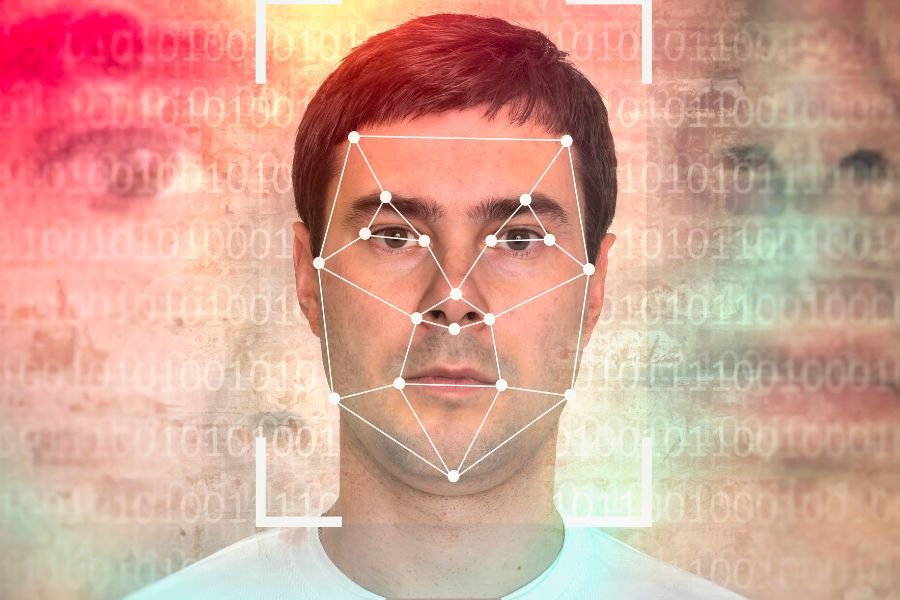
racism; race; facial recognition; is it racist; look the same; similar looks; inclusion; representation Facial recognition technology concept.Photo credit: Canva

"When it (FFA) sees familiar types of faces, for example, faces you've had lots of exposure to, it lights up, like ha, I know this. But when it sees faces from a group you haven't spent much time with, the neural activation is weaker and less precise. Your brain doesn't process all the details. It kind of glosses over it. It's almost like your brain says, 'eh, close enough, I'll just put everything in the same category as the ones I've already seen,'" Julia explains before adding later. "It's not that the other races actually look the same, it's that our brain isn't trained to see the differences, yet."

In many ways, it's like hearing someone speak French when you don't speak the language. At first, the words all mush together and sound the same, but as you begin to pick up on French words, things become clearer. So, no, everyone who thinks people from another ethnic group all look the same is racist; they simply need to exercise that part of their brain.

boomer grandparents, boomer grandparent, millennial parents, millennial parent, grandkids
Image via Canva/PeopleImages

Boomer grandparents are excessively gifting their grandkids, and Millennial parents have had enough.

Millennial parents and Boomer grandparents don't always see eye to eye on parenting and grandparenting. Now, Millennial parents are uniting on a nightmare Boomer grandparenting trend that sees them "excessively gifting" their grandkids with tons of both new and old *unwanted* stuff during visits.

Ohio mom Rose Grady (@nps.in.a.pod) shared her "Boomer grandparent" experience in a funny and relatable video. "Just a millennial mom watching her boomer parents bring three full loads of 'treasures' into her home," she wrote in the overlay.


Grady can be seen looking out the window of her home at her Boomer mom and dad carrying bags and boxes up her driveway after several visits. The distressed and contemplative look on Grady's is speaking to plenty of Millennial moms.

@nps.in.a.pod

Today's "treasure" highlight was the mobile that hung in my nursery... #boomerparents #boomers #boomersbelike #millennialsoftiktok #millenialmom #motherdaughter

Grady captioned the video, "Today's 'treasure' highlight was the mobile that hung in my nursery..."

The humorous video resonated with with fellow Millennial parents. "Straight to the trash when they leave," one viewer commented. Another added, "I always say 'if you don’t want it in yours, we don’t want it in ours' 😂."

Even more Millennial parents have shared and discussed their situations with Boomer grandparents buying their kids too much stuff on Reddit. "Both my mother and my MIL love buying and sending toys, books, clothes, etc. I don't want to be ungrateful but we just don't need it and don't have the space. I have brought this up politely in 'we are all out of drawers for that' but it hasn't slowed things down," one explained. "I think part of the issue is that the grandparents live in different cities and vacation a lot. They don't get to see our daughter much so they buy stuff instead."

Another Millennial parent shared, "While the intention is very kind behind these, all the grandparents are very aware that we do not need, nor wish to receive these gifts in such an excessive volume - as it creates a daily struggle to store and accommodate in our home. I struggle to keep on top of tidying as it is, and this is a massive added challenge."

millennial parents, millennial parent, millennial mom, kids room, organize Millennial mom struggles to organize her son's room.Image via Canva/fotostorm

How to talk to Boomer grandparents about gifts

So, why are Boomer grandparents excessively gifting? "Boomer grandparents may be the first grandparent generation to have accumulated the substantial discretionary funds that enables them to spend money on their grandchildren," Sari Goodman, a Certified Parent Educator and founder of Parental Edge, tells Upworthy. "These grandparents probably grew up with grandparents who didn’t have that kind of money and so they may be excited to give their grandchildren the things they didn’t get."

Goodman suggests that Millennial parents first discuss with them the "why" behind the gifting. "What comes before setting a boundary to limit over-the-top gift-giving is delving into the reasons grandparents are buying so much," she explains. "Coming from a place of compassion and understanding makes it possible to come up with mutually beneficial solutions."

- YouTube www.youtube.com

She recommends that Millennial parents sit down with their Boomer parents to learn more. "Did they grow up without many toys and clothes and are fulfilling a dream? Ask them about the values they learned as children (hard work, perseverance, the power of delayed gratification) and how they can pass on these lessons to the grandchildren," she suggests.

She adds that another reason may be that Boomer grandparents live far away and want their grandchildren to feel a connection with them. "Set up a regular FaceTime or Zoom meeting. Rehearse with the kids so they have something to say and suggest a topic for the grandparents," says Goodman. "Or send snail mail. Kids love getting mail. The grandparents can send postcards from where they live and explain some of the special sites."

boomer grandparents, boomer grandparenting, video chat, video call, grandkids Boomer grandparents have a video call with grandkids.Image via Canva/Tima Miroshnichenko

Finally, Goodman adds that for some grandparents, this may be is the only way they know how to show their love. Millennial parents could ask if they would be open to other ideas. "Parents can set up an activity for grandparents and kids to do when they come over—a jigsaw puzzle, art activity, board game, magic tricks," she says. "Arrange for the grandchildren to teach the grandparents something their phones can do or introduce them to an app they might like."

This article originally appeared last September

conflict, arguments, disagreements, conflict management, psychology, human behavior, anger, therapists
via Canva/Photos

Researchers say one phrase can grind arguments to a halt.

Conflict is a natural and healthy part of our daily lives, so it can be very productive when we know how to have productive disagreements. In fact, you can argue that learning to have difficult and challenging, even confrontational conversations, with others is essential to a happy life.

However, it's extremely difficult to keep conflicts from spinning out of control into arguments. Has getting into a heated argument with your significant other, a coworker, or a child ever solved anything? Probably not. Heated arguments often lead people down the dark path of personal attacks, animosity, and getting so riled up that they stop making sense altogether.


"If no one ever argues, you’re not likely to give up on old ways of doing things, let alone try new ones. Disagreement is the antidote to groupthink,” organizational psychologist Adam Grant said, according to Psychology Today. “We’re at our most imaginative when we’re out of sync."

So the big question is, how do we prevent heated arguments from happening and steer them to more productive territory instead? Researchers have been on the case and may have a solution.

A group of scholars at the University of Wisconsin found that it’s essential for people to create a safe environment for discussion, and the key to doing so is to ask open-ended questions that lead to points of agreement. Specifically, the researchers say to use “I” statements, such as “I feel frustrated” or “I feel concerned,” when expressing yourself during the disagreement. It's an old therapy trick that's often used to prevent other people from feeling attacked by accusations.

However, the most effective phrase researchers identified is one that clearly directs the discussion toward agreement.

conflict, arguments, disagreements, conflict management, psychology, human behavior, anger, therapists We face disagreements in every area of life. Handling them properly is harder than it seems. Photo by Vitaly Gariev on Unsplash

The best way to stop an argument, they say, is with the phrase: “I’d actually like to focus on all the things we agree on.”

There are 3 big reasons why the phrase is so effective at stopping arguments from happening. First, the phrase immediately changes the mindset of both people from the areas where they disagree to one of agreement. We are no longer arguing about why we like or don’t like pineapple on pizza. Instead, we’re focusing on the toppings we both enjoy, such as pepperoni or black olives.

This subtle shift turns the person we disagree with from enemy to collaborator.

Another big reason “I’d actually like to focus on all the things we agree on” is such an effective phrase because it extinguishes the other person’s anger. When we search for a way to agree, we suddenly become an unappealing target for the other person’s rage.

Finally, this phase makes you the good guy in the disagreement because you are looking for a positive solution. You’ve just taken a right turn onto the high road and have become the rational party in the conversation. This tactic is especially effective when a third party, such as a boss or sibling, is involved in the disagreement and wants to see who is acting in good faith. This will encourage the person you’re having a dispute with to be more cooperative to save face.

The key is to be genuine about seeking agreement and maintain a sincere tone when presenting your approach. Once the potential fight has been quelled, you can work together to reach the best possible agreement.

- YouTube www.youtube.com

The paper provides some helpful acronyms anyone can remember during their next disagreement, in addition to the one key phrase:

  • Validate
  • Ask (open-ended questions)
  • Listen (to test assumptions)
  • Uncover interests
  • Explore options
  • Decide (on solutions)
The researchers also further recommended some active listening techniques in addition to asking question, like mirroring or paraphrasing the other person's statements and words, and priming. Priming involves "[making] a guess out loud about what the other person might be thinking or feeling. One must choose the words carefully and use a calm tone to avoid worsening the situation. The goal is to make the other person feel comfortable speaking."
@therapytothepoint

6 Listening Skills to Listen Like a Therapist. 1) Minimal encouragers 2) Validation 3) Silence 4) Open/Close ended questions 5) Summaries 6) Reflection #listeningskills #activelistening #howtolisten #communicationskills #listeningiseverything #therapyskills #therapistsontiktok #therapytok

Using "I" statements also helps because we're avoiding using "you" statements. "Anyone who’s ever been in conflict with someone knows that hearing a you-statement is hearing yourself be blamed for something, identified as the problem. 'You never listen to me,' 'You’re always late,' 'Why are you so stubborn?' And even if you don’t know consciously that you're being blamed, your reflexive reaction of defensiveness tells you that you know it when you hear it," Gregg Levoy, author of "Vital Signs: The Nature and Nurture of Passion," writes in Psychology Today.

Learning how to prevent heated arguments can strengthen the relationship with the person you disagree with. Resolving a conflict together makes their relationship stronger and more enduring. So, a conflict can be a gift that you can use to skillfully bring yourself closer to someone. The key is to focus on the areas of agreement and to be sincere so you can resolve the issue together without leaving any lingering resentment.

This article originally appeared in January. It has been updated.

Pop Culture

In 1969, the Monkees appeared on The Johnny Cash Show and played a stunning, original country song

"Nine Times Blue" is a jaw dropping intersection of craftsmanship and pure talent.

the monkees, nume times blue, monkees live, monkees country, johnny cash show

The Monkees perform on "The Johnny Cash Show."

The great debate about The Monkees is whether they were a real band or just a group of actors thrown together for a TV show. The answer is yes. They were actors cast to play an American version of The Beatles, and many of their early songs were written by big-time professional songwriters such as Tommy Boyce, Bobby Hart, Neil Diamond, Carole King, and Gerry Goffin.

However, The Monkees would pick up their own instruments, play on the 1967 Headquarters album, and perform as a live band on sold-out tours. After a resurgence in the '80s, the band enjoyed a lucrative career as a legacy act, with various members continuing to perform as The Monkees until Michael Nesmith died in 2021. Nesmith, originally a country singer from Dallas, Texas, wrote several of The Monkees' hits, including "Mary, Mary," "Papa Gene's Blues," "The Girl I Knew Somewhere," and "Listen to the Band," and was a driving force in the group being taken seriously as musicians.


By the summer of 1969, The Monkees' TV series was off the air, and the affable Peter Tork had exited the group, citing exhaustion. The remaining three soldiered on, performing on The Johnny Cash Show to promote their latest album, Instant Replay. The band chose to perform "Nine Times Blue," a country song written by Nesmith that he had demoed at the time but wouldn't be released until he recorded it as a solo artist in 1970.

The performance is a wonderful reminder that The Monkees were great comedic actors and accomplished musicians. Davy Jones and Micky Dolenz do a fantastic job singing harmonies on the chorus, while Nesmith plays some nice fills on his Gibson acoustic.

- YouTube www.youtube.com

Later in the show, The Monkees joined Cash for a performance of his 1966 novelty song, "Everybody Loves a Nut," which perfectly suited the band's comedic sensibilities. Two weeks after the release, Cash scored one of his biggest hits with "A Boy Named Sue," recorded live at San Quentin prison.

A few months later, Nesmith left The Monkees to pursue a country-rock career, first with the seminal group The First National Band, which scored a Top 40 hit with "Joanne" from the album Magnetic South.

- YouTube www.youtube.com

Although Nesmith's country-rock albums of the '70s were moderately successful, he was still overshadowed, as a musician, by The Monkees' towering success and subsequent downfall. In the '70s, it wasn't easy for Nesmith to get the respect he was due as a country artist. But in the years leading up to his death in 2021, Nesmith's work was reappraised, and he was seen as a brilliant songwriter who anticipated the rise of alt-country.

The Monkees hold a complicated place in rock 'n' roll history. While some see them as a prefabricated band assembled to cash in on The Beatles' success, others recognize them as talented musicians brought together under bizarre circumstances who forged their own path and created something fresh and innovative, only earning proper respect years later.

baby names, sibling names, twin names, unique names, terrible baby names, baby name trends 2025, baby boy names, baby girl names

"I recently met a guy named Scott who has six siblings. Two of his brothers are also named Scott."

We're looking at opposite ends of the spectrum, folks: young people's names are either incredibly strange and unique, or extremely old-fashioned—and there's no in between. Studies show that over the past few decades, more Americans have been given uncommon names at birth, and researchers believe this is a sign of growing individualism. “As American culture has become more individualistic, parents have favored giving children names that help them stand out—and that means more unique names and fewer common names” Jean Twenge, a psychology professor at San Diego State told the BBC in 2016.

Having a baby and giving it a name that people haven’t heard before is also, apparently, a sign of affluence. “When you have lots of resources and are less worried about scarcity, you can afford to stick out a little bit. In fact, it may be advantageous to go away from the crowd,” Dr. Michael Varnum of Arizona State University also told the BBC. “There may be more opportunities to innovate, for example. If you don’t have a lot of resources or wealth, the better strategy might be conformity and to do what most people are doing.”


wealthy, rich, affluence, wealthy parents, unique baby names Unique names can be a sign of affluence.Canva Photos.

When it comes to strange names that make people wonder, “What were their parents thinking?" some parents are repeat offenders. For some reason, they've given some or all of their children unique names. It's definitely a choice, but at least the kids aren't alone?

A Redditor asked the NameNerds forum for people to share the “sibling names have you come across, which made you think ‘hmmmm…’” and the responses didn’t disappoint. Here are 17 of the most “questionable” sibling names.

1. Brothers: Grover and Oscar

"Parents claim Grover Washington & Oscar Peterson; I say Sesame Street."

sesame street, oscar the grouch, oscar, grover, names, kids Turn Around No GIF by Sesame Street Giphy

2. Twins: Archer and Hunter

"All I could think was would they name the next one gatherer?"

"On the bright side, at least they didn't go with Beau and Arrow."

3. Twins: Damian and Damion

"Maybe it's my southern accent, but are these not pronounced the same?"

4. Twins: Jenna and Jena

"How did they distinguish Jenna from Jena verbally?"

baby names, sibling names, twin names, unique names, terrible baby names, baby name trends 2025, baby boy names, baby girl names This just in: twins are individuals! media3.giphy.com

5. Fraternal Twins: Charles and Charlotte

"Let's just say my birth name gave me depression throughout my whole childhood and teenage years. I changed my name as soon as I could. I also know another pair of boy-girl twins named Ronald and Hermione (after Harry Potter's friends). Ron hates his name because he said it's like being named Romeo and Juliet as siblings."

6. Sisters: Millie Robin and Mollie Ribbon

"What bothers me most about that is that, obviously, the first one was a selected name, but the other name seems forced to match at the expense of having a middle name that's just made up. 'Ribbon' for all the wrong reasons."

7. Fraternal Twins: Luke and Leah

"Twins named Luke and Leah (pronounced lay-uh). The mom got REAL mad if you asked if she was a big Star Wars fan. 'They’re names FROM THE BIBLE.' Ma’am, there are more than 3,400 names in the Bible. You picked the two that are also the names of fraternal twins in one of the most popular film series of all time."


baby names, sibling names, twin names, unique names, terrible baby names, baby name trends 2025, baby boy names, baby girl names Luke Skywalker GIF by Star Wars Giphy

8. Brothers: William and Liam

"I’ll be honest and say that I never knew Liam was a nickname for William until I came to this sub. I know people named William and people named Liam, but I don’t know anyone Williams who go by Liam."

9. Eric, Sebastian and Ursula (like 'The Little Mermaid')

"How are you gonna pick a theme and make one of the names the villain????"

"Arielle was right there And Arista .. and Alana ... take your pick."

10. Fraternal Twins: Adam and Eva

"NOOOO OH MY GOD those poor kids. That’s so weird!"

11. Brothers: Scott, Scott and Scott

"I recently met a guy named Scott who has six siblings. Two of his brothers are also named Scott. Three boys in one family, brothers, not half or step-siblings. All named Scott."

baby names, sibling names, twin names, unique names, terrible baby names, baby name trends 2025, baby boy names, baby girl names Which one is the Great Scott, though? media2.giphy.com

12. Andy, Sally, Sally, Tom and Tom

"I know a woman who named 2 of her kids the same name twice. So if her kids didn’t go by their middle names, it would be like Andy, Sally, Sally, Tom, and Tom. Her name was also Sally. She gave her first daughter the exact same first and middle name as her. Hopefully this is understandable- Second daughter had a different middle name. Second daughter gave variations of her or her mom and sisters names to her three daughters, and gave the fourth daughter the exact same first and middle name as her mom and older sister. Older sister was pissed as she didn’t want the name used unless she herself had a daughter… even though she was 40+ yrs old with health issues."

13. Brothers: Arthur and Arthur

"I went to school with two brothers both named Arthur. They went by big Arthur and little Arthur. Their parents reasoned that it was their favourite name and they didn’t want to give the second son a name they liked less than Arthur."

"Depending on where they are from, that’s actually normal. My dad has 5 sisters and they are all named Maria, but have different middle names so everyone calls them by their middle names."

14. Siblings: Destin and Destiny

"Destin?? Like the diaper cream?!"

15. King, Princess, Diamond, Markus, Markella

"Siblings I met named King, Princess, and Diamond. Also other siblings named Markus and Markella after their dad Mark."

baby names, sibling names, twin names, unique names, terrible baby names, baby name trends 2025, baby boy names, baby girl names Slay Go Off GIF by AHS Giphy

16. Siblings: Heather and Heath

"Siblings Heather and Heath. Not twins and they have an older brother and younger sister with completely unrelated names."

"Those are at least pronounced differently."

17. Siblings: Amy, Mya, May, Aym

"I knew sisters in elementary that were Amy, Mya, and May. Their mom was pregnant and we were all so worried the kid would be named Yam… nope they named baby (boy) Aym."

This article originally appeared last year. It has been updated.

Pop Culture

'Wicked' author shares the one  'Wizard of Oz' line that inspired Elphaba and Glinda's story

Wicked author Gregory Maguire says he "fell down to the ground" laughing when the idea hit him.

wicked, icked for good, wizard of oz, wicked songs, wicked golden globes, wicked oscars, ariana grande, cynthia erivo
Public domain, Tenor

The two witches in "The Wizard of Oz" clearly had a history together.

Have you ever watched a movie or read a book or listened to a piece of music and wondered, "How did they come up with that idea?" The creative process is so enigmatic even artists themselves don't always know where their ideas come from, so It's a treat when we get to hear the genesis of a brilliant idea straight from the horse's mouth. If you've watched Wicked and Wicked: For Good, and wondered where the idea for the friendship between Elphaba (the Wicked Witch) and Glinda (the Good Witch) came from, the author of the book has shared the precise moment it came to him.

The hit two-part movie Wicked is based on the 20-year-old hit stage musical, which is based on the novel "Wicked: The Life and Times of the Wicked Witch of the West" written by Gregory Maguire. While the musical is a simplified version of the 1995 book, the basic storyline—the origin story of the two witches from "The Wizard of Oz"—lies at the heart of both. In an interview with BBC, Maguire explained how Elphaba and Glinda's friendship popped into his head.


Maguire was visiting Beatrix Potter's farm in Cumbria, England, and thinking about "The Wizard of Oz," which he had loved as a child and thought could be an interesting basis for a story about evil.

"I thought 'alright, what do we know about 'The Wizard of Oz' from our memories,'" he said. "We have the house falling on the witch. What do we know about that witch? All we know about that witch is that she has feet. So I began to think about Glinda and the Wicked Witch of the West…

"There is one scene in the 1939 film where Billie Burke [Glinda the Good Witch] comes down looking all pink and fluffy, and Margaret Hamilton [the Wicked Witch of the West] is all crawed and crabbed and she says something like, 'I might have known you'd be behind this, Glinda!' "

"This was my memory, and I thought, now why is she using Glinda's first name? They have known each other. Maybe they've known each other for a long time. Maybe they went to college together. And I fell down onto the ground in the Lake District laughing at the thought that they had gone to college together."

In Wicked: Part One, Glinda and the soon-to-be Wicked Witch, Elphaba, meet as students at Shiz University, a school of wizardry. They get placed as roommates, loathe each other at first, but eventually become best friends. The story grows a lot more complicated from there (and the novel goes darker than the stage play), but it's the character development of the two witches and their relationship with one another that force us to examine our ideas about good and evil.

Maguire also shared with the Denver Center for Performing Arts what had inspired him to use the "Wizard of Oz" characters in the first place.

"I was living in London in the early 1990’s during the start of the Gulf War. I was interested to see how my own blood temperature chilled at reading a headline in the usually cautious British newspaper, the Times of London: 'Sadaam Hussein: The New Hitler?' I caught myself ready to have a fully formed political opinion about the Gulf War and the necessity of action against Sadaam Hussein on the basis of how that headline made me feel. The use of the word Hitler – what a word! What it evokes! When a few months later several young schoolboys kidnapped and killed a toddler, the British press paid much attention to the nature of the crime. I became interested in the nature of evil, and whether one really could be born bad. I considered briefly writing a novel about Hitler but discarded the notion due to my general discomfort with the reality of those times. But when I realized that nobody had ever written about the second most evil character in our collective American subconscious, the Wicked Witch of the West, I thought I had experienced a small moment of inspiration. Everybody in America knows who the Wicked Witch of the West is, but nobody really knows anything about her. There is more to her than meets the eye."

And to think, that little inspiration would turn into a critically acclaimed pop culture juggernaut. Arguably not just because of the dazzling costumes, choreography, and vocal prowess of both grande and Erivo…but because of the very real human elements interwoven throughout the story.

Authors and artists—and their ideas—help hold a mirror up to humanity for us to see and reflect on who we are, and Wicked is one of those stories that makes us take a hard look at what we're seeing in that mirror. Thanks, Gregory Maguire, for launching us on a collective journey that not only entertains but has the potential to change how we see one another.

This story originally appeared last year.