Death is hard to think about and harder still to talk about. Some people get panic attacks just imagining the inevitable end of their life. It’s an extremely uncomfortable and inescapable fact of living. For some people, learning as much as they can about what it’s like and how it works is the one thing that brings them a little bit of comfort.
That’s where Julie McFadden comes in. McFadden has been working as a hospice nurse for nine years. She has been educating people about the dying process on social media for almost as long, racking up millions of views with her gentle, reassuring, and highly informative FAQs.
In a recent video, Hospice Nurse Julie tackles a big, scary question: What time do people usually die? And can we actually predict someone’s time of death?
“When is the most common time to die? I think you might be surprised what research says,” she begins the video.
McFadden says even she was surprised when she started digging into the data and research. She noted that in her own work, she hasn’t really seen a trend, but after poring through studies and speaking to colleagues throughout the hospice industry, she was taken aback to discover there was a clear answer to her question.
“Research and anecdotal evidence… it does show that most people die between 2 a.m. and 5 a.m.,” she says. She explains that some professionals refer to this window as the “letting go hour.”
Other studies and experts have a slightly different take, citing the most common time as 6 a.m.—8 a.m., or even peaking at 11 a.m. But the truth remains that there is a definitive pattern of a high percentage of people passing away in the wee hours of the morning or middle of the night.
“So, why does that happen? That’s where my brain went. And to me, the reason why is the most fascinating part,” she explains.
There are a few different factors, McFadden says, that explain such a narrow death window. The first relates to the normal cycle of our body’s energy and alertness.
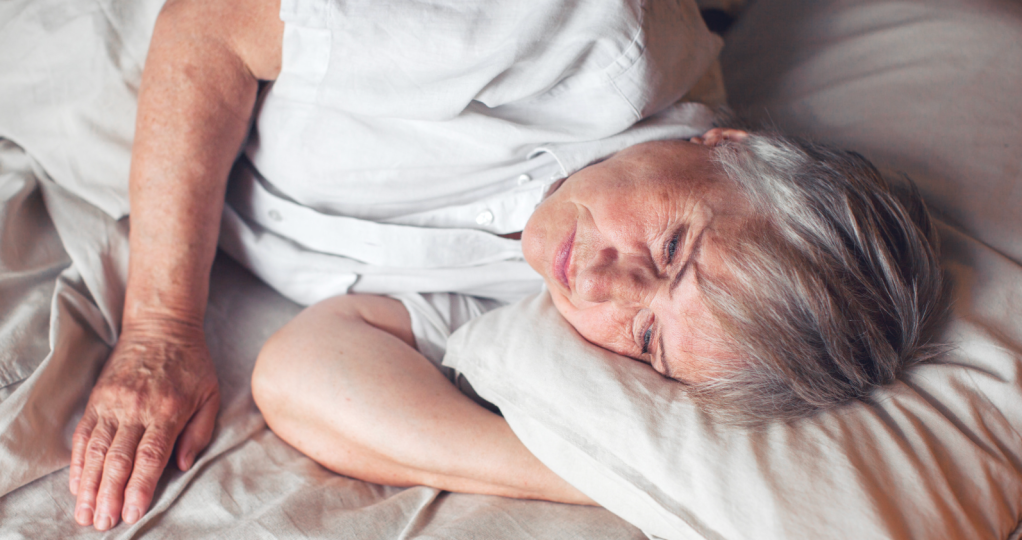
“Biologically, we have a circadian rhythm… And between the hours of two and five, that is when our body’s energy level is the lowest. Our temperatures drop, our blood pressure drops, and our breathing slows.”
She mentions that those late night/early morning hours are also typically very quiet, without a lot of interruption and stimulation that might unwittingly keep a patient engaged with the outside world. “There’s less people kind of trying to hold you there.”
The dying person’s personality also plays a role. McFadden says she sees over and over that some patients will wait until the entire family arrives before they “let go,” while others will wait until things are quiet and they’re alone. More outgoing people may wait to be surrounded before they pass, while introverts may prefer to pass in solitude. For the folks who prefer peace and quiet, those nighttime hours make a lot of sense.
McFadden then shared a pretty wild story of a patient of hers who “chose” when to die. Viewers then chimed in with their own.
Most people who have lost a loved one absolutely insist that dying people are aware of, and have some level of control over, when they decide to let go. You should watch McFadden’s video to hear her best story, but the comments were full of even more.
“My good friend Donna was dying in hospice from a brain tumor and a week before she passed things looked pretty grave so she wasn’t expected to last another 2 days. Her sister was by her side and said it’s okay you can go but she opened her eyes and said no I’m not going yet I’m waiting for my birthday, I’m dying on my birthday. Her birthday was a week away and no one thought she would make it but she did. Her sister whispered in her ear ‘today is your Birthday Sis you made it’ and then she passed within the hour,” one user shared.
“My grandmother was actively dying for two weeks and held on until the wee hours of the first of the month. She was concerned about getting her social security check to help the family,” said another.
“About a week before my 93 year old mom died, she adamently said a few times to me and others she was leaving the following Tuesday. At first I thought she meant she’s going out… That Tuesday comes and it was clear she was probably not going to make it to end of the week. I was aware of her comments from the week before but didn’t think it would happen that day. She died at 11:12 pm that night, on the day she said she was leaving. She knew.”
“While not quite the same thing as ‘predicted,’ my mother said ‘they’ told her when she was going to pass away — to the minute. ‘They’ being the people visiting her and promising to help her during her visioning experiences. She said they had shown her where she was going to go. She died at exactly the time her visioning-visitors had told her.”
The stories shared by the hundreds in the comments to McFadden’s video are heart-wrenching, but ultimately extremely hopeful.
McFadden doesn’t want her viewers who may have a loved one who’s dying to be more anxious and nervous during the night, worrying and potentially losing sleep.
“People are going to do it when they do it. Their body is going to let go when the body is ready to let go. All you can do is be there for your loved one the best you can.”
She reiterates that, even for someone like her who has seen and helped many patients cross over from this world to the next, that death is a mystery. As much as we can continue to learn and understand new aspects of it, we’ll never fully know what it’s like until we experience it ourselves.
This article originally appeared in June.