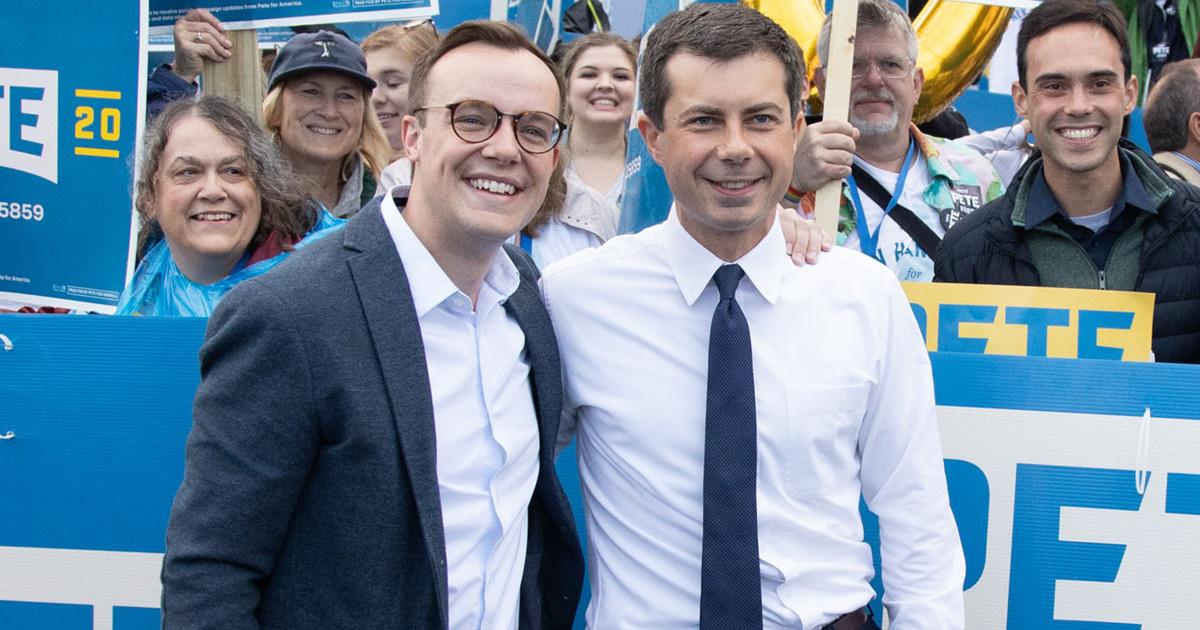
Chasten Buttigieg reacts to Rush Limbaugh’s death by throwing some perfectly polite shade
Conservative radio provocateur Rush Limbaugh, 70, died yesterday after complications from lung cancer. The popular radio show host helped define the Republican Party in the ’80s and ’90s while leaving a legacy blemished by extreme intolerance. One group that was often pilloried by Limbaugh was the LGBT community. In the 1980s, he had a segment…
Conservative radio provocateur Rush Limbaugh, 70, died yesterday after complications from lung cancer. The popular radio show host helped define the Republican Party in the ’80s and ’90s while leaving a legacy blemished by extreme intolerance.
One group that was often pilloried by Limbaugh was the LGBT community. In the 1980s, he had a segment on his show called “AIDS Update” where he mocked gay and bisexual men who died of AIDS. During the height of the AIDS epidemic, he claimed that “Gays deserved their fate.”
As America became more accepting of the LGBT community, Limbaugh did not. In 2020, he lambasted former Democratic presidential candidate and current Secretary of Transportation Pete Buttigieg for kissing his husband, Chasten, from a debate stage.
♥️. Limbaugh said “They’re looking at Mayor Pete, 37-year-old gay guy, mayor of South Bend, loves to kiss his husband on the debate stage. And they’re saying, ‘OK, how’s this going to look” and it looks great! pic.twitter.com/Ro7roWozxn — Gayatri ✈️ (@soulflickering) February 17, 2021
“Okay, how’s this going to look, 37-year-old gay guy kissing his husband onstage next to Mr. Man Donald Trump? What’s going to happen there?’” Limbaugh asked. “They’ve got to be saying that despite all the great progress and despite all the great wokeness, and despite all the great ground that’s been covered, America’s still not ready to elect a gay guy kissing his husband on the debate stage president.”
“There may be some Democrats who think that’s exactly what we need to do, Rush,” he said. “Get a gay guy kissing his husband on stage, ram it down Trump’s throat, and beat him in the general election. Really. Having fun envisioning that.”
Limbaugh went on to say that Donald Trump would “have fun” facing off against a candidate who “kissed his husband on the debate stage.”
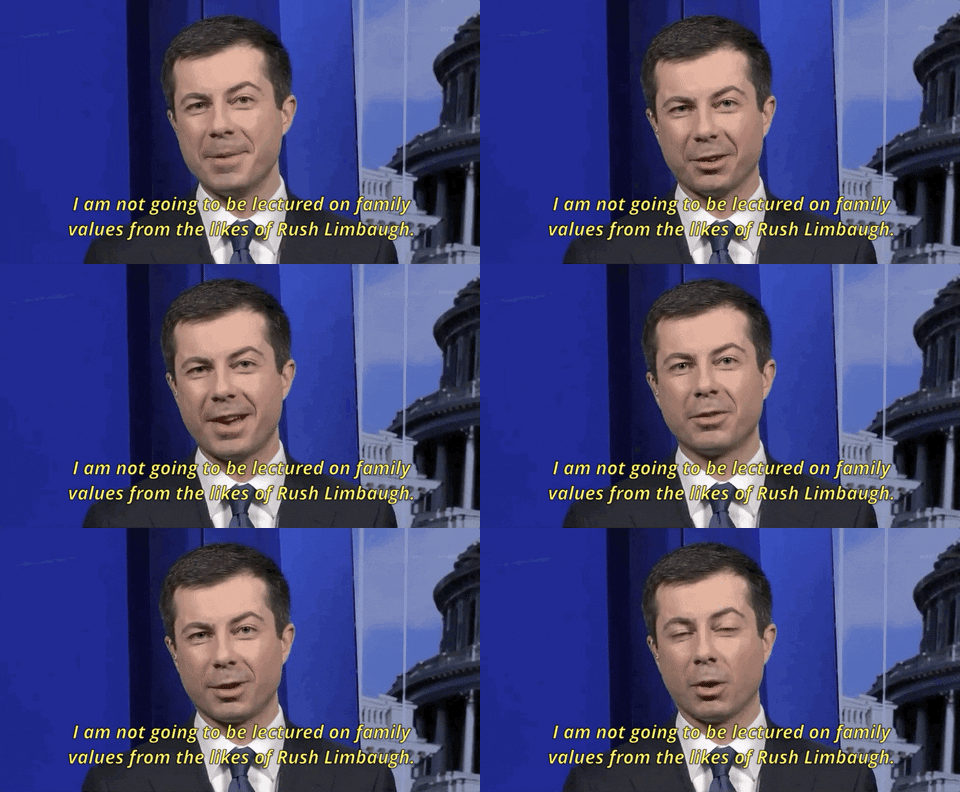
Buttigieg on homophobic attacks: "I'm not going to be lectured on family values from the likes of Rush Limbaugh or anybody who supports Trump as the moral & political leader of the US … I'm saddened for what the GOP has become if they embrace that kind of homophobic rhetoric." pic.twitter.com/sXFHOnlXYm— Aaron Rupar (@atrupar) February 16, 2020
Pete Buttigieg adeptly responded to Limbaugh’s comments by pointing out his relationship history.
“Well, I love my husband. I’m faithful to my husband. Onstage, we usually just go for a hug, but I love him very much,” Pete Buttigieg said. “And I’m not going to take lectures on family values from the likes of Rush Limbaugh.”
Limbaugh was married four times, three of them ending in divorce.
Donald Trump wouldn’t even entertain Limbaugh’s comments. When asked if the country was ready for a gay couple in the White House he said, “I think so. I think there would be some that wouldn’t. I wouldn’t be among that group, to be honest with you.”
Then-presidential-candidate Joe Biden supported the Buttigiegs in the controversy. “I mean, my God,” Biden said, calling it “part of the depravity of this administration.”
After the news of Limbaugh’s passing was made public, Chasten Buttigieg threw some polite, but pointed, shade at the radio host who mocked his marriage. He posted a picture of himself and Pete kissing, without a comment.
It’s tasteless to dunk on someone in the wake of their passing, but Chasten’s tasteful post was a way of showing that no matter how hard Limbaugh tried to disenfranchise and mock the LGBT community, their love still stands.
Chasten’s post was a demonstration of the power of love in the face of hate.
An Operation Smile volunteer reverses an oxygen mask so a child with a cleft condition can blow a bubble for the first time in Guadalajara, Mexico. (Operation Smile Photos)
For thousands of children born with cleft conditions, Operation Smile provides simple, playful tools—like bubbles—to strengthen the skills they need to speak and thrive.
While a bottle of bubbles might seem out of place in a hospital setting, you might be surprised to learn that, for thousands of children around the world born with cleft lip and palate, they can be a helpful tool in comprehensive cleft care. Lilia, who was born with cleft lip and palate in 2020, is one of the many patients who received this care.
As a toddler, Lilia underwent two surgeries to treat cleft lip and palate with Operation Smile’s surgical program in Puebla, Mexico. Because of Operation Smile’s comprehensive care, it wasn’t long before her personality transformed: Lilia went from a quiet and withdrawn toddler to an exuberant, curious explorer, babbling, expressing herself with a variety of sounds, and engaging with others like any child her age.
Lilia is now a healthy five-year-old, with the same cheerful attitude and boundless energy. Her progress is the result of care at every level, from surgery to speech therapy to ongoing support at home—but it’s also evidence that small, sustained interventions throughout it all can make a meaningful difference.
Lilia at age 1, before surgery, and at age 5, 4 years post-surgery
Cleft Conditions: A Global Problem
Since 1982, Operation Smile has provided cleft lip and cleft palate surgeries to more than 500,000 patients worldwide with the help of generous volunteers and donors. Cleft conditions are congenital conditions, meaning they are present at birth. With cleft lip and palate, the lip or the roof of the mouth do not form fully during fetal development. Cleft conditions put children at risk for malnutrition and poor weight gain, since their facial structure can make feeding challenging. But cleft conditions can have an enormous social impact as well: Common difficulties with speech can leave kids socially isolated and unable to meet the same developmental milestones as their peers.
Surgery is a vital step in treating cleft conditions, but it’s also just one part of a much larger solution. Organizations like Operation Smile emphasize the importance of multi-disciplinary teams that provide comprehensive, long-term care to patients across many years. This approach, which includes oral care, speech therapy, nutritional support, and psychosocial care, not only aids in physical recovery from surgery but also helps children develop the skills and confidence to eat easily, speak clearly, and engage in everyday life. This ensures that each patient receives the full range of support they need to thrive.
Marie, 11 months, with her mother at Operation Smile Madagascar before her cleft surgery (Operation Smile Photos)
A Playful (and Powerful) Solution
Throughout a patient’s care, simple tools like bubbles can play a meaningful role from start to finish.
Immediately before surgery, children are often in a new and unfamiliar environment far from home, some of them experiencing a hospital setting for the first time. When care providers or loved ones blow bubbles, it’s a simple yet effective technique: Not only are the children soothed and distracted, the bubbles also help create a sense of joy and playfulness that eases their anxiety.
Milagros Rojas, a volunteer speech therapist in Peru, using bubbles in a screening with a patient. (Operation Smile Photos)
In speech therapy, bubbles can take on an even more important role. Blowing bubbles requires controlled airflow, as well as the ability to form a rounded “O” shape with the lips, which are skills that children with cleft conditions may struggle to develop. Practicing these skills with bubbles allows children to gently strengthen their facial muscles, improve breath control, and support the motor skills needed for speech development. Beyond that, blowing bubbles can help kids connect with their parents or providers in a way that’s playful, comforting, and accessible even for very young patients.
Finally, bubbles often follow patients with cleft conditions home in the “smile bags” that each patient receives when the surgical procedure is finished. Smile bags, which help continue speech therapy outside of the hospital setting, can contain language enrichment booklets, a mirror, oxygen tubing, and bubbles. While regular practice with motor skills can help with physical recovery, small acts of play help as well, giving kids space to simply enjoy themselves and join in on what peers are able to do.
Bubbles at Home and Beyond
Today, because of Operation Smile’s dedication to comprehensive cleft care, Lilia is now able to make friends and speak clearly, all things that could have been difficult or impossible before. Instead of a childhood defined by limitation, Lilia—and others around the world—can look forward to a childhood filled with joy, learning, discovery, friends, and new possibilities.
CTA: Lilia’s life was changed for the better with the care she received through Operation Smile. Find out how you can make an impact in other children’s lives by visiting operationsmile.org today.
When Holly and Brandon Dunn’s car was broken into, the stolen items were ones they thought they’d never get back. The thief took a bag containing the ashes of their late chihuahua named Tia. The thief also took Tia’s ceramic paw prints and a memorial stuffed-animal replica of the beloved pup. Two weeks later, the items were found and returned. Now the Seattle community is chipping in to reward the hero with a fresh start.
Brandon explained to KING-TV that the couple was unable to have children, so Tia had been their furry kid throughout their 20-year relationship.
“It’s a bit cliche, I guess, comparing a dog to a child. But, you know, for us that was my child,” he said.
The search was on
The Dunns put up flyers offering a reward for the return of the ashes and memorial items. Folks on social media and Reddit offered to help search and put up additional flyers in the Seattle area. There were even people willing to 3D-print a replica of Tia’s paw prints to replace the original ones.
A hero reaches out
Two weeks later, the unlikely happened. The items were found and returned by a homeless man named Chris Engdahl.
For the past seven years, Engdahl had been living unhoused in the Seattle area. He made a living off what he could find and sell from dumpsters. It was in a random dumpster that Engdahl found Tia’s ashes, paw prints, and stuffed replica. Engdahl knew the items had sentimental value and held onto them in hopes of finding their owner. After seeing one of the flyers, Engdahl texted Brandon’s phone number and made sure the Dunns got Tia’s remains back.
The Seattle community chips in
Engdahl didn’t want a reward from the couple and was just happy that a fellow dog lover got their precious memorial items back. The Dunns had already moved out of the state. However, they and the Seattle community still wanted to do something to help Engdahl.
Kathryn Michie, a person who helped post flyers for the Dunns, started a GoFundMe for Engdahl to help restart his life. As of this writing, Engdahl has recently moved into his first apartment, and the GoFundMe has raised more than $6,700. The money will be used to help Engdahl get furniture and other supplies. Some of the money will also go toward food for his new dog, Reo, whom he recently rescued from the street. Altogether, it will help Engdahl’s new place feel more like home.
“I just got off the phone with Chris and he’s absolutely floored with the support from this community!” Michie wrote in a May 6 update on the GoFundMe page. “Thank you to everyone who is changing his life for the better. He is such an angel and deserves all the help!”
Kindness and support from an entire community helped recover lost items, house someone in need, and create a new life for a dog, too.
Imagine passing a test with flying colors when you didn’t even know you were taking one. A mother-daughter duo, known as Martina and Alexa, visits fast-food and coffeehouse drive-thrus. The person serving them is then, in a sense, given a test of their kindness, often revealing the most wholesome side of humanity.
The way it works is this: The mother-daughter duo purchases food and drinks at drive-thrus such as Starbucks, Carl’s Jr., and Wendy’s. When they’re given their items, the daughter begins telling a story. As explained in the videos, “Every second they listen, the tip goes up $1. They don’t know that.”
They have many fun examples on TikTok and Instagram. But one recently truly stood out.
A blond man appears in the Starbucks drive-thru window, cheerfully greeting the pair. “Hi! Here we are!” While the mother counts out one-dollar bills on her lap, her daughter, sporting bright red long hair, begins telling a story with the most adorable uptick: “One time at school? We had a science project about health? And I went up there? And like I talked for five minutes about how sugar was bad for you?”
While the story goes on, the barista smiles warmly and occasionally says, “Right, uh huh,” to keep her at ease. She continues: “But on the actual day? After school, I went and I bought a donut? To test if sugar is bad for you. So yeah. Because I can’t present information without data and all of that, so yeah. Also, I have a snake at home? She’s a ball python? And she’s so cute. Her name is Frosty!”
The barista enthusiastically asks, “Really?” She continues, “Yeah, and sometimes she likes her tank.” At this point, Mom cuts her off, and the barista hands over a drink. “Can I give you a tip?” she asks while handing him $30. “Oh my gosh! Thank you. Are you sure?”
The whole exchange exemplifies pure kindness. But it gets even better. Turns out the barista is Dale B. Pirofsky. And there was something about him they just couldn’t forget, nor could the viewers who saw the video.
The duo behind the videos thought they’d pay his kindness forward not just with a big tip, but with the hope of helping him raise money for a car. They started a GoFundMe, where they shared:
“When we met Dale, there was something about him that immediately stood out – his kindness, his warmth, his humor, and the kind of positive energy that you can feel right away. He truly has one of those bright souls that makes people smile without even trying.
After we shared the video, Dale became a favorite across social media in just a few days. It has been so special to see how many people connected with him through the screen. So many of you saw exactly what we saw in person – his genuine heart, his sweet personality, and the joy he brings into a simple moment.
Many people reached out asking how they could support him financially, so we contacted Dale directly. After speaking with him and getting his permission, we decided to create this GoFundMe in his name. Dale shared with us that he has been working two jobs to save up for his very first car. This fundraiser is not an emergency request – it is simply a way for anyone who feels moved by Dale’s story to support a goal he has already been working so hard toward.”
“Everyone deserves to be heard”
Upworthy had the chance to chat with Dale, who shared how grateful he was for the whole encounter.
When asked what he thought when she started telling the story, he said he was happy to listen. “Whenever someone wants to talk to me, especially children, I always try to listen,” he said. “I grew up—and honestly still struggle—with feeling unheard or unacknowledged, so I always try to make someone who needs to chat feel heard.”
He didn’t suspect it was a test or a prank. “Honestly? I probably would have should the context of the story been something less engaging!” he said. “But considering she was talking about her school project, I figured it was something she was super proud of! Everyone deserves to be heard about what they are enthusiastic about.”
This has been his biggest tip so far. “As a barista, the thirty-dollar tip definitely takes the cake!” he said. “Although, I did have to share it with my fellow baristas, and I’m in no way, shape, or form unhappy about that. My coworkers have been nothing but supportive of me, and they totally deserved a little something!”
As for the duo, they remain rather mysterious. But what he does know is how good they made him feel. “They are a family of sweet-hearted people,” he said. “This family has absolutely turned my life upside down over the last week, and I am so grateful for all the support I’ve been given! It’s nice to see my enthusiasm and smile have made so many people so happy. It’s a dream of mine I can finally say I’ve achieved.”
Lots of kids imagine their wedding day when they are little in all kinds of creative ways. But few have those childhood imaginings recorded, and even fewer have them unearthed on their actual wedding day.
But one bride was surprised by just that at her own wedding reception, and in the absolute sweetest way. During the father-daughter dance, as the Beach Boys crooned out “God Only Knows,” suddenly a man’s voice came over the speaker. “Tell me about your wedding,” it said.
A child’s voice responded: “My wedding is gonna have clowns dancing with the children, and a moon bounce, and face painting…when the brides all change into costumes, they go in the moon bounce.”
I could not stop crying!! 🥹🤍full backstory: my parents found a video from when I was 4 years old talking shout my future wedding, where I named my childhood friends as my bridesmaids that were in attendance, and said Max would be my husband…. While I didn’t meet Max until college it was kismet!! They edited that clip into our father daughter dance and totally surprised everyone including me!!! ❤️ #fatherdaughterdance#wedding#bride#2026bride#2026wedding @absocialstudio
But when Dad asked who they were, no one expected her little voice to cry out, “Max! Max! Max!”
Max, Jordan’s real-life adult groom, who was listening to all of this, was gobsmacked—as in full-on, wide-eyed, jaw-to-the-floor shocked. Jordan herself was blown away.
“No way!” Max said. “No way. No way!”
Jordan wrote the backstory in the TikTok caption: “My parents found a video from when I was 4 years old talking about my future wedding, where I named my childhood friends as my bridesmaids that were in attendance, and said Max would be my husband…. While I didn’t meet Max until college it was kismet!! They edited that clip into our father-daughter dance and totally surprised everyone including me!!!”
People loved the clever, creative weaving of the audio into the father-daughter dance. And of course, commenters adored the groom’s stunned reaction:
“You just KNOW your dad has been planning that since the moment you said ‘Dad, this is Max.’”
“Just sobbing over a girl who manifested her entire life without knowing it.”
“This is the most beautiful invisible string story I’ve ever heard of.”
“The fact your husband was crying before he even heard his name said… a REAL one!! Congratulations!”
“I am BAWLING RIGHT NOW. literally the definition of ‘in every lifetime.’”
Of all the uses of childhood videos at a wedding, this one might be the most creative and meaningful yet. Congratulations to the adorable couple, who were so clearly meant for one another.
In 2022, the Caraballo family welcomed a new member: their neighbor from across the street, Paul Callahan, who was 82 at the time. Callahan, a widower, lost his wife prior to the Caraballos moving in. It makes sense their new neighbor was feeling lonely, but a beautiful friendship was on the way. After their initial meeting, Callahan quickly became like a grandfather to the Caraballos, a family of seven, and the story went viral. Various publications and news outlets covered the heartwarming blended family and they were even invited to appear on Good Morning America and The Kelly Clarkson Show.
South West News Service first reported the whole story, writing that when Sharaine, then 32, and Wilson Caraballo, then 42, moved their family of seven into a new home in Pawtucket, Rhode Island in 2022, they weren’t sure how they’d be received. “Our biggest fear moving into a new neighborhood was, ‘What if our neighbors don’t like us?’ What if, because we have a lot of kids, they make a lot of noise and we come from a big family, so what if there’s any conflict with the neighbors?” Sharaine told USA Today. “We’re the only Black family in our neighborhood.”
Then their neighbor showed up with a ladder
But all that fear quickly dissipated when their new neighbor, Callahan, showed up with a ladder and offered to help the family spruce up their new home.
“He was coming over with tools. He’d bring screwdrivers and teach Wilson how to fix up the garage, and Wilson followed all his advice,” Sharaine told South West News Service. The octogenarian soon became a fixture at the Caraballo house. Now, Callahan stops by nearly every day and can always be found at the family’s cookouts, gatherings, and holidays.
He’s not the neighbor anymore, he’s family
Callahan has become a great friend to the family’s children, whom he entertains with stories from his past. “The kids run up to him like that’s their grandfather,” Sharaine said. “Paul is definitely a family member. He’s no longer considered a neighbor.”
Callahan believes that it’s all about taking the time to be friendly.
“You get many chances to talk to people. If you don’t take a chance, you may miss a friend,” Callahan said. “It doesn’t hurt to be nice. That’s the other thing, it costs you nothing, but a lot of times, you get a better return.”
The story went viral, and for good reason
Sharaine keeps her well-wishers updated on the doings of her family, including Callahan, on her Instagram page. Though she hasn’t posted about Callahan specifically since their mini media storm, she keeps posts about their story and media appearance pinned to the top of her page for all to see.
And considering how many “kids these days” laments we see coming from older generations, it’s also heartening to see kids showing excellent character qualities when no one directly asked them to.
A viral video from a Little League baseball game is giving us a nice dose of both—good sportsmanship and basic human kindness from two players from opposing teams.
As reported by USA Today, Isaiah (Zay) Jarvis, a batter from Oklahoma, took a pitch from Texas East pitcher Kaiden Shelton right to the side of his helmet. It was a hard blow that caused Jarvis to spin around and crumble to the ground, grabbing his head. The replay in slow motion shows that the ball basically just knocked his helmet off, though it was undoubtedly jarring and probably painful as well.
Jarvis was able to continue playing, but Shelton was shaken up. No matter how fierce the competition, no one wants to be responsible for injuring another person. He was visibly upset on the mound, so Jarvis left first base and approached him.
Here is what actually happened on that field
That a kid this age would approach a player who hit him with a ball and comfort him with a hug, especially knowing that all eyes were on him, is just so lovely. Someone raised this young man to put people’s feelings ahead of competitiveness and not worry about what others might think.
And the fact that the pitcher was so distraught at the possibility of having hurt someone is also so sweet. This was a moment that showed the true character of both of these boys, and both of them exemplified caring and compassion.
Same with the pitcher. His instant remorse is such a human aspect that’s missing in sports these days.
“Both of those boys are what you want your kids to aspire to,” wrote one commenter. “One willing to forgive and knows it wasn’t intentional and the other showing remorse and sorrow. I love it!!”
thanks for the smart comment. exactly my reaction. there is hope. what a great kid, and compliments to his parents.
Thankfully, these kids aren’t some one-off anomaly. We see examples of kindness and empathy all the time in sports. Despite how fierce competition can get, enjoyment of the game and the self-improvement on all levels that comes with playing is what it’s all about, and many coaches and parents strive to make sure that their kids are learning all of those lessons.
This video demonstrates even more than simple respect for an opponent. It shows that this kid recognized his opponent’s humanity first and foremost. He didn’t just say, “It’s no problem.” He recognized that the pitcher had feelings of his own and wanted to make surehe was okay. That’s a whole other level of sportsmanship to strive for, one that takes nothing away from strong competition and doing your best to win.
This went beyond good sportsmanship
The moment has had a lasting impact on both boys. In a follow-up by ESPN, Jarvis reflected, “I don’t think it’s changed me, but it’s changed my lifestyle. People know me, and so I always need to be doing the right thing.” The two became friends, and their story is now held up as a symbol of what youth sports should look like.
Many adults could even learn from the emotionally intelligent and empathetic interaction of these two kids. Good sportsmanship all around. Love to see it. Big kudos to these kiddos and whoever raised them.
This article originally appeared four years ago. It has been updated.
Eleanor Roosevelt lived a one-of-a-kind life that included her role as first lady of the United States. Born in 1884, she became a prominent figure in American politics and culture.
In it, she shared the wisdom and advice she had gathered throughout her life. In one column from 1943, Roosevelt offered her confidence-building advice:
“No one can make you feel inferior without your consent.”
Roosevelt’s insightful wisdom centers on separating self-worth from the opinions and perceptions of others and instead turning inward to find value and confidence. Her advice came years after surviving a traumatic childhood and undergoing her own self-discovery.
Roosevelt’s personal struggle with confidence
Roosevelt had a tumultuous upbringing. Her mother died of diphtheria when she was only eight years old, and less than two years later, her father died due to depression and alcoholism. She was orphaned by age 10, and Roosevelt’s grandmother, Mary Hall, became her guardian.
Roosevelt also grew up feeling self-conscious about her appearance and serious demeanor, according to a short biography published by The George Washington University’s Eleanor Roosevelt Papers Project.
She was given many nicknames, including “Granny,” “very plain,” and “old-fashioned.” Roosevelt once wrote, “I was a solemn child without beauty. I seemed like a little old woman entirely lacking in the spontaneous joy and mirth of youth.”
Despite these challenges, Roosevelt found her sense of worth and confidence through education. Her grandmother sent her overseas in 1899, when she was 15, to attend Allenswood Academy in London. It was there that she discovered her gift for forming friendships and her love of learning.
In her autobiography, Roosevelt wrote that she developed “confidence and independence,” adding that she was “totally without fear in this new phase of my life.”
Roosevelt also wrote about battling people-pleasing.“I was always afraid of something: of the dark, of displeasing people, of failure. Anything I accomplished had to be done across a barrier of fear,” she wrote.
Building confidence and self-worth is a difficult process that may require intentional effort. Zack Goldman, a psychotherapist and founder of Solid Ground Psychotherapy, shares three helpful tips for anyone struggling with feelings of inferiority:
Stop treating confidence like a prerequisite for action
Goldman explains that one of the biggest misconceptions about confidence is that people think they need to feel confident before doing something difficult.
“In reality, confidence is usually built afterward through repeated experiences of taking action despite discomfort,” he told Upworthy. “Start with small, manageable risks because every time you prove to yourself that you can tolerate uncertainty, rejection, or imperfection, yourself trust grows.”
Pay attention to how you speak to yourself during difficult moments
“Many people unknowingly reinforce low self-worth through constant self-criticism, especially when they make mistakes or feel emotionally overwhelmed,” Goldman said.
He explains that instead of asking, “What’s wrong with me?” try asking, “What would I say to someone I care about in this situation?”
“Learning to respond to yourself with more fairness and compassion helps create a more stable sense of worth that is not dependent on constant achievement or external validation,” he added.
Build a life that reflects your values, not just other people’s expectations
According to Goldman, people often lose confidence when they spend too much time trying to meet standards that do not actually align with who they are.
“Self-worth becomes much stronger when your decisions, relationships, and goals reflect your own values rather than approval seeking,” he said. “Even small choices that move you toward a more authentic version of yourself can create a deeper sense of confidence and internal stability over time.”
The video—in which Goma showed up for a job interview at the BBC and was mistaken for, quite literally, another Guy (technology journalist Guy Kewney)—has gone viral time and time again, thanks in no small part to how well Goma handled the situation after being thrust into a live on-air interview.
Now, two decades after the wholesome snafu, Goma has decided to impart some wisdom about turning a potentially catastrophic moment into one of pure grace.
To be fair, Goma admits he wasn’t stoic the entire time
Speaking to This Morning, Goma said his initial thoughts were, “God help me. I’m lost completely.”
However, he remembered the words of his mother, who taught him to quietly fix a problem without embarrassing anyone.
“My mom always says to us, ‘If you notice something, your brother made a mistake anywhere, correct the mistake first before talking to the person,’” he said.
Not wanting to make anyone else feel uncomfortable, Goma held onto his composure. That was all the fuel he needed to carry on, answering the questions placed before him with such admirable self-possession that viewers still revisit the clip time and time again. Sure, it’s partly for a good laugh, but also because Goma’s chutzpah is undeniably inspiring.
The hidden Zen wisdom behind all this
Nearly all of us have experienced a situation where we felt unprepared, overwhelmed, or suddenly put on the spot (if you haven’t, your time is coming). Goma’s response offers a blueprint for surviving those moments with dignity intact. In similarly anxiety-inducing situations, we can direct our attention outside ourselves and aim to simply be of service in whatever way we can muster in the moment, rather than laser-focusing on what we’re experiencing internally. When that happens—when we forego our concept of “I,” as Buddhists say—what once felt insurmountable often suddenly shrinks to its proper size.
There’s also something to be said for the fact that Goma never appeared bitter about the misunderstanding that made him Internet-famous. Even not getting the job he originally came to interview for, which he shared was heartbreaking at the time, didn’t ultimately defeat his spirit. Over the years, he has retained his humor and warmth, which has only deepened people’s affection for him.
Life after becoming Internet-famous
According to Newstalk, Goma now works with people who have learning disabilities. It might not be the job he planned for all those years ago, but it sounds like he’s found work with purpose nonetheless. He also teamed up with Elliott Gotkine, the BBC producer who put him on the air, to release their story in book form as The Wrong Guy: The Inside Story of TV’s Greatest Cock-Up.
Though we may never find ourselves accidentally talking shop on live television, may we all handle our own unexpected blunders with that same humility and humor. Who’s to say what surprising blessings might come as a result?
British singer-songwriter Dylan Holloway, who performs as Dylan and the Moon, has been wowing audiences with his voice for quite some time. But what makes Holloway especially unique is that he also charmed crowds before identifying as male. While Holloway had long wrestled with his gender identity, he transitioned from female to male during the COVID-19 pandemic. While some might say they never look back, Holloway chooses to look back with love and gratitude for his former self.
In a recent clip posted to Holloway’s Instagram page, he shows his followers a split screen. On the left is Dylan presenting as female, with blonde curls and soprano notes. That side is labeled “2018.” On the right is modern-day Dylan, now presenting as male, shirtless and tattooed, marked “2026.” To the song “Kiss Me,” he harmonizes with his former self, and it’s absolutely pitch-perfect.
At the top of the clip, he writes, “Singing with my past self…trans duet.” Holloway adds in the comments:
“A duet with my past self. I make these videos because it brings me joy to embrace my entire journey & it helps me spread love to others who may wish to do the same… I’m proud of who I am & the unique art I can make because of it … whoever you are, whatever your journey, you are wonderful & deserve love for your whole self too.”
Fans in the comment section were equally loving and seemingly in awe:
“You were and are a beautiful person, with a lot of charisma, musically and a beautiful voice. In both interpretations. Gifted! I’m impressed.”
“I see a talented musician who is proud of his story and who loves himself, as he should.”
Sixpence None the Richer
As for the song? The year was 1998. The band Sixpence None the Richer had taken American radio stations by storm with their sweet, melodic single “Kiss Me” from their self-titled album, released a year earlier. Its lyrics are pretty straightforward, though some could call them a tad bossy. The singer would like a gentleman to kiss her “behind the bearded barley. Nightly, behind the green, green grass. Swing, swing. Swing the spinning step. You’ll wear those shoes and I will wear that dress.” Holloway nails every note.
Back in 2012, Holloway became a sensation while competing on Britain’s The X Factor, where he ended up as a finalist in a band called MK1. More recently, he compiled clips from the show featuring his former self singing beautifully then and just as purely now as a man.
In an interview with DIVA Magazine, Holloway described his time on the show:
“MK1 ended up at the finals on national television, which was such a turning point in my life. Until then I had just been a little androgynous kid from Newquay with a secret inside me, and now I was a rapper in an urban band on telly. But everyone knew me as someone I wasn’t, and I felt like a caricature of myself. Eventually, after a few years, these feelings bubbled to the surface and I couldn’t continue to be this person everyone thought I was, so I drifted and started releasing my own music under the name Lots Holloway.”
When asked what it’s like singing with his former self, Holloway seemed to feel at peace:
“It’s actually such a wonderful experience to look at them now. I think a lot of transgender people find there’s a pressure, whether they put that on themselves or it is external pressure, to eliminate the person you once were when you become someone new. Now I’m the person I am today, I look back at old footage of myself with this new compassion and love. I wouldn’t be here right now if it wasn’t for that brave, resilient, and bold soul that was brave enough to come out.”
Alongside his career as a musician, Holloway also speaks professionally about mental health advocacy and LGBTQ rights. On the Raise the Bar website, where he is listed as one of its motivational speakers, the organization shares the importance of these side-by-side videos: “In posting these videos, he spreads the message that it is okay to accept your old self, as it is all part of the journey that makes you who you are now.”
Upworthy spoke with Holloway, who shared how he feels about transitioning and music in general.
“For awhile, I thought I had to leave that version of myself behind. But over time, I realised there was something really beautiful about letting both versions of me exist together,” he said. “So instead of erasing my past, I started creating duets with old vocal recordings and videos I had. Almost like having a conversation across time with younger me. So healing. How many people ever have that opportunity? I want other people to know it’s okay to embrace who you are – the whole story.”
He says his favorite duet so far is “Yellow” by Coldplay.
“This song came out when I was growing up and confused about myself,” he said. “I recorded it on a rooftop in 2018. Then went back to the same place in 2026 to film again, totally free and transitioned. And the merging of those two people together, to me, is beautiful. I love how the lyrics mean something totally different in this context. ‘Your skin and bones turn into something beautiful. I swam across. I jumped across for you. You know I love you so.’ All of it.”
He added, “My dream is that Coldplay will see it and see how much their song helped heal me. And one day, we will play it together with the old version of me projected behind us to sing it too. In a huge stadium, of course. I want to spread the message of acceptance and love as far as we can.”
“Traditional songwriting” is where he draws most of his influence: “People who tell stories. People who write to move others. Dolly Parton, David Bowie, Coldplay, Paul Simon, Tracy Chapman. Iconic.”
He plans to keep telling those stories.
“I’m a totally independent artist, and this year, I’m creating an album in public and allowing my fans to make decisions along the way,” he said. “I make one bit of content a day and release one song a month. Eventually, it will all come together into an album. And my fans will know they helped bring it to life. So everyone is welcome to come and get involved!”
Holloway is also releasing a documentary later this year that shares more of his story. “It shows an up close and personal journey of my transition from the lens of being a singer who risked losing their voice,” he said.