upworthy
Add Upworthy to your Google News feed.
Google News Button
Internet

Here are 17 things people really miss the most about living in the '90s

Wouldn't you kill for a Friday night at Blockbuster and a pizza? No texts. No TikTok.

the 1990s, Kurt Cobain, Bill Clinton

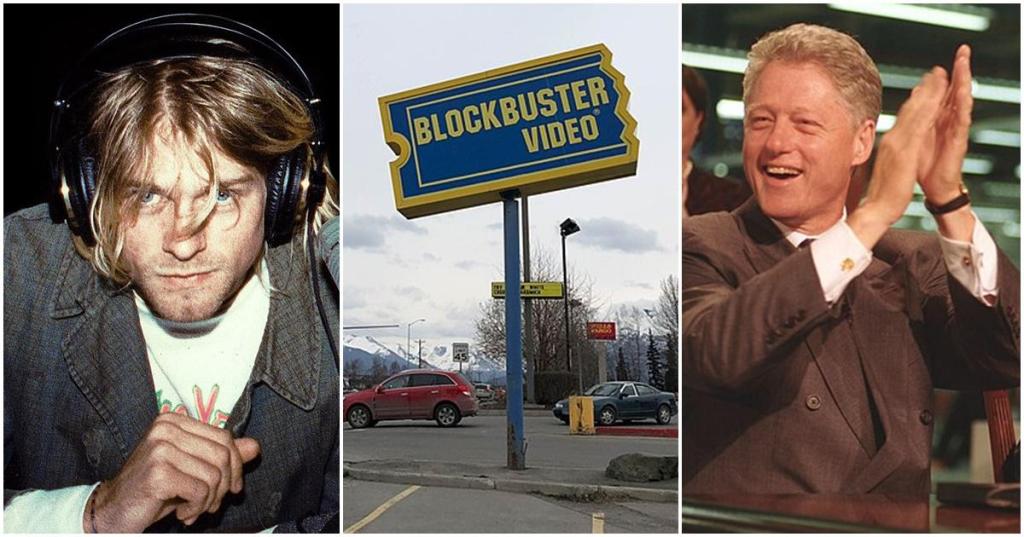
Kurt Cobain, Blockbuster Video, Bill Clinton.

The 1990s was a sweet spot in American history. The stifling Cold War with the Soviet Union had just come to the end in 1989 and it would still be 12 years before a new era of fear after the 9/11 attacks.

The 1990s was also a time of prosperity that lifted up Americans across the socioeconomic spectrum and an era that saw unprecedented peace in the world. In fact, things were going so well in America that President Clinton managed to have a budget surplus four years in a row.

The '90s was also the last gasp of the analog era when people couldn't contact you 24/7 and did things for the pure joy of it instead for the likes and shares.

To say that the '90s was the last great American decade may be looking back with rose-colored glasses but it's obvious that as we've entered this new era dominated by technology, we left behind a lot of things that brought us joy. Many of us wouldn't mind having them back.

A recent Reddit thread asked "What do you miss about the '90s?" and the answers will take you back to a time that most of us remember fondly. Will people ever say that about the 2020s? Only time will tell.


1. You made plans without having to text people.

"Before we had mobile phones, my wife and I would plan to meet at a certain street corner at a certain time after work. We sometimes had to wait for the other person to show up, but we knew they would." — i_will_be_dead

2. The world was clearly changing for the better.

"There was a period between the Cold War and the War on Terror when it seemed like there was hope for the world." — igetasticker

3. Friday nights at home with the family.

"Blockbuster/Pizza Hut on Friday nights." — EdwardPackard

4. People left you alone.

"Not being contactable 24/7. Peace of leaving school/work and not having to deal with their nonsense till tomorrow." — Soma_Tweaker

5. Air travel without the stress.

"Did you know that before 9/11, it wasn't a massive pain in the ass to go fucking anywhere?! Loved ones could walk you right to the gate. You could bring snacks, sandwiches, and drinks onto the plane with you. The prices at Hudson News were perfectly reasonable, because if they weren't, you could just walk out of the terminal and grab something." — GavinBelsonsAlexa


6. The mall.

"Malls were awesome, and I hate that the strip mall style has taken over. Especially up in Canada, where it gets to -40 in the winter. Back in the day you could legitimately spend hours wandering the mall, indoors and warm. Now it is depressing. Maybe the big malls like Mall of America or West Edmonton Mall are still okay, but the ones in my city are shit." — Lexi_Banner

7. Following a scene.

"In the '90s I would walk to my local record shop and talk to the guy. He would recognize me and ask about my thoughts on the Offspring album I bought last time I was in, and then recommend something that just came in from some guys called Green Day.

I'd then give a listen on the wall-mounted headphone player and take it home. Then, the whole next week would listen to nothing else... It was kind of great." — Koro

8. A genuine good time.

"I think people are more concerned with posting something and going viral now. I really hate that you can just be minding your business, doing something with family or friends and enjoying yourself, and somebody will randomly record what you're doing so they can call you 'corny' and get likes and views." — Enviornmental-Bank81

9. Magazines.

"Everyone had their favorites for whatever hobby or interest you had. For me it was 'Guitar World,' picking up the issues with bands I loved and plinking along to the tab on my crappy electric guitar! For my wife it was 17, checking out the most recent trends!" — JackFairy80

10. Hanging out.

"Honestly the thing I miss the most, and the thing that is so hard to explain to modern kids, is 'hanging out.' Before cell phones, people used to just go to each other's homes, or to some public space, and just spend time together." — Vambot5

11. Making mix tapes.

"It was so much fun to make them, carefully trying to fit as much as you could in the limited amount of time that you had, but still making each song work with the next. Getting one was just as thrilling, especially if you just put it on without looking at the tracklist (if whoever made it included one) and being surprised by each new song." — Edgar

12. Music mattered more.

"Music felt more special because you kind of had to take some risks when buying a cd. At best you could listen to it at one of the stations in the store, but other times you might have heard a song on the radio or watched a music video on MTV. I bought some albums where only the song I liked was good, but still tried to appreciate it all." — plentyfunk66

13. Less pressure to be perfect.

"Nowadays due to social media, especially sites like Instagram, so many young people feel like it's necessary to always be dressed well, always wear a full face of make-up, etc. Sure, we had unrealistic beauty standards and plastic surgery before, but to me it feels like it's gotten much, much worse and also much more uniform than before." — Owezara

14. No 24-hour news cycle.

"Maybe I'm in a minority, but I for one REALLY miss NOT having a 24-hour news cycle. Once that became a thing, it basically prevented journalists from actually doing thorough research before splitting 'information' on TV to satiate their corporate owners." — Minerva_Madin

15. People talked to one another.

"I miss going to coffee shops or bars and being able to meet new random people. I made some of my best friends that way. Now folks just leer up from their phones more often than not." – Shiller_Killer

16. People watched concerts instead of filming them.

"Concerts weren't a sea of phones in the air. People are so concerned with people knowing they were at a concert via social media, that they don't even pay attention or experience the show. It's so dumb." — thebestmike

17. Brick-and-mortar stores.

"I still think this is underrated. Yes now we have a much much wider selection of stuff available instantly, but it used to be extremely fun to go out on a Sunday, go to a record store or video rental store with your friends, discuss options and settle on one." — Humble Shoulder

This article originally appeared on 11.19.21

old letter, 1959, tony trapani, letter, secret letters, love letter, love stories, dads, fatherhood, father and son, parents, parenting
via SHVETS production/Pexels and Suzy Hazelwood/Pexels
Tony Trapani discovers a letter his wife hid from him since 1959.

Writing a letter is truly a lost art form, and many young people will never know the joy of it. You had to choose your words carefully and say everything you wanted to say. Once you sent it off, there was no way to be sure it was delivered. No way to know if it had been opened or read. You couldn't take it back or send it again. You just put it in the mailbox and hoped for the best. It was excruciating and magical all at the same time.

One story of a letter never delivered has captured the hearts of readers everywhere. A heart-warming local news story gone viral for the best reasons.


Tony Trapani and his wife were married for 50 years despite the heartache of being unable to have children. "She wanted children,” Trapani told Fox 17. "She couldn't have any. She tried and tried." Even though they endured the pain of infertility, Tony's love for his wife never wavered and he cherished every moment they spent together.

letter, secret letters, love letter, love stories, dads, fatherhood, father and son, parents, parenting Tony Trapani received the most important letter of his life, but he didn't see it for 50 years Photo by Álvaro Serrano on Unsplash

After his wife passed away when Tony was 81 years old, he undertook the heartbreaking task of sorting out all of her belongings. In particular was a mountain of papers stuffed into filing cabinets. Trapani diligently went through every single one.

That’s when he stumbled upon a carefully concealed letter in a filing cabinet hidden for over half a century.

The letter was addressed to Tony and dated March 1959, but this was the first time he had seen it. His wife must have opened it, read it and hid it from him. The letter came from Shirley Childress, a woman Tony had once been close with before his marriage. She reached out, reminiscing about their past and revealing a secret that would change Tony's world forever.

"Dear Tony, I bet you are surprised to hear from me after so many years. I was just thinking about you tonight like so many other nights. But I thought I would write you and find out how you are," the letter reads. "Tony, please don't be angry or surprised to hear this. I have a little boy. He is five-years- old now - grey eyes and beautiful black hair. What I am trying to say Tony is he is your son."


"Please, Tony if you can find it in your heart to forgive me, please come and see him," Shirley wrote in the letter. "Every day he asks me where is his daddy and believe me Tony I can't even answer him anymore. I would be forever grateful to you if you would just see him. ... I'll close now hoping and praying you will answer. P.S. His name is Samuel Duane."

Now, Tony faced the fact that he had a son that would be around 60 years old and he set out to find him.

For over a year, Trapani’s sister tried to track down the mysterious Samuel Duane Childress, until she finally contacted his wife, Donna.

Tony and Samuel met in January 2015 and he felt like a new dad. After meeting his father, Samuel said his mother told him she sent the letter, but Tony never responded. "Why my wife didn't tell me," said Trapani, "I don't know. She wanted children. She couldn't have any. She tried and tried."

It's easy to understand why it may have been hard for Trapani's late wife, Dolly, to pass along that sort of news. Though we'll never know what exactly must have been in her heart and mind when she hid the letter all those years ago.

"I always asked my mom, I said, 'Well what does he look like?'' Samuel said. "She said, 'Well, go look in the mirror."

The two met and caught up on a lifetime of memories with the understanding that they could never change the past. "Just to know him now is so important to me. It's going to fill that void," Samuel said.

But just to be sure, Tony took a paternity test to ensure they were father and son. Stunning everyone involved, the test came back negative. Tony was not the father.


letter, secret letters, love letter, love stories, dads, fatherhood, father and son, parents, parenting Tony and Samuel didn't waste time thinking about what might have been if he'd seen the letter earlier. Photo by Ire Photocreative on Unsplash

The news upset Tony and Samuel, but they still had a unique bond. They shared a relationship with Samuel’s mother and both have been on an incredibly wild ride after Tony found the mysterious letter.

“They're keeping that bond,” Donna said. “That paper doesn't mean anything to him. That bond has been made—and we're going to move on from here.”

Tony Trapani passed away in 2017, leaving him just two short years to connect with the man he once believed to be his son. If he'd seen the letter earlier, maybe they would have had more time. But that's all in the past, and by all accounts the men treasured the time they got together, and the relationship that they did have — not the one they wished for.

This article originally appeared earlier this year. It has been updated.

snl, christmas, holidays, satire, comedy, kristen wiig, saturday night live, humor, youtube, christmas presents, moms
SNL/YouTube

Classic SNL Christmas sketch has people rethinking the holiday dynamics in their family.

Five years ago, one of the most iconic Christmas sketches ever aired on Saturday Night Live. It's called simply, "Christmas Robe," and it depicts an average American family excitedly waking up on Christmas morning, running to the tree, and opening their presents. In song form, each member of the family takes turns rapping about their own gift haul: A hat, a drone, a pinball machine...

Except for poor mom, played perfectly by Kristen Wiig, who only got a robe—that was 40% off. Things only get worse for Mom as she discovers that her stocking is also empty and she must now go make the family breakfast while everyone plays with their new gifts.


If you haven't seen it, here it is. It's well worth watching in its entirety:


- YouTube www.youtube.com

The sketch got a lot of laughs and resonated deeply with people—especially moms—who watched it.

It's no big secret that moms are the primary makers of Christmas magic in most Western families. While they get joy out of making the holidays special for their families, it's a lot of exhausting work, made worse when it goes unnoticed and unappreciated. It's implied, of course, that Kristen Wiig's character bought everyone their presents while no one in the family bothered to think of her at all.

Jessica Cushman Johnston writes for Motherly: "[Making Christmas magic] is not something my husband or my kids put on me, it’s my own deal. It’s also a tinsel-covered baton handed down from generation to generation of women. As a kid, I just thought the warm fuzzy feelings I felt on Christmas morning 'happened.' Now I know that the magic happens because someone is working hard, and now that someone is me."

Kristin Wiig's character beautifully says it all with the dead-inside expression as she feigns excitement over her lonely robe. In just two and a half minutes, the cast and writers managed to capture a frustrating feeling that millions of women relate to.

The sketch spawned discussions, think pieces, and even parodies when it aired in 2020. Real moms took to social media to "show off" their own robes in an act of solidarity. The sketch had, one could say, a moment. And then, quietly, it retired and took its place in the SNL holiday hall of fame, destined to be re-watched for years to come.

And then something funny happened. People kept tuning in. The skit continued to reach new viewers, and somewhere along the line, a few people actually learned something from the extremely silly sketch.

Saturday Night Live's YouTube and social media are full of comments from viewers who say the sketch opened their eyes in a very real way. And even better, that they're changing their behavior because of it:

"As a retail worker, I actually heard multiple people reference this sketch while buying presents for their wife/mom this year. Thanks SNL!"

"This skit changed Christmas in our house. The year it aired my husband made sure I didn’t get a robe and since this aired (okay, two Christmases have gone by) it’s a joy to see boxes under the tree and a full stocking- now in our house when I’m forgotten my husband says, “you got a robe” and adjusts the situation. Never thought a skit could change my life."

"I just saw this first time. I'm definitely going to buy better present next Christmas to my mom."

"A few years ago, I got a robe. This year, I got a new iPad plus all the accessories. SNL doing all the moms a solid."

"As a grown man, this skit is the first time I've realized how true this is. And now I feel so damn awful :( Gonna bombard moms with the presents this year"

"Seriously! I got a bunch more stuff for my mom after seeing this! It's so accurate. No more robes for mom!"

"I was laughing at this, then realized my mom's stocking was empty and ran out and bought her a truckload of stuff. Love you Mom!"

"Thanks, SNL. After watching this with the family, I had the most bountiful Christmas ever!! And the gifts were wrapped instead of left in the bags the came in."

"This video did more to stimulate spending on Moms this year than almost anything else, guaranteed. Look at SNL actually making a difference with their humor"

The comments go on and on, with the video now reaching over 12 million views. Some moms changed their behavior, too, after seeing the sketch:

"This is spot on, and exactly why I now buy myself Christmas presents, without feeling guilty about it."

The trouble of moms unfairly shouldering too much labor around the holidays (and, well, most other times of the year) is not a new problem. Not by a long shot. So why has this skit reached people when other forms of messaging has failed to sway them?

Marie Nicola, a pop culture historian and cultural analyst, says that no amount of deeply serious essays or shrugged off "mom is complaining again" can fix what satire easily addresses. That's the power of comedy at its best:

"It allows the audience see what was historically unseen or ignored, and it validates the labour as visible and concrete, without being accusatory because it wraps the whole thing up in camp comedy and exaggeration. The skit makes it safe to laugh. This is what psychologists call benign violation," she says. "SNL is showing viewers that something is wrong but they have made it safe enough that people can laugh at it instead of feeling attacked. Once the defenses drop, then recognition can flow through that opening."

The Humor Research Lab writes that humor occurs when an accepted "norm" is violated in a benign way—that's the benign violation Nicola's referring to. "Jokes ... fail to be funny when either they are too tame or too risqué."

The best pieces of satire—the ones that reach the highest levels of cultural relevance—thread that needle perfectly. The norm, in this case, according to Nicola, is that it is "a privilege to curate the perfect holiday experience for the family, the gift is the joy in the moment and their memories for years to come." We're not allowed to talk about the dejection and exhaustion that come from all that hard work. This sketch gave a lot of people permission for the first time to do so.

It’s not the first time that SNL’s comedy and satire have had a palpable effect on how we view the world.


- YouTube www.youtube.com

Once SNL performed the "More Cowbell" sketch, none of us could look at the bizarrely overproduced "Don't Fear the Reaper" the same way again. An old Eddie Murphy sketch got a lot of laughs out of the idea of "white privilege" long before it became a commonly known concept. And people had a hard time taking Sarah Palin seriously after Tina Fey's spot-on yet over-the-top impersonation, with studies later investigating the "Tina Fey Effect's" impact on the election.

And now, the more than 12 million people who have seen "Christmas Robe" are going to have a hard time looking at Mom’s empty stocking without being reminded of Kristen Wiig’s pitch-perfect performance.

Of course, "Christmas Robe" continues to land and connect with viewers today in part because it has not solved the problem of household inequities. The phenomenon continues to exist in spades. But the fact that it’s made even a small dent is pretty remarkable for a two-and-a-half-minute parody rap song.

time, neil degrasse tyson, time flies, perception of time. clock, science,

A clock and Neil deGrasse Tyson.

When you’re a kid, time passes a lot more slowly than when you’re an adult. At the age of seven, summer seems to go on forever, and the wait from New Year’s Day to Christmas feels like a decade. As an adult, time seems to go faster and faster until one weekend you’re putting up your Christmas lights though you swear you just took ‘em down a month ago.

Why does time seem to speed up as we get older? Astrophysicist Neil deGrasse Tyson recently explained the phenomenon in a video posted to Instagram. He also offered tips on how to slow the passage of time as you age. DeGrasse Tyson is one of the most popular science communicators in the world and the host of 2014's Cosmos: A Spacetime Odyssey and 2020’s Cosmos: Possible Worlds.


Why does time appear to speed up as we get older?


“When you're young, everything is new. Your brain is constantly recording fresh memories, and the more memory your brain stores, the longer the experience feels. But then something changes. As you get older, routines take over. Your brain stops saving so much detail. It switches to autopilot because everything feels familiar and predictable,” deGrasse Tyson explains. “And when your brain stores fewer new memories, your perception of time compresses. That's why childhood feels long, and adulthood feels like a blur.”


Steve Taylor, PhD, author of many best-selling books including Time Expansion Experience, The Leap, and Spiritual ScienceThe Leap, and Spiritual Science, agrees with deGrasse Tyson.

“This is mainly because, as children, we have so many new experiences, and so process a massive amount of perceptual information,” Taylor writes at Psychology Today. “Children also have an unfiltered and intense perception of the world, which makes their surroundings appear more vivid. However, as we get older, we have progressively fewer new experiences. Equally importantly, our perception of the world becomes more automatic. We grow progressively desensitized to our surroundings. As a result, we gradually absorb less information, which means time passes more quickly. Time is less stretched with information.”

How do we make time slow down?

There’s something a little depressing about the idea that time speeds up as we age because we have fallen into predictable routines. The good news is that we can break this cycle by changing our habits and having new experiences. The more novel information we can process and the less routine our lives become, the slower time will move.

DeGrasse Tyson believes that with some change in our behaviors, we can get back to longer summers and Christmases that aren’t perpetually around the corner.

“You can actually slow time down again. Do something unfamiliar,” deGrasse Tysons says. "Travel somewhere new. Break a routine you've repeated for years. Learn a skill your brain hasn't mapped yet. Because the more new memories your brain forms, the slower time feels as it passes. So if life feels like it's accelerating, it's not your age. It's your brain, and you can reboot it.”

Family

Mom says she won’t be volunteering for her child’s holiday school events, prompting heated debate

Her TikTok ignited a heated debate about who is responsible for creating holiday magic.

christmas, christmas drive, christmas school activity, christmas party, school, parenting, holiday magic

Three kids with festive hats in a classroom and a stressed mom with hands on head.

The school calendar is chock-full of activities that both parents and teachers have to rally for, but December is particularly teeming with holiday-themed events.

Between the labor-intensive donation drives, the parties requiring a bajillion different snacks and decorations, and the festive field trips that need several chaperones…conjuring up holiday magic is exhausting work for everyone involved—except maybe the kids.


For one mom on TikTok, the growing list finally felt like too much—and her stance sparked a heated debate about who’s really responsible for creating Christmas cheer.

In a video that quickly went viral, the creator known as @heyempoweredmama shared that she plans to decline every holiday request from her child’s school this year. No donations, no volunteering, no party planning, no field trips. Her message was clear: she’d reached her limit and made a firm decision to step back.

In her view, families that have the capacity will fill the gaps and classrooms will continue to run—and parents who bow out shouldn’t feel that they’re letting their children or their schools down.

This sentiment immediately prompted teachers to speak their piece about how this logic often forces already overworked educators to shoulder the burden, because, in truth, many parents opt out of showing support.

@heyempoweredmama This is one way im reducing the mental load as a mom of 4 navigating high functioning anxiety. Maybe this will help you too!
♬ original sound - heyempoweredmama


“Don’t worry, teachers like me are accustomed to picking up the slack and working even more (unpaid) when we don’t get enough parental support because WE don’t want to let our kids in our classroom down. 👍🏻”

“Please don’t make assumptions about the other parents who are picking up the slack. I teach. My husband teaches. We have two kids in two different schools. We are spread thin. But we still prioritize showing up for our kids, their teachers, and our school communities. I don’t always WANT to step in and volunteer, but I do, so that my children & their teachers are supported. It’s the same group of us, to- who participate, show up and do what we can to fill the holes left by so many families. You know nothing about what all were juggling and whether we WANT to step in and pick up the slack. You do you. But don’t make it sound like the list for volunteers is neverending. That's a lie you’re telling ourself in an effort to feel better about your choices.”

Self described “room parents” seemed to share a similar opinion.

“I am the room parent for my son’s class…other parents don’t step up, period. Everyone has the mindset that someone else will do it.”

The original poster responded to these reactions with understanding and reiterated that she’s doing her best within her own home. She acknowledged the strain on teachers while standing by her decision.

Still, some parents could empathize with where she was coming from.

“Honestly, I completely understand. This is one of the reasons I don’t LOOOVE the holidays the way others do. It’s like two months of chores. School parties, teacher gifts, cookie swaps, food drives, Christmas concerts, etc., etc. On top of everything else that has to be done this time. It’s a LOT. I have also had to set some boundaries in this department. I will participate and volunteer some other time of year. Christmas? The busiest time of the year? Count me out.”

Many also had constructive ideas for how things could be made more manageable, such as taking on just one volunteering activity, volunteering only for events their child is actually involved in (like a performance), or making a monetary donation instead.

christmas, christmas drive, christmas school activity, christmas party, school, parenting, holiday magic media4.giphy.com

As the conversation grew, @heyempoweredmama released a series of follow-up videos in which she clarified that, at her child’s school at least, there was no real shortage of active parent volunteers. She also argued that the real problem is the school system itself, which requires everyone—parents and teachers alike—to do “too much.”


What this viral moment reveals isn’t a battle between parents and teachers, but their shared burden. Parents feel buried by the growing demands of schools. Teachers feel equally swamped by a system that’s failing them. Both groups want students to experience joy during the holidays. Both wish the load felt lighter. Both are overwhelmed.

No matter where you stand on this particular debate, most of us can agree on this: no one can carry the season alone. As long as the system relies on people who are already stretched thin, conversations like this will keep resurfacing every holiday season.

hospice, medical bed, regrets, elderly man, family,

A man in hospice care.

Does money really buy happiness? Are Elon Musk or Jeff Bezos happier than a school teacher living in Arkansas or a fireman in Nevada? Studies show that more money can make people incrementally happier, but Dr. Jordan Grumet, hospice doctor and author of The Purpose Code, says that the important thing is knowing how to spend it.

Grumet has a great perspective on money and happiness because he has seen people from every background in their final days when they get honest about their regrets, and he doesn’t see much of a difference in how happy they are. “I take care of people at the end of life, and I’ve seen people from every economic class,” Grumet tells CNBC Make It. “I’ll tell you, money doesn’t seem to correlate. It really doesn’t. I’ve seen really, really happy poor people, and I’ve seen really, really miserable rich people.”


The key indicator of whether someone has led a good life at the end is whether they have any regrets. “The happiest people I see are the ones who don’t have regrets, and the ones who don’t have regrets put the energy, courage, and time into becoming who they wanted to be, whether they spent money on it or not,” Grumet says.

runner, purpose, jogging, desert, fitness, regrets A woman running in the desert.via Canva/Photo

Spend your money on 'becoming' your true self

That’s why Grumet believes that we should be careful to spend our money on things that help us grow as people. Buying a new sports car or an expensive vacation will bring you temporary happiness, but the kind that lasts comes from what Grumet calls “becoming.”

“When you direct resources toward becoming a fuller, more intentional version of yourself, you’re not just chasing pleasure—you’re investing in growth,” he writes in Psychology Today. “If you love writing, you might hire a coach. If you’re adventurous, maybe it’s a trip to Machu Picchu. When spending fuels purpose and passions, it naturally draws others to you. And as the Harvard study reminds us, it’s those human connections that form the foundation of happiness.”

The Harvard study Grumet mentions is the Harvard Adult Development Study, which studied participants for over 80 years. The big takeaway was that personal connections are the key to true fulfillment. “Good relationships keep us happier, healthier, and help us live longer,” Robert Waldinger, author of The Good Life: Lessons from the World's Longest Scientific Study of Happiness, writes.

camping, friends, connection, relationships, nature A group of friends hangining out in nature.via Canva/Photo

Pursuing your potential leads to meaningful connections

Investing in exploring your passions will help you grow as a person and form meaningful connections with others who share your interests. Whether that means making new friends at the runners group or connecting with other writers in your Introduction to the Novel class. Spending money on a new F350 or on jewelry probably won’t do that.

Further, when we invest our resources in following our passions and personal development, it will likely lead to fewer regrets in our final days. The greatest regret people have while in hospice is that they wish they had lived a life "true to myself, not the life others expected of me.” By pursuing your passions, you’ll know in your heart that you pushed yourself to live as authentically as possible.

“The data are clear: earning more money does not guarantee happiness,” Grumet writes. “Spending on things and even experiences can offer momentary boosts, but their impact tends to fade. The most enduring form of spending is on becoming—on growth, purpose, and passions that make you a better version of yourself.”