



Many school districts are moving to a 4-day week, but there are pros and cons to the approach.
American kids have fewer school days than most other major countries as it is, which poses a big challenge for families with two working parents. In a system designed for the "classic" stay-at-home mom model, it's difficult for many modern families to cover childcare and fulfill their work obligations during the many, many holidays and extra days off American children receive in school.
Some school districts, in fact, are ready to take things one step further with even fewer instructional days: for better or for worse.
Whitney Independent School District in Texas recently made news when it decided to enact a four-day week heading into the 2025 school year. That makes it one of dozens of school districts in Texas to make the change and over 900 nationally.
The thought of having the kids home from school EVERY Friday or Monday makes many parents break out in stress hives, but this four-day school week movement isn't designed to give parents a headache. It's meant to lure teachers back to work.
Yes, teachers are leaving the profession in droves and young graduates don't seem eager to replace them. Why? For starters, the pay is bad—but that's just the beginning. Teachers are burnt out, undermined and criticized relentlessly, held hostage by standardized testing, and more. It can be a grueling, demoralizing, and thankless job. The love and passion they have for shaping the youth of tomorrow can only take you so far when you feel like you're constantly getting the short end of the stick.
School districts want to pay their teachers more, in theory, but their hands are often tied. So, they're getting creative to recruit the next generation of teachers into their schools—starting with an extra day off for planning, catch-up, or family time every week.
Teachers in four-day districts often love the new schedule. Kids love it (obviously). It's the parents who, as a whole, aren't super thrilled.
- YouTube www.youtube.com
So far, the data shows that the truncated schedule perk is working. In these districts, job applications for teachers are up, retirements are down, and teachers are reporting better mental well-being. That's great news!
But these positive developments may be coming at the price of the working parents in the communities. Most early adopters of the four-day week have been rural communities with a high prevalence of stay-at-home parents. As the idea starts to take hold in other parts of the country, it's getting more pushback. Discussions on Reddit, Facebook, and other social media platforms are overrun with debate on how this is all going to shake up. Some parents, to be fair, like the idea! If they stay-at-home or have a lot of flexibility, they see it as an opportunity for more family time. But many are feeling anxious. Here's what's got those parents worried:
The effect on students' achievement is still unclear.
The execution of the four-day week varies from district to district. Some schools extend the length of each of the four days, making the total instructional time the same. That makes for a really long day, and some teachers say the students are tired and more unruly by the late afternoon. Some districts are just going with less instruction time overall, which has parents concerned that their kids might fall behind.
A study of schools in Iowa that had reduced instructional days found that five-days-a-week students performed better, on average.
Four-day school weeks put parents in a childcare bind.
Having two working parents is becoming more common and necessary with the high cost of living. Of course—"school isn't daycare!" But it is the safe, reliable, and educational place we send our kids while we we work.
Families with money and resources may be able to enroll their kids in more academics, extracurriculars, sports, or childcare, but a lot of normal families won't be able to afford that cost. Some schools running a four-day week offer a paid childcare option for the day off, but that's an added expense and for families with multiple kids in the school system, it's just not possible.
 In a 4-day model, kids often (but not always) receive less instructional time. Photo by Ivan Aleksic on Unsplash
This will inevitably end with some kids getting way more screentime.
With most parents still working five-day weeks, and the cost of extra activities or childcare too high, a lot of kids are going to end up sitting around on the couch with their iPad on those days off. Adding another several hours of it to a child's week seems less than ideal according to expert recommendations.
Of course there are other options other than paid childcare and iPads. There are play dates, there's getting help from family and friends. All of these options are an enormous amount of work to arrange for parents who are already at capacity.
Working four days is definitely a win for teachers that makes the job more appealing. But it doesn't address the systemic issues that are driving them to quit, retire early, or give up their dreams of teaching all together.
@5th_with_ms.y Replying to @emory here are my thoughts on my 4day work week as a teacher✨ #foryou #fyp #fypシ #foryoupage #foryoupageofficiall #teachersoftiktokfyp #teachersoftiktok #teachertok #teachersbelike #teachertiktok #tik #tiktok #viralllllll #teachertoks #teaching #teacher #tok #viralvideo #teacherlife #viral #trendy #teacher #teaching #worklifebalance #worklife #publicschool #publiceducation #school #student
A Commissioner of Education from Missouri calls truncated schedules a "band-aid solution with diminishing returns." Having an extra planning day won't stop teachers from getting scapegoated by politicians or held to impossible curriculum standards, it won't keep them from having to buy their own supplies or deal with ever-worsening student behavior.
Some teachers and other experts have suggested having a modified five-day school week, where one of the days gets set aside as a teacher planning day while students are still on-site participating in clubs, music, art—you know, all the stuff that's been getting cut in recent years. Something like that could work in some places.
In any case, the debate over a shortened school week is not going away any time soon. More districts across the country are doing their research in preparation for potentially making the switch.
Many parents don't theoretically mind the idea of their busy kids having an extra day off to unwind, pursue hobbies, see friends, catch up on projects, or spend time as a family. They're also usually in favor of anything that takes pressure off of overworked teachers. But until we adopt a four-day work week as the standard, the four-day school week is always going to feel a little out of place.
This article originally appeared in February. It has been updated.
- Gen X mom reenacts 'coming home from school in the 80s' and totally nails it ›
- A 9-year-old girl bravely gave her school board an all-time mic drop on standardized tests ›
- School districts are transforming buses into wifi hotspots for students without internet ›
- Awkward, grainy video of high school in 1989 is flooding Gen Xers with the happiest memories ›

Gen Z employees.
Forget the corner office. Gen Z is rewriting the rules of professional success—and their approach might save us all from burnout.
While previous generations dutifully climbed the corporate ladder rung by rung, Gen Z is choosing to do things differently. These youngsters, born between 1997 and 2012, embrace a clear philosophy: work should fund your life, not consume it. It's a simple dogma. This emerging trend, dubbed "career minimalism," goes beyond the corporate buzzword, representing a fundamental shift that challenges what we thought we knew about ambition, success, and the definition of "making it" in today's economy.
The great corporate ladder exodus
The statistics are striking: 68% of Gen Z workers claim that they would not pursue management roles unless they came with higher pay or a better title. This isn't laziness—it's a well-thought-out strategy. Generation Z watched Millennials sacrifice their twenties to corporate culture, only to face economic uncertainty, housing crises, and unprecedented stress levels.
Gen Z is boldly saying "No thanks" to that traditional blueprint.
Janel Abrahami, Glassdoor’s Career Pivot Strategist, puts it perfectly. "Gen Z is more willing to embrace a flex mindset than older generations," Abrahami tells Upworthy. "While past generations often prioritized climbing the corporate ladder, Gen Z is looking for the career equivalent of a lily pad: a sustainable route where they can jump to whatever opportunity best fits their needs at the moment. That could mean taking a pay cut for more free time, accepting a lower title for a more creative role, or switching to an industry they see as more stable—since 70% of Gen Z questions their job security as AI advances in the workplace, many are proactively moving toward sectors like skilled trades, healthcare, and education."  Person with pink hair typing on laptop. Photo credit: Canva
This lily pad mentality represents a profound shift in how an entire generation views professional growth. Instead of linear progression within a single company, Gen Z sees their careers as a series of strategic moves that prioritize personal fulfillment, financial stability, and—crucially—time for the things that actually matter to them.
Generation side hustle
Despite the moniker "career minimalism," 57% of Gen Z employees have at least one side hustle—more than any generation before them. Is it about the money? Not exactly. For Gen Z, side hustles are where their ambition thrives.
Nearly half (49%) of Gen Z side hustlers say their primary motivation is to be their own boss, while 42% are driven by the desire to pursue their passions. These numbers tell a story about a generation that refuses to wait for opportunities. When their 9-to-5 doesn't provide creative fulfillment or meaningful impact, they create it themselves.
A teacher in Iowa sums it up, saying, "I always joke that I don't dream of labor… If people were truly passionate about their job, it wouldn't pay anything. Passion is for your 5-9 after the 9-5."
- YouTube www.youtube.com
Similarly, a research analyst echoes this sentiment, saying, "While having a job that you're passionate about is really cool, it's important to have other interests that are not tied to your work life."
The broader statistics are even more telling: 66% of Gen Z and Millennials have started or plan to start side hustles, with 65% intending to continue their entrepreneurial ventures through 2025. Meaning, this isn't a phase—it's a fundamental reimagining of how work fits into a fulfilling life. The pattern is clear: younger generations are diversifying their income streams and refusing to put all their professional eggs in one corporate basket.
Work-life balance as a non-negotiable priority
While older generations might view work-life balance as a nice idea, Gen Z regards it as essential infrastructure for a sustainable life. Thirty-two percent of Gen Z rank work-life balance as the most critical aspect of a job, compared to 28% of Millennials and 25% of Gen X. More significantly, they're willing to prioritize this balance over higher compensation—a move that would have been unthinkable to previous generations entering the workforce.
"Employers may be surprised by the changing attitudes of Gen Z in the workplace," says Abrahami. "However, this doesn't mean that Gen Z is abandoning work; instead, they are redefining ambition through career minimalism. If Gen Z feels unsupported in achieving the work-life balance they seek, they may become less motivated or start looking for opportunities that align better with their values and lifestyles."
 Young working professionals. Photo credit: Canva
Gen Z is working smarter, not harder: Seventy-three percent of Gen Z employees want permanent flexible work alternatives, and they're not just asking—they're demanding. Companies that fail to adapt are losing talent rapidly. Research shows that 72% of Gen Z workers have considered leaving a job because of inflexible policies. Meanwhile, organizations offering flexible work arrangements see 78% higher retention rates among Gen Z employees. When companies listen to their employees' preferences, everyone wins.
Empathy is the key to Gen Z's management style
As Gen Z enters management roles—they make up over 10% of managers in 2025—this generation is bringing a different leadership philosophy to the table. Gone are the days of barking orders, wielding fear, and pitting direct reports against each other: Gen Z leaders prioritize emotional intelligence, collaboration, and authentic connection with their teams.
Gen Z managers focus on:
- Transparent, honest communication over corporate speak
- Continuous feedback loops instead of annual performance reviews
- Collaborative decision-making that includes team input
- Mental health support as a fundamental management responsibility
Seventy-seven percent of Gen Z consider organizational values when choosing an employer, and as they move into leadership roles, they ensure those values are lived, not just posted on company websites.
The companies (already) getting it right
Innovative organizations understand the importance of the Gen Z workforce, with many getting a head start on adapting to their preferences. The results speak for themselves. Goldman Sachs moved to a flexible dress code in 2019, General Motors eliminated its 10-page dress code in favor of a simple "dress appropriately" policy, and companies like Google offer flexible time off and comprehensive mental health support. Other companies, such as Microsoft, have introduced therapy stipends and on-demand counseling sessions to cater to Gen Z's work values.
Canva provides a standout example: through initiatives like "Force for Good," the company encourages employees to contribute over 10,000 hours annually to community projects. This commitment to purpose-driven work has helped Canva achieve a 92% employee satisfaction rate.
- YouTube www.youtube.com
These changes aren't just nice-to-haves—they're competitive advantages. Companies that embrace Gen Z-friendly policies are seeing measurable improvements in engagement, retention, and overall performance.
What every generation can learn from career minimalism
Gen Z's approach to work is not radical; it's rational. After watching previous generations sacrifice their health, relationships, and personal fulfillment for corporate success that often proved fleeting, Gen Z chose a different path.
These lessons are valuable for everyone, regardless of age:
Boundaries create sustainability. Gen Z's insistence on work-life balance is a nugget of wisdom. By setting clear boundaries, they dodge the burnout that has plagued older generations and create space for long-term productivity and creativity.
Diversification reduces risk. While previous generations sought security in a single employer, Gen Z believes that proper security comes from multiple income streams and transferable skills. Their side hustles are money-generating insurance policies against rapidly changing industries and A.I.
Values-driven work increases engagement. When work aligns with personal values, engagement and performance naturally increase. Gen Z's demand for meaningful work benefits everyone by forcing companies to clarify their purpose and impact.
Flexibility enhances productivity. The data is precise: flexible work arrangements lead to higher retention, better performance, and increased job satisfaction across all generations.
For Abrahami, the way Gen Z operates in the workplace feels like a breath of fresh air, and she encourages managers to get to know their Gen Z direct reports. "Gen Z’s habits will continue to shape our workforce, so it's important employers take the time to truly understand them," Abrahami notes. "Their approach isn’t about laziness; rather, it’s a new representation of how they define success. They want sustainable careers that align with their goals, whether that means prioritizing a job that prevents burnout or one that provides security from layoffs. Older generations have much to learn from Gen Z, and we’re likely to start to see these values become more widely accepted."
 Gen Z coworkers.Photo credit: Canva
The future of work belongs to Gen Z
Gen Z's philosophy in the workplace offers a compelling answer to the age-old question: "What if there's a better way?" Their formula is refreshingly simple: stable jobs for security, side hustles for passion, and strict boundaries for sustainability.
As workplace dynamics continue to evolve, the rise of career minimalism—fueled by Gen Z's values—will reshape not only how we define professional success but also how we experience fulfillment. The future of work may belong not to the climbers, but to those content to hop from lily pad to lily pad with purpose and self-awareness.
The corner office can keep its view. Gen Z has found something better: a career that actually fits their life, instead of consuming it. And honestly? The rest of us should take notes.
This article originally appeared in September
- Lily Allen's joke about her kids 'ruining' her career is a spot-on comment about motherhood ›
- A son's heartfelt LinkedIn post for his father who was laid off is getting a massive response ›
- Barbie's awesome new career is a welcomed sign of the times. ›
- Employment lawyer reveals 4 texts to never send a coworker - Upworthy ›


Xennials share the best life advice that their Boomer parents gave them.
Xennials (those born 1977 to 1983) are a microgeneration between Gen X (those born 1965 to 1980) and Millennials (those born 1981 to 1996). These late '70s and early '80s babies were mostly raised by Baby Boomer parents (born 1946 to 1964) who taught them lots of positive life lessons that have stuck with them.
In a discussion among Xennials on Reddit, one posed the question: "What do you think was your best lesson learned by being raised by Boomers?"
Fellow Xennials shared their open and honest answers about the good their Boomer parents instilled in them. These are 15 things they appreciate having learned from their Boomer parents:
 Xennial woman with her Boomer mother.Photo credit: Canva
"My parents were born in the late 40s. I got the same indoctrination to only show calm. And you know what? It has worked out for me. I feel the feels, but I have the mental equipment to only show the calm. I think this is actually a benefit of our upbringing." - FastWalkingShortGuy
"My parents were both born in ‘48. They have always been fairly liberal, artsy types. The best thing I learned from them is that racism, sexism and homophobia is wrong and we should all actively work to make the world a better place. Also, that societal expectations are arbitrary and that you should carve your own path and be yourself." - Public-Grocery-8183
"My dad worked harder than I ever have. He literally worked 24 hours days when it would snow. Worked his regular job for 12 hours, then snow removal all night long. Before the sun was up, he was back at his regular job. I'm so glad I don't have to do that. I feel terrible all the times I kept him up at night with my videos games or other youthful bullsh*t. It gave me a work ethic like no other. If you want to own your own business, it's best if you don't have any 'quit' in you." - 86400spd
"Good: Mom and dad can both work full time and still cook a healthy and good dinner for the fam every night." - Verbull710
"I was born in ‘79 (mom 1955 and dad 1949 so both boomers). The best thing I learned from then was to not make excuses and be independent. They were not neglectful but they weren’t helicopter parents and let me suffer the consequences of my actions when I messed up." - Creative-Tomatillo
"A couple come to mind: Rely on yourself. Don’t expect anyone else to figure things out for you. And balanced meals, how to garden." - mel060
 A Xennial son spends time with his Baby Boomer parent.Photo credit: Canva
"Boomer parents taught me about cool hippie era counter culture stuff and gave me a leg up on having music, literature, and film nerd cred." - User Unknown
"I learned how to budget, survive on a poverty level income, and persevere no matter what is thrown at me. I was taught to fix things rather than replace when possible." - Economy_Dog5080
"Learning to suck things up and move on rather than dwelling on them. I think they probably took it farther than they should with that, but as I see gen Z being kind of ruled by their trauma (and don't get me wrong, I love gen z), I'm glad I learned to just deal with stuff and press on when I need to. That and not micromanaging my kid- boomers were pretty hands off parents and while it wasn't perfect, I do think it's much better than the helicopter parenting of today." - Myrtle_Snow_
"My parents very much taught me how to do things for myself. I knew how to fix the minor things on my car, basic plumbing, electric, obviously I could mow a lawn and grow some plants. They taught me to cook more than just the bare bones, but tasty stuff. I could do laundry the right way. And my mom actually took time to teach me how to learn. Back in the day you needed to know how to use encyclopedias and librarians. She told me I needed to know how to ask the right questions to learn what was necessary. I think they did a great job with these." - esignIntelligent456
 A Xennial son goofs around with his Baby Boomer dad.Photo credit: Canva
"My parents are both 1956, def Boomers. They are pretty frugal and taught me to never be wasteful, which actually they got from their parents and passed down. My mom was a huge fan of garage sales, shopping for our clothes and toys and stuff and then having sales and selling the same stuff after we were done with it. Then in order to get the most money when reselling we had to take care of the stuff so we could sell it so that taught us to take care of everything we had. I hated it then and found it embarrassing, especially when we went into someone’s garage and it was like a kid from my school sitting there. But now I freaking love going to find treasures. Haha. They also taught me to save money. When I was a kid I hated getting 'money for college' for Christmas and birthdays but when they were able to pay all of the tuition for me without any loans I knew I wanted to do the same for my kids." - JumboThornton
"Life is hard, don’t give up. My pops was pretty sick, had a stroke, seizures, and was an amputee. He lived way longer than he should have apparently and he refused to let that shit define him. My mom showed me that when you really love someone, nothing gets in the way. My dad got sick like 2 years after they married and they loved each other until the day he died. So, she showed me how strong love can be. She also told me to punch my bully in the nose as hard as I can, that way he will tear up and it will definitely leave him hurting lol." - Intelligent-Invite79
"Life is not fair. My dad preached that to me and it may be painful, but true. You dint get 'participation trophies' in life!" - SafetyNo6700
"How to spend money responsibly. I don’t actually need everything." - Demon_Eater12345
"My parents were huge on respect. They taught me to respect others and think before I speak. It even went so far as to consider how others might take what I say based on their perspective, religion, experience, etc. Now, 45 years later, I need to teach them the same lessons they taught me." - truthcopy

The story of an emergency poop and a shower dilemma sparked an online debate.
One couple, one toilet, one digestive emergency, and a half-finished shower. For anyone who values poop-time privacy, it's hard to imagine a more awkward combo. Someone recently shared how they handled that exact scenario, sparking an online debate about bathroom decorum and, by extension, whether couples should be comfortable pooping in each other's company.
In a viral thread on Reddit, the OP said they arrived home and told their boyfriend they were taking a "quick shower." But as soon as they started shampooing, their partner walked in and announced an urgent poop emergency. "I respond 'Dude, no. I'll just close the shower curtain and you can go,'" they replied. "To which he responds 'Are you serious?!? You gotta get out!' To which I'm like, 'Dude, are YOU seriously asking me to get out of the shower right now?'"
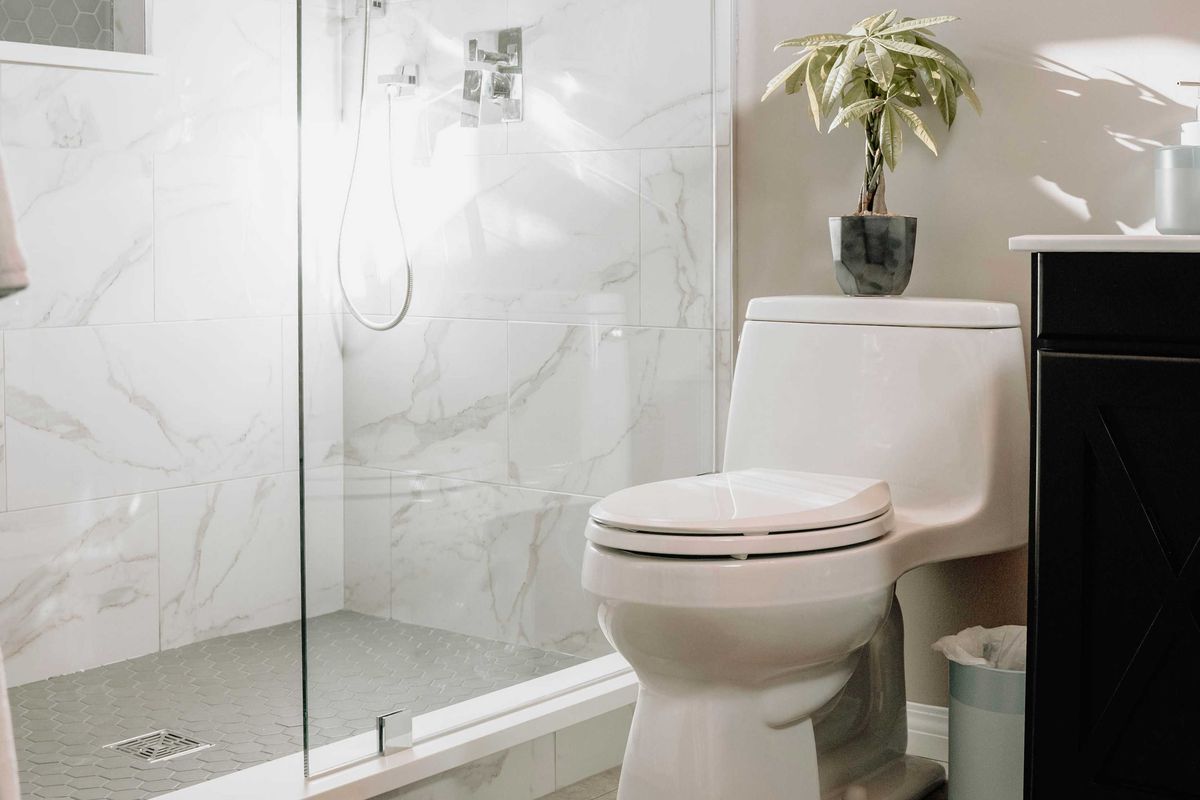 A modern bathroom. Photo by 99.films on Unsplash
The context here is crucial. The Redditor said they've lived together for more than two years and are "pretty [comfortable] with each other but definitely not to the point of pooping in front of each other."
Their boyfriend has IBS, so bathroom urgency is a serious issue for him: "When he's gotta go, he's gotta go." But the OP noted that their home is very cold and heated with a wood stove. "I hadn't gotten the fire going yet so was just standing freezing and dripping and shampoo-haired outside the bathroom waiting for him to s---," they added. "This is obviously not THAT big of a deal but like…am I crazy thinking that it's a wild ask to make ur partner leave mid shower so you can take a dump?"
The post went viral, and many comments appeared to side with the boyfriend, citing general privacy concerns as well as his IBS.
"I've been married over 20 years and we still give each other privacy to poop"
"Ngl I wouldn't want to be in the shower while someone was actively s----ing in the same room, but maybe that's me."
"op even said he has IBS. Bro is fighting demons in there"
"I have [Crohn's]. If my wife had to vacate the shower every time I unexpectedly needed the toilet, she'd be shaving her head."
"Sometimes when I s--- I don't even want to be in there"
"I’ve been married over 20 years and we still give each other privacy to poop. Multiple bathrooms do help. IBS adds a whole level of complexity to this scenario. It's urgent, and often very unpleasant both in sound/smell and he's probably embarrassed enough by it as it is. This was a case of really bad timing. If it happens again, rinse out the shampoo and get out ASAP - although you're majorly inconvenienced, he's got an actual emergency."
- YouTube www.youtube.com
"I am not leaving that water till the shampoo is rinsed and conditioner is applied and rinsed. Period."
But there were plenty of other perspectives.
"This is so weird to me. I don't share a bathroom while my husband s---s if I can reasonably avoid it, but if I've just put in shampoo and he's got to GO, then we're just going to have to handle business at the same time. I'm not leaving the bathroom soapy and cold because he can't poop with an audience. It's just f---ing bodily functions, I'm not that precious and neither is he. IBS wouldn't change that. It's not ideal, but he'd never ask me to be physically uncomfortable because he was emotionally uncomfortable. Edit: to be clear, I'll rush the shower. Skip shaving and other unnecessary steps. Shorten the post shower routine or fully push it back. But I am not leaving that water till the shampoo is rinsed and conditioner is applied and rinsed. Period."
"Completely wild. As much as I gotta poop (also in same boat with the IBS) if I'm kicking everyone out every time I do, nothing would ever get done. Nobody else can shower or use the shower to pee or my ol lady would never be able to get ready for work. Thats insane IMO."
"I had an ex with IBS, it was bad. But I know how to just not use my nose in horribly smelly situations. I'd rush, for his comfort, but I wouldn't bail, covered in soap."
"IBS emergencies are real and when someone says they have to go, they usually mean right now. That said, asking someone to step out of the shower soaking wet in a freezing house is also pretty rough and understandably frustrating."
"I'm 12 years in and have never once done that with my husband in the room or vice versa"
Naturally, some comments diverged from the original story and focused more on the idea of pooping in the same room as your partner.
"Honestly I’m more fascinated by how many spouses poop in front of each other. I’m 12 years in and have never once done that with my husband in the room or vice versa. I didn’t realise it was such a common thing!"
"I'm surprised how many people are appalled by the idea 🤣 we have full blown conversations while pooping daily. If it's especially stinky I'll vacate, but otherwise it's not a big deal at all."
"I dump in front of my husband all the time lol. And vice versa. Just turn on the fan. Oh and we have three bathrooms haha!"
Bathroom etiquette is complex. In a 2025 Reddit thread, people debated whether or not a "courtesy flush" is expected at someone else's house. Some argued it's the decent thing to do, while others doubted its effectiveness or disliked the idea because of water waste.
- YouTube www.youtube.com