upworthy
Add Upworthy to your Google News feed.
Google News Button
Health

Teenager creates eye-opening videos that shatter stereotypes surrounding autism and girls

"I get that a lot, that because I'm good-looking, nothing can be wrong with me — so I want to show that mental illness is diverse."
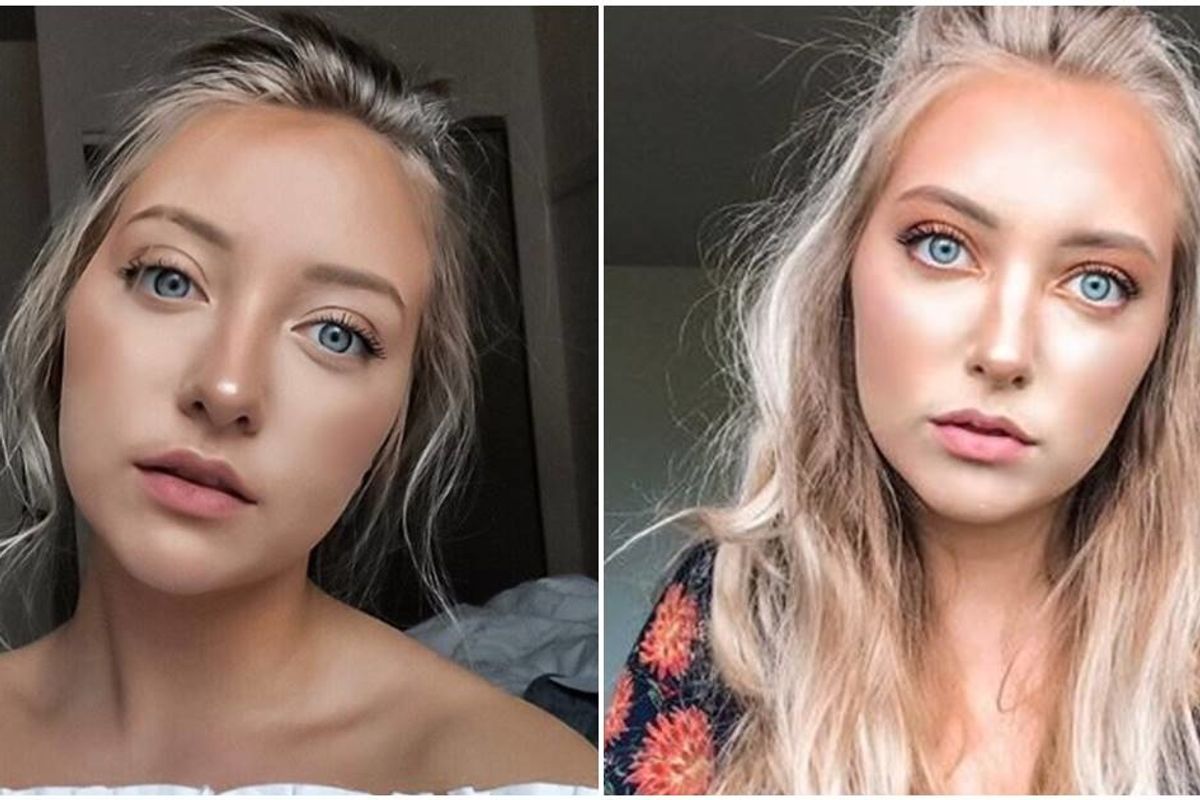
Teenage girl selfies in different lighting
via paigelayle / Instagram

Paige Layle shares the harmful stereotypes about appearance and illness.

A 2020 study revealed that about 1 in 36 children were identified to have autism spectrum disorder (ASD), according to estimates from the CDC's Autism and Developmental Disabilities Monitoring (ADDM) Network. Of those affected, boys are four times more likely than girls to be diagnosed.

Autism Spectrum Disorder is marked by communication and social difficulties, sensory processing issues, and inflexible patterns of behavior. Almost everything that researchers have learned about the disorder is based on data derived from studies of boys.

However, researchers are starting to learn that ASD manifests differently in girls. This has led many girls to be undiagnosed or misdiagnosed.

"The model that we have for a classic autism diagnosis has really turned out to be a male model," Susan F. Epstein, PhD, a clinical neuropsychologist said to Child Mind Institute. "That's not to say that girls don't ever fit it, but girls tend to have a quieter presentation, with not necessarily as much of the repetitive and restricted behavior, or it shows up in a different way," Epstein added.

Stereotypical ASD behaviors may also get in the way of recognizing the disorder in girls.

"So where the boys are looking at train schedules, girls might have excessive interest in horses or unicorns, which is not unexpected for girls," Dr. Epstein notes. "But the level of the interest might be missed and the level of oddity can be a little more damped down. It's not quite as obvious to an untrained eye." In other words, girls with ASD usually have their symptoms go unnoticed, so they suffer in silence.

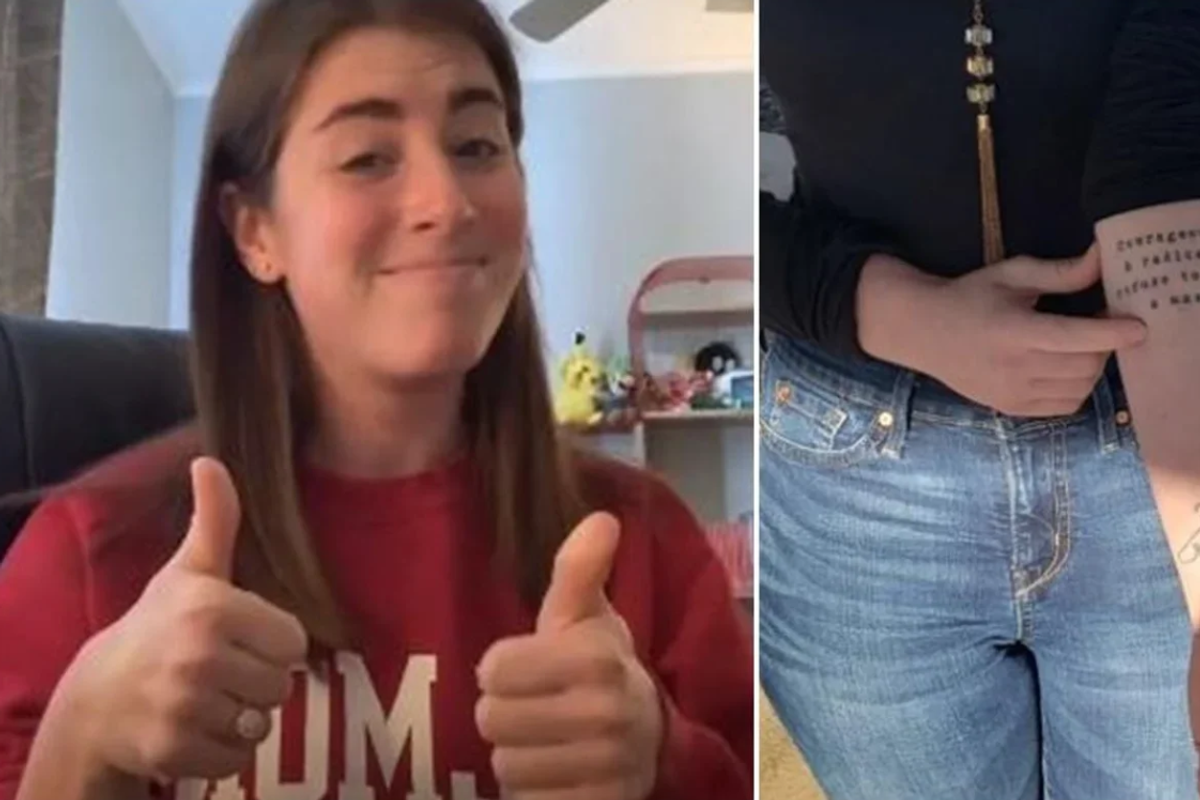
In 2020, Paige Layle, then a19-year-old eyelash technician from Ontario, Canada, shared that she has autism. However, because she's a social butterfly, most people don't realize she has the disorder. "I get that a lot, that because I'm good-looking, nothing can be wrong with me — so I want to show that mental illness is diverse," Layle told BuzzFeed.

To help people better understand how autism manifests in girls and women, Layle has made a series of videos on her TikTok page.

"I decided to start making videos because of an audio that was going all over TikTok that was making fun of autistic people. I hated it. I feel like many people don't understand how many people are autistic," she said.

Layle's videos are eye-opening because they shatter some big myths about autism and show how difficult it can be to live with the disorder, especially if you don't know you have it.

@paigelayle learn more about autism! :) i get many questions every day to make more vids about it, i will continue to show you guys! #feature #fup #fyp #featureme ♬ original sound - paigelayle

In the first video, she explains how the initial research done on autism was only on boys or men.

"Girls usually end up showing different traits than guys do. Which is why it can take us years to get diagnosed. I was 15 when I got diagnosed and that's considered early for a girl."

She also explains that girls often are diagnosed later because they are better at hiding autistic behaviors.

"This is something we call masking. Masking is basically just being like a really good actor.

It's where you take traits that everyone else is showing and start portraying them as yourself. It's like a lot of copying going on. ... In your mind you don't think you're copying. You think that this is normal and everyone feels the same way you do.

You basically feel like an alien and you're really good at hiding that. Which is why I don't seem autistic."

In part two, she discusses the idea of being high-functioning.

@paigelayle no such thing as high/ low functioning autism!!! it’s just how YOU perceive us. not about how we’re affected. #feature #featureme #fup #fyp ♬ original sound - paigelayle

"Get high-functioning and low functioning out of your vocabulary. It doesn't help anybody. I know you may think that saying 'Oh like you're high-functioning' is compliment. It's not a compliment. It's also like a reminder that I'm just masking, and it's so hard.

Masking is the most exhausting thing in the world... 'High-functioning' is basically a label that you can use to be like 'Your autism doesn't affect me that much.' But I'll tell you that everyone you think is high-functioning is greatly affected by their autism."

In part three, Paige discusses common autistic traits that girls have.

@paigelayle more on special interests later ☺️ #feature #autism #fyp #fyp #featureme ♬ original sound - paigelayle

"I am overly social. I give way too much eye contact. I'm really good in social situations. It's also very common for girls with autism to have other mental disabilities or mental disorders as well. I have seven and one of the main ones is OCD.

All of these mental illnesses stem from having autism. But OCD, anxiety, and depression are very common, especially in girls. Just the feeling that the world needs rules for you to understand it. That's why a lot of autism special interests include things like anatomy, the human body, psychology, just figuring out how the world works is our way to figure out how to live in it."

In part four, Paige further discusses the topic of masking.

@paigelayle ahhh masking. can’t live with you, can’t live without you. #feature #fup #fyp #featureme #autism ♬ original sound - paigelayle

"When you're in the autistic closet and you are not known to be autistic yet ... you like subconsciously know that you're weird and you don't know how to act or how to be.

It's like the way you walk, the way you talk, the way you wear your hair, like your mannerisms. Like everything you say. Everything you think. Everything you think that you enjoy. It's all what you are accustomed to from your peers.

I've been diagnosed for four years and I'm still trying to figure out who I am and what I actually like to do. You just get to used to creating this mask that when it's like 'Hey, you can take it off,' It's like what the frick is underneath it? I don't know what's going on."

In 2024, Layle released her first book, But Everyone Feels This Way, with Hatchett Book Group that can be accessed as a hard copy, e-book, and audiobook. She also offers neurodivergent peer consulting, merch, and more via her Linktr.ee.

This story originally appeared five years ago.

Joy

People from around the globe share 15 signs that someone is obviously an American

"An Italian told me that Americans walk confidently in the wrong direction."

tourists, american tourists, us tourists, vacation, american style

Americans on vacation.

One of the fun things about traveling to different countries is that you not only get to learn about other cultures, but you also learn some things about your own. Americans who travel abroad often learn that people around the world appreciate them for being open, friendly, and good at spreading hope and optimism.

On the other hand, people in other countries can often tell when an American is coming from a mile away because they speak loudly, whether indoors or outdoors. Americans also have a very peculiar body language and are known to lean on things when they have to stand for an extended period.


A Reddit user posed a question in the AskReddit subforum to learn more about how Americans stand out abroad: What's an "obvious" sign that someone is American? The post received more than 35,000 responses, with an overwhelming number of commenters noting that Americans are all smiles and love to make small talk, something most people appreciate.

According to Redditors, here are 15 "obvious" signs that someone is American:

1. They have a unique confidence

"An Italian told me that Americans walk confidently in the wrong direction."

"Been taught to walk fast, and look worried.. People think you know what you're doing."

2. They're friendly

"I worked as a cashier in a tourist place in Paris, I always recognised Americans because they were kinda friendly to me and they always left tips."

"I guess there are worse things than friendly and generous."


3. Time = distance

"If someone asks how far away something is, an American will tell how you long it takes to get there as opposed to a physical distance."

"It actually pisses off some Americans to give a distance in miles, unless they're calculating gas mileage. In some places, you have to give with and without traffic options. I think it's more valuable info in time than in distance."

4. Grinning at strangers

"The gentle grins you give to strangers if you make eye contact with them as you pass by, at least in the Midwest. was not well received in Germany."

"I dated a European man here in the US. When we walked together, every time I made eye contact with someone on our path I would smile at them, and they would always smile back. Boyfriend was so confused at all these strangers smiling at me. Kept asking if I knew all these people. It was hilarious."


5. They like personal space

"How much personal space they give themselves. Americans like at LEAST an arm's length."

"We're conditioned to fill spaces evenly. I noticed when i worked delivery, spending lots of quality time on elevators that for every new person that enters, everybody shuffles to even things out. Similar thing plays out in social gatherings and bars. Not sure if that's universal or not, but I find it interesting. I think the size of our personal bubbles is because our spaces are generally much larger because we've got the space (heh) to build bigger buildings, sidewalks, roads etc. Might also explain why we're louder. Used to filling larger spaces with volume."

Body language expert Joe Navarro says that among Americans, the social zone for acquaintances and casual interactions is four to 12 feet, while family and close friends stand 1.5 to four feet apart. The intimate zone, for those closest to us, ranges from the skin to about 18 inches.


6. They lean

"According to the CIA, when training to be a spy, you have to unlearn how to lean. Americans tend to lean on things when standing still."

All of this is true, according to Jonna Mendez, the former chief of disguise at the CIA, who has shared some of her tips and tricks for making Americans seem more European. "So we would de-Americanize you," Mendez told NPR. "They think that we are slouchy, a little sloppy. And they think that they can almost see that in our demeanor on the street because they stand up straight. They don't lean on things."


7. They don't have an indoor voice

"I've lived in America for 25 years, and it still irritates me that instead of lowering their voices in restaurants so everyone can hear, Americans just scream over each other and make their restaurants as loud as clubs."

"For some reason, my otherwise smart and wonderful American friends will speak in the same volume, diction, and speed regardless of any outside factor unless specifically asked."

8. Dessert for breakfast

"In my homestay in London, I was told that I was 'so American' for enjoying a piece of cake for breakfast (not frosted cake, but like a nuts and dried fruit spiced coffeecake kind of thing). Apparently, that's exclusively for like a 4 pm snack, and breakfast is more of a savory meal."

"A lot of American breakfast items in my mind are desserts (pancakes, muffins, waffles, etc.). It doesn't mean I won't eat them, but it's kinda weird to do so."

9. They wear their clothes differently

"A British man once told me he knew I was American because I was wearing a baseball cap backwards."

"An Italian told me they could tell I was American because I wore my sunglasses on the top of my head when I wasn't using them."


10. Exposed soles

"While visiting Turkey, I was told that I looked American because I was sitting with one leg across the other, and the bottom of my shoe was exposed. Apparently, it's rude idk."

"In a lot of places outside of the US, showing the bottom of your shoe is rude."

11. Tactical gear

"Tactical sunglasses."

"I'm in the US, and virtually anything marketed towards men has the word 'tactical' in front of it."

12. They love small talk

"I'm from California (though a smallish town), and we wave to neighbors on our road, even if we haven't met, and start conversations in the grocery line with people if the opportunity presents itself. Also, smiling and saying hello to someone you happen to walk by and make eye contact with is quite normal. We are a social species, it would be so weird not to be friendly, even to strangers, for me, and I'm not even that social of a person."

"What really gets me to it is not that Americans do small talk constantly, but the fact that they are so good and fast at it. I mean, I say 'yeah, it's hot,' and they reply with some interesting fact or make a connection to their hometown. I feel less of myself after this. They must have some small talk class in school or some sh*t."

13. They like to point

"I've always observed my US friends like to point at stuff while walking and say what it is…. We were out walking around Amsterdam recently and they were like 'hey look it's a smoke shop'…. 'Oh look a sex shop'…. 'Oh hey, it's a prostitute' …. 'Look at the canal'…. 'Wow it's another prostitute'….. 'another canal' etc etc. It was like watching Netflix with Audio Descriptions turned on."

"You know that little voice inside your head, your internal monologue? Americans seem to monologue their thoughts."


14. Optimism and enthusiasm

"Dunno in all context, but Americans in Europe stand out with their ceaseless optimism and enthusiasm."

"I'm reminded a lot of Ted Lasso. Everyone I know (all Americans) loves the show. I wonder what kind of European fan base it has."

"Americans are so positive and have such a thirst for life. It sickens me."

15. They eat while walking

"When I lived in Europe, people said only Americans eat while walking. I'd be eating a bagel or something on the way to work or class, and multiple people asked if I was American lol."

"Jay Leno said on Top Gear, I think it was, that Americans are also the only people who eat while driving. I don't do this, but I constantly see people who do, haha, especially in LA, where people spend a lot of time in their cars."

Bridge, Anne Hathaway, communication technique, bridge back method, interview tips
Photo Credit: Canva, Wiki Commons

A beautiful bridge. Anne Hathaway.

Have you ever found that you've lost control of a conversation? Perhaps you're making a point about something when it's derailed by a topic you'd rather not discuss. Rather than get frustrated, there's a super simple technique one can use to get back on track. It's called the "bridge back" method, and once you understand how it's done, it can be an incredibly useful tool in conversation.

The "bridge back" method is often exemplified in interviews. Rob D. Willis, a strategic story producer, shared an interview on his Instagram that Matt Lauer conducted with Anne Hathaway during her Les Misérables press junket tour. In this re-surfaced clip making the rounds online, Lauer brings up a "wardrobe malfunction" and asks her what "lessons she learned."


First, Hathaway acknowledges that it happened. She then explains how it made her feel. "It kind of made me sad on two accounts. One, I was very sad that we live in an age when someone takes a picture of another person in a vulnerable moment rather than delete it. And I'm sorry that we live in a culture that commodifies sexuality of unwilling participants, which brings us back to Les Mis because that's what my character is." (Hathaway played Fantine, a sex worker in France in the 1800s.)

Willis pauses the clip here and points out that this is a classic "trap question" that a celebrity often gets. "The journalist wants an embarrassing story, but the actor wants to talk about what they're working on." He praises Hathaway's bridge back technique and says "it's perfect for difficult questions."

He breaks down how she does it:

Step 1: Briefly acknowledge

“It was obviously an unfortunate incident”

She owns it without dwelling on it or getting emotional.

Step 2: Connect to the bigger picture

“It kind of made me sad on two accounts. One was that I was very sad that we live in an age when someone takes a picture of another person in a vulnerable moment and rather than delete it... And I’m sorry that we live in a culture that commodifies sexuality of unwilling participants.”

She moves the frame from her personal mistake to a cultural critique.

Step 3: Return to your point

“Which brings us back to Les Mis — because that’s what my character is”

Anne Hathaway appears on TheToday Show to discuss Les Misérables www.youtube.com, Kingsherry, The Today show

On Vocate, a site dedicated to building communication and public speaking skills, they note, “Good bridging isn’t about avoidance. It’s about reframing. A skillful speaker acknowledges the legitimacy of the question but still takes the opportunity to express what truly matters to them and their audience.”

They add that the method is also often seen with skilled politicians, writing, “Used well, it creates space for clarity, narrative control, and audience connection.” For a slightly easier way to memorize the tip, they call it the "ABC method"—“Acknowledge, Bridge, Communicate.”

On the Cornerstone Coaching and Training site, human resources consultant Betty Lochner goes over similar ideas and stresses the importance of staying in control without getting aggressive or defensive. “Learning how to bridge conversations is learning how to move someone from where they want the conversation to be to where you want it to go.”

Nadhi Saini gives examples on how to use bridging in conversations. www.youtube.com, Nidhi Saini

john waite, police, cops, rock stars, musicians
Photo credit: Kiowa County Sheriff’s Office via Facebook, cropped

Kansas police pulled over an '80s pop star, and it led to a wholesome moment.

Being pulled over by the police is always nerve-racking, and it's probably even more awkward when the driver is a pop star with multiple chart-topping singles. In July 2025, one such encounter went viral after sheriff's deputies in Kiowa County, Kansas, stopped a vehicle transporting British '80s hitmaker John Waite. But instead of leading to tension, the traffic stop resulted in a genuinely wholesome moment.

Waite and his band were en route to their concert at United Wireless Arena in Dodge City when they were pulled over for speeding. Sergeant Justin Rugg just happened to be a longtime fan. "I'm not even on cloud nine; I'm on like cloud 12," he said after making the stop, according to the Kiowa County Sheriff Office's Facebook page. The post continued: "It's not every day our Deputies get to pull over cool guys!!"


Everyone was a good sport about the whole thing. Waite took a photo with the officer and even had his band pose for another, leaning over the hood of the patrol car and looking back at the camera in mock confusion. The band eventually made it to the show, and both Waite and the sheriff's office shared the photos. The KCSO wrote to Waite, "Have a rockin' time and check out that beautiful Kansas sky!" On his own account, the musician added, "Pulled over for speeding. Good guy cop!"

- YouTube www.youtube.com

"The next thing I know, I'm taking photographs with him, and we're almost wrestling"

Neither the report nor the social media posts officially say whether Waite's crew received a speeding ticket, but given the cordial tone of the photo session, it seems likely they were let off with a warning.

The comment sections are full of solid jokes and observations, including this one: "Excuse was he didn't want to be late for a show. He got off with a verbal. I'm going to have to try that next time." A commenter whose profile lists their occupation as a 911 dispatcher with the Kiowa County Sheriff's Office wrote: "I was just excited to dispatch on this call lol!! Freaking AMAZING!!!!! Hey, John Waite, stop in here on your way back!! It's my weekend to work so I didn't get to see you!!!!"

Months later, Waite laughed about the viral encounter during an interview with the YouTube channel AccordingToAmabile.

"[The officer] says, 'Who are you?'" he recalled. "I'm going, 'John Waite.' He says, 'John Waite!' And the next thing I know, I'm taking photographs with him, and we're almost wrestling. Everybody's cracking up and laughing. He was a great guy! That night, I look out in the audience, and he's raging, jumping up and down about four rows back! You meet some fantastic people [as a musician]. You really do. And a lot of it's very funny."

- YouTube www.youtube.com

You've probably heard Waite's '80s hits

While many people admitted they don't recognize the singer's name, it's likely they've heard at least a few of his songs.

Waite's first prominent gig came in the late '70s as the frontman and bassist of the hard rock–power pop band The Babys, best known for minor hits like "Isn't It Time" and "Every Time I Think of You." The group, which briefly included Journey keyboardist Jonathan Cain, broke up in 1981, and Waite launched a solo career the following year with his debut LP, Ignition. He enjoyed a long run of commercial success in the decade, landing 10 singles on the Billboard Hot 100, including his ultra-smooth 1984 No. 1 hit "Missing You." (If you haven't seen the music video, do yourself a favor. It's 1984 in visual form. Classic stuff.)

In between his various solo projects and tours, Waite had another breakthrough moment. In 1988, he co-founded the supergroup Bad English, which scored a No. 1 hit the following year with the sleek ballad "When I See You Smile." No wonder Sergeant Rugg was so impressed.

- YouTube www.youtube.com

baking, bakery, cookies, bread, dough, desserts, food, food science, food technology, food waste, conservation, sustainability

Scientists conducted a comprehensive test on cookie-baking temperatures and discovered a surprising result.

If you Google "chocolate chip cookie recipe," you'll find millions of different recipes and methods for making them at home. All feature slight variations that make them unique. Baking temperature, for example, is one detail many bakers disagree on. Top results recommend baking cookies at 375, 350, or even, in some cases, 325 degrees Fahrenheit. Many of them claim to be the "absolute best" chocolate chip cookie recipe.

Science may have something to say about that, thanks to some delectable new research.


A team of food scientists and researchers from the University of Guelph recently conducted a rigorous examination of the effects of baking temperature on cookies.

In a paper fittingly titled "Morphological changes and color development during cookie baking—Kinetic, heat, and mass transfer considerations," published in the Journal of Food Science, a team led by Maria Corradini presented an impressively detailed study.

The researchers set out to methodically track what happens to cookies during baking. How does color change over time? How do shape, size, moisture level, and thickness evolve at different points in the process? And, crucially, how do all of those factors shift when different baking temperatures are applied?

It's safe to say this may be the most comprehensive scientific examination of desserts ever conducted.

baking, bakery, cookies, bread, dough, desserts, food, food science, food technology, food waste, conservation, sustainability The most delicious experiment ever.Photo credit: Canva

The paper explains what the researchers were looking to uncover and why it matters:

"During baking, several physical and physicochemical changes occur, such as shape expansion/contraction, color development, and the generation of desired flavor compounds. Studying the physical and physicochemical properties of baked goods and the influence of heat and mass transfer on them can provide valuable information to the cereal sector to improve and optimize the baking process, control the quality and safety characteristics of products, and guarantee appropriate handling of this product."

Though the study focused specifically on cookies, many of the findings could also apply to other baked goods, such as bread, crackers, and granola bars, which make up a sizable portion of the average person's diet.

The researchers found that, not surprisingly, temperature had a big impact on how the cookies turned out.

Cookies baked at the highest temperatures set quickly in the oven and ended up the driest after the 12-minute bake. Cookies baked at the lowest temperatures retained the most moisture but tended to spread more and develop less ideal shape and structure.

While everyone has their own preferences for gooey and doughy cookies or crisp and crunchy ones, the team did find one specific temperature that really hit the spot. Food & Wine summed it up this way:

"Within the lab conditions of the study, 205°C (just over 400 F) struck a middle ground — hot enough to promote structure and doneness without excessive drying. That balance may help explain why many experienced bakers gravitate toward slightly higher oven temperatures than individual recipes typically call for."

Veteran bakers across social media have plenty of opinions about the ideal temperature for baking cookies, with many advocating for the higher end of what most recipes suggest. Cookies baked at around 375 degrees Fahrenheit often develop a lightly crisp exterior with an extremely moist center. In the lab, researchers baked each batch for 12 minutes. In a home kitchen, however, baking "until done" at lower temperatures typically requires more time and may actually result in a drier cookie overall.

- YouTube www.youtube.com

What's particularly fascinating about the study is what its findings could mean for future baking research.

In the conclusion of the paper, the authors write, "This study serves as an initial and fundamental step for developing a future comprehensive model that can be used to simulate the baking process for producing cookies with better quality and safety."

Now that the baking process has been modeled in such extreme detail, researchers are one step closer to "virtual cookies," Corradini told the Institute of Food Technologists. She added that, one day, companies may be able to experiment virtually with different recipes and baking methods without wasting food ingredients or energy.

The research could also lead to more efficient food production processes. Corradini has partnered with a team at the University of Foggia in Italy, "who used a very high-resolution biomedical 3D printer to produce biscuit prototypes. They found that they could design a biscuit that needed much less time baking, thereby saving energy."

baking, bakery, cookies, bread, dough, desserts, food, food science, food technology, food waste, conservation, sustainability The findings are of particular interest to commercial bakeries that spend billions on energy. Photo by Juno Jo on Unsplash

Commercial bakeries in the United States spend close to a billion dollars on energy each year, so they're constantly looking for ways to make the process more efficient. One study found, for example, that cutting bread-baking time by 20% did not reduce quality or safety.

Studies like this could help lower those costs, potentially making baked goods more affordable and accessible. And even if they don't, they might inspire us amateur bakers to try a slightly more aggressive baking approach at home on our next batch of snickerdoodles.

Health

11 people share the 'harsh truths' that helped them become far more emotionally mature

"How people treat me is not my fault, but I am responsible for what I tolerate."

upset woman, hurt people, discussion, argument, heartache
via Pexels

A woman listens to a harsh truth.

It can be heartbreaking to realize that someone you love can't live up to your expectations. It can be even harder to look back at choices you’ve made in life and know you could have been kinder or put more effort into things that really mattered.

However, when we bravely face the hard truths we have to learn in life, we become emotionally stronger. The struggle may be painful at the time, but as the saying goes, “We are stronger in the places where we’ve been broken.” On the other side of the emotional Rubicon is healing, wisdom, and strength.


A poster in Reddit’s emotional intelligence subforum asked users a very personal question that got to the heart of how they became stronger people: “What’s a harsh truth you had to accept to become emotionally mature?” The responses showed the power of taking personal responsibility and seeing yourself and others with rigorous honesty.

upset woman, woman driving, crying in car, honesty, realization An upset woman sits in her car.via Canva/Photos

The discussion is a wonderful reminder of the gold that we can find on the other side of heartache and loss. Here are 11 of the best harsh truths people had to accept to become emotionally mature.

1. Bad parents aren't an excuse

"Having sh*tty parents is not an excuse to be a sh*tty adult. At a certain point, it's on you to do the work and break the cycle."

2. Nobody owes you anything, nobody is coming to save you

"That's right, if you want change, start a revolution yourself."

"Or, as my therapist put it, 'the cavalry is not coming. It's on you.'"

3. You never truly know what anyone is thinking

"You will never really know what people are thinking. They will say what they think people want to hear or avoid the truth. You truly have to trust yourself and work with yourself. Identify what you’re thinking and feeling, and then work with it. And there are no answers. Some things will always be a mystery and never solved."

Psychologists call this phenomenon the Theory of Mind, which holds that we can understand and interpret others' beliefs, thoughts, and feelings to read social situations. However, even though we may come close to understanding other people's inner states, we can never be 100% sure.

upset man, sad man, man in his 30s, man by ocean, anxiety, depression An upset man grabs his head.via Canva/Photos

4. You can mean well and still hurt people

"Two things can exist at once! You can mean well and absolutely hurt someone’s feelings. You arent above accidentally upsetting someone."

"This one is huge to me lately. I had to break up with someone who I do love, but I can't be with anymore. He refused to believe I ever loved him if I was hurting him, I said two things can be true at the same time!"

5. Beware of takers

"Lots of folks are takers, and if you are a giver and don’t know this, they will drain you dry."

"My mum always categorises people by 'radiators' and 'drains.'"

6. Watch where you place your self-worth

"If you tie your self-worth to another person, you are giving them power to take your self-worth out the door with them if they leave. That's not a power you want to give them, and I highly doubt they would want that either."

7. People hear what they want to hear

"Feel what they want to feel, do what they want to do, say what they want to say... all we are control of is our boundaries and what we do with how we feel."

upset woman, woman at computer, calculator, stress, anxiety A stressed-out woman.via Canva/Photos

8. Radical accountability

"Radical accountability is often not fun but will completely transform your capacity, integrity, self-trust, potential for growth, etc."

David Goggins, a motivational speaker and former Navy SEAL, is known for championing the power of radical accountability. Here, he shares how he created an accountability mirror. Every day, he wrote a mistake on a Post-it note and attached it to his mirror. He then methodically worked on fixing each misstep.

- YouTube www.youtube.com

9. Being honest about motivations

"Being able to take responsibility for my actions means considering all of the harm I’ve caused and being able to look at my motivations honestly. It’s really hard to do that because the shame can be so strong, but it’s honestly really healing to be able to face yourself like that."

10. You're responsible for what you tolerate

"How people treat me is not my fault, but I am responsible for what I tolerate. I really didn't want to have to be accountable for myself for a very long time. It was simply easier to blame anyone and anything outside of myself for what happened to me. But I must admit that my life transformed once I started taking responsibility. Many people don't want to admit that they play their part in what happens to them (bar if they're a child, obviously - and very serious cases of abuse and violence). And I was one of them."

11. Some people will never reach emotional maturity

"That the people you love deeply and dearly may never become emotionally mature themselves. They may still try to defend and protect themselves even when all you wanted to do was be seen or heard. Taking it personally when you just want a resolution. It's realizing their limits are so much smaller than yours. What it so simple for you to do, even things like taking accountability for your actions, seems like a fkn mountain for them that they aren't willing to start climbing."