upworthy
Add Upworthy to your Google News feed.
Google News Button
Joy

Simple photography lesson shows why selfies distort how you really look

Don't be fooled!

selfies, camera lenses, taking selfies, self-photography, noses, iPhones, smartphone photos

A selfie camera can distort how you look in real life.

We've all done it: You snap a selfie, look at it, say, "OMG is my nose swollen?" then try again from a different angle. "Wait, now my forehead looks weird. And what's up with my chin?" You keep trying various angles and distances, trying to get a picture that looks like how you remember yourself looking. Whether you finally land on one or not, you walk away from the experience wondering which photo actually looks like the "real" you.

I do this, even as a 40-something-year-old who is quite comfortable with the face I see in the mirror. So, it makes me cringe imagining a tween or teen, who likely take a lot more selfies than I do, questioning their facial features based on those snapshots. When I'm wondering why my facial features look weird in selfies it's because I know my face well enough to know that's not what it looks like. However, when a young person whose face is changing rapidly sees their facial features distorted in a photo, they may come to all kinds of wrong conclusions about what they actually look like.


Not that it should matter, of course. But we're talking about people living in a society obsessed with personal appearance. It's going to matter to a lot of people, and if they get the wrong impression of their face, some people will go to all sorts of lengths to change it. That's why understanding a bit about how focal lengths on cameras can impact what we see in photographs is vital.

Why do I look different in selfies?

Writer Evey Winters shared some of that education in a post on Facebook. She writes about this topic through a trans and dysmorphia lens, but it applies to everyone.

Winters points out that if someone is thinking of doing surgery to change their bodies, they should seek sources outside of themselves and a cellphone camera.


"I have dysmorphia and recognize that in myself," she wrote, "but even if I didn’t, there’s not a selfie I’ve ever taken that would accurately help me make choices about my face. Mirrors are slightly better only for their minimal distortions."

Why do people look different in selfies?

"Almost any photo taken of you with a commonly available cell phone without additional equipment will not display anything approaching an accurate summation of you but an artistic rendering of what the camera is able to capture," she continued. "Cameras are not people. People don’t freeze frames of time for all eternity down to the pixel and automatically enhance certain features like the darkness of pores and fine lines in your skin."

"If you want the best chance at getting good feedback pre-op about what you might want to change," she added, "I’d recommend a skilled photographer take a series of photos of you at different focal lengths and even then none of these will be entirely accurate as none of these employ humans binocular vision and filtering."

selfies, photography, friends in photos, camera phone, smartphone, good selfies, bad selfiesA group of friends taking a selfie.via Canva/Photos

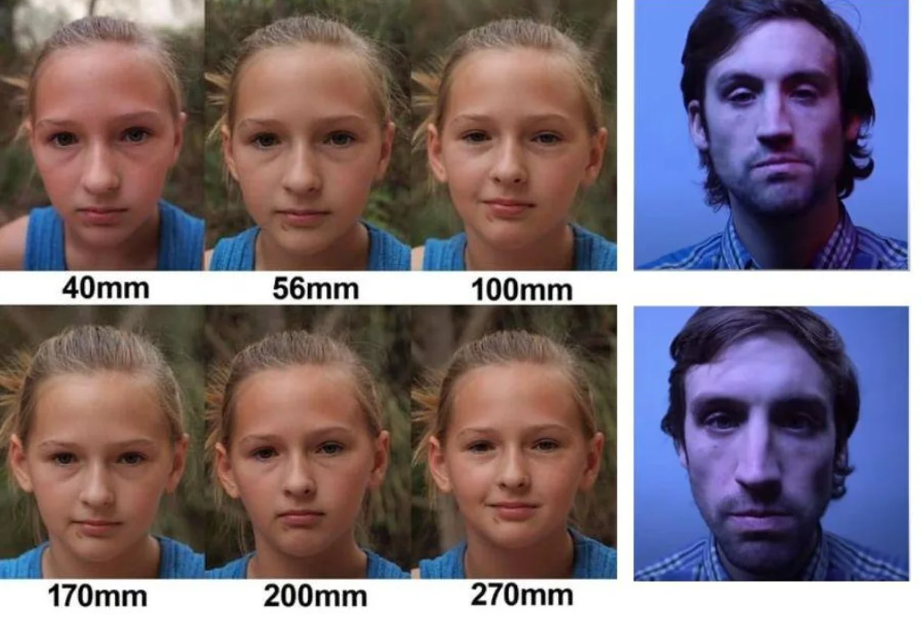
Winters shared a collage of photos of the same girl's face at different focal lengths to show the significant difference it makes. "Notice how in different photos this child’s eyes may appear to be slightly hooded," she wrote. "The nose appears enlarged disproportionately. Hairline seems to shift with every snap. So does jaw shape, face shape, and even the width and size of the ears."

The difference between each of these photos is significant, but the difference between the first and the last is stunning. Cellphone selfie cameras usually have an even smaller focal length than the 40 mm shown here (Winters points out that the iPhone 13 Pro Max selfie camera has the equivalent of a 23 mm focal length), so they distort facial features even more. It also depends on how far away from the camera you are—the closer you are, the more distortion you'll see. Lighting matters, too, but even the best lighting can't cancel out what the focal length is doing.

Vox shared a video specifically about the "big nose" phenomenon with selfies, showing how drastic the distortion can be.

- YouTubewww.youtube.com

The difference between each of these photos is significant, but the difference between the first and the last is stunning. Cellphone selfie cameras usually have an even smaller focal length than the 40 mm shown here (Winters points out that the iPhone 13 Pro Max selfie camera has the equivalent of a 23 mm focal length), so they distort facial features even more. It also depends on how far away from the camera you are—the closer you are, the more distortion you'll see. Lighting matters, too, but even the best lighting can't cancel out what the focal length is doing.

This article originally appeared three years ago.

time, neil degrasse tyson, time flies, perception of time. clock, science,

A clock and Neil deGrasse Tyson.

When you’re a kid, time passes a lot more slowly than when you’re an adult. At the age of seven, summer seems to go on forever, and the wait from New Year’s Day to Christmas feels like a decade. As an adult, time seems to go faster and faster until one weekend you’re putting up your Christmas lights though you swear you just took ‘em down a month ago.

Why does time seem to speed up as we get older? Astrophysicist Neil deGrasse Tyson recently explained the phenomenon in a video posted to Instagram. He also offered tips on how to slow the passage of time as you age. DeGrasse Tyson is one of the most popular science communicators in the world and the host of 2014's Cosmos: A Spacetime Odyssey and 2020’s Cosmos: Possible Worlds.


Why does time appear to speed up as we get older?


“When you're young, everything is new. Your brain is constantly recording fresh memories, and the more memory your brain stores, the longer the experience feels. But then something changes. As you get older, routines take over. Your brain stops saving so much detail. It switches to autopilot because everything feels familiar and predictable,” deGrasse Tyson explains. “And when your brain stores fewer new memories, your perception of time compresses. That's why childhood feels long, and adulthood feels like a blur.”


Steve Taylor, PhD, author of many best-selling books including Time Expansion Experience, The Leap, and Spiritual ScienceThe Leap, and Spiritual Science, agrees with deGrasse Tyson.

“This is mainly because, as children, we have so many new experiences, and so process a massive amount of perceptual information,” Taylor writes at Psychology Today. “Children also have an unfiltered and intense perception of the world, which makes their surroundings appear more vivid. However, as we get older, we have progressively fewer new experiences. Equally importantly, our perception of the world becomes more automatic. We grow progressively desensitized to our surroundings. As a result, we gradually absorb less information, which means time passes more quickly. Time is less stretched with information.”

How do we make time slow down?

There’s something a little depressing about the idea that time speeds up as we age because we have fallen into predictable routines. The good news is that we can break this cycle by changing our habits and having new experiences. The more novel information we can process and the less routine our lives become, the slower time will move.

DeGrasse Tyson believes that with some change in our behaviors, we can get back to longer summers and Christmases that aren’t perpetually around the corner.

“You can actually slow time down again. Do something unfamiliar,” deGrasse Tysons says. "Travel somewhere new. Break a routine you've repeated for years. Learn a skill your brain hasn't mapped yet. Because the more new memories your brain forms, the slower time feels as it passes. So if life feels like it's accelerating, it's not your age. It's your brain, and you can reboot it.”

women's volleyball, sports, athletes, hair ties, ponytails

It's hard to keep a ponytail in place through a whole volleyball game—or at least it used to be.

Over a decade ago, head coach Jerritt Elliott noticed a problem with his volleyball players. Frequently, during practices, the women would have to stop and adjust their hair, pulling their ponytails tighter, replacing a broken hair tie, or otherwise fixing an issue.

According to ESPN, rather than complain about the problem, Elliott decided to tackle it head on. In 2013, he set out to learn everything he could about long hair and the challenges of keeping a ponytail in place through intense athletic activity. He interviewed friends, former players, and even Olympic athletes about their experiences with hair ties. Some complained about how they didn't hold. Others complained about headaches or damaged hair. Elliott spent $80 buying every kind of hair tie his athletes might use to see how they were made and how they functioned.


"People that know me know that I have a wild brain," he told ESPN. "I'm very entrepreneurial."

Through all of this research, he came up with an idea: A very long, thin elastic that could be wrapped around a ponytail as many times as necessary to get the desired hold. He didn't know if he had a great idea or not, but he soon found out.

Around the time Elliott was developing the idea, he met the woman he would later marry—Italian volleyball player Andrea Nucete. Elliott gave her a prototype of his hair tie idea, which she tossed into her car's glove compartment and forgot about.

"I was like, 'Why would I tie my own hair tie? What is the benefit? I don't trust the bald guy,'" she told ESPN.

But after two hair ties broke during a beach volleyball game, she remembered Elliott's tie in her car and gave it a try.

"I used the entire 34-inch version of the product, put it in my hair, called him right after," she said. "I say, 'We have something here. 100%. This is different.'"

The couple worked for four more years to perfect the product, trying out various combinations of elastic and fabric to see what would meet the desired criteria of strong enough to hold the hair securely yet soft enough not to cause damage. They ultimately landed on a rubber core covered in a woven fabric sheath that would expand and retract without grabbing individual hairs.

- YouTube www.youtube.com

In 2018, Elliott and Nucete got married and officially launched their TIY Products business.

The TIY hair tie comes in two lengths, 34 inches and 51 inches, the latter of which is designed to be used with the Pro 2.0 cutting case, which allows users to trim their TIY ties to any size they wish. The cost is significantly higher than a standard hair tie—$8.50 for one standard-length TIY—but Nucete-Elliott told ESPN she knows players who have used the same TIY through all four years of their NCAA volleyball careers. It's not something one can say for your average hair tie.

Players seem to love it.

"You put it in at 8 a.m. one day, and the rest of the day, through a game, it stays in place. You don't have to think about it," TCU middle blocker Sarah Sylvester told ESPN.

"I feel like it's definitely made the process easier and made my hairstyles look cleaner," said Louisville setter Nayelis Cabello. "And it matches my game-day outfit, so that makes it 10 times better." (The TIY comes in 35 different colors.)

The TIY has been making its way around to other women's sports, partially thanks to players sharing them on TikTok.

@sydney_parrishh

TIY making its way to womens basketball 👀👀👀 #tyi #hairtok #hairstyle #wbb #womensbasketball #volleyball #indiana #iu #hair #hairtie #ponytailtutorial

In a 2019 PureWow review of hair ties, the TIY got strong ratings from editors who struggled to get a good fit out of other hair ties. "The adjustable sizing is a game changer, especially for working out or if you need something strong," said one editor. The only complaint was that it was hard to make it look neat: "It’s tricky to master, so the finished result can look unkempt." That may not matter as much on the court, though, and it seems that the less-polished look of the tie has become standard to see in women's sports.

"As women, we have different hair textures and hair types," says Nucete-Elliott in a TIY video, "so we created something that is 13 times stronger, twice as stretchy than a regular elastic, and it's customizable so that you can adapt it to your hair and be able to be used in any aspect of your life."

It's pretty wild that one of the best products we've seen for long hair originated with a man who doesn't even have any.

You can find TIY Products and learn more about them here.

old letter, 1959, tony trapani, letter, secret letters, love letter, love stories, dads, fatherhood, father and son, parents, parenting
via SHVETS production/Pexels and Suzy Hazelwood/Pexels
Tony Trapani discovers a letter his wife hid from him since 1959.

Writing a letter is truly a lost art form, and many young people will never know the joy of it. You had to choose your words carefully and say everything you wanted to say. Once you sent it off, there was no way to be sure it was delivered. No way to know if it had been opened or read. You couldn't take it back or send it again. You just put it in the mailbox and hoped for the best. It was excruciating and magical all at the same time.

One story of a letter never delivered has captured the hearts of readers everywhere. A heart-warming local news story gone viral for the best reasons.


Tony Trapani and his wife were married for 50 years despite the heartache of being unable to have children. "She wanted children,” Trapani told Fox 17. "She couldn't have any. She tried and tried." Even though they endured the pain of infertility, Tony's love for his wife never wavered and he cherished every moment they spent together.

letter, secret letters, love letter, love stories, dads, fatherhood, father and son, parents, parenting Tony Trapani received the most important letter of his life, but he didn't see it for 50 years Photo by Álvaro Serrano on Unsplash

After his wife passed away when Tony was 81 years old, he undertook the heartbreaking task of sorting out all of her belongings. In particular was a mountain of papers stuffed into filing cabinets. Trapani diligently went through every single one.

That’s when he stumbled upon a carefully concealed letter in a filing cabinet hidden for over half a century.

The letter was addressed to Tony and dated March 1959, but this was the first time he had seen it. His wife must have opened it, read it and hid it from him. The letter came from Shirley Childress, a woman Tony had once been close with before his marriage. She reached out, reminiscing about their past and revealing a secret that would change Tony's world forever.

"Dear Tony, I bet you are surprised to hear from me after so many years. I was just thinking about you tonight like so many other nights. But I thought I would write you and find out how you are," the letter reads. "Tony, please don't be angry or surprised to hear this. I have a little boy. He is five-years- old now - grey eyes and beautiful black hair. What I am trying to say Tony is he is your son."


"Please, Tony if you can find it in your heart to forgive me, please come and see him," Shirley wrote in the letter. "Every day he asks me where is his daddy and believe me Tony I can't even answer him anymore. I would be forever grateful to you if you would just see him. ... I'll close now hoping and praying you will answer. P.S. His name is Samuel Duane."

Now, Tony faced the fact that he had a son that would be around 60 years old and he set out to find him.

For over a year, Trapani’s sister tried to track down the mysterious Samuel Duane Childress, until she finally contacted his wife, Donna.

Tony and Samuel met in January 2015 and he felt like a new dad. After meeting his father, Samuel said his mother told him she sent the letter, but Tony never responded. "Why my wife didn't tell me," said Trapani, "I don't know. She wanted children. She couldn't have any. She tried and tried."

It's easy to understand why it may have been hard for Trapani's late wife, Dolly, to pass along that sort of news. Though we'll never know what exactly must have been in her heart and mind when she hid the letter all those years ago.
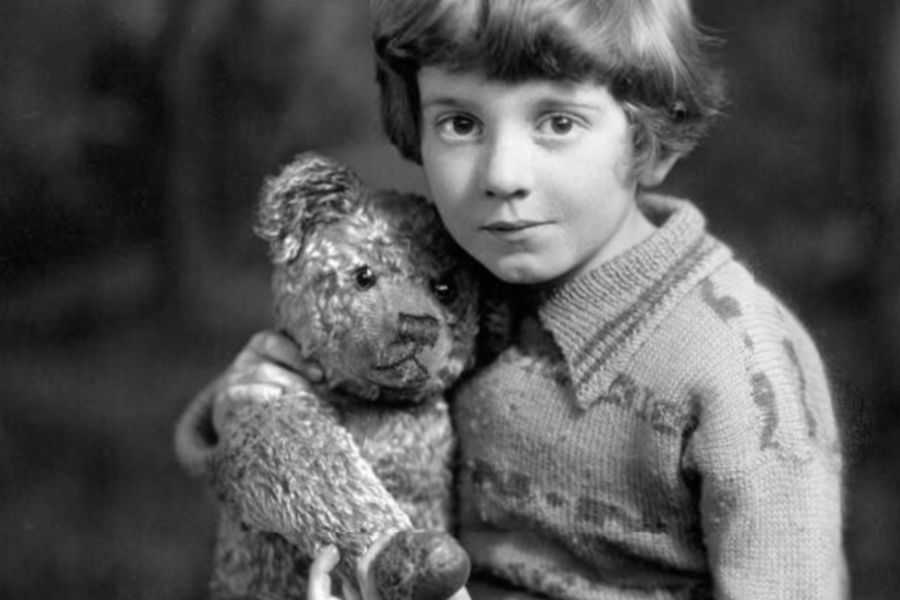
"I always asked my mom, I said, 'Well what does he look like?'' Samuel said. "She said, 'Well, go look in the mirror."

The two met and caught up on a lifetime of memories with the understanding that they could never change the past. "Just to know him now is so important to me. It's going to fill that void," Samuel said.

But just to be sure, Tony took a paternity test to ensure they were father and son. Stunning everyone involved, the test came back negative. Tony was not the father.


letter, secret letters, love letter, love stories, dads, fatherhood, father and son, parents, parenting Tony and Samuel didn't waste time thinking about what might have been if he'd seen the letter earlier. Photo by Ire Photocreative on Unsplash

The news upset Tony and Samuel, but they still had a unique bond. They shared a relationship with Samuel’s mother and both have been on an incredibly wild ride after Tony found the mysterious letter.

“They're keeping that bond,” Donna said. “That paper doesn't mean anything to him. That bond has been made—and we're going to move on from here.”

Tony Trapani passed away in 2017, leaving him just two short years to connect with the man he once believed to be his son. If he'd seen the letter earlier, maybe they would have had more time. But that's all in the past, and by all accounts the men treasured the time they got together, and the relationship that they did have — not the one they wished for.

This article originally appeared earlier this year. It has been updated.

grandma, family, prank, humor, funny

Wholesome, harmless pranks can bring a family together.

An entire extended family pranked their matriarch in a way that's making hundreds of thousands of people celebrate. It's not an easy feat, as pranks can often come off as insensitive or they simply don't work out as intended, but in the case of Paige Kampsen's family, it was utter perfection.

Kampsen shared a video with the explanation, "Seeing how long it takes Grandma to notice us wearing her clothes." In the video, we see a large family preparing Thanksgiving dinner, milling about, chatting, and doing puzzles together while also surreptitiously going into Grandma's bedroom one by one. Every family member takes an item of clothing from her closet, puts it on, and rejoins the family in the dining room and kitchen area. Meanwhile, Grandma is bustling around, completely oblivious to her family’s antics.


That is, until she notices one unmistakable item from her closet.

The robe was too much to miss. Grandma's "What the hell?!" as she began noticing her clothing on the rest of the family was hilarious, and the way she laughed as hard as everyone else speaks to the joy of a close family with a good sense of humor.

People in the comments of the video, which has been liked over a million times, absolutely loved it:

"I'm so glad her genuine reaction was recorded. This is going to live rent free in her mind forever!! This is the best kind of carrying on 😂😂"

"Grandmas just thought everyone was finally well dressed 😂"

grandma, family, prank, humor, funny An elderly woman. Photo credit: Canva

"This is that healing laughter! You guys are rich. 💕 This kind of family connection isn’t something everyone gets to experience."

"The cutest and sweetest prank ever. What a blessed woman!"

"Formally requesting an invitation to next year’s dinner! This is hilarious!!"

"I love how it wasn't at ALL obvious until one of them wore her robe 😂"

"It took her awhile because grandmas are too busy looking at the beautiful faces to notice the clothes. ❤️"

grandma, grandparents, aging, elderly, humor Grandma power Giphy

Naturally, no family is perfect or gets along all the time, but this example of a big crew going all in to bring a smile to Grandma's face is simply delightful. People who have lots of family to spend holidays with may forget that not everyone has that in their lives, and many people wish they did.

And grandparents aren't just nice to have around (absent problematic family dynamics). Research shows that grandparents have a profound effect on the development of kids' cognitive and verbal abilities, mental health, and overall well-being.

"Recent research suggests that grandparent involvement during childhood, conceptualized as the amount of contact and emotional closeness, is positively linked to emotional development, cognitive functioning, and social adjustment in early adulthood," writes Dr. Thomas R. Verny. "The lessons learned from grandparent-grandchild relationships in childhood, especially those related to spirituality and moral development, persist into early adulthood."

And the benefits often flow both ways. Grandparent involvement in kids' lives can stave off the loneliness and isolation that is often experienced by aging adults, according to Michigan Medicine, which is a link to the mental health and overall well-being of elderly folks.

Of course, it helps if you have a grandparent who is as playful and quick to laugh as Grandma Kampsen. What a wonderful holiday memory for all of them.

Family

After 10 years of 'gentle' parenting, mother of two admits why she got it all wrong

"High warmth is beautiful. But without structure? It creates anxiety."

frustrated mom, homework, upset mom, gentle parenting, homework, child homework

A frustrated mom helps her daughter with homework.

Over the past 15 years or so, a trend known as gentle parenting has gained popularity among mostly millennial parents. The parenting style emphasizes emotional validation, empathy, respect, and understanding over punishment. Proponents of gentle parenting say it promotes healthy bonds between parent and child as well as emotional intelligence and confidence.

However, critics of gentle parenting say that it can easily slip into becoming permissive parenting, where boundaries erode. It can also lead to children growing up with difficulty following orders or anyone telling them "no."


Jaclyn Williams, a graduate student in clinical mental health counseling who specializes in child and adolescent therapy, recently kicked the parenting hornet’s nest with a viral Instagram reel in which she laments raising her two children with gentle parenting over the past 10 years.

What's wrong with gentle parenting?

In the comments, Williams recounts her journey, admitting she backslid from gentle to permissive parenting. This led to a lack of boundaries and had profound impacts on her children. One child became a people-pleaser who suppressed their real feelings, absorbed everyone’s emotions, and became withdrawn. The other became anxious, insecure, neglected, and emotionally dysregulated.

The changes became profound after Williams moved her family across the country and began easing up on the rules. "I felt like I was protecting them or really just letting them feel all their feelings, but what ended up happening was they were looking at me to help them regulate and for safety and security, not join them in their feels," Williams told Newsweek. "My kids were longing for the safety, security, and structure—a leader, so to say."

frustrated mom, child behavior, problem child, mom and phone, pulling hair A mom has her hair pulled by her child.via Canva/Photos

Seeing the results of her parenting style, Williams shifted to an authoritative style, emphasizing high warmth (connection, validation, empathy) and high structure (clear boundaries, consistent limits, natural consequences). Soon she saw her kids become less anxious, more confident, less entitled, and better at regulating their emotions.

Williams' post received significant criticism from parents who practice gentle parenting, many of whom argued that her issues stemmed from being too permissive. "Thank you for acknowledging the fact that what you did was permissive parenting, not gentle parenting. Gentle parents still hold hard boundaries," BareFootNTP wrote. But Williams stuck by her post, adding that it’s very easy for gentle parents to backslide.

Gentle parenting can become permissive parenting

"The point is to show how easily it is to slip into permissive parenting, especially when life happens. Everyone is so quick to defend gentle parenting; nobody is seeing the human side. A first-time mom trying her best, dealing with their own childhood issues, guilt, shame, anxiety, depression, and trying to raise those sweet babies better.... the point is to help others and create space for understanding, empathy, and compassion," she wrote in the comments.

Williams posted a follow-up video to double down on her change in parenting style.


In the comments, Williams noted that many gentle parents who achieved similar outcomes reached out to her. "Here's what I want you to know: You didn't mess it up," Williams wrote. "High warmth is beautiful. But without structure? It creates anxiety. And nobody told you that."