
upworthy
Add Upworthy to your Google News feed.
Google News Button
Family

Nine things new parents think they need and the more practical alternatives.

No, you actually don't need a 'pee pee teepee.'

new parents; baby; newborn; baby items
Photo by Kelly Sikkema on Unsplash

Things new parents think they need but don't.

There's nothing like preparing for a new baby. The excitement and anticipation take hold and before you know what's happening, your baby registry is five pages long full of things you've probably never heard of. I've been there before, and now, four kids later, I can tell you with absolute certainty that there are tons of things you actually don't need. It's easy to get carried away when everything is so tiny and cute, especially 'cause marketing around baby stuff is bananas. The following offers some alternative items to the ones you'll likely only use a limited number of times before practicality takes over.


Many of us have been there, standing in the baby aisle looking like we're smuggling an oddly shaped beach ball under our now-too-small maternity shirt contemplating between the many styles of pacifiers and different types of bottles. You'd be forgiven for spending an insane amount of money on bottles shaped like a deflated spaceship that guarantee your baby will never burp, when two weeks after they're born you find out your baby actually prefers the $0.98 ones from Walmart. Figuring out what you really need is tricky enough, so let me help you out. Hold on to your bellies or shiny new babies folks, this list might blow your mind.

Baby wipes.

Baby wipes from Amazon

1. Put the Pee Pee Teepee down and back away slowly.

Aside from the word "teepee" being highly inappropriate for non-Indigenous people to use, you can go ahead and take this bad boy off your baby registry. If you're not familiar with a "pee pee teepee," it's a cone-shaped item that goes on top of your little guy's business so he doesn't accidentally pee in his eyes or on the unsuspecting diaper changer. Here's the thing, baby wipes or a baby washcloth work just as well. When my boys were little I'd just throw a wipe over their baby business while I changed the diaper, and once the dirty diaper was off, it's easy to toss the used wipe in before trashing the diaper. Easy peasy and it's one less thing to put on your list.
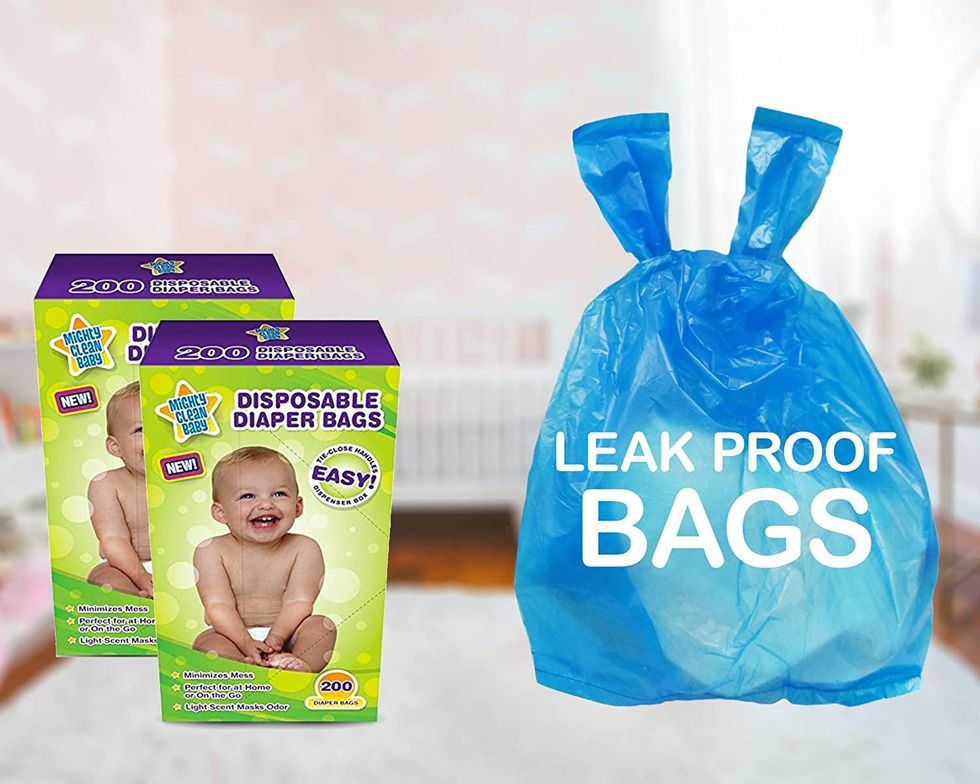
Disposable diaper bags.

Disposable diaper bags from Amazon

2. Diaper Genies are unnecessary and it's easy to forget they exist.

I had such high hopes for my Diaper Genie as a first-time mom. They're so cool, you shove a dirty diaper in there and twist. That's it. It locks in the odor and makes a weird-looking segmented snake of dirty diapers. Alas, when your diaper pail is in one room and you're changing a diaper on a wiggly baby in another, most times the diaper just winds up in the closest trash can. So just buy some small cheap trash cans to put in different rooms and then empty them at the end of the day. There's only so much odor a diaper genie can hold and they only take special expensive trash bags. Save your money. Get some small trash cans and those little smell good bags to toss the smelly diapers.
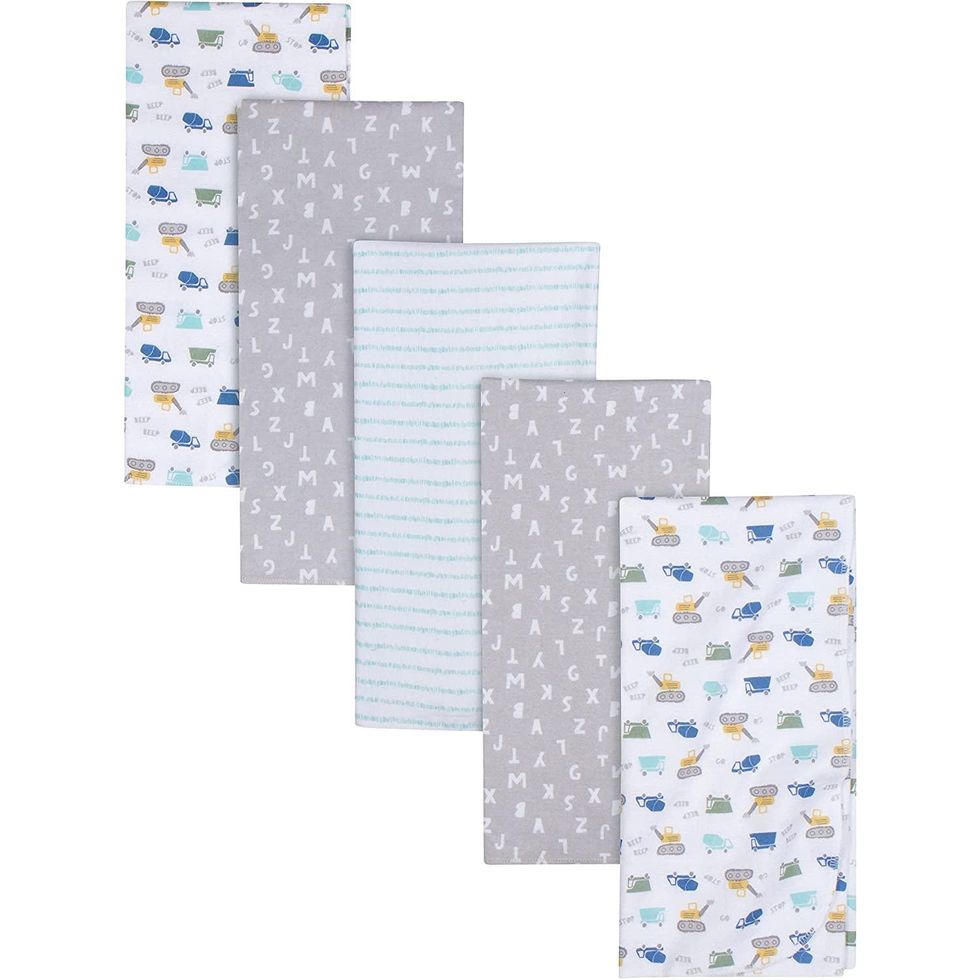
Receiving blankets.

Receiving blankets from Amazon

3. You can buy a swaddler but you don't actually need it.

I know this might be a controversial statement, but honestly those swaddlers are really expensive and babies quickly outgrow them. You can do the perfect swaddle with a receiving blanket for a fraction of the price and just as much energy. You know how babies come all bundled up when the nurse brings them in from the nursery? Yeah, that's a really good swaddle that will give your snuggle bug the same coziness as an expensive swaddler.
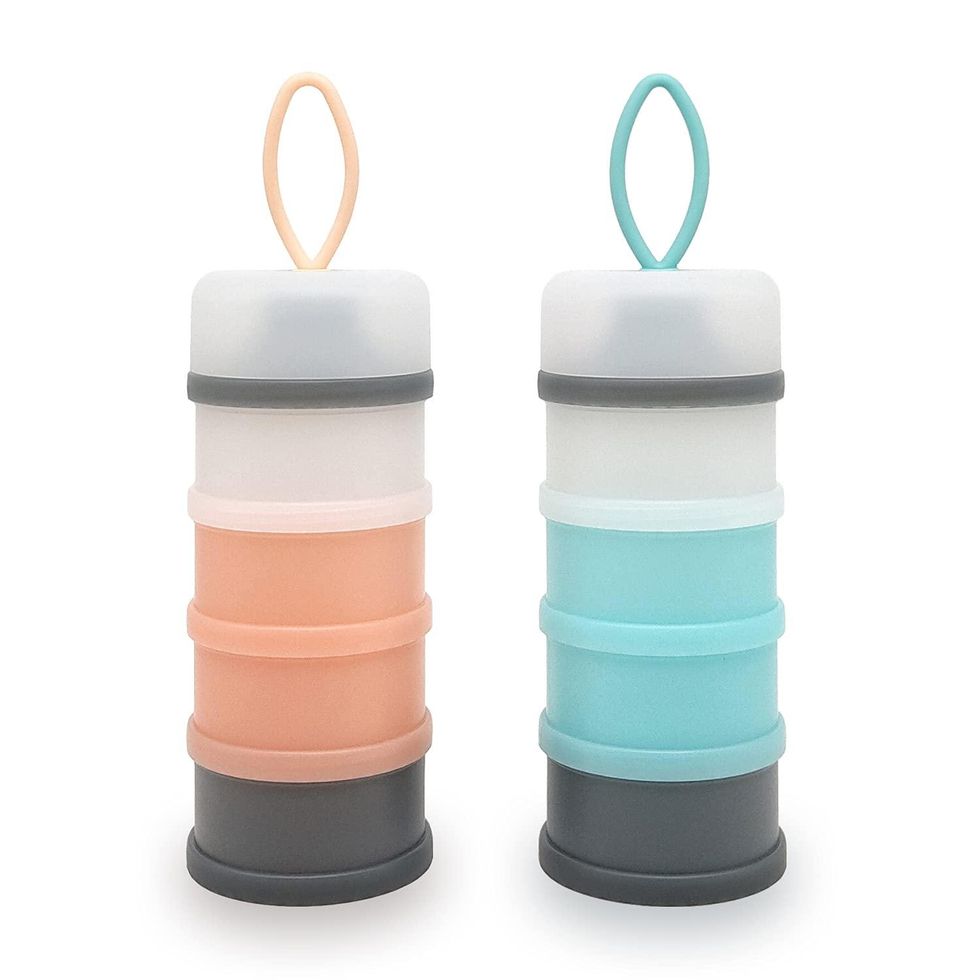
Portable baby formula dispenser.

Portable baby formula dispenser from Amazon

4. You don't have to be fancy and get a Baby Brezza.

Honestly, I had never heard of a Baby Brezza until I had my youngest, so I'm assuming its a newer invention. They're certainly cool and also really expensive and unnecessary. These little doodads are like baby Keurigs but for formula. They hold powdered formula and water, you press a button and it supposedly perfectly mixes up a warm bottle of sustenance. The price tag on these things are about the same as a larger much more needed baby item, like a car seat-stroller combo. There have also been some concerns raised by pediatricians due to some bottles not getting enough formula added.

Take the guesswork out of it and just fill the bottles by hand. You can even put water in the bottles in advance and leave them out at room temperature and use a portable formula container to put premeasured scoops in. I know it's no Baby Brezza, but you'll be $200 richer and know exactly how much formula is going into your baby's bottle.
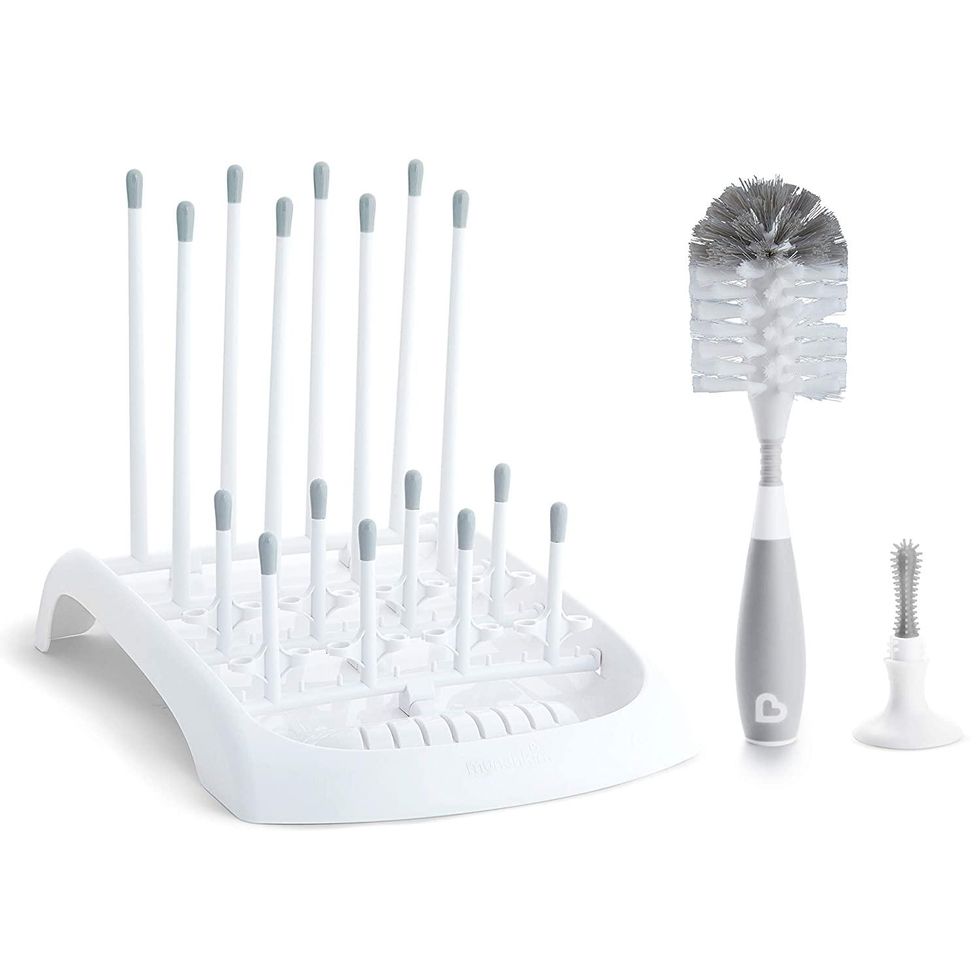
Bottle drying rack.

Bottle drying rack from Amazon

5. Your baby doesn't need fake grass to dry their bottles on.

Don't laugh, a fake grass bottle dryer is something that actually once sat on my kitchen counter. That's about all it did because I dang sure didn't use it for more than the first week. When you're sleep deprived, you want the easiest thing available and oftentimes that's the top rack of the dishwasher or the dish rack that's already on your countertop. The things we get suckered into buying is laughable sometimes. Besides it being esthetically pleasing, you don't actually need it and a regular bottle rack, in fact, works better because there are no removable trees holding the nipples.
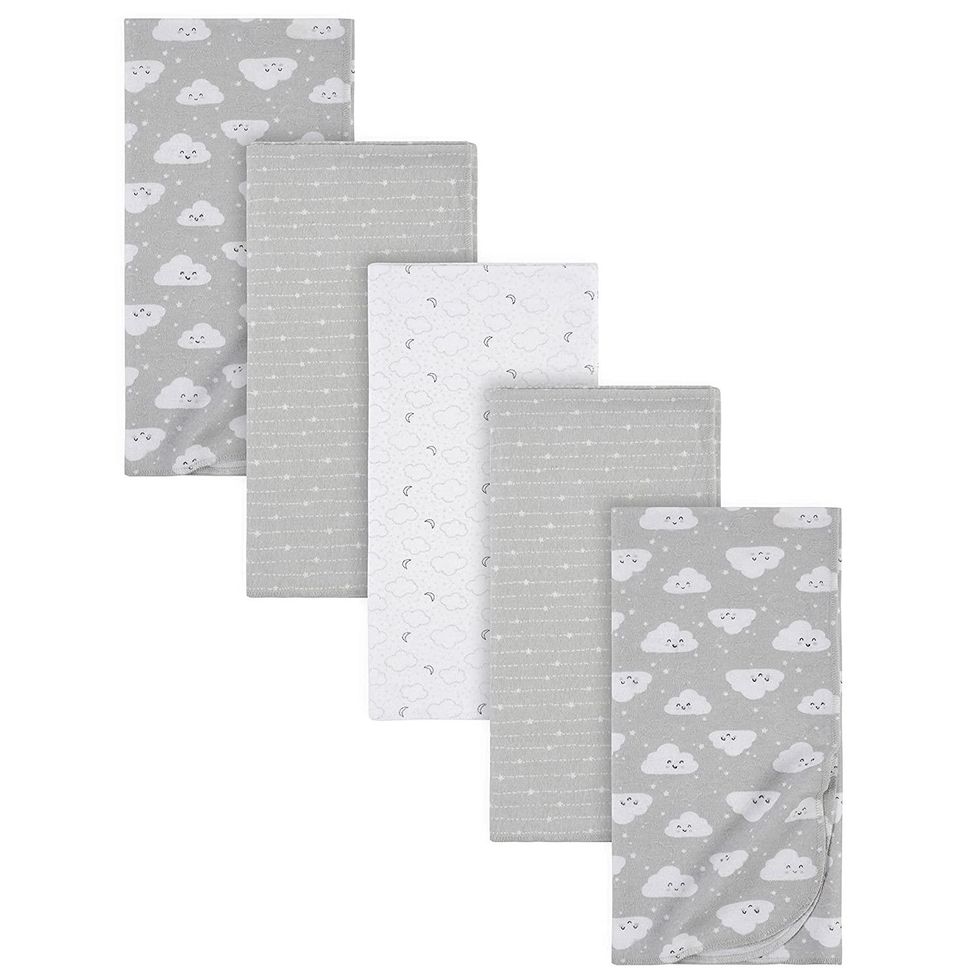
Receiving blankets.

Receiving blankets from Amazon

6. Side eye anyone that says you need embroidered burp cloths.

Don't fall for it. Yes, purpose-made burp cloths can be super cute but they're literally used to catch baby puke. These things are too small to cover the area needed to prevent your back and shoulder from becoming a casualty of a little guy eating too fast. Remember those receiving blankets we talked about earlier? Yeah, they are much more absorbent and cover more of your body to spare you having to change clothes. Those flannel blankets are versatile. You can use them for swaddling, to cover a car seat or stroller, for burp cloths or even a clean area to change the baby on. There's no such thing as too many receiving blankets. I'll make it easy for you, grab a pack here.
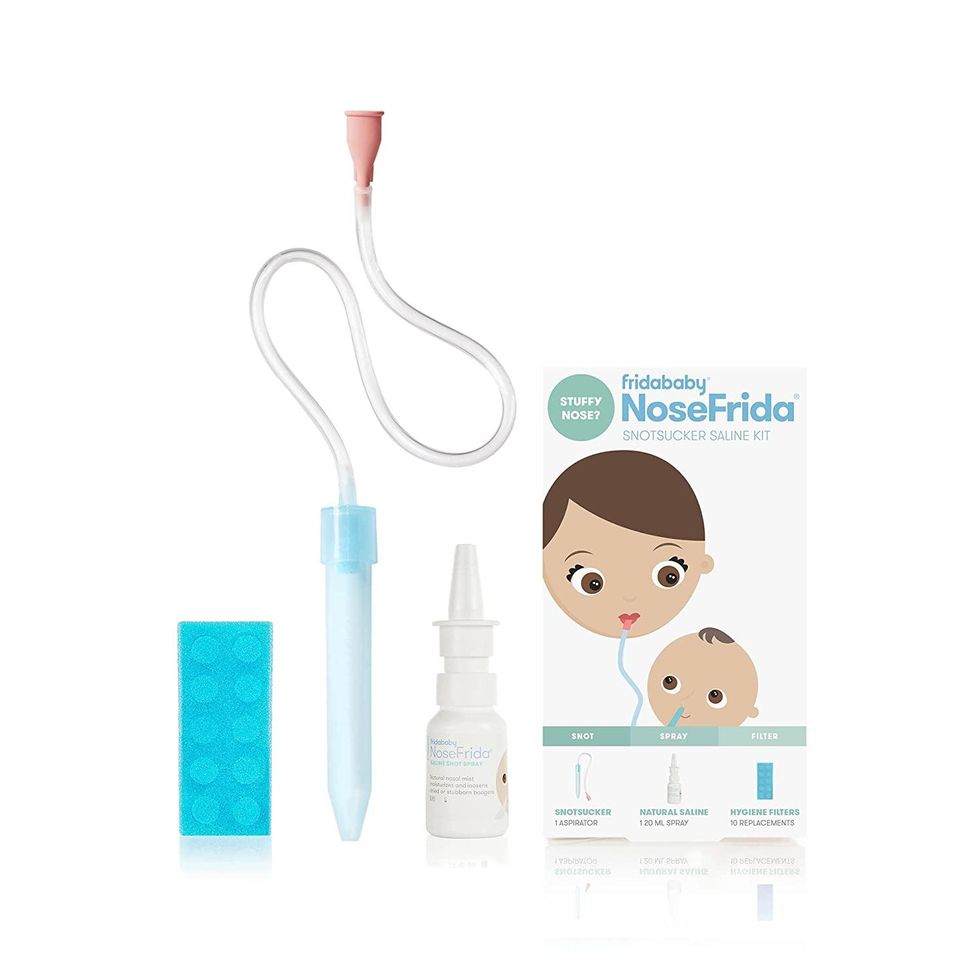
NoseFrida.

NoseFrida from Amazon

7. Skip the bulb syringe and splurge on the NoseFrida.

The hospital will give you a useless bulb syringe that only the nurses know how to work, because I swear no matter how hard you squeeze the bulb you barely get anything out. Bulb syringes even come with many newborn essential sets. I'm sure they work, but they seem to take way too much effort for the little bit of mucus they pull out. Get the NoseFrida—yes, it's a little more expensive but it's worth it, even though it seems gross. I promise the hygiene filter that goes in the tube will spare you from getting baby boogers in your mouth. You can literally use that thing well into the toddler years until your little one learns to blow their nose. Can't speak highly enough of this thing and here's a link to it here.
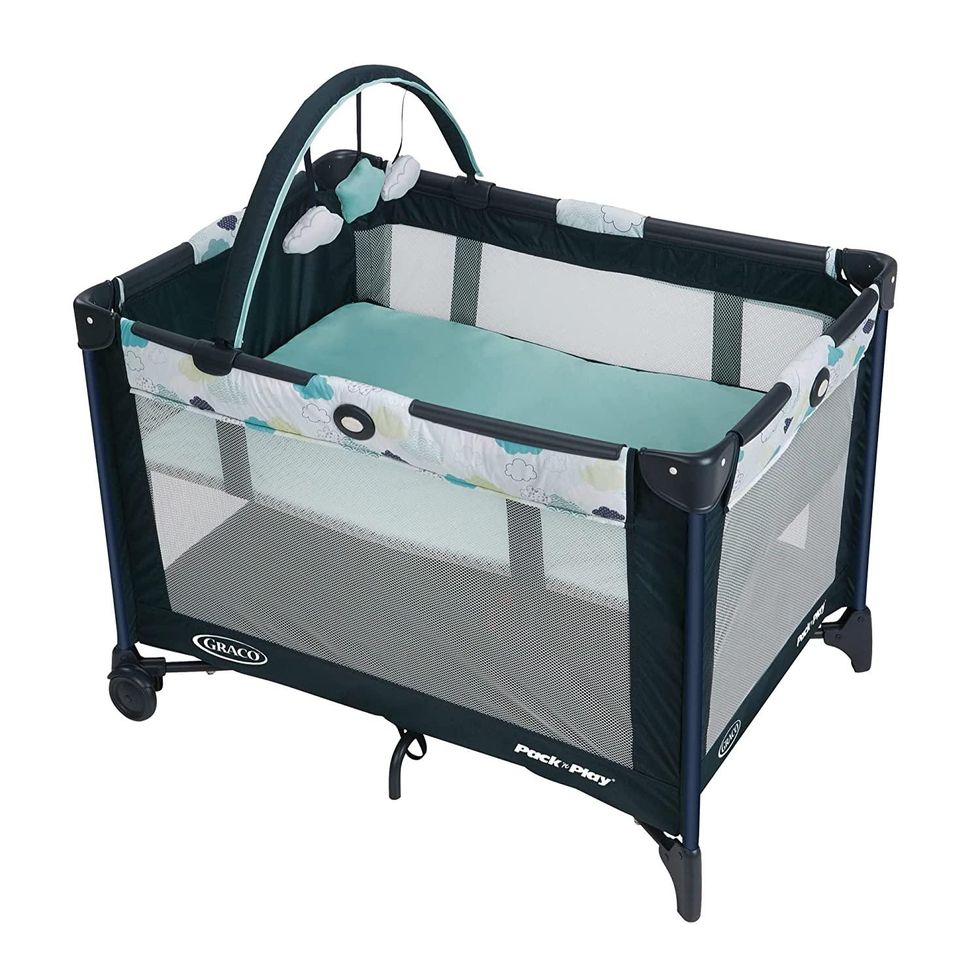
Pack 'n' Play

Basic Pack 'n' Play from Amazon

8. Do you really need a Pack 'n' Play that turns into a rocket ship?

OK, maybe it doesn't turn into a rocket ship but some of those things are so outrageous that you might need to be a rocket scientist to put it together. Pack 'n' Plays are really convenient and a great investment for new parents, especially if you like to travel or have family out of state. You can use it so your baby can sleep in your bedroom until you're ready for the switch to sleeping away from your little one. Just try not to get distracted by all the bells and whistles and stick to the basics. A Pack 'n' Play with a bassinet is really all you need. It's much cheaper and you'll use the bassinet piece much longer than the ones that come with other parts.
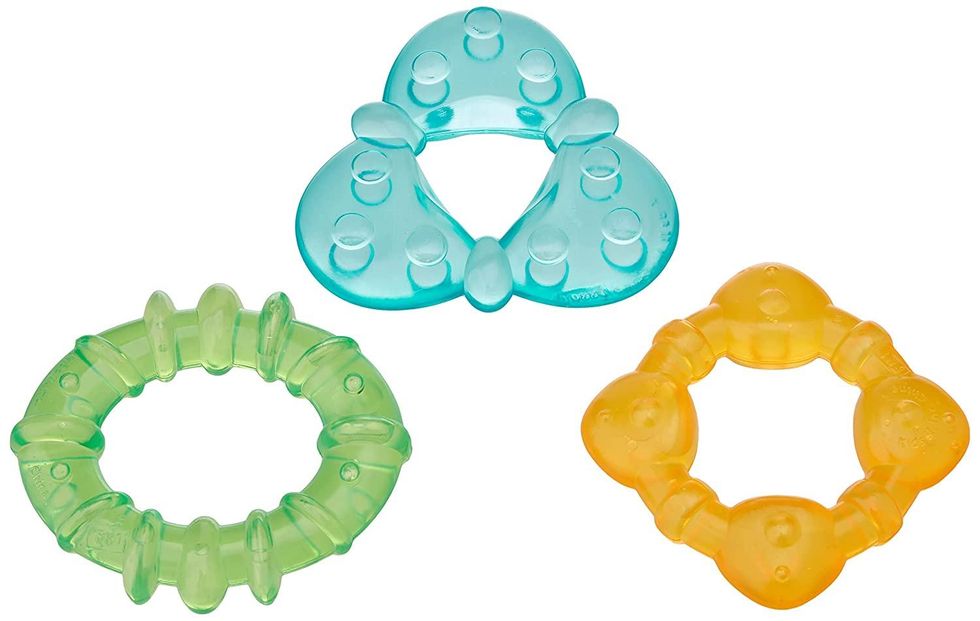
Teething rings.

Teething rings from Amazon

9. Expensive teething jewelry is overrated.

Fancy teething jewelry is cute and has become quite popular lately, but babies don't really need it. They are perfectly happy with the normal water-filled teething rings or rubber ones that can be thrown in any diaper bag. They're tried and true, plus they're designed specifically for teething. While the jewelry is marketed for teething babies, doctors have warned that they're not safe enough to use for that purpose. Besides, having a baby is expensive enough, no need to add to it when you can pick up teething rings at just about any store for a reasonable price.

The idea that everything for babies has to be the most expensive top-of-the-line things is just marketing. When it comes down to it, babies need very basic things: a safe place to sleep, food, diapers and lots of love. Everything else is extra and you can be as extra as you'd like but it should never feel like it's a necessity. Your baby will love you whether you have the Baby Brezza or mix their bottles by hand, promise.


This article originally appeared on 9.16.22

guitar, learning a skill, neuroscience, music, exposure, passive exposure, gardening

A woman learning how to play guitar.

Learning a new skill, such as playing an instrument, gardening, or picking up a new language, takes a lot of time and practice, whether that means scale training, learning about native plants, or using flashcards to memorize new words. To improve through practice, you have to perform the task repeatedly and receive feedback so you know whether you’re doing it correctly. Is my pitch correct? Did my geraniums bloom? Is my pronunciation understandable?

However, a new study by researchers at the Institute of Neuroscience at the University of Oregon shows that you can speed up these processes by adding a third element to practice and feedback: passive exposure. The good news is that passive exposure requires minimal effort and is enjoyable.


"Active learning of a... task requires both expending effort to perform the task and having access to feedback about task performance," the study authors explained. "Passive exposure to sensory stimuli, on the other hand, is relatively effortless and does not require feedback about performance."


woman reading, woman book, young woman, studying, new skills A woman reading a book.via Canva/Photos

How to pick up new skills faster?

So, if you’re learning to play the blues on guitar, listen to plenty of Howlin’ Wolf or Robert Johnson throughout the day. If you’re learning to cook, keep the Food Network on TV in the background to absorb some great culinary advice. Learning to garden? Take the time to notice the flora and fauna in your neighborhood or make frequent trips to your local botanical garden.

If you’re learning a new language, watch plenty of TV and films in the language you are learning. The scientists add that auditory learning is especially helpful, so listen to plenty of audiobooks or podcasts on the subject you’re learning about.

But, of course, you also have to be actively learning the skill as well by practicing your guitar for the recommended hours each day or by taking a class in languages. Passive exposure won't do the work for you, but it's a fantastic way to pick up things more quickly. Further, passive exposure keeps the new skill you're learning top-of-mind, so you're probably more likely to actively practice it.

What is passive exposure?

Researchers discovered the tremendous benefits of passive exposure after studying a group of mice. They trained them to find water by using various sounds to give positive or negative feedback, like playing a game of “hot or cold.” Some mice were passively exposed to these sounds when they weren't looking for water. Those who received this additional passive exposure and those who received active training learned to find the water reward more quickly.

gardening, woman gardening, gardening shears, leaning gardening, weeds A woman tending to her garden.via Canva/Photos


“Our results suggest that, in mice and in humans, a given performance threshold can be achieved with relatively less effort by combining low-effort passive exposure with active training,” James Murray, a neuroscientist who led the study, told University of Oregon News. “This insight could be helpful for humans learning an instrument or a second language, though more work will be needed to better understand how this applies to more complex tasks and how to optimize training schedules that combine passive exposure with active training.”

The one drawback to this study was that it was conducted on mice, not humans. However, recent studies on humans have found similar results, such as in sports. If you visualize yourself excelling at the sport or mentally rehearse a practice routine, it can positively affect your actual performance. Showing, once again, that when it comes to picking up a new skill, exposure is key.

The great news about the story is that, in addition to giving people a new way to approach learning, it’s an excuse for us to enjoy the things we love even more. If you enjoy listening to blues music so much that you decided to learn for yourself, it’s another reason to make it an even more significant part of your life.

- YouTube www.youtube.com

This article originally appeared last year.

Shitsuke, Japanese parenting, parenting, Japan, discipline. learning
Photo credit: Canva

Parents watch as their child uses a toothbrush.

When it comes to parenting, sometimes the simplest reframing of how you discipline can make all the difference. In a YouTube video, pediatric occupational therapist Emma Hubbard shares a tip she describes as the "Japanese rule that changes everything."

It's a method called "Shitsuke," which she explains literally translates to "discipline." She claims it's the "one simple rule that Japanese parents follow that helps create calm, respectful, and obedient children."


Hubbard makes it clear from the jump that although the word translates to "discipline," it doesn't carry the same meaning it does in Western culture. Instead, it's about getting ahead of behavioral issues rather than responding to them.

"It's really easy to fall into a cycle that looks something like this," she says. "We wait for our kids to act out, then we punish, lecture, or bargain with them. Shitsuke flips this completely."

- YouTube www.youtube.com

She goes on to explain that Shitsuke strongly urges parents to nurture their children by modeling good behavior and giving clear, consistent instruction.

"It's based on the belief that children develop good manners and courtesy through instruction and practice, not through punishment or hoping they'll just figure it out," she says. "Instead of constantly putting out fires, Japanese parents prevent them by actively teaching the exact behaviors they want to see."

Hubbard shares three main principles of this method:

1. Model the behavior you want to see

It's actually quite simple. Hubbard explains, "Japanese parents understand that kids are observational learners. If you want a calm child, you must be calm. If you want a respectful child, you must be respectful, especially when you're frustrated. And if you don't want your child to scream when they're angry, then you should also try not to scream when you're angry."

2. Be consistent with clear rules

Studies show that children are less anxious when given clear instructions and predictable routines.

"The truth is, rules don't make children unhappy," Hubbard says. "In fact, having no clear rules is what makes them anxious and stressed. Think about it like this. Imagine if you went to work and your boss never told you what time to arrive, what your job was, or even when team meetings started. You'd be anxious, stressed, and confused all day. And that's exactly how your child feels without clear rules."

In an article for Psychology Today, Jenalee Doom, PhD, points out that "both children's and adults' brains love predictability. We can still get pleasure from unpredictable things like surprises, but in general, we feel safe and secure when we have predictable routines, and we find unpredictability to be highly stressful." She goes on to offer suggestions for helping children feel safe, such as keeping regular bedtimes and having meals together.

3. Learn to reframe "naughty" behavior into a learning experience

This is the game changer for many parents, and what Hubbard calls the most important part of the concept.

"This is the most important part of Shitsuke that completely changes everything," she says. "Instead of just saying 'Don't do that' or 'Stop being naughty,' Shitsuke teaches parents to ask one crucial question: 'What skill does my child need to learn here?'"

The clear genius behind this principle is that it takes mistakes (which are going to happen) and turns them into lessons.

"This shift in thinking changes everything because instead of punishing the behavior you don't want, you start actively teaching the skill that they're missing," she adds. "And that's when you see real, lasting obedience because your child actually knows how to behave well."

children, discipline, shitsuke, Japanese method of learning, lessons A young girl has a tantrum. Photo credit: Vinh Thang on Unsplash

Hubbard's YouTube video has nearly one million views and over one thousand comments, many of which add insightful thoughts to the conversation.

One commenter stressed the importance of being respectful:

"Something I will add: growing up in Japan, polite behavior was acknowledged and positively reinforced by nearly every adult I interacted with. Not just my teachers, but my pediatrician, my neighbors, the old lady who ran the corner tobacco store, my barber, etc. Saying 'good morning!' or 'thank you!' felt fantastic, because here you are a tiny child being respectfully greeted by big adults. As an adult, I now acknowledge kind American children I encounter with comments like 'thank you, that was very considerate' to pass it on, and I see them smile. I do not have children of my own, but I encourage everyone to notice the children who are trying their best and to thank them for it."

Another commenter backs up the claim that children often thrive when they have set rules:

"Rules don't make children unhappy. 100%. As a teacher, they're the ones who expect me to follow the rules and enforce the consequences all the time. Predictability makes kids happy."

This commenter discusses the value of the words parents use:

"Framing of messages are so important. For example, instead of saying, 'Don't forget…,' rather say, 'please remember.' Or, 'Don't pull the kitty's tail,' instead say, 'Please pet it gently.' Reframe the message from communicating with negatively charged words to positively charged words by telling them what you want them to do, not what you don't want them to do."

discussion, debate, disagreement, conversation, communication, curiosity

How do you get someone to open their minds to another perspective?

The diversity of humanity means people won't always see eye to eye, and psychology tells us that people tend to double down when their views are challenged. When people are so deeply entrenched in their own perspectives they're refusing to entertain other viewpoints, what do we do?

Frequently, what we do falls into the "understandable but ineffective" category. When we disagree with someone because their opinion is based on falsehoods or inaccurate information, we may try to pound them with facts and statistics. Unfortunately, research shows that generally doesn't work. We might try to find different ways to explain our stance using logic and reasoning, but that rarely makes a dent, either. So often, we're left wondering how on Earth this person arrived at their perspective, especially if they reject facts and logic.


According to Stanford researchers, turning that wondering into an actual question might be the key.

discussion, debate, disagreement, conversation, communication, curiosity Questions are more effective than facts when it comes to disagreements.Photo credit: Canva

The power of "Tell me more."

Two studies examined how expressing interest in someone's view and asking them to elaborate on why they hold their opinion affected both parties engaged in a debate. They found that asking questions like, "Could you tell me more about that?” and ‘‘Why do you think that?" made the other person "view their debate counterpart more positively, behave more open-mindedly, and form more favorable inferences about other proponents of the counterpart’s views." Additionally, adding an expression of interest, such as, ‘‘But I was interested in what you’re saying. Can you tell me more about how come you think that?” not only made the counterpart more open to other viewpoints, but the questioner themselves developed more favorable attitudes toward the opposing viewpoint.

In other words, genuinely striving to understand another person's perspective by being curious and asking them to say more about how they came to their conclusions may help bridge seemingly insurmountable divides.

discussion, debate, disagreement, conversation, communication, curiosity Asking people to elaborate leads to more open-mindedness.Photo credit: Canva

Stanford isn't alone in these findings. A series of studies at the University of Haifa also found that high-quality listening helped lower people's prejudices, and that when people perceive a listener to be responsive, they tend to be more open-minded. Additionally, the perception that their attitude is the correct and valid one is reduced.

Why curiosity works

In some sense, these results may seem counterintuitive. We may assume that asking someone to elaborate on what they believe and why they believe it might just further entrench them in their views and opinions. But that's not what the research shows.

Dartmouth cognitive scientist Thalia Wheatley studies the role of curiosity in relationships and has found that being curious can help create consensus where there wasn't any before.

“[Curiosity] really creates common ground across brains, just by virtue of having the intellectual humility to say, ‘OK, I thought it was like this, but what do you think?’ And being willing to change your mind,” she said, according to the John Templeton Foundation.

discussion, debate, disagreement, conversation, communication, curiosity Curiosity can help people get closer to consensus. Photo credit: Canva

Of course, there may be certain opinions and perspectives that are too abhorrent or inhumane to entertain with curious questions, so it's not like "tell me more" is always the solution to an intractable divide. But even those with whom we vehemently disagree or those whose views we find offensive may respond to curiosity with more open-mindedness and willingness to change their view than if we simply argue with them. And isn't that the whole point?

Sometimes what's effective doesn't always line up with our emotional reactions to a disagreement, so engaging with curiosity might take some practice. It may also require us to rethink what formats for public discourse are the most impactful. Is ranting in a TikTok video or a tweet conducive to this shift in how we engage others? Is one-on-one or small group, in-person discussion a better forum for curious engagement? These are important things to consider if our goal is not to merely state our case and make our voice heard but to actually help open people's minds and remain open-minded in our own lives as well.

comedian, comedy, jimmy carr, standup, philosophy, parenting, dads, fatherhood, family, kids

Comedian Jimmy Carr put the jokes aside and delivered a brilliant nugget of parenting advice mid-show.

Jimmy Carr is best known as a comedian, but he also has dyslexia and had extreme trouble reading and writing into his early teen years. Years later, he'd go on to graduate from Gonville and Caius College, Cambridge with degrees in social and political science and first class honors.

It's safe to say that, jokes aside, he's a pretty smart guy. And in Carr's standup routines, he's not afraid to set aside the gags for a few minutes and get serious about topics that he feels deserve proper attention.


At a recent show, Carr was performing crowd work—asking questions and bantering with the audience—when an audience member called out a poignant question.

"What's your advice for parents with toddlers?" a woman yelled out.

"Well, I mean, practical advice? You can half-ass it. Get an iPad, a Netflix subscription, and you're off to the...races. They'll be very... happy," he said. The crowd roared with laughter. But Carr wasn't done. "You want serious advice?" he asked the woman.

Seamlessly, he launched into his philosophy on parenting.

"Hard choices now, easy life later," he said to a round of applause from the crowd. "I bet you fucking love your kids, but you've also got to love who they could be. So it's kindness, isn't it? You want to be really kind to your children, but not just kind in the moment. In the moment, what do kids want? They want to watch TV, not read books. They want to eat junk food, not vegetables. If you give in to that, if you're kind in the moment, you've got fat, stupid kids. That's no good. You've got to be a little bit mean in the moment."

He then joked that this clip would become his own "famous last words," so to speak when his own kids get older and reveal what a terrible father he turned out to be.

- YouTube www.youtube.com

Carr taps into a common debate in his performance here: When does gentle parenting become so gentle that it does kids a disservice?

Millennial and even Gen Z parents are "breaking generational cycles of harshness and emotional distance," writes Motherly. Baby Boomers were notoriously distant, often as a result of their own upbringing, and some experts say Millennials have perhaps overcorrected.

Gentle parenting preaches connection over correction and validating a child's feelings frequently. Research generally suggests this is a good approach, but it's a high-wire act that requires careful calibration. Otherwise, as Carr points out, you wind up letting kids do whatever they want in an effort to be kind and avoid hurting their feelings—an approach called permissive parenting. That ultimately doesn't serve them in the long-run.

He doesn't shy away from the fact that being "meaner" is hard, and far easier said than done. It's a good thing to care about your kid's happiness, which is why Carr's reframe of the approach is so brilliant. You're being kind to the person your child will one day be, by being a little bit "meaner" right now.

comedian, comedy, jimmy carr, standup, philosophy, parenting, dads, fatherhood, family, kids Jimmy Carr became a dad in 2019.Albin Olsson/Wikimedia Commons

Carr is often all jokes, but he's been known to get serious when it comes to parenting. Reports say that Carr has one son, Rockefeller, who was born in 2019.

At another recent show, a woman called out wondering how she should deal with the kids who were bullying her 11-year-old son. After several minutes of non-stop, chaotic, ridiculously silly jokes, Carr turned on a dime.

"Speaking as a parent... you cannot helicopter parent. You cannot pave the jungle. You can just teach him to get through it. It's a very tough thing. On the upside, your kid is being bullied. That's terrible, I imagine heartbreaking for you...But at least he's not the bully. Tell him from me, you can't have an easy life and a great character. You can't have both. It'll make him stronger and better and more compassionate in the future," Carr said.

- YouTube www.youtube.com

Carr's parenting advice videos have gone mega viral across social media and commenters can't believe how skillfully he can transition from jokes to solid gold words of wisdom.

"Jimmy can turn things on a sixpence from humour to compassion. He is a remarkable person."

"Just a brilliant intelligent empathetic chap."

"I do like how Jimmy can flip from the most savage come backs possible into full on philosopher in the most natural way."

"I love how this applies to essentially everything in life. Hard choices now. Easy life later. So simple, so true"

It shouldn't be a surprise that a comedian like Carr has such thoughtful takes on everything from mortality to parenting to life itself and happiness. Comedy is ultimately rooted in fundamental truths about the world. What's special about Carr is how he can turn off the funny filter and deliver that truth in its purest, most potent form when needed.

Parenting

Instead of a 'Sweet 16,' mom hosts 'Coming of Age Brunch' with adult mentors for her teen daughter

She calls it a "birthday tradition that will change your teenager's life."

sweet sixteen, birthday, birthday brunch, coming of age, young adulthood, parenting, parenting tip, parenting teens

A group of women raising glasses (left) A happy teen girl (right)

Turning sixteen is considered a milestone. It symbolizes the beginning of the transition from childhood to young adulthood, and the start of new privileges, responsibilities, and identities.

Many families celebrate this new chapter with some kind of “Sweet 16” ritual. Depending on one’s culture, it might go by a different name, such as a bar/bat mitzvah (when a boy/girl turns 13 in Jewish culture) or a quinceañera,, (when a girl turns 15 in Latin American culture). Each celebration involves slightly different traditions, but generally have the same intention of commemorating a child’s newfound maturity.


A mom who posts parenting tips under the handle of @simplyonpurpose recently shared her unique take on a “Sweet 16,” which she hails as “a birthday tradition that will change your teenager’s life.”

She calls it the “Coming of Age Brunch.”

Rather than having a birthday party with friends, this mom has her child choose a select group of adult mentors who have played a “special part” in the child’s life. These guests are asked to bring letters conveying, in their own words, “what it means to be a strong woman” and sharing special praise for the teen.

The reason is simple: “Children need a village during their adolescent years more than at any other time in their lives,” @simlyonpurpose wrote in her caption. This was a tradition that began with her eldest daughter, who is now 22. Doing it for now the third time, @simplyonpurpose feels confident that “every teenager needs this- a room full of adults that you admire praising you.”

It sounds lovely. Imagine if every girl had this kind of support as they entered an undeniably turbulent stage of life. Sure, maybe the hormonal fluctuations, body image issues, changing friend groups, relationship dramas, and social media challenges would still be there, but perhaps they wouldn’t be quite so all-consuming.

sweet sixteen, birthday, birthday brunch, coming of age, young adulthood, parenting, parenting tip, parenting teens A teen girl getting a hug.Photo credit: Canva

And to be clear, the OP clarified that this was not strictly a girls-only ritual, though she would tweak it slightly for a boy, featuring a “fire pit with roasted hotdogs and marshmallows” and male mentors to share words of wisdom and love.

This is great to hear as well, considering there have been a lot of conversations centered around how a lack of healthy mentors has led many young men to getting “red pilled,” or influenced by misogynistic and radicalized online forums that target lonely or vulnerable boys by offering a sense of belonging.

sweet sixteen, birthday, birthday brunch, coming of age, young adulthood, parenting, parenting tip, parenting teens A teen boy wearing headphones while looking at his phone. Photo credit: Canva

By and large, other parents were totally on board with a “Coming of Age Brunch.” Quite a few were excited to try it out for their own teens.

“This really resonates. 💗 I want to do something similar for my daughter as she turns 17," one person wrote.

"Teens don’t need more preaching. Instead they need trusted adults who model strong values, healthy boundaries, and long-term thinking. That kind of guidance sticks,” added another.

Another added, “I cannot even think of anything that could possibly be a better gift - you just cemented her village. How incredible!”

The proverb “It takes a village” is an extremely popular saying found in many cultures across the world, but it's lately accompanied with the lament that villages are not so easy to come by in the modern world. Maybe by creating new traditions like this, we are able to reclaim that sense of much-needed community. At the very least, young folks don’t have to feel so alone, and that in itself is a great thing.