upworthy
Add Upworthy to your Google News feed.
Google News Button
Pop Culture

25 'bizarre but effective' life hacks that have actually made people's lives smoother

Creating an email for your kid when they're born to create time capsule of memories is pretty genius, gotta admit.

productivity, life hacks, cleaning hacks, productivity hacks, chatgpt for productivity, health hacks

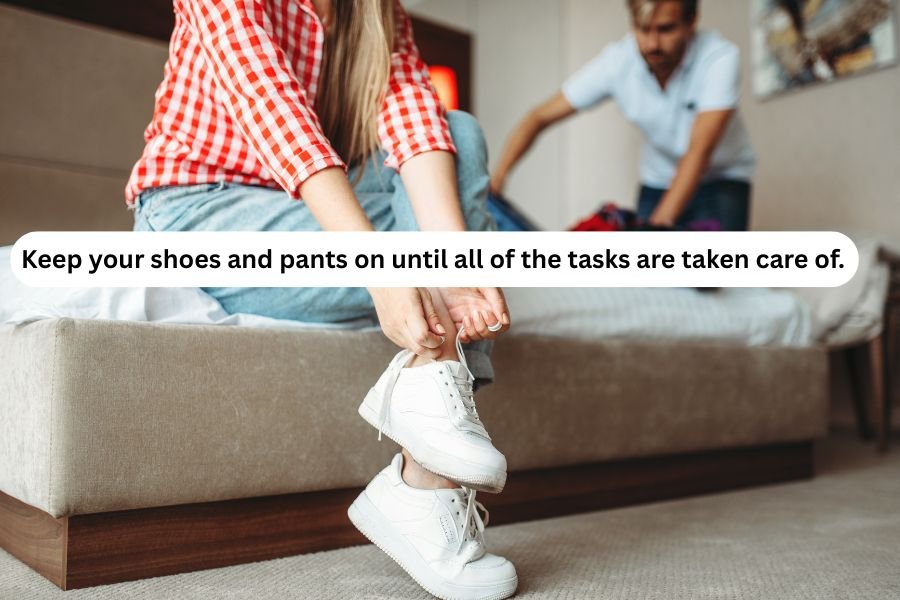
A person tying their shoes on inside.

Streamlining our days is simply a necessity as life brings us more and more to-dos with each passing moment. But luckily, necessity is the mother of invention, and people have found clever ways to make mundane tasks more efficient, more enjoyable, and more likely for us to fit into a routine.

Odds are you’ve come across a list or two sharing some of these strategies (we’ve certainly written a few), and might be thinking you’ve seen it all. That certainly seemed to be the thought going through someone’s head when they asked folks online, “What's your weirdest but most effective life hack in 2025?

This person clarified that they didn’t want “obvious” answers, like automating bills, and used one friend’s hack of bulk-recording “angry customer rants” to play when they were put on hold too long as an example.

“Just looking for fun, clever hacks, especially for the kind of tasks you always put off, like chasing refunds or fighting with a warranty department,” the OP added. Over a thousand people responded with their kooky ways of making life more livable.

Laundry seemed to be one of the biggest dreaded tasks that people tackled. But once they found a system that worked, there was no going back.
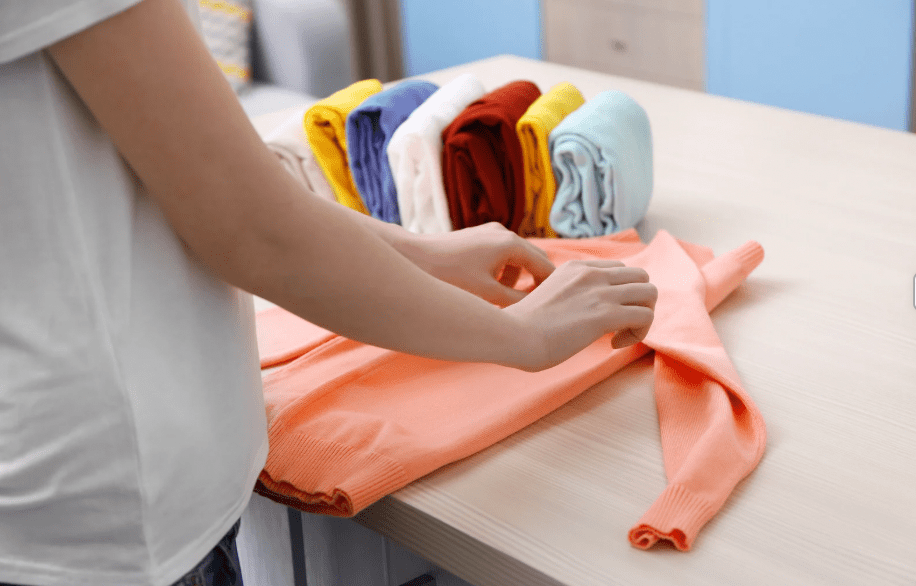
productivity, life hacks, cleaning hacks, productivity hacks, chatgpt for productivity, health hacks A person folding clothes.Photo credit: Canva

“If you hate putting away laundry as I do, this is the absolute best way to do it. Fold and put away like two shirts at a time then gtfo.”

“Once I recognized that you are never done with laundry it was a game changer… I identified anything that doesn't need to be folded (socks, underwear, athletic clothes, etc) and gave them bins that I can toss in laundry as I get to it. Towels were the same way. Who am I folding towels for? This ain't a hotel…I have a process flow too. When the hamper is full, do laundry. Clean and dry laundry goes into a big hamper I named the "laundry inbox". If the inbox is full...I sort. If I touch the clothes in my hamper I fold them (or at least a few)…No more rifling through clothes to find something to wear and leaving them in the bin. I probably spend a few minutes on laundry every day and this works so well. It's never done. I just keep moving things forward.”

“As soon as washing machine finishes, clothes go straight onto hangers, then hangers go straight onto the line. I even hang my underwear around the ‘neck’ of the hanger. When clothes are dry, I just grab the whole lot of hangers (with the clothes on them) together on the line, and they go straight into my wardrobe.”

“That laundry folding technique…the one where you fold items neatly and symmetrically, and then I fold the T-shirts in half again so that they slot into my drawers - you almost ‘post’ them into their slot in the drawer, and you can see your entire wardrobe at once from above.I can see all my clothes, and simply pick out the one I want without disturbing any of the others…No fumbling, unfolding them, etc. The whole process of getting dressed takes half the time it used to, and you’re never hunting for anything, turning anything inside out, getting the wrong T-shirt because you didn’t see the pattern, etc. Of course, folding the clothes takes a bit longer, so I do that in one go whilst watching TV. Time spent up front, time saved later on.”

Cleaning was also a big one. Several folks had tips for keeping things tidy despite being busy, organizationally challenged, unmotivated, neurodivergent, etc.
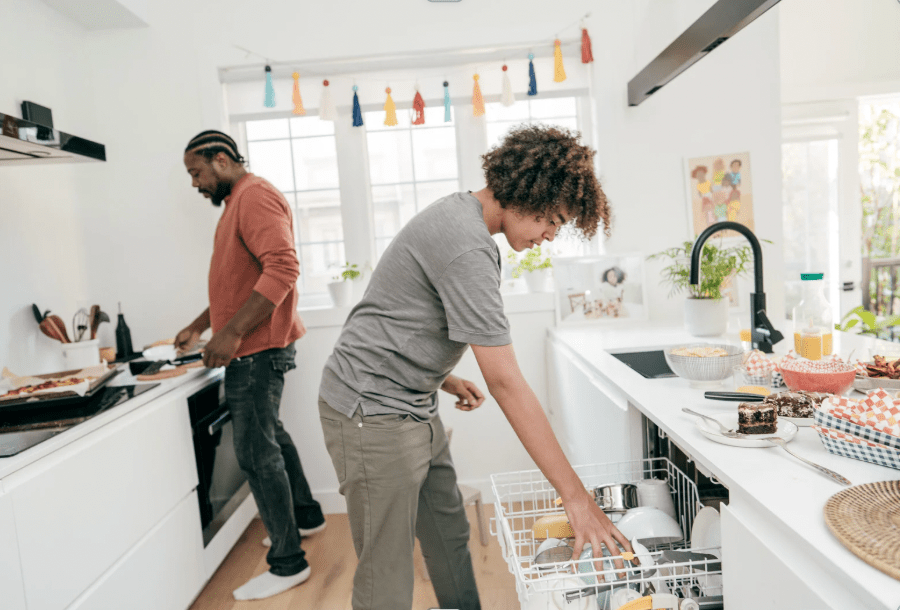
productivity, life hacks, cleaning hacks, productivity hacks, chatgpt for productivity, health hacks Two people doing chores. Photo credit: Canva

“One tiny thing I like to do is that every time I leave a room, I make an attempt to leave it tidier than when I entered it. Just tidy one thing as I leave.”

“Laundry and clean the house on Thursday night so I don’t have to do shit on the weekend.”

“I work in a school, and my house gets pretty gross during the school year because my husband and I get too busy/burnt out to clean. So I invite people for a dinner party the second weekend after school ends, so I'm forced to clean up right away and we start the summer with a clean house.”

“I sweep my floor daily before bed…That way the amount of dust is bearable every day instead of clumps of cat hair from the whole week. “

“I tidy/clean every day for 15 minutes. I set a timer and stop when it goes off. This has all but eliminated the need for hour-long cleaning sessions with bigger intervals.”

Perhaps unsurprisingly, many people found success by sourcing some of their time management to AI. We don't need to debate the environmental or ethical implications of those (that’s another conversation), but it is worth noting how a major obstacle keeping so many of us from streamlining in the first place is mental exhaustion, plain and simple.

productivity, life hacks, cleaning hacks, productivity hacks, chatgpt for productivity, health hacks A person using AI to streamline their workflow. Photo credit: Canva

“I struggle with decision making fatigue…I've trained my Chatgpt to be my productivity coach. So every time I struggle these days - I just go to it and type in short hand what I'm supposed to do and what I'm feeling. And just blindly follow it's advice. Like..’heyy as my productivity coach, I've been procrastinating planning this upcoming meeting. I feel like I don't have all the pieces and keep pushing it away. I have 25 mins now, help me fix it.’ Works like a charm.”

But it’s not just this kind of tech that people have used to streamline their life.

productivity, life hacks, cleaning hacks, productivity hacks, chatgpt for productivity, health hacks A person doing all their emails at once. Photo credit: Canva

“I keep a burner email address just for warranties, returns, and shady sign ups, and I forward all receipts there manually right after a purchase.”

“I struggle with waking up, especially when an alarm is involved. Often because I have a hard time falling asleep in the first place. But I noticed on a vacation where the bedroom had skylights that couldn’t be covered that I woke up well with natural sunlight…So we installed automatic blinds in our bedroom, where it opens up a little bit at sunrise, and halfway at 8am, etc. I wake up SO much better now, which helps with the rest of my day!”

“When your kid is born…start an email address just for them. Whenever you have a thought, take a picture or video, or want to save a memory send it to that email. Over the years you will have a perfect little journal of your life with them that is safe from fires or getting lost. And when they turn 18 you can surprise them with it and give them the password as a present and they can read / see all the times you were thinking of them over the years :)”

And never underestimate the power of a good list.
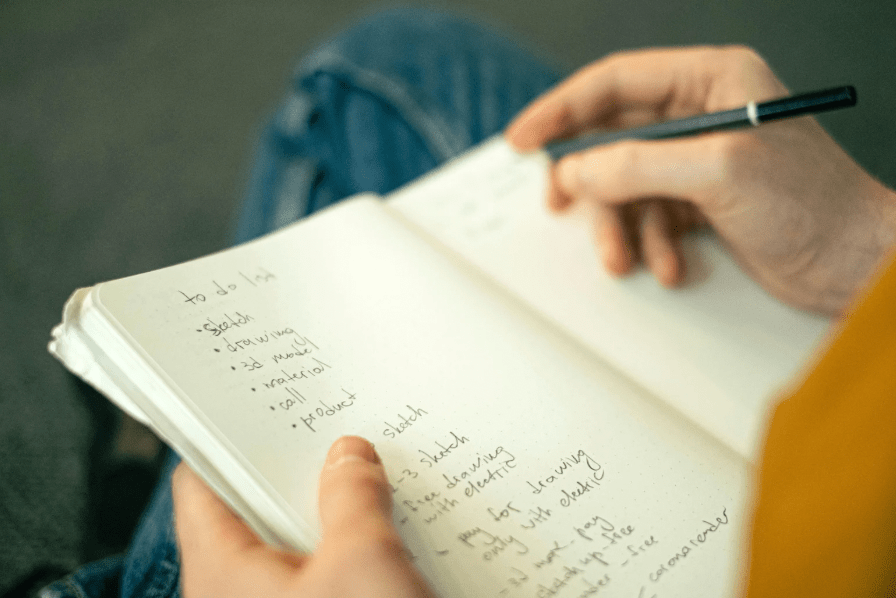
productivity, life hacks, cleaning hacks, productivity hacks, chatgpt for productivity, health hacks A person writing a to-do listPhoto credit: Canva

“I wrote a list of meals we actually all like and realistically cook all the time anyways. We pick out a meal per day on Fridays, make our shopping list and are set for a whole week without thinking once ‘whats for dinner.’”

“I make my to do list, sit down to do a leisure activity (read, watch tv, play a game), and set a 15 minute timer. When the timer goes off, I pick a task to complete from my list. When it’s done, I set a new timer, and chill for another 15 minutes. Works every time!”

“To do list for every. Single. Thing. Even the smallest, dumb things like ‘google that:...’ I don't have to store it in my brain… SO satisfying.

People also swore by doing away with daily routine tasks and consolidating them to one designated, optimal time.
productivity, life hacks, cleaning hacks, productivity hacks, chatgpt for productivity, health hacks A Now & Later list. Photo credit: Canva

“Instead of answering messages, email, answering phone as things come in… I do it in small time blocks 3 times a day. morning, afternoon, evening. 99.9% of things aren't urgent and can wait.”

“Identify weekly tasks that can be changed to monthly. Identify monthly tasks that can be changed to every two months.”

“I invoice monthly instead of at the end of each project…I only have 1 day each month I need to check for outstanding payments rather than every day or week. You do have to get better at buffer and cashflow though.”

Finally, we saved the best, most unique ones for last:
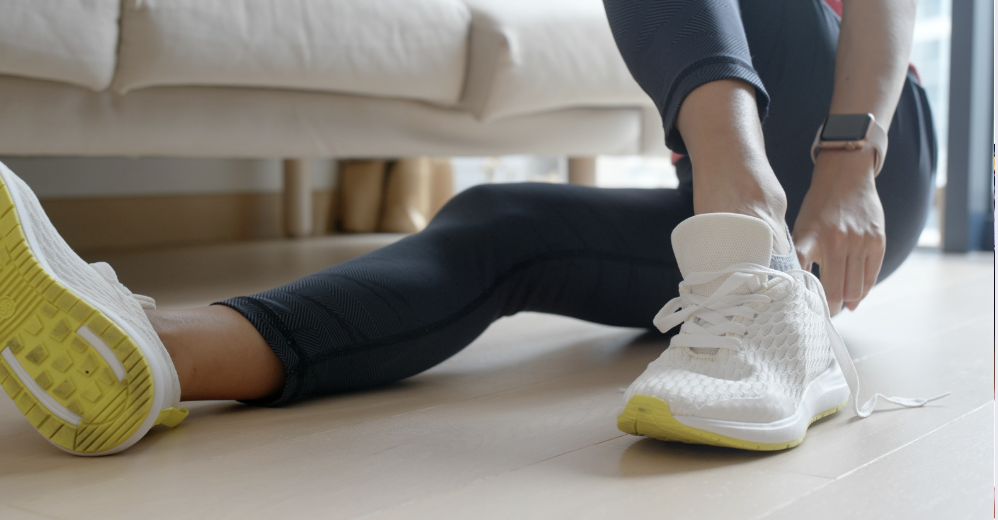
productivity, life hacks, cleaning hacks, productivity hacks, chatgpt for productivity, health hacks A person tying their shoes inside. Photo credit: Canva

“My biggest hack is making commitment bets with friends when I’m in a high energy state…If I have a bet I never fail it’s crazy.”

“This is a common one in the various ADHD subs but- keep your shoes and pants on until all of the tasks are taken care of… If you take your shoes off at the door, get a pair of house sneakers. If you struggle with being productive at home, put some shoes on. For some reason, having shoes on kickstarts my energy and makes me want to do things. I even bought some light sneakers I only wear inside now.”

“For the past two year, I have committed to learning one new skill every quarter. This means I focus on four skills in total each year, ranging from networking and communication to personal finance and investing, Phyton programming, running etc. To dive into each skill, I choose one high-quality book or podcast that resonates with the topic. I dedicate time to not just consume the content, but also to engage with it through listening, reading, and writing. This approach has allowed me to gain a solid understanding of each subject and apply what I've learned to real-world scenarios. The results have been remarkable! Not only has my perspective on various aspects of life expanded, but I've also seen significant growth in my professional network. Engaging with new concepts has sparked meaningful conversations and connections with like-minded individuals.”

“Get whiteboard erasers and write on the lid of your freezer everything that is inside. No need to go rummaging around trying to see what you have. Any time something new goes in, add it to the lid. Any time you take something out, erase it.”

“Take the time to consume art. Whether that’s finding artists you like and literally going to galleries, or even it’s just going to the garage or a different room with the sole reason to listen to music…But try and see the beauty in it. After a while, you start to see the beauty in everyday life.
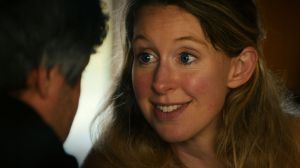

Once a refugee seeking safety in the U.S., Anita Omary is using what she learned to help others thrive.
Pictured here: Anita Omary; her son, Osman; and Omary’s close friends
True

In March 2023, after months of preparation and paperwork, Anita Omary arrived in the United States from her native Afghanistan to build a better life. Once she arrived in Connecticut, however, the experience was anything but easy.

“When I first arrived, everything felt so strange—the weather, the environment, the people,” Omary recalled. Omary had not only left behind her extended family and friends in Afghanistan, she left her career managing child protective cases and supporting refugee communities behind as well. Even more challenging, Anita was five months pregnant at the time, and because her husband was unable to obtain a travel visa, she found herself having to navigate a new language, a different culture, and an unfamiliar country entirely on her own.


“I went through a period of deep disappointment and depression, where I wasn’t able to do much for myself,” Omary said.

Then something incredible happened: Omary met a woman who would become her close friend, offering support that would change her experience as a refugee—and ultimately the trajectory of her entire life.

Understanding the journey

Like Anita Omary, tens of thousands of people come to the United States each year seeking safety from war, political violence, religious persecution, and other threats. Yet escaping danger, unfortunately, is only the first challenge. Once here, immigrant and refugee families must deal with the loss of displacement, while at the same time facing language barriers, adapting to a new culture, and sometimes even facing social stigma and anti-immigrant biases.

Welcoming immigrant and refugee neighbors strengthens the nation and benefits everyone—and according to Anita Omary, small, simple acts of human kindness can make the greatest difference in helping them feel safe, valued, and truly at home.

A warm welcome

Dee and Omary's son, Osman

Anita Omary was receiving prenatal checkups at a woman’s health center in West Haven when she met Dee, a nurse.

“She immediately recognized that I was new, and that I was struggling,” Omary said. “From that moment on, she became my support system.”

Dee started checking in on Omary throughout her pregnancy, both inside the clinic and out.

“She would call me and ask am I okay, am I eating, am I healthy,” Omary said. “She helped me with things I didn’t even realize I needed, like getting an air conditioner for my small, hot room.”

Soon, Dee was helping Omary apply for jobs and taking her on driving lessons every weekend. With her help, Omary landed a job, passed her road test on the first attempt, and even enrolled at the University of New Haven to pursue her master’s degree. Dee and Omary became like family. After Omary’s son, Osman, was born, Dee spent five days in the hospital at her side, bringing her halal food and brushing her hair in the same way Omary’s mother used to. When Omary’s postpartum pain became too great for her to lift Osman’s car seat, Dee accompanied her to his doctor’s appointments and carried the baby for her.

“Her support truly changed my life,” Omary said. “Her motivation, compassion, and support gave me hope. It gave me a sense of stability and confidence. I didn’t feel alone, because of her.”

More than that, the experience gave Omary a new resolve to help other people.

“That experience has deeply shaped the way I give back,” she said. “I want to be that source of encouragement and support for others that my friend was for me.”

Extending the welcome

Omary and Dee at the Martin Luther King, Jr. Vision Awards ceremony at the University of New Haven.

Omary is now flourishing. She currently works as a career development specialist as she continues her Master’s degree. She also, as a member of the Refugee Storytellers Collective, helps advocate for refugee and immigrant families by connecting them with resources—and teaches local communities how to best welcome newcomers.

“Welcoming new families today has many challenges,” Omary said. “One major barrier is access to English classes. Many newcomers, especially those who have just arrived, often put their names on long wait lists and for months there are no available spots.” For women with children, the lack of available childcare makes attending English classes, or working outside the home, especially difficult.

Omary stresses that sometimes small, everyday acts of kindness can make the biggest difference to immigrant and refugee families.

“Welcome is not about big gestures, but about small, consistent acts of care that remind you that you belong,” Omary said. Receiving a compliment on her dress or her son from a stranger in the grocery store was incredibly uplifting during her early days as a newcomer, and Omary remembers how even the smallest gestures of kindness gave her hope that she could thrive and build a new life here.

“I built my new life, but I didn’t do it alone,” Omary said. “Community and kindness were my greatest strengths.”

Are you in? Click here to join the Refugee Advocacy Lab and sign the #WeWillWelcome pledge and complete one small act of welcome in your community. Together, with small, meaningful steps, we can build communities where everyone feels safe.

This article is part of Upworthy’s “The Threads Between U.S.” series that highlights what we have in common thanks to the generous support from the Levi Strauss Foundation, whose grantmaking is committed to creating a culture of belonging.

Joy

Thomas Jefferson coined a hip and funny phrase for abrupt goodbyes that still holds up today

A great phrase for when you've just gotta leave without explanation.

thomas jefferson, goodbye, name is haines, woman waving, us history

Thomas Jefferson and a woman waving.

"Irish goodbye" is a term for when someone slips out of an event without telling anyone, avoiding the awkwardness of announcing their departure. (Though the Irish didn't necessarily invent the phenomenon.) But what do we call it when someone decides to turn tail and leave a situation immediately, without any explanation at all? These days, there doesn't seem to be a name for a sudden, unexpected exit. Back in the 1800s, however, there was one, courtesy of the third president, Thomas Jefferson.

The phrase: "My name is Haines."


This may sound a bit strange, but it all stems from an unusual interaction Jefferson had while in office with a member of the opposition party. According to Monticello.org, The Weekly Picayune originally published the story in New Orleans on February 17, 1840.

The story behind "My name is Haines"

In 1805, during his second term as president, Jefferson was riding near Monticello, his Virginia residence, when he struck up a conversation with another man on the road. Amusingly, the man had no idea who he was speaking to, and as a rank-and-file member of the Federalist Party, which opposed Jefferson's Democratic-Republican Party, he had plenty of harsh words for the president.

monticello, thomas jefferson, jefferson house, virginia, famous houses Thomas Jefferson's Monticello.via Martin Falbisoner/Wikimedia Commons

The Weekly Picayune wrote:

"Haines took particular pains to abuse Mr. Jefferson; called him all kinds of hard names, ran down every measure of his administration, poked the non-intercourse and embargo acts at him as most outrageous and ruinous, ridiculed his gun-boat system as preposterous and nonsensical, opposed his purchase of Louisiana as a wild scheme — in short, took up every leading feature of the politics of the day, and descanted upon them and their originator with the greatest bitterness."

Jefferson simply listened, neither in the mood to argue nor to reveal his identity. When the two arrived at Jefferson's home, the president invited the man inside for refreshments. At one point, the visitor asked the president for his name. Here is how it was reported in The Weekly Picayune:

"Jefferson," said the President, blandly.

"The [devil]! What, Thomas Jefferson?"

"Yes sir, Thomas Jefferson."

"President Thomas Jefferson?" continued the astonished Federalist.

"The same," rejoined Mr. Jefferson.

"Well, my name is Haines!" and putting spurs to his horse, he was out of hearing instantly.

jefferson memorial, tidal basin, washington d.c., historical monuments, american history The Jefferson Memorial in Washington, D.C.via Joe Ravi/Wikimedia Commons

Why did Haines ride off so quickly?

There are many reasons Haines may have decided to bail on the president so abruptly. He was likely embarrassed after bad-mouthing the president to his face and may not have wanted to risk any reprisal for his harsh words. And as someone who harbored deep ill will toward the president, he probably had no interest in entertaining his company. Regardless, "My name is Haines" became a popular phrase after appearing in The Weekly Picayune , and it was used whenever someone wanted to leave a situation suddenly and without explanation.

The phrase would be used until around the Civil War, but by the beginning of the 20th century, it, too, had said goodbye. It faded away rather than vanishing in an instant, as Mr. Haines famously did.

grass skiing, 1980s, '80s nostalgia, skiing, sports
Photo credit: YouTube screenshots via Warren Miller Entertainment

People are blown away by this '80s video of people grass skiing.

The video absolutely screams "1980s": a group of young men walk up a grassy hill with some kind of equipment on their backs, clad in short shorts and loud-looking wind breakers. But then something weird happens: as retro synthesizers blare in the background, they strap on what look like tricked-out roller skates and start gliding down a grassy hill. They perform gleeful mid-air splits, leap over tree trunks, and enjoy the editing benefits of super-cool slow-mo. What exactly is happening here?

The video, which appears to be compiled from a 1984 skiing documentary, went viral in January 2026 through an X post captioned "In the 1980s many were certain summer skiing would become a thing." People responded with a blend of confusion and nostalgia—wondering if the video was even real, pointing out how dangerous this sport looked, and asking why they'd never even heard of grass skiing to begin with.


"Well, why didn't it catch on?"

Here are some of the best reactions:

"This looks like a great way to frolic"

"This looks incredibly fun"

"LOL! The body english on the jumps is peak 80s. I wanna go back, go back, and do it all over but I can't go back I know...."

"Yep Still have mine but wouldn't dare nowadays."

"Guessing the broken arms, legs, backs, and necks convinced people it was not a great idea. Snow is far more forgiving."

"Where does one find a grassy hillside like this?"

"Wait…… HOW IS THIS NOT A THING?!!!! Somebody make them now!!!!! I swear I’ll buy the first pair!!!!"

"Looks fun until you faceplant right into dirt"

"80s seemed like so much fun. I’m a 90s kid and that was fun too but 80s feels like it was more raw"

"Fun fact: crashing hurts less and causes less damage in the snow."

"Well, why didn't it catch on?"

- YouTube www.youtube.com

The history of grass skiing

If you're like most people in the comments, you'd probably never seen this footage, which appears to be taken from the Warren Miller documentary Ski Country. According to The Ski Journal, that film "marked the height of grass skiing in the United States," 21 years after the sport was invented by Josef Kaiser in Germany. They note an average pair of these skis "consist of 192 rolls and some 1,500 individual pieces," with variations depending on the discipline and application.

The ultra niche design, The Ski Journal writes, is part of the activity’s "downfall" in the U.S. "The skis are made to be carved, and so snow-plowing and hockey-stopping aren't possible," they note, "meaning options for stopping are limited to falling or running out of momentum at the bottom of the hill." Nonetheless, the activity did have a brief moment in the sun. It's reportedly been Stateside since 1966, when it first hit Bryce Mountain Resort in Virginia. In 2024, SnowTrex Magazine notes that competitions are still held in Europe.

If you want to learn more about grass skiing, check out the detailed page at the International Ski and Snowboard Federation website.

- YouTube www.youtube.com

Gen X; Gen X grandparents; absent grandparents; Gen X worst grandparents; Millennials; worst grandparents; Gen Z

Gen X designated the 'worst grandparents' by Millennials

Generation X, typically the children of Baby Boomers born between the years of 1965-1980 tend to have a complicated reputation depending on who you ask. Some view them as a feral generation never to be spoken of poorly without consequence, while others view them as innovators pushing us into the future. But in recent years, Gen Xers have been dubbed the "worst grandparents" by social media users.

This multi-year conversation started when a video went viral calling Gen X out for being "terrible" grandparents, claiming that they never want to help with grandchildren. It didn't take long before other Millennials piled on to air their own grievances about Gen X grandparents. Most people criticizing the "new grandparents" were genuinely perplexed as to how they did not want to be more involved in the lives of their grandchildren.


Gen X; Gen X grandparents; absent grandparents; Gen X worst grandparents; Millennials; worst grandparents; Gen Z Family baking fun in the kitchen.Photo credit: Canva

Kylie Muse reveals in a video that she felt neglected by her Gen X parents growing up, saying, "It's quite a common theme for Gen X parents to be neglectful in some capacity and it's just crazy to me how more of them haven't learned from the past 20 to 30 years, instead of these grandparents seeing their kids having kids as an opportunity to restore the health in their relationships with their kids by showing up and helping them during the hardest transition of their lives, they would rather double down and compromise their relationship with that next generation. All for the sake of hyper-individualism and pride."

@kylies.muse

Gen x grandparents and their beloved empty nest 🥴 just say you hate having a family 😭 #grandparents #grandparentsoftiktok

The critique coming from the younger generation is not lost on Gen X, and they started coming out in force to respond with such vigor you'd think John Hughes had just announced the re-release of The Breakfast Club. It would seem that some of the people complaining of the lack of involvement have not considered that Gen X could have valid reasons for not immediately jumping in to take on grandparenting in the way some expect. A man by the name of John S. Blake gives a candid look into why Gen X was neglected as children and, in turn, became hype-independent at an early age.

"As a Gen X who's been on this earth long enough to have some hindsight I can tell you this, being independent at a young age is not a flex, what it actually means is capitalism is so brutal that our parents were forced to neglect their own children to stay alive. My generation was struggling so much that we had to leave our children unattended in order to produce enough so that we could afford to exist," Blake says.

@blackfluidpoet

Replying to @ellens0061 #foryoupage #homealone #fyp #foryou

But perhaps one of the most heart wrenching explanations comes from an elder Millennial who goes by the name Amazing Dea. In response to another Millennial who asks about Gen X being let off the hook, Dea shares, "Being as though you look like you might be a younger Millennial, let me go ahead and enlighten you. Generation X and older Millennials had to live through more than just this pandemic. We had the crack epidemic, we had the AIDS epidemic and let me tell you something, it was scary as f***."

Dea went on to explain that there were apartment complexes burned due to high populations of people with AIDS living in them and how they would witness people go from being completely normal to being addicted to crack in a matter of weeks. It seems that depending on socioeconomic status, Gen Xers lived wildly different lives with the common theme being growing up entirely too fast at an extremely young age.

Gen X; Gen X grandparents; absent grandparents; Gen X worst grandparents; Millennials; worst grandparents; Gen Z Three generations smiling by the sea.Photo credit: Canva

Another person kindly breaks down the confusion over why Gen X isn't rising to the occasion of being award-winning grandparents. In response to the criticism she replies, "We grew up in a different time, first of all. A lot of us, meaning me, Gen X, I was raised by boomers. A lot of us did not get raised by our grandparents. We were like the feral kids, like by 7 and 9 years old we were actually babysitting our brothers and sisters, alright."

The woman explains further in the video that Gen X doesn't want to raise their grandchildren or simply be babysitters, that there's a difference between expecting grandparents to be involved and expecting them to be babysitters.

@that1crazy72

Let’s take it a step further. You share DNA with your grandkids they are part of you not everyone gets the privilege of being a grandparent so if you are one take that as a blessing #genxgrandparents

In many of the response videos shared by Gen Xers, they certainly seem to love their grandchildren and children alike, but there's a discrepancy in expectation. The consensus of the forgotten generation seems to be that they had adult responsibilities much too early, were exposed to adult life experiences at a young age, and were often left to their own devices for long periods of time while also being told that their voices didn't matter.

While the argument seems to be around their lack of involvement as grandparents, they appear to be saying that they want to enjoy the freedom they didn't have as children, while being valued as a person and not a babysitter. In many follow up videos, Gen Xers gushed over their grandchildren and how they loved when they were around. It's just that they draw the line at raising them. Maybe for some, their experiences with their own childhood isn't enough to move Gen X out of the "worst grandparents" category, but for others it provides much needed context.

This article originally appeared in June.

Health

Caregivers at senior living home share the 3 hard truths they wish everyone knew

"Sometimes people forget how much we love the elderly we work with."

caregiving, caregivers, elderly, senior living, senior citizens
Photo credit: Canva

A caregiver helps their patient.

While caring for the elderly can be extremely rewarding, it comes with a specific set of challenges that aren't often discussed. Delivering high-quality care is vital for anyone in this position, but this must come with a level of patience many of us might take for granted.

While visiting my own mother in the senior living home where she resides, I was able to sit down for heart-to-hearts with a few of the caregivers who work for various residents. They opened up in a way I found beautifully vulnerable and surprising. Here are their stories. (At their request, I have changed their names.)


Setting boundaries with families

caregiving, caregivers, nursing, family dynamics, elderly, senior living Caregiver discusses a patient with another family member.Photo credit: Canva

A woman named Veronica shared that she often feels stuck in the middle of family disputes. "I don't like it when I'm just trying to do my job and take care of clients and I've got 20 people calling me. Sisters, wives, brothers, daughters, sons, and even best friends. Everyone has an opinion. I wish they'd have family meetings and decide what to do without sticking me in the middle."

Another woman, Anne, added her two cents, saying, "Family dynamics are tricky. I want to respect how hard it is to age on everyone in the family, without feeling like I'm inserting myself in the drama."

They want to be asked about their day

caregiving, caregivers, burnout, nursing, elderly, senior citizens A caregiver takes a break. Photo by Vladimir Fedotov on Unsplash

Anne shares that she sometimes feels invisible. "Sometimes I wish they would ask how things are in my life. What my hopes and wishes are. I would like it if they understood that sometimes I need a day off, or that my body hurts sometimes."

On a resource site for caregivers, one of the helpful tips is finding the balance between helping others and self-care. This means paying attention to their own mental and physical health needs. "Maintaining your health is crucial for being able to care effectively for your loved one. Take care of your own health by focusing on nutrition, exercise, and sufficient rest. Regular self-care routines can help you stay strong and resilient in the face of caregiving demands."

Mental Health America also has a few articles dedicated to self-care as a caregiver. "If you cannot remember the last time you slept properly, ate adequately, exercised weekly, or did not feel guilty about taking a sick day, then you're probably feeling the impacts of caregiving on your mental and physical health. Ask yourself: 'What could I do to replenish myself?'"

They go on to give tips: "Is there any small action that could improve my life or make me feel more content with my present state? If you're treating yourself fairly, the answer should be yes. Everyone always has some need that could be better fulfilled—caregivers are no exception."

Hard to say goodbye

caregiving, caregiver, elderly, senior citizens, loss, grief Elderly people holding hands. Photo by Dulcey Lima on Unsplash

Sometimes, especially after a caregiver has worked with a person for more than a month or two, they develop a true bond. While the connection is genuinely satisfying, it can make the loss of that patient even harder.

Mark, who has been working with senior citizens for two decades, explains how devastating the losses can feel. "I worked with a woman named Evelyn for seven years. She passed away at the age of 94. It's especially hard because when you're in this business, you might have three clients pass in the span of a few weeks."

Veronica added, "Sometimes people forget how much we love the elderly we work with."

These sentiments come back to decompression. Processing just one loss can be difficult. Having to do so for multiple people in a short amount of time takes extra healing time for everyone.

The resource site also notes how important it is to take breaks when needed. "Caregiving can be overwhelming, so taking respite breaks regularly is important. These breaks can help prevent burnout and give you time to recharge. Schedule time for yourself to engage in activities that you enjoy and that help you relax."

vegan, bacon, habits, food, vegetarian, eating

The "vegan but bacon" message went viral.

Most of us have things we want to do in life, goals we want to achieve, but find that all kinds of obstacles get in our way. Sometimes those obstacles are external things we can't control, and sometimes they are internal things we aren't consciously aware of that hold us back.

For instance, certain mindsets can keep us from making progress, from negative thinking to creating rules for ourselves that don't actually exist. One example of the latter was brilliantly challenged by a vegan content creator named Liz, who had someone tell her that they'd go vegan if it weren't for their love of bacon. Her response was powerfully simple: "So do it. Go vegan but bacon."


Liz, Tiktok, video, viral, content creator, vegan TikTok · liz 🌱🥕🪱🤎 www.tiktok.com

The TikTok post was viewed nearly three million times, topped only by her similar post that said the same thing, but with cheese instead of bacon. Lots of people in the comments of both posts shared that they eat vegan 95% of the time, eat vegan only at home but not at other people's houses, or that they have one specific non-vegan food they eat but stick to plant-based foods otherwise. As Liz says, "Harm reduction is harm reduction," and most people do things a step at a time, not all at once.

The idea that you don't have to take an all-or-nothing approach to a certain diet or lifestyle was a revolutionary one for people who struggle with perfectionism. And, as another creator pointed out, this theory can apply to lots of areas of our lives.

"Stop making arbitrary rules for yourself," wrote Addie the Optimist on TikTok. "It prevents you from actually reaching your goals." She said if you don't have 100% of your energy to put in at the gym, go to the gym anyway and give 50%. It doesn't have to be all or nothing.

The truth is, there are very few actual rules in life. Aside from laws of the land and whatever spiritual laws someone might feel are obligatory, the "rules" we tend to live by are generally optional and largely arbitrary. Three meals a day? Totally made up. Wearing workout clothes to exercise? Genuinely optional. You can just do things. You rarely have to do them any particular way, and you rarely have to do them all the way.

Giving yourself permission to do something imperfectly is incredibly freeing, and may actually lead to greater progress than perfectionism, as many people shared in the comments:

"I was like 'I need to go the gym but I only like cardio' then I realized I can do just the cardio and no one will come arrest me."

"Sometimes washing most of the dishes is washing enough."

"Half-assing is the stepping stone to whole-assing. 🙂↕️"

"If you only have 10% to give and you give 10% you have just given 100%."

"Sloppy success beats perfect failure!"

"Perfect is the enemy of done."

"Once you get out of the all or nothing mindset the possibilities are endless."

vegan, habits, food, vegetarian, eating You don't have to take an all or nothing approach to change. Photo credit: Canva

As Addie said in her video, "You don't have to be imprisoned by your own rules." That's easier said than done for some of us, perhaps, but seeing a mindset shift demonstrated like this can sometimes help us snap out of our own self-limiting thoughts. Additionally, having a short slogan to remind ourselves to ditch all-or-nothing thinking can also be helpful. So, the next time you find yourself feeling like you have to do something all the way or not at all, just tell yourself "vegan but bacon," and give yourself permission to follow your own rules.