A mom seeks doctor's help for postpartum depression and instead gets a visit from the cops
Too many women lose out on much needed support because of unwarranted stigma.

Postpartum depression is very common, and treatable.
Jessica Porten recently visited her doctor four months after giving birth to her daughter, Kira. She wasn't feeling quite like herself.
She had been dealing with overwhelming sadness and fits of anger, which she knew was likely stemming from a case of postpartum depression.
In a Facebook post, Porten recounts the story of that appointment.
"I tell them I have a very strong support system at home, so although I would never hurt myself or my baby," she writes. "I’m having violent thoughts and I need medication and therapy to get through this."
In other words, she went to her doctor to ask for help for an extremely normal and treatable issue that affects an estimated 1 million women in the U.S. each year in one form or another.
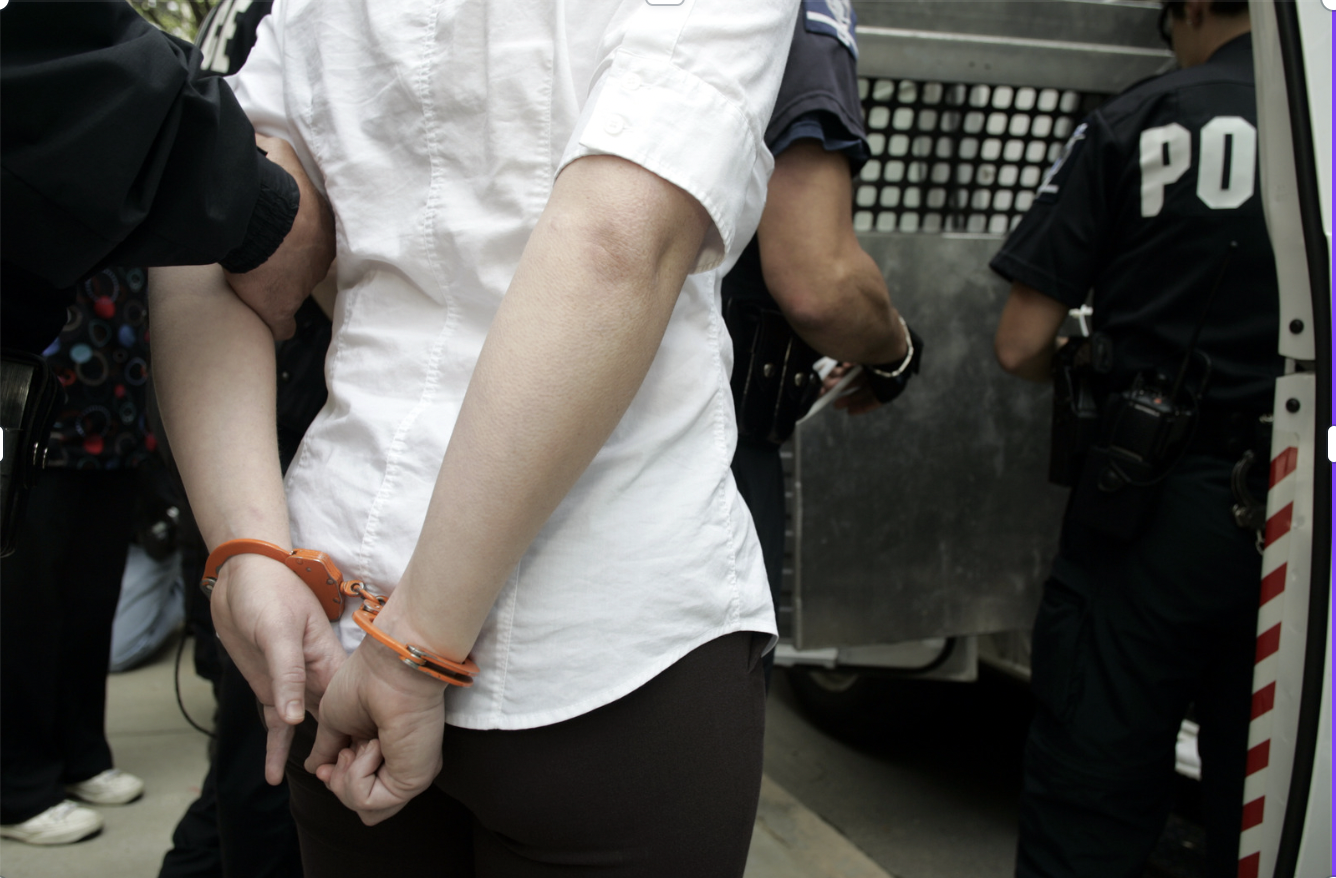
But instead of getting help, as Porten tells it, the office did something pretty unexpected: They called the police.
Because of her admission to "violent thoughts," staff wanted the police to escort Porten to the ER for evaluation.
The cops, according to Porten, were skeptical of the need for their presence when they arrived and allowed her to drive herself to the hospital.
But the ordeal continued.
"We arrive at the ER and I’m checked in, triaged, blood drawn. I am assigned a security guard to babysit me," she writes.
She says she waited for over an hour to get a room, all while wrangling her months-old baby. After some brief tests, a lot of waiting, and a super-short interview with a social worker, she was deemed mentally fit enough to be discharged.
Porten and her 4-month-old didn't leave the hospital until after midnight.
The worst part? Porten never got the help she asked for.

Postpartum depression is as serious as the stigma it carries
Canva
In addition to the undue stress and wasted time, Porten left the hospital without having received any medical help whatsoever.
"Not once during all of this has a doctor laid eyes on me," she writes. "Not once. Not even before they decided to call the cops on me."
Porten says that, for all her time and effort, she received some papers and pamphlets and was sent on her way.
"I’m still processing all of the emotions that are coming with being treated this way. I’m not exactly sure what to do here. I will say I am deeply hurt and upset, and above all angry and disgusted and disappointed by how this whole thing went down."
She also points out that if she had been a woman of color, her ordeal probably would have been even more drawn out and traumatic.
Postpartum depression is a serious issue - as is the stigma it carries.
Postpartum depression is common. The condition, and even the scary violent thoughts that sometimes accompany it, may even have an important evolutionary purpose. Some argue that new moms are on high alert for danger and that stress can sometimes visually manifest itself in their thoughts.
But, as with most mental health issues, postpartum depression can carry a lot of shame, embarrassment, and guilt for the women affected by it — leading them to ignore their symptoms instead of seeking help. One study even found that countries that don't recognize postpartum depression by name actually see women more likely to come forward with their symptoms.
Stories like Porten's show exactly why many women would rather suffer in silence than be poked, prodded, and treated inhumanely. And of course, not getting proper treatment will only make things wore.
It's time for a different approach.
It may be a common policy to call the police in the interest of the child's safety. But a policy that better addresses the mother's concerns and gets her the help she needs, without being shamed, is definitely a better way to go.
To get there, we need to help more honest and brave women feel comfortable coming forward about the aspects of postpartum depression that are hard to talk about. And we all need to better educate ourselves on the complexities of mental health issues and, more importantly, the human beings behind them.
You can find a link to Porten's post on Facebook here:
https://www.facebook.com/photo.php?fbid=1021317492...
This story originally appeared on 01.24.18

- We need to fundamentally reexamine how new moms are cared for after childbirth. ›
- These postpartum rules for moms in the 1960s are going viral because they're ridiculous. ›
- 12 hilariously relatable comics about life as a new mom. ›
- Here are the phrases you should know when dealing with cops. - Upworthy ›
- What men should be doing for wives during postpartum - Upworthy ›
- Woman with depression lists how her husband can support her - Upworthy ›
- Dad surprises wife with epic sushi boat after she gives birth, and folks are taking notes - Upworthy ›


A woman is getting angry at her coworker.via
A man with tape over his mouth.via
A husband is angry with his wife. via 
a man sitting at a desk with his head on his arms Photo by
Can a warm cup of tea help you sleep better? If you believe it, then yes. Photo by 
Three women sit on a blanket in the park. 
Two women engaging in a pleasant conversation inside a coffee shop
Two men engaging in a peaceful disagreement.
Resurfaced video of French skier's groin incident has people giving the announcer a gold medal
"The boys took a beating on that one."
Downhill skiing is a sport rife with injuries, but not usually this kind.
A good commentator can make all the difference when watching sports, even when an event goes smoothly. But it's when something goes wrong that great announcers rise to the top. There's no better example of a great announcer in a surprise moment than when French skier Yannick Bertrand took a gate to the groin in a 2007 super-G race.
Competitive skiers fly down runs at incredible speeds, often exceeding 60 mph. Hitting something hard at that speed would definitely hurt, but hitting something hard with a particularly sensitive part of your body would be excruciating. So when Bertrand slammed right into a gate family-jewels-first, his high-pitched scream was unsurprising. What was surprising was the perfect commentary that immediately followed.
This is a clip you really just have to see and hear to fully appreciate:
- YouTube youtu.be
It's unclear who the announcer is, even after multiple Google inquiries, which is unfortunate because that gentleman deserves a medal. The commentary gets better with each repeated viewing, with highlights like:
"The gate the groin for Yannick Bertrand, and you could hear it. And if you're a man, you could feel it."
"Oh, the Frenchman. Oh-ho, monsieurrrrrr."
"The boys took a beating on that one."
"That guy needs a hug."
"Those are the moments that change your life if you're a man, I tell you what."
"When you crash through a gate, when you do it at high rate of speed, it's gonna hurt and it's going to leave a mark in most cases. And in this particular case, not the area where you want to leave a mark."
Imagine watching a man take a hit to the privates at 60 mph and having to make impromptu commentary straddling the line between professionalism and acknowledging the universal reality of what just happened. There are certain things you can't say on network television that you might feel compelled to say. There's a visceral element to this scenario that could easily be taken too far in the commentary, and the inherent humor element could be seen as insensitive and offensive if not handled just right.
The announcer nailed it. 10/10. No notes.
The clip frequently resurfaces during the Winter Olympic Games, though the incident didn't happen during an Olympic event. Yannick Bertrand was competing at the FIS World Cup super-G race in Kvitfjell, Norway in 2007, when the unfortunate accident occurred. Bertrand had competed at the Turin Olympics the year before, however, coming in 24th in the downhill and super-G events.
As painful as the gate to the groin clearly as, Bertrand did not appear to suffer any damage that kept him from the sport. In fact, he continued competing in international downhill and super-G races until 2014.
According to a 2018 study, Alpine skiing is a notoriously dangerous sport with a reported injury rate of 36.7 per 100 World Cup athletes per season. Of course, it's the knees and not the coin purse that are the most common casualty of ski racing, which we saw clearly in U.S. skier Lindsey Vonn's harrowing experiences at the 2026 Olympics. Vonn was competing with a torn ACL and ended up being helicoptered off of the mountain after an ugly crash that did additional damage to her legs, requiring multiple surgeries (though what caused the crash was reportedly unrelated to her ACL tear). Still, she says she has no regrets.
As Bertrand's return to the slopes shows, the risk of injury doesn't stop those who live for the thrill of victory, even when the agony of defeat hits them right in the rocks.